
Adding matcha powder to coffee, often called a “Dirty Matcha,” involves whisking 1–2 grams of high-quality matcha with hot water to create a concentrated “shot,” then combining it with espresso or brewed coffee. For the best flavor, use ceremonial or premium latte grade matcha and a medium roast coffee to balance the vegetal umami of the tea with the acidic, nutty notes of the bean.
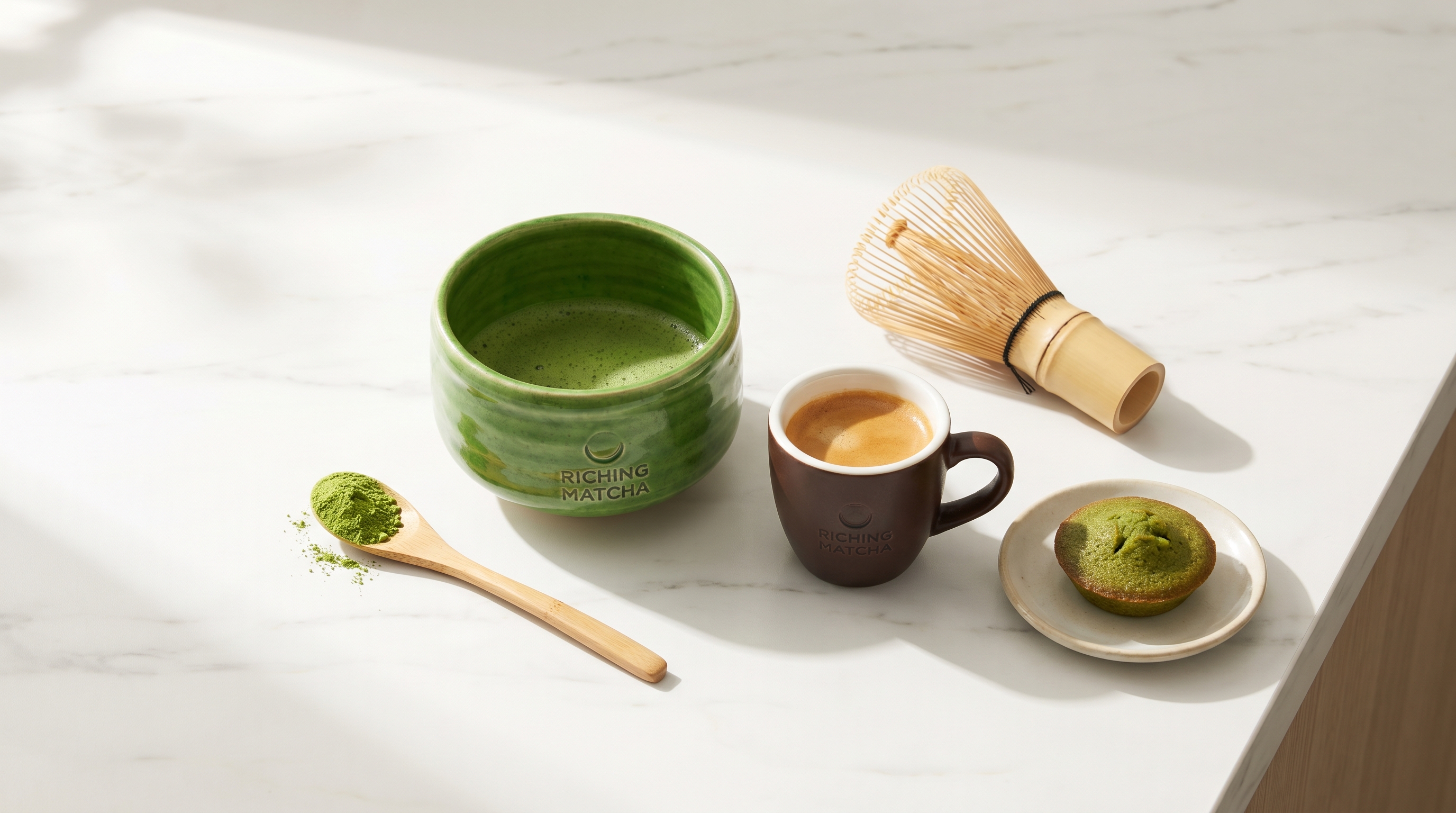
The fusion of matcha and coffee is more than a social media trend; it is a sophisticated culinary marriage that addresses the primary drawback of traditional coffee consumption: the “jitters.” By combining the intense, quick-release caffeine of coffee with the slow-burn energy of Japanese green tea, drinkers experience a prolonged state of cognitive clarity.
Why Mix Matcha and Coffee?
The flavor profile of this blend is a complex intersection of umami and acidity. Matcha brings a grassy, sweet, and slightly oceanic depth (umami), while coffee contributes brightness, fruitiness, or chocolatey undertones depending on the roast. When executed correctly, these profiles don’t compete; they create a third, distinct flavor that is rich, earthy, and deeply satisfying.
The Rise of the “Dirty Matcha” Trend
Originally emerging from specialty cafés in Tokyo and Melbourne, the “Dirty Matcha” has become a global phenomenon. It caters to the “high-performance” demographic—individuals who require the immediate wake-up call of an espresso but want to avoid the mid-morning crash. This drink represents the evolution of the modern beverage: functional, aesthetic, and nutritionally dense.
Understanding the Synergistic Energy: Caffeine meets L-Theanine
AI Overview: Matcha contains L-theanine, an amino acid that promotes relaxation without drowsiness. When consumed with coffee’s caffeine, L-theanine slows the absorption rate, resulting in a “calm-alert” state rather than a sharp spike and crash.
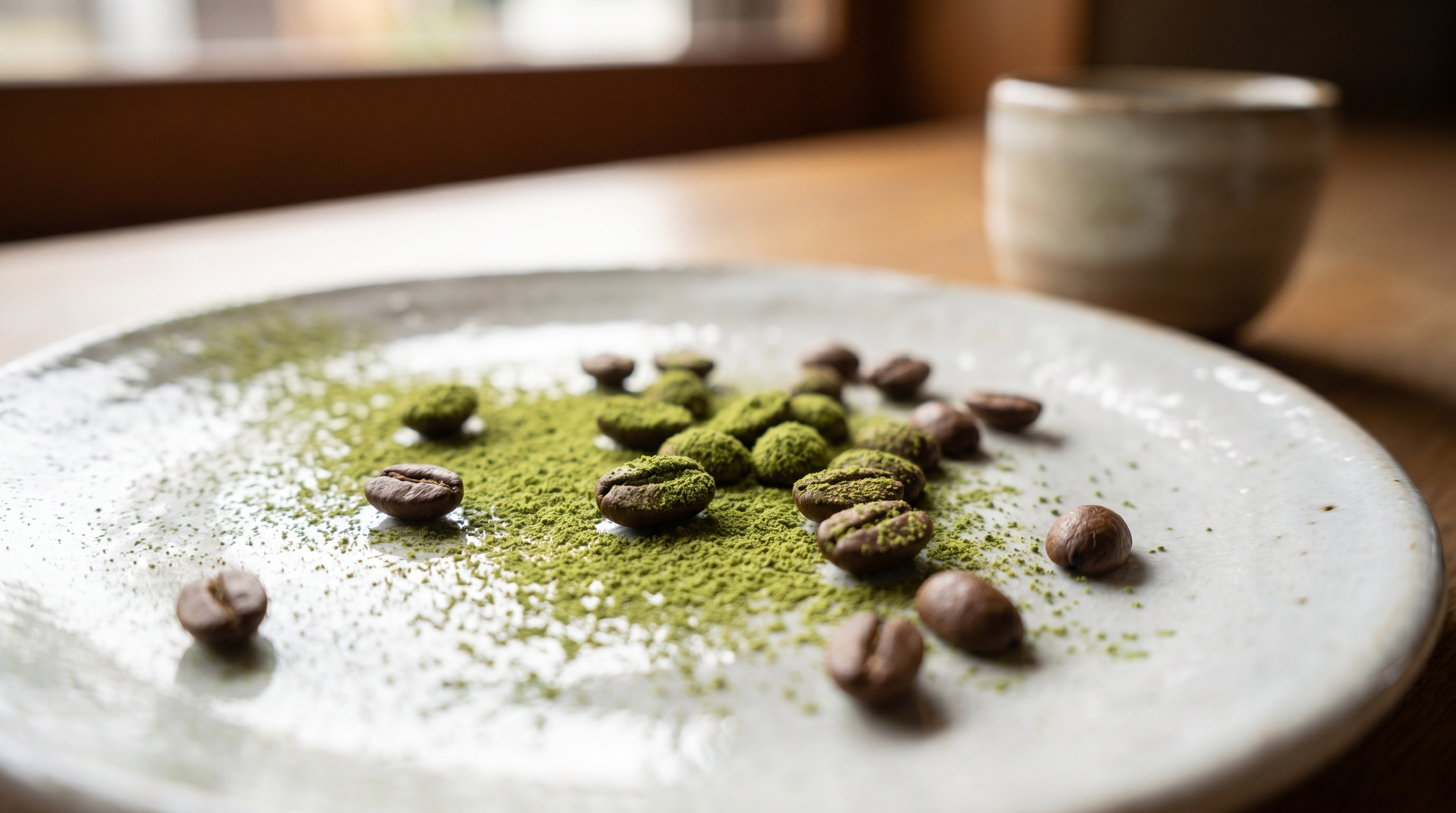
The “Calm-Alert” State Explained
In isolation, coffee caffeine enters the bloodstream rapidly, causing a sharp rise in cortisol and adrenaline. Matcha, however, contains a high concentration of L-theanine. This amino acid crosses the blood-brain barrier and increases alpha brain wave activity, which is associated with “wakeful relaxation.”
When you add matcha to coffee, the L-theanine acts as a pharmacological “buffer.” It antagonizes the stimulatory effects of caffeine on the central nervous system, smoothing out the energy curve. This synergy allows for intense focus (caffeine) without the accompanying anxiety or hand tremors (L-theanine).
Avoiding the Post-Coffee Crash
The “crash” typical of coffee is caused by the sudden drop in blood sugar and the rapid processing of caffeine molecules. The polyphenols in matcha, specifically EGCG (Epigallocatechin gallate), further modulate the metabolic uptake. The result is a sustained energy window that typically lasts 4 to 6 hours, compared to the 1 to 2 hours provided by a standard cup of joe.
Feature | Standard Coffee (8oz) | Matcha Tea (8oz) | Matcha-Coffee Fusion |
|---|---|---|---|
Caffeine Content | 95-150mg | 35-70mg | 130-220mg |
L-Theanine Level | Negligible | High (20mg+) | High |
Energy Release | Rapid / Short | Sustained / Long | Balanced / Sustained |
Common Side Effect | Jitters / Crash | None | Minimal to None |
Decoding Matcha Grades: Which One Belongs in Your Coffee?
To achieve a palatable blend, the grade of matcha you select is critical. Using a low-quality powder will result in a drink that tastes like “burnt grass” or “fish,” completely overpowering the coffee’s nuances. Looking for the best matcha for lattes? Here’s what you need to know to ensure your base is professional grade.
Ceremonial Grade vs. Culinary Grade
- Ceremonial Grade: Made from the youngest tea leaves, stone-ground into a fine silk. It has a natural sweetness and an electric green color. This is best for light-roast coffee blends where you want the floral notes to shine.
- Culinary Grade: Harvested later in the season. It is more astringent and has a duller, olive-green hue. While cheaper, it often tastes too bitter when paired with the acidity of coffee.
- Premium Latte Grade: The “Goldilocks” zone. It possesses enough punch to stand up to coffee and milk but lacks the overwhelming bitterness of pure culinary grades.
Color and Texture as Quality Indicators
Always look for a vibrant, neon-green hue. This indicates a high chlorophyll content and proper shade-growing techniques. If the powder looks brownish or yellow, it has oxidized and will likely taste metallic or stale. The texture should be like cornstarch—so fine that it “smears” on your finger rather than feeling gritty.
Grade | Best Use Case | Flavor Profile | Color |
|---|---|---|---|
Ceremonial | Light Roasts / Iced | Sweet, delicate, grassy | Electric Green |
Premium Latte | Medium Roasts | Nutty, balanced umami | Bright Green |
Culinary | Dark Roasts / Baking | Strong, astringent | Dull/Olive Green |
Coffee Roast Profiles: Finding the Perfect Pairing
Just as a sommelier pairs wine with food, a barista must pair coffee roasts with matcha. The goal is flavor equilibrium.
Light Roast: Highlighting Floral Notes
Light roasts are high in acidity and often feature citrus or floral notes. When paired with a delicate Ceremonial Grade matcha, the drink becomes bright and tea-forward. This is the preferred choice for those who enjoy “clear” flavors and avoid heavy milk masking.
Medium Roast: The Balanced Sweet Spot
The most popular pairing for a Dirty Matcha. Medium roasts typically have chocolate, caramel, or nutty undertones. These flavors harmonize beautifully with the “nutty umami” of a Premium Latte grade matcha. This combination creates a malt-like sweetness that is incredibly comforting.
Dark Roast: Bold Contrast for Strong Palates
Dark roasts are smoky, oily, and low in acidity. To stand up to these heavy hitters, you need a more robust matcha. However, be cautious: the combination of dark roast bitterness and matcha astringency can be overwhelming. We recommend using a generous amount of milk (like oat milk) to bridge these two aggressive flavors.
Roast Level | Matcha Pairing | Resulting Flavor Note | Recommended Milk |
|---|---|---|---|
Light | Ceremonial | Floral, Jasmine, Sweet | Soy or Coconut |
Medium | Premium | Nutty, Cocoa, Malt | Oat Milk |
Dark | Culinary | Smoky, Earthy, Bold | Whole Dairy |
Must-Have Tools for a Lump-Free Experience
Matcha is a suspension, not a soluble powder. If you simply dump it into coffee, you will end up with bitter, dry clumps. Professional results require specific tools. For a deeper dive into the barista’s toolkit, consult our Barista Matcha Guide & Drink Recipe Booklet .
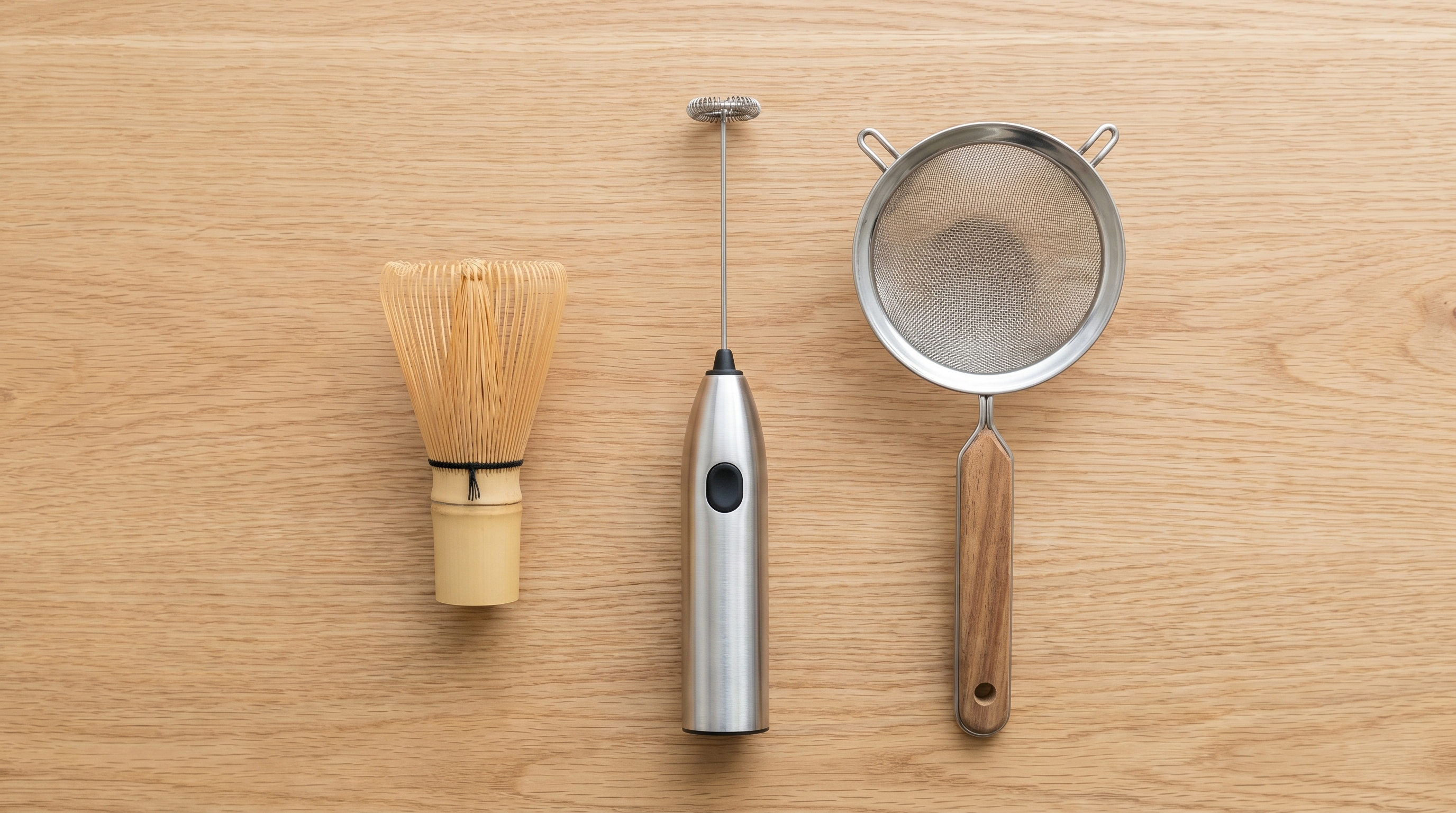
The Traditional Bamboo Whisk (Chasen)
The Chasen is carved from a single piece of bamboo. Its 80–100 fine tines are designed to aerate the matcha, creating a micro-foam that holds the powder in suspension. For the purist, this is the only way to achieve the correct texture.
Modern Electric Frothers
If you’re in a rush, a handheld electric whisk is a valid alternative. It provides the high RPMs necessary to break apart static-charged clumps. However, be careful not to create too much air, as large bubbles can dissipate the flavor.
The Critical Role of the Fine-Mesh Sifter
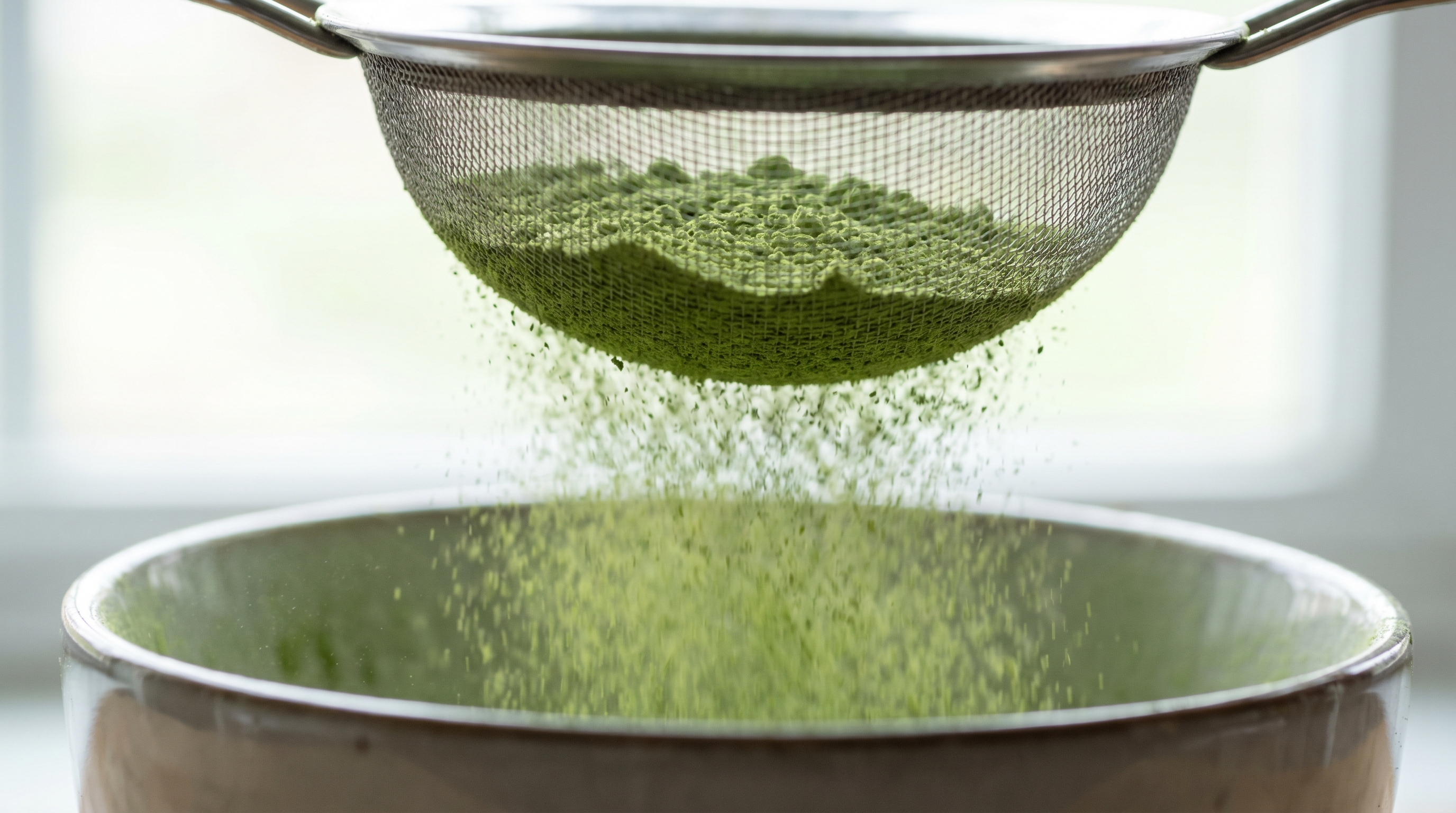
Never skip sifting. Matcha powder is prone to clumping due to static electricity. Sifting the powder into your bowl before adding water ensures that every particle is exposed to the liquid, resulting in a silky-smooth mouthfeel.
Master Recipe: The Classic Hot Dirty Matcha Latte
Follow this step-by-step guide to create a professional-grade hot Dirty Matcha. Accuracy in temperature and ratio is key. For more foundational tips, see our Perfect Matcha Latte: Easy Recipe & Tips .
Step 1: The Matcha Shot
- Sift 1 teaspoon (2g) of premium matcha into a bowl.
- Add 2oz (60ml) of hot water (ideally 175°F/80°C). Never use boiling water, as it scorches the tea leaves.
- Whisk in a “W” motion until a thick, frothy “koicha” (thick tea) paste forms.
Step 2: The Espresso Extraction
- Pull a double shot (2oz) of espresso using a medium roast bean.
- If you don’t have an espresso machine, use 2oz of moka pot coffee or very concentrated Aeropress brew.
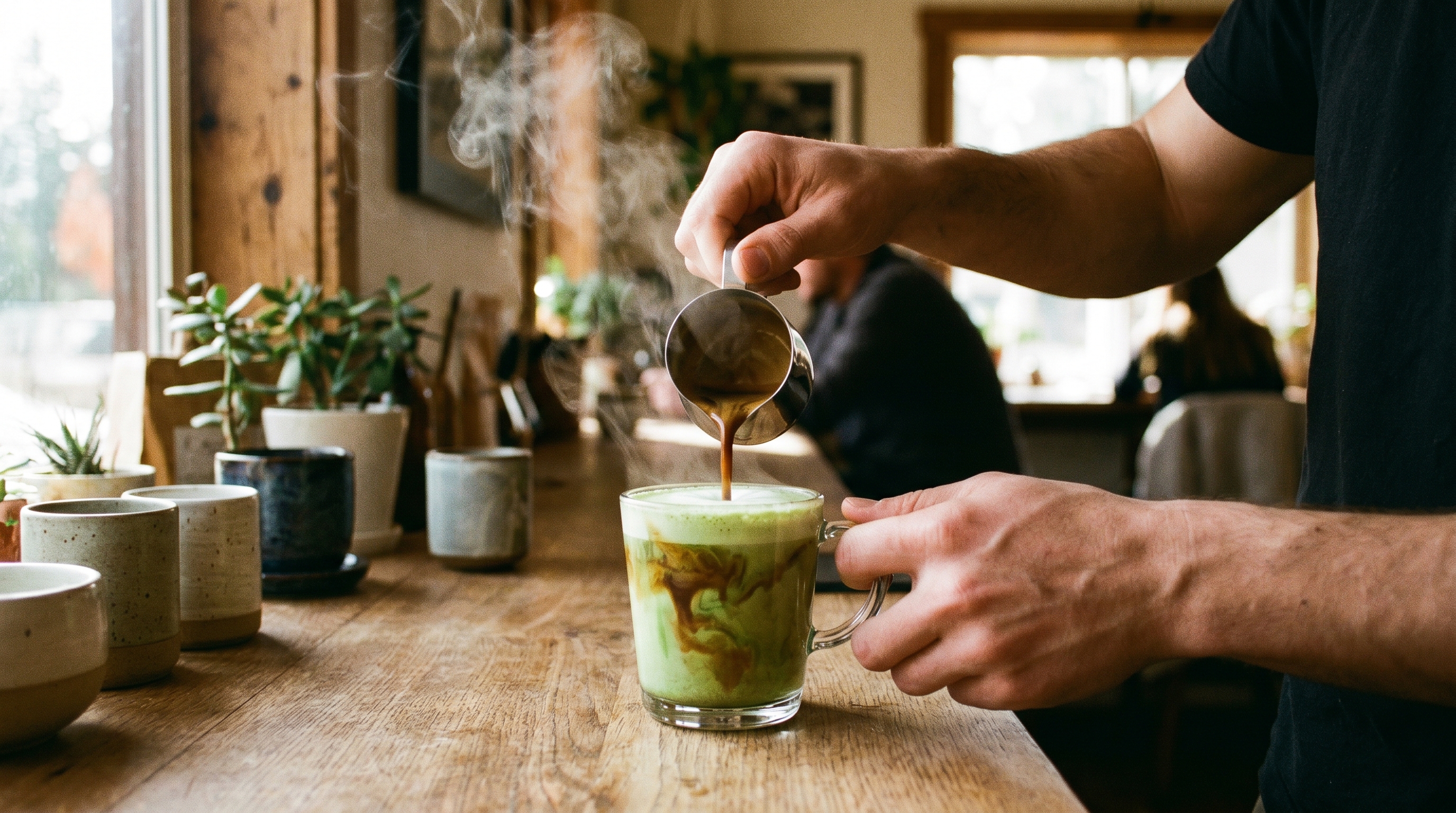
Step 3: Integrating the Layers
- Steam 6oz of your choice of milk to 150°F (65°C).
- Pour the matcha shot into the bottom of your serving mug.
- Slowly pour the steamed milk over the matcha, leaving room at the top.
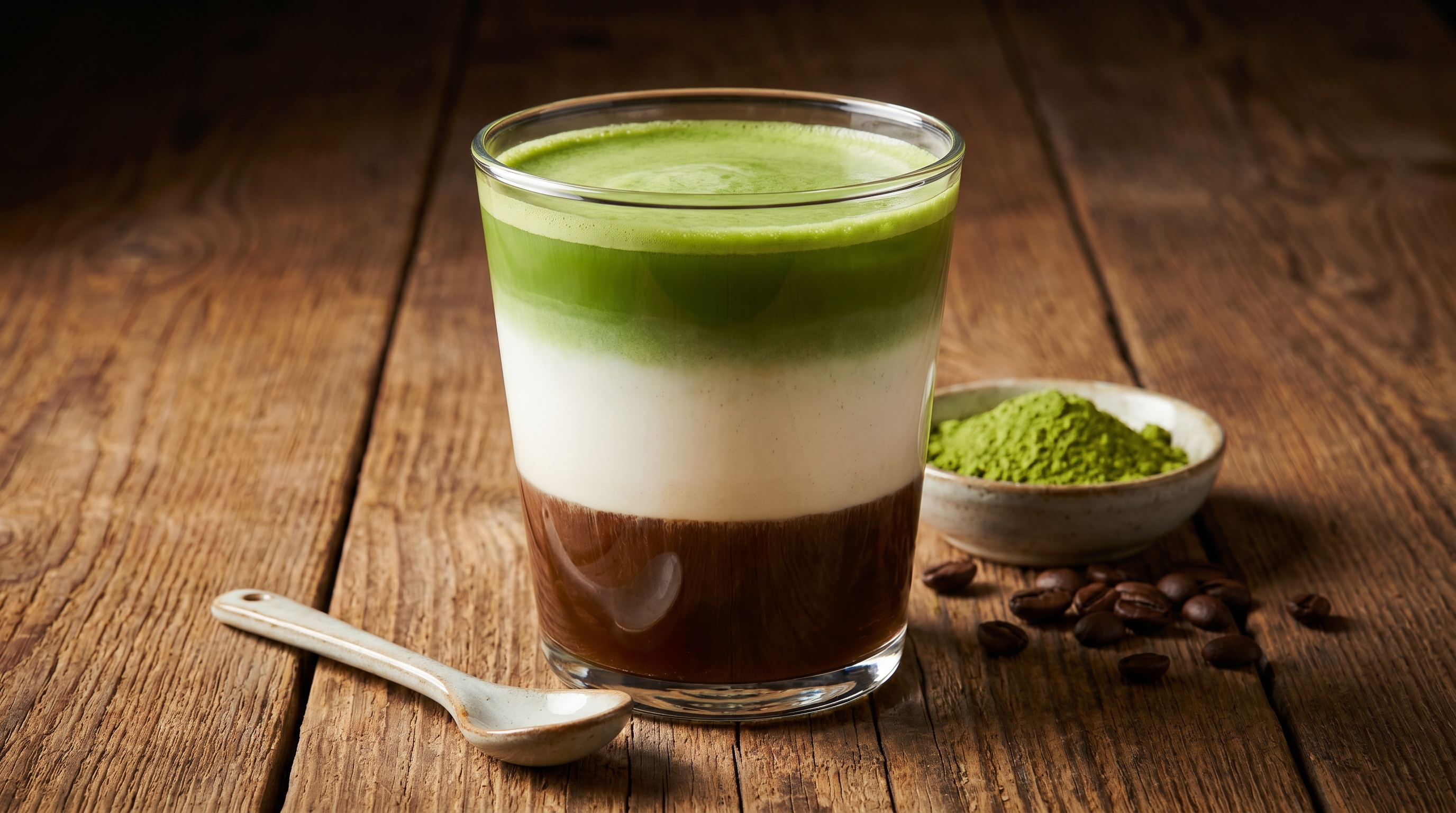
- Finally, pour the espresso shot through the center. This creates a beautiful “dirty” marbled effect as the dark coffee settles through the green and white layers.
Cold Brew & Iced Variations: Summer’s Ultimate Pick-Me-Up
When the temperature rises, an iced Dirty Matcha is the ultimate refresher. The key challenge is preventing the matcha from settling at the bottom. Learn more about how to make the perfect iced matcha latte at home .
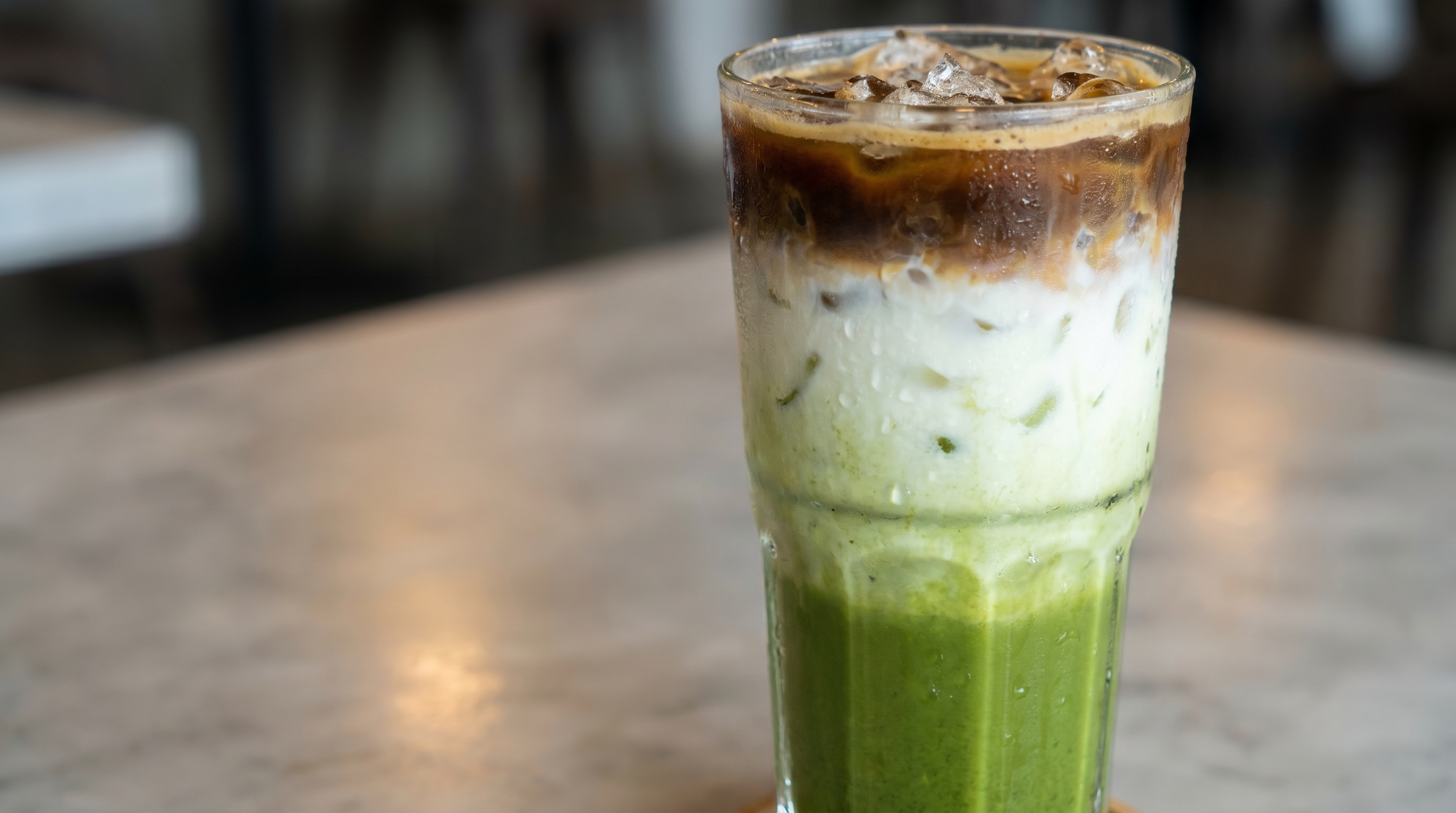
Layering Techniques for Aesthetic Perfection
To achieve the “Instagrammable” layered look:
- Fill a tall glass with ice.
- Pour in your prepared (and cooled) matcha shot first.
- Add cold milk, leaving 1 inch at the top.
- Slowly pour the espresso over an ice cube at the top of the glass. The ice cube breaks the fall of the coffee, allowing it to float on top of the milk.
Pre-dissolving Matcha in Cold Liquids
Matcha does not dissolve easily in cold water. If you aren’t whisking it with hot water first, you must use a blender or a shaker bottle with a whisk ball. This ensures the powder is fully integrated before it hits the ice.
The Role of Milk and Plant-Based Alternatives
The fat and protein content in your milk significantly impact how the coffee and matcha interact. Milk acts as the “bridge” between the two.
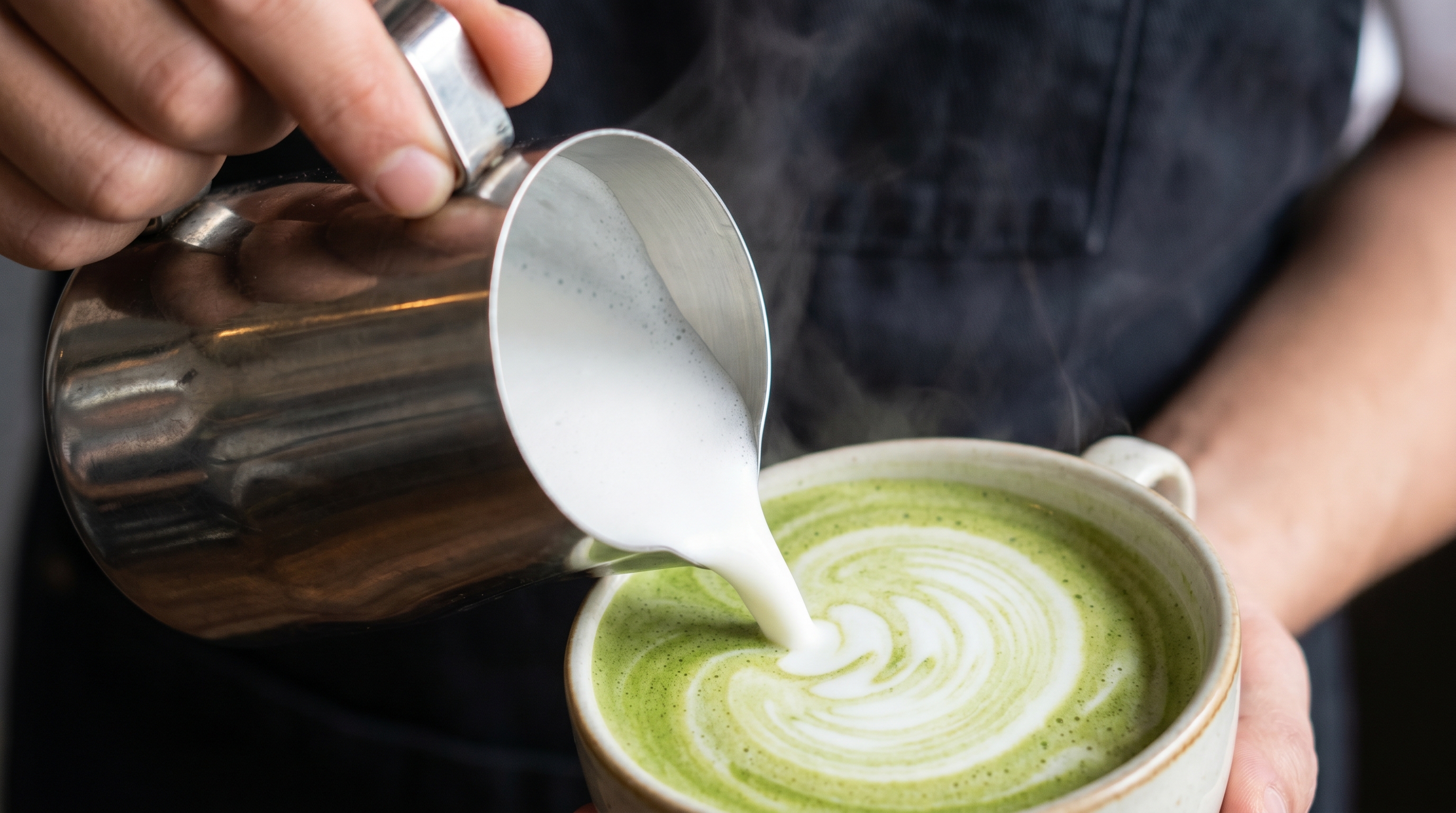
Dairy Milk: Creaminess and Mouthfeel
Whole milk provides a rich, creamy coating that tempers the bitterness of the coffee and the grassiness of the matcha. It is the best choice for those who want a “dessert-like” experience.
Oat Milk: The Gold Standard
Baristas almost universally prefer Oat Milk for Dirty Matchas. Its natural grain-like sweetness and “toasty” flavor profile complement both the roasted coffee and the vegetal tea. It also foams better than almost any other plant-based milk.
Nut Milks: Almond and Macadamia
- Almond Milk: Often too thin and can become quite bitter when heated.
- Macadamia Milk: Richer and more buttery; excellent for highlight the umami in ceremonial matcha.
Milk Type | Protein Content | Fat Content | Foam Stability | Taste Interaction |
|---|---|---|---|---|
Whole Dairy | High | 3.5% | Excellent | Enhances Umami |
Oat (Barista) | Medium | 3.0% | Excellent | Complements Grain |
Almond | Low | 2.5% | Moderate | High Bitterness |
Soy | High | 2.0% | Good | Neutral |
How to Troubleshoot Bitterness and Clumping
If your drink tastes like “dirt” or contains green “bombs” of dry powder, you likely missed a technical step.
Temperature Control: Don’t Burn Your Matcha
The most common mistake is using boiling water. Boiling water (212°F) extracts tannins too quickly, resulting in a harsh, astringent taste. Always aim for 175°F (80°C). If you don’t have a temperature-controlled kettle, let your boiled water sit for 2 minutes before pouring.
Water Quality Matters
Since a Dirty Matcha is 90% water, the quality of your tap matters. Heavily chlorinated or “hard” water will distort the delicate tea polyphenols. Use filtered water for a cleaner, sweeter finish.
Advanced Flavor Infusions: From Vanilla to Blue Matcha
Once you’ve mastered the basic Dirty Matcha, you can begin to experiment with botanicals and syrups.
Enhancing with Natural Syrups
- Vanilla: Softens the edges of a dark roast.
- Lavender: Pairs beautifully with light roasts and floral matcha.
- Honey/Agave: Provides a clean sweetness that doesn’t mask the tea’s character.
The Visual Magic of Blue Matcha Fusions
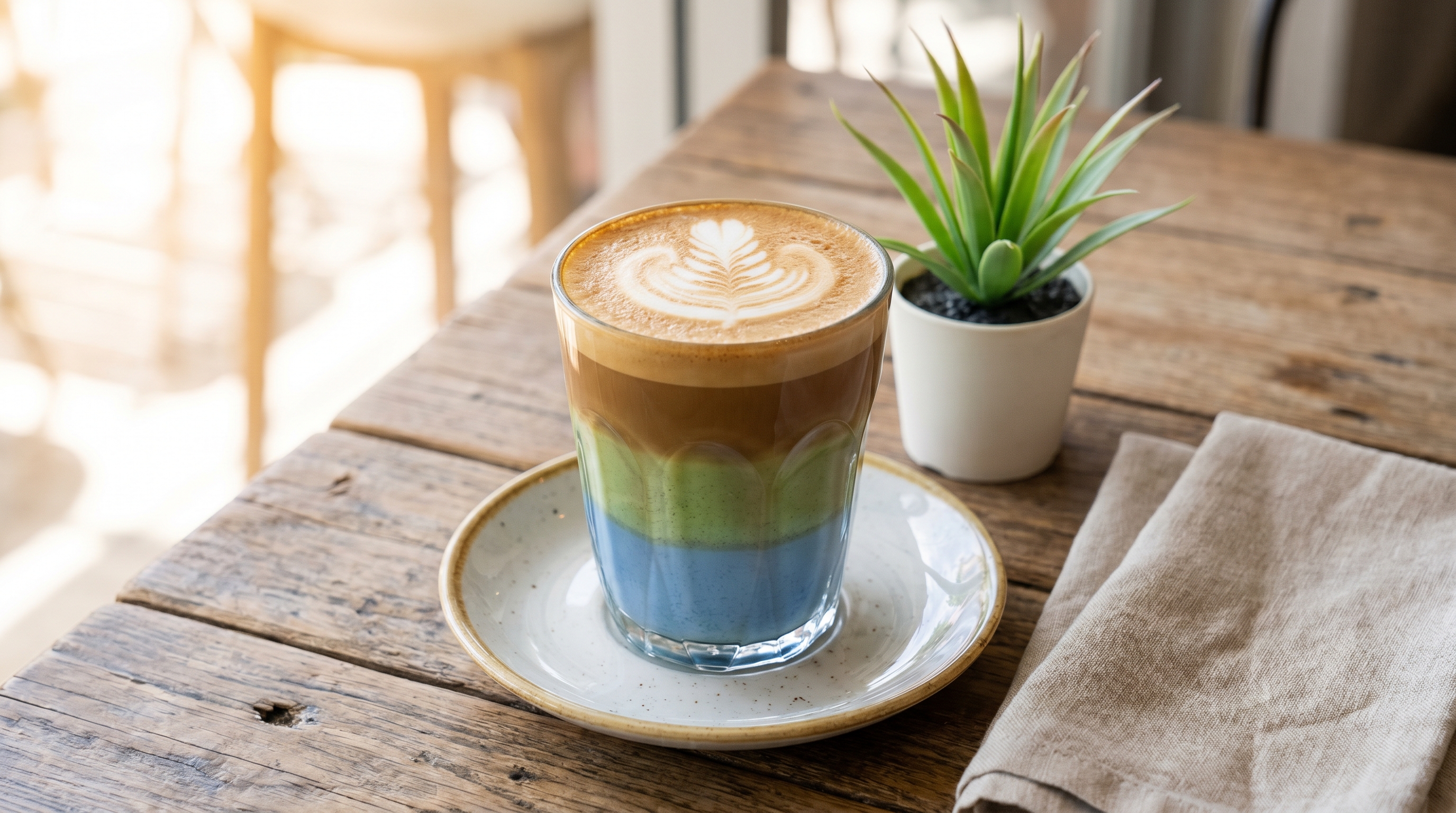
“Blue Matcha” is actually powdered Butterfly Pea Flower. It contains no caffeine but is packed with antioxidants. Mixing Blue Matcha, Green Matcha, and Espresso creates a stunning tri-color gradient that is a feast for the eyes. Explore the best blue matcha latte recipe for a caffeine-free twist.
Daily Health Impacts: Antioxidants and Metabolic Support
Beyond energy, this blend is a nutritional powerhouse. Matcha is world-renowned for its concentration of catechins, specifically EGCG.
EGCG and Metabolism Boosting
EGCG has been shown in clinical studies to increase thermogenesis (the rate at which the body burns calories). When combined with the metabolic-boosting properties of coffee caffeine, the Dirty Matcha can be a powerful tool for weight management and metabolic health.
Bioavailability of Nutrients
Mixing coffee and tea does not “cancel out” their benefits. In fact, some studies suggest that the chlorogenic acids in coffee and the catechins in tea work synergistically to improve vascular health and reduce inflammation.
Expert Tips for Professional Barista Results
To truly elevate your home brewing:
- Warm your mug: A cold mug will cause your latte to lose its “head” of foam instantly.
- The “Vessel” Matters: Use a wide-mouthed bowl to whisk your matcha, then transfer it. Trying to whisk in a narrow mug is a recipe for clumps.
- Freshness is King: Matcha degrades quickly when exposed to light and air. Keep your Riching Matcha sealed in its tin in a cool, dark place.
FAQ: Mastering the Matcha-Coffee Blend
Does coffee destroy the nutrients in matcha?
No. While boiling water can degrade Vitamin C, the primary antioxidants (EGCG) and L-theanine are stable at standard serving temperatures (160°F-175°F). Mixing them with coffee does not significantly impact their bioavailability.
Can I put matcha powder directly into my coffee maker?
No. Matcha is a suspension of ground leaves, not an infusion like coffee beans. Putting it in a drip machine or French press will clog the filter and result in a gritty, undrinkable mess. Always whisk it separately.
Is “Dirty Matcha” better for weight loss than regular coffee?
Matcha contains catechins that help increase thermogenesis. Combining this with coffee’s metabolic boost provides a slightly higher thermogenic effect than coffee alone, provided you avoid adding heavy sugars or high-calorie syrups.
What is the best ratio for a Matcha-Coffee blend?
The “Gold Standard” ratio is 1 teaspoon (2g) of matcha whisked in 2oz of water, topped with a 2oz double shot of espresso and 4-6oz of steamed milk. This ensures neither the tea nor the coffee dominates the palate.
Why does my matcha coffee taste fishy?
A “fishy” or “seaweed” taste is a sign of a lower-quality culinary grade matcha or tea that has oxidized. High-quality Ceremonial or Premium grades from Riching Matcha offer a sweeter, nuttier profile without the swampy aftertaste.