In the global landscape of specialty beverage trends, few regional hubs have exerted as profound an influence in recent years as South Korea’s artisanal café scene. From the viral sensation of Dalgona coffee to structurally complex multi-layered iced teas, Korean baristas have mastered the intersection of high-visual social media appeal and rigorous flavor construction.
The latest innovation to capture the attention of beverage connoisseurs and industry experts alike is the Matcha Einspanner. This drink represents a sophisticated fusion of traditional European coffeehouse heritage and East Asian tea culture, presenting a striking three-tiered masterpiece of vivid green stone-milled Japanese green tea, velvety milk, and a dense, luxurious layer of sweetened, vanilla-flecked cream.
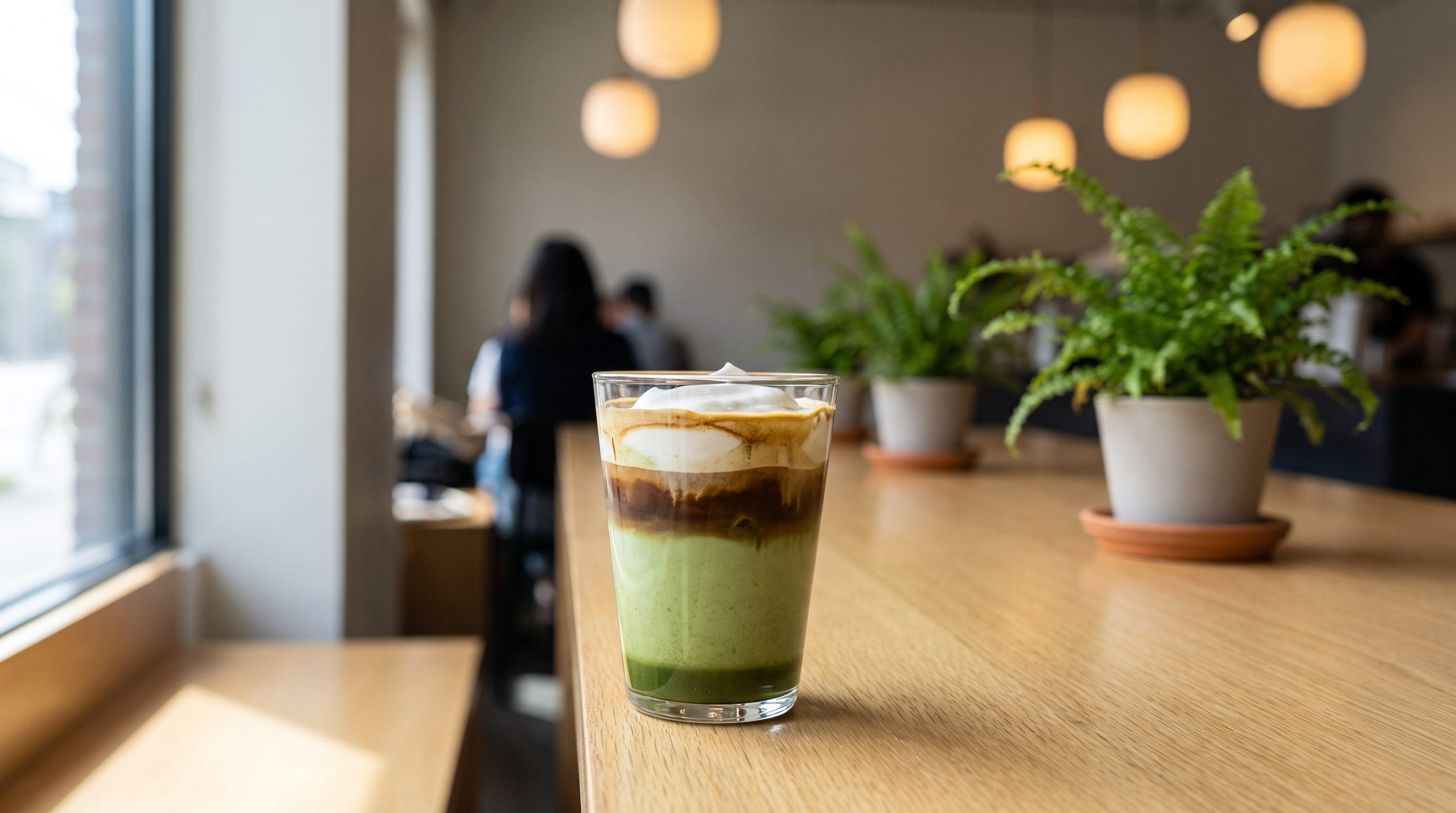
An authentic Matcha Einspanner served in a contemporary Seoul café, showcasing the pristine, distinct separation of the vivid green matcha base and the luxurious, slow-descending cream crown.
For the home enthusiast, recreating this beverage offers a rewarding masterclass in ingredient density and texture control. For the café owner, corporate beverage director, or wholesale distributor, understanding the mechanics of the Matcha Einspanner is key to capturing high-margin premium sales.
In this comprehensive guide, we will analyze the history, physical chemistry, commercial economics, and precise preparation techniques required to craft the ultimate Matcha Einspanner. From molecular foam stability to cost-per-serving optimization, we present the definitive resource for this modern culinary phenomenon.
2. What is a Matcha Einspanner?
To understand the Matcha Einspanner, one must examine its unique structural architecture and physical properties. Unlike a standard iced matcha latte, where milk and whisked tea are completely homogenized, the Einspanner is designed as a layered, non-homogenized drink. It is a sensory experience defined by a deliberate temperature, density, and flavor gradient.
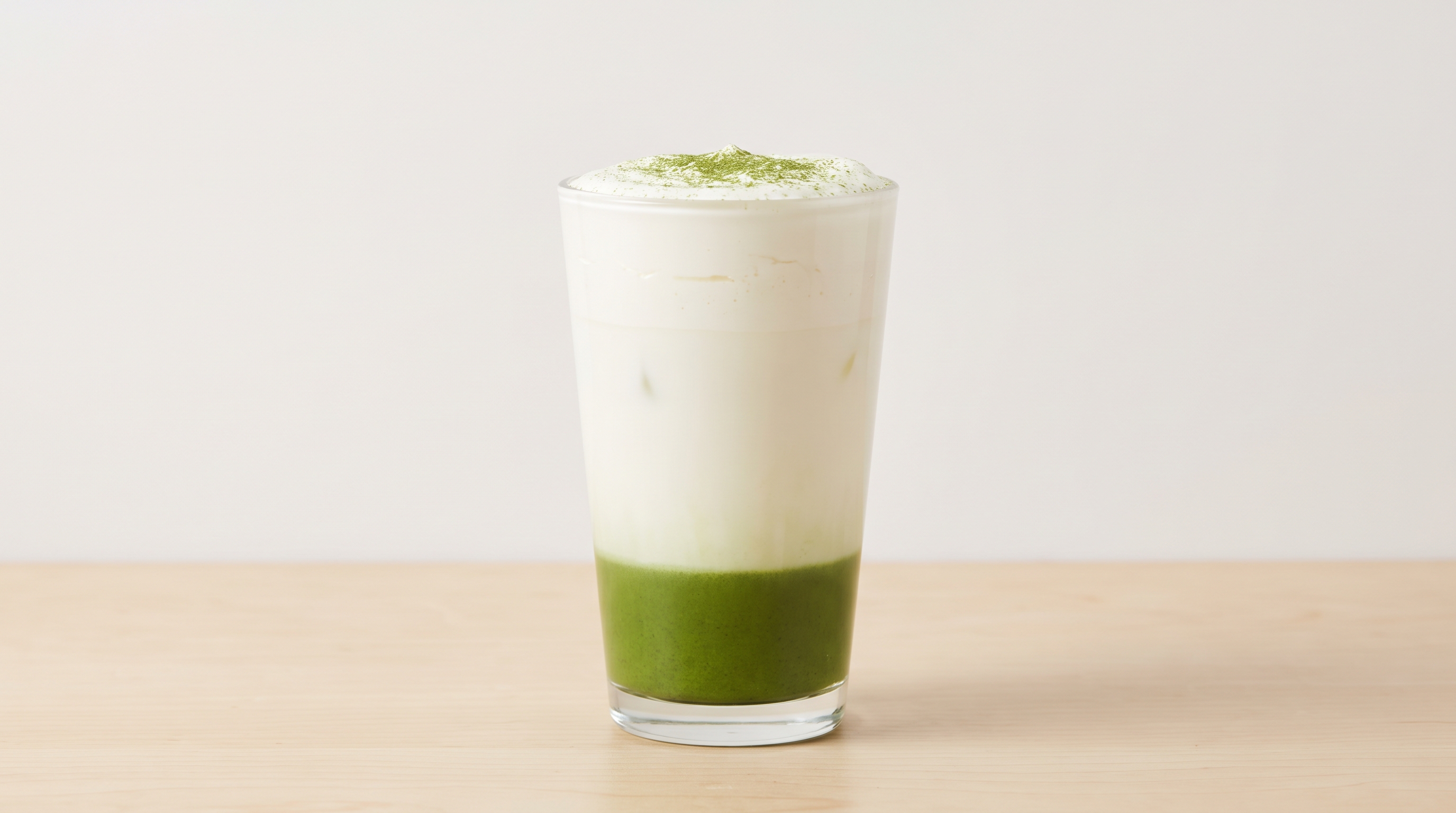
The structural anatomy of a perfectly executed Matcha Einspanner, displaying the sharp density boundary between the intense green matcha layer and the rich cream float.
A standard 12-ounce Matcha Einspanner is comprised of three distinct layers, built from the bottom up:
- The Matcha Base: A highly concentrated, vibrant green emulsion of premium stone-milled matcha powder and warm or cold water. This layer is characterized by its clean, grassy umami and pleasant vegetable astringency.
- The Milk Buffer: A cold, lightly sweetened or unsweetened milk layer (dairy or high-performance barista-grade plant alternatives) that serves as a transitional element, bridging the gap between tea and fat.
- The Einspanner Cream Crown: A dense, heavy cream layer whipped to a highly specific “ribbon stage” (approximately 30–40% overrun). This cream is sweetened and frequently infused with real vanilla bean paste or sea salt, designed to float gracefully on top without sinking.
The design of the Matcha Einspanner completely redefines how a beverage is consumed. It is served without a straw and is deliberately left unstirred. As the consumer sips directly from the rim of the glass, their palate first encounters the cold, thick, sweet, and decadent vanilla cream.
Immediately following this initial indulgence, the lower, crisp, clean, and astringent matcha-infused milk flows underneath the cream barrier.
This creates a dynamic contrast within the mouth: the rich lipids of the cream naturally coat the taste buds, softening the bitter catechins of the matcha, while the clean finish of the green tea cuts through the dairy fat, leaving the palate refreshed rather than weighed down.
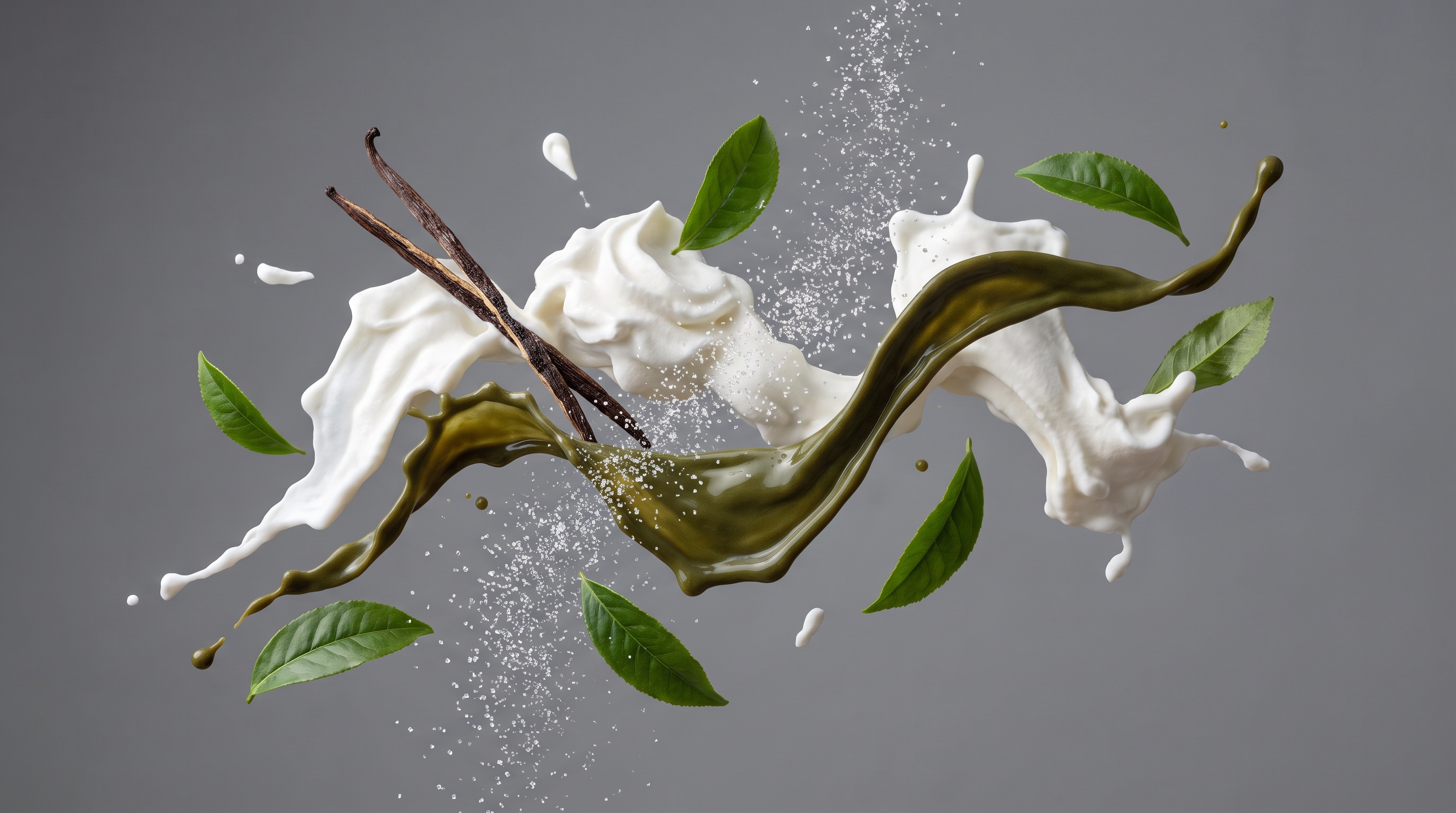
An artistic representation of the flavor symphony within a Matcha Einspanner, illustrating the dynamic interaction between fresh green tea leaves, luxurious cream waves, and sweet vanilla notes.
3. The Origin: From Viennese Classic to Modern Korean Café Trend
To fully appreciate this contemporary beverage, we must trace its lineage back to the historic coffeehouses of 19th-century Vienna, Austria.
The term Einspänner originally referred to a elegant, single-horse carriage. The carriage drivers (Einspännerfahrer) required a beverage that could stay warm during long, drafty waits on the cobblestone streets of Vienna, while remaining stable enough not to spill if they had to suddenly take the reins with one hand.
The Viennese coffeehouses solved this by serving hot, strong black coffee in a glass, topped with an exceptionally thick dome of cold whipped cream. The cream acted as a thermal insulator, trapping the steam and heat of the coffee beneath it, while preventing any sloshing or spilling during sudden movement. The driver would sip the hot coffee through the cold cream barrier—a technique known as Kaffee mit Schlag.
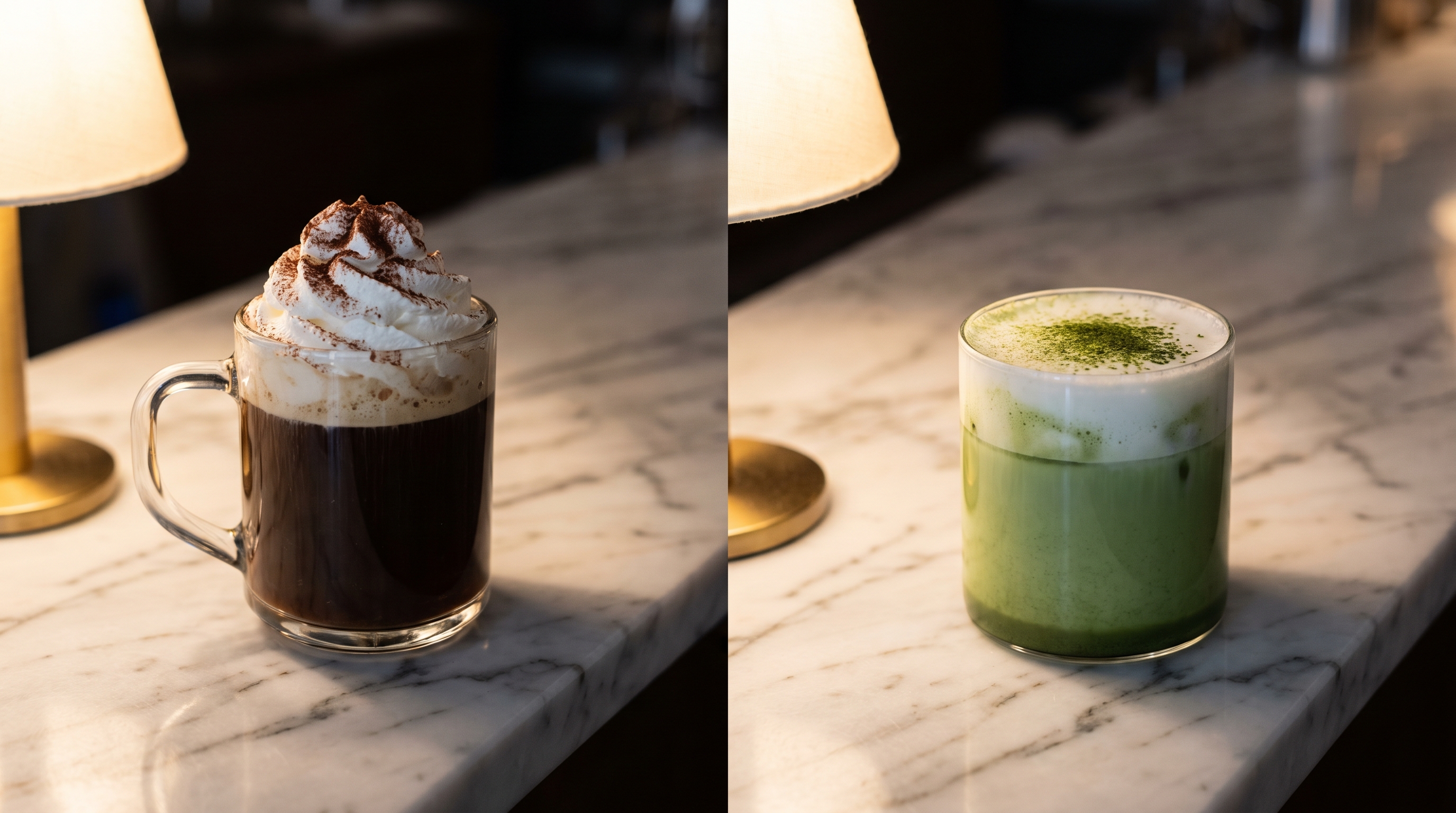
A historical and cultural comparison: the traditional Viennese espresso-based Einspänner side-by-side with the contemporary Korean-style Matcha Einspanner.
Fast forward to the mid-2010s in Seoul, South Korea. Independent, design-forward micro-roasters and specialty tea bars began looking for ways to elevate classic espresso and tea preparations.
Korean baristas, renowned for their precise technique and eye for presentation, took the structural blueprint of the Viennese Einspänner and adapted it to iced beverage formats.
By replacing the espresso base with concentrated stone-milled Japanese green tea, they created the Matcha Einspanner. This genius adaptation substituted the dark, roasted bitterness of coffee with the vibrant green color and savory umami of shade-grown tea, sparking an international menu trend that has captured the specialty beverage industry.
4. Matcha Einspanner vs. Matcha Latte vs. Matcha Cold Foam
For specialty beverage brands and café operators, precise menu definitions are vital for managing customer expectations and training staff. While these three beverages share similar raw materials, they differ dramatically in execution, texture, and physical chemistry.
Matcha Latte (Traditional/Iced)
A standard matcha latte is a completely integrated, homogenized emulsion. The matcha powder is whisked with hot water and then thoroughly mixed into hot steamed milk or poured over ice and cold milk.
The goal is a uniform, smooth drink with a balanced, singular flavor profile throughout. The texture is thin and fluid, designed to be consumed through a straw or directly from a mug.
In a Matcha Cold Foam drink, the structural relationship is inverted. The base of the drink is typically a standard milk or cold-brew coffee, while the matcha itself is incorporated directly into a aerated, low-fat milk foam that sits on top.
Because cold foam is aerated using high-shear blenders with skim milk or non-dairy creamers, it is light, highly aerated, and eventually dissolves down into the beverage below.
The Matcha Einspanner keeps the matcha in its purest, most concentrated state at the bottom of the glass, while utilizing a heavy, high-fat (minimum 35% butterfat) cream top.
Unlike cold foam, the Einspanner cream is whipped to a luxurious, semi-solid “ribbon” density. It does not dissolve quickly into the liquid below; instead, it maintains its integrity as a distinct, floating layer from the first sip to the last.
5. The Science of the Perfect Einspanner Cream
Achieving a stable, floating cream layer that pours smoothly but does not sink into the matcha base is a matter of lipid physics and fluid mechanics. To train baristas to execute this drink consistently, we must understand the variables that control cream viscosity.
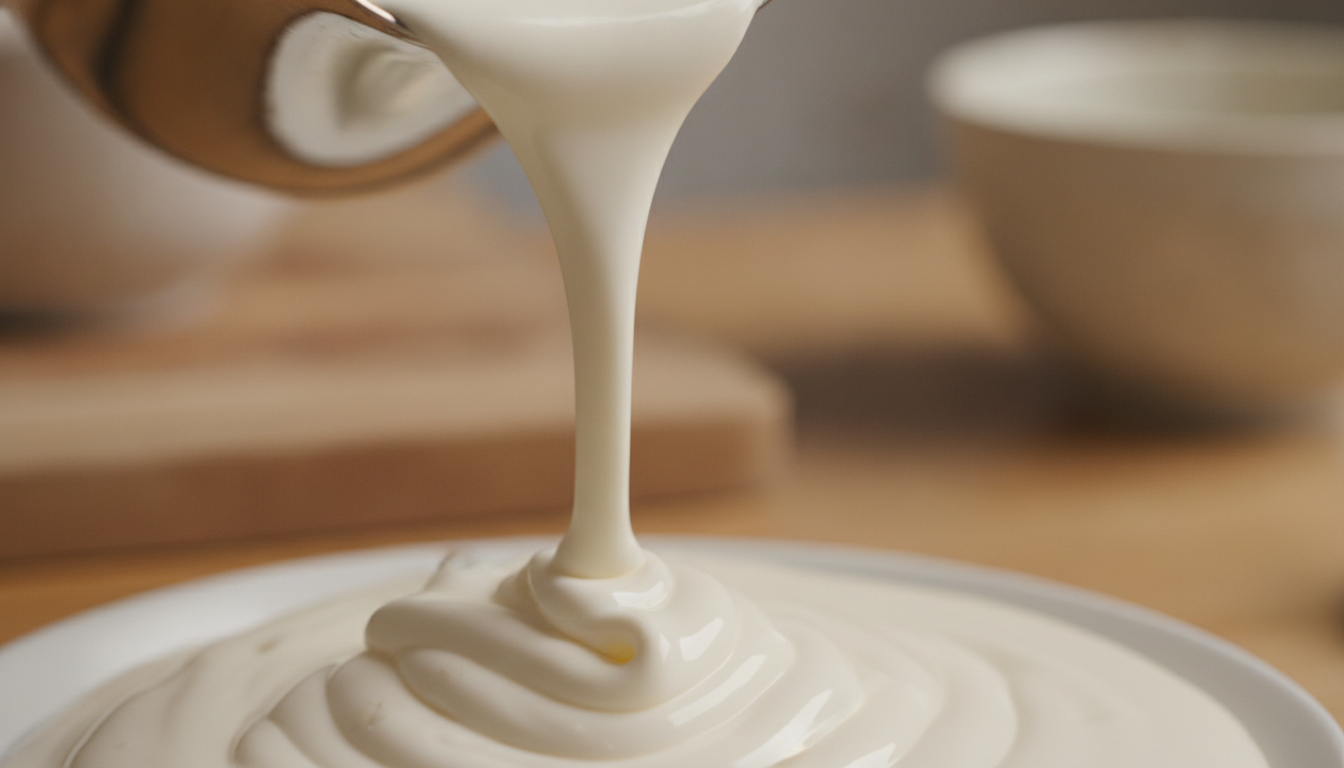
A master barista demonstrates the ideal “ribbon stage” viscosity of heavy whipping cream, showing the smooth, velvety, and cohesive flow necessary for clean layering.
The Critical Role of Butterfat
The ability of the cream to float depends on the density difference between the top and bottom layers. Water has a density of approximately
1.0 g/mL1.0\text{ g/mL}1.0 g/mL
, while milk fat (lipids) has a density of approximately
0.9 g/mL0.9\text{ g/mL}0.9 g/mL
.
Therefore, a higher fat content naturally makes the cream layer more buoyant.
- Standard Whipping Cream (30–35% fat): Will float, but lacks the structural integrity to resist sinking when poured over ice or when the glass is tilted.
- Heavy Whipping Cream (36–40% fat): The gold standard. The high concentration of fat globules allows for the creation of a stable, dense matrix of air, water, and fat that easily supports its own weight on top of the liquid base.
Whipping Physics: The “Ribbon Stage”
The most common mistake in making an Einspanner is over-whipping or under-whipping the cream:
- Under-whipped cream is too fluid. When poured, it breaks the surface tension of the milk layer, mixing prematurely and destroying the beautiful layered aesthetic.
- Over-whipped cream reaches stiff peaks (resembling cake frosting). It sits on top of the drink in an unsightly, solid clump, making it impossible for the consumer to sip the liquid underneath.
The target is the ribbon stage (also known as soft, pouring peaks). At this point, the cream has incorporated just enough air to double in volume (30-40% overrun).
When you lift the whisk, the cream should fall back into the bowl in thick, visible ribbons that hold their shape on the surface for 3 to 5 seconds before slowly melting back into the mix.
Emulsion and Temperature Control
Lipids are highly sensitive to temperature. If the cream is even slightly warm, the fat globules will liquefy and fail to trap the air bubbles necessary for a stable foam.
- Rule: The cream, whipping bowl, and whisk must be kept chilled at 4℃
(39°F
) prior to whipping.
- Stabilization: For commercial environments where speed of service is critical, adding a tiny pinch of xanthan gum or using a premium vanilla bean paste containing natural gums can help stabilize the emulsion, preventing syneresis (the separation of liquid from the gel) over a 24-hour holding period.
6. Step-by-Step Matcha Einspanner Recipe
This formulation has been refined through rigorous testing in commercial café environments to ensure perfect structural separation, exquisite mouthfeel, and excellent speed of service.
Ingredient Ratios Comparison
To cater to both home enthusiasts and commercial operators, the following table compares exact ingredient weights for single-cup home preparation and high-volume commercial batching.
| Home Barista Scale (Single 12oz Cup) | Commercial Café Scale (10-Cup Batch) | Technical Function & Specification |
|---|
| | | 36–38%36\text{–}38\%36–38% milk fat; provides buoyancy and luxury |
Fine White Sugar / Simple Syrup | | | Sweetener; balances matcha’s natural astringency |
| | | Real specks of vanilla; enhances visual value |
| | | High L-theanine, vibrant green, stone-milled |
| | | Dissolves matcha; releases volatile aromatic oils |
| | | Serves as the smooth transitional base layer |
| | | Chills base; supports the density gradient |
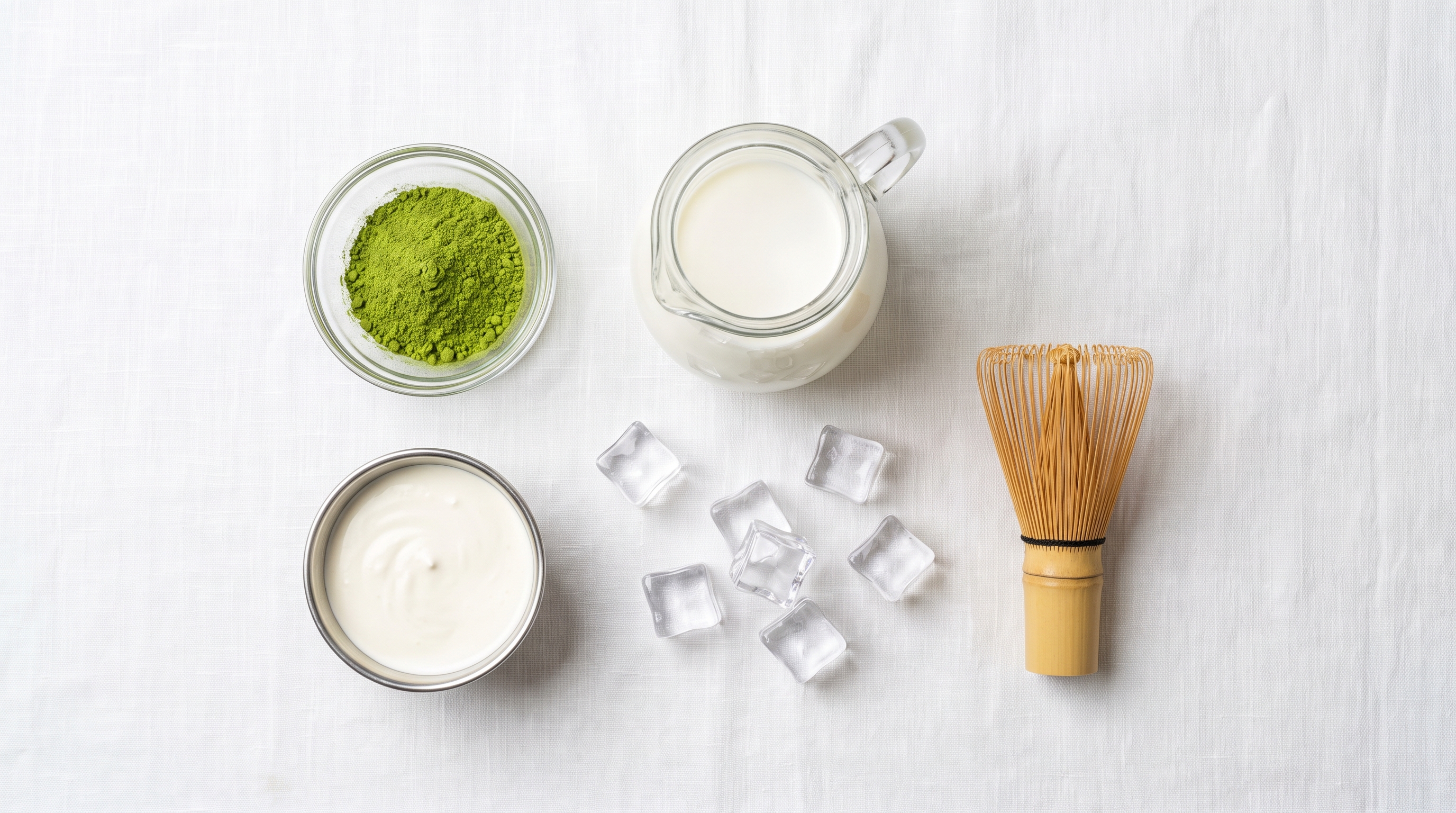
The essential elements of a premium Matcha Einspanner: stone-milled matcha powder, cold heavy cream, fresh milk, pure water, crystal-clear ice, and a traditional bamboo chasen.
Step 1: Whisking the Matcha Base
The quality of your matcha preparation determines the flavor and color of the bottom layer.
- Sift the Matcha: Always sift 4g
of high-quality matcha powder through a fine-mesh sifter directly into a wide-mouthed bowl (chawan). This breaks up static-induced clumps and ensures complete solubility.
- Add Hot Water: Pour 40g
of purified water heated to exactly 75℃
(167°F
) over the powder.
Pro Tip: Never use boiling water (100℃
), as this scalds the delicate green tea leaves, destroying chlorophyll and turning the L-theanine sweetness into bitter, over-extracted catechins.
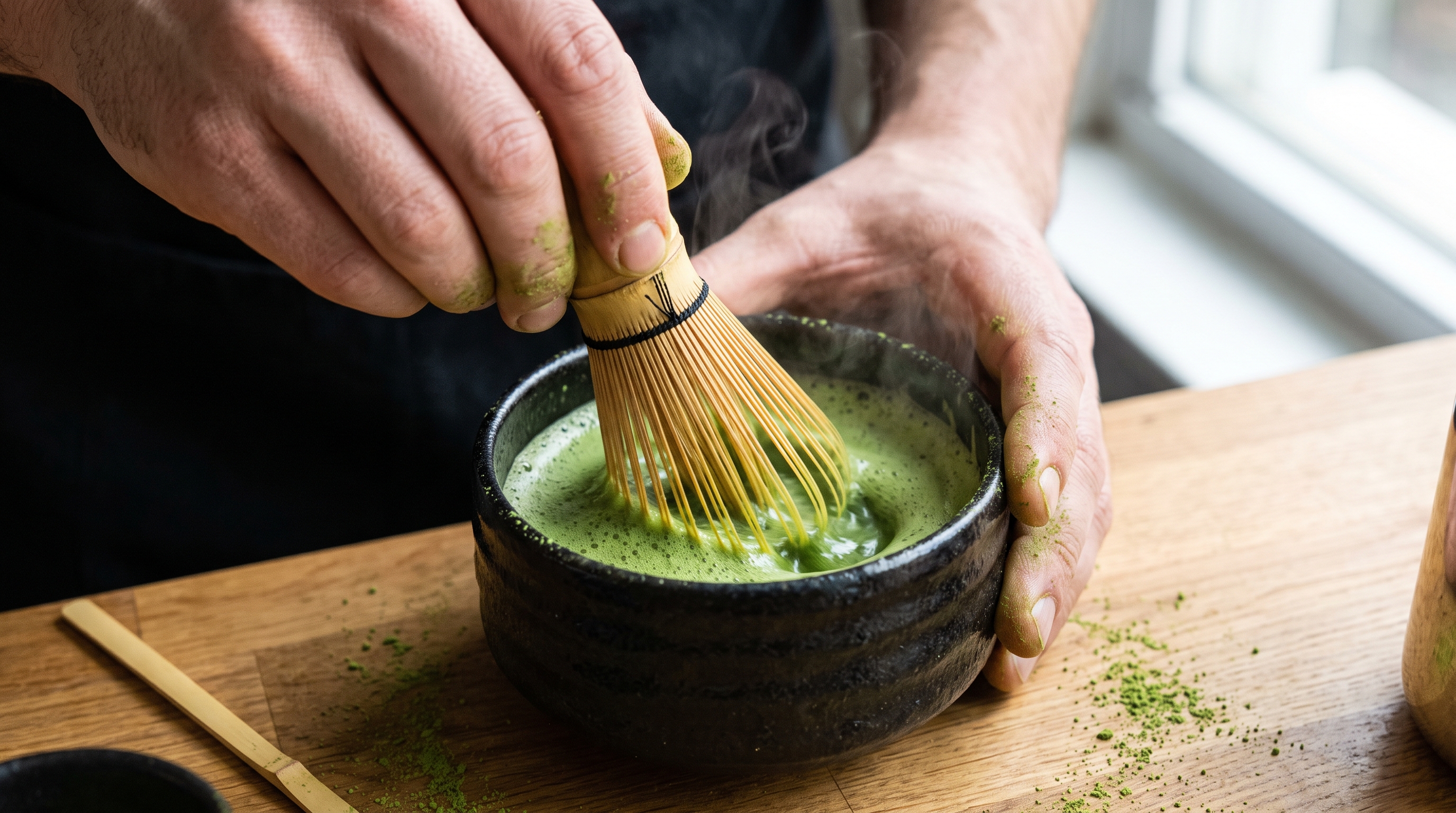
- Whisk to Emulsify: Using a traditional bamboo whisk (chasen), whisk rapidly in a “W” or “M” motion—not a circular motion—for 45 seconds. Keep your wrist loose and apply vertical shear force until a thick, micro-foamed suspension with no visible sediment is achieved.
The traditional whisking of premium green tea using a chasen. This motion ensures complete suspension of the insoluble tea solids, creating a smooth, non-gritty base.
Step 2: Preparing the Einspanner Cream
- Combine Ingredients: In a chilled stainless steel mixing bowl, combine 60g
of heavy whipping cream,8g
of sugar, and 2g
of vanilla bean paste.
- Aerate: Use an electric hand mixer, a milk frother, or a traditional wire whisk. If using an electric frother, submerge the tip just below the surface to fold in air.
- Monitor Viscosity: Whisk for approximately 30 to 60 seconds. Stop immediately when the cream thickens to the point where it leaves a soft, billowy trail when drizzled. It should still be pourable. Cover and place in the refrigerator until ready to assemble.
Step 3: Assembly and Layering Physics
- Prepare the Glass: Take a clear, straight-sided 12-ounce glass. Fill it with 100g
of clean, solid ice cubes.
- Pour the Milk: Pour 120g
of cold whole milk or barista oat milk over the ice.
- Incorporate the Matcha: Slowly pour the warm whisked matcha base directly over the ice cubes. The ice helps arrest the downward momentum of the pour, allowing the matcha to float gracefully on top of the milk, creating a stunning green-and-white marbled look.
- Float the Cream Crown: Take your chilled Einspanner cream. Hold a bar spoon upside down just above the surface of the matcha layer. Slowly pour the cream over the back of the spoon. This disperses the kinetic energy of the pour, allowing the cream to sit gently on top of the liquid in a clean, perfect layer.
- Garnish: Sift a tiny dusting of pure matcha powder over the cream top for an elegant, professional finish.
7. Choosing the Best Matcha Powder for Matcha Einspanner
Because the Matcha Einspanner relies on a strong contrast between sweet cream and earthy tea, selecting the correct grade of matcha is critical. Using the wrong grade can result in a dull, muddy-looking beverage or an intensely bitter taste that overpowers the delicate vanilla cream.
The Science of Matcha Quality
High-quality matcha is produced from green tea leaves shaded under straw or black vinyl nets for 3 to 4 weeks prior to harvest. This shading process reduces sunlight exposure by up to 90%
, forcing the tea plant to produce massive amounts of chlorophyll (resulting in a deep emerald green color) and L-theanine (an amino acid that provides a sweet, savory umami taste).
Lower-quality, unshaded green tea leaves are high in catechins, which produce a bitter, astringent cup of tea with a yellowish-brown hue.
To help café operators make the right choice, let us evaluate the three primary commercial grades of matcha:
| | Premium Latte-Grade Culinary | |
|---|
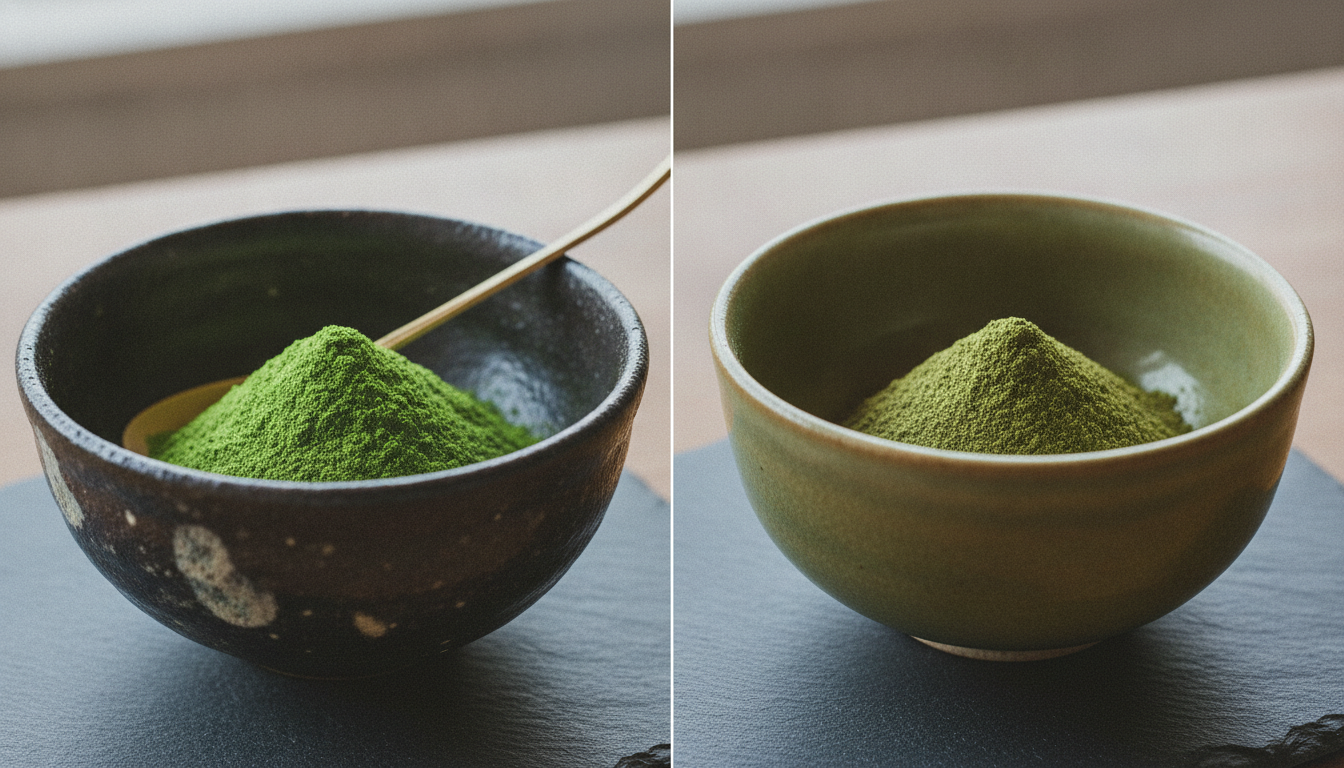
| Extremely High (Vivid Emerald Green) | High (Vibrant Leaf Green) | Moderate (Dull/Olive-Yellow Green) |
| Sweet Umami, Nutty, No Bitterness | Balanced Creamy Umami, Mild Astringency | High Bitterness, Grassy, Astringent |
| Exceptionally Fine, Zero Grittiness | Very Fine, Smooth Suspension | Coarser Grind, Tends to Settle Rapidly |
| | Highly Cost-Effective ($$) | |
| Pure water whisking, high-end tea bars | Specialty Milk Drinks (Einspanners, Lattes) | Baking, confectionery, food processing |
A visual comparison of matcha powder grades: Ceremonial-grade (left) displays an intense emerald green with a sweet aroma, while standard culinary-grade (right) shows a yellower hue and higher astringency.
These grades deliver the brilliant, photo-ready green color and smooth umami flavor profile that consumers expect from a premium Korean-style beverage.
8. Commercial Cost-Benefit Analysis for Cafés
For coffeehouse owners and food service managers, adding a new specialty beverage to the menu requires a careful evaluation of profitability and operational efficiency. The Matcha Einspanner is an incredibly lucrative menu item when executed correctly.
Let us break down the Cost of Goods Sold (COGS) for a standard 12-ounce Matcha Einspanner using premium-grade wholesale ingredients:
- Premium Latte-Grade Matcha (4g
): $0.24
- Heavy Whipping Cream (60g
): $0.30
- Whole Milk / Barista Oat Milk (120g
): $0.18
- Sugar, Vanilla, and Purified Water: $0.08
- Cup, Strawless Lid, and Ice: $0.15
- Total Cost of Goods (COGS): $0.95
In metropolitan areas, a specialty Korean-style Matcha Einspanner easily commands a retail price of 6.5 to
7.50.
This represents an exceptional gross margin of 85% to 87%
, making it one of the most profitable beverages on a modern specialty drink menu.
Sourcing & Supply Chain Efficiency
To maintain these margins, cafés must move away from expensive retail tins and partner directly with an established bulk matcha powder supplier . Sourcing matcha in bulk ensures: - Consistency of Color and Flavor: Customers expect the exact same vibrant green color and smooth taste on every visit.
- Volume Pricing Discounts: Buying 1kg or 5kg vacuum-sealed foil packs dramatically lowers the cost-per-gram compared to small retail tins.
- Freshness Protection: High-quality wholesale suppliers package their matcha in nitrogen-flushed, light-blocking aluminum bags to prevent oxidation during transit and storage.
9. 5 Creative Matcha Einspanner Variations to Elevate Your Menu
To keep your beverage menu exciting and encourage repeat business, consider offering these seasonal and creative twists on the classic Matcha Einspanner recipe.
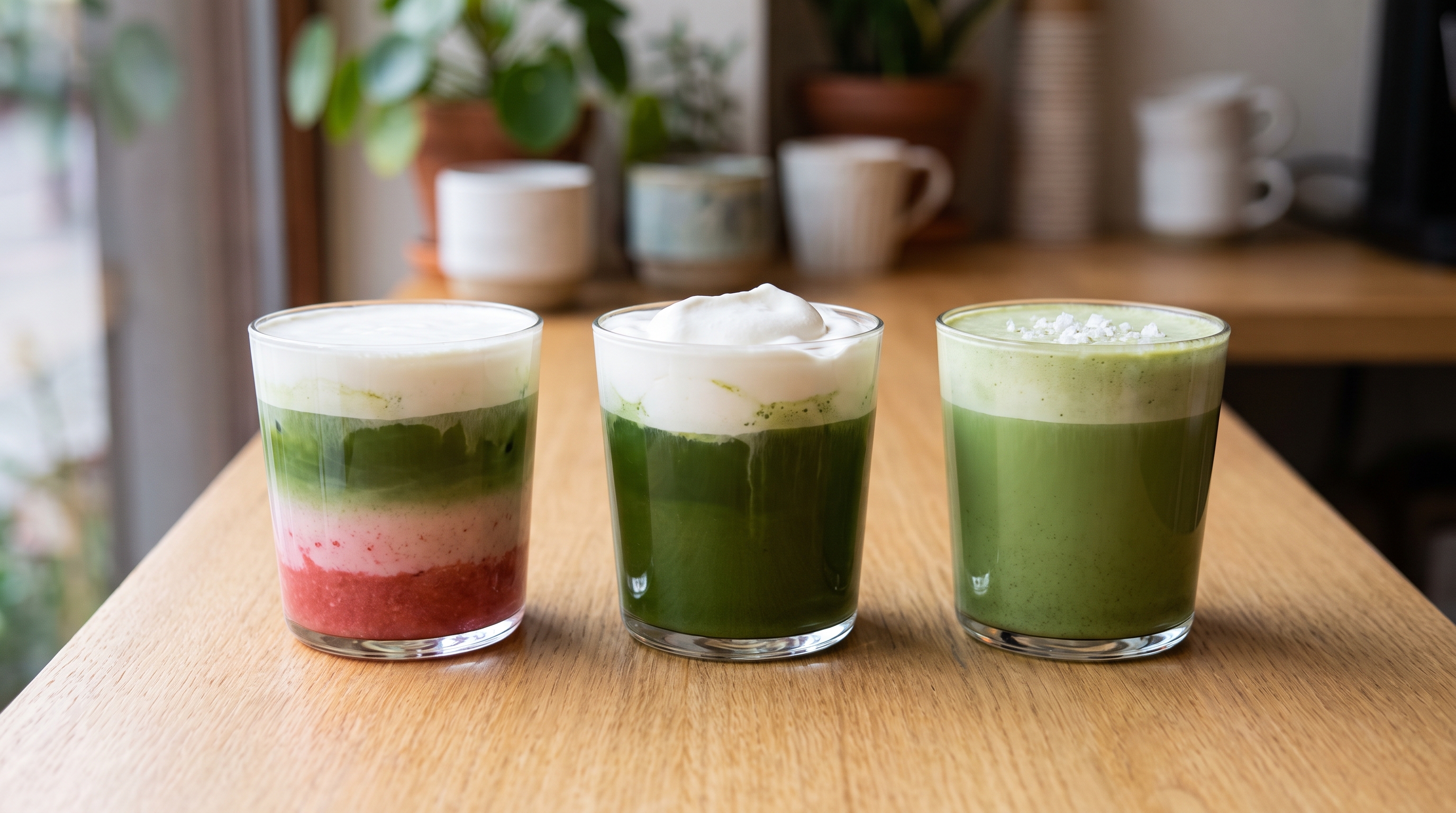
A menu showcase of creative Matcha Einspanner variations, featuring a Strawberry Matcha Einspanner (left), a classic clean-layered version (center), and a fully homogenized premium iced matcha (right).
1. Strawberry Matcha Einspanner
A beautiful pink-and-green layered sensation that is a massive bestseller in spring.
- How to make it: Add 30g
of house-made fresh strawberry purée to the very bottom of the glass before adding ice. Pour the cold milk over the purée, layer the whisked matcha, and top with the standard vanilla Einspanner cream. The result is a gorgeous four-layered drink with a bright, fruity acidity that pairs perfectly with the matcha.
2. Sea Salt Cream Matcha Einspanner
An incredibly popular variation that balances sweet and savory flavors.
3. Roasted Pistachio Matcha Einspanner
An earthy, nutty variation that is perfect for autumn and winter menus.
4. Vanilla Bean Pod Matcha Einspanner
For high-end tea lounges wanting to showcase absolute ingredient transparency.
- How to make it: Infuse your heavy cream batch with a scraped whole Madagascar vanilla bean pod overnight. The tiny, visible black vanilla specks suspended throughout the cream layer provide an elegant, premium look that justifies a premium price point.
5. Barista Oat Milk & Coconut Cream Einspanner (Plant-Based)
A fully vegan version of the drink that does not compromise on texture.
- How to make it: Replace the dairy milk layer with a high-performance, barista-grade oat milk. For the cream crown, substitute heavy whipping cream with chilled, full-fat coconut cream whipped with a touch of organic agave syrup. This offers lactose-intolerant and vegan customers a delicious way to enjoy the Einspanner experience.
10. Pro Tips for Flawless Café Presentation
In the competitive specialty beverage market, execution is everything. Use these professional barista techniques to ensure your Matcha Einspanners look as good as they taste.
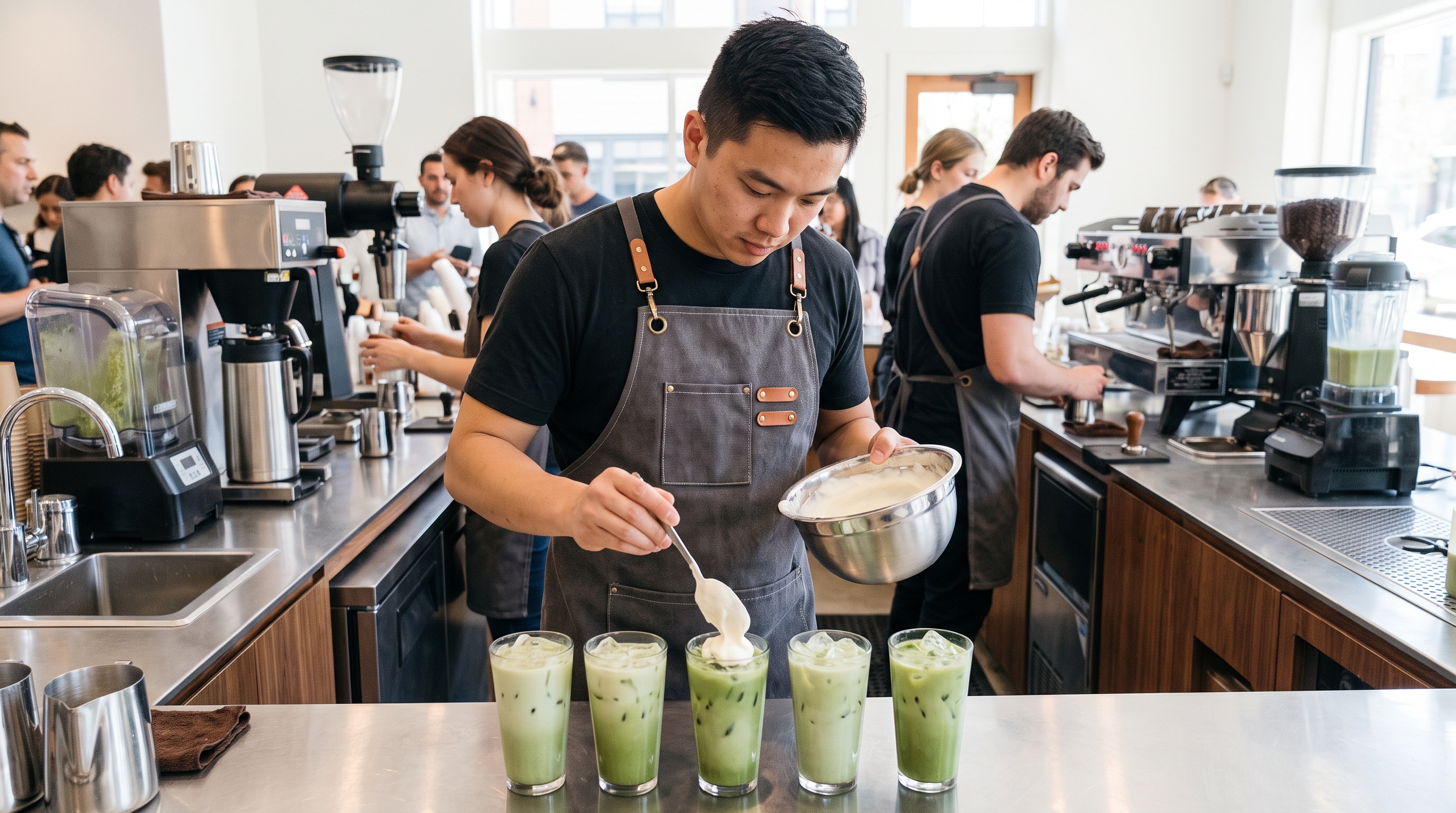
A professional barista carefully layers a Matcha Einspanner at the bar, demonstrating the precise control and attention to detail required for specialty beverage service.
- The Temperature Barrier: Always ensure your milk and cream are thoroughly chilled before assembly. If the milk is room temperature, the cold cream layer will sink rapidly, losing its crisp, clean separation.
- Sift Every Time: Never skip sifting your matcha. Even high-end matcha develops tiny clumps due to static electricity. Un-sifted matcha leaves bitter, dry pockets of powder in the base, ruining the drink’s smooth mouthfeel.
- Optimize Speed of Service: In a busy café, whisking matcha and whipping cream to order can slow down service.
Solution: Batch-prepare your Einspanner cream in the morning and store it in a professional whipped cream dispenser (Siphon) charged with N2O
(using a low-pressure setting to keep it pourable), or store it in a chilled squeeze bottle. For the matcha base, mix a concentrated matcha-and-water batch every 4 hours, keeping it in a dark, vacuum-insulated carafe to prevent light and temperature degradation.
- Glassware Selection: Serve this drink in a clear, straight-walled, stemless glass (8oz to 12oz). Textured or ribbed glass looks beautiful, but straight walls make the sharp, clean lines between the white milk, green matcha, and ivory cream pop.
11. Frequently Asked Questions
Can I make a hot version of the Matcha Einspanner?
Yes, you can. To make a hot Matcha Einspanner, whisk your premium matcha with hot water and combine it with hot steamed milk (without creating too much foam). Gently spoon the cold, semi-whipped cream over the top. The contrast of the hot green tea base flowing through the thick, cold sweet cream is an incredible winter time treat.
Why does my cream layer sink directly to the bottom?
This usually happens for two reasons: either your cream is under-whipped (too liquid) and breaks through the liquid base, or the milk base is too warm. Ensure your heavy cream has at least
35–38%35\text{–}38\%35–38%
fat content, is whipped to a clear ribbon stage, and is poured slowly over ice or the back of a spoon onto a thoroughly chilled drink base.
What is the best way to drink a Matcha Einspanner?
Do not stir the drink and do not use a straw! Sip it directly from the rim of the glass. Tilt the glass slowly so that the cold matcha and milk base flows underneath the rich, sweet cream layer, allowing both textures and flavors to combine in your mouth on every sip.
How long does the whipped Einspanner cream stay stable?
When kept in a sealed container in a refrigerator at 4℃
(39°F
), a standard batch of whipped heavy cream will remain stable for up to 24 hours. If you notice slight separation, simply give it a quick, gentle whisk for 10 seconds before serving to re-emulsify the mixture.
Is ceremonial-grade matcha really necessary for this recipe?
While you can use culinary matcha, we highly recommend using a high-quality premium culinary matcha or a ceremonial grade matcha . These premium grades have a naturally sweeter, smoother umami flavor and a vivid emerald green color that balances the rich cream, without the bitter and grassy notes found in standard culinary grades. The Matcha Einspanner is more than just a passing social media trend; it represents a thoughtful evolution in beverage design. By combining the rich heritage of Viennese coffeehouses with the vibrant, umami-rich world of Japanese stone-milled green tea, it offers a sophisticated, multi-layered sensory experience that stands out on any menu.
For home baristas, mastering this drink is a rewarding lesson in texture and presentation. For café owners and beverage brands, it is a high-margin, premium offering that attracts discerning customers and elevates your brand’s craft coffee and tea credentials.
To ensure your drinks have the stunning, vivid green color and exceptional flavor profile that makes the Matcha Einspanner famous, partnering with a reliable, world-class supplier is essential.
Whether you are launching a new beverage line, upgrading your café menu, or developing your own brand, utilizing premium private label matcha solutions and custom OEM matcha packaging allows you to scale your business with absolute confidence and consistent quality. Contact our wholesale team today to source the finest shade-grown, stone-milled Japanese green tea and bring the authentic taste of Korean café culture to your customers.