
The global culinary landscape has witnessed a paradigm shift in consumer taste preferences. Modern consumers no longer seek simple, one-dimensional sweetness in their baked goods; instead, they demand complex, botanical, and balanced flavor profiles. Among these emerging flavors, matcha powder—a finely ground green tea powder derived from shade-grown Camellia sinensis leaves—has transitioned from a traditional Japanese tea ceremony staple into an indispensable ingredient in Western and global pastry applications.
For commercial bakeries, pastry chefs, and industrial food manufacturers, incorporating matcha is not merely about jumping on a culinary trend. It represents a strategic opportunity to capture high-margin market segments, satisfy the clean-label movement, and appeal to wellness-oriented consumers.
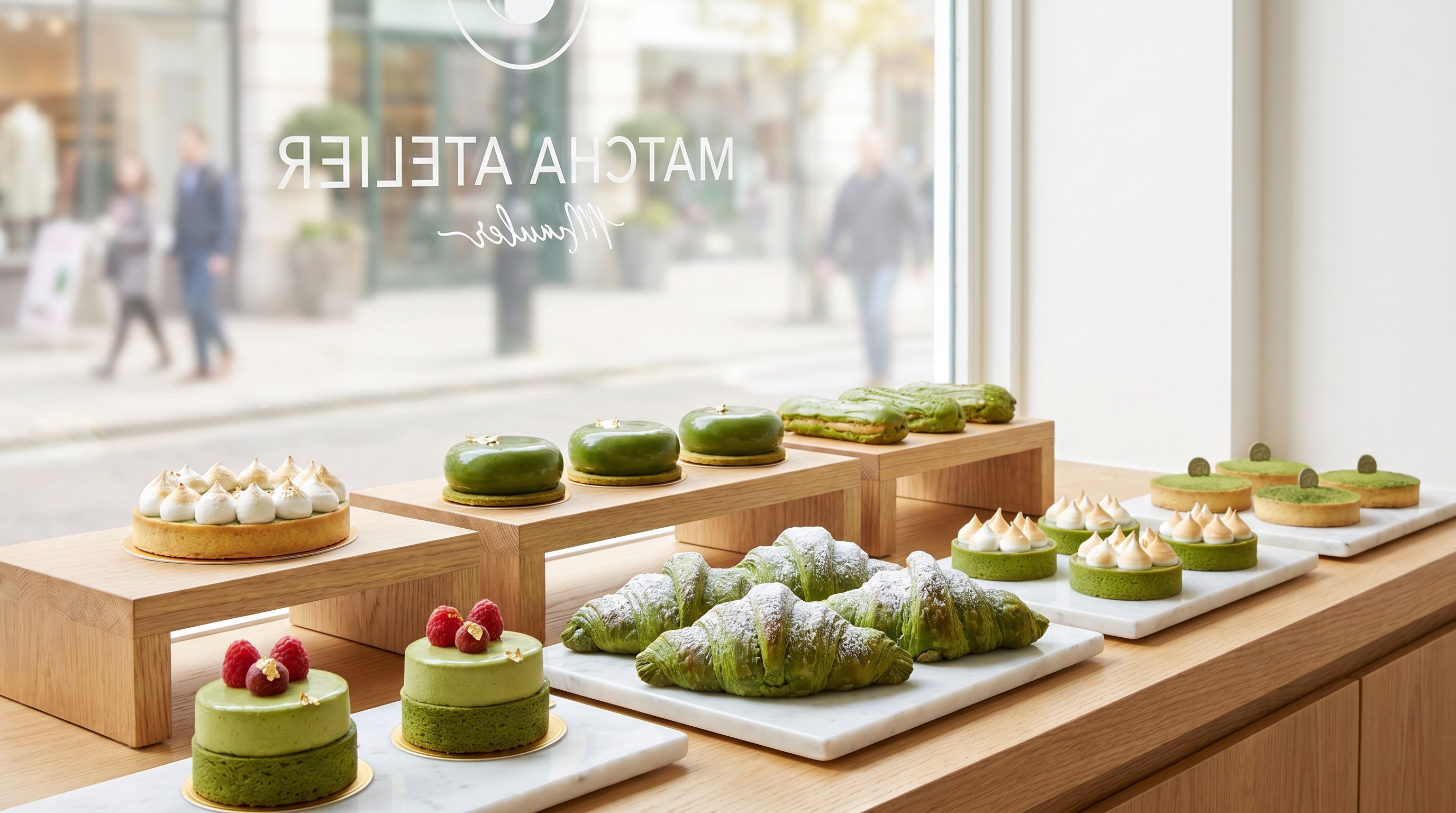
From a marketing and sensory perspective, matcha offers a unique triad of value propositions:
- Vibrant Visual Appeal: The natural, vivid green hue of premium matcha acts as an organic colorant, eliminating the need for synthetic dyes (such as Yellow 5 or Blue 1) that modern consumers actively avoid.
- Complex Taste Dynamics: Matcha introduces a sophisticated flavor profile characterized by a delicate balance of sweet, savory (umami), and pleasantly bitter notes. This complexity cuts through the heavy sweetness of fat and sugar typical in pastries, creating a more mature, satisfying dessert.
- Nutritional Halo Effect: Rich in antioxidants—specifically epigallocatechin gallate (EGCG)—L-theanine, and natural vitamins, matcha carries an inherent “superfood” status. Highlighting matcha on product packaging immediately elevates a standard pastry to a premium, guilt-free indulgence.
To capitalize on these advantages, purchasing departments and product developers must partner with a reliable wholesale matcha powder supplier who can provide consistent, high-yield ingredients capable of surviving industrial food processing conditions. Whether formulating for a boutique pastry shop or a high-throughput commercial bakery line, understanding the physical and chemical characteristics of matcha is the first step toward product excellence.
The Science of Baking Matcha: What Key Quality Markers Define a Great Culinary Matcha?
Baking is a science of precise chemical interactions, and introducing matcha powder into a formulation requires an understanding of its native chemical composition. Matcha is not merely dried tea leaves ground into dust; it is a highly specialized agricultural product whose chemical profile is carefully managed through cultivation and manufacturing protocols.
Understanding these markers is essential when analyzing bulk matcha powder products for industrial applications.
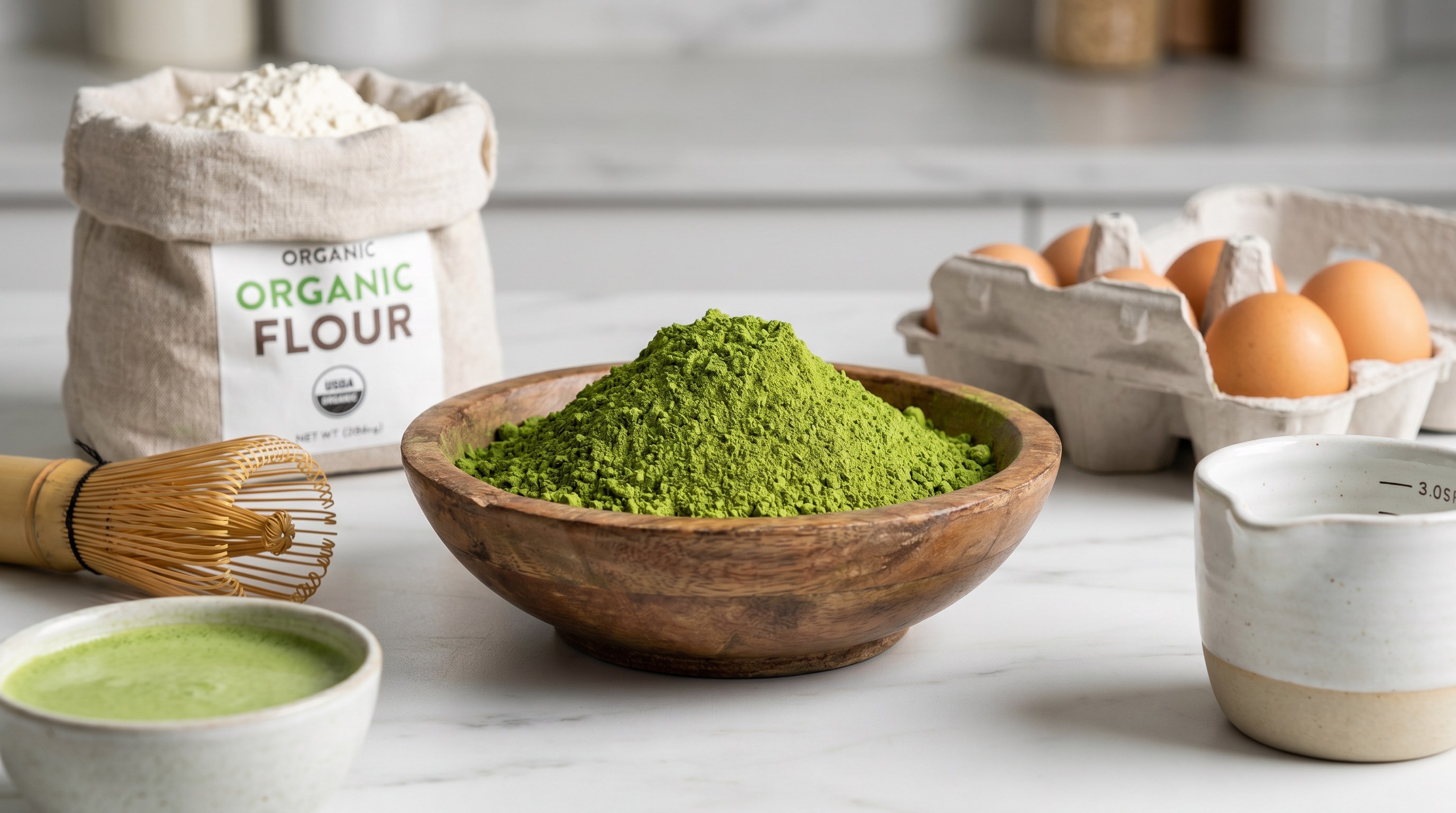
The Shading Process and Amino Acid Accumulation
Approximately 20 to 30 days before harvest, tea fields destined for matcha production are covered with shade cloths (Tana shading system) to block up to 90% of direct sunlight. This deliberate light deprivation drastically alters the plant’s metabolism:
- L-Theanine Preservation: In direct sunlight, the amino acid L-theanine (responsible for matcha’s sweet, savory, and umami characteristics) naturally converts into catechins (which yield a more astringent, bitter taste). Shading halts this conversion, locking in high levels of L-theanine.
- Chlorophyll Boosting: To maximize its photosynthetic capacity under low-light conditions, the plant dramatically increases its production of chlorophyll a and b
, giving the leaves their characteristic deep, emerald-green color.
Chlorophyll Concentration
The absolute chlorophyll content in a batch of matcha serves as a direct indicator of its visual performance in bakery applications. High-quality matcha features a bright green color because of its high chlorophyll ratio. Lower-grade powders, harvested later in the season or from unshaded crops, contain higher levels of carotenoids and pheophorbides, leading to a dull, yellow, or khaki hue.
Milling Technology and Particle Size Distribution
The physical performance of matcha in doughs, batters, and creams is heavily dictated by its particle size. Authentic matcha is ground using slow-turning granite millstones or advanced air-jet milling machines.
- Granite Stone Milling: This traditional method produces an incredibly fine, spherical particle size averaging 5 to 10 microns. The low-heat generation of stone milling preserves the delicate volatile oils and prevents premature oxidation.
- Industrial Jet Milling: For high-capacity commercial grades, jet milling is utilized to achieve consistent micro-fine particle distribution.
If the particle size exceeds 20 microns, the powder will feel gritty on the palate, and its dispersion in liquid or fat matrices will be uneven, resulting in speckled green spots and localized bitter pockets in the final baked goods.
Rate of Oxidation
Matcha is highly sensitive to oxygen, light, and heat. Once ground, the exposed surface area of the micro-fine particles makes it highly susceptible to oxidation. Oxidation degrades both chlorophyll (turning it brown) and volatile aromatic compounds (reducing the fresh, grassy aroma to a stale, hay-like scent). Commercial manufacturers must ensure that their matcha is milled to order and packed under vacuum or nitrogen-flushed conditions.
Color Retention and Heat Stability: How to Prevent Your Matcha Baked Goods from Turning Brown
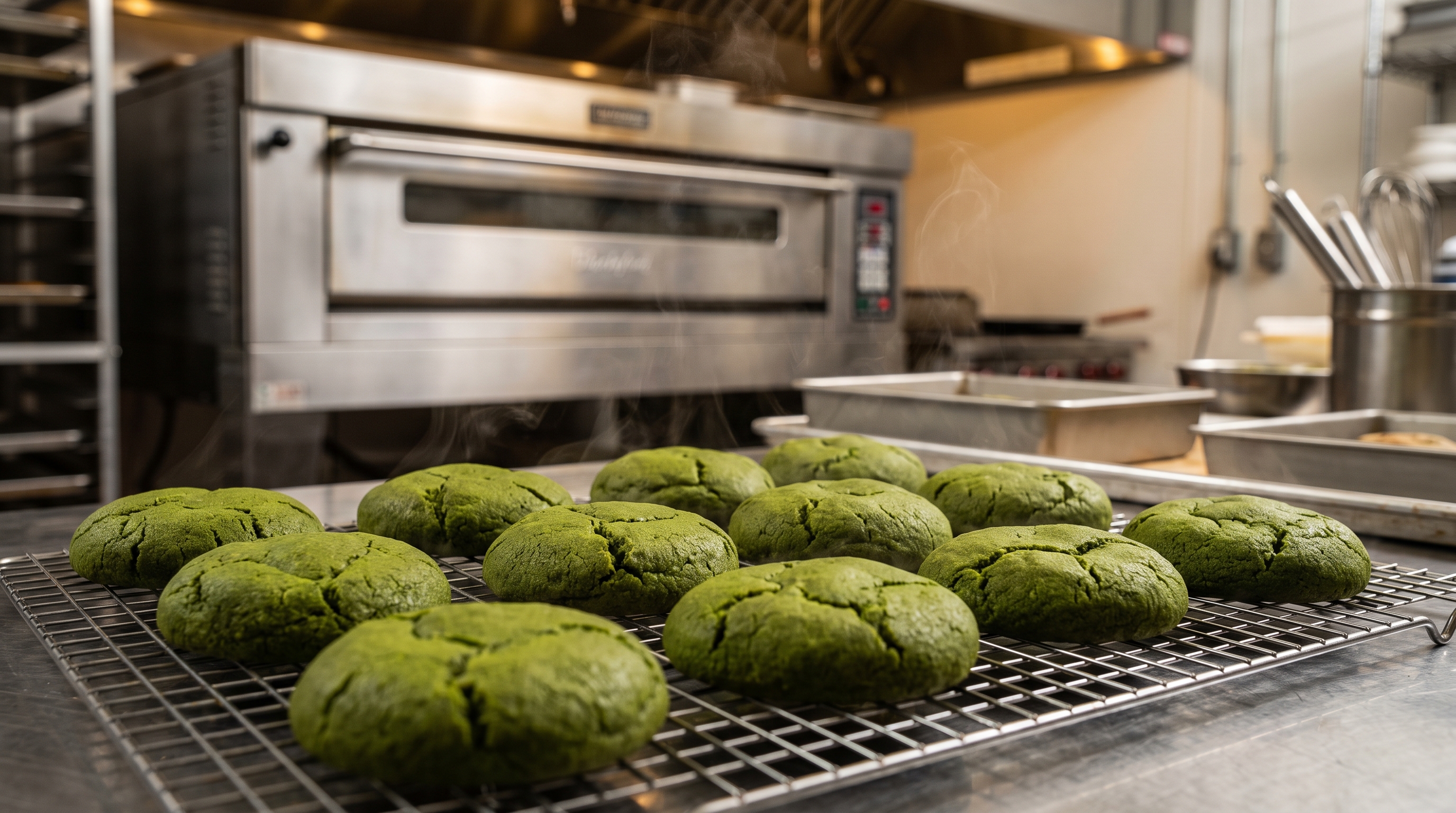
The single greatest challenge when baking with matcha is preserving its vibrant green color. During baking, the high temperatures of the oven can cause the chlorophyll within the matcha to degrade, leaving cakes, cookies, and pastries with an unappealing, brownish-yellow appearance.
The Chemistry of Chlorophyll Degradation
At its molecular core, chlorophyll contains a magnesium ion (Mg2+)
bound within a porphyrin ring. When exposed to heat and acid, this magnesium ion is easily displaced by hydrogen ions (H+).
This chemical transformation converts chlorophyll into pheophytin:
Chlorophyll(Vibrant Green)+Heat/Acid–Pheophytin(Olive Brown)
To prevent this reaction, food scientists and pastry chefs must manipulate several key environmental factors:
Controlling Oven Temperature and Baking Profiles
- Low and Slow: High baking temperatures accelerate magnesium displacement. Baking matcha-based items at lower temperatures for slightly longer periods preserves the green hue. For example, baking cookies at 140°C to 150°C (284°F to 302°F) instead of the standard 180°C (356°F) reduces surface browning.
- Steam and Convection: Introducing steam during the initial stages of baking can help set the protein structure on the surface of cakes and breads without reaching the critical thermal degradation threshold of chlorophyll as rapidly.
Managing pH Environments
The pH of your batter or dough is a primary driver of color retention.
- Acidic pH (< 6.0): Heavily acidic environments (caused by ingredients like buttermilk, natural cocoa powder, lemon juice, or cream of tartar) contain high concentrations of hydrogen ions, which rapidly displace magnesium and turn the matcha brown.
- Neutral to Alkaline pH (7.0 – 7.5): Maintaining a neutral or slightly alkaline pH preserves the green color. Small, precise additions of sodium bicarbonate (baking soda) can neutralize acidic ingredients. However, caution must be exercised, as an overly alkaline pH (> 8.0) can cause structural collapse in cakes and introduce an unpleasant soapy flavor.
Natural Color Protectors
To shield chlorophyll from oxidation and thermal stress, commercial bakeries utilize natural protective matrices:
- L-Ascorbic Acid (Vitamin C): Acting as a highly effective oxygen scavenger, the addition of 0.1% to 0.3% ascorbic acid by flour weight helps prevent oxidation during mixing and baking, maintaining a bright green shade.
- Natural Metal Chelators: Ingredients rich in copper or zinc can theoretically stabilize chlorophyll by replacing the magnesium ion with a more stable metal ion (forming copper chlorophyllin, which is highly heat-resistant). However, for clean-label compliance, focusing on antioxidant protection via tocopherols (Vitamin E) or ascorbic acid is highly preferred.
Achieving the Perfect Flavor Profile: Balancing Bitterness and Sweetness in Commercial Desserts
A masterfully executed matcha dessert should not taste like sugar alone, nor should it taste like grass. It must deliver an initial wave of sweet, creamy, and umami notes, followed by a clean, lingering botanical bitterness that cleanses the palate. Achieving this balance requires a deep understanding of the sensory compounds inherent to matcha.
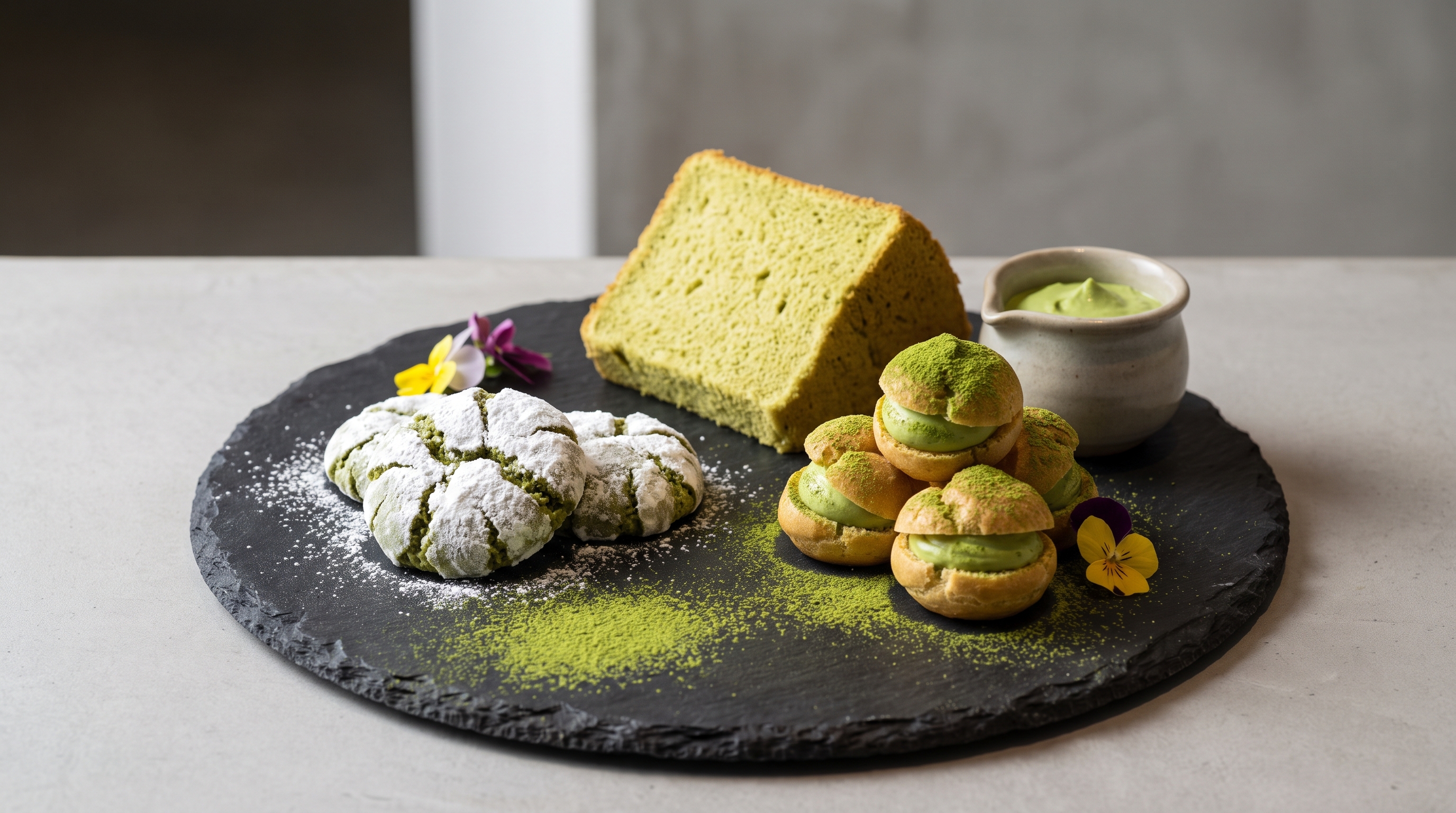
Understanding Bitter and Umami Compounds
The flavor profile of matcha is governed by three primary groups of compounds:
- Catechins (specifically EGCG): These polyphenols are highly bitter and astringent. They provide the structural “backbone” of matcha’s flavor.
- L-Theanine: This amino acid yields a sweet, savory, and rich umami flavor that rounds out the astringency of the catechins.
- Caffeine: Adds a sharp, clean bitterness that works synergistically with the catechins.
In culinary applications, especially when using a budget-friendly culinary grade matcha powder , the catechin content is typically higher, resulting in a more robust bitterness. If not balanced correctly, this can overpower the delicate notes of a dessert.
Strategies for Balancing Bitterness and Sweetness
- Fat Emulsification: Lipids (such as cocoa butter, dairy butter, cream cheese, and heavy cream) are highly effective at masking excessive bitterness. Fat molecules coat the taste buds, slowing down the binding of bitter catechins to sensory receptors. This is why matcha pairs exceptionally well with white chocolate, buttercreams, and cheesecakes.
- Synergistic Sweeteners: High-potency sucrose provides a direct counterweight to bitterness. However, incorporating alternative sugars like trehalose or maltodextrin can enhance the mouthfeel and body of the dessert without adding cloying sweetness. For sugar-reduced or keto formulations, natural sugar alcohols (erythritol, xylitol) must be carefully dosed, as they possess a cooling effect that can clash with matcha’s warm, earthy profile.
- Salt as a Bitter Blocker: A minute addition of sodium chloride (sea salt)—around 0.1% to 0.2% of total formulation weight—selectively blocks bitter taste receptors on the human tongue while simultaneously magnifying the subtle umami notes of L-theanine.
Application Guide: Selecting Matcha for Cookies, Cakes, Whipped Cream, and Pastry Fillings
Different bakery items undergo vastly different thermodynamic, physical, and structural transformations. Consequently, a matcha powder that performs flawlessly in a cold whipped cream filling may fail completely when baked inside a high-temperature cookie.
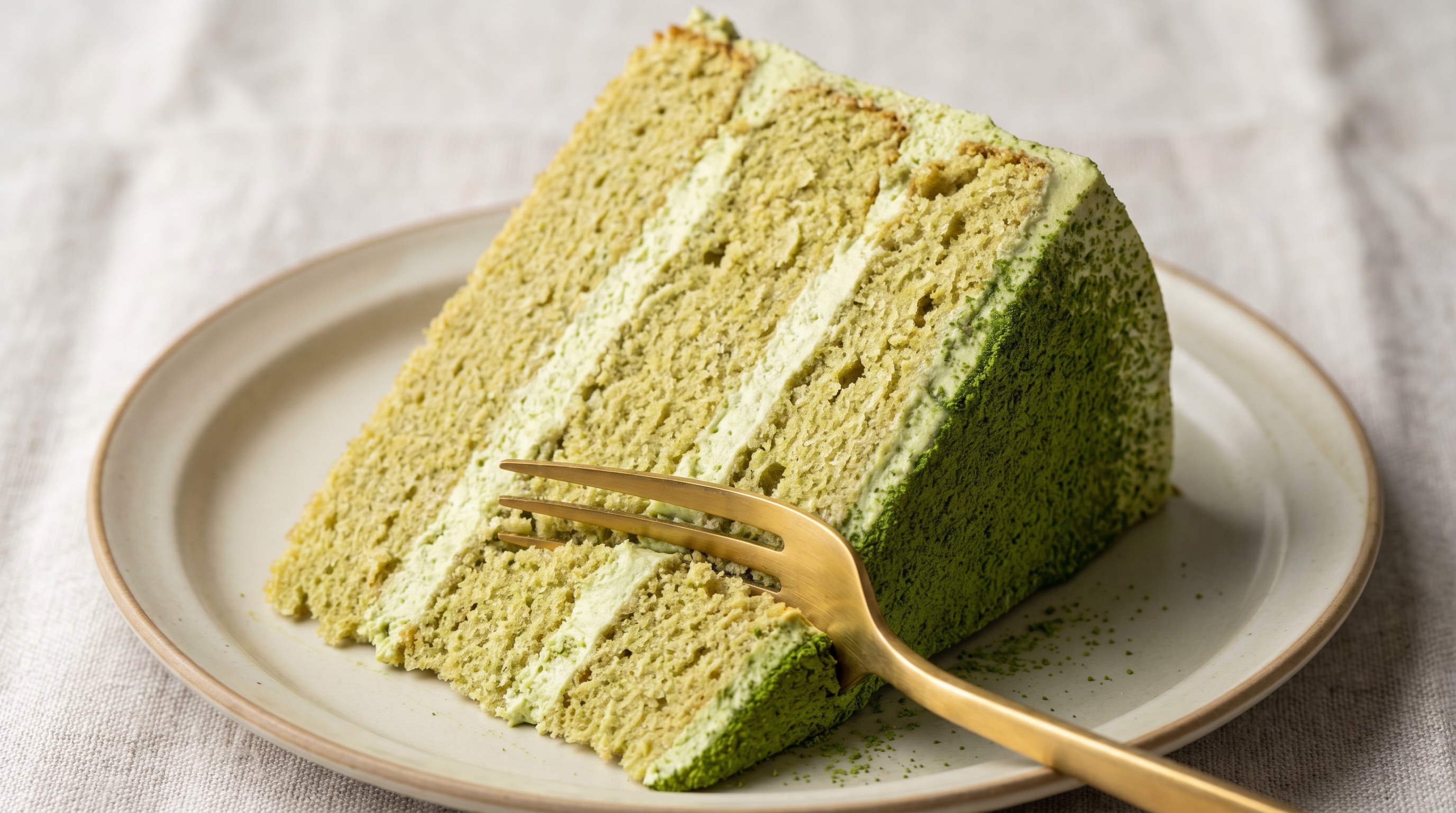
1. Baked Cakes (Chiffon, Sponge, Pound Cakes)
- Structural Demand: High moisture, moderate to high heat exposure, and delicate crumb structures.
- Matcha Selection: Needs a fine particle size (< 10 microns) to ensure even dispersion throughout the cake batter without forming dry flour pockets. Because cakes are baked throughout their volume, the interior remains shielded from direct air and excessive heat, allowing for the use of premium-to-mid-grade culinary matcha.
- Sensory Target: A soft pastel green hue with a gentle, non-astringent green tea aroma that complements vanilla and egg notes.
2. Cookies (Shortbread, Crinkle, Tuiles)
- Structural Demand: Low moisture, high surface heat, and direct exposure to oven air.
- Matcha Selection: Cookies have a high surface-area-to-volume ratio, making them highly susceptible to browning and oxidation. Therefore, a robust, highly pigmented culinary grade matcha is required. The bold flavor of culinary matcha survives the caramelization and Maillard browning of the cookie’s exterior.
- Sensory Target: A distinct, rich green color with a pronounced, punchy green tea flavor that can cut through heavy butter and sugar contents.
3. Whipped Creams, Mousses, and Ganaches (Cold Applications)
- Structural Demand: High fat, high moisture, zero heat exposure.
- Matcha Selection: Because there is no thermal degradation, the raw color and flavor of the matcha are showcased completely. Using a premium culinary or high-end barista-grade matcha is highly recommended. The powder must be completely free of clumps to prevent unsightly green specks in the smooth cream.
- Sensory Target: An incredibly vibrant emerald green, with a sweet, aromatic, and umami-rich profile devoid of harsh bitterness.
4. Pastry Fillings (Custards, Curds, Baked Frangipane)
- Structural Demand: Medium heat (stovetop cooking or moderate baking), high starch or egg yolk matrix.
- Matcha Selection: Egg yolks have a strong yellow pigment (lutein) that can blend with matcha to create a yellowish-green or chartreuse color. To counteract this, a highly concentrated culinary matcha with intense green pigment is required.
- Sensory Target: A balanced green tea flavor that cuts through the sulfurous and rich notes of egg-based custards.
Culinary Grade vs. Premium Grade: Which Matcha is Best for Your Bakery Business?
Navigating the grades of matcha can be confusing for purchasing managers. While retail packaging often uses ambiguous marketing terms, commercial sourcing relies on clear definitions of harvest times, leaf positioning, and manufacturing methods.
Understanding these distinctions helps when selecting certified organic matcha powder for high-end product lines.
Harvest Timing and Leaf Selection
- Premium Grade: Sourced from the first harvest of the year (Spring). The youngest, tender leaves at the top of the tea plant (tencha) are selected. These leaves contain the absolute highest concentrations of L-theanine and chlorophyll.
- Culinary Grade: Sourced from the second or third harvests (Summer and Autumn). These leaves have been exposed to more sunlight and are positioned lower on the stem. They contain higher levels of catechins (resulting in higher bitterness) and slightly lower levels of chlorophyll (yielding a yellow-green hue).
Physical and Chemical Comparison Table
To assist your R&D and purchasing departments in choosing the correct grade, the table below provides a side-by-side comparison of Culinary Grade versus Premium Grade Matcha.
Evaluation Criteria | Culinary Grade Matcha | Premium Grade Matcha |
|---|---|---|
Color Profile | Yellowish-green to medium green | Vivid, deep emerald green |
Aroma | Earthy, robust, slightly hay-like or nutty | Freshly cut grass, sweet, marine, umami |
Particle Size | 10 to 15 microns | 5 to 10 microns (ultra-fine) |
Taste Profile | Strong, bold bitterness, high astringency | Sweet, creamy, rich umami, very low bitterness |
Heat Stability | High (bold flavors survive heat processing) | Moderate to Low (delicate notes volatilize easily) |
Primary Sourcing | Second/Third Harvest (Summer/Autumn) | First Harvest (Spring) |
Cost Matrix | Cost-effective for bulk food manufacturing | Premium pricing suited for high-end boutique items |
Best Applications | Cookies, breads, doughs, baked crusts, thick custards | Whipped creams, high-end ganache, glazes, raw fillings |
Cost-Benefit Analysis for Commercial Operations
While it is tempting to purchase Premium Grade Matcha for all applications to achieve the greenest color, it is financially inefficient. The subtle, sweet, and complex umami notes of premium spring-harvest matcha are highly volatile and will be lost under the high heat of an oven or when mixed with heavy fats.
Conversely, the bold bitterness and lower price point of culinary matcha make it the ideal workhorse for baked doughs and batters, where its strong flavor profile successfully cuts through other heavy ingredients.
Dosage Recommendations: Standard Formulations for Major Bakery Products
A precise dosage of matcha is the difference between an exquisite, gourmet dessert and an unpalatably bitter, structurally compromised pastry. In professional baking, formulations are always calculated using Baker’s Percentages (where the total weight of flour is defined as 100%).
The Functional Impact of Matcha on Dough Structure
Matcha powder is highly hygroscopic (moisture-absorbing). It contains micro-fine fibers and cellulose that absorb water at a much higher rate than standard wheat flour. If you simply add matcha to an existing recipe without adjusting the liquid ratios, you will end up with a dry, dense crumb structure.
As a general rule:
For every 10 grams of matcha powder added to a formulation, you must increase the liquid (milk, water, or eggs) by 10 to 15 grams to maintain hydration equilibrium.
Recommended Dosage Guidelines (Percentage by Weight)
The following table provides standard commercial dosage guidelines for various bakery applications. These percentages are based on total formulation weight (or flour weight where applicable) to achieve a balanced flavor and professional-grade color.
Bakery Application | Recommended Dosage (% by Weight) | Suggested Matcha Grade | Hydration / Formula Adjustment |
|---|---|---|---|
Sponges & Chiffon Cakes | 1.5% – 2.5% | Premium Culinary | Increase liquid by 1.2x of matcha weight; sift with flour three times. |
Butter & Shortbread Cookies | 2.5% – 4.0% | Culinary Grade | Reduce flour by equal weight of matcha; bake at lower surface temp. |
Croissant & Danish Dough | 1.0% – 2.0% | Premium Culinary | Hydrate matcha in the water/milk phase before mixing the dough. |
Whipped Cream & Frostings | 1.0% – 1.8% | Premium Grade | Sift directly into cream; whip slowly to prevent clumping. |
Custards, Curds & Fillings | 2.0% – 3.0% | Culinary Grade | Whisk with sugar before adding hot milk/eggs to prevent clumping. |
Ice Cream & Gelato Bases | 1.5% – 2.5% | Premium Culinary | High-shear blend into warm base, then age base for 12 hours. |
Professional Dispersion and Mixing Protocols
To prevent clumping and ensure a homogenous color distribution throughout your product, never add dry matcha powder directly to wet doughs or creams. Use one of the following methods:
- The Dry Sift Method: For cakes and cookies, thoroughly whisk the matcha powder together with your dry ingredients (flour, starch, baking powder) and pass the entire mixture through a fine-mesh sieve at least twice.
- The Slurry Method: For whipped creams, fillings, and batters, create a smooth paste by whisking the matcha with a small portion of warm water, milk, or melted butter (approx. 40°C to 50°C / 104°F to 122°F) before integrating it into the main formulation.
Chemical Synergy: How Sugar, Dairy Fats, and Butter Interact with Matcha Flavor and Color
When compounding a formula, a pastry chef must think like a chemist. The physical-chemical interactions between matcha’s polyphenols and the macro-nutrients (lipids, proteins, carbohydrates) of your pastry matrix will dictate the final product’s sensory and structural success.
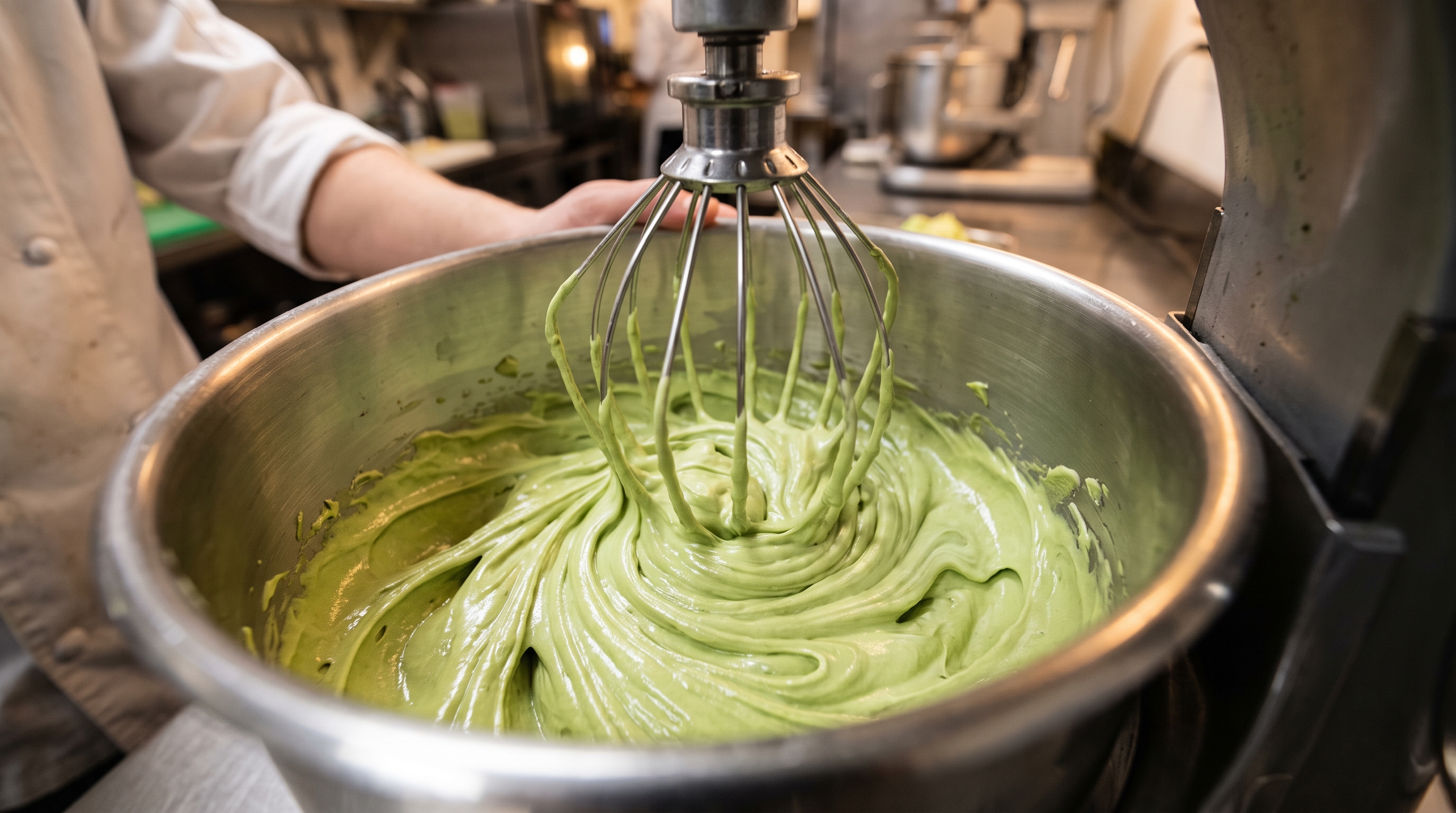
Dairy Proteins and Polyphenol Binding
Milk proteins—specifically casein—possess a unique molecular structure that allows them to readily bind with polyphenolic compounds like catechins.
- Astringency Reduction: When matcha is added to a milk-based matrix (such as a custard, pastry cream, or milk-chocolate ganache), the casein proteins hydrophobic-bond with the EGCG molecules. This binding effectively “masks” the bitterness and astringency of the tea, resulting in a significantly smoother and creamier flavor profile.
- Antioxidant Bioavailability: While protein binding makes the matcha taste smoother, it does temporarily reduce the immediate bioavailability of the antioxidants. For health-focused or vegan product lines using plant-based milks (oat, almond, coconut), this binding effect is much weaker, meaning the raw, punchy bitterness of the matcha will be more pronounced and may require more precise sweetener adjustments.
Lipids as Flavor Carriers and Color Preservers
- The Coating Effect: Fats like butter, cream cheese, and cocoa butter act as physical barriers on the palate. By coating the taste buds, these fats delay the perception of bitterness, allowing the sweet and grassy notes of the matcha to shine first.
- Chlorophyll Protection: Chlorophyll is fat-soluble. When suspended in a rich, fat-dominant matrix (like a high-butter frosting or a white chocolate glaze), the chlorophyll molecules are partially insulated from the surrounding aqueous phase. This insulation protects them from the hydrogen ions (H+H^+
) that cause brown pheophytinization, helping to maintain a bright green color over a longer shelf life.
Egg White Albumen and Aeration Stability
In delicate cakes like Chiffons and Soufflés, the addition of matcha can affect the stability of egg white foams (meringues).
- The natural saponins and micro-particles in matcha can interfere with the protein-air interface of whipped egg whites, potentially causing the foam to weep or collapse if added too early.
- The Fix: Always whip your meringue to stable medium peaks with sugar first, then gently fold in the sifted flour-matcha mixture during the final consolidation phase.
Meeting the Clean-Label Demand: The Role of Organic Matcha in Modern Food Manufacturing
The modern B2B food industry is heavily guided by the “clean-label” initiative. Consumers are scrutinizing ingredient decks more than ever before, looking for recognizable, minimally processed ingredients, and actively rejecting synthetic colors, chemical preservatives, and artificial flavors.
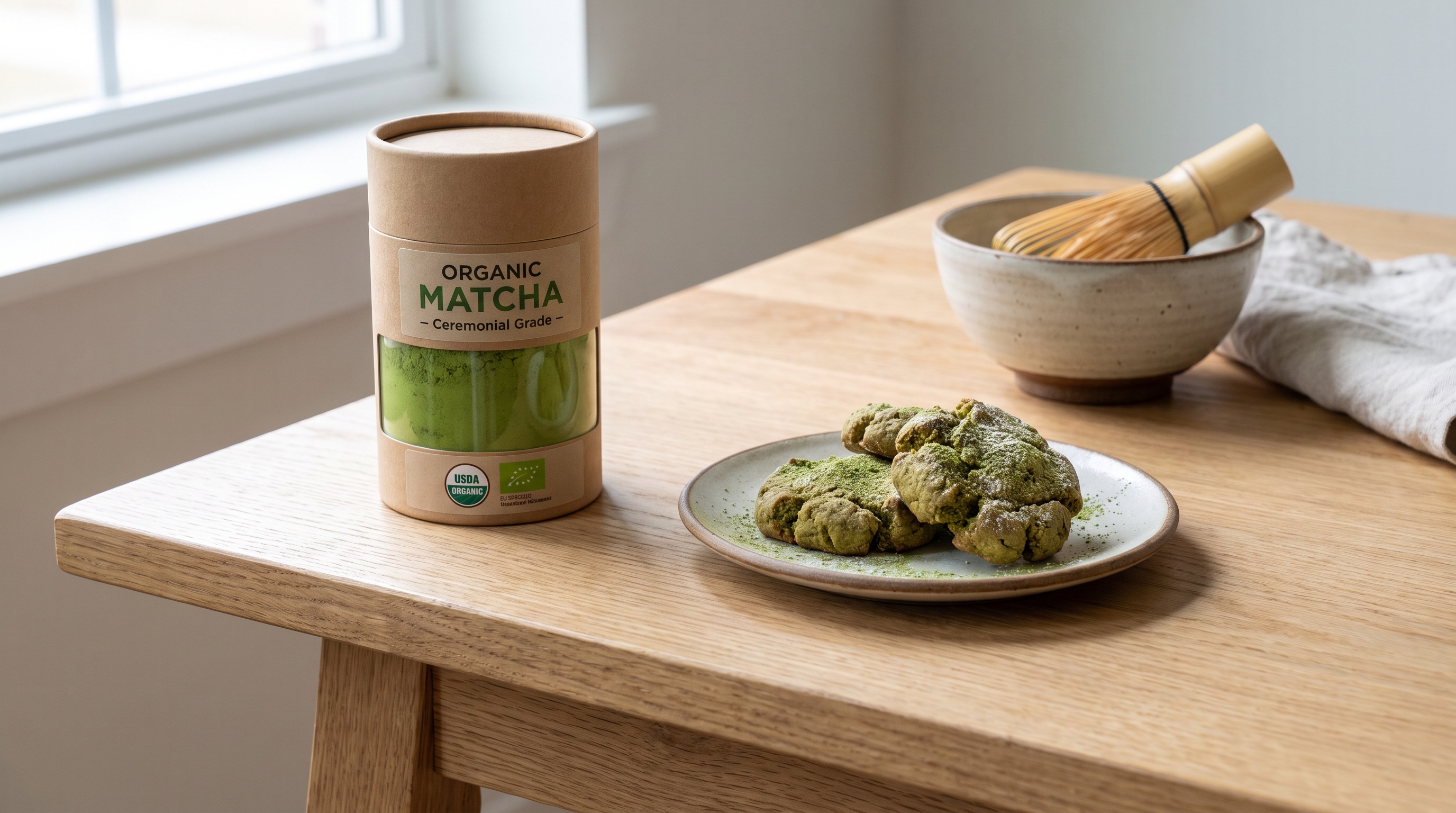
Replacing Synthetic Colorants with Matcha
For decades, commercial bakeries relied on Yellow 5 and Blue 1 to create green-colored baked goods, such as pistachio cakes or mint cookies. However, regulatory shifts and consumer pressure have made these artificial colorants undesirable. Premium green tea powder serves as a 100% natural, clean-label alternative that not only colors the product but also provides authentic flavor and structural benefits.
The Strategic Value of Organic Certifications
When exporting baked goods or supplying national grocery chains, having certified organic ingredients is a massive competitive advantage. Utilizing a certified organic matcha guarantees that the tea was cultivated without synthetic pesticides, herbicides, or chemical fertilizers.
- USDA Organic: Strictly regulates the import and processing of organic matcha in North America.
- EU Organic: Imposes exceptionally low limits on pesticide residues and heavy metals, making compliance critical for European distribution.
- JAS (Japanese Agricultural Standards): The gold standard of organic tea cultivation in Japan, ensuring complete traceability from the farm to the shipping port.
For manufacturers targeting health-conscious consumers, labeling a product as “Made with Organic Japanese Matcha” instantly justifies a premium retail price point. Purchasing departments should ensure their B2B suppliers can provide valid transaction certificates (TC) for every single batch to maintain their clean-label integrity.
B2B Sourcing: Evaluating Bulk Packaging and Shelf-Life Stability for Industrial Bakeries
In large-scale food manufacturing, operational efficiency is highly dependent on raw material stability. Because matcha is exceptionally sensitive to environmental degradation, improper packaging and storage can turn an expensive, high-quality ingredient into a flat, brown, and useless powder before it even reaches the production line.

Critical Packaging Requirements
To prevent the three enemies of matcha—Oxygen, Light, and Moisture—commercial packaging must meet strict barrier specifications:
- Multi-Layer Foil Lining: Bulk packaging should utilize heavy-duty, multi-layer aluminum laminate bags. Standard clear plastics or thin paper bags offer zero protection against light penetration and gas transmission.
- Nitrogen Flushing & Vacuum Sealing: During the packaging process, atmospheric oxygen must be purged from the bag using food-grade nitrogen gas (N2N_2
). This process reduces the residual oxygen level to less than 1.0%, halting the oxidation of chlorophyll and lipids.
- Desiccant Packs: For high-humidity warehousing environments, incorporating food-safe silica gel packets inside outer cartons helps manage ambient moisture.
Storage Protocols for Industrial Facilities
To guarantee a stable shelf life of 12 to 18 months, industrial bakeries should establish the following warehouse protocols:
- Cold Storage (Ideal): Bulk matcha should be stored in temperature-controlled warehouses maintained at 2°C to 8°C (35°F to 46°F). If long-term storage (over 6 months) is required, freezing at -18°C (0°F) preserves freshness perfectly.
- Temperature Acclimation: Critical Step: When retrieving bulk matcha bags from cold storage, never open them immediately. Allow the sealed bag to sit at room temperature for 12 to 24 hours to acclimate. Opening a cold bag in a warm, humid bakery will cause immediate moisture condensation on the micro-fine powder, leading to rapid clumping and oxidation.
- FIFO Inventory Management: Strict First-In, First-Out (FIFO) protocols must be enforced to ensure raw material freshness.
Sourcing and Quality Control: How to Test Matcha Quality and Run Sensory Evaluations Before Bulk Purchases
Before signing long-term supply contracts or placing large orders, quality assurance (QA) teams must perform rigorous sensory and physical evaluations of potential matcha samples. A reliable wholesale partner like Riching Matcha will always welcome sample testing and provide complete transparency throughout the process.
To streamline your selection process, use the following Recommended Matcha Buying Checklist to verify potential suppliers:
In addition to documentation, your culinary development team should perform the following three sensory tests:
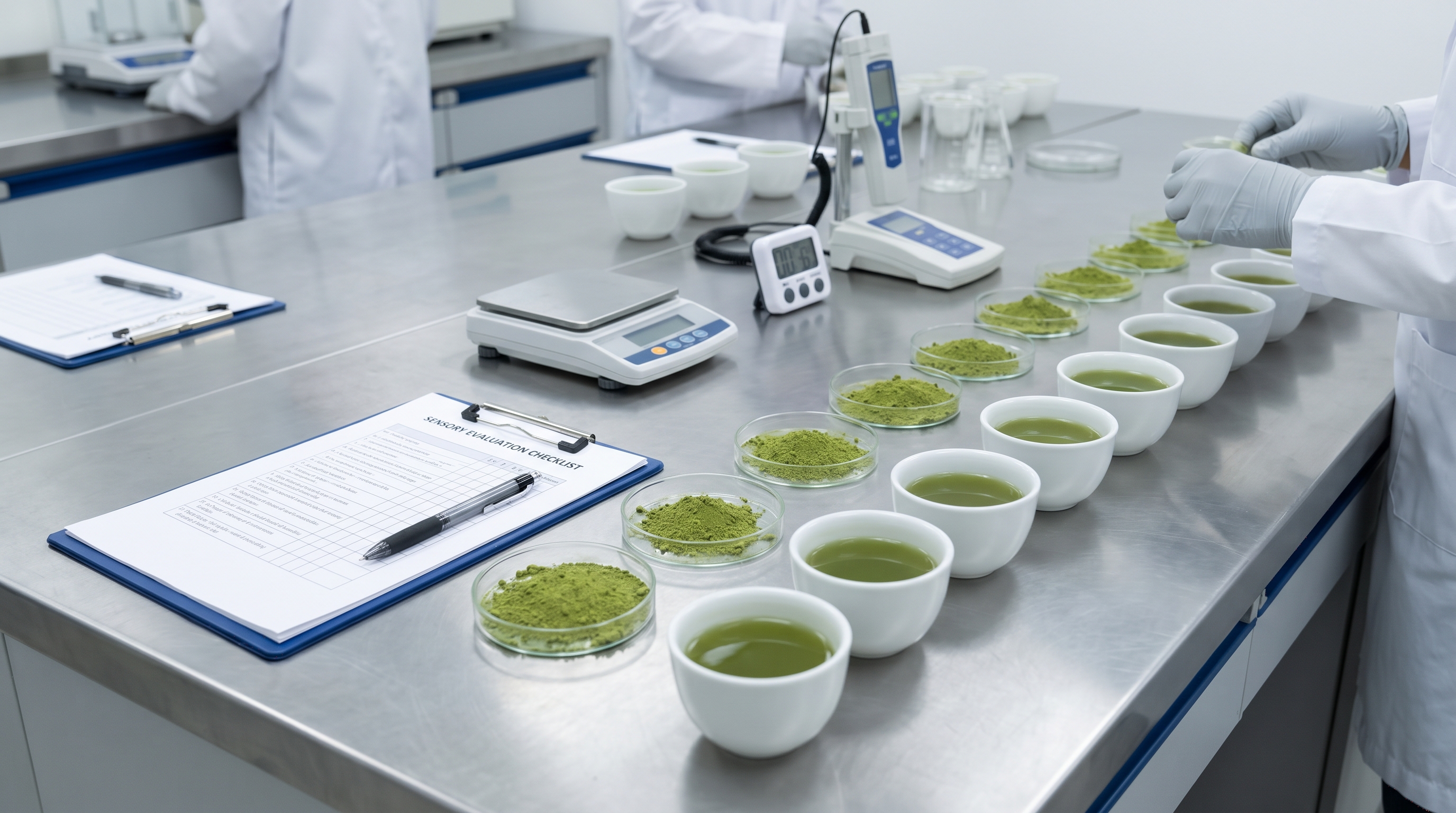
Test 1: The Dry Powder Visual & Tactile Assessment
- Procedure: Place 5 grams of matcha on a clean sheet of white paper under neutral, natural light. Examine the color. Rub a small amount between your thumb and index finger.
- Evaluation: Premium grades will display a bright, vibrant, electric green. Lower grades will look dull, khaki, or yellow. The texture should feel as smooth as baby powder (indicative of < 10-micron stone milling). If it feels gritty or sand-like, it will cause texture issues in your final baked goods.
Test 2: The Hot Water Dispersion (Whisk) Test
- Procedure: Sift 2 grams of matcha into a bowl, add 70ml of hot water (80°C / 176°F), and whisk vigorously in a W-motion for 30 seconds using a bamboo whisk or high-speed milk frother.
- Evaluation: Note the aroma, foam stability, and flavor. A high-quality matcha will produce a dense, creamy foam with micro-bubbles that hold their structure. The aroma should be fresh, sweet, and vegetal, with no hint of burnt paper or stale hay. The taste should be clean, sweet, and savory (umami), with a pleasant, non-lingering bitterness.
Test 3: The Practical Baking Trial
- Procedure: Formulate a standard batch of sugar cookies or a simple sponge cake using the sample matcha at a 2.5% dosage by weight. Bake under standard conditions.
- Evaluation: Once cooled, slice the product open to inspect the internal crumb color. A high-performing matcha will yield a clean, uniform pastel green interior with no dark speckling. Taste the product to ensure the green tea flavor is distinct and balanced, without tasting overly bitter, grass-like, or astringent.
By implementing these quality control measures and selecting the appropriate grade for your specific application, your bakery can launch premium, clean-label matcha creations that satisfy the modern consumer’s desire for natural, sophisticated flavors.
Ready to elevate your product line with premium ingredients? Feel free to contact Riching Matcha for wholesale quotes and request technical datasheets and samples for your next product trial.
B2B FAQs: Crucial Sourcing Solutions for Commercial Bakers
Q1: What is the average shelf life of bulk matcha powder, and how do we prevent color fading in storage?
Answer: Under optimal storage conditions (cool, dry, and dark), vacuum-sealed bulk matcha powder maintains its quality for 12 to 18 months. Once a bag is opened, it should be used within 4 to 6 weeks for optimal color and aroma performance. To prevent color fading, keep the powder sealed in its original moisture-barrier aluminum lining, squeeze out excess air, and store it in a cool pantry or refrigerator. Avoid exposure to direct sunlight, fluorescent bakery lights, and temperatures above 25°C (77°F).
Q2: Why does our natural organic matcha fade to brown during baking, and how can we prevent this without using artificial green dyes?
Answer: Fading occurs because the high heat and acidity of the baking process displace the natural magnesium ion at the center of the chlorophyll molecule, converting it into olive-brown pheophytin. You can mitigate this naturally by:
- Baking at slightly lower temperatures for longer times (e.g., 140°C–150°C).
- Ensuring the batter’s pH is neutral to slightly alkaline (7.0 to 7.2) by neutralizing acidic ingredients with a touch of baking soda.
- Adding 0.1% to 0.3% L-ascorbic acid (Vitamin C) to act as a natural antioxidant color protector.
- Suspending the matcha in a fat-rich medium (like butter or chocolate) to insulate the chlorophyll from heat and acid during the bake.
Q3: What are the typical Minimum Order Quantities (MOQs) for commercial matcha sourcing, and how is it packaged for shipment?
Answer: For commercial B2B orders, MOQs typically start at 20 kg to 50 kg for standard culinary and premium grades. Industrial shipments are packaged in heavy-duty 20 kg to 25 kg fiber drums or double-walled corrugated cartons. Inside, the matcha is divided into smaller, heat-sealed, multi-layer aluminum foil bags (usually 1 kg, 2 kg, or 5 kg bags) that have been flushed with nitrogen to protect against oxygen exposure during shipping and warehousing.
Q4: Can our R&D department request technical datasheets, pesticide analysis reports, and samples before placing a bulk order?
Answer: Yes, reputable B2B suppliers will provide a comprehensive Technical Datasheet (TDS), Material Safety Datasheet (MSDS), Certificate of Analysis (COA) for every batch, and third-party lab testing reports (such as Eurofins or SGS) showing compliance with pesticide residue limits, heavy metals, and radiation clearances. Sample kits of various culinary and premium grades are readily available to commercial food scientists for bench-top trials.
Q5: How do we verify that imported bulk matcha complies with USDA Organic and EU Organic certification standards?
Answer: To verify organic compliance, always request the supplier’s organic certificates issued by accredited certification bodies (such as Kiwa BCS, Ecocert, or JONA). When importing or purchasing, the supplier must provide a Transaction Certificate (TC) or Certificate of Inspection (COI) that matches the specific lot number and weight of the batch you are receiving. This documentation ensures complete traceability and verifies that the product meets the strict organic standards of your importing country.