
Selecting the ideal packaging format for retail matcha is not merely an aesthetic choice; it is a critical business decision that directly influences product freshness, customer satisfaction, brand positioning, and bottom-line profitability. Unlike roasted coffee beans or dried black tea leaves, matcha is a highly delicate, non-fermented, stone-ground green tea powder. Its chemical composition makes it exceptionally vulnerable to environmental factors. When exposed to oxygen, ultraviolet (UV) light, heat, or moisture, matcha rapidly undergoes photo-oxidation and degradation. This process destroys its vibrant green chlorophyll, breaks down its sweet L-theanine amino acids into astringent catechins, and ruins its delicate umami flavor profile.
For private label brands, tea retailers, Amazon FBA sellers, and cafe owners, the choice of packaging size and structure dictates the “freshness velocity” of the product. Freshness velocity refers to the rate at which a consumer can realistically finish a container of matcha after opening it, compared to the rate at which the powder oxidizes inside that container. A package that is too large for the customer’s consumption rate results in a stale, bitter product by the time they reach the bottom, permanently damaging your brand’s reputation for quality.
Beyond preservation, the physical format of your packaging establishes your product’s positioning on retail shelves and e-commerce platforms. It communicates your brand value, justifies your retail price point, and determines your shipping and logistics efficiency. By selecting the correct packaging matrix, brands can optimize their margins, streamline international shipping, minimize fulfillment damages, and appeal directly to their target customer personas.

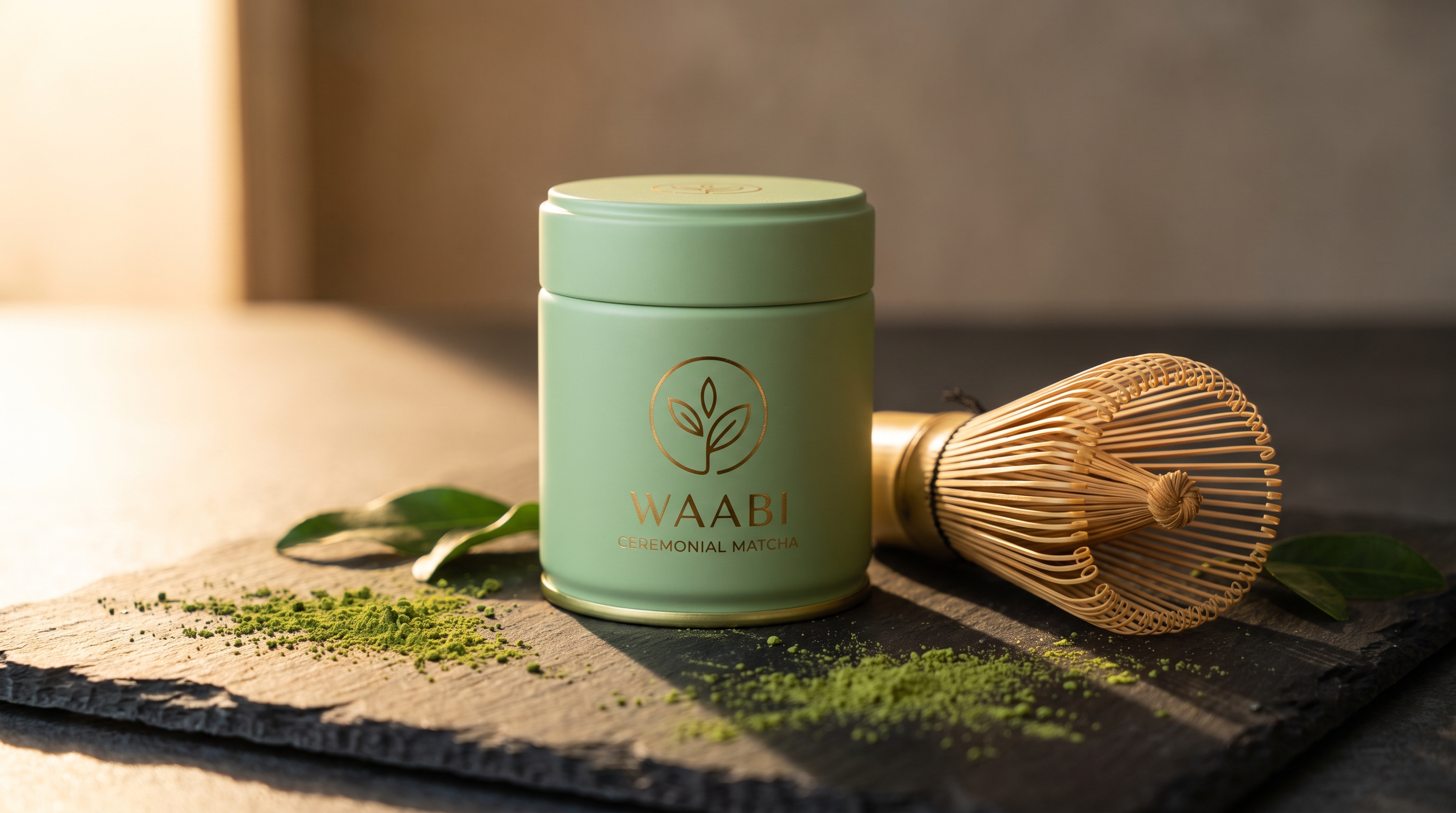
The 30g Matcha Tin: Ultimate Premium Packaging for Ceremonial Grade Matcha
The 30g metal tin is the undisputed gold standard for ultra-premium ceremonial matcha. Originating from traditional Japanese tea culture, this compact size is engineered specifically to match the consumption habits of high-end connoisseurs. Because ceremonial grade matcha is typically prepared as koicha (thick tea) or usucha (thin tea) using only 1 to 2 grams of powder per serving, a 30g tin provides exactly 15 to 30 servings. For a dedicated enthusiast drinking matcha daily, this container will be consumed within two to four weeks—the optimal window before opened matcha begins to lose its peak flavor and vibrant color.
From a structural perspective, premium 30g tins are constructed from food-grade tinplate, coated with a protective internal lacquer to prevent metal contact. They feature a dual-seal mechanism: an inner aluminum pull-ring lid (similar to a pull-tab can) that creates an airtight, hermetic seal at the factory, and an outer slip-on metal cap to protect the powder after the inner seal is broken. Many high-end brands also include a secondary plastic plug-lid beneath the metal cap to further restrict air exchange during daily use.
For private label brands targeting the luxury wellness demographic, specialty tea boutiques, or high-end gift markets, the 30g tin is highly recommended. It allows you to offer premium products at a high price-per-gram ratio while maintaining an accessible overall retail price point. If your brand utilizes a ceremonial grade matcha wholesale supply, pairing it with a 30g luxury tin ensures that your customers experience the product exactly as the tea master intended: exceptionally fresh, vibrantly green, and rich in sweet umami notes.
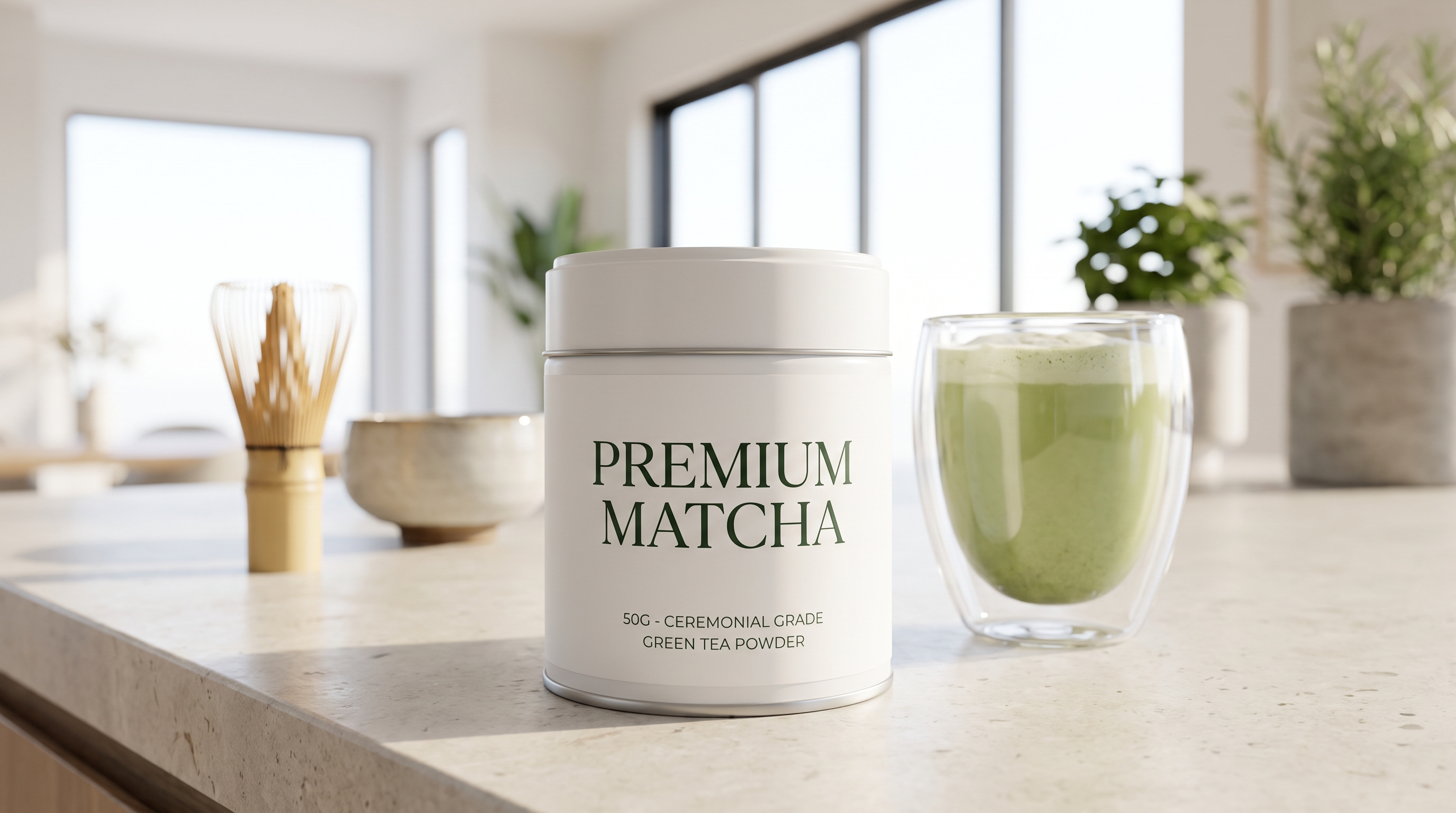
The 50g Matcha Tin: The Balanced Daily-Use Format for Dedicated Enthusiasts
The 50g metal tin represents a strategic bridge between ultra-premium ceremonial grades and high-volume value formats. This size has surged in popularity as matcha has transitioned from an occasional ritual beverage to a daily dietary staple for health-conscious consumers. A 50g tin provides approximately 25 to 50 servings, making it the perfect monthly supply for individuals who consume one matcha beverage every morning.
This format is highly versatile, housing either high-tier ceremonial matcha or premium organic culinary blends designed for daily home lattes. On retail shelves, the 50g tin has a slightly larger physical footprint than its 30g counterpart. This provides graphic designers with a larger canvas for brand storytelling, ingredient lists, and nutritional facts, without sacrificing the structural integrity and premium feel of a metal container.
For brands, the 50g tin offers an optimized cost-of-goods-sold (COGS) model. The unit cost of a 50g metal tin is only marginally higher than that of a 30g tin, yet it holds 66% more product. This allows brands to offer better value to their customers while maintaining healthy gross margins. It appeals directly to the “dedicated enthusiast” demographic—consumers who demand a high-quality product but are mindful of cost-of-ownership and packaging waste.
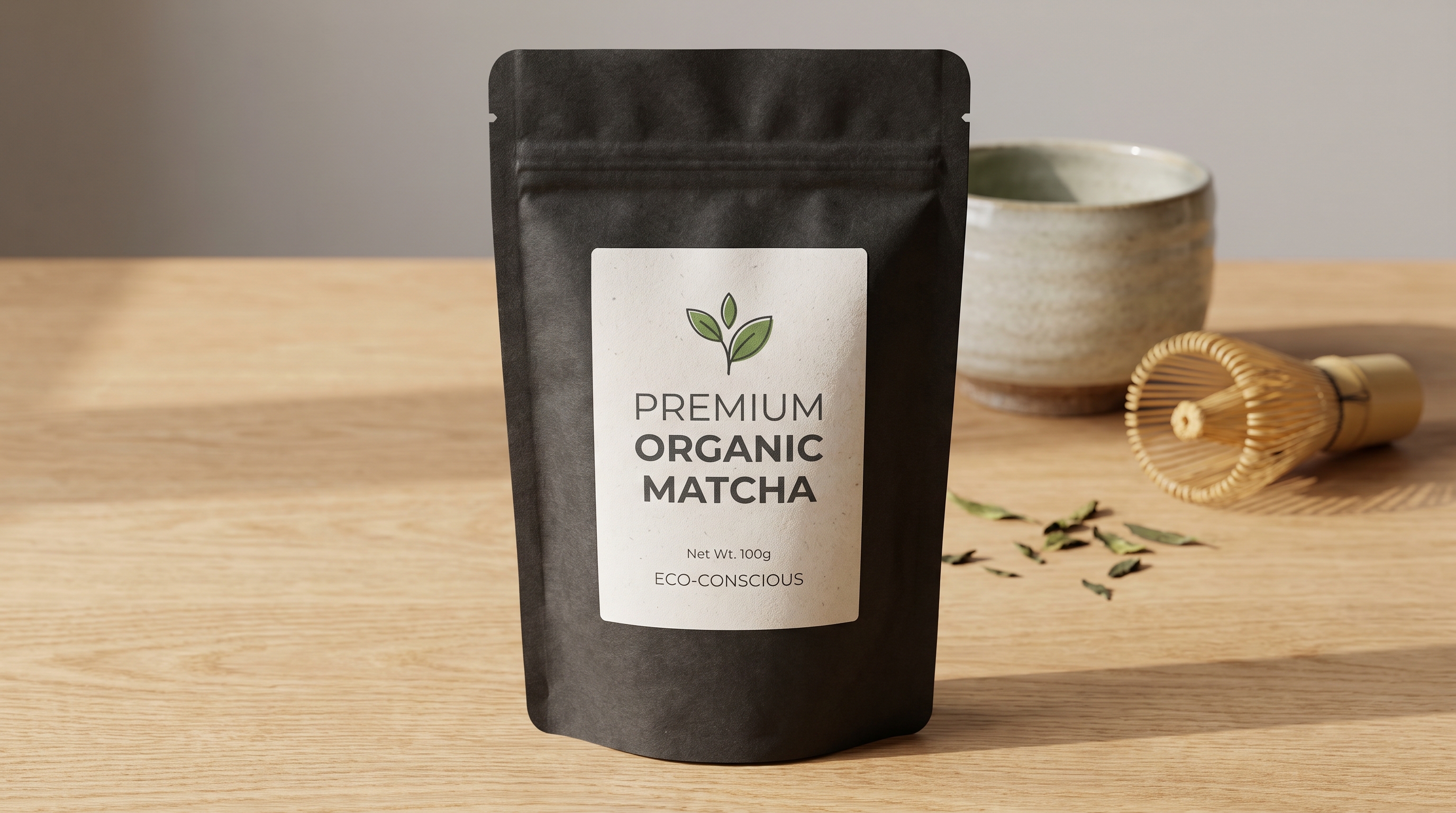
The 100g Matcha Bag: Value-Oriented Stand-Up Pouches for Daily Consumers
As the market for home-brewed matcha lattes, green smoothies, and culinary baking continues to expand, the 100g stand-up pouch (frequently referred to as a Doypack) has become a staple format for modern tea brands. This packaging size is almost exclusively paired with culinary grade or premium-grade matcha intended for blending, whisking with milk, or incorporating into wellness recipes.
The 100g bag is highly economical, built with multi-layered laminated films (typically matte PET, aluminum foil, and PE) that block 100% of UV light and oxygen transmission. Unlike tins, stand-up pouches feature a built-in, heavy-duty resealable zipper. This allows consumers to press excess air out of the bag before sealing, which actively reduces the volume of oxygen interacting with the remaining powder inside the package.
For businesses utilizing high-volume wholesale culinary matcha powder , the 100g bag is an exceptionally profitable format. It dramatically reduces packaging costs per gram compared to metal tins. Additionally, because pouches ship flat and weigh significantly less than metal containers, they lower international freight costs and reduce carbon footprints during domestic fulfillment. This format targets the grocery shopper, the fitness enthusiast, and the home baker who prioritizes volume, convenience, and value.
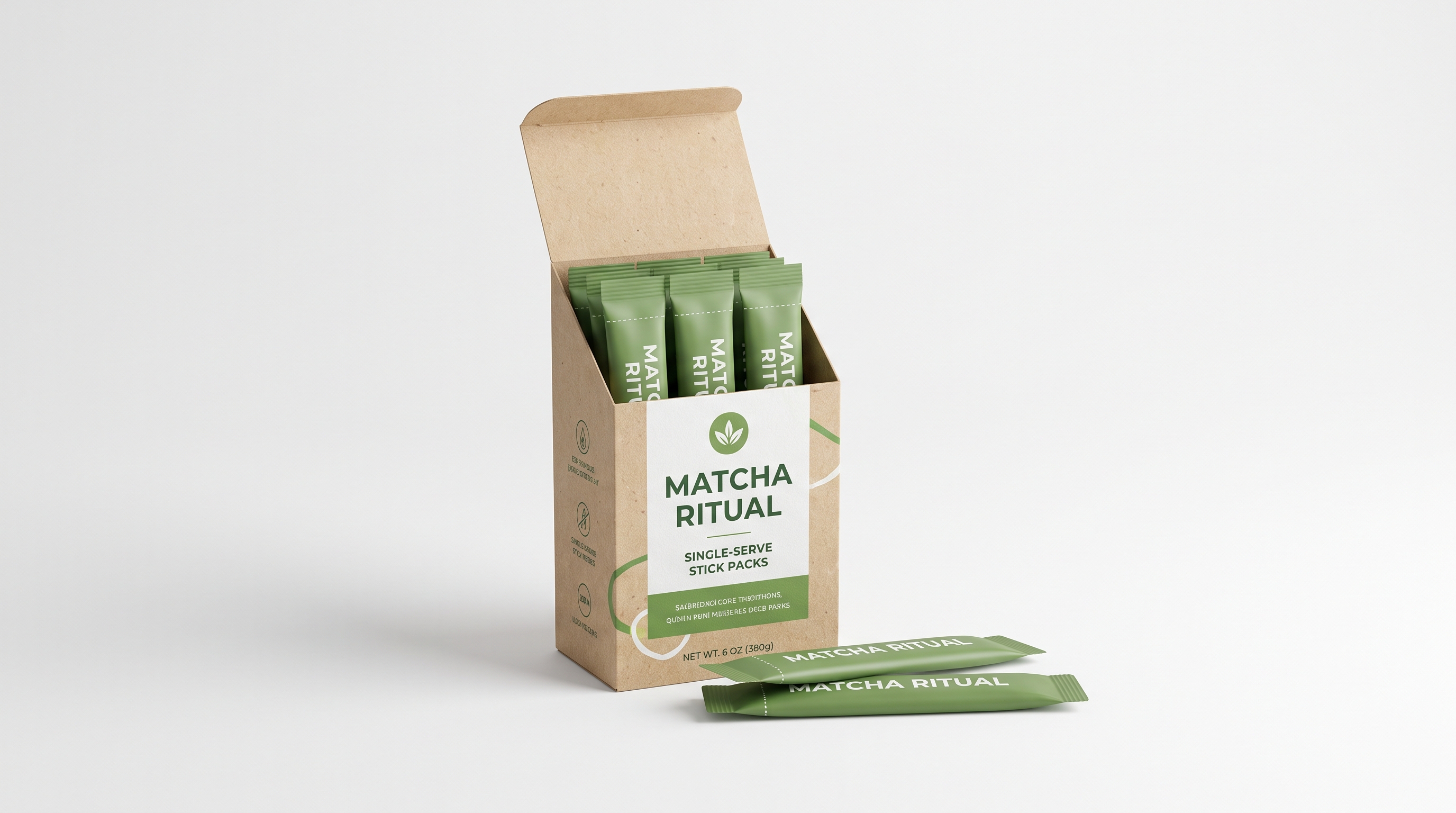
Single-Serve Matcha Stick Packs: Capitalizing on Travel-Friendly and Convenience Trends
In the fast-paced modern wellness market, convenience is a major driver of consumer purchasing behavior. Single-serve matcha stick packs, typically containing 1g, 1.5g, or 2g of powder, directly address this demand. This format caters to active professionals, travelers, gym-goers, and office workers who want to enjoy fresh matcha without the need for traditional bamboo whisks, sifter screens, or bulky containers.
Stick packs are produced using specialized multi-lane vertical form-fill-seal (VFFS) machinery. The laminate film is wrapped around a forming tube, sealed longitudinally, filled with a precise dose of matcha powder, and sealed horizontally. Each stick is nitrogen-flushed during the filling process to achieve near-zero residual oxygen levels. This ensures that the matcha remains perfectly preserved until the exact moment of consumption.
From a marketing perspective, stick packs are rarely sold individually; they are packaged in secondary retail boxes containing 10, 15, 30, or 50 sticks. This format solves the open-container oxidation issue completely: because each single serving is sealed independently, the consumer never exposes the remaining supply to air or moisture. Stick packs are an ideal entry-point product for brands looking to capture trial-oriented consumers, subscription box customers, or impulse buyers at point-of-sale registers.
Retail Matcha Packaging Format Comparison Matrix
To help your brand select the most profitable and strategically aligned packaging format, the table below provides a detailed side-by-side comparison of the five primary packaging options.
Packaging Format | Target Consumer | Premium Tier | Freshness Retention (Post-Opening) | Volumetric Efficiency | Primary Use Case | Cost per Unit (Relative) |
|---|---|---|---|---|---|---|
30g Metal Tin | Connoisseurs, Gift Buyers, Purists | Ultra-Premium | Moderate (2–3 weeks) | Low | Traditional Ceremonial Whisking | High |
50g Metal Tin | Daily Drinkers, Wellness Seekers | Premium | Moderate (3–4 weeks) | Low | Daily Matcha Tea / Light Lattes | Moderate-High |
100g Stand-Up Pouch | Everyday Latte Drinkers, Bakers | Value / Premium | High (Ziploc gas expulsion) | High | Matcha Lattes, Smoothies, Baking | Low-Moderate |
Stick Packs (Box) | On-the-Go Professionals, Athletes | Premium / Convenience | Outstanding (Individual seals) | Moderate | Shaker Bottles, Office, Travel | Moderate (High COGS/g) |
Bulk Bags (1kg+) | Cafes, Bakeries, Foodservice | Industrial / Commercial | Low (Requires rapid turnover) | Outstanding | Lattes, Ice Cream, Culinary OEM | Very Low |
Bulk Matcha Bags: The Best Packaging Formats for Cafes and Foodservice Wholesalers
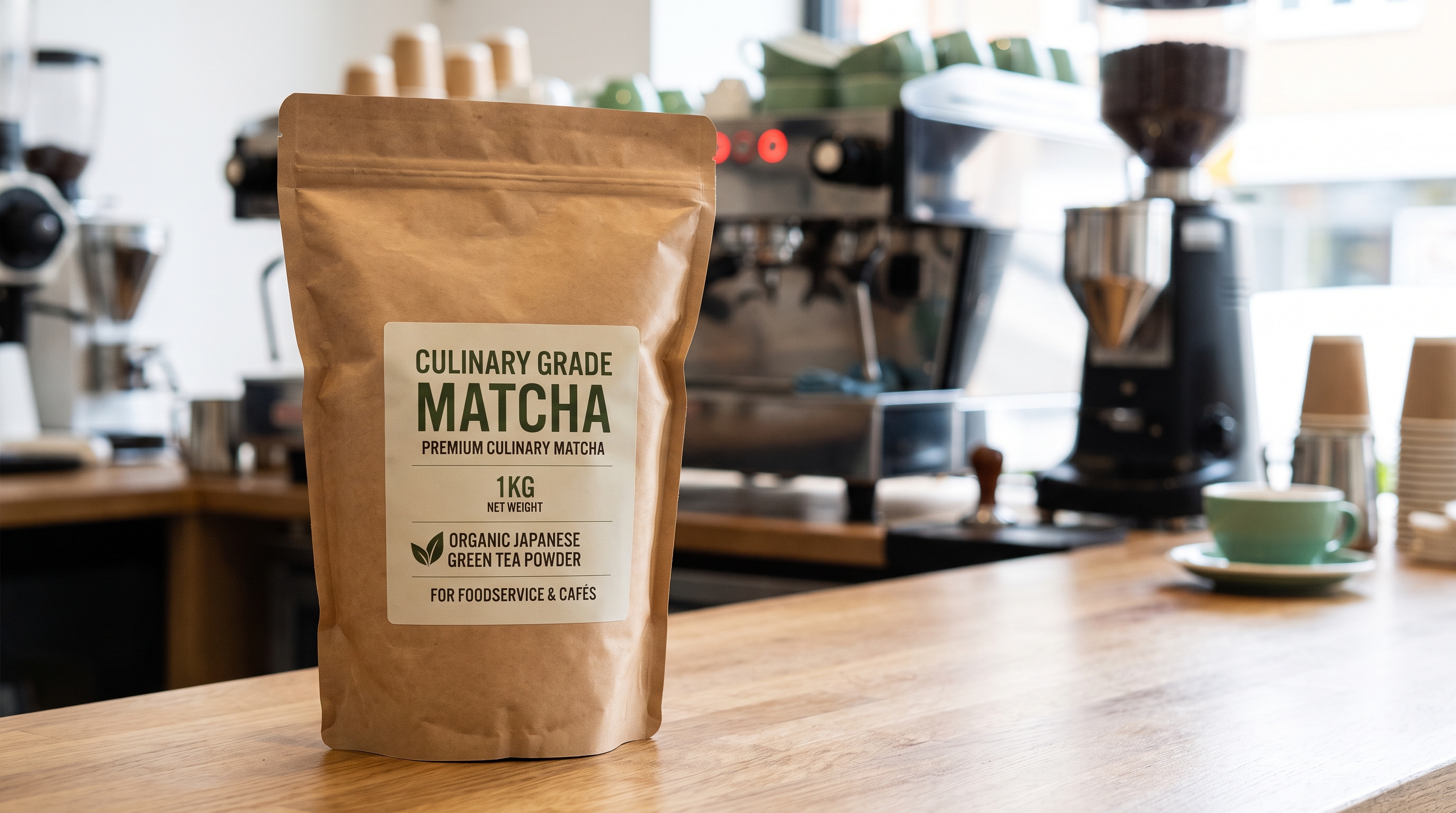
For cafes, quick-service juice bars, industrial bakeries, and foodservice operators, retail-sized packaging is highly inefficient and cost-prohibitive. These businesses operate in high-volume environments where matcha is used as an ingredient for lattes, frappés, pastries, and ice creams. Consequently, their primary packaging requirements focus on cost-per-kilogram optimization, ease of storage, scoopability, and physical resilience.
Bulk matcha packaging typically starts at 500g and extends to 1kg, 5kg, and 20kg bulk boxes. The industry standard for commercial foodservice is the 1kg flat-bottom or side-gusseted bag, constructed from ultra-durable, high-barrier laminates like kraft paper lined with aluminum and polyethylene. These bags feature heavy-duty commercial press-to-close zippers or integrated tin-ties to allow quick access during busy cafe shifts while keeping the powder safe from kitchen humidity, steam, and heat.
In a foodservice setting, the speed of consumption (turnover rate) is extremely fast. A busy cafe can easily use 1kg to 5kg of culinary matcha per week. Because the powder is consumed so rapidly, the risk of long-term oxidation is minimized, making the lower cost-per-gram of bulk packaging highly advantageous. Wholesalers and private label suppliers should always offer bulk options to capture lucrative business-to-business (B2B) accounts, wholesale cafe distributors, and commercial food manufacturing partnerships.
How Packaging Material and Formats Directly Affect Matcha Shelf Life and Freshness
To understand why high-barrier packaging is mandatory for matcha, one must examine the physical and chemical properties of the green tea powder. Matcha is highly hygroscopic, meaning it greedily absorbs moisture from the surrounding air. When matcha absorbs water molecules, its natural enzymes reactivate, causing rapid clumping, hydrolytic degradation of lipids, and a sour smell. Furthermore, chlorophyll—the pigment responsible for matcha’s emerald color—is highly photosensitive. Exposure to light waves (especially UV) causes photo-oxidation, turning the powder into a dull, brownish-yellow color within days.
To prevent this degradation, modern packaging relies on multi-layer laminates. Each layer in a high-barrier pouch serves a specific, scientifically engineered purpose:
- Outer Layer (PET / Kraft Paper): Provides structural integrity, mechanical strength, puncture resistance, and a smooth surface for printing or labeling.
- Middle Layer (Aluminum Foil or EVOH): Serves as an absolute barrier to oxygen, moisture, and light. Aluminum foil (typically 7 to 9 microns thick) offers near-zero gas transmission rates.
- Inner Layer (PE or CPP): A food-grade, chemically inert sealant layer that allows the packaging to be hermetically heat-sealed at high speeds.
Additionally, premium packaging operations use modified atmosphere packaging (MAP) technologies, such as nitrogen flushing. During the packaging process, food-grade nitrogen gas is injected into the tin or pouch right before sealing to displace ambient air. This reduces the residual oxygen level inside the package to below 1%. This process stops oxidation in its tracks and extends the unopened shelf life of the matcha up to 18 to 24 months.
Packaging Material Barrier Property Comparison
The table below provides a technical comparison of the various packaging materials used in the industry, evaluating their protective capabilities against key environmental degrading agents.
Packaging Material Type | Oxygen Barrier | UV Light Barrier | Moisture Barrier | Relative Cost | Best Suited For |
|---|---|---|---|---|---|
Tinplate (Steel) | Excellent | Excellent | Excellent | High | 30g & 50g Ceremonial Tins |
Aluminum Foil Laminate | Excellent | Excellent | Excellent | Moderate | Stand-Up Pouches (100g–1kg) |
Kraft Paper + PET/PE | Good | Moderate | Good | Moderate | Foodservice & Eco-Friendly Bags |
Nylon-Laminate Foil | Excellent | Excellent | Excellent | High | Single-Serve Stick Packs |
Standard Plastic (Mono-layer) | Poor | Poor | Fair | Very Low | Not recommended for Matcha |
Shipping Logistics: How Matcha Packaging Formats Impact Freight and Fulfillment Costs
From a B2B supply chain and logistics perspective, your choice of packaging format has a profound impact on freight costs, warehouse storage efficiency, and fulfillment defect rates. When shipping products internationally from primary production facilities in Japan or China to destination markets, freight charges are calculated using either actual weight or dimensional (volumetric) weight—whichever is greater.
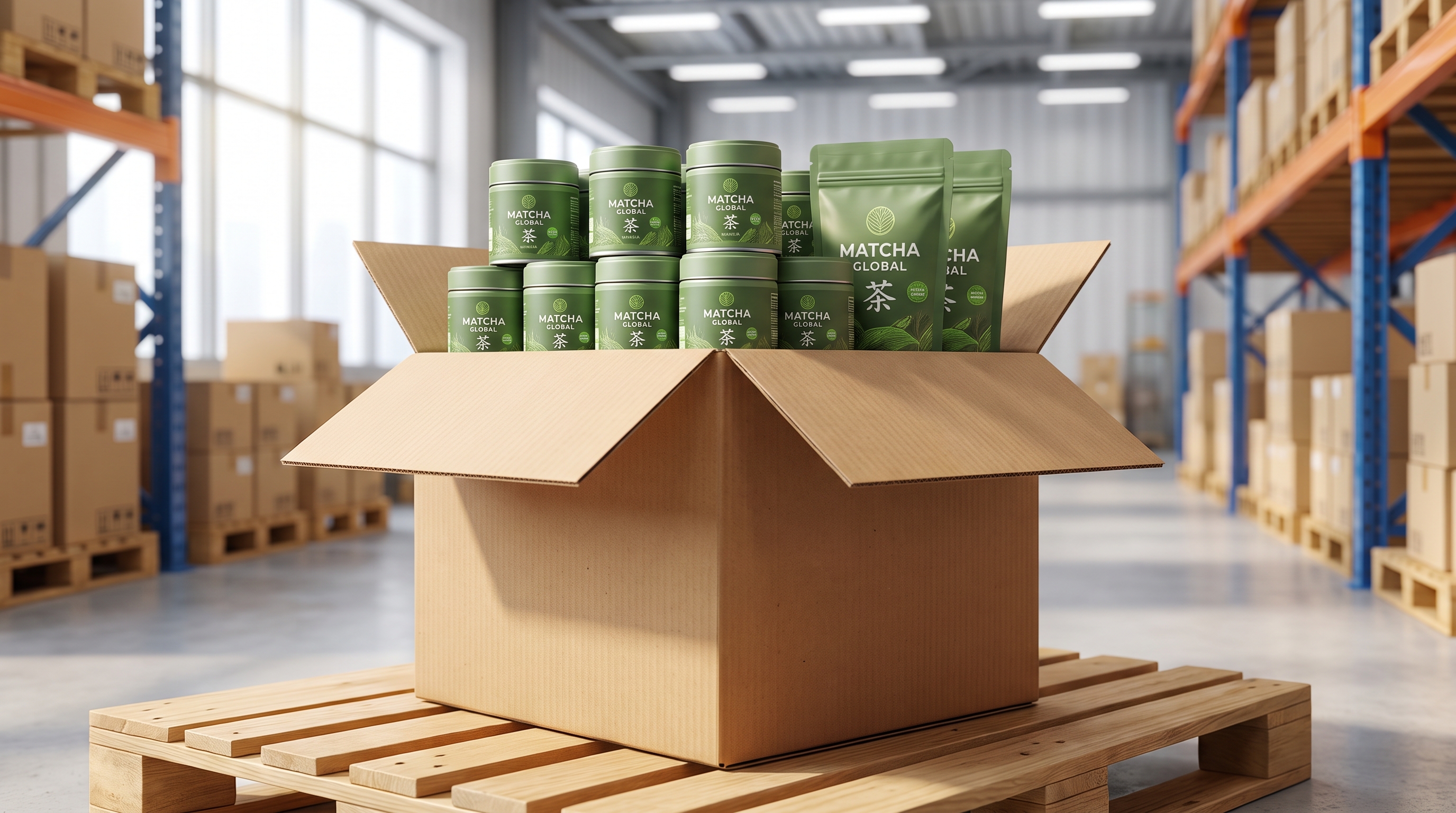
Metal tins are rigid, non-compressible, and contain a high volume of empty headspace. Consequently, they have a very poor volumetric efficiency. When shipping empty or pre-filled tins, you are effectively paying to ship air. For example, a shipping carton filled with 30g tins will contain far more empty space and weigh significantly less than a carton of the same dimensions filled with flat-packed stand-up pouches. This disparity can increase ocean and air freight costs by up to 40% to 50% for tin-packaged products.
Furthermore, metal tins are highly susceptible to physical damage during transit. If a shipping pallet is subjected to rough handling or drops, metal tins can easily dent. A dented tin is unsellable at retail, resulting in high return rates and write-offs. Conversely, laminated stand-up pouches and stick packs are flexible, highly resilient, and virtually immune to impact damage. They pack tightly together, leaving zero empty space within shipping master cartons, optimizing your pallet utilization and dramatically reducing domestic shipping rates.
E-Commerce Strategy: Which Matcha Packaging Works Best for Amazon FBA Sellers?
For digital-first brands and Amazon FBA (Fulfillment by Amazon) sellers, packaging choices must be optimized around FBA fee structures, pick-and-pack rates, and customer unboxing experiences. Amazon charges sellers storage and fulfillment fees based on strict size and weight tiers. Keeping your product within the “Small Standard-Size” tier is critical for preserving your margins.
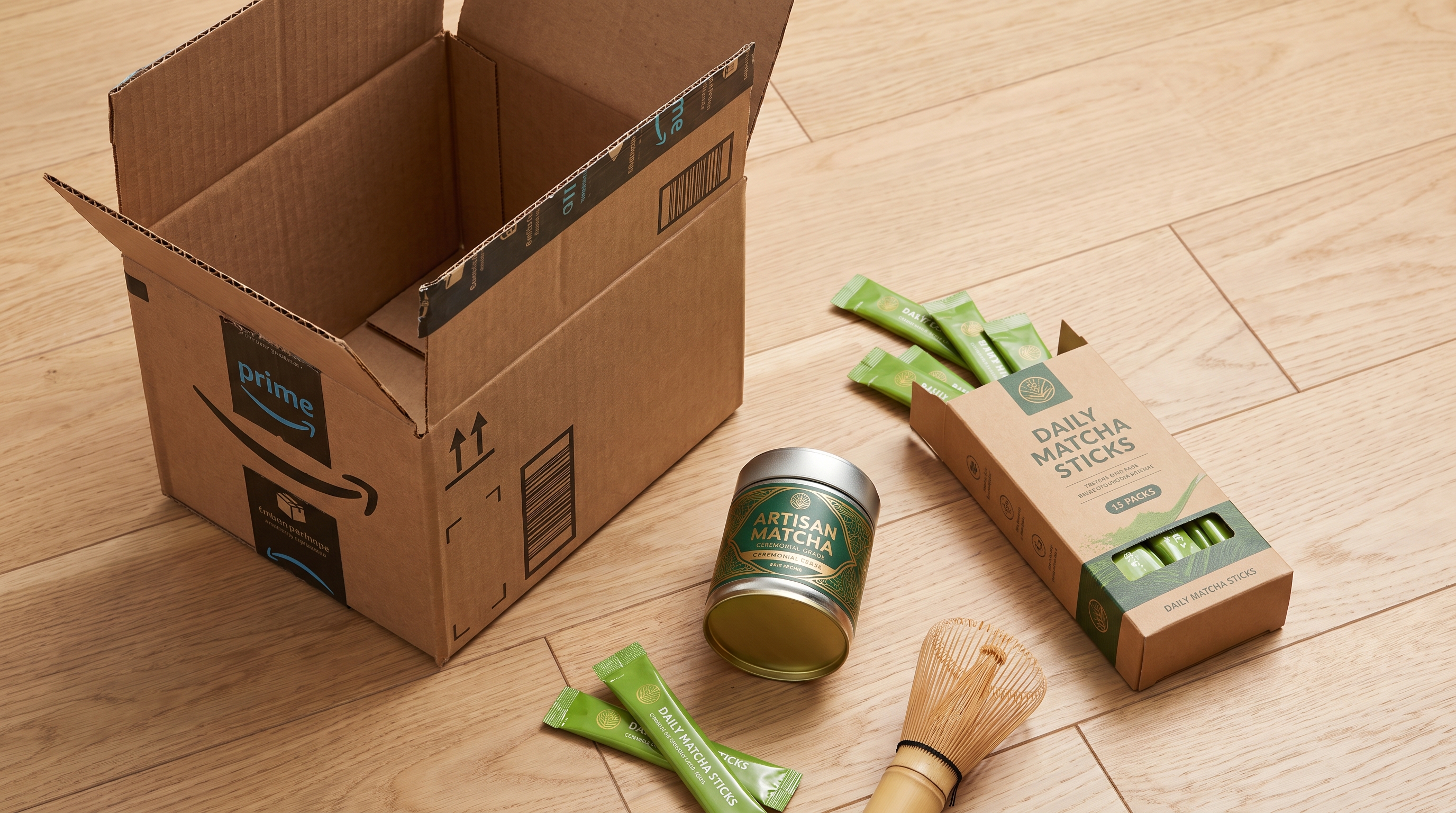
Stand-up pouches (100g) and stick pack retail boxes are the absolute champions of the Amazon FBA ecosystem. Because they are flat or low-profile, they easily fit into standard bubble mailers or small cardboard envelopes. This minimizes the dimensional weight fees charged by Amazon for shipping. Furthermore, because pouches are lightweight and drop-resistant, they do not require expensive protective prep-work (such as bubble wrapping), which Amazon often charges extra for during inbound receiving.
However, if your Amazon brand positions itself in the luxury wellness niche, you may still choose to sell 30g or 50g tins. To make this profitable, FBA sellers must ensure their supplier uses ultra-durable metal tins that can withstand the rigors of multi-tier courier transit. Many successful e-commerce brands package their metal tins inside a custom-designed, thick cardboard gift box. This secondary packaging serves a dual purpose: it adds an extra layer of structural protection against denting while elevating the consumer’s unboxing experience, encouraging repeat purchases and positive five-star reviews.
Retail Placement: Matching Packaging Designs to Cafes and Physical Gourmet Stores
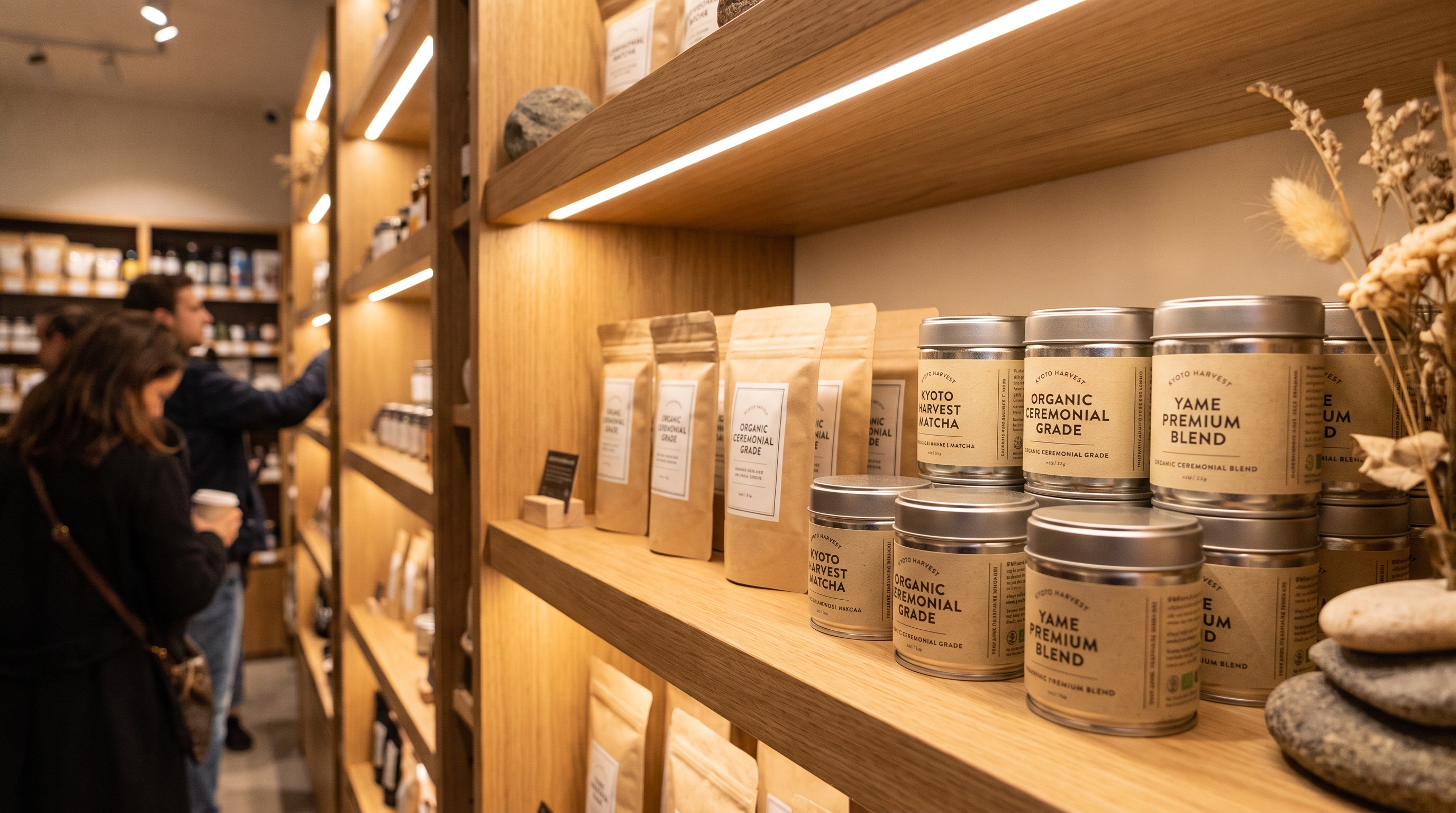
In physical retail environments—such as specialty grocery stores, high-end organic supermarkets, boutique tea shops, and independent cafes—the visual and tactile presentation of your packaging is your most powerful marketing tool. On a physical shelf, your product has less than three seconds to capture a shopper’s attention and communicate its value proposition.
Metal tins have an inherent advantage in premium retail environments. They stand perfectly upright, stack easily to form neat vertical towers, and project a classic, high-end, artisanal image. When placed on wooden display shelves in organic markets, matte-coated metal tins with minimalist gold foil embossing communicate luxury, purity, and heritage. They invite touch, and physical contact is a psychological trigger that significantly increases the likelihood of a purchase.
Stand-up pouches, while highly practical, require careful merchandising. If a pouch is not packed tightly with powder or lacks a wide bottom gusset, it can sag, slump, or fall over on the shelf, making the display look messy. To counter this, retail-focused brands use thick laminated materials (120 to 150 microns thick) with a matte finish or soft-touch varnishes to ensure the bag stands perfectly rigid. For cafes, single-serve stick packs are ideally suited for counter-top point-of-purchase (POP) displays. Placing an eye-catching, self-dispensing box of individual matcha sticks near the cash register triggers impulse buys from customers ordering their morning coffee.
Private Label Design Tips: Designing Eye-Catching and Compliance-Friendly Matcha Packaging
When launching a private label matcha brand, your packaging design must balance visual appeal with strict regulatory compliance. Matcha is classified as a food product, meaning it is subject to rigorous labeling laws by organizations such as the FDA (Food and Drug Administration) in the United States, EFSA in Europe, and equivalent global bodies.
From a design and compliance standpoint, your packaging must clearly display:
- Product Identity: The words “Matcha Green Tea Powder” must be prominent.
- Net Weight: Stated clearly in both ounces and grams on the lower third of the front panel.
- Country of Origin: Consumers demand transparency; always state “Product of Japan” or “Product of China” clearly.
- Nutrition Facts Panel & Ingredients: Typically, the only ingredient is “Matcha Green Tea Powder.”
- Certification Logos: If your product is organic, display certified organic logos like USDA Organic or Euro Leaf, along with the certifier’s information.
For the aesthetic design, contemporary wellness brands lean heavily toward clean, minimalist aesthetics. Utilizing a primary color palette of deep forest greens, crisp whites, warm earth tones, or dramatic matte black helps reflect the natural origins of the product. Applying tactile printing finishes—such as spot UV coatings, metallic hot stamping, or soft-touch matte lamination—instantly upgrades the sensory feel of the package, letting customers know they are purchasing a premium, healthy product.
Partnering with Riching Matcha: Comprehensive OEM and Custom Private Label Packaging Solutions
Navigating the complexities of sourcing premium matcha, designing compliant packaging, and managing complex packaging machinery can be overwhelming for growing brands. Partnering with an experienced, all-in-one manufacturing and packaging specialist simplifies your supply chain, reduces your time-to-market, and guarantees professional-grade quality control.
As a leading global custom matcha packaging supplier , Riching Matcha provides comprehensive end-to-end private label matcha services for brands of all sizes. Operating from state-of-the-art, ISO 22000, HACCP, and GMP-certified clean-room facilities, we manage the entire manufacturing chain under one roof. Our capabilities include importing direct shade-grown tencha, precision stone grinding, multi-lane automated stick pack filling, metal tin sealing with double-lid technology, and stand-up pouch packaging with integrated nitrogen flushing.
By choosing Riching Matcha as your production partner, you gain access to our extensive catalog of premium ceremonial and culinary matcha grades, paired with fully customizable packaging options. Whether you require bespoke custom-printed tins for a luxury boutique line, lightweight pouches for high-volume Amazon sales, or single-serve stick packs for a fast-growing health brand, our engineering and design teams will guide you from initial prototyping to final shipment. We offer low minimum order quantities, rigorous testing, and reliable logistics to help your brand grow. Take the next step in securing your brand’s market position by contacting Riching Matcha for custom packaging options today.
Frequently Asked Questions (B2B Focus)
1. What is the typical shelf life of matcha powder post-opening, and how does the packaging choice affect it?
Unopened matcha powder that has been properly nitrogen-flushed and sealed in a high-barrier aluminum or metal container has a stable shelf life of 18 to 24 months. However, once the hermetic seal is broken and the powder is exposed to ambient air, degradation begins. Post-opening shelf life is typically 4 to 8 weeks before noticeable loss of color, aroma, and flavor occurs.
Packaging choice plays a massive role here:
- Stick Packs: Maintain perfect freshness for every single use because each serving remains completely sealed until consumed.
- Stand-Up Pouches: Offer high post-opening freshness if the consumer expels excess air from the bag before sealing the zipper, reducing the internal oxygen volume.
- Metal Tins: Have a static air volume inside the tin that increases as the powder is consumed. This makes it critical to consume the product within 30 days of opening.
2. What are the Minimum Order Quantities (MOQs) for custom-printed matcha tins vs. custom-printed pouches?
Our MOQ requirements are designed to accommodate both growing startups and high-volume retail chains:
- Custom-Printed Metal Tins: The standard MOQ for fully customized, direct-to-metal printed tins is 10,000 units per design. For brands needing a lower entry point, we can apply high-quality, custom-printed adhesive labels onto blank matte black, matte white, or silver tins with an MOQ of only 1,000 units.
- Custom-Printed Pouches: Utilizing state-of-the-art digital printing, we can produce fully customized stand-up pouches with an MOQ starting at 1,000 to 5,000 units. Traditional rotogravure printing (ideal for massive runs) carries an MOQ of 10,000 to 20,000 units but offers the lowest unit cost.
- Stick Packs: The MOQ for custom foil stick packs typically starts at 50,000 individual sticks, which are then packed into custom secondary retail boxes (e.g., 1,600 to 5,000 retail boxes depending on stick count per box).
3. Do you offer nitrogen flushing (modified atmosphere packaging) for all retail sizes?
Yes. Riching Matcha utilizes advanced automated packaging machinery capable of nitrogen flushing (MAP) for our 30g tins, 50g tins, stand-up pouches, and single-serve stick packs. This process displaces oxygen within the package, reducing residual oxygen levels to under 1.0%. This step is vital to prevent chlorophyll oxidation and lipid rancidity, guaranteeing that your customers receive vibrant, stone-ground green tea with its original, fresh-milled aroma.
4. How durable are matcha tins during long-distance sea freight and Amazon FBA warehouse handling?
While metal tins offer an incredibly premium retail feel, they are naturally rigid and susceptible to denting under extreme impact or pressure. To prevent shipping damage:
- Our Export Packing Standard: We pack tins into heavy-duty, double-wall corrugated master cartons with custom honeycomb cardboard dividers. This ensures no two tins rub against or dent each other during transit.
- Amazon FBA Prep Advice: If you are shipping directly to Amazon FBA warehouses via ocean freight, we highly recommend using pallets with corner edge-protectors and secure shrink-wrapping. For individual courier shipments, placing the tin inside a custom branded outer paperboard box adds vital structural reinforcement and guarantees a pristine unboxing experience for the end consumer.
5. Can we request custom-blended matcha powders paired with specific custom-sized stick packs?
Absolutely. Riching Matcha is a fully integrated OEM partner. We do not just package standard grades; we can develop custom proprietary formulations tailored to your market. This includes blending ceremonial or culinary matcha with functional ingredients like collagen peptides, MCT powder, L-theanine, mushroom extracts (Lion’s Mane, Cordyceps), or natural sweeteners (monk fruit, stevia). We can scale the sizing of our vertical stick pack machines to fill anywhere from 1.0 gram to 10 grams per stick, matching your exact dosing requirements.