

In the global food and beverage trade, importing botanical products is subject to rigorous regulatory scrutiny. Matcha—specifically ground Camellia sinensis tea leaves—occupies a unique category. Because it is consumed as a suspended whole-leaf powder rather than an infusion, food safety authorities globally inspect it with heightened intensity. For B2B buyers, distributors, and private label brands, establishing a robust, error-free import documentation workflow is not merely a administrative chore; it is a critical strategy for risk mitigation.
The secondary impacts of inadequate documentation at port entries are severe:
- Demurrage and Detention Fees: When customs authorities hold a container due to missing or mismatched documents, port storage and container rental fees escalate daily. These costs can quickly eclipse the net margin of the entire shipment.
- Product Degradation: Matcha is an exceptionally delicate, light-sensitive, and temperature-sensitive powder. Prolonged storage in non-climate-controlled customs warehouses accelerates oxidation, degrading its vibrant chlorophyll content into a dull brownish-yellow, compromising the flavor profile.
- Customs Bond Forfeiture and Blacklisting: Repeated clerical errors or failure to comply with food safety declarations can lead to the revocation of your continuous customs bond. This triggers a high-risk profile flag in customs automated systems, guaranteeing physical inspection for all future shipments.
- Downstream Supply Chain Breaches: A delay of even a few days can disrupt bottling plants, contract packaging facilities, and retail distribution schedules, resulting in expensive contract penalties and damaged brand reputations.
Understanding the “why” behind government inspections helps clarify this complexity. Regulatory bodies such as the Food and Drug Administration (FDA) in the United States and the European Food Safety Authority (EFSA) in Europe are tasked with protecting public health. Because tea leaves cannot be washed prior to grinding into matcha without ruining the raw material, any contaminants on the leaves—pesticides, heavy metals, microbial pathogens, or environmental radiation—will end up directly in the consumer’s cup.
Consequently, customs clearance requires cross-referencing commercial, agricultural, and laboratory verification documents. Importers must approach compliance with the same rigor they apply to sourcing and marketing.
Decoding the Commercial Invoice and Packing List for Green Tea Imports

The commercial invoice and packing list are the foundational pillars of international trade. For green tea imports, these documents must be extremely precise, leaving no room for interpretation by customs officers. Under-declaration of cargo value to minimize tariffs is a major red flag that triggers customs audits, retroactive penalties, and potential anti-dumping investigations.
When importing culinary matcha wholesale , your commercial invoice must clearly distinguish between food-ingredient grades and higher-value ceremonial grades. This pricing distinction justifies the unit value to customs valuation specialists, ensuring smooth clearance.
The commercial invoice must clearly define the transaction’s legal framework using Incoterms 2020. Whether shipping under Free on Board (FOB), Cost, Insurance, and Freight (CIF), or Delivered Duty Paid (DDP), the responsibilities for export clearance, freight, insurance, and import duties must align perfectly across the invoice, Bill of Lading (B/L), and Customs Entry Summary (such as CBP Form 7501 in the US).
Furthermore, the packing list must detail the exact breakdown of the shipment. It should trace every batch number from the master cartons back to the original manufacturing lot, allowing for targeted recalls if a food safety issue arises.
Mandatory Document Field | Exact Requirement for Matcha Imports | Impact of Errors or Discrepancies |
|---|---|---|
Shipper / Exporter Info | Full legal name, registered facility address, and FDA Facility Registration Number (if importing to the USA). | Immediate hold at port of entry; rejection of the Prior Notice filing. |
Consignee / Importer | Legal company name, tax ID/EIN, and physical delivery address (no P.O. boxes). | Failure of customs bond verification; clearance delays. |
Detailed Product Description | Clear specification: “100% Pure Matcha Green Tea Powder (Camellia sinensis), Culinary Grade, Unfermented.” | Misclassification by customs officers; imposition of incorrect tariff rates. |
Harmonized System (HS) Code | Exact 6-to-10-digit tariff code matching the destination country’s tariff schedule. | Retroactive customs fines, audits, and physical seizure of goods. |
Net and Gross Weight | Precise metric weights (kilograms) matching the Bill of Lading and Phytosanitary Certificate exactly. | Retainers at port weigh stations; physical inspection to resolve weight discrepancies. |
Packaging Configuration | Detailed listing: Number of pallets, bags per carton, and inner packaging materials (e.g., nitrogen-flushed aluminum foil bags). | Customs rejection during physical inspections due to cargo mismatch. |
Incoterms 2020 & Value | Clear declaration of the chosen Incoterm (e.g., FOB Kyoto, CIF Los Angeles) and total transaction value. | Re-valuation of goods by customs, leading to higher duties and penalty fees. |
Certificate of Analysis (COA): Essential Quality Parameters for Matcha Powder
A Certificate of Analysis (COA) is the definitive proof of a shipment’s quality, purity, and safety. Every batch of bulk matcha powder wholesale must be accompanied by a comprehensive COA issued by an accredited laboratory. The COA serves a dual purpose: it proves compliance with destination-market food regulations and assures quality control specialists that the batch matches contract specifications.
A robust COA evaluates three primary dimensions of the matcha powder:
- Physical Characteristics: This includes particle size (mesh size), moisture content, and color profile. Moisture control is critical; if moisture exceeds 5.5%, the matcha is highly vulnerable to mold growth, mycotoxin development, and accelerated oxidation, which degrades color and flavor.
- Chemical Markers: This measures key active compounds such as L-theanine, total catechins, Epigallocatechin Gallate (EGCG), and caffeine. These markers confirm that the product is authentic Camellia sinensis and has not been adulterated with additives like sencha dust, cornstarch, or green dye.
- Microbiological Limits: This profile ensures the powder is free from harmful pathogens. Because matcha is not baked or boiled before consumption, microbial safety is paramount.
The following table outlines the standard physical, chemical, and microbiological parameters expected in premium B2B matcha shipments:
Parameter Category | Specific Analyte / Metric | Standard B2B Specification Limit | Accepted Testing Method |
|---|---|---|---|
Physical | Moisture Content | ≤5.0%\le 5.0\% | Loss on Drying ( 105∘C105^\circ\text{C} , 3 hours) |
Physical | Particle Size (Mesh) | 800 to 1200 mesh800 \text{ to } 1200 \text{ mesh} ( 10−15 μm10 – 15 \ \mu\text{m} ) | Laser Diffraction Analysis |
Physical | Water Activity ( awa_w ) | <0.35< 0.35 | Water Activity Meter (Chilled Mirror) |
Chemical | L-Theanine Content | ≥1.5%\ge 1.5\% (Premium Grades) | High-Performance Liquid Chromatography (HPLC) |
Chemical | Total Catechins | 10.0%−15.0%10.0\% – 15.0\% | HPLC-UV Detection |
Chemical | Adulterants (e.g., Dyes) | Negative (Absence of artificial colorants) | Spectrophotometry / Chromatography |
Microbiological | Aerobic Plate Count (APC) | <10,000 CFU/g< 10,000 \text{ CFU/g} | Plate Count Agar (FDA-BAM Ch. 3) |
Microbiological | Yeast and Mold | <100 CFU/g< 100 \text{ CFU/g} | Dichloran Rose Bengal Chlortetracycline Agar |
Microbiological | Escherichia coli | Negative in 25g25\text{g} | MPN Method / Chromogenic Agar |
Microbiological | Salmonella spp. | Negative in 25g25\text{g} | FDA-BAM Ch. 5 / PCR Assay |
Navigating Organic Certifications: USDA, EU, and JAS Standards
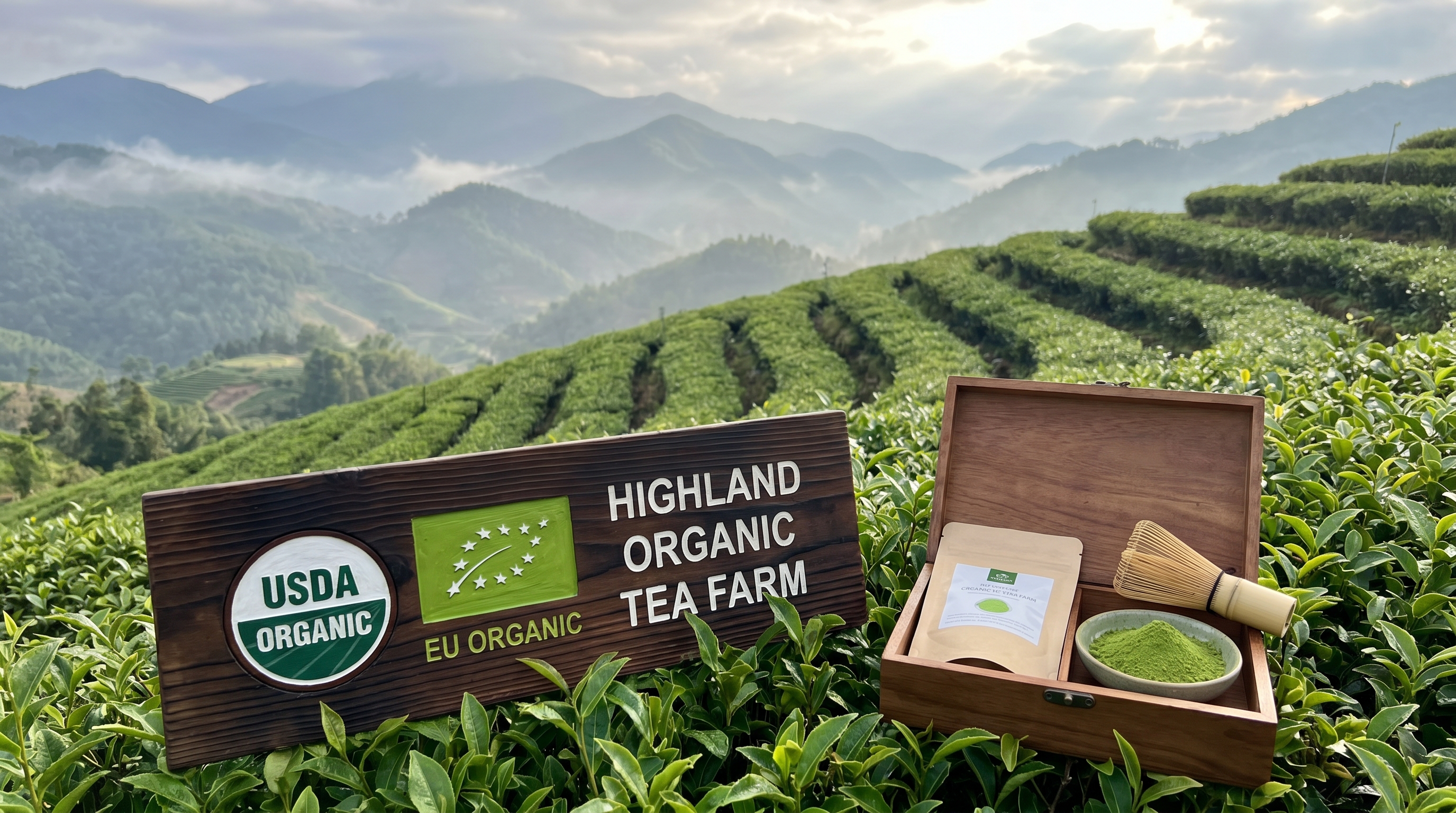
For brands targeting health-conscious consumers, importing wholesale organic matcha powder offers a significant market advantage. However, labeling a product as “organic” requires strict compliance with international equivalence agreements. If the organic certification paperwork is incomplete or mismatched at customs, the entire shipment can be held, stripped of its organic status, or forced to return to origin.
The organic regulatory landscape relies on three primary global standards:
- JAS (Japanese Agricultural Standards): Managed by Japan’s Ministry of Agriculture, Forestry, and Fisheries (MAFF).
- USDA National Organic Program (NOP): The regulatory framework governing organic food products within the United States.
- EU Organic Regulation (Reg EU 2018/848): The strict standards enforced across all European Union member states.
Fortunately, bilateral organic equivalency agreements exist between many of these regions. For example, Japan and the US, as well as Japan and the EU, maintain organic equivalency agreements. This means that JAS-certified organic matcha can be imported and sold as organic in the US or EU—provided specific import documentation protocols are followed exactly.
The key documents required for organic verification include:
- Organic Certificate: Issued to the producer by an accredited third-party certification body (such as Kiwa, Ecocert, or SGS). This document must show the exact legal name of the manufacturer and be currently valid.
- Transaction Certificate (TC): This document is the most common point of failure. A TC must be issued for each specific shipment by the exporter’s certifying body. It links the invoice, batch numbers, and net weights, proving a complete chain of custody from the farm to your container.
- Certificate of Inspection (COI) for Europe: When importing into the EU, the COI must be logged and approved via the electronic TRACES (Trade Control and Expert System) platform before the shipment arrives at the EU port of entry. Failure to submit this on time will strip the organic status of the shipment, forcing it to be cleared as conventional matcha.
Food Safety Compliance: Pesticide Residue Test Reports and Limits
Pesticide residue testing is the most heavily scrutinized safety parameter for tea imports globally. Because matcha is made by grinding whole tea leaves, consumers ingest any residues directly. Consequently, regulatory bodies like the US Environmental Protection Agency (EPA) and the European Commission enforce strict Maximum Residue Limits (MRLs) for hundreds of chemical compounds.
To ensure compliance, importers must secure a pesticide residue test report from an accredited third-party laboratory using advanced testing methodologies:
- GC-MS/MS (Gas Chromatography-Tandem Mass Spectrometry): Highly effective for identifying volatile and semi-volatile pesticide compounds.
- LC-MS/MS (Liquid Chromatography-Tandem Mass Spectrometry): Essential for identifying polar, non-volatile, and thermally unstable pesticides that GC-MS/MS cannot reliably detect.
Using both methods allows laboratories to run comprehensive multi-residue screens (often covering 500+ compounds). The EU enforces some of the world’s strictest pesticide standards. Under European regulations, any pesticide not explicitly registered and granted a tolerance level is subject to a default MRL of 0.01 mg/kg (the limit of analytical detection).
The table below contrasts the MRL standards for key pesticide compounds in major global markets:
Pesticide Compound | Common Agricultural Use | US EPA MRL (mg/kg) | EU MRL (mg/kg) | Critical Testing Method |
|---|---|---|---|---|
Acetamiprid | Neonicotinoid insecticide used for aphid and thrip control. | 50.050.0 | 0.10.1 | LC-MS/MS |
Imidacloprid | Systemic insecticide widely used in leafhopper control. | 50.050.0 | 0.10.1 | LC-MS/MS |
Bifenthrin | Pyrethroid insecticide targeting caterpillars and mites. | 30.030.0 | 0.10.1 | GC-MS/MS |
Chlorpyrifos | Organophosphate insecticide. | 0.10.1 (Phased out/Strict limits) | 0.010.01 (Prohibited) | GC-MS/MS |
Glyphosate | Broad-spectrum herbicide used for weed management. | 1.01.0 | 0.10.1 | LC-MS/MS (Specialized) |
Cypermethrin | Pyrethroid insecticide for chewing insect control. | 15.015.0 | 0.10.1 | GC-MS/MS |
If a shipment is tested at port and found to exceed these limits, it will be denied entry. The importer must then pay to either destroy the entire shipment under customs supervision or export it to a country with compatible MRL limits.
Mitigation of Heavy Metals: ICP-MS Testing and Legal Limits
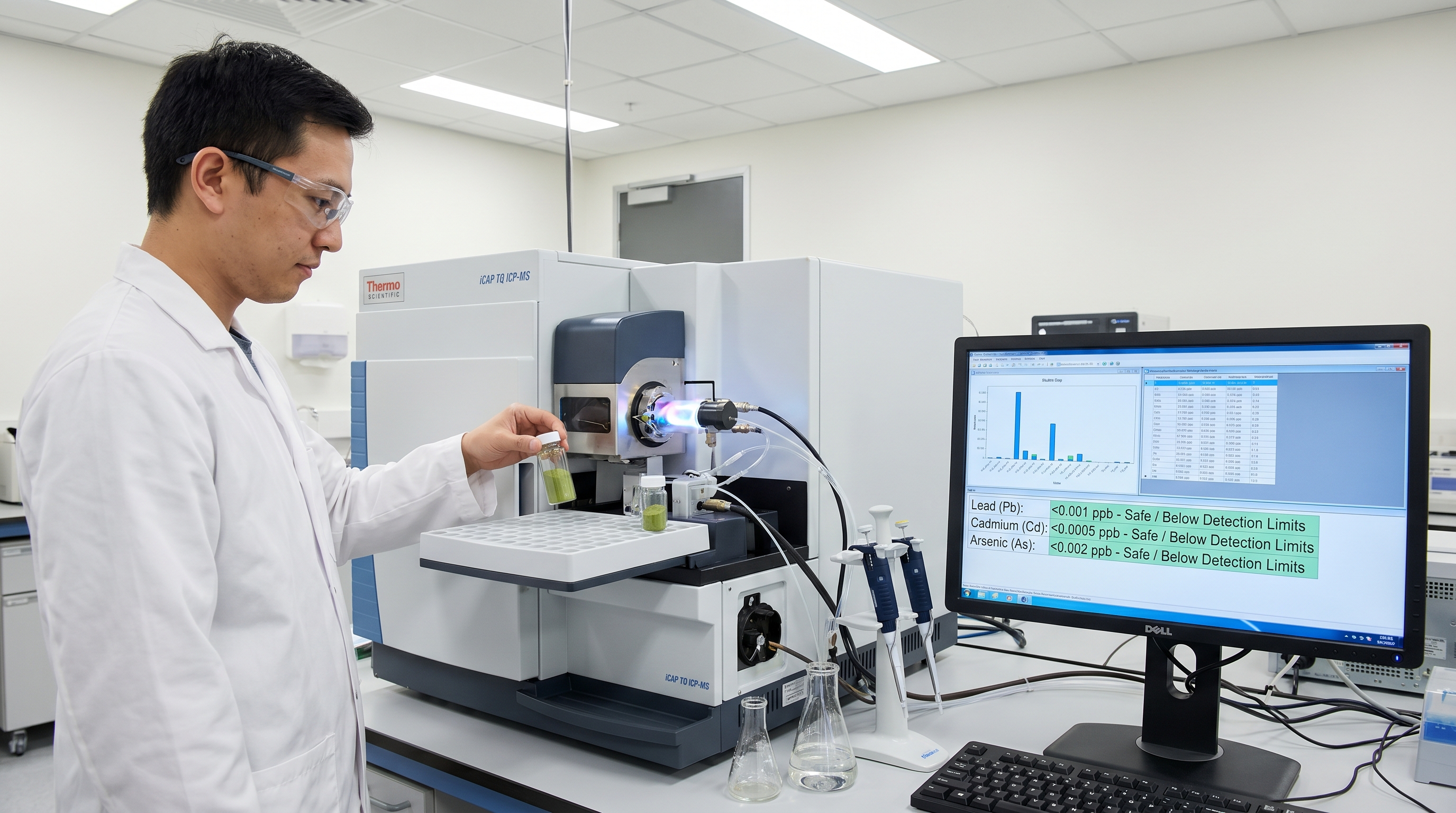
Heavy metal contamination is an inherent environmental risk in tea cultivation. The tea plant (Camellia sinensis) is an efficient bioaccumulator, readily drawing heavy metals from the soil and groundwater into its leaves. Environmental factors—such as soil chemistry, high-altitude terroir, and proximity to industrial zones—directly influence heavy metal concentrations.
To guarantee consumer safety and prevent port rejection, bulk matcha shipments must undergo ICP-MS (Inductively Coupled Plasma Mass Spectrometry) analysis. ICP-MS is the gold standard for heavy metal testing, capable of detecting elements at parts-per-billion (ppb) levels.
Food safety authorities focus on four primary heavy metals: Lead (Pb), Arsenic (As), Cadmium (Cd), and Mercury (Hg).
- United States: The FDA does not set a federal limit for heavy metals in tea leaves, but it relies on general safety guidelines. However, importers must comply with California’s Proposition 65, which mandates clear warning labels if daily exposure limits are exceeded (e.g.,0.5ug/day for lead).
This standard practically requires bulk importers to maintain exceptionally low heavy metal levels.
- European Union: The EU enforces some of the world’s strictest statutory limits for heavy metals in food products under Regulation (EC) No 1881/2006.
The table below contrasts the regulatory thresholds for heavy metals in matcha across major global markets:
Heavy Metal | Major Environmental Sources | California Prop 65 MADL/NSRL | EU Maximum Limit in Tea | Analytical Detection Method |
|---|---|---|---|---|
Lead (Pb) | Soil contamination, historical leaded fuel deposits, old processing equipment. | 0.5 μg/day0.5 \ \mu\text{g/day} (Inhalation/Ingestion) | 3.0 mg/kg3.0 \text{ mg/kg} | ICP-MS |
Arsenic (As) | Natural soil deposits, agricultural runoff, contaminated groundwater. | 10.0 μg/day10.0 \ \mu\text{g/day} (Inhalation) | 1.0 mg/kg1.0 \text{ mg/kg} | ICP-MS |
Cadmium (Cd) | Industrial waste, chemical fertilizers, geological weathering. | 4.1 μg/day4.1 \ \mu\text{g/day} (Ingestion) | 1.0 mg/kg1.0 \text{ mg/kg} | ICP-MS |
Mercury (Hg) | Atmospheric deposition from coal-fired plants, natural soil deposits. | Not explicitly capped under Prop 65 | 0.1 mg/kg0.1 \text{ mg/kg} | ICP-MS |
Phytosanitary Certificate: Navigating Agricultural Inspections
As an agricultural import, raw matcha tea powder can harbor quarantine pests, invasive plant species, or plant-pathogen diseases. To manage these biosecurity risks, agricultural departments (such as USDA-APHIS in the US and national plant health authorities in Europe) require a Phytosanitary Certificate for every import shipment.
This certificate must be issued by the exporting country’s National Plant Protection Organization (NPPO) (such as Japan’s Ministry of Agriculture, Forestry, and Fisheries). It verifies that the consignment has been inspected, is free from quarantine pests, and complies with the importing country’s plant health regulations.
Key areas to manage for a successful agricultural inspection include:
- Timing of Inspection: The physical inspection by the exporting country’s NPPO must occur close to the shipping date. The certificate must be dated within the required window (typically no more than 14 days before the ship leaves the port of origin).
- ISPM 15 Wood Packaging Compliance: If your bulk matcha pallets are secured on wood packaging materials (WPM), the pallets must be heat-treated or fumigated with methyl bromide. They must also bear the official IPPC (International Plant Protection Convention) stamp. Failure to show this stamp will result in the immediate rejection of the entire container at the destination port.
- Physical Verification at Port of Entry: Agricultural inspectors may randomly select containers for physical inspection. They will open the container, verify that the seal matches the paperwork, and inspect the packaging for any signs of water damage, pest infestation, or soil contamination. If any pests are found, the shipment will be placed under quarantine hold. The importer must then pay for fumigation, which can ruin the aroma and flavor of premium matcha.
Correct Customs Classification: HS Code and Product Descriptions for Matcha Powder
Correctly classifying your imported matcha under the Harmonized System (HS) is essential for precise tariff calculation and compliance. HS codes are universally standard up to the first 6 digits, while individual nations use the final 4 to 10 digits to determine specific duty rates, trade remedies, and statistical tracking.
When importing ceremonial grade matcha , classifying it under the correct HS code is critical. This classification justifies its higher declared value to customs officials, helping you avoid valuation audits and ensuring accurate tariff calculations.
For green tea and matcha, the primary classification falls under Heading 09.02. The primary factor in determining the correct subheading is whether the green tea is unfermented and packaged in immediate packings of a content exceeding or not exceeding 3 kg.
HS Code (US HTS) | Detailed Product Description | Primary Duty Rate (USA) | Primary Duty Rate (EU) | Critical Customs Note |
|---|---|---|---|---|
0902.10.0000 | Green tea (not fermented), in immediate packings of a content not exceeding 3 kg. | Free | 0.0%0.0\% | Applied primarily to retail-ready, pre-packaged tins, boxes, or private label pouches. |
0902.20.0000 | Green tea (not fermented), in immediate packings of a content exceeding 3 kg. | Free | 0.0%0.0\% | The standard classification for bulk commercial bags, bags-in-boxes, or fiber drums destined for repackaging. |
0902.10.10 (EU Tariff) | Organic Green Tea (not fermented), in immediate packings ≤\le 3 kg. | Free | 0.0%0.0\% (COI required) | Requires a valid Certificate of Inspection (COI) registered in TRACES to qualify. |
0902.20.10 (EU Tariff) | Organic Green Tea (not fermented), in immediate packings >> 3 kg. | Free | 0.0%0.0\% (COI required) | Standard bulk organic shipping classification. |
Using an incorrect HS code—such as trying to classify matcha under herbal infusions or general food preparations—will quickly flag your shipment for a customs audit. If customs officials determine you misclassified goods to avoid tariffs or regulations, they can assess retroactive duty payments and impose heavy civil penalties.
Proactive Logistics: Avoiding Common Customs Pitfalls for First-Time Importers

Even with flawless paperwork, first-time food importers often face delays due to operational and logistical oversights. Knowing how the port clearance system operates allows you to plan ahead and avoid expensive pitfalls.
- Failure to File Importer Security Filing (ISF “10+2”): For ocean freight entering the United States, the ISF must be submitted electronically to CBP at least 24 hours before the cargo is loaded onto the vessel at the foreign port. Failing to file this on time can result in an immediate $5,000 fine per violation, cargo holds, and mandatory non-intrusive scanning at destination ports.
- Unclear Incoterms Negotiations: Choosing “Delivered Duty Paid” (DDP) might seem convenient, but it often creates complications. Under DDP, the foreign seller is responsible for clearing the goods through customs. If they do not have a registered legal entity, tax ID, or continuous customs bond in your country, the shipment will be held at port. Navigating under FOB or CIF and using your own licensed customs broker gives you direct control over the clearance process.
- Lacking a Continuous Customs Bond: If you plan to import bulk shipments multiple times a year, a continuous customs bond is highly recommended. It covers all your entry filings across any US port of entry for a full year. Relying on single-entry bonds for high-value food shipments is more expensive and requires longer processing times for each individual consignment.
- Failing to Verify FDA Food Facility Registration: Ensure that both the manufacturer’s and exporter’s food facility registrations are active and updated with the FDA. If either party’s registration has lapsed, your customs broker will not be able to file the mandatory Prior Notice, and the cargo will be refused entry.
Pre-Shipment Protocols: How to Prepare Your Import Documents

The key to a smooth customs clearance is executing a disciplined, step-by-step document verification process before the vessel leaves the port of origin. Once the ship is underway, correcting clerical errors, securing missing stamps, or rerunning lab analyses becomes significantly more difficult and expensive.
Phase 1: 30 Days Prior to Cargo Departure
- Request Pre-Shipment Samples: Always request a representative sample from the exact production batch intended for your order.
- Run Third-Party Lab Testing: Send this pre-shipment sample to an independent, ISO-accredited lab (such as Eurofins or SGS) to run a comprehensive pesticide screen (GC-MS/MS and LC-MS/MS), heavy metals analysis (ICP-MS), and microbiological count.
- Cross-Reference Regulatory Limits: Compare the lab results directly with the legal limits of your target market (e.g., EU MRLs, FDA guidelines, California Proposition 65 thresholds). Do not ship the order unless the batch fully complies.
Phase 2: 15 Days Prior to Cargo Departure
- Draft Commercial Documents: Have your exporter draft the Commercial Invoice, Packing List, and organic certificates.
- Conduct Document Audits: Cross-reference all documents to ensure exact consistency. Verify that spelling, batch codes, net/gross weights, and HS codes match perfectly across the Invoice, Packing List, Certificate of Analysis, and Organic Transaction Certificate.
- Confirm FDA Prior Notice Registration: If shipping to the United States, ensure your broker has filed the Prior Notice with the FDA. This filing generates a confirmation number that must accompany the Customs Entry Summary.
Phase 3: 5 Days Prior to Cargo Departure
- Secure Phytosanitary and Export Certificates: Verify that the exporting country’s plant protection agency has inspected the cargo and issued the Phytosanitary Certificate.
- Confirm ISPM 15 Pallet Stamps: Ensure the exporter has used certified, heat-treated pallets with clear, legible IPPC stamps.
- Deliver Digital Document Package to Customs Broker: Send the complete documentation set (Invoice, Packing List, COA, Phytosanitary Certificate, Organic TC/COI, and Bill of Lading) to your licensed customs broker so they can prepare and submit the customs entry filings before the vessel arrives.
Complete Compliance Checklist for Importers, Distributors, and Private Label Brands
Compliance responsibilities shift depending on your business model and your position in the supply chain. If you are importing bulk matcha under your own brand using private label matcha packaging , you bear the full legal liability as the Importer of Record. This means you must ensure that all packaging and nutrition labels fully comply with FDA or European food labeling regulations.
The following matrix outlines the specific document and compliance responsibilities for different B2B personas:
B2B Business Persona | Critical Documentation Focus | Key Regulatory Targets | High-Risk Operational Pitfalls | Mitigating Compliance Action |
|---|---|---|---|---|
Bulk Importer of Record | Phytosanitary Certificates, ISF filings, Customs Entry Forms (CBP 7501), and continuous customs bonds. | Customs Border Protection, USDA-APHIS, national agricultural bodies. | Agricultural pest holds, ISPM 15 packaging violations, valuation audits. | Contract with a licensed customs broker and establish a dedicated continuous customs bond. |
Wholesale Tea Distributor | Comprehensive batch COAs, Organic Certificates, Transaction Certificates (TCs), and Kosher/Halal certifications. | State food safety inspectors, downstream retail QA teams. | Batch tracing failures during a quality claim, organic status revocation. | Implement a robust ERP batch-tracking system linking inbound TCs to outbound sales invoices. |
Private Label Brand | Third-party pesticide test reports (GC/LC-MS/MS), compliant product packaging mockups, and allergen declarations. | FDA Food Labeling Rules, European Commission Reg 1169/2011, Prop 65. | Misbranding claims, omission of mandatory country of origin labeling, Prop 65 lawsuits. | Have a food safety attorney review packaging labels; secure written quality guarantees from your manufacturer. |
Streamlined Sourcing: How Riching Matcha Facilitates Hassle-Free B2B Export Documentation
In the demanding B2B matcha trade, your exporter’s document processing efficiency is just as critical as the quality of the tea leaves. Operational delays at the loading port, clerical errors on organic transaction certificates, or failing to update food facility registrations can quickly derail your supply chain.
As a premium, globally integrated matcha manufacturer and exporter, Riching Matcha has built a robust export compliance program designed to safeguard B2B buyers. They manage every step of the export-import process with meticulous attention to detail:
- Rigorous Laboratory Protocols: Every single production run undergoes thorough testing at accredited, independent laboratories (including Eurofins and SGS). Riching Matcha provides complete COAs and multi-residue pesticide screens (GC-MS/MS and LC-MS/MS) that meet or exceed the destination market’s standards.
- Seamless Organic Chain of Custody: Holding valid USDA NOP, EU Organic, and JAS certifications, Riching Matcha guarantees a transparent chain of custody. They handle the prompt issuance of organic Transaction Certificates (TCs) and manage EU TRACES COI filings to ensure your organic status remains intact.
- Precision Document Preparation: Their dedicated export logistics team prepares flawless commercial invoices, packing lists, and phytosanitary certificates, ensuring exact alignment across all documents to prevent customs delays.
- Strategic Packaging & Logistics Support: From secure, nitrogen-flushed, multi-layer aluminum bulk packaging to ISPM 15-compliant palletization, Riching Matcha ensures your cargo is protected and fully prepared for customs inspection.
By partnering with Riching Matcha, global brands can focus on marketing and distribution, confident that their supply chain is built on a foundation of safety, quality, and complete regulatory compliance.
Frequently Asked Questions
1. Can I import JAS-certified organic matcha into the US and sell it as USDA Organic?
Yes, under the USDA-JAS Organic Equivalency Agreement, organic matcha grown and certified under Japanese Agricultural Standards can be sold as organic in the United States. However, the shipment must be accompanied by an NOP Import Certificate (Form 2170-1) issued by an accredited Japanese certifying body, proving a secure chain of custody.
2. What happens if my matcha shipment fails a pesticide test at the port of entry?
If a customs physical inspection reveals pesticide residues exceeding the target market’s MRLs, the cargo will be denied entry. As the Importer of Record, you will be issued a formal notice to either destroy the entire shipment under customs supervision or export it to a country where the detected pesticide levels are legally accepted. Both options are expensive and must be completed within a strict, customs-mandated window (typically 90 days).
3. How long do I need to keep my matcha import documentation on file?
Most major customs and food safety authorities (including US Customs and Border Protection and EU member-state authorities) require you to keep all import records on file for at least 5 years from the date of entry. This includes commercial invoices, packing lists, entry summaries, Bills of Lading, COAs, and organic certificates, which must be readily accessible in the event of a retrospective customs audit or product recall.
4. Why is a Phytosanitary Certificate required for a finely ground tea powder?
Even though matcha is heavily processed and finely ground, it remains an unfermented agricultural product of plant origin (Camellia sinensis). Plant health protection agencies require a Phytosanitary Certificate to verify that the raw material was thoroughly inspected at origin, processed under hygienic conditions, and is free from quarantine pests or pathogens that could threaten local agricultural ecosystems.
5. Does the FDA physically inspect every single shipment of imported matcha?
The FDA does not physically inspect every shipment. Instead, it utilizes an automated predictive risk-modeling system called PREDICT (Predictive Risk-based Evaluation for Dynamic Import Compliance and Targeting). This system evaluates the safety risk of incoming food cargo based on historical compliance data, the country of origin, the exporter’s registration status, and the accuracy of your Prior Notice filings. Shipments with complete, flawless documentation from trusted, established suppliers are typically cleared automatically, while those with clerical errors or high-risk profiles are flagged for physical inspection.