
For global business-to-business (B2B) tea buyers, food manufacturers, and beverage brands, sourcing matcha is a balance between product freshness, capital allocation, and supply chain continuity. At the center of this balance lies the concept of Minimum Order Quantity (MOQ).
MOQ is the smallest volume of a product that a manufacturer or supplier is willing to sell in a single transaction. In the industrial matcha supply chain, this is not a random number chosen to restrict buyers. Rather, it is an operational and financial threshold determined by manufacturing efficiencies, processing run times, and raw material allocations.
For an importer, understanding the mechanisms behind matcha MOQ is critical for several strategic reasons:
- Shelf Life and Freshness Conservation: Unlike traditional black or green loose-leaf teas, matcha is a ground powder. It is highly vulnerable to oxidation, heat, light, and moisture. Once stone-ground, its vibrant green color (chlorophyll content) and delicate amino acid profile (L-theanine) begin a gradual countdown. Buying excessive volumes simply to bypass high MOQ thresholds can lead to dead stock and flavor degradation.
- Capital Efficiency: Committing capital to massive ocean containers of bulk matcha can restrict cash flow. Understanding how to navigate MOQs allows brands to run leaner, more agile inventory management programs.
- Production Line Efficiency: For manufacturers using matcha as an ingredient (e.g., in bakery goods, ice creams, or ready-to-drink beverages), matching the raw ingredient intake with production batch cycles reduces raw material waste and staging time.
At Riching Matcha Wholesale , we work directly with food service distributors, retail brands, and industrial processors to establish MOQ structures that preserve freshness while maximizing cost efficiencies. By bridging agricultural output with industrial packaging limits, we ensure our partners receive vibrantly green, highly functional matcha tailored to their specific operational scale.
Not all matcha is processed, milled, or packaged in the same manner. Consequently, MOQ structures vary dramatically depending on whether you are purchasing ceremonial-grade stone-ground matcha or culinary-grade industrial-milled powder.
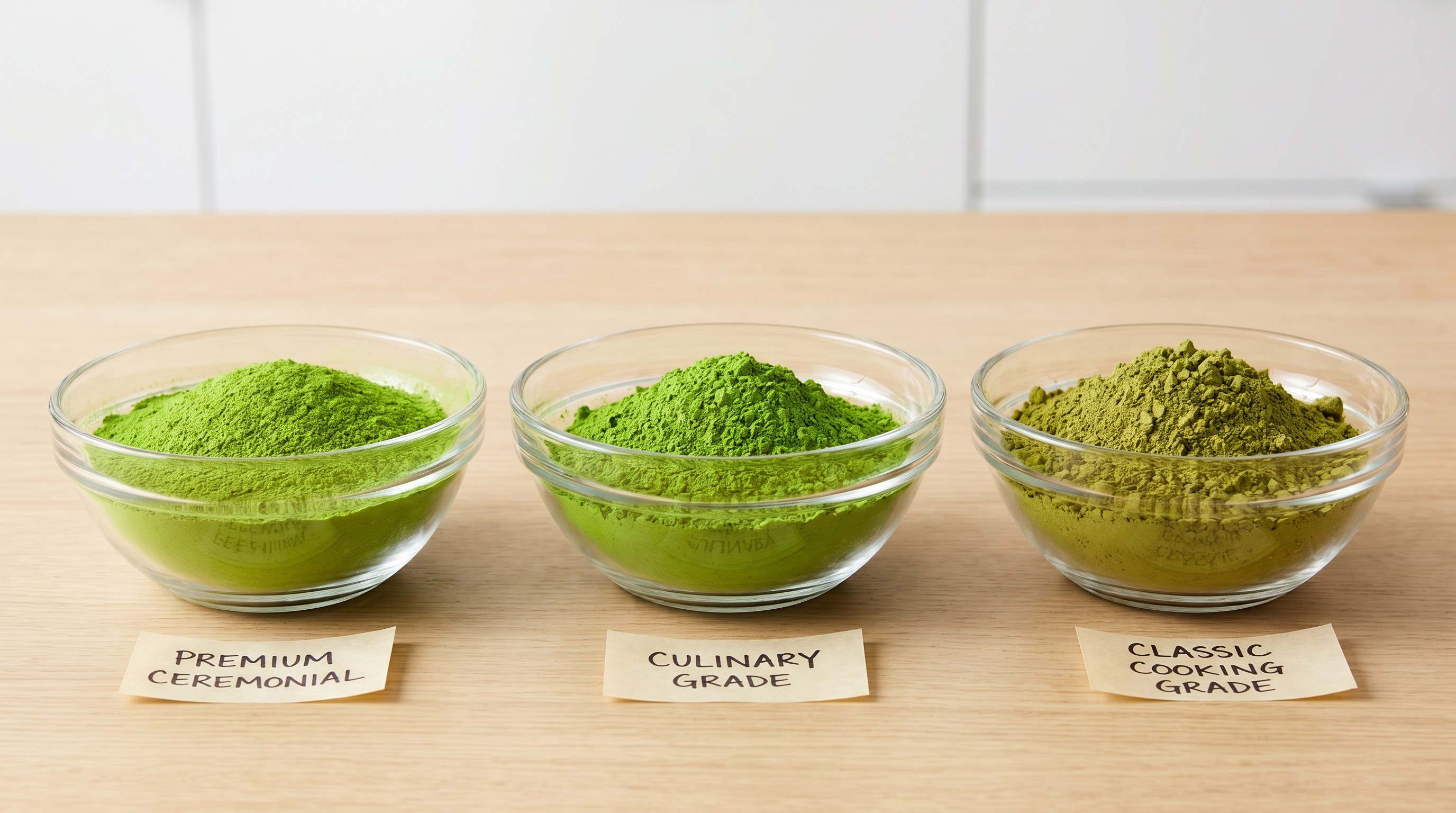
To understand why these MOQs differ, we must examine the operational realities of the processing mill.
Ceremonial Matcha Sourcing Dynamics
Ceremonial matcha is made from the youngest, shade-grown tencha leaves. It is traditionally milled using granite stone grinders rotating at slow speeds (typically 30 to 40 RPM) to prevent frictional heat from scorching the delicate leaves. One stone mill typically yields only 30 to 40 grams of ceremonial matcha powder per hour.
Because of this slow, low-yield process, ceremonial matcha is highly valuable. Suppliers are often willing to offer lower physical MOQs (e.g., 20 kg to 50 kg) because the raw material is expensive, and production runs are meticulously partitioned to preserve organoleptic quality.
Culinary and Industrial Matcha Sourcing Dynamics
Culinary and industrial grades are produced from later harvests. Instead of slow stone grinding, these leaves are processed using high-velocity jet mills or ball mills, which can output hundreds of kilograms per hour. Because these machines require significant setup, cleaning, and calibration times between batches, running small quantities is economically non-viable.
If a factory runs only 50 kg of culinary matcha through an industrial jet mill, more product could be lost in the internal piping and cyclone collectors of the machinery than is actually packaged. Therefore, industrial culinary grades carry much higher MOQs (typically starting at 100 kg to 500 kg).
Matcha Grade | Primary Mill Type | Typical Hourly Yield | Standard Bulk MOQ | Target Application |
|---|---|---|---|---|
Super Premium Ceremonial | Traditional Granite Stone | 30g – 40g / mill | 10 kg – 20 kg | Traditional tea ceremonies, premium retail |
Standard Ceremonial | Slow Stone or Micro-Jet | 1 kg – 5 kg | 20 kg – 50 kg | Specialty cafés, premium lattes, direct retail |
Premium Culinary | High-Velocity Jet / Ball Mill | 50 kg – 150 kg | 100 kg | Matcha lattes, baking, blends, cosmetics |
Industrial / Food Grade | Industrial Hammer / Jet Mill | 200 kg+ | 500 kg – 1,000 kg | Mass food production, RTD beverages, ice cream |
Sample Orders vs. Trial Orders vs. Bulk Orders: Which is Right for You?
When establishing a sourcing pipeline with a supplier, purchasing managers must navigate three distinct phases of product onboarding: sample testing, trial production runs, and full-scale bulk orders. Each level features unique MOQ boundaries designed to mitigate risk for both the importer and the manufacturer.
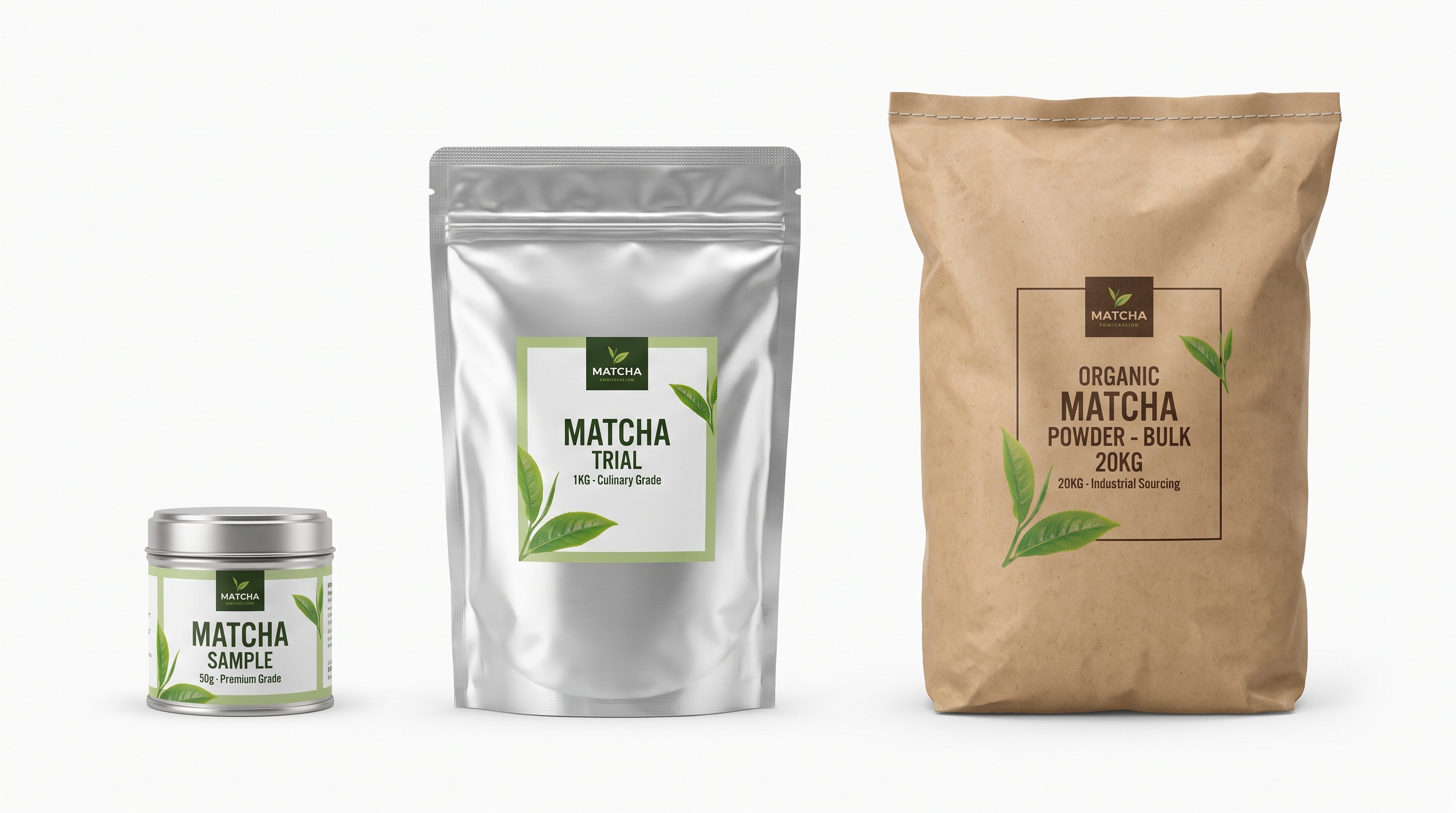
1. Sample Orders (Testing & QA Evaluation)
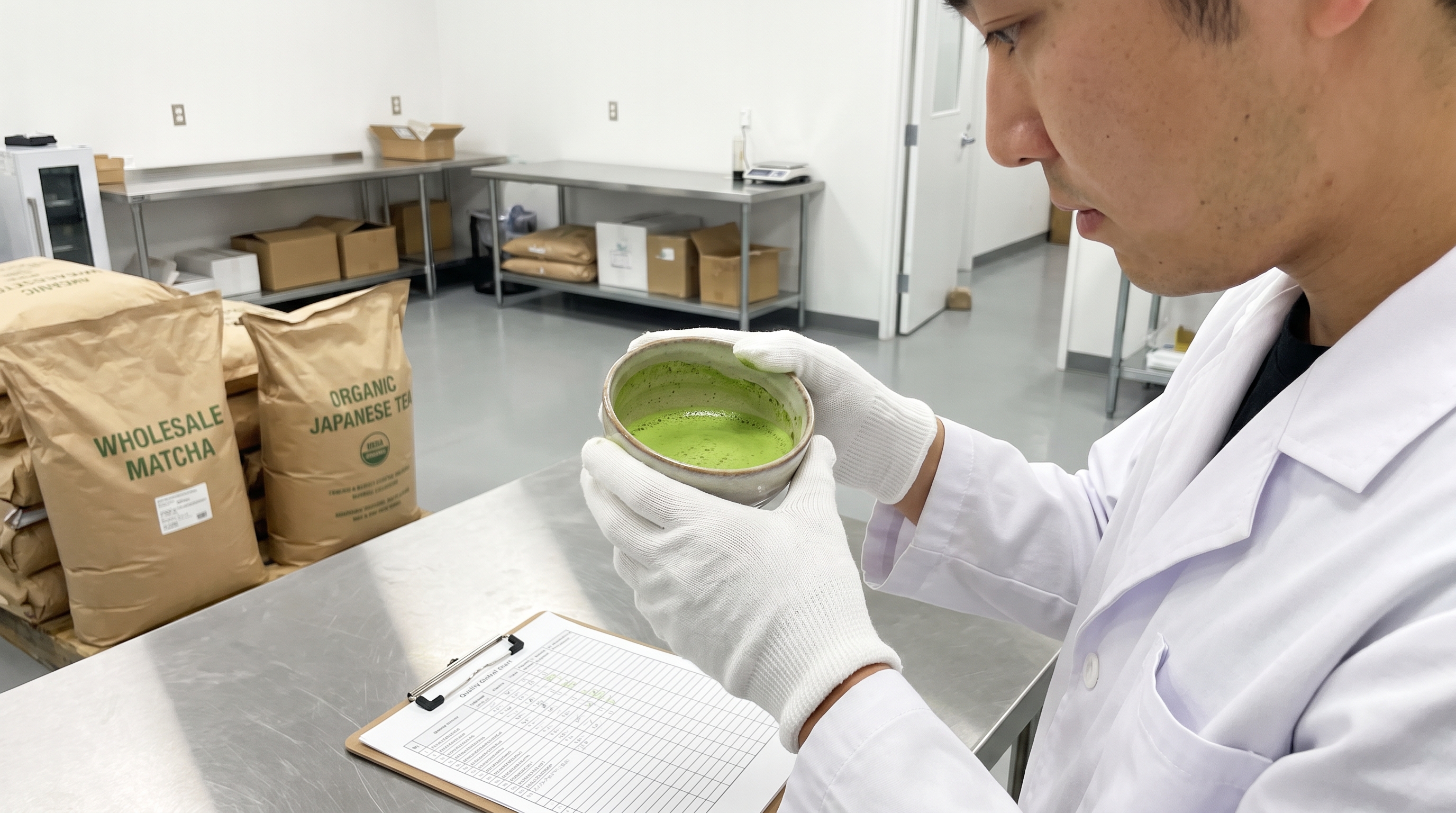
Before any transaction occurs, quality assurance (QA) teams must verify the physical and chemical properties of the matcha. This includes analyzing the moisture content, particle size distribution (measured in mesh or microns), microbiology (aerobic plate count, yeast, mold), heavy metals, and pesticide residues.
- Typical MOQ: 50g to 200g per grade.
- Objective: Organoleptic evaluation (color, aroma, taste, astringency) and laboratory verification.
- Logistics: Dispatched via express air courier (DHL, FedEx, UPS) to ensure maximum freshness during transit.
2. Trial Orders (R&D & Market Validation)
Once a sample is approved, a business rarely jumps straight to multi-ton procurement. Instead, a trial order (or test batch) is executed. This allows café chains to run regional pilot programs, and food brands to execute R&D line trials on their extrusion, baking, or bottling equipment.
- Typical MOQ: 5 kg to 50 kg.
- Objective: Process compatibility testing and initial shelf-stability studies.
- Logistics: Air freight or consolidated ocean shipping (LCL).
3. Bulk Commercial Orders (Scale Pricing Optimization)
This represents the standard commercial purchasing cadence. Once the product is fully integrated into the buyer’s product line, bulk orders are placed to maximize economies of scale, lower transport costs, and secure competitive unit pricing.
- Typical MOQ: 100 kg to 1,000 kg (depending on grade).
- Objective: Margin optimization and supply chain stabilization.
- Logistics: Full Container Load (FCL) or refrigerated Ocean/Rail Freight.
Minimum Order Quantities for Bulk Matcha Powder Customization
As a business grows, standard off-the-shelf matcha may no longer meet its unique product specifications. Customization becomes necessary. This might involve altering the mesh size for better solubility in cold liquids, blending matcha with functional ingredients (like collagen, MCT oil, or adaptogens), or sourcing certified organic options.
Custom Sieve and Mesh Sizing
Standard matcha is milled to a particle size of approximately 5 to 15 microns (1,000 to 2,000 mesh). However, industrial Ready-to-Drink (RTD) beverage manufacturers often require a slightly coarser mesh to prevent clumping in industrial mixing vats, or an ultra-fine mesh for instant dissolvability. Adjusting the mill speed and internal classification systems requires a dedicated manufacturing run.
- Custom Milling MOQ: Typically starts at 200 kg.
Custom Ingredient Blending
Formulating products like matcha collagen, sweetened latte bases, or functional mushroom-matcha blends requires specialized industrial ribbon blenders or double-cone blenders. To ensure homogeneous distribution of active ingredients across the entire batch, the machinery must be filled to its optimum operating capacity.
- Custom Blending MOQ: Typically starts at 500 kg per formulation.
Certified Organic vs. Conventional Matcha
Sourcing Riching Organic Matcha involves strict segregation of agricultural raw materials. Because organic processing lines must undergo complete wet-dry sanitization cycles to prevent cross-contamination with conventional tea leaves, short production runs are highly inefficient.
- Organic Certified Bulk MOQ: Typically starts at 100 kg per shipment.
MOQ Requirements for Private Label Tins, Bags, and Stick Packs
One of the most profitable sectors of the modern tea market is private labeling. Whether you are an e-commerce brand, a specialty grocery chain, or a fitness supplement company, launching your own branded matcha line yields high margins. However, private labeling introduces a complex set of packaging-related MOQs.
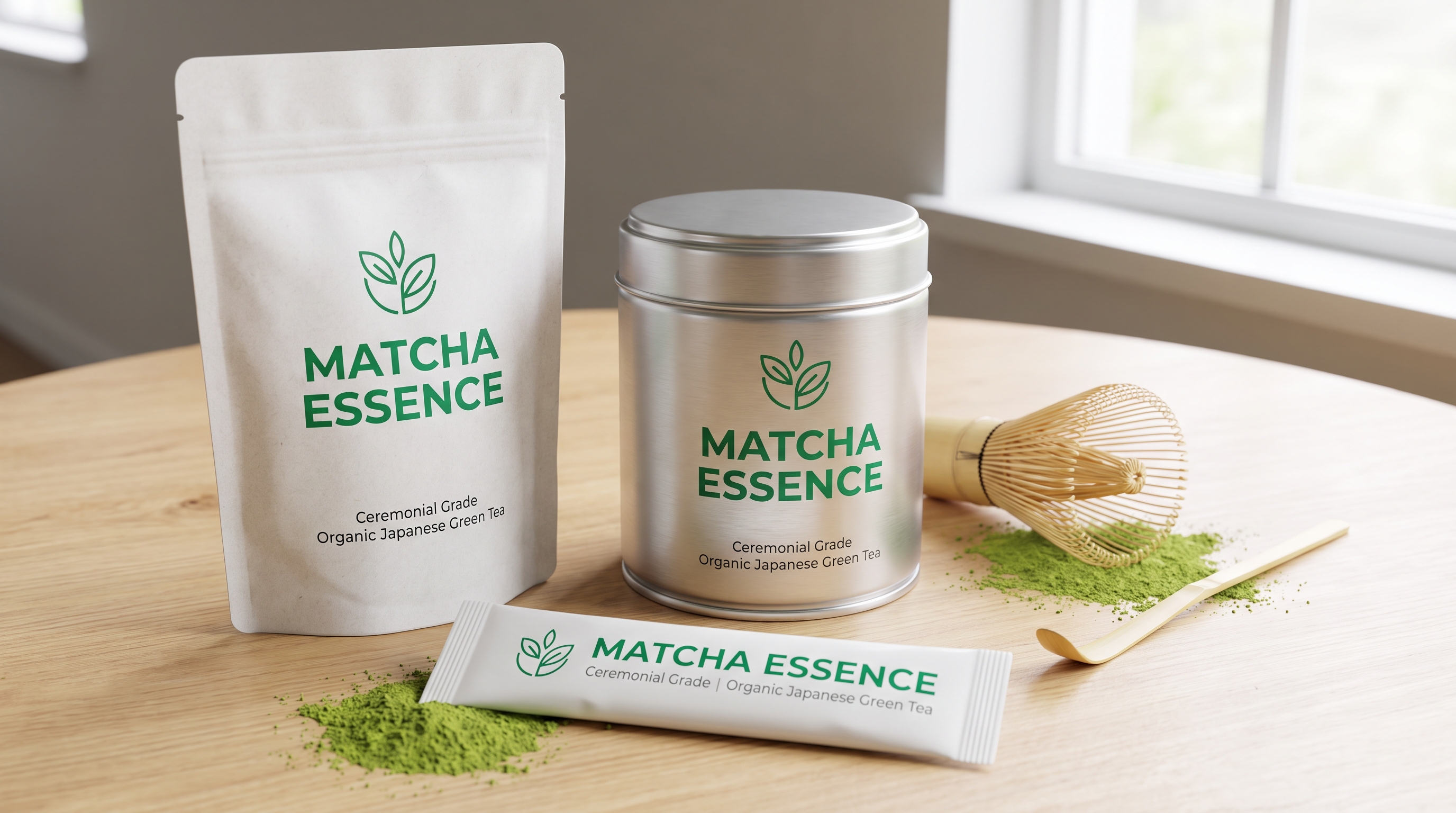
When you choose Riching Matcha Private Label services, we guide you through the raw material constraints of different packaging formats. The physical matcha powder itself is highly customizable at relatively low volumes, but the packaging vessels have their own manufacturing thresholds:
Metal Tins (30g – 80g)
Tinplate containers are the gold standard for ceremonial matcha. They offer complete protection against oxygen, UV light, and structural crushing.
- Stock Tins with Custom Labels: If we use standard stock silver, black, or gold tins and apply a high-quality printed paper or vinyl label, the MOQ can be as low as 500 to 1,000 units.
- Direct Lithographic Printed Tins: Printing your branding artwork directly onto the metal surface of the tin during the metal fabrication process requires a substantial mechanical run. The MOQ for direct-print tins is 10,000 units.
Flexible Stand-Up Pouches / Mylar Bags (30g – 250g)
Stand-up pouches (with resealable zippers and high-barrier aluminum lining) are incredibly popular due to their low shipping weight and modern shelf presence.
- Digital Printing (Low MOQ): Digital printers do not require custom copper printing plates. This allows brands to print small runs of fully customized pouches. The MOQ is highly accessible, starting at 1,000 to 2,000 pouches.
- Rotogravure Printing (High Volume): For massive retail distribution, rotogravure printing offers the lowest unit cost. However, it requires a separate engraved steel cylinder (plate) for each color in your artwork. The MOQ starts at 10,000 to 20,000 pouches.
Single-Serve Stick Packs (1g – 3g)
Perfect for on-the-go consumption and fast-paced lifestyles, stick packs are filled on automated Form-Fill-Seal (FFS) machinery. This equipment runs at extremely high speeds, consuming kilometers of rolled packaging film in a single shift.
- Automated Stick Pack MOQ: Starts at 50,000 to 100,000 individual sticks per design run.
Customizing Matcha Accessories and Gift Sets: Understanding MOQ Boundaries
For many retail brands and corporate gifting businesses, selling matcha powder is only half of the equation. To provide a complete consumer experience, companies package their matcha with traditional or modern preparation tools. These include bamboo whisks (chasen), bamboo scoops (chashaku), ceramic whisk holders (kusenaoshi), and handcrafted ceramic bowls (chawan).
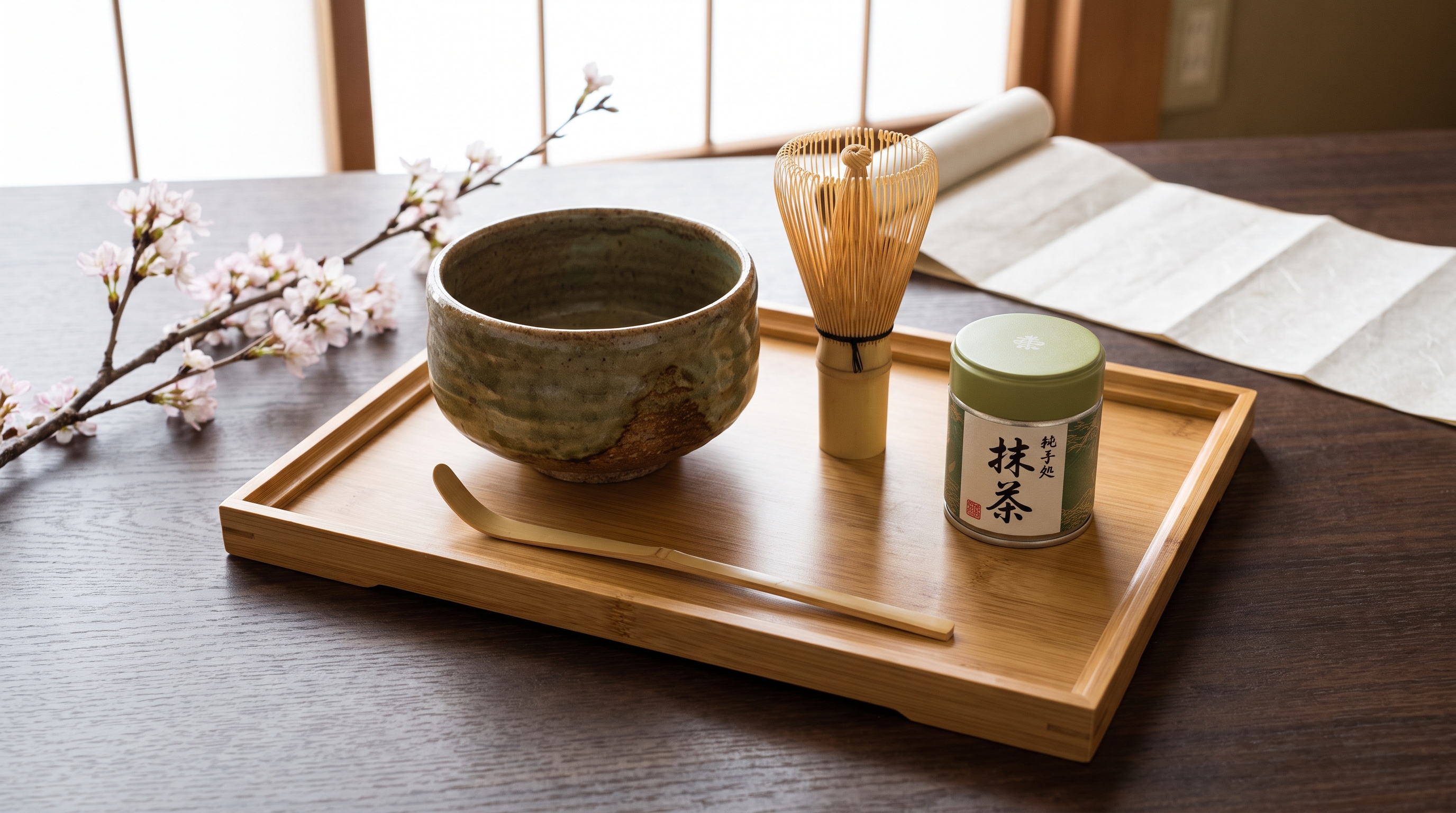
Through Riching Matcha Accessories sourcing, we help brands bundle high-quality accessories alongside their tea orders. Because accessory manufacturing involves different industries (woodworking, ceramic firing, paper box manufacturing), their MOQs are calculated differently than tea powder:
1. Traditional Bamboo Whisks (Chasen)
Each traditional whisk is hand-carved from a single piece of seasoned bamboo.
- Standard Whisk (Plain): Available in bulk with an MOQ of 100 units.
- Custom Brand Laser-Engraving: We can laser-engrave your brand’s logo onto the handle of the bamboo whisk. This process is highly precise, carrying a manageable MOQ of 500 units.
2. Ceramic Bowls (Chawan) & Whisk Holders (Kusenaoshi)
Ceramic items are molded, glazed, and fired in large industrial kilns.
- Standard Colors/Shapes: Sourced from our active molds with an MOQ of 200 units.
- Custom Glaze or Embossed Logo: Modifying the glaze chemical formulation or pressing a custom logo into the wet clay before firing requires an MOQ of 1,000 units.
3. All-in-One Ceremonial Gift Sets
Creating a bespoke retail-ready box with custom-cut EVA foam inserts to house a tin of matcha, a whisk, scoop, and holder requires structured paperboard printing.
- Custom Gift Set Box Packaging MOQ: Typically starts at 500 to 1,000 sets to offset the cost of custom knife-edge tooling for the box inserts.
How Packaging Materials and Custom Printing Impact Your Order Limits
To make informed purchasing decisions, a sourcing manager must understand the structural and mechanical realities of packaging production lines. The physical construction of the packaging dictates the supplier’s MOQ.
The Mechanics of Form-Fill-Seal (FFS) Rollstock
When packaging matcha into pouches or stick packs, factories do not usually buy premade bags if they are running high-speed machinery. Instead, they buy large rolls of printed multi-layer film (known as rollstock).
An automated machine unrolls this film, shapes it into a tube, heat-seals the bottom, drops in a nitrogen-flushed charge of matcha, and seals the top.
The manufacturer of that rollstock film cannot easily run their massive flexographic or rotogravure printing presses for less than 500 to 1,000 meters of film without incurring massive raw material waste during color calibration. Consequently, your packaging MOQ is directly tethered to the minimum length of film the printing press can physically process.
Multi-Layer Barrier Protection Requirements
Matcha is exceptionally sensitive to light transmission and oxygen permeation. Standard single-layer plastic bags are completely inadequate. Premium packaging must utilize a three- or four-layer laminate structure:
- Outer Layer: PET or Kraft Paper (for printability and structural rigidity).
- Barrier Layer: Vaporized Aluminum Foil (AL) or Metallized PET (VMPET) to block 100% of light and oxygen.
- Inner Sealant Layer: Linear Low-Density Polyethylene (LLDPE) for clean heat-sealing.
Because of the complexity of laminating these layers together with food-grade adhesives, raw material producers sell laminated films in large master rolls. This explains why customized packaging requires higher initial MOQs, even if the supplier is highly flexible with the volume of the tea powder itself.
Strategic Purchasing: How First-Time Matcha Buyers Can Start Safely
Entering the premium matcha market can be intimidating for start-ups, boutique tea brands, or independent café groups. Committing to a large bulk order without a historical sales baseline presents financial risks.
At Riching Matcha, we prioritize sustainable long-term partnerships over one-off transactions. We advise first-time importers to utilize a step-by-step risk-reduction roadmap to scale up operations systematically.
Step 1: Secure an Off-The-Shelf Standard Stock Program
Begin by utilizing your supplier’s standard, pre-formulated matcha grades packed in generic bulk packaging (such as double-sealed 10 kg foil bags inside heavy-duty cartons).
- Why it works: Because the supplier processes these standard grades daily, they do not require custom manufacturing runs. You can easily purchase as little as 10 kg to 20 kg to launch your business and test local market reception.
Step 2: Utilize “Blanket Orders” with Scheduled Releases
If your projected annual consumption is 1,000 kg, but you do not have the warehouse space or cash flow to receive it all at once, you can negotiate a Blanket Purchase Order.
- How it works: You sign a contract for 1,000 kg to lock in the volume discount pricing tier. However, you arrange for the supplier to ship the product in monthly or quarterly increments of 250 kg. This guarantees fresh, stone-ground shipments throughout the year while protecting your working capital.
Step 3: Implement Custom Packaging Deposits
For private-label brands that want customized bags but cannot afford the cash outlay for 10,000 bags plus 500 kg of matcha in one go, ask your supplier for a Packaging Deposit Scheme.
- How it works: You pay for the initial print run of 10,000 custom pouches upfront. This meets the packaging manufacturer’s MOQ. However, the supplier stores the empty pouches in their temperature-controlled warehouse. They then pack the pouches in smaller batches (e.g., 1,000 pouches per quarter) as your sales roll in.
Practical Guide: Estimating Your Monthly Matcha Consumption for Business
Before contacting a supplier like Riching Matcha, it is highly beneficial to calculate your realistic monthly consumption. This allows our sales engineering team to match your business with the perfect MOQ bracket and logistics channel.
To calculate your volume requirements, categorize your business model and use the formulas below:
For Café Operators and Food Service Distributors
An average 12oz or 16oz matcha latte uses approximately 3g to 5g of premium culinary matcha powder.
Monthly Volume (kg)=Daily Servings×30 Days×Grams per Serving (e.g., 4g)1,000\text{Monthly Volume (kg)} = \frac{\text{Daily Servings} \times 30 \text{ Days} \times \text{Grams per Serving (e.g., 4g)}}{1,000}
Let’s look at real-world operational scenarios based on different daily sales volumes:
- Boutique Café (50 cups/day):50×30×4g=6,000g (6 kg per month)50 \times 30 \times 4\text{g} = 6,000\text{g} \ (6\text{ kg per month})
- High-Volume Specialty Coffee Shop (150 cups/day):150×30×4g=18,000g (18 kg per month)150 \times 30 \times 4\text{g} = 18,000\text{g} \ (18\text{ kg per month})
- Regional Café Chain (5 Locations, 100 cups/day/location):500×30×4g=60,000g (60 kg per month)500 \times 30 \times 4\text{g} = 60,000\text{g} \ (60\text{ kg per month})
For Private Label E-Commerce Brands
Determine your target monthly sales velocity for your retail packaging sizes (typically 30g tins or 100g bags).
- Target sales of 500 pouches of 100g organic matcha per month:500×0.1 kg=50 kg of bulk powder per month500 \times 0.1\text{ kg} = 50\text{ kg of bulk powder per month}
- Target sales of 2,000 tins of 30g ceremonial matcha per month:2,000×0.03 kg=60 kg of bulk powder per month2,000 \times 0.03\text{ kg} = 60\text{ kg of bulk powder per month}
For Food and Beverage Manufacturers
Industrial processing lines (bakeries, dairy processors, RTD tea brands) operate on a batch-formulation percentage (typically 1% to 3% matcha powder by weight of the finished product).
Required Matcha (kg)=Total Production Batch Weight (kg)×Matcha Percentage\text{Required Matcha (kg)} = \text{Total Production Batch Weight (kg)} \times \text{Matcha Percentage}
- A bakery producing 10,000 kg of matcha cookies monthly at a 1.5% inclusion rate:10,000 kg×0.015=150 kg of industrial culinary matcha per month10,000\text{ kg} \times 0.015 = 150\text{ kg of industrial culinary matcha per month}
The Financial Equation: How MOQ Affects Unit Cost and Shipping Freight
Sourcing bulk ingredients is fundamentally a volume-optimization game. As your order size increases, your cost per kilogram decreases dramatically. This cost reduction is driven by two key factors: production amortization and shipping logistics.
Production Cost Amortization
Every time a factory switches from processing one grade of tea to another, the machinery must be stopped, thoroughly deep-cleaned to satisfy food safety audits, and recalibrated. This downtime represents lost revenue.
When you order a higher volume, these fixed operational setup costs are amortized over a larger number of kilograms, lowering your unit cost.
Shipping Freight Economics
The physical weight and volume of your shipment dictate your shipping method. Sending small quantities via air courier is fast but incredibly expensive per kilogram. Transitioning to ocean freight reduces unit transport costs significantly.
Let’s analyze how order size shifts shipping logistics and impacts your bottom line:
Order Weight | Shipping Method | Transit Time | Avg. Freight Cost / kg | Key Commercial Characteristic |
|---|---|---|---|---|
10 kg – 49 kg | Express Air Courier (DHL/FedEx) | 3 – 5 days | $8.00 – $12.00 / kg | Highly expensive, reserved for samples and urgent trials |
50 kg – 199 kg | Air Freight (Airport-to-Airport) | 5 – 10 days | $4.00 – $6.50 / kg | Good compromise for premium ceremonial grades |
200 kg – 999 kg | LCL Ocean Freight (Less Container Load) | 25 – 40 days | $1.00 – $2.00 / kg | High margin optimization for growing commercial brands |
1,000 kg+ | FCL Ocean Freight (Full Container Load) | 25 – 40 days | $0.30 – $0.75 / kg | The ultimate cost-efficiency standard for global importers |
Note: The shipping rates listed above are estimates. Actual freight rates fluctuate based on global shipping lanes, seasonal demand, fuel surcharges, and port handling fees.
How to Efficiently Negotiate MOQ and Terms with Riching Matcha
In B2B trade, negotiations should aim for a mutually beneficial scenario where the supplier maintains production standards and the buyer secures healthy operating margins. At Riching Matcha, we welcome open dialogue regarding MOQ parameters, customized packaging structures, and payment terms.

To prepare for a successful negotiation with our sales engineering team, consider the following strategic levers:
1. Present a Clear Growth Roadmap
If you cannot meet our standard bulk MOQ of 100 kg on your very first order, do not worry. Share your business plan, marketing strategies, and projected growth targets with our team. We are often highly supportive of promising brands and may offer a customized introductory MOQ (e.g., 50 kg) for the first two orders to help you establish market traction.
2. Standardize Your SKUs
If you are planning to launch four different flavors of matcha, each requiring a separate custom blending run, you will face multiple MOQs. To optimize your capital, launch with one or two flagship SKUs (such as a Premium Organic Ceremonial and a Premium Culinary Latte grade). Once these two core products generate stable cash flow, you can easily expand into custom blends.
3. Provide Your Exact Testing Protocols
To speed up the QA evaluation phase and avoid costly delays, provide your specific testing criteria upfront. Whether your target country has strict agricultural limits on specific pesticides, or your factory requires a specific microbiology profile, our quality control lab will pre-screen and certify batches that perfectly match your country’s compliance requirements.
Ready to start your premium matcha sourcing journey? Simply reach out to our dedicated support specialists on our Riching Matcha Contact Page to request official product catalogs, technical spec sheets, or custom private-label pricing analyses.
Top 5 Matcha MOQ FAQs for Importers, Cafés, and Brands
Navigating the nuances of international matcha sourcing can raise many technical and operational questions. Below, we address five of the most common questions raised by B2B purchasing managers, quality control officers, and brand founders.
Q1: Why can’t I order custom-printed packaging with a very low tea powder MOQ (like 50 kg)?
The restriction is not caused by the tea powder itself, but by the physical manufacturing limits of high-speed printing presses. Packaging material manufacturers laminate and print film in large master rolls. A run of less than 1,000 to 2,000 meters of film is technically impossible for rotogravure or large-scale flexographic printers due to mechanical setup requirements and color-calibration waste.
To overcome this hurdle, Riching Matcha offers a digital printing service for stand-up pouches, lowering your initial customized packaging MOQ to as little as 1,000 to 2,000 units. Alternatively, we can apply high-quality custom labels to stock tins or bags at even lower volumes.
Q2: Does the MOQ differ between Japanese organic certified matcha and conventional matcha?
Yes. Organic matcha cultivation and processing require strict isolation protocols. To maintain USDA Organic, EU Organic, or JAS certification, processing facilities must run comprehensive sanitization cycles on all milling, blending, and packaging machinery to ensure there is zero cross-contamination with conventional tea leaves.
Because of these mandatory cleaning cycles and the detailed batch tracing required by organic certification bodies, organic certified matcha runs carry higher, more structured MOQs (typically starting at 100 kg for bulk orders) compared to standard conventional runs.
Q3: What is the average shelf life of bulk matcha once it is delivered, and how does that affect my MOQ planning?
Under optimum conditions (stored in an unopened, nitrogen-flushed, double-sealed foil bag in a cool, dark, and dry warehouse), bulk matcha has a stable commercial shelf life of 18 to 24 months. Once a retail container or bulk bag is opened, the powder should ideally be consumed within 60 to 90 days to ensure the best flavor, color, and nutritional profile.
When planning your MOQ, we recommend ordering a 3-to-6-month supply. This keeps your inventory fresh while allowing you to access highly favorable bulk shipping rates and tiered volume discounts.
Q4: Can I mix and match different grades of matcha to meet your overall company MOQ?
Yes. At Riching Matcha, we encourage purchasing flexibility. If our bulk commercial order threshold is 100 kg, you do not have to buy 100 kg of a single grade. You can easily split your order across different grades to suit your business needs—for example, combining 20 kg of Ceremonial Matcha for retail sale with 80 kg of Culinary Matcha for your café latte and baking applications.
This approach helps you meet our transport and processing thresholds while keeping your individual SKU inventory fresh and highly functional.
Q5: How does nitrogen flushing affect the shelf stability of my private label matcha orders?
Nitrogen flushing is an absolute necessity for high-quality private-label packaging. During the packaging process, automated machines inject food-grade nitrogen gas into the bag or tin, displacing the oxygen content to below 1%. Because oxygen is the primary element responsible for degrading chlorophyll and oxidising delicate amino acids, this nitrogen-flushed atmosphere effectively freezes the aging process of the matcha.
At Riching Matcha, we utilize advanced nitrogen-flushing technology on all our automated stick-pack and pouch-filling lines. This ensures that when your customers unzip their branded pouch or pop open their metal tin, they are greeted by a vibrant green, aromatic, and fresh matcha experience.