
To find a reliable partner, you must evaluate their manufacturing capacity, organic certifications, and ability to provide consistent quality across various grades for your specific business application. Choosing a supplier is not merely a transaction but a strategic alliance that determines the flavor profile, safety, and profitability of your entire product line. As you navigate the global market, identifying the Best Matcha Supplier requires a deep understanding of tea cultivation, processing technology, and international export standards.
Whether you are a startup café or a large-scale food manufacturer, your chosen partner should offer comprehensive support ranging from bulk raw materials to custom private label solutions. A truly professional entity will maintain high-capacity production facilities while ensuring that every batch of tencha is processed under strict quality control protocols. By focusing on transparency and traceability, you can secure a supply chain that grows alongside your brand.
A matcha supplier is a specialized entity, often a factory or a large-scale distributor, that manages the cultivation, harvesting, and processing of Camellia sinensis leaves into a fine green tea powder. Finding the Best Matcha Supplier means identifying a partner that owns or directly manages tea gardens to ensure that shading and harvesting techniques meet professional standards. They are responsible for the critical transition from raw leaf to “Tencha,” and finally to the vibrant green powder used in beverages and food production.
Beyond simple production, these suppliers act as the backbone of your inventory management by providing consistent lead times and technical specifications. They must bridge the gap between traditional agricultural practices and modern industrial requirements, ensuring that every kilogram of powder meets microbiological and sensory benchmarks. A professional supplier understands the nuances of different markets and adapts their processing to satisfy global regulatory frameworks.
What are the core functions of a manufacturer?
A primary manufacturer oversees the entire lifecycle of the tea, starting from the rigorous shading process that lasts 20 to 30 days before harvest to increase chlorophyll and L-theanine levels. They utilize high-tech machinery to steam, air-dry, and de-vein the leaves, ensuring that only the purest parts of the plant are stone-milled or jet-milled into powder.
- Managed shading of tea plantations to enhance umami flavor.
- Precise steaming and drying to lock in the vibrant green color.
- De-veining and de-stemming to produce high-quality Tencha.
- Fine grinding using traditional stone mills or modern industrial mills.
Make no mistake about it, the technical sophistication of the factory directly impacts the solubility and texture of the final product. Without state-of-the-art equipment, even the best leaves can result in a bitter, gritty powder that ruins the consumer experience.
Why is direct factory sourcing important?
Sourcing directly from a factory eliminates unnecessary middleman markups and provides you with direct access to the source of your product’s quality. This transparency allows for better communication regarding batch-to-batch consistency and provides a faster resolution for any logistical or technical inquiries.
- Significant cost savings by removing distributor commissions.
- Direct control over quality specifications and custom blends.
- Faster response times for large-scale bulk orders.
- Greater traceability for organic and safety certifications.
Here is the kicker: direct sourcing is often the only way to guarantee that your matcha hasn’t been blended with older, oxidized stock by third-party traders. Knowing exactly where your tea was grown and processed provides a level of brand security that is priceless.
How do suppliers support business growth?
Strategic suppliers do more than ship boxes; they provide market insights, research and development support, and scalable production capacities that accommodate your brand’s expansion. They help you navigate the complexities of international shipping, customs documentation, and regional taste preferences.
- Scalable production from small trial batches to multi-ton shipments.
- R&D support for developing unique matcha-based beverage or food recipes.
- Logistical expertise for global distribution and “door-to-door” delivery.
- Provision of marketing materials and technical data sheets (TDS).
The truth is, a supplier’s ability to scale is your greatest asset during a period of rapid market penetration. You need a partner who can increase output without compromising the delicate sensory profile of your signature products.
Key Takeaway: A dedicated matcha supplier is a vertically integrated partner that manages everything from the shade-growing of leaves to the final grinding and global distribution of the powder.
Function | Business Impact | Key Metric |
|---|---|---|
Shading Management | Flavor & Color | L-theanine Content |
Milling Technology | Texture & Solubility | Particle Size (Microns) |
Direct Sourcing | Cost & Traceability | Price per Kilogram |
The vertical integration of a supplier ensures that quality control is maintained at every agricultural and industrial step, directly influencing your product’s market competitiveness.
What defines the Best Matcha Supplier?
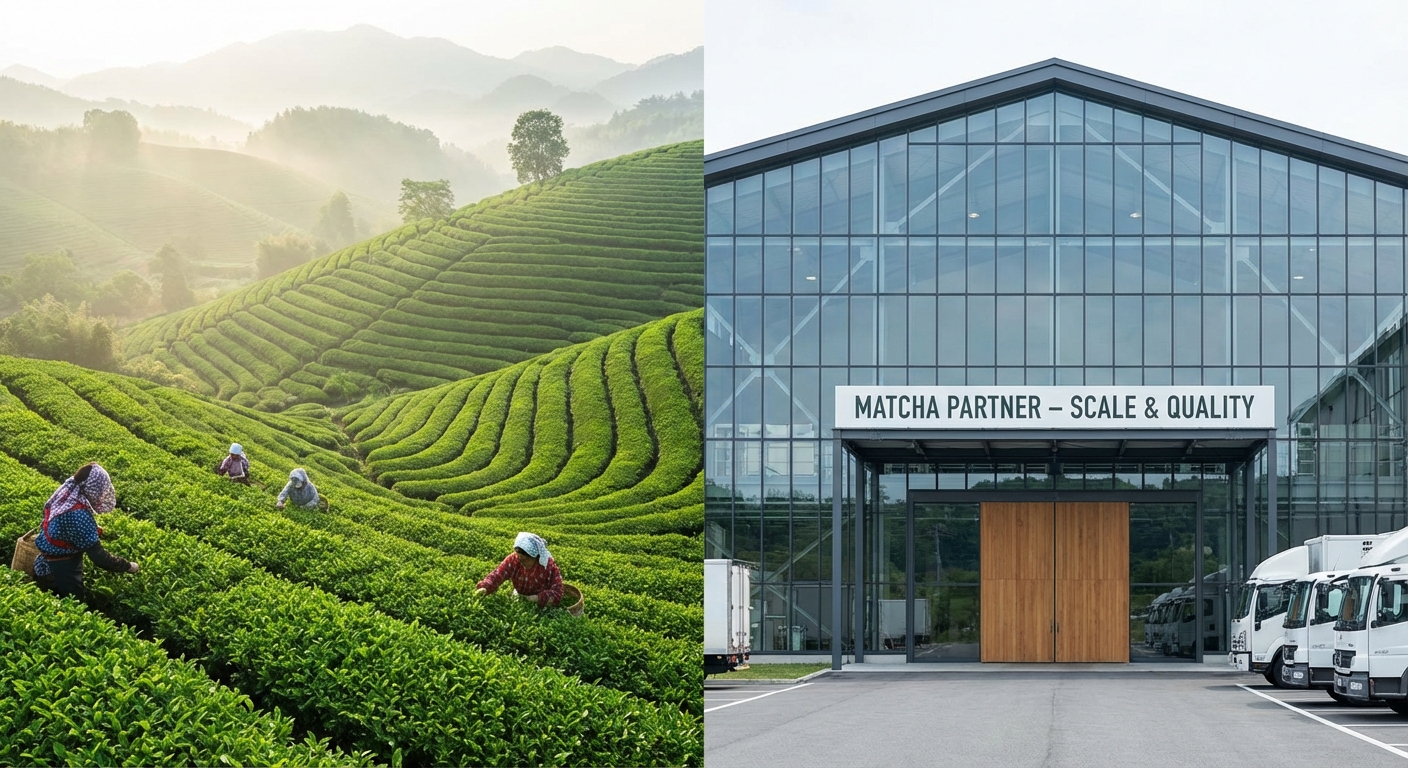
The Best Matcha Supplier is defined by its ability to provide a “farm-to-table” transparency while maintaining massive annual capacities that can exceed 10,000 tons. They must offer a diverse range of grades, from high-end ceremonial tea to cost-effective culinary powders, all while meeting international organic standards like USDA and EU. A top-tier partner integrates advanced quality control systems, such as ISO or HACCP, into their daily operations to ensure every shipment is safe and pure.
Reliability in this industry also hinges on communication and the flexibility to provide custom solutions like private labeling or bespoke blending. The Best Matcha Supplier doesn’t just fulfill orders but actively works to optimize your supply chain through competitive pricing and stable lead times. When you partner with an industry leader, you gain access to decades of agricultural expertise and cutting-edge processing technology that smaller traders simply cannot match.
What is the importance of annual capacity?
Large-scale annual capacity, such as 10,000+ tons, ensures that your business will never face stockouts during peak seasons or sudden spikes in demand. It reflects a supplier’s stability and their investment in infrastructure, which is a key indicator of long-term reliability.
- Ensures consistent supply for global franchises and beverage chains.
- Reflects the presence of hundreds of specialized matcha machines.
- Allows for better price negotiation through economies of scale.
- Provides a buffer against seasonal agricultural fluctuations.
Here is a thought: if your supplier cannot guarantee volume, your marketing efforts for a new product launch could lead to a disastrous inventory shortage. High capacity is the foundation of a “growth-proof” partnership.
Why does geographic location matter?
Suppliers located in historically significant regions, such as Hangzhou’s Jingshan Town (the birthplace of tea culture), benefit from ideal soil conditions, climate, and a deep-rooted heritage of tea mastery. These regions provide the perfect environmental “terroir” required to produce the vibrant green color and high-umami flavor profile that consumers demand.
- Ideal temperature and rainfall patterns for shade-grown tea.
- Rich, mineral-dense soil that enhances the nutrient profile.
- Proximity to major shipping ports for efficient global export.
- Access to generations of experienced tea farmers and tasters.
Believe it or not, the environmental conditions of the tea garden are the primary determinants of the amino acid content in the final powder. A supplier in a premier tea-growing region starts with a natural advantage that cannot be replicated in a laboratory.
How is consistency maintained year-round?
Maintaining consistency requires sophisticated blending techniques where master tea tasters combine various batches of Tencha to match a specific flavor and color profile. This ensures that the “Matcha Latte” your customer buys in December tastes exactly like the one they bought in May.
- Standardized sensory testing for color, aroma, and taste.
- Strict storage in temperature-controlled warehouses to prevent oxidation.
- Continuous monitoring of moisture content and particle size.
- Batch-specific COAs (Certificates of Analysis) for every shipment.
You might be wondering how they do it. The secret lies in the professional blending of harvests, allowing the supplier to smooth out the natural variations that occur between different picking seasons.
Key Takeaway: Superior suppliers combine massive production scale with artisanal attention to detail, ensuring that geographic advantages are maximized through consistent, high-tech processing.
Feature | Best Supplier Standard | Why It Matters |
|---|---|---|
Annual Capacity | 10,000+ Tons | Supply Security |
Machinery | 500+ Machines | Quality Consistency |
Certifications | USDA / EU Organic | Global Compliance |
A massive infrastructure combined with rigorous organic standards makes a supplier an indispensable asset for high-growth beverage and retail brands.
How to evaluate Matcha quality?
Evaluating quality involves a multi-sensory and analytical approach that looks at color, texture, aroma, and the chemical composition of the powder. To identify the Best Matcha Supplier, you should request samples and conduct side-by-side comparisons, focusing on the vibrant green hue which indicates high chlorophyll levels. The powder should be extremely fine, typically around 5-10 microns, which allows it to dissolve smoothly without clumping in water or milk.
Beyond the physical appearance, the “umami” taste profile—driven by L-theanine—is the hallmark of premium matcha. The Best Matcha Supplier will provide detailed technical data sheets that outline the levels of antioxidants, caffeine, and amino acids. Bitterness should be minimal in higher grades, as excessive astringency often points to poor shading practices or the inclusion of old, lower-quality leaves in the production line.
What does color tell you about quality?
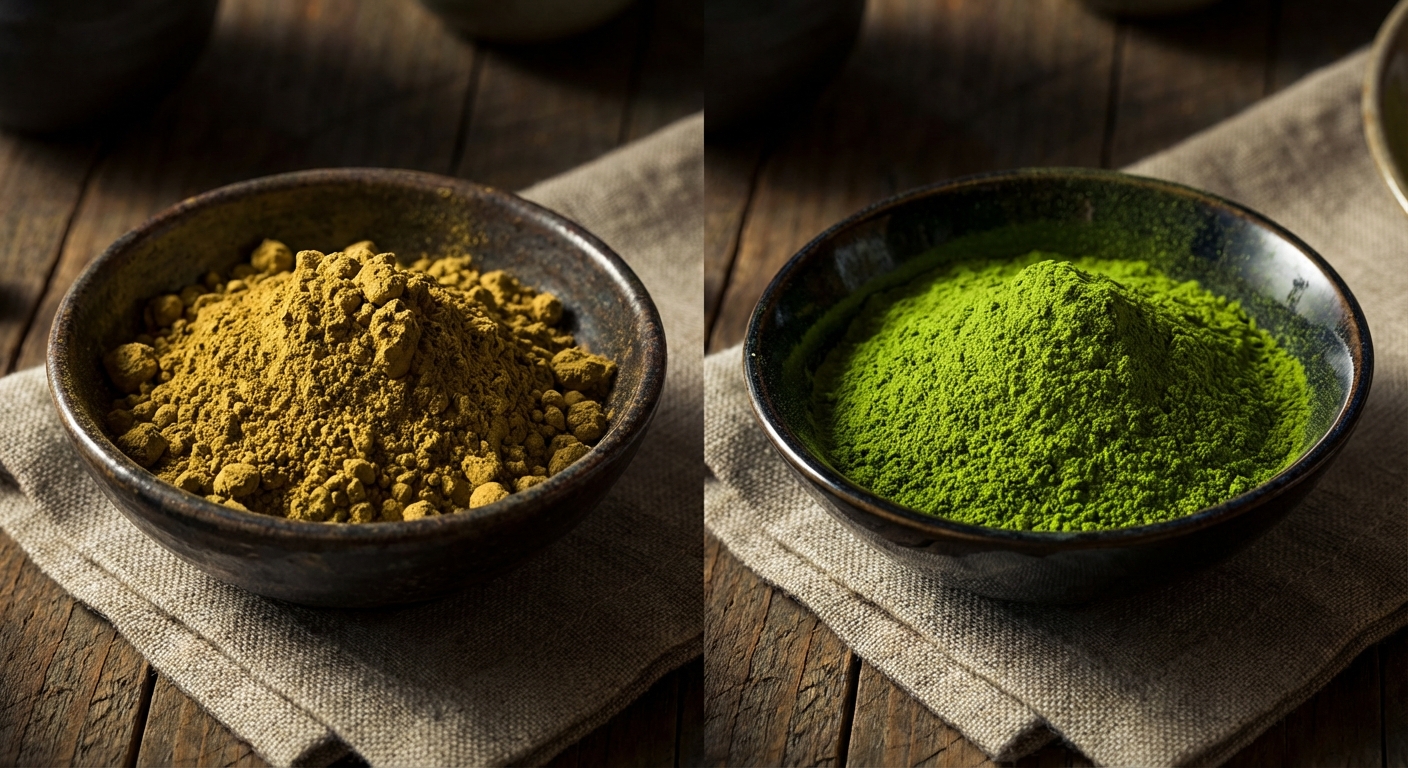
The color of matcha is the most immediate indicator of its grade and processing quality, with a bright “electric” green signifying young, shade-grown leaves harvested in the spring. In contrast, a yellowish or brownish tint often indicates that the tea was grown in full sun, harvested late in the season, or has oxidized due to poor storage.
- Vibrant green: High chlorophyll and proper shading.
- Dull or yellow-green: Sun-grown leaves or old harvest.
- Brownish hues: Significant oxidation or heat damage during milling.
- Consistent color across batches: Professional blending and storage.
But wait, there’s more; the color also reflects the steaming process used immediately after harvest to stop fermentation. If the steaming is not perfectly timed, the vibrant green color is lost forever, resulting in an inferior product for your brand.
How does particle size affect the application?
Particle size, measured in microns, determines how well the powder suspends in liquids and how it feels on the palate; professional-grade matcha should feel like fine silk or cosmetic powder between your fingers. A smaller particle size increases the surface area, which enhances the release of flavor and nutrients during preparation.
- Ceremonial Grade: 5-10 microns for a creamy, froth-rich texture.
- Culinary Grade: 10-15 microns for bold flavor in baking.
- Smooth mouthfeel: Essential for premium lattes and tea.
- High solubility: Reduces clumping and sedimentation in drinks.
Here is the kicker: if the particles are too large, the matcha will quickly settle at the bottom of the cup, leaving your customers with a gritty and unpleasant final sip. Investing in finely milled powder is non-negotiable for beverage excellence.
What are the key flavor components?
The flavor of high-quality matcha is a complex balance between the savory “umami” of amino acids and a very mild, refreshing bitterness from catechins. L-theanine, an amino acid produced during the shading process, is responsible for the sweet, brothy taste that defines a premium experience.
- Umami: The “savory” taste associated with high-grade tea.
- Astringency: A slight, pleasant dryness that balances the sweetness.
- Floral/Grassy notes: Indicators of fresh, high-quality spring harvests.
- Clean finish: No lingering metallic or overly bitter aftertaste.
The bottom line is that the flavor profile must match your specific use case. While a bakery needs a bold, slightly bitter tea to stand up to sugar and flour, a ceremonial tea must be smooth enough to drink with nothing but hot water.
Key Takeaway: Quality evaluation must balance visual vibrance, microscopic texture, and a high-umami flavor profile to ensure the product meets specific business needs.
Indicator | High Quality | Low Quality |
|---|---|---|
Color | Bright Emerald Green | Yellowish or Brownish |
Texture | Silky, < 10 Microns | Gritty, Sandy |
Taste | Sweet Umami | Very Bitter / Hay-like |
Analyzing these three factors allows a buyer to quickly distinguish between professional-grade supplies and inferior agricultural leftovers.
Which Matcha grade should you choose?
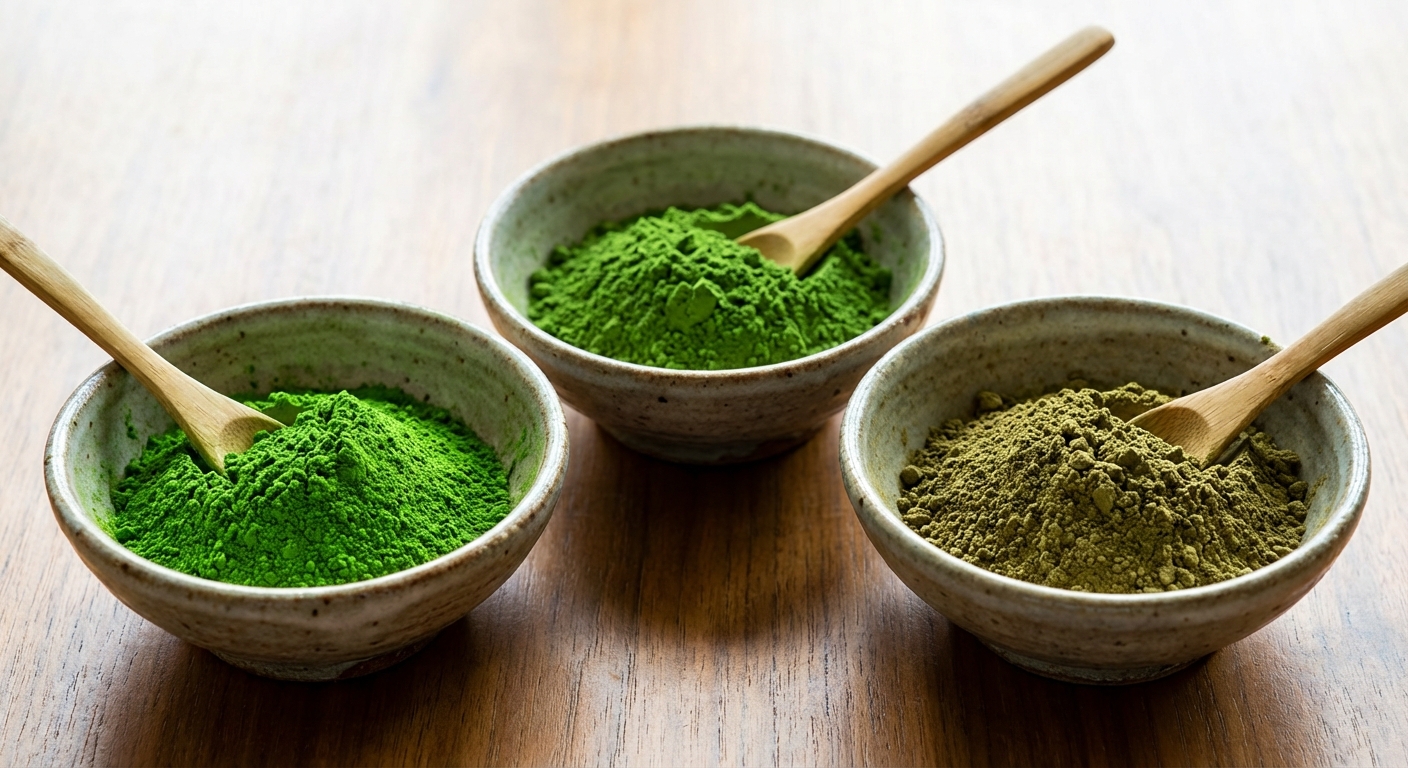
Selecting the correct grade depends entirely on your product’s end-use and your target price point. The Best Matcha Supplier will typically offer at least four distinct categories: Culinary, Premium, Ceremonial, and high-end “TOP” series. For food manufacturers and bakeries, Culinary grade provides the strong color and robust flavor needed to cut through other ingredients, while the Ceremonial grade is reserved for premium retail and traditional tea preparation.
Mistaking these grades can lead to either an overpriced product or a lackluster consumer experience. The Best Matcha Supplier helps you navigate this by providing specific recommendations based on whether you are making lattes, ice cream, or wellness supplements. By choosing a partner with a wide selection, you can source all your needs from one place, ensuring a unified flavor identity across your entire brand portfolio.
When is Culinary Grade the right choice?
Culinary grade matcha is intentionally processed to have a bolder, more astringent flavor and a darker green color, making it the perfect ingredient for baking, confectionery, and large-scale food manufacturing. Its strength allows the distinctive tea flavor to remain prominent even when mixed with dairy, sugar, or flour.
- Ideal for: Cookies, cakes, muffins, and chocolate.
- Cost-effective for high-volume food production.
- Stronger “tea” flavor that withstands high heat.
- Vibrant enough for natural food coloring applications.
Let’s face it, using a delicate ceremonial grade in a brownie would be a waste of money because the subtle umami notes would be completely lost. Culinary grade is the workhorse of the food industry for a reason.
Why is Premium Grade best for lattes?
Premium grade serves as the versatile middle ground, offering a vibrant color and a smoother taste than culinary grade, but at a more accessible price point than ceremonial options. It is the gold standard for cafés and bubble tea shops where the matcha is mixed with milk or plant-based alternatives.
- Perfect balance of umami and mild astringency.
- Vibrant green color that looks stunning in milk-based drinks.
- Higher solubility for quick service in busy environments.
- The most popular choice for “Matcha Latte” retail products.
You’ll find that this grade provides the “Instagram-worthy” green color your customers expect without the premium price tag of a competition-grade tea. It is the engine that drives most successful matcha beverage brands.
What defines the “TOP” and Ceremonial series?
These elite grades are produced from the very first harvest of the spring, using the youngest, softest leaves which are stone-milled slowly to prevent heat friction. These powders are intended to be whisked with hot water and consumed “straight,” offering an unparalleled sweetness and a thick, creamy froth.
- Highest L-theanine content for maximum relaxation and focus.
- Absolutely zero bitterness when prepared correctly.
- Intense emerald color and a complex, floral aroma.
- Designed for high-end gifting and luxury tea retail.
Now, here is the real secret: “TOP” series matcha is often used by boutique coffee shops to differentiate themselves from corporate chains. Offering an ultra-premium tier can significantly boost your brand’s prestige and average transaction value.
Key Takeaway: Matching the matcha grade to your specific application is the most effective way to optimize both the quality and the cost-efficiency of your product line.
Grade Category | Primary Use Case | Key Advantage |
|---|---|---|
Culinary | Baking & Smoothies | High Flavor Impact |
Premium | Lattes & Beverages | Color & Value |
Ceremonial | Traditional Tea | Pure Umami Experience |
Choosing the right grade ensures that the sensory properties of the tea are aligned with the consumer’s expectations and the business’s budget.
Why certifications matter in Matcha supply?
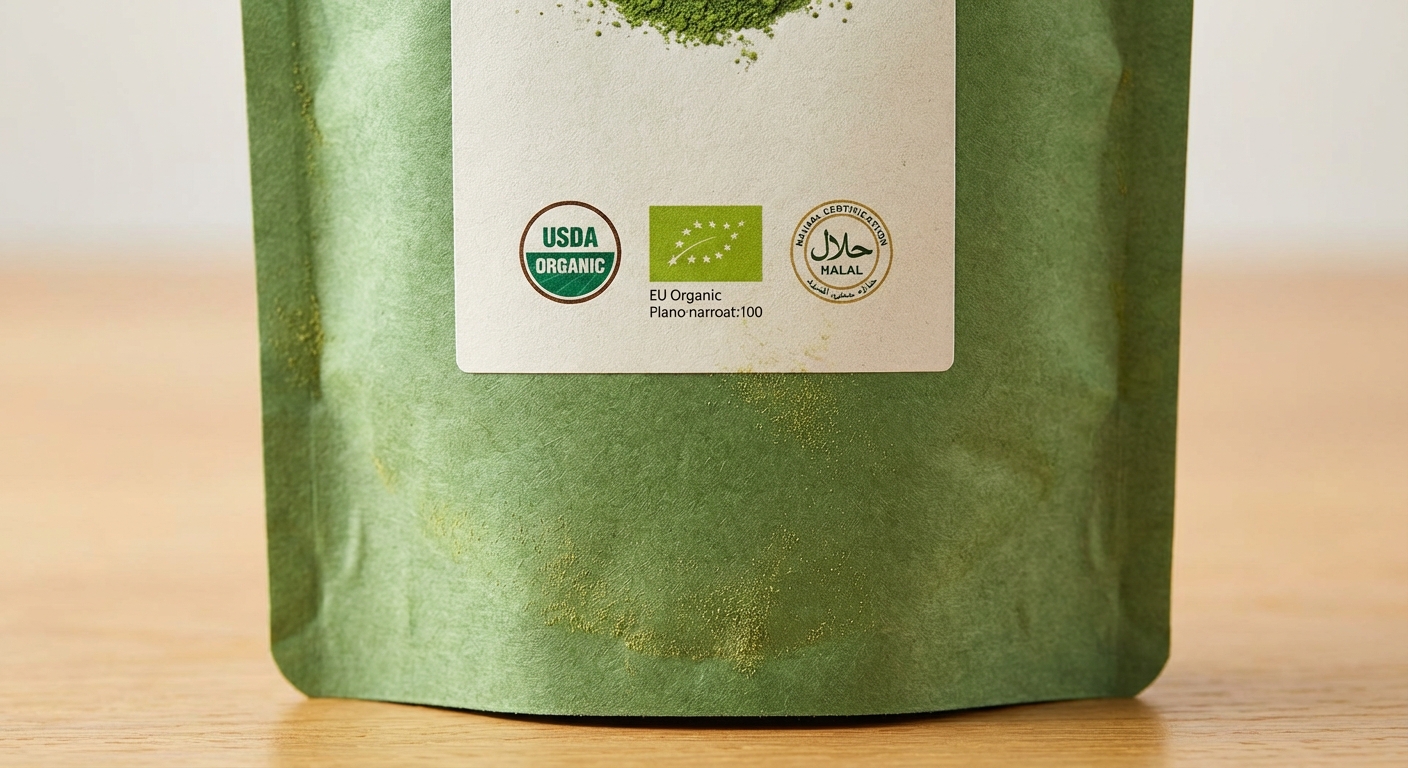
In the B2B world, certifications are the “universal language” of trust and quality assurance. When searching for the Best Matcha Supplier, look for those who hold USDA Organic, EU Organic, and JAS certifications, as these guarantee that the tea is grown without synthetic pesticides or fertilizers. These seals are not just marketing tools; they are legal requirements for entering regulated markets in North America and Europe.
Furthermore, food safety certifications like HACCP, ISO 22000, and FSSC 22000 indicate that the factory operates under a rigorous management system. The Best Matcha Supplier will proactively provide these documents along with batch-specific lab results for heavy metals and radiation. In an industry where purity is paramount, having a certified partner protects your brand from liability and ensures that you are delivering a truly healthy product to your customers.
How does Organic Certification protect your brand?
Organic certification provides a transparent paper trail from the tea garden to your warehouse, ensuring that every step of the process complies with strict environmental and health standards. For consumers, the organic seal is often the primary factor in their purchasing decision, particularly in the wellness and superfood categories.
- Ensures no synthetic pesticides or herbicides are used.
- Mandates regular soil and water testing by third parties.
- Required for “Organic” labeling on your retail packaging.
- Increases the perceived value and retail price of your product.
Here is the thing: without proper certification, you cannot legally claim your product is organic in many countries. A supplier with ready-to-use TC (Transaction Certificates) saves you months of bureaucratic headaches during the import process.
What is the role of ISO and HACCP in safety?
ISO and HACCP are international standards that focus on identifying and controlling food safety risks during the manufacturing process. A factory with these certifications has implemented systems to prevent physical, chemical, and biological contamination, such as metal detection and strict hygiene protocols for workers.
- HACCP: Identifies “Critical Control Points” in the production line.
- ISO 22000: Provides a comprehensive food safety management framework.
- Metal Detection: Ensures no machinery fragments enter the powder.
- Microbiological Testing: Guarantees the powder is free from E. coli or salmonella.
You can’t afford to take risks with food safety. One contaminated batch could lead to a product recall that costs your company millions and destroys your reputation overnight.
Are specialized certifications like Halal or Kosher necessary?
For brands targeting a global audience, Halal and Kosher certifications open doors to significant market segments in the Middle East, Southeast Asia, and various religious communities. These certifications confirm that the production facility is clean and that the ingredients used are permissible under specific dietary laws.
- Halal: Essential for markets like Indonesia, Malaysia, and the UAE.
- Kosher: A mark of general purity often favored by Western consumers.
- Demonstrates a supplier’s commitment to global inclusivity.
- Facilitates easier entry into international supermarket chains.
Believe it or not, many distributors now require these certifications as a baseline for any new product listing. Being “Global Ready” means having a supplier who has already done the heavy lifting of obtaining these diverse seals of approval.
Key Takeaway: Certifications serve as an independent verification of a supplier’s safety, quality, and environmental claims, making them essential for international trade.
Certification | Market Reach | Focus Area |
|---|---|---|
USDA / EU Organic | North America / Europe | Pesticide-Free |
ISO 22000 / HACCP | Global | Food Safety Management |
Halal / Kosher | Global / Religious | Dietary Law Compliance |
By prioritizing certified suppliers, businesses can mitigate risk and ensure their products meet the highest global standards for health and safety.
How to verify Matcha safety and purity?
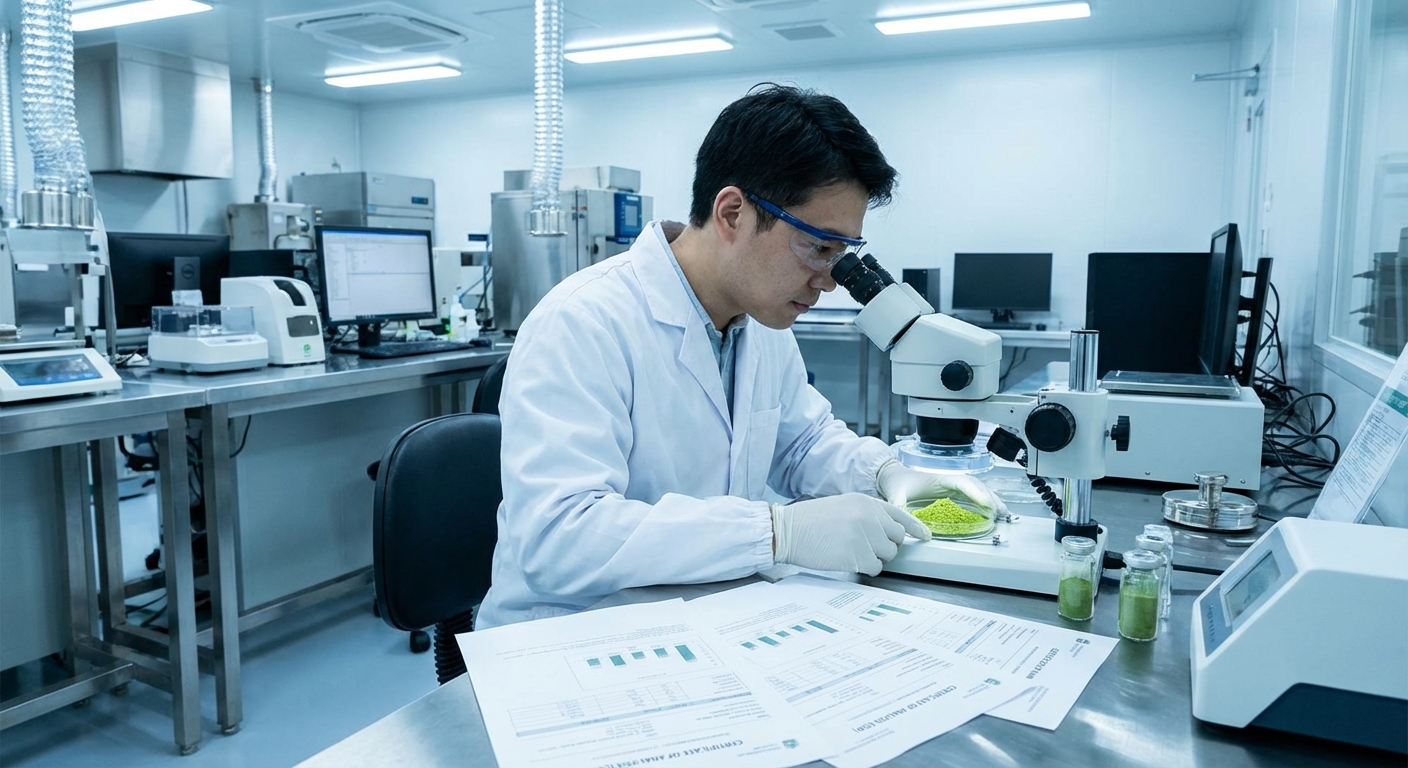
Safety verification requires a rigorous testing regime that goes beyond the supplier’s word and into the realm of independent laboratory analysis. The Best Matcha Supplier will regularly submit their products to authoritative third-party organizations like Eurofins, SGS, or Alex Stewart. These tests check for a wide spectrum of potential contaminants, including heavy metals (like lead and arsenic), pesticide residues, and radiation levels, particularly for tea sourced from East Asia.
Transparency is the ultimate indicator of a reliable partner. The Best Matcha Supplier will provide you with a comprehensive Certificate of Analysis (COA) for every specific batch you purchase, not just a generic one from several years ago. By verifying these documents against international safety limits, you can confidently market your products to health-conscious consumers. This level of diligence is what separates professional B2B players from fly-by-night trading companies.
Why is third-party lab testing essential?
Third-party testing provides an unbiased assessment of the product, ensuring that the supplier is not “grading their own homework.” It acts as a final safeguard that catches any irregularities in the soil or processing environment that might have been missed during internal checks.
- Eurofins or SGS: Gold standards for food safety testing.
- Detection of 500+ different pesticide residues.
- Verification of nutritional claims (antioxidants, amino acids).
- Peace of mind for your legal and compliance teams.
The kicker is that many retailers now demand these independent reports before they will even consider stocking your brand. Having them ready to go demonstrates that you are a serious and professional business operator.
What are the limits for heavy metals and radiation?
Matcha is a ground leaf product, meaning consumers ingest the entire plant, which makes the concentration of heavy metals a critical concern. Reliable suppliers monitor lead, cadmium, and arsenic levels to ensure they are well below the strict thresholds set by the FDA and the European Food Safety Authority.
- Lead: Must be kept extremely low through careful soil management.
- Radiation: Post-2011, testing for Cesium-134 and 137 is mandatory for many.
- Microbiology: Limits on mold, yeast, and total plate count.
- Soil Testing: Proactive monitoring of the tea garden’s environment.
To put it simply, you are what you eat—and in this case, you are also what your tea absorbed from the ground. Only a supplier with direct control over their agricultural land can guarantee these safety levels.
How do you read a Certificate of Analysis (COA)?
A COA is a technical document that lists the results of various tests performed on a specific batch of matcha, comparing them against “specifications.” You should look for the batch number, the date of testing, and ensuring that all results are marked as “Pass” according to your region’s regulations.
- Batch Number: Must match the number on your shipping cartons.
- Parameters: Includes color, moisture, ash, and mesh size.
- Pesticides: Look for “N.D.” (Not Detected) or levels below the MRL.
- Authorization: Must be signed by a quality control manager or lab tech.
Keep this in mind: a COA is only as good as the batch it represents. If your supplier cannot link the document directly to the bags in your warehouse, the testing is essentially meaningless for your quality assurance program.
Key Takeaway: Verifying safety through third-party lab testing and batch-specific COAs is the only way to guarantee the purity and legality of your matcha supply.
Test Category | What It Detects | Requirement |
|---|---|---|
Heavy Metals | Lead, Arsenic, Cadmium | Below FDA/EU Limits |
Pesticide Screen | 500+ Chemicals | Non-Detected (Organic) |
Microbiology | E. coli, Salmonella | Zero Tolerance |
A data-driven approach to safety ensures that your brand remains protected from health scares and regulatory scrutiny.
What makes a Matcha supply chain reliable?
A reliable supply chain is characterized by its stability, transparency, and the ability to handle complex international logistics without delays. To find the Best Matcha Supplier, you must evaluate their warehouse infrastructure, particularly their ability to store bulk powder in climate-controlled environments (usually around 5°C) to prevent oxidation. Reliability also means having a diversified logistics network that can ship via air for urgent samples or via sea for cost-effective bulk replenishment.
Furthermore, a professional supplier manages the “first-mile” logistics—from the tea farm to the processing plant—with the same care as the “last-mile” export. The Best Matcha Supplier will have established relationships with global freight forwarders and a deep understanding of customs requirements for different countries. This ensures that your inventory levels remain stable, allowing you to fulfill your own customers’ orders with confidence and precision.
How does cold storage affect shelf life?
Matcha is highly sensitive to heat, light, and oxygen; without climate-controlled storage, the vibrant green powder can turn brown and lose its nutritional potency within weeks. A reliable supplier invests in massive industrial refrigerators to keep the bulk tencha and finished powder fresh until the moment it is shipped.
- Maintains 5°C temperature to slow down natural oxidation.
- Controls humidity (typically <60%) to prevent clumping and mold.
- Preserves the delicate amino acids and “spring-fresh” aroma.
- Extends the effective shelf life of the product for the end buyer.
You might be surprised to learn that matcha stored at room temperature loses its quality five times faster than refrigerated stock. If your supplier’s warehouse isn’t chilled, your product’s quality is already declining before it even leaves the factory.
Why is logistical expertise crucial for B2B?
Shipping dozens of tons of tea across oceans involves navigating a maze of export licenses, phytosanitary certificates, and ocean freight schedules. A supplier with an experienced export department can preemptively solve issues with port congestion or customs inspections, ensuring your “just-in-time” inventory system doesn’t fail.
- Preparation of all export documents (Invoice, PL, CO, Phytosanitary).
- Experience with both LCL (Less than Container Load) and FCL.
- Direct booking with major shipping lines to secure better rates.
- Real-time tracking and proactive communication on shipment status.
The bottom line: a cheap price means nothing if the goods are stuck at the border for three weeks because a document was missing. Logistical reliability is the “hidden” value of a top-tier supplier.
What role does packaging play in transit?
For bulk orders, the packaging must be robust enough to withstand the rigors of international shipping while providing an airtight barrier against the environment. This usually involves multi-layer aluminum bags inside heavy-duty corrugated cartons, often palletized and shrink-wrapped for maximum stability.
- Triple-layered aluminum foil bags for superior oxygen barriers.
- Vacuum sealing to remove air and prevent moisture ingress.
- Reinforced 5-ply cartons to prevent physical damage during handling.
- Clear labeling with batch numbers and “This Side Up” instructions.
Here is the kicker: poor packaging can lead to “micro-punctures” during transit, which expose the powder to air and ruin the entire shipment. Your supplier’s attention to these small details is what prevents massive financial losses.
Key Takeaway: A reliable supply chain integrates climate-controlled storage, logistical precision, and protective packaging to deliver fresh, high-quality matcha anywhere in the world.
Component | Reliability Factor | Business Benefit |
|---|---|---|
Cold Storage | Constant 5°C | Maximum Freshness |
Export Support | Documentation Accuracy | Fast Customs Clearance |
Bulk Packaging | Vacuum-Sealed Foil | Reduced Transit Waste |
Managing these logistical variables ensures that the quality produced at the farm is the same quality that arrives at your door.
How to balance price and quality?
In the competitive tea market, balancing price and quality is an art that requires a deep understanding of your own brand’s “sweet spot.” The Best Matcha Supplier will provide a transparent pricing structure that reflects the actual grade, harvest season, and volume of your order. Buying in bulk—from hundreds of kilograms to multiple tons—is the most effective way to lower your “landed cost” and increase your profit margins without sacrificing the sensory standards your customers expect.
However, you should be wary of prices that seem “too good to be true,” as these often indicate the use of sun-grown tea or the blending of old stock. The Best Matcha Supplier offers value through efficiency and scale, not by cutting corners on shading or safety testing. By working closely with a factory-direct partner, you can negotiate long-term contracts that lock in favorable pricing, protecting your business from the volatility of agricultural commodity markets.
How do economies of scale lower your costs?
When you work with a supplier that has an annual capacity of over 10,000 tons, the fixed costs of machinery, labor, and certifications are spread over a massive volume. This allow them to offer much lower per-kilogram prices compared to smaller artisanal farms or boutique trading companies.
- Lower raw material costs through massive tea garden ownership.
- Reduced energy costs per ton through high-efficiency milling.
- Bulk shipping discounts passed on to the final customer.
- Access to lower-cost specialized packaging for large orders.
Here is a thought: a 10% reduction in your matcha cost can lead to a 30% increase in your net profit for a beverage-focused business. Scaling your orders is the fastest way to improve your bottom line.
Why is “Factory Direct” the cheapest reliable option?
Buying from a factory-direct supplier removes the 15% to 30% commission typically charged by wholesalers and brokers. You are essentially paying for the product and the processing, rather than the marketing and administrative overhead of multiple middle-tier companies.
- Direct negotiation with the decision-makers at the source.
- No “hidden fees” added by international trading agents.
- Direct access to tiered pricing based on annual volume commitments.
- Clearer understanding of exactly what you are paying for.
The truth is, many “famous” matcha brands are actually just white-labeling products from large factories. By going straight to the source, you can get the same—or better—quality for a fraction of the retail-branded price.
Can you customize grades to hit a price point?
Professional suppliers can “engineer” a custom blend that fits your specific budgetary constraints while still meeting your color and flavor requirements. For example, they might blend a high-color spring harvest with a more robust summer harvest to create a “Signature Latte Grade” that is both beautiful and affordable.
- Customized ratios of different harvests (Spring vs. Autumn).
- Adjusted milling times to balance texture and cost.
- Flexible packaging options (Bulk bags vs. Individual tins).
- Bespoke specifications tailored to your unique recipe.
Here is the kicker: you don’t have to choose between “cheap” and “good.” A sophisticated supplier can find a middle ground that provides the best “bang for your buck” for your specific market niche.
Key Takeaway: Achieving the perfect price-to-quality ratio requires a factory-direct relationship where scale and customization are used to optimize costs.
Strategy | Cost Impact | Quality Impact |
|---|---|---|
Bulk Volume (1 Ton+) | 20% – 30% Savings | None |
Factory Direct | 15% – 25% Savings | Higher (Freshness) |
Custom Blending | Variable | Tailored to Need |
By focusing on direct sourcing and volume commitments, businesses can secure a premium product at a highly competitive industrial price.
Why OEM and private label matter?
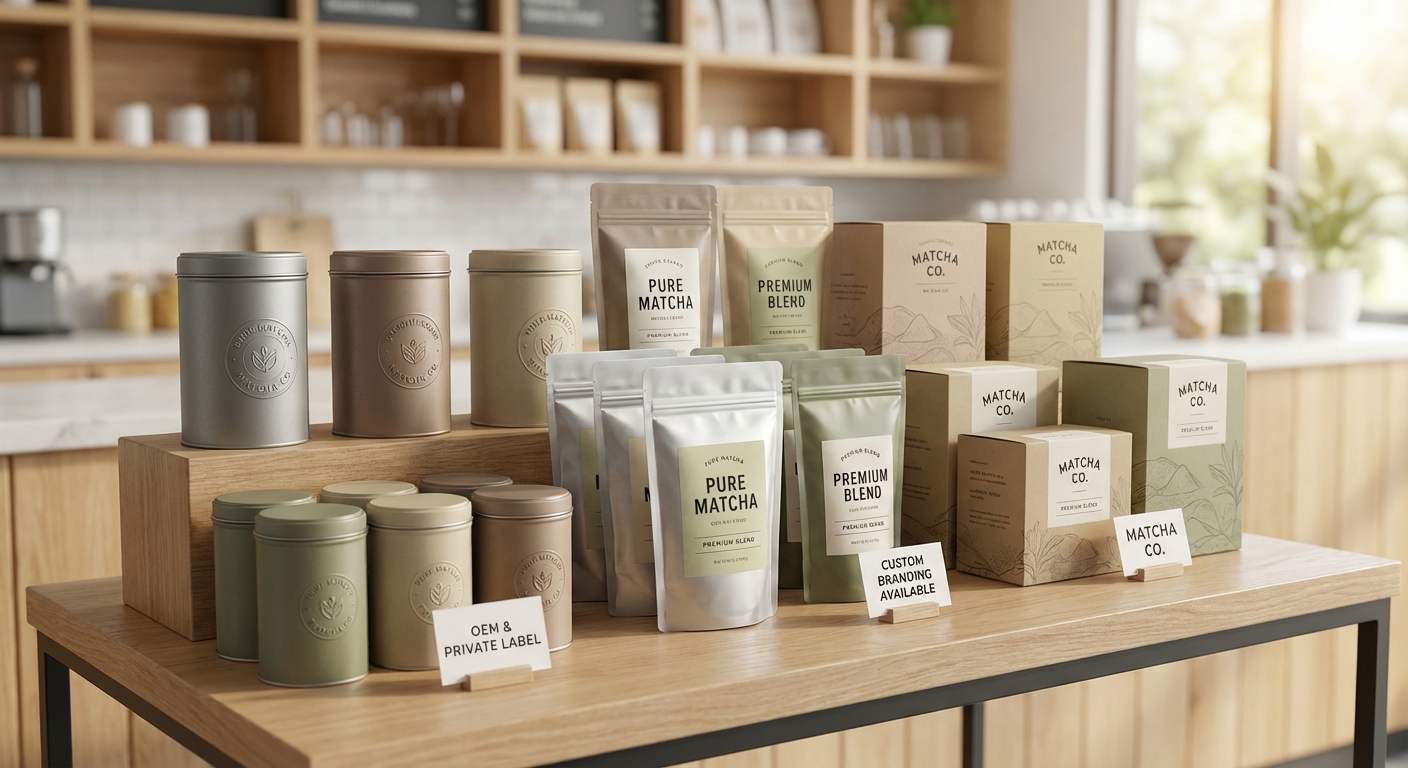
OEM (Original Equipment Manufacturer) and private label services allow you to launch a professional tea brand without the massive capital investment of building your own factory. The Best Matcha Supplier will offer a “one-stop-shop” service that includes custom packaging design, specialized filling, and the provision of accessories like bamboo whisks. This allows you to focus on marketing and sales while your partner handles the complexities of food production and quality control.
From sleek aluminum tins for retail to convenient stick-packs for on-the-go consumers, the Best Matcha Supplier provides a variety of formats to suit your brand identity. They act as your “silent partner,” ensuring that the product inside the box matches the premium image you’ve built on the outside. In today’s fast-moving market, the ability to rapidly deploy new products with custom branding is a major competitive advantage.
What are the benefits of “One-Stop” purchasing?
Managing multiple vendors for matcha powder, tins, labels, and shipping is a logistical nightmare that increases the risk of errors and delays. A supplier that offers a complete OEM solution ensures that all components—the tea, the tin, and the label—fit together perfectly and arrive in one cohesive shipment.
- Saves hundreds of hours in vendor management and coordination.
- Ensures the packaging is food-safe and compatible with the powder.
- Reduces total shipping costs by consolidating all items.
- Provides a single point of accountability for the entire product line.
Make no mistake about it, the convenience of a turnkey solution is worth its weight in gold when you are trying to launch a new brand. It allows you to go from concept to “shelf-ready” product in a fraction of the time.
How does custom packaging enhance brand value?
The first thing a customer sees is your packaging, not the tea; high-quality tins, embossed labels, and unique box designs create an “unboxing experience” that justifies a premium price. Your supplier should offer a range of materials, including eco-friendly paper cans and premium UV-protected glass, to align with your brand’s values.
- Stick Packs: Perfect for the growing wellness and convenience market.
- Printed Pouches: Cost-effective and lightweight for e-commerce.
- Luxury Tins: Standard for ceremonial grades and gifting.
- Custom Boxes: Adds a layer of sophistication for retail shelves.
Here is the kicker: a well-designed package can increase the perceived value of your matcha by 50% or more. Your supplier’s ability to execute complex packaging designs is a key part of your brand’s success.
Can they support low MOQ for new brands?
While large factories prefer massive volumes, the Best Matcha Supplier understands the needs of growing brands and will often offer negotiable Minimum Order Quantities (MOQs) for private label projects. This lowers the barrier to entry, allowing you to test new markets or flavors with minimal financial risk.
- Negotiable MOQs for startup brands and trial launches.
- Step-up pricing that rewards you as your volume grows.
- Ability to print small-run digital labels for seasonal products.
- Flexibility to change packaging formats as the market evolves.
You’ll find that a partner who supports you when you are small will become your most trusted ally when you are large. Look for a supplier that views your small initial order as a seed for a future partnership.
Key Takeaway: OEM and private label services transform a raw commodity into a high-value brand asset, providing a complete solution for retail and e-commerce success.
Packaging Format | Target Audience | Key Benefit |
|---|---|---|
Stick Packs | On-the-go / Gym | High Convenience |
Aluminum Tins | High-end Retail | Maximum Freshness |
Stand-up Pouches | Online Consumers | Shipping Efficiency |
A comprehensive private label service allows businesses to focus on brand building while the supplier ensures manufacturing excellence.
Why do global buyers choose Riching Matcha?
Global buyers consistently turn to Riching Matcha because it represents the pinnacle of Chinese matcha production, combining ancient heritage with modern industrial scale. Based in the famous Jingshan Town of Hangzhou, they manage 3,000 hectares of tea gardens and operate over 500 specialized matcha machines. This massive infrastructure allows them to maintain an annual capacity of 10,000+ tons, ensuring that they can fulfill the needs of any brand, from local cafés to international food conglomerates.
The company’s commitment to quality is backed by comprehensive certifications, including USDA and EU Organic, and rigorous third-party testing by organizations like Eurofins and SGS. As the Best Matcha Supplier, they offer a diverse portfolio of grades, including their exclusive “TOP” series for high-end applications and robust culinary powders for food manufacturing. When you choose them as your partner, you are gaining more than a vendor; you are gaining a strategic ally with a proven track record of supporting successful brands worldwide.
What is the significance of the Jingshan location?
Jingshan is widely regarded as the birthplace of the traditional tea ceremony and holds a prestigious position in tea history, providing a unique “cultural terroir” that enhances the brand story of any business sourcing from there. The region’s specific micro-climate and mineral-rich soil are ideally suited for the slow, shade-grown cultivation that produces high-amino acid Tencha.
- A legacy of tea cultivation dating back over 1,000 years.
- Pristine environmental conditions far from industrial pollution.
- Direct access to traditional techniques and modern innovations.
- Strong local government support for organic and sustainable farming.
Believe it or not, the “Jingshan” name carries significant weight in the Asian market and is increasingly recognized by Western connoisseurs. Sourcing from this region gives your brand an authentic and compelling origin story.
How does the 3,000-hectare farm benefit you?
Owning and managing such a vast area of tea gardens ensures total control over the agricultural process, from soil fertilization to the exact timing of the spring harvest. This direct oversight is what allows for the consistent production of “Pure” and “Organic” matcha that meets the strict pesticide-free requirements of the EU and USA.
- Guarantees a steady supply of high-quality raw materials year-round.
- Allows for experimental shading and harvesting techniques.
- Eliminates the risk of cross-contamination from neighboring non-organic farms.
- Ensures long-term price stability through direct land management.
Now, here is the real secret: most suppliers are just traders who buy from dozens of small, uncoordinated farms. Large-scale plantation ownership is the only true way to guarantee consistent quality across every single ton produced.
Why is the 500-machine capacity a game-changer?
A factory equipped with over 500 machines, including state-of-the-art milling and steaming units, can process fresh leaves at an incredible speed, locking in color and flavor before any oxidation can occur. This technological advantage means that even during the busiest harvest seasons, the quality remains uniform and lead times remain short.
- Rapid processing of fresh leaves to maximize chlorophyll retention.
- Redundant systems that prevent production halts during maintenance.
- Ability to produce multiple grades simultaneously for different clients.
- Extreme precision in particle size and moisture control.
The bottom line is that modern machinery is the only way to meet the rigorous consistency standards of global beverage chains. Without this industrial might, quality fluctuates wildly with the weather and the season.
Key Takeaway: Riching Matcha combines historical prestige, massive agricultural control, and industrial technological power to serve as the ultimate global supply partner.
Feature | Riching Standard | Business Result |
|---|---|---|
Tea Garden Area | 3,000 ha | Total Quality Control |
Machinery Count | 500+ Units | Fast & Consistent Lead Times |
Annual Capacity | 10,000+ Tons | Unbeatable Scalability |
By integrating every step of the supply chain, they provide a level of security and quality that few other manufacturers in the world can match.
What are common red flags in supplier selection?
Identifying red flags early in the selection process can save your business from costly product recalls and brand-damaging quality issues. A major warning sign is a supplier that is reluctant to provide batch-specific COAs or third-party lab results, as this often hides issues with pesticides or heavy metals. The Best Matcha Supplier will be completely transparent about their sourcing, while a trader masquerading as a factory will often give vague answers about the specific tea gardens they manage.
Another red flag is inconsistent color and flavor across different samples of the same grade, which indicates a lack of professional blending and poor inventory management. If a supplier offers prices significantly below the market rate for “ceremonial” matcha, they are likely using lower-quality, sun-grown tea or old stock that has lost its nutritional value. To find the Best Matcha Supplier, you must look beyond the initial sales pitch and demand hard evidence of their production capacity and safety protocols.
Why is a lack of transparency a dealbreaker?
Transparency is the foundation of any food-grade partnership; if a supplier cannot show you photos of their factory or refuses to provide a clear map of their tea gardens, they are likely hiding a compromised supply chain. A reliable partner welcomes factory audits and provides detailed documentation for every step of their process.
- Vague origin stories or “proprietary” sourcing that hides middlemen.
- Expired or altered organic and safety certifications.
- Refusal to provide samples from the current production batch.
- Inconsistent communication and slow response to technical queries.
Here is the thing: if they are hiding something from you now, they will certainly hide it when a quality issue arises later. Transparency is the only way to build a sustainable, long-term business relationship.
How can you spot “Fake” ceremonial grades?
“Fake” ceremonial matcha is often just high-quality culinary grade that has been mislabeled to fetch a higher price; it will look green, but it will have a harsh, bitter aftertaste and a gritty texture. Real ceremonial tea should have a “brothy” umami sweetness that comes from high L-theanine levels, which are only found in the youngest, spring-harvested leaves.
- Yellowish tint in a powder labeled as “Ceremonial.”
- Strong, unpleasant bitterness when mixed only with water.
- Visible sediment or “clumping” that doesn’t whisk away easily.
- Low price point that doesn’t align with the labor-intensive production.
But wait, there’s more; some unscrupulous suppliers add sugar or artificial colors to hide the poor quality of their tea. Always test your samples “straight” (with only hot water) to reveal the true character of the powder.
What are the dangers of “Trader” suppliers?
Traders often lack direct control over the production environment, meaning they cannot guarantee consistency or safety from one batch to the next. They often source from whoever is cheapest that month, leading to a “lottery” style of quality where your brand is the ultimate loser.
- Batch-to-batch inconsistency that ruins your product’s flavor profile.
- No ability to provide custom blends or technical R&D support.
- Higher prices due to the trader’s markup on top of the factory price.
- Limited liability and poor support when things go wrong logistically.
Here is the kicker: a trader might disappear if a massive quality issue is discovered, leaving you to deal with the legal and financial fallout. A factory-direct partner has too much invested in their facility to ever risk their reputation like that.
Key Takeaway: Avoiding suppliers who lack transparency, offer suspicious pricing, or operate as unverified traders is essential for protecting your brand’s integrity.
Red Flag | Potential Risk | How to Verify |
|---|---|---|
Missing COA | Pesticide / Safety Issues | Demand Third-Party Lab Results |
Low Price | Sun-Grown / Old Tea | Side-by-Side Sensory Test |
No Factory Photos | Middleman Markup | Request a Video Audit / Site Visit |
Due diligence in the selection phase prevents catastrophic failures in the production and retail phases.
How to choose the right Matcha partner?
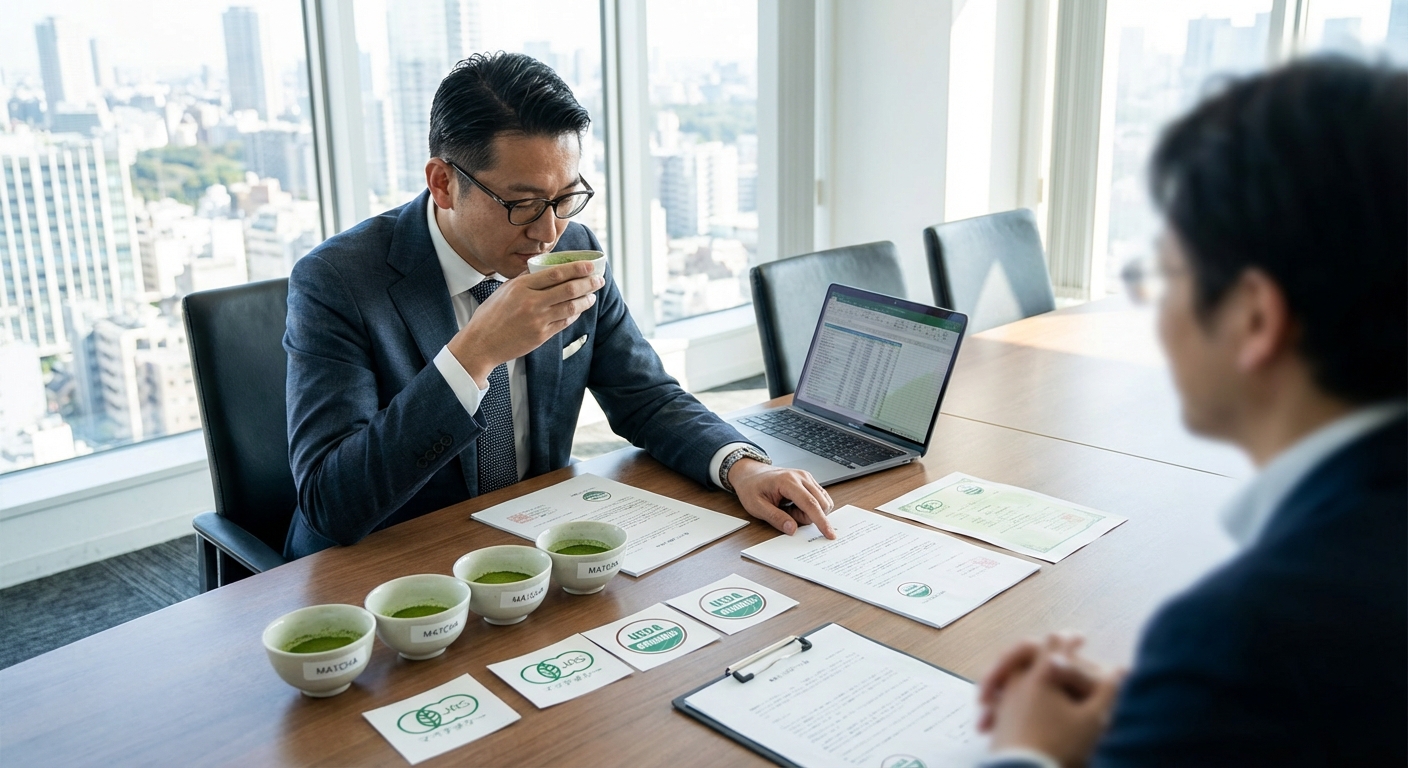
Choosing the right partner is a strategic decision that should be based on a comprehensive evaluation of their capacity, certifications, and cultural fit with your business. The Best Matcha Supplier will not only meet your technical requirements but will also demonstrate a genuine interest in your brand’s growth and success. You should look for a partner that offers a high degree of flexibility, whether that means providing custom samples for your R&D team or adjusting lead times for your holiday promotions.
A true partnership is built on clear communication and a shared commitment to quality. The Best Matcha Supplier will act as an extension of your own team, providing the market insights and technical expertise needed to navigate the evolving tea landscape. By selecting a partner with a proven history of serving global clients and a clear vision for the future of sustainable tea production, you can secure a supply chain that serves as a solid foundation for your business’s long-term prosperity.
What questions should you ask during the first meeting?
Your first meeting is the time to dig deep into the supplier’s operations to ensure they can handle your projected growth; don’t be afraid to ask technical questions about their shading duration, milling technology, and cold storage capacity. Their answers will reveal whether they are true tea masters or just sales agents.
- “Do you own the tea gardens, or do you source from third parties?”
- “Can you provide a batch-specific COA for a 500kg order today?”
- “What is your maximum daily production capacity for ceremonial grade?”
- “How do you ensure the temperature remains at 5°C during bulk storage?”
Make no mistake about it, the level of detail in their response is a direct indicator of their professionalism. A top-tier supplier will have these answers ready and will provide supporting documentation without hesitation.
How do you evaluate “Cultural Fit” in B2B?
Cultural fit is about alignment in values—such as a commitment to organic farming or a focus on rapid customer service—and it determines how smoothly you will work together during times of stress. A partner who responds to emails within hours and proactively shares news about the new harvest is far more valuable than one who is simply the cheapest.
- Responsiveness: Do they answer your technical questions promptly?
- Proactivity: Do they suggest ways to optimize your shipping or packaging?
- Transparency: Are they honest about potential delays or crop variations?
- Vision: Do they invest in sustainable practices that match your brand values?
Here is the thing: you are entering a long-term relationship. Choosing a partner who values your success as much as their own will save you countless hours of frustration and conflict.
Why is a “Pilot Order” the ultimate test?
Before committing to a multi-ton annual contract, you should always conduct a pilot order to test the supplier’s entire process, from communication and documentation to shipping and product quality. This “real-world” test reveals any hidden friction in the supply chain and allows you to verify the batch-to-batch consistency before scaling up.
- Tests the accuracy and speed of their export documentation.
- Verifies that the “Bulk” quality matches the initial “Sample” quality.
- Allows your production team to test the powder in your specific recipes.
- Identifies any issues with packaging durability during international transit.
Here is the kicker: a supplier who excels at the pilot order is likely to excel at a large-scale contract. It is the cheapest and most effective way to “de-risk” your entire procurement strategy.
Key Takeaway: The right partner is found through a combination of rigorous technical questioning, cultural alignment, and a successful real-world pilot project.
Selection Step | Objective | Success Metric |
|---|---|---|
Technical Audit | Capacity & Safety | Valid COAs / Factory Tour |
Communication Test | Cultural Fit | < 24h Response Time |
Pilot Order | Process Reliability | 100% Specification Match |
Taking the time to conduct this three-step evaluation ensures that your matcha supplier is a true asset to your business.
Conclusion: Ready to scale your Matcha business?
Selecting the Best Matcha Supplier is the most critical decision you will make for your tea brand, beverage chain, or food manufacturing business. Throughout this analysis, we have explored how production scale, geographic advantage, organic certifications, and logistical expertise converge to create a reliable supply chain. By avoiding common red flags and focusing on a partner who offers transparency and a “factory-direct” relationship, you can secure the high-quality, cost-effective matcha needed to dominate your market.
At Riching Matcha, we solve the most common problems in the tea industry: inconsistent quality, supply shortages, and lack of transparency. We provide you with direct access to 3,000 hectares of organic tea gardens and an annual capacity of over 10,000 tons, ensuring your business never misses a growth opportunity. Our vision is to be the world’s most trusted source of pure, vibrant matcha, empowering brands to deliver health and excellence to consumers everywhere. If you are ready to take your business to the next level with a partner who understands your needs, contact us today to discuss your custom bulk or private label requirements.
FAQ Section
What is the difference between Matcha and regular Green Tea?Matcha is a fine powder made from shade-grown tea leaves that are steamed, dried, and ground, meaning you consume the whole leaf. Unlike regular steeped green tea, matcha is significantly higher in antioxidants, caffeine, and L-theanine because the entire plant is ingested.
Do you have any MOQ for your matcha tea powder?Our minimum order quantities are negotiable and depend on your specific needs, whether you are looking for bulk raw materials or a custom private label project. We recommend contacting our experts to discuss a volume that fits your current business stage and growth projections.
Can you export organic matcha tea powder to the EU and USA?Yes, all of our organic matcha products are fully certified under USDA and EU standards, and we have extensive experience shipping to these highly regulated markets. We provide all necessary documentation, including Transaction Certificates (TC), to ensure a smooth customs clearance process.
How do you ensure the consistency of your matcha batches?Consistency is maintained through a combination of state-of-the-art climate-controlled storage and the expertise of our master blenders. By storing tencha at 5°C and scientifically matching sensory profiles, we ensure that your product maintains the same color and flavor year-round.
What grades of matcha do you offer for business use?We offer a comprehensive range including Culinary grade for food manufacturing, Premium grade for café lattes, and Ceremonial grade for retail and traditional tea. Additionally, our “TOP” series provides an ultra-premium option for high-end boutique brands and luxury gifts.
Do you offer private label and custom packaging services?Yes, we provide a complete OEM solution that includes custom tins, stick packs, and pouches designed to your specifications. Our “one-stop” service handles everything from the high-quality powder to the final labeled packaging, ready for retail distribution.
Is your matcha tested for heavy metals and pesticides?Absolutely; every batch of our matcha undergoes rigorous testing by independent third-party laboratories such as Eurofins and SGS. We provide batch-specific Certificates of Analysis (COA) to guarantee that our products meet or exceed international safety standards.
What is the lead time for a bulk matcha order?Lead times vary based on the order size and packaging requirements but generally range from 7 to 21 days for production. Our massive 10,000-ton annual capacity allows us to maintain stable lead times even during peak harvest seasons.