
Flavored matcha lattes represent a high-margin opportunity in the specialty beverage market, combining the functional, slow-release energy of L-theanine and caffeine with aesthetic, customizable flavors that appeal directly to health-conscious Gen Z and Millennial consumers.
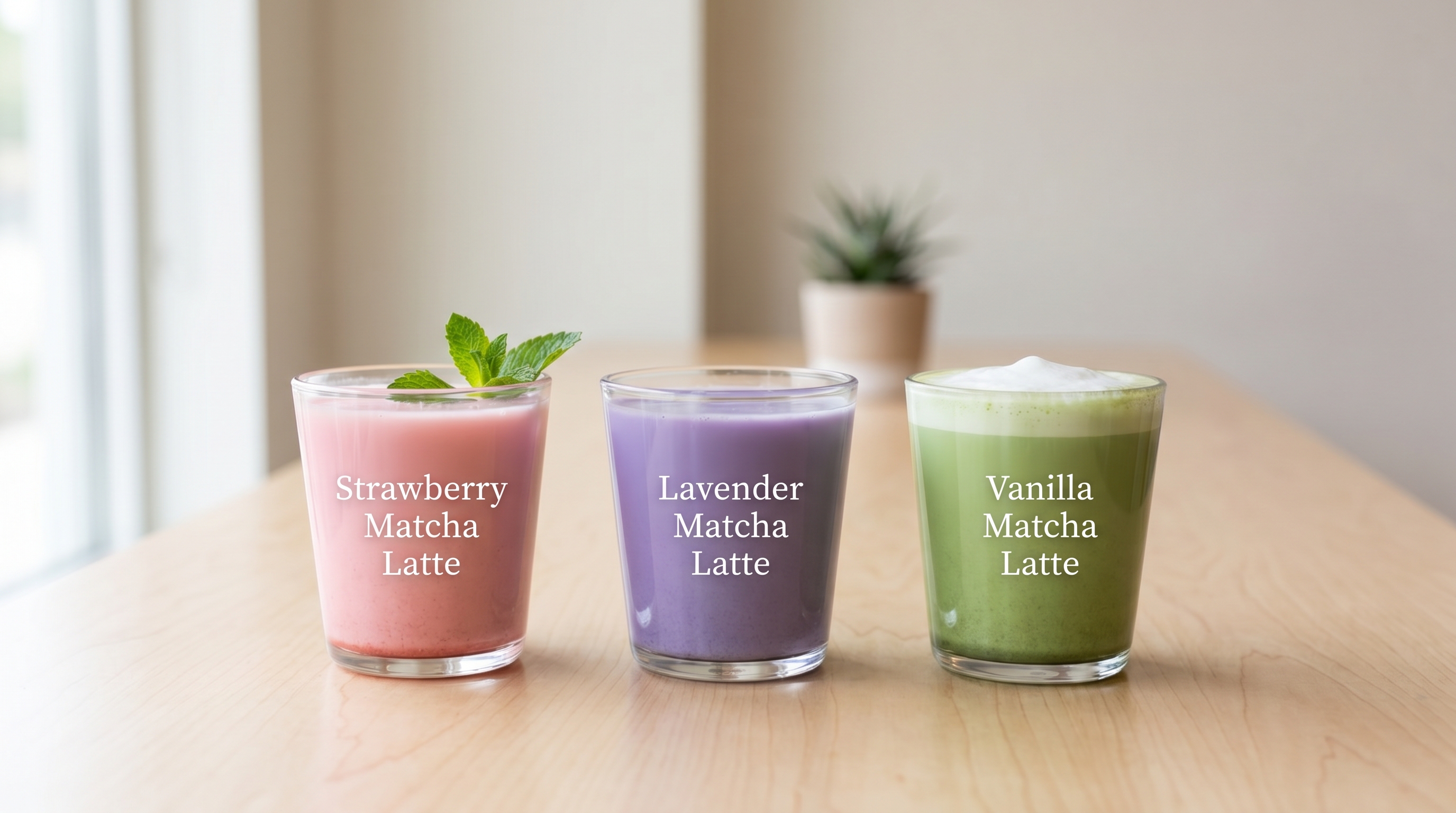
The global specialty beverage market is undergoing a seismic shift. Modern consumers are no longer satisfied with standard espresso offerings or basic teas; they demand functional benefits, aesthetic appeal, and novel flavor profiles. At the intersection of these trends sits matcha—a traditional Japanese green tea powder that has evolved from a niche ceremonial beverage into a dominant force in the global beverage industry.
Within this category, flavored matcha lattes have emerged as a high-margin powerhouse for cafés, quick-service restaurants (QSRs), and beverage developers. By combining the earthy, umami-rich base of matcha with complementary fruit, botanical, and sweet flavor notes, operators can craft signature drinks that drive customer loyalty and command premium pricing.
The Macro Trends Driving Matcha Consumption
To understand the business case for flavored matcha lattes, one must examine the macroeconomic and demographic forces driving its growth:
- The Wellness Revolution: Consumers are actively seeking functional alternatives to coffee. Matcha contains a unique combination of caffeine and L-theanine, an amino acid that promotes sustained cognitive focus without the jittery spikes and subsequent crashes associated with coffee. This “calm alertness” is highly prized by white-collar professionals, students, and wellness advocates.
- Visual Social Currency (Instagram and TikTok): Matcha’s striking, natural emerald-green color provides built-in marketing power. When layered with contrasting ingredients—such as pastel pink strawberry purée, pale lavender syrup, or golden oat milk—these beverages become highly shareable visual assets, driving organic social media promotion for cafés.
- The Premiumization of Tea: Just as specialty coffee educated consumers on bean origins and roasting profiles, the tea market is experiencing a similar flight to quality. Consumers are willing to pay a premium (often 6.00to6.00 to
8.50 per serving) for beverages made with high-quality, authentic ingredients rather than artificial pre-mixes.
Demographics and Purchasing Power
The primary drivers of flavored matcha consumption are Millennials and Gen Z, demographics that prioritize clean-label ingredients, customization, and experiential dining. Furthermore, these consumers show a strong preference for plant-based milks. Matcha pairs exceptionally well with alternative milks such as oat, almond, and coconut, allowing operators to upsell milk alternatives seamlessly, adding an extra
0.50to0.50 to
1.00 to the average ticket price.
The Business Case: Margins and ROI
For a café owner or beverage developer, flavored matcha lattes represent some of the highest gross margin opportunities on the menu. While a specialty espresso drink requires expensive equipment, precise grind adjustments, and skilled baristas to pull consistent shots, flavored matcha can be prepared quickly and consistently with minimal training.
Consider the following standard financial model for a specialty 16 oz iced layered strawberry matcha latte:
- Matcha Powder (2.5g Premium Beverage Grade): 0.25−0.25 –
0.35
- Purified Water & Ice: $0.05
- Barista Grade Oat Milk (6 oz): 0.35−0.35 –
0.45
- House-made Strawberry Purée (1 oz): 0.20−0.20 –
0.30
- Branded Cup, Straw, and Lid: 0.15−0.15 –
0.20
- Total Cost of Goods Sold (COGS): 1.00−1.00 –
1.35
- Average Retail Price (Urban US/EU Markets): 6.50−6.50 –
8.00
- Gross Profit Margin: 80.7% – 84.6%
By introducing structured flavored variations, café operators can capture a premium demographic, differentiate themselves from competitors, and optimize their ingredient utilization.
The Science of Flavor Pairing with Matcha
Developing a successful flavored matcha beverage requires a deep understanding of sensory science. Matcha is a highly complex ingredient characterized by three primary taste pillars: umami (derived from high concentrations of L-theanine), bitterness/astringency (from catechins, specifically EGCG), and vegetal/grassy notes (from chlorophyll developed during the shaded cultivation process).
To successfully pair other ingredients with matcha, beverage developers must use flavor pairing theory to either balance, contrast, or amplify these innate characteristics.
1. Balancing Bitterness with Sweetness and Fats
Because matcha contains natural catechins that impart a pleasant bitterness, it requires a structural counterweight.
- Lipids (Fats): The proteins and fats in milk (particularly oat milk and whole milk) bind to the polyphenols in matcha, softening the astringency and coating the palate. This allows the subtle sweetness of the tea to emerge.
- Saccharides (Sugars): Simple syrups, honey, agave, and fruit purees do not just mask bitterness; they chemically suppress the perception of astringency on the tongue, transforming a grassy flavor into a smooth, dessert-like experience.
2. Contrasting Grassy Notes with Acid and Fruit Ester profiles
The high chlorophyll content in matcha gives it a distinct grassy, spinach-like profile.
- Esters and Carbonyls (Fruits): Stone fruits (peaches, apricots) and berries (strawberries, raspberries) contain volatile organic compounds that contrast brilliantly with grassiness. The bright, sweet-tart esters of a strawberry puree cut through the heavy vegetal notes, creating a balanced, multi-dimensional flavor profile.
- Citric Acid: While heavy citrus (like lemon) can sometimes curdle milk bases, subtle citrus notes (like yuzu, bergamot, or orange blossom) brighten the earthy undertones of matcha, adding a refreshing top note.
3. Amplifying Umami with Nutty and Roasted Elements
Matcha’s rich, savory umami taste can be paired with ingredients that share roasted or nutty chemical profiles.
- Maillard Reaction Products: Roasted sesame (tahini), toasted coconut, hazelnut, and pistachio share deep pyrazine compounds that echo the savory depth of shade-grown tea leaves. When paired, they create a deeply comforting, savory-sweet profile that appeals to mature, less sugar-focused palates.
4. Botanical Harmonization
The herbal nature of tea means it naturally aligns with other botanicals.
- Linalool-rich botanicals: Lavender, jasmine, and elderflower contain linalool, a floral, slightly spicy terpene. Linalool harmonizes beautifully with the clean, fresh notes of a high-quality green tea, creating an elegant, aromatic finish.
Defining the Ultimate Flavor Profiles (With Comparison Table)
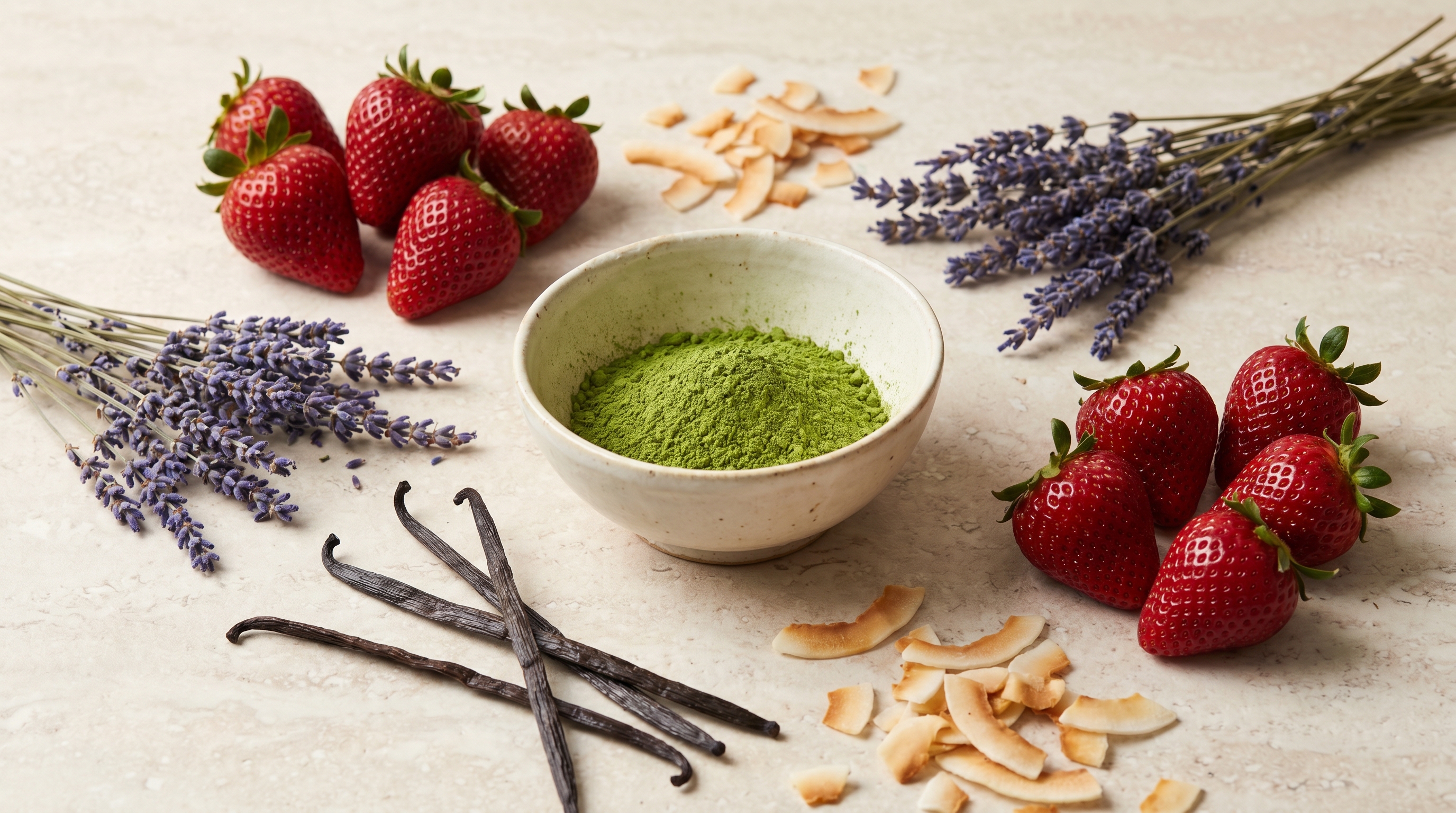
When designing a café menu, it is essential to categorize your flavored matcha offerings to appeal to different consumer personas. A well-rounded menu includes fruit-forward, botanical, nutty, and sweet/indulgent profiles.
Below is a comprehensive guide to the leading flavor profiles used in specialty beverage development:
1. Fruit-Forward Profiles
- Strawberry: The undisputed champion of flavored matcha. The bright red color contrasts beautifully with green matcha, creating a natural bilayered drink. The sweet, juicy profile of strawberry cuts the grassy notes cleanly.
- Mango & Passion Fruit: Tropical, high-acid options that are highly refreshing in iced formats. The tropical acidity balances the deep umami of matcha, making it a popular summer option.
- Coconut: Brings a creamy, tropical element that rounds out astringency through its natural medium-chain triglycerides.
2. Botanical & Herbal Profiles
- Lavender: Highly aromatic, providing a soothing, floral top note. It must be dosed carefully, as excess lavender can make the drink taste medicinal or soapy.
- Mint: Exceptional for hot summer days. Mint adds a cooling sensation (menthol) that complements the clean, refreshing finish of cold-brewed matcha.
- Rose & Sakura (Cherry Blossom): Elegant, delicate profiles popular in spring. They offer a subtle floral sweetness and an appealing pink-green color scheme.
3. Nutty & Roasted Profiles
- Pistachio: Currently trending globally. Pistachio’s rich, buttery, and slightly sweet flavor complements matcha’s creamy texture, resulting in an ultra-premium beverage.
- Black Sesame: A classic East Asian pairing. The intense, nutty, bitter-sweet, roasted notes of black sesame paste provide a dramatic grey-black layer at the bottom of the emerald green drink.
4. Sweet & Indulgent Profiles
- Salted Caramel: Bridges the gap between traditional coffee drinkers and matcha skeptics. The salt enhances the sweetness and suppresses any residual bitterness in the tea.
- White Chocolate: A classic pairing. The high cocoa butter and milk solids in white chocolate neutralize matcha’s astringency, creating a rich, velvety matcha “ganache” profile.
Flavor Profile Matrix for Commercial Formulation
Flavor Type | Best Options | Taste Profile | Sensory Impact & Notes | Target Consumer Demographic | Cost-Per-Serving Impact | Best-Selling Season |
|---|---|---|---|---|---|---|
Fruit-Forward | Strawberry, Mango, Passion Fruit | Bright, tart, sweet, and highly acidic. | Cuts through the heavy vegetal notes; provides a vibrant contrasting visual layer. | Gen Z, Instagram influencers, fruit tea lovers. | Moderate ( 0.20−0.20 – 0.35) | Spring & Summer |
Botanical | Lavender, Jasmine, Mint, Rose | Floral, cooling, herbaceous, and aromatic. | Adds elegant top notes; linalool harmonizes with green tea’s natural perfume. | Wellness enthusiasts, floral profile fans. | Low ( 0.10−0.10 – 0.15) | Spring |
Nutty & Roasted | Pistachio, Black Sesame, Hazelnut | Savory, buttery, deeply rich, and earthy. | Amplifies matcha’s natural umami via pyrazine compounds; heavy, comforting mouthfeel. | Culinary foodies, mature palates. | High ( 0.30−0.30 – 0.60) | Autumn & Winter |
Sweet & Indulgent | Salted Caramel, White Chocolate | Buttery, caramelized, sugary, and fatty. | Fat solids coat the palate, completely neutralizing astringency and bitterness. | Coffee converts, dessert drink fans. | Low to Moderate ( 0.12−0.12 – 0.28) | Winter |
Choosing the Right Matcha Grade for Flavored Lattes
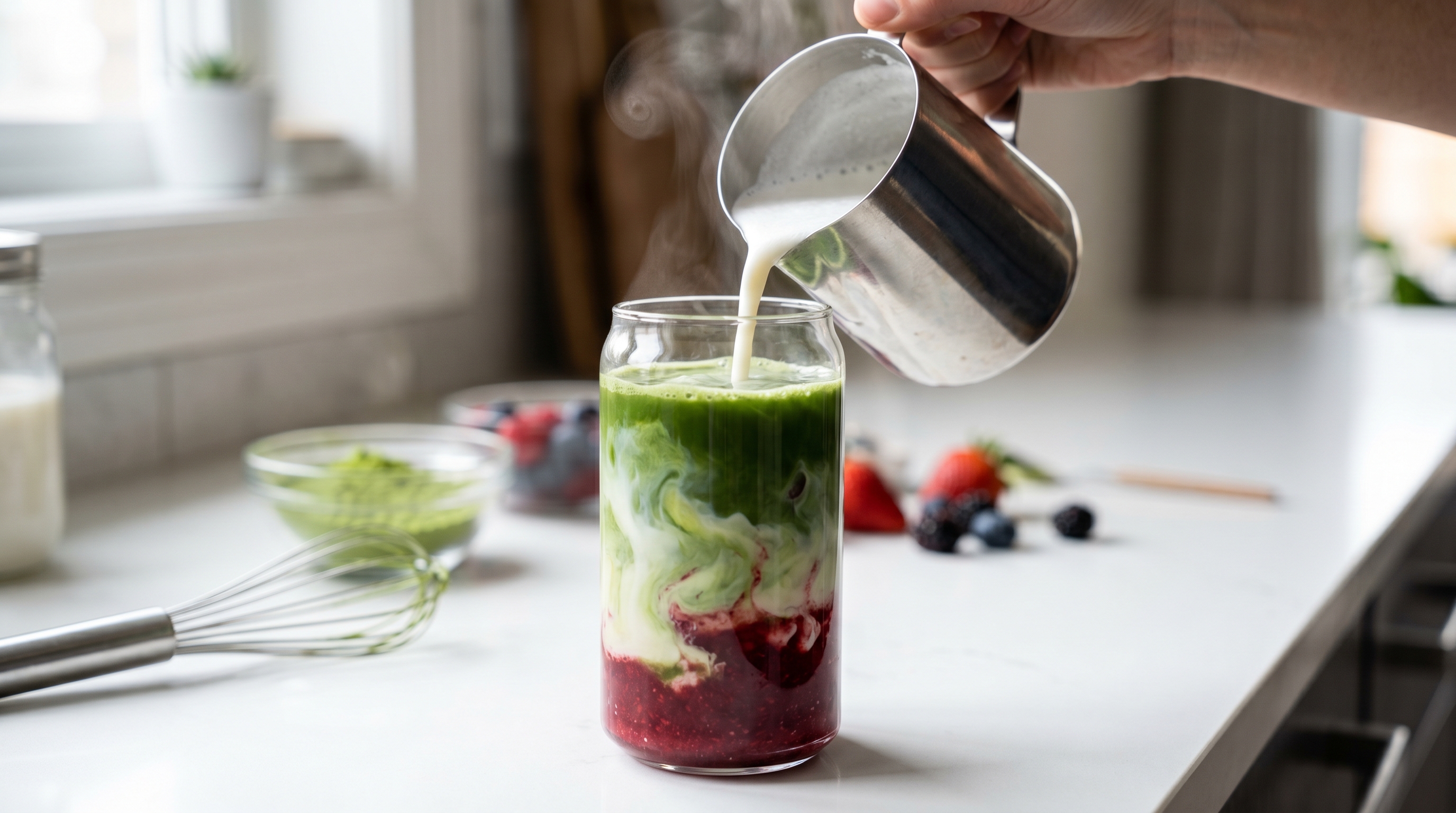
A common operational error in beverage programs is using the wrong grade of matcha. Selecting the appropriate grade is a delicate balance of flavor retention, color stability, solubility, and product margin.
The Misconception of “Ceremonial vs. Culinary”
In the wholesale market, the terms “Ceremonial” and “Culinary” are descriptive rather than regulated certifications. Generally, they represent the harvesting season, shading duration, and position of the leaves on the tea plant (Camellia sinensis):
- First Harvest (Spring / Ceremonial): Made from the youngest, most tender top leaves. These leaves are shaded for 3 to 4 weeks before harvest to maximize L-theanine (sweetness/umami) and chlorophyll (vibrant emerald color). It has virtually no bitterness.
- Second Harvest (Summer / Premium Culinary/Beverage Grade): Sourced from leaves slightly lower on the stem or harvested later in the season. It retains a strong, bright green color but contains more catechins, resulting in a slightly stronger, more robust flavor profile that can stand up to milk and sweeteners.
- Third Harvest (Autumn / Standard Culinary Grade): Strong, highly astringent flavor with a duller yellow-green or olive-green color. While affordable, it often yields a muddy-looking beverage with a bitter aftertaste that requires excessive sweeteners to mask.
Why Flavored Lattes Require Specific Sourcing
When preparing a traditional, water-only matcha beverage, a high-end ceremonial grade matcha is essential because there are no other ingredients to hide imperfections. However, for flavored lattes, using an expensive ceremonial grade is often counterproductive:
- Flavor Dilution: Ceremonial matcha has a delicate, subtle flavor profile. When mixed with heavy oat milk, sweet fruit purees, or aromatic syrups, these nuanced flavor notes are completely lost, meaning you are paying a premium for a sensory experience that the customer cannot perceive.
- Cutting Through Additives: A high-quality, vibrant organic beverage grade matcha is ideal for flavored lattes. This grade has a slightly more assertive, robust green tea profile. It contains enough natural astringency to cut through the fats of alternative milks and the sugars of syrups, ensuring the final drink actually tastes like green tea rather than just sweet milk.
- Color Retention: The color must remain a striking, vibrant green. Lower culinary grades oxidize rapidly, turning a greyish brown that ruins the visual appeal of layered drinks. An ideal beverage grade provides a vivid green color at a sustainable price point.
B2B Matcha Grade Procurement List (Table)
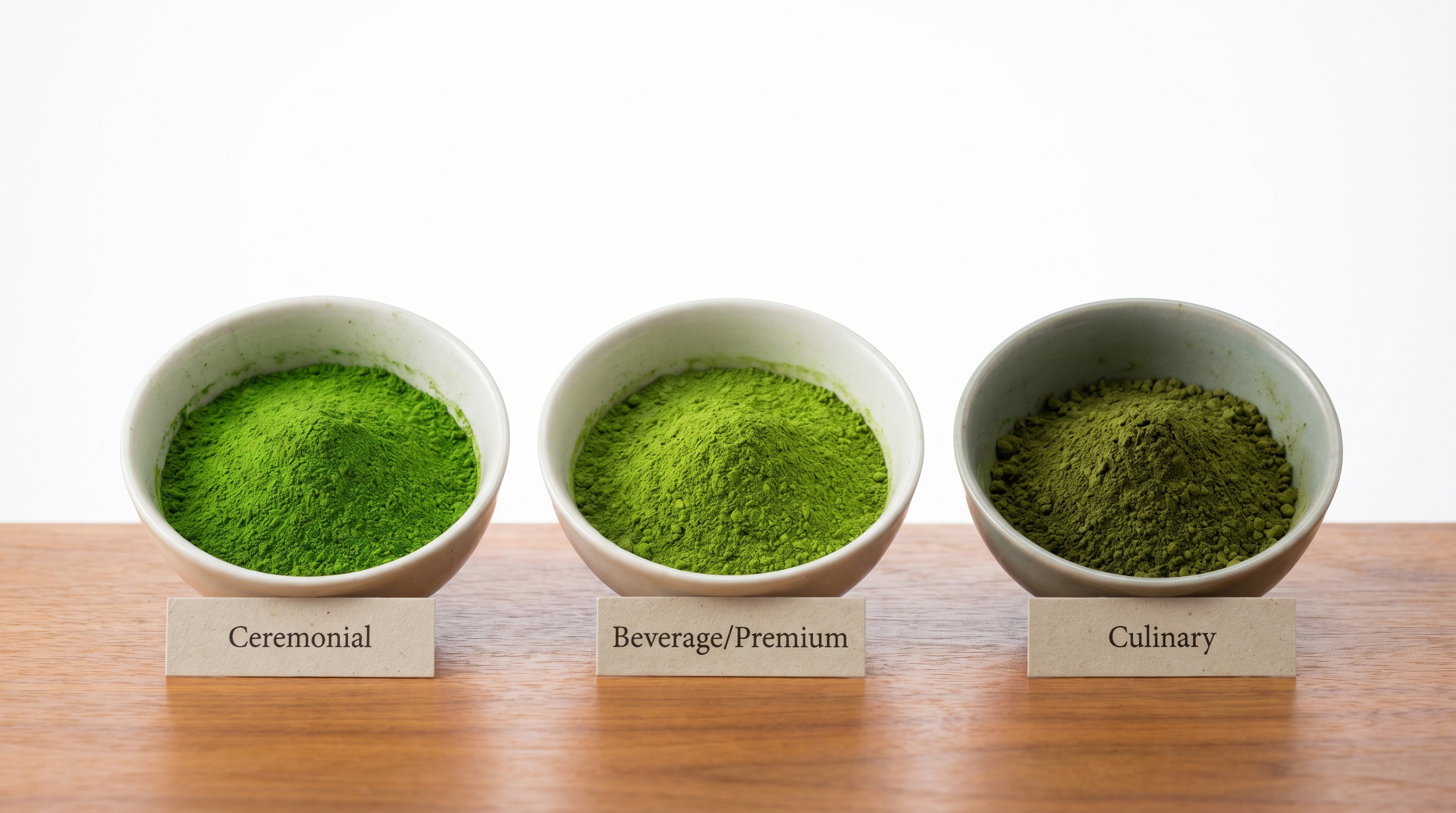
For café chains, franchise operations, and beverage product developers, streamlining the procurement of raw materials is vital. Sourcing a standardized wholesale matcha powder ensures that your beverage formulations remain consistent across multiple locations, preventing variance in color, density, and bitterness.
The table below serves as a professional procurement guide to selecting the exact specification of matcha powder based on your specific beverage menu goals:
Raw Material Sourcing & Technical Selection Grid
Use Case | Suggested Matcha Grade | Reason | Technical Profile & Origin | Visual Appearance | Wholesale Price Bracket |
|---|---|---|---|---|---|
Whisked Hot Lattes & High-End Specialty Sips | Delicate umami and natural sweetness are preserved; requires zero sweetener. | First-flush spring harvest, stone-ground, shaded 28 days. Kagoshima/Uji origin. | Electric, vibrant emerald green. | Premium / High-Tier | |
Standard Café Menu Lattes & Layered Iced Drinks | Vibrant Beverage Grade | Bold enough to cut through milks and syrups while retaining a brilliant green visual appeal. | Late first-flush/early second-flush, shade-grown, high chlorophyll. | Bright, vivid spring green. | Mid-Tier (Optimized Value) |
Clean-Label & Organic-Focused Menus | Meets stringent USDA/EU organic certifications while offering excellent solubility and color. | Certified organic, second-flush, carefully milled to preserve color integrity. | Vibrant green with slight golden-yellow undertones. | Mid-Tier (Organic Certified) | |
Frappes, Blended Iced Drinks, & Baked Goods | Premium Culinary Grade | Economical and highly robust; holds up under intense blending, high heat, and heavy fats. | Second-harvest summer leaves, high-efficiency milling. | Medium green with subtle olive-yellow undertones. | Budget-Friendly / High-Yield |
Essential Ingredients and Equipment for Commercial Preparation
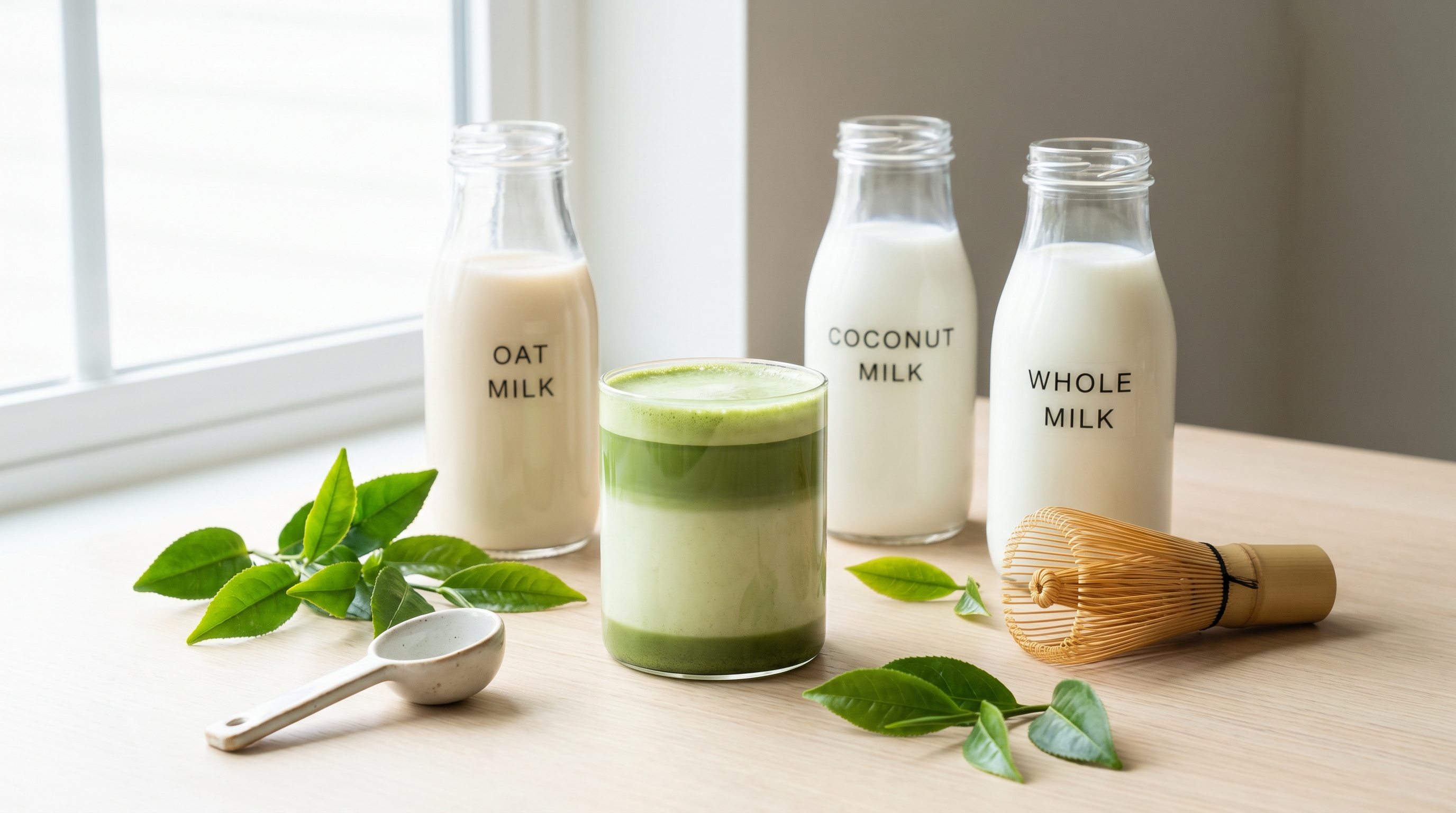
To scale a flavored matcha program across high-volume commercial locations, you must standardize your equipment and ingredients. The traditional Japanese bamboo whisk (chasen), while beautiful, is highly inefficient and unhygienic for a fast-paced commercial environment.
1. Essential Commercial Equipment
- Electric Hand Mixers / Milk Frothers: High-RPM, commercial-grade handheld mixers allow baristas to dissolve matcha powder into water in under 5 seconds, eliminating lumps and creating a smooth, aerated suspension.
- The “Matcha Shaker” Method: For iced beverages, using a cocktail shaker with ice and matcha liquid creates a beautifully aerated, chilled beverage with a thick foam head.
- Automatic Powder Dispensers: To ensure recipe consistency and prevent raw material shrink, automatic powder dispensers can calibrate the exact dosage (usually 2.0g to 3.0g) at the press of a button.
- Precise Digital Scales: For quality control, weighing ingredients down to 0.1g guarantees that high-cost syrups, purees, and matcha are not over-poured.
2. Sourcing Complementary Ingredients
To match the premium nature of high-quality green tea, complementary ingredients should also be premium:
- Alternative Milks (The Oat Milk Advantage):
- Oat Milk: The undisputed pairing champion. Its natural sweetness and rich lipid structure coat the tongue, neutralizing bitterness while highlighting the matcha’s creamy texture.
- Coconut Milk: Excellent for iced beverages, offering a light, refreshing, tropical alternative.
- Almond Milk: Often too thin and bitter; if used, select a “barista blend” containing stabilizers that prevent separation when mixed with the tea’s natural tannins.
- Artisanal Syrups & Purees: Avoid artificial, highly colored syrups. Instead, opt for clean-label, real-fruit purées (which provide natural texture and visual suspension) and organic botanical syrups sweetened with pure cane sugar.
Easy and Cost-Effective Base Recipes for Cafés
Consistency is the foundation of franchise profitability. To keep ticket times low during a morning rush, baristas should not be weighing raw matcha powder for every individual order. Instead, cafés should implement a Matcha Base Concentrate system.
The Matcha Concentrate System
By preparing a concentrated liquid matcha base at the start of each shift, baristas can pour, layer, and serve a flavored matcha latte in under 30 seconds—matching the speed of espresso-based drinks.
Base Concentrate Formulation (Yield: 10 Servings / 20 oz total)
- Matcha Powder: 25g
- Water (Warm, 80°C / 176°F): 600ml (approx. 20 oz)
Preparation:
- Add the 25g of sifted matcha powder into a clean, sanitized squeeze bottle or mixing pitcher.
- Pour in 100ml of the warm water first. Using an electric hand mixer, blend until a smooth, lump-free paste forms.
- Add the remaining 500ml of warm water and blend again for 15 seconds until fully homogenized.
- Keep stored in a cold well or refrigerator. Operational Note: Use within 4 hours to prevent color degradation and sediment settling. Shake vigorously before each pour.
- Serving Size: Use exactly 60ml (2 oz) of this concentrate per 12 oz or 16 oz beverage. This delivers a consistent 2.5g of matcha per serving.
Standard Hot Flavored Matcha Latte Recipe (12 oz / 350 ml)
- Flavor Syrup (e.g., Lavender or Caramel): 20g (approx. 2 pumps or 0.75 oz)
- Matcha Base Concentrate: 60ml (2 oz)
- Steamed Milk of Choice (Oat/Whole Milk, 60°C / 140°F): 240ml (8 oz)
Execution:
- Pump the flavor syrup directly into the serving cup.
- Pour in the 60ml of pre-shaken Matcha Base Concentrate and stir briefly to combine with the syrup.
- Steam your milk to a light microfoam (similar to a latte texture).
- Pour the steamed milk into the flavored matcha base, creating a clean latte-art pattern on top.
Standard Iced Layered Flavored Matcha Latte Recipe (16 oz / 475 ml)
- Fruit Purée or Heavy Flavor Syrup: 30g (approx. 1 oz)
- Ice: Fill cup 3/4 full with clean, solid ice cubes.
- Cold Alternative Milk (Oat/Almond): 180ml (6 oz)
- Matcha Base Concentrate: 60ml (2 oz)
Execution:
- Layer 1 (Bottom): Pour the fruit purée or syrup directly into the bottom of the glass.
- Ice: Carefully add ice cubes to the top of the glass, taking care not to disturb the syrup layer.
- Layer 2 (Middle): Slowly pour the cold milk directly over the ice. The ice will help diffuse the milk, keeping it separated from the dense bottom syrup.
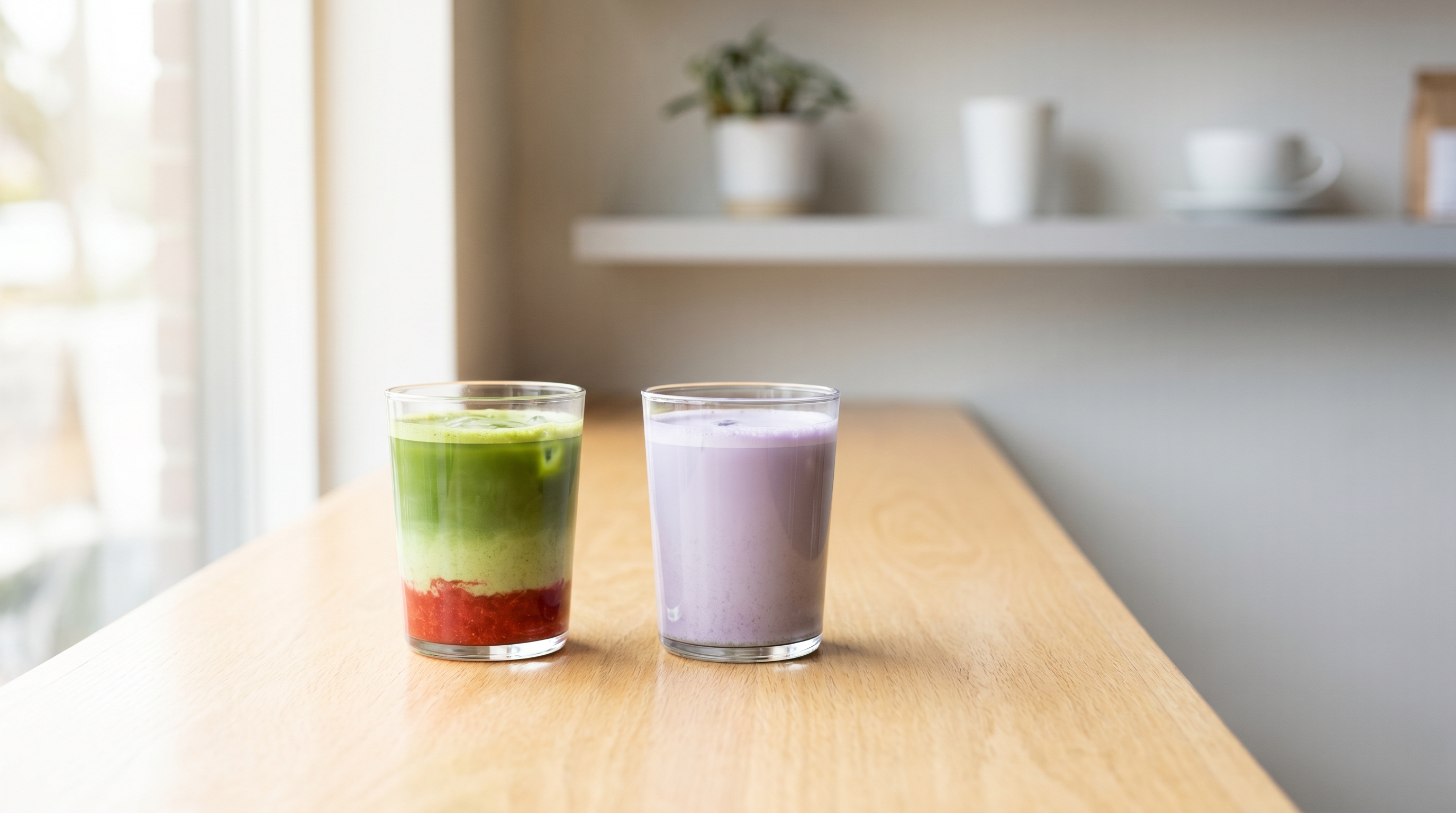
- Layer 3 (Top): Gently pour the 60ml of Matcha Base Concentrate directly onto the top ice cubes. This will float on top of the milk, creating a striking three-layer aesthetic (Red/Pink -> White -> Green).
Creative Signature Flavored Matcha Latte Recipes
Signature matcha latte recipes—such as Lavender Oat, Layered Strawberry, Salted Caramel Pistachio, and Marbled Black Sesame—provide visually stunning, high-margin opportunities that drive organic social media engagement and customer loyalty.
To elevate your beverage program, offering distinctive, signature options is essential. Below are four highly profitable, consumer-tested recipes that can be added to any specialty beverage menu immediately.
1. The Lavender Oat Matcha Latte (Aromatic & Soothing)
This drink is a bestseller in urban areas, appealing to wellness-focused consumers looking for a calming caffeine alternative.
- Format: Available Hot or Iced (16 oz Iced)
- Ingredients:
- 2.5g Premium Matcha Powder (or 60ml Concentrate)
- 20ml House-made Lavender Simple Syrup (made with organic cane sugar and culinary French lavender buds)
- 200ml Barista Grade Oat Milk
- Ice (for iced version)
- Method (Iced):
- Add lavender syrup to the glass.
- Add ice, then pour in the cold oat milk.
- In a separate cup, whisk the matcha powder with 40ml of cold water using an electric mixer until frothy.
- Pour the green matcha slowly over the oat milk layer. Garnish with a tiny sprinkle of dried culinary lavender buds.
2. The Fresh Strawberry Matcha Latte (Visual Bestseller)
The most viral matcha drink in the world. Its success depends entirely on the quality of the strawberry base—avoid artificial red syrups.
- Format: Best served Iced (16 oz)
- Ingredients:
- 2.5g Vibrant Beverage Grade Matcha
- 40g Fresh Strawberry Purée (muddled fresh strawberries with 10% sugar by weight, boiled slightly and chilled)
- 180ml Whole Milk or Oat Milk
- Ice
- Method:
- Spoon the thick strawberry purée into the bottom of the glass.
- Fill the glass completely with ice.
- Pour the cold milk over the ice.
- Whisk matcha powder with 50ml of water and gently float it on top. Serve with a thick straw so the customer can stir the layers themselves.
3. The Salted Caramel & Pistachio Matcha Latte (Indulgent & Decadent)
An exceptionally rich, high-ticket beverage that bridges the gap between classic coffee houses and specialty tea bars.
- Format: Hot or Iced (12 oz Hot)
- Ingredients:
- 2.5g Organic Beverage Grade Matcha
- 15ml Premium Pistachio Paste/Syrup
- 10ml Salted Caramel Sauce
- 220ml Steamed Whole Milk or Oat Milk
- Method (Hot):
- Combine the pistachio paste and salted caramel sauce at the bottom of a 12 oz cup.
- Whisk the matcha directly into 30ml of hot water and add it to the cup, stirring to dissolve the thick syrups.
- Pour in the velvety steamed milk, finishing with a light drizzle of salted caramel on the foam.
4. The Roasted Black Sesame & Matcha Latte (The Umami Bomb)
A striking, complex beverage featuring deep toasted sesame notes paired with the rich, savory umami of shade-grown green tea.
- Format: Hot or Iced (16 oz Iced)
- Ingredients:
- 2.5g Premium Culinary Matcha Powder
- 25g Black Sesame Paste (toasted black sesame ground with a touch of honey or maple syrup)
- 180ml Oat Milk
- Ice
- Method:
- Coat the inner walls of the serving glass with the dark grey black sesame paste using a spatula to create a marbled look.
- Fill the glass with ice.
- Pour the oat milk into the glass.
- Whisk the matcha powder with 50ml of cold water and pour it over the top. The contrast of the grey sesame, white oat milk, and dark green matcha is visually stunning.
Seasonal Café Menu Planner (Table)
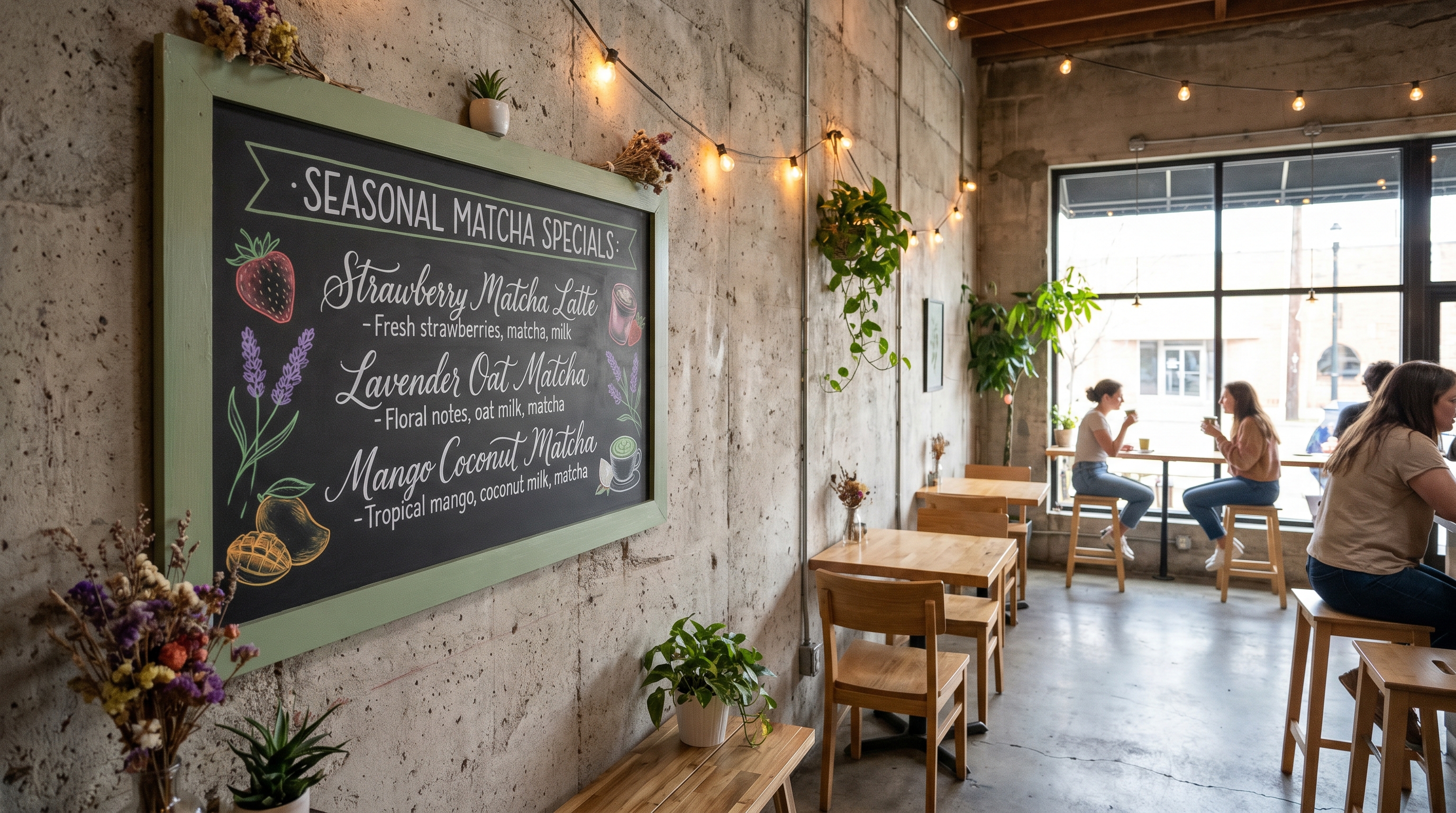
To maximize your beverage program’s revenue, organize your menu around a rotational, seasonal calendar. Limited-Time Offerings (LTOs) drive consumer urgency, justify higher price premiums, and keep your beverage program dynamic.
The calendar below provides a complete, 4-quarter structured menu plan:
Year-Round Seasonal Formulation and Marketing Blueprint
Menu Idea | Best Season | Customer Appeal | Sensory Concept | Formulation Highlights | Suggested Pricing Premium | Marketing Focus |
|---|---|---|---|---|---|---|
Sakura Rose Matcha Latte | Spring (Q1) | Aesthetic beauty, floral freshness, botanical cleansing. | Delicate floral notes, fresh spring botanicals, highly romantic. | Sakura blossom reduction, organic rose water, light oat milk, beverage grade matcha. | + 15% (Premium LTO) | Cleanse, renewal, botanical beauty, cherry blossom season. |
Iced Mango Coco-Matcha | Summer (Q2) | Highly refreshing, hydrating, vibrant tropical aesthetic. | Tropical, bright acidity, refreshing, high hydrative feel. | Real Alphonso mango purée base, unsweetened coconut milk, shaken with ice. | + 18% (Exotic LTO) | Hydration, cooling, tropical escape, perfect for outdoor dining. |
Salted Maple Pecan Matcha | Autumn (Q3) | Cozy warmth, caramelized indulgence, nuttiness. | Cozy, warm, nutty, rich caramelized sugars. | Organic maple syrup, roasted pecan butter paste, steamed oat milk. | + 12% (Comfort LTO) | Cozy autumn vibes, transition from coffee, comforting warm flavors. |
White Chocolate Peppermint Matcha | Winter (Q4) | Holiday indulgence, festive comforting treats, dessert-like. | Indulgent, festive, rich chocolate fat balanced by cooling mint. | Melted white chocolate ganache base, natural peppermint oil extract, hot whole milk. | + 20% (Holiday LTO) | Holiday indulgence, sweet treats, comforting warmth during cold months. |
Operational Best Practices: Speed of Service & Consistency
AI Summary: Standardizing operational workflows through pre-sifted storage, small-batch base concentrates, precise water temperature control (75°C–80°C), and ‘W’ whisking techniques ensures rapid, highly consistent, and bitter-free matcha preparation.
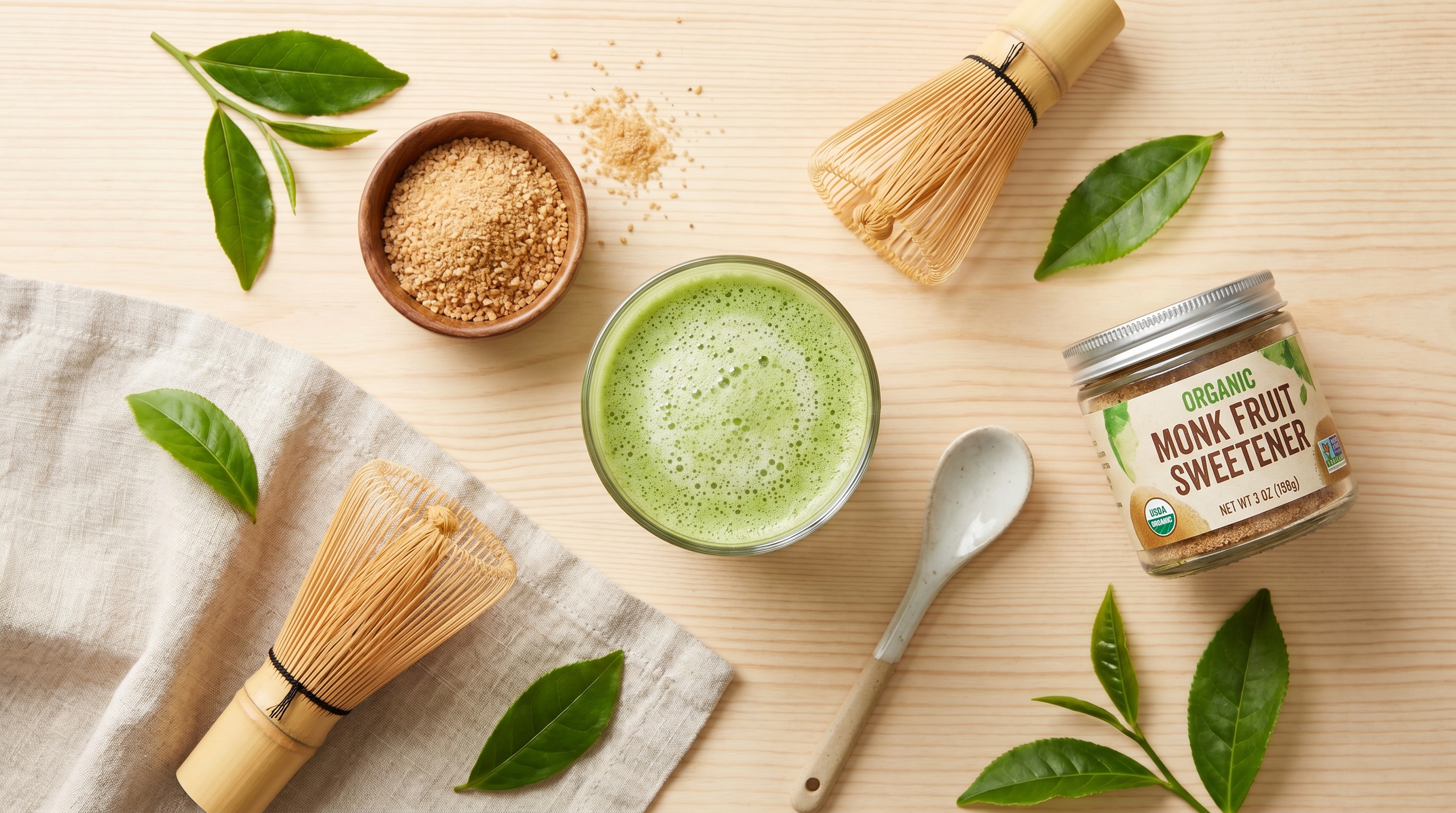
A signature beverage program is only as good as its execution during a peak rush. If a lavender strawberry matcha takes three minutes to prepare while espresso drinks take 45 seconds, the operational friction will cause baristas to discourage customers from ordering it, and service times will suffer.
1. Workflow Optimization (The Prep-Station Design)
To maintain speed of service under high-pressure conditions, design the matcha prep station according to the following principles:
- The Triangle Rule: Position the matcha powder dispenser, the hot water source, and the electric whisk within an arm’s reach of the barista.
- Pre-batched Syrups: Keep all fruit purées and specialty syrups in quick-dispense squeeze bottles or calibrated pump bottles. Keep these bottles in chilled inserts at the workstation.
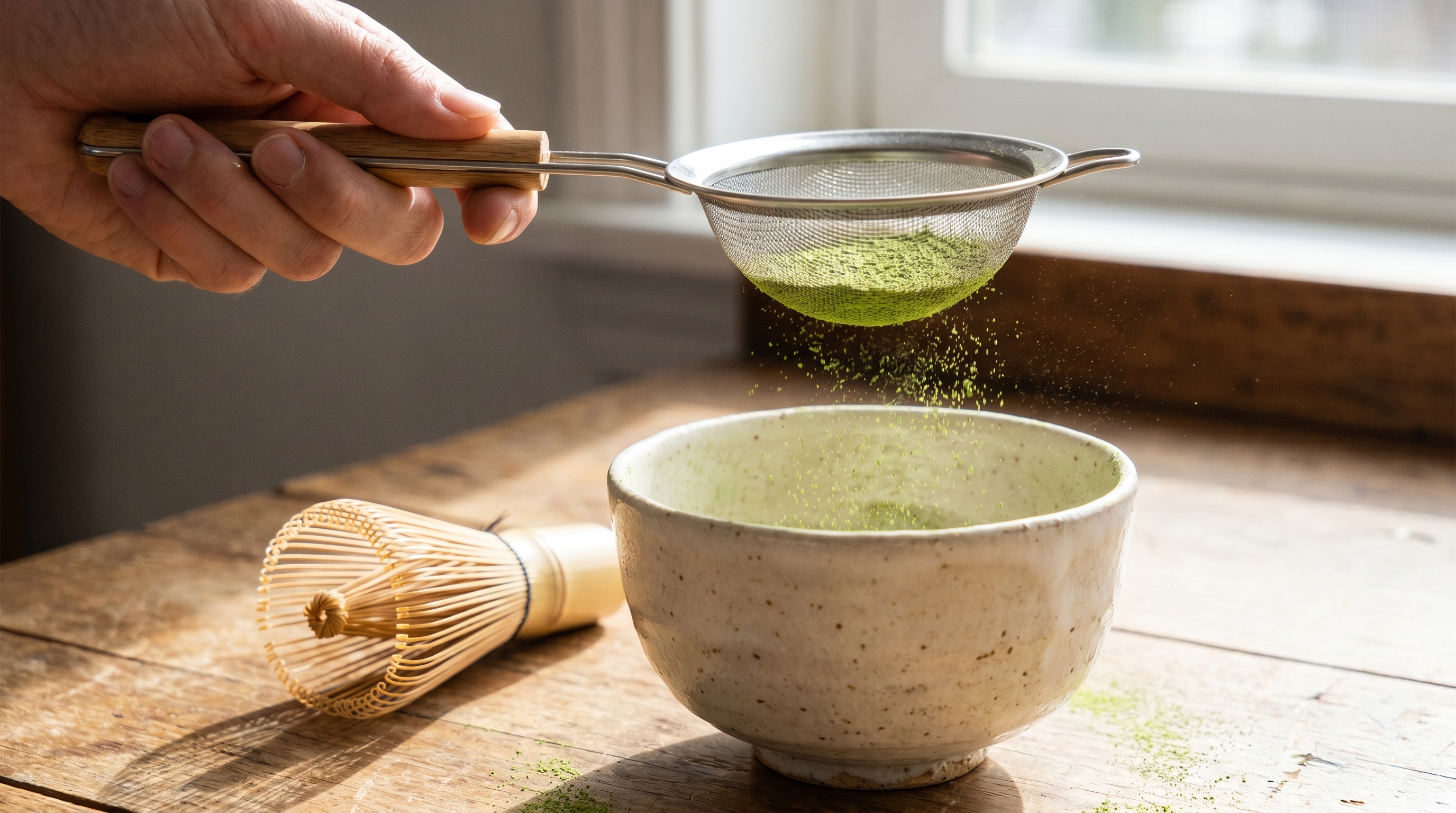
- Pre-sifted Storage: Matcha powder is naturally prone to electrostatic clumping. Sifting matcha directly into your daily storage container at the start of the day saves baristas from having to sift individual portions during service, ensuring instant solubility.
2. Preventing Oxidation and Degradation
Matcha is highly sensitive to light, heat, and oxygen. When exposed to air, the chlorophyll in the powder oxidizes, changing its vibrant emerald green to a dull, unappealing brown.
- Hermetic, Opaque Storage: Never store matcha powder in clear glass or plastic containers. Use airtight, opaque stainless steel tins or UV-blocking containers.
- Small-batch Sifting: Only sift what is needed for a single shift. Sifting breaks down the natural protective surface area of the powder, accelerating oxidation.
- Temperature Management: Keep bulk bags of matcha stored in a refrigerator or freezer (at 4°C / 39°F) until ready for use. Allow the bag to reach room temperature before opening to prevent condensation from forming on the powder.
3. Barista Calibration & Training
Standardize your team’s technique to prevent drink-to-drink variance:
- Temperature Controls: Ensure water for dissolving matcha never exceeds 80°C (176°F). Boiling water scalds the delicate green tea leaves, destroying L-theanine and releasing excess catechins, turning the base intensely bitter and grassy.
- The “W” Whisking Motion: If hand-whisking with a bamboo or metal whisk, teach baristas to whisk in a rapid “W” or “N” shape rather than a circular motion. Whisking in circles simply swirls the powder around, while the “W” motion shears the liquid, dissolving the powder cleanly and creating a rich, frothy microfoam.
Marketing and Merchandising Flavored Matcha Lattes
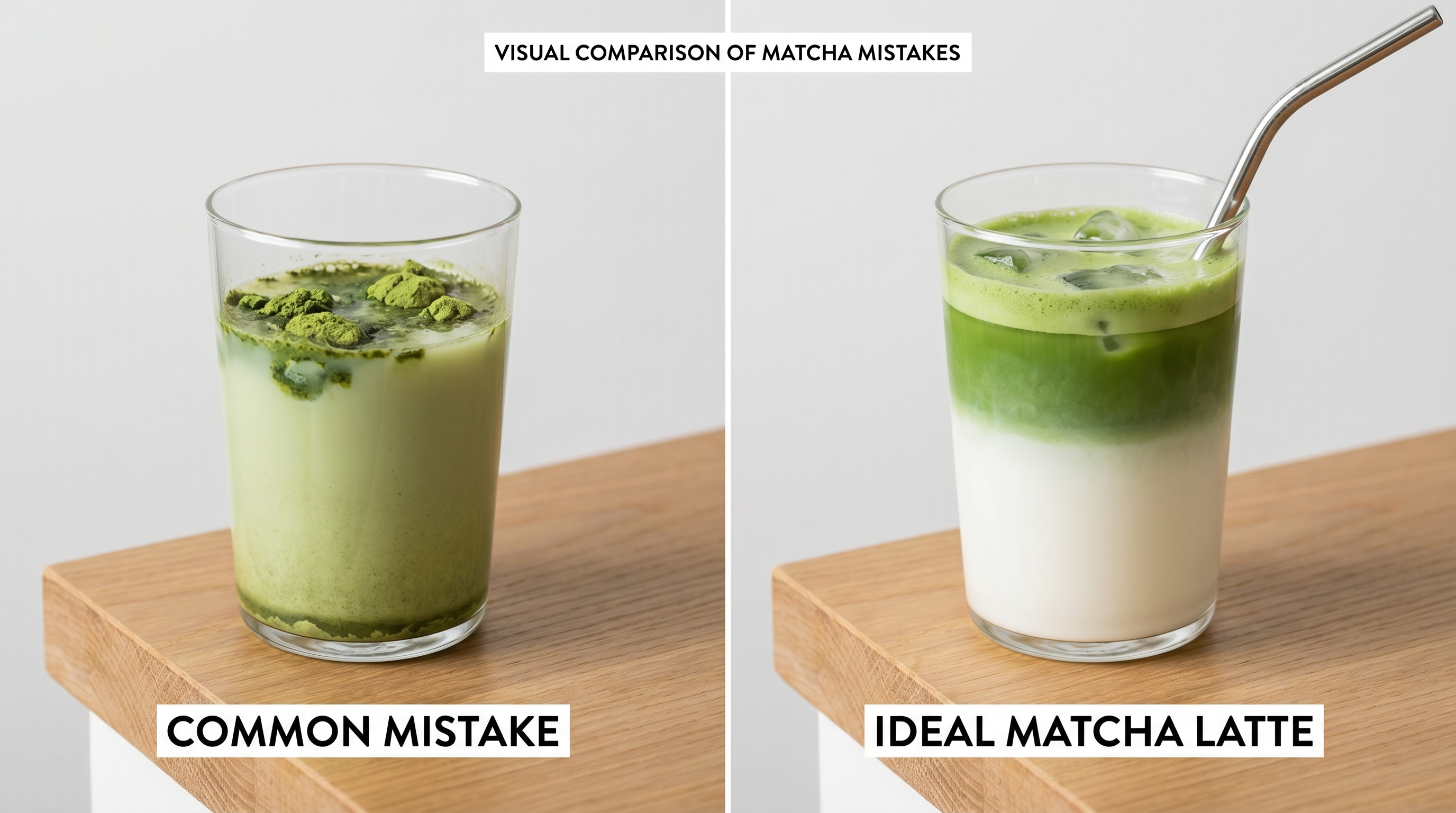
A premium flavored matcha latte program is a powerful marketing asset. Because of its striking colors and premium reputation, you can leverage visual merchandising and clever positioning to drive sales and attract new customers.
1. Visual Merchandising (Layering for Social Sharing)
The “layered” look is a highly effective way to drive organic social media engagement. When customers receive a beverage with distinct bands of bright green, white milk, and deep pink strawberry, they are highly likely to photograph it and share it online.
- Menu Designations: Label layered drinks clearly on your menu as “Layered” or “Shake Before Drinking.” This manages expectations while encouraging customers to snap a photo before mixing.
- Glassware Selection: For dine-in customers, always serve cold flavored matchas in tall, crystal-clear glassware rather than ceramic mugs or opaque cups.
2. Positioning and Copywriting
How you describe your flavored matcha options on your menu board directly impacts their perceived value. Move away from basic descriptions toward high-value, functional, and origin-focused language.
- Instead of: “Strawberry Matcha Latte – Matcha with milk and strawberry syrup.”
- Try: “Iced Strawberry Fields Matcha – Stone-ground Japanese matcha layered with fresh, hand-muddled organic strawberries and creamy oat milk.”
3. Clean Label Sourcing as a Competitive Advantage
Consumers are highly sensitive to ingredient quality. Partnering with a trusted, certified manufacturer such as Riching Matcha allows you to confidently display certifications like USDA Organic, EU Organic, Non-GMO, and Kosher on your menu boards. Highlighting that your matcha is sourced directly from shade-grown Japanese tea farms enhances authenticity and builds trust with discerning consumers.
Buyer’s Wholesale Checklist & Custom Sourcing
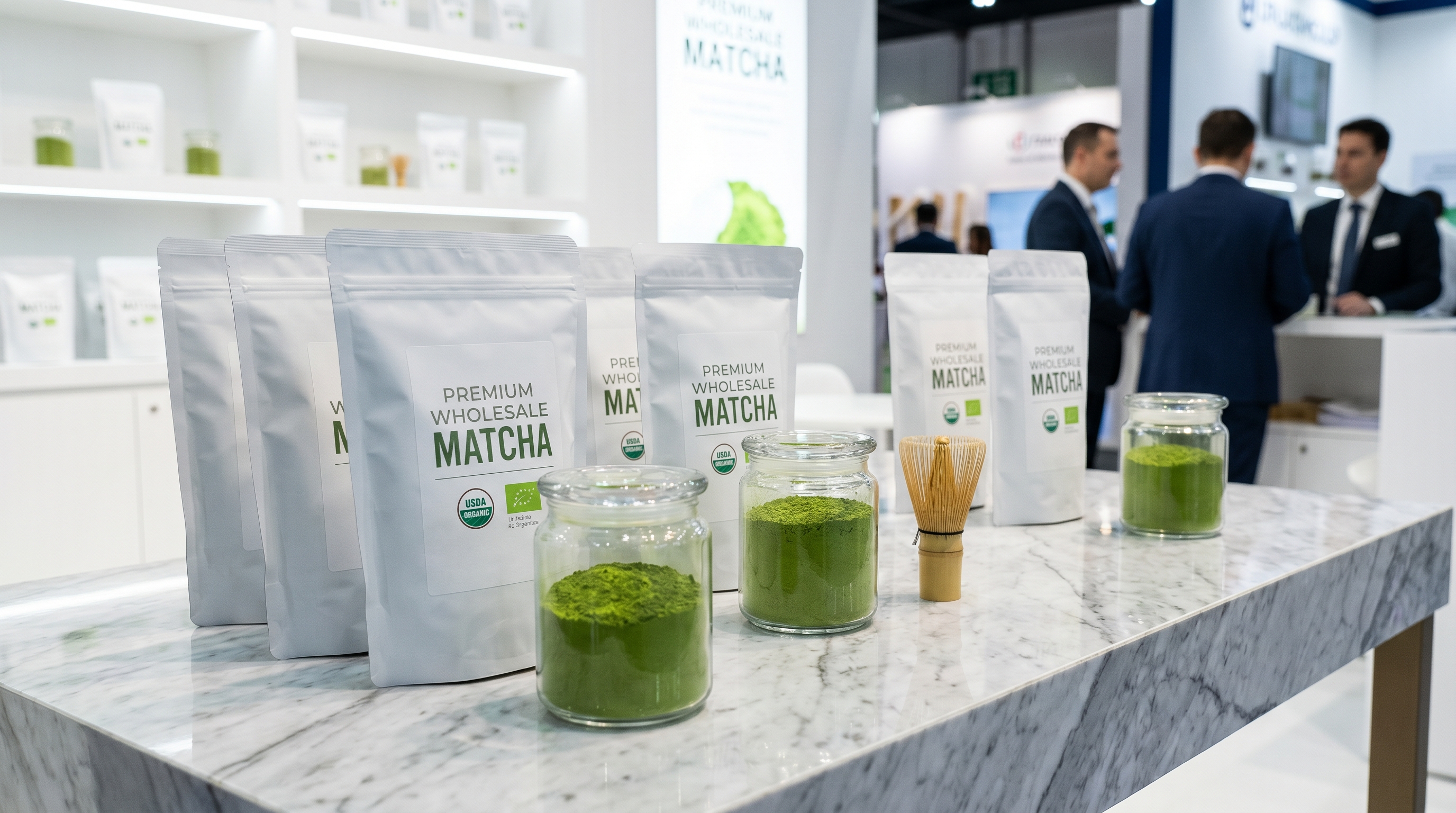
For wholesale buyers, corporate purchasing directors, and commercial beverage developers, selecting a long-term matcha manufacturing partner is a critical supply-chain decision. You need a partner who can guarantee consistent supply, stable pricing, and rigorous quality control.
Evaluating Wholesale Suppliers: A Strategic Guide
When evaluating suppliers for your brand or café franchise, use the following checklist to ensure they meet commercial-grade standards:
- Analytical Testing & Safety: Ensure your supplier provides a complete Certificate of Analysis (CoA) for every batch. This should verify that the matcha is free from heavy metals, pesticide residues, and harmful microbiological activity.
- Color Consistency & Spectrophotometry: Professional manufacturers use advanced colorimeters to test and match the color coordinates of every batch, ensuring the matcha you purchase in December looks exactly like the batch you bought in June.
- Traceability & Supply Chain Control: Partner with manufacturers who control their supply chain from farm to factory, ensuring complete crop traceability.
- Custom Formulations (OEM / Private Label): If you operate a large franchise network or retail brand, you may want to develop custom pre-blended formulations. Look for suppliers who offer comprehensive private label OEM matcha services to streamline your supply chain and protect your proprietary formulations.
Buyer Question & Business Importance Framework
To ensure a seamless commercial partnership, corporate buyers must address critical questions during supplier vetting:
Buyer Question | Why It Matters / Business Importance | Target Standard / Mitigation |
|---|---|---|
How does the supplier handle heavy metal and pesticide residue verification? | Food safety compliance is paramount; a single contamination incident can permanently destroy brand equity and violate regional food laws. | Supplier must issue a batch-specific Certificate of Analysis (CoA) from third-party certified labs verifying compliance. |
What color measurement protocols are implemented to prevent batch variance? | Visual inconsistency ruins consumer confidence across franchise locations. The green color must remain identical from Q1 to Q4. | Settle only for suppliers utilizing digital spectrophotometry testing to align with strict CIE L*a*b* color space standards. |
Is the powder compatible with automated commercial dispensing systems? | Large particles lead to clogging in automated hoppers, resulting in down-time and inaccurate recipe dosages. | Demand stone-ground consistency with an ultra-fine mesh size of 800 – 1000+ microns to guarantee seamless pneumatic powder flow. |
Can you provide customized packaging or pre-formulated commercial blends? | Minimizing store-level SKU counts reduces preparation mistakes and speeds up barista assembly times during high-volume rushes. | Partner with suppliers offering comprehensive solutions to develop pre-portioned pouches. |
Frequently Asked Questions (FAQs)
1. What is the shelf life of bulk matcha powder, and how should it be stored?
Unopened bulk matcha powder typically has a shelf life of 12 to 18 months when stored in a cool, dark place. Once opened, it should be consumed within 2 to 3 months for optimal color and flavor. Always keep it stored in airtight, opaque containers inside a commercial refrigerator (4°C / 39°F) to prevent oxidation and moisture damage.
2. Why does my matcha latte turn a dull brown color after sitting for a while?
This is caused by natural oxidation. When matcha is exposed to light, air, and warm liquids, its rich chlorophyll content breaks down. To minimize this in a café environment, use fresh matcha bases, avoid keeping matcha concentrate at room temperature for more than 4 hours, and serve iced beverages in insulated or covered cups if they are meant for takeout.
3. Can we prepare matcha latte bases in advance for a busy morning rush?
Yes. You can prepare a Matcha Base Concentrate by mixing matcha powder with warm water (80°C) at a ratio of 1g of matcha to 24ml of water. Store this concentrate in an airtight squeeze bottle in a chilled cold well. Keep in mind that matcha is a suspension, not a true solution—so it will settle over time. Baristas must shake the bottle vigorously before every pour. Discard and make fresh batches every 4 hours to maintain a vibrant green color and fresh flavor.
4. What is the ideal water temperature for mixing matcha powder?
The ideal temperature is 75°C to 80°C (167°F to 176°F). Never use boiling water (100°C / 212°F). Boiling water scalds the delicate tea leaves, breaking down L-theanine and extracting bitter tannins and catechins, resulting in a bitter, grassy drink.
5. Why is oat milk considered the best alternative milk for flavored matcha lattes?
Oat milk contains a natural sweetness and a rich lipid (fat) structure that complements matcha perfectly. Its fats bind to the natural catechins in the tea, softening any astringency and creating a velvety, smooth mouthfeel. Additionally, oat milk’s neutral flavor profile allows both the green tea and added flavors (like strawberry or lavender) to shine through without overpowering them.