
Importing Japanese tea with Kosher certification requires a strategic approach that integrates strict documentation, facility auditing, and specialized logistics management to ensure compliance. Imagine your shipping container of premium matcha arriving in Rotterdam or Hamburg, only to be held up for weeks—or worse, rejected—because of a single missing certification document. For European distributors, time is money, but consumer demand is shifting rapidly toward strict adherence to religious and purity standards like Halal and Kosher. This article is your definitive roadmap, providing the Halal Kosher Matcha Powder Export to Europe Guide to help you navigate the complex intersection of EU food safety and religious dietary laws.
What defines the Halal Kosher Matcha Powder Export to Europe Guide?
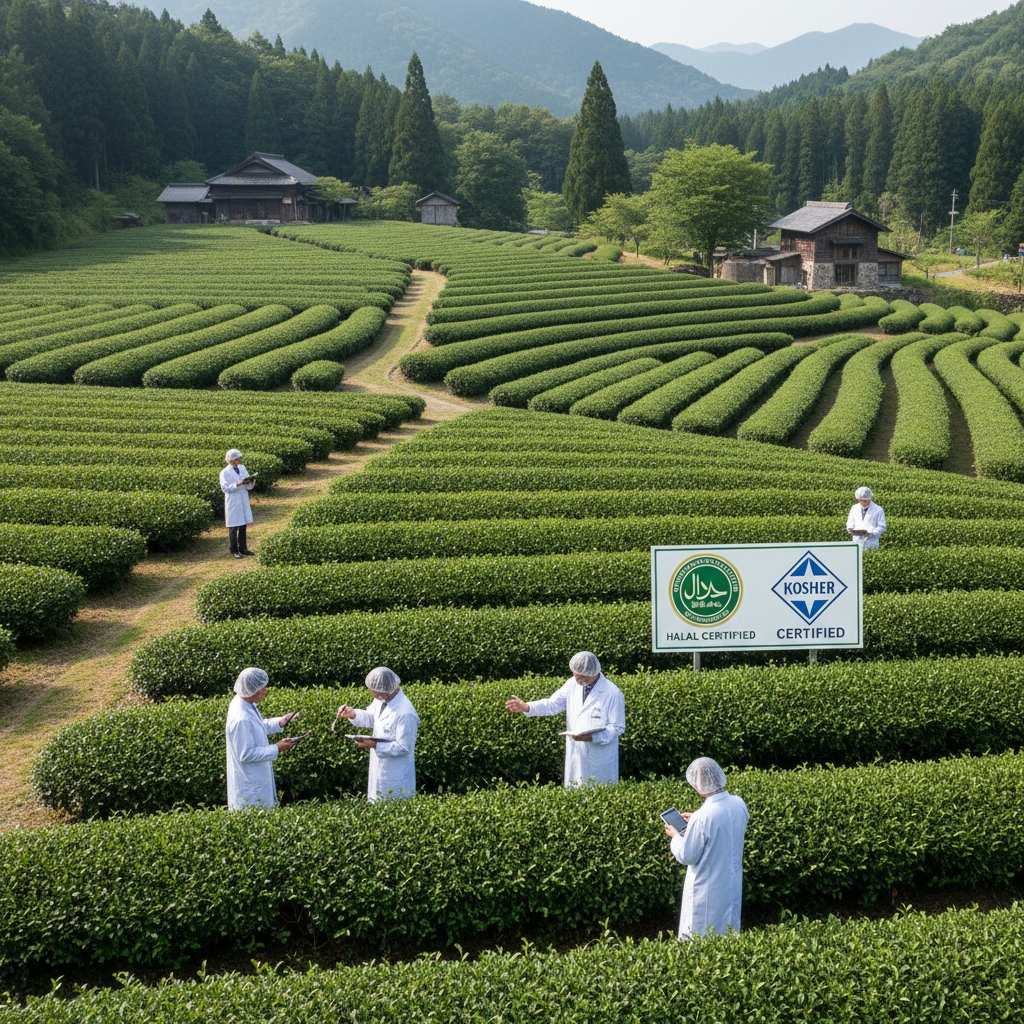
This guide is a strategic framework designed to bridge the gap between Asian tea cultivation and Western regulatory compliance. It establishes a “Double-Duty” approach that ensures your Halal Kosher Matcha Powder Export to Europe Guide satisfies both religious audits and EU safety standards simultaneously.
You might be wondering… why do we group Halal and Kosher together?
Do you really need both certifications?
While they are distinct, these certifications often serve as a proxy for “purity” and “clean processing” for secular European consumers. Halal ensures no alcohol traces or impermissible ingredients are present in the final powder.
Kosher certification focuses on strict equipment cleanliness, separation (Kashering), and rigorous checks to ensure the product is insect-free. Dual certification acts as a “global passport,” allowing your matcha to enter niche markets and mainstream health stores alike without friction.
Key Takeaway: Obtaining both certifications allows you to market your product as universally “clean,” appealing to religious demographics and health-conscious secular buyers simultaneously.
Certification | Primary Focus | Secular Market Perception | |
|---|---|---|---|
Halal | Alcohol-free / Permissible Origin | Clean, Additive-free | |
Kosher | Equipment Purity / Insect-free | High Quality Control / Safe | |
EU Organic | Pesticide-free | Environmental Safety |
Analysis: Combining these certifications creates a compelling value proposition that mitigates market entry barriers across diverse European consumer segments.
Why is following this export guide crucial for your ROI?
Ignoring multi-billion dollar religious markets leaves significant revenue on the table for any serious tea distributor. The global Kosher market is vast, and the Halal market is even larger, meaning exclusion is a costly strategic error.
Here’s the deal:
What are the risks of non-compliance?
The most immediate risk is customs seizures due to mislabeling or insufficient proof of origin. Major retail chains like Carrefour or Tesco may reject shipments entirely if they lack full traceability transparency.
Furthermore, there is the hidden cost of demurrage charges while goods sit at the port awaiting clearance. These delays erode margins and damage relationships with downstream buyers who rely on just-in-time delivery.
Key Takeaway: Compliance is not merely an operational cost; it is an investment that protects your shipment’s value and increases the per-kilogram marketability of your matcha.
Risk Factor | Financial Impact | Operational Consequence | |
|---|---|---|---|
Customs Seizure | 100% Loss of Goods | Legal penalties | |
Retail Rejection | Loss of Contract | Brand reputation damage | |
Port Demurrage | Daily Fees (€100s/day) | Cash flow disruption |
Analysis: Proactive compliance prevents catastrophic financial losses and ensures your supply chain remains reliable and cost-efficient.
How do Halal and Kosher standards differ in production?
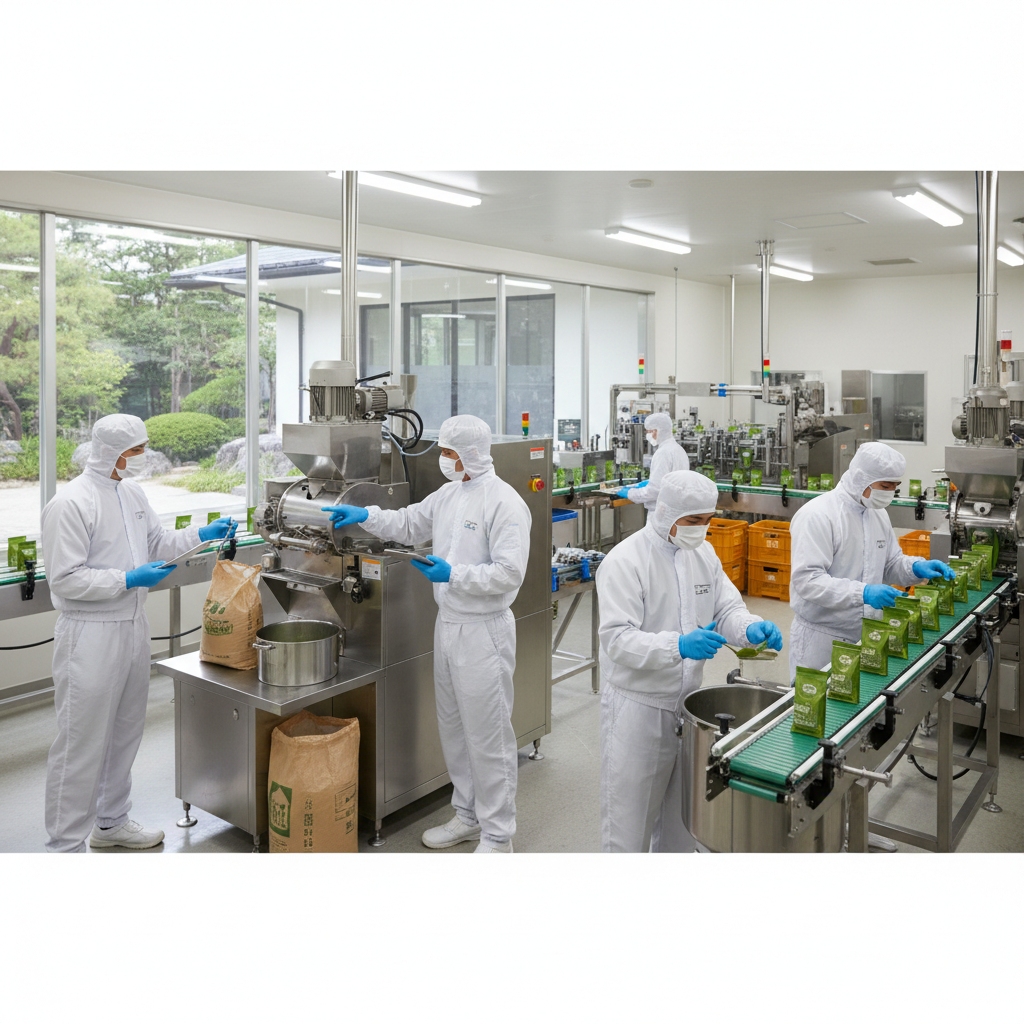
Technical differences in production focus on alcohol prohibition for Halal versus equipment supervision and insect checks for Kosher. Understanding the nuances of the Halal Kosher Matcha Powder Export to Europe Guide ensures your factory floor protocols satisfy both sets of auditors.
But here is the interesting part:
Alcohol vs. Equipment Supervision
The Halal focus is a strict prohibition of alcohol, meaning even cleaning agents or extraction solvents must be vetted and certified alcohol-free. This extends to any flavorings or additives used in blended matcha products.
The Kosher focus relies on the “Mashgiach” (supervisor) who inspects for cross-contamination and bugs. Leaf checking is significantly more rigorous for Kosher certification to ensure absolutely no insects are processed with the leaves.
Key Takeaway: You need a supplier who understands both protocols, as a factory that only knows Organic standards might fail a Kosher audit due to improper equipment sharing.
Feature | Halal Requirement | Kosher Requirement | |
|---|---|---|---|
Cleaning Agents | Must be alcohol-free | Must be Kosher-certified | |
Insect Checks | Standard hygiene | Rigorous/Zero tolerance | |
Supervision | Periodic audits | Often requires onsite Mashgiach |
Analysis: Successfully navigating these production differences requires a manufacturing partner with specialized protocols established for dual compliance.
What is the step-by-step inspection and certification process?
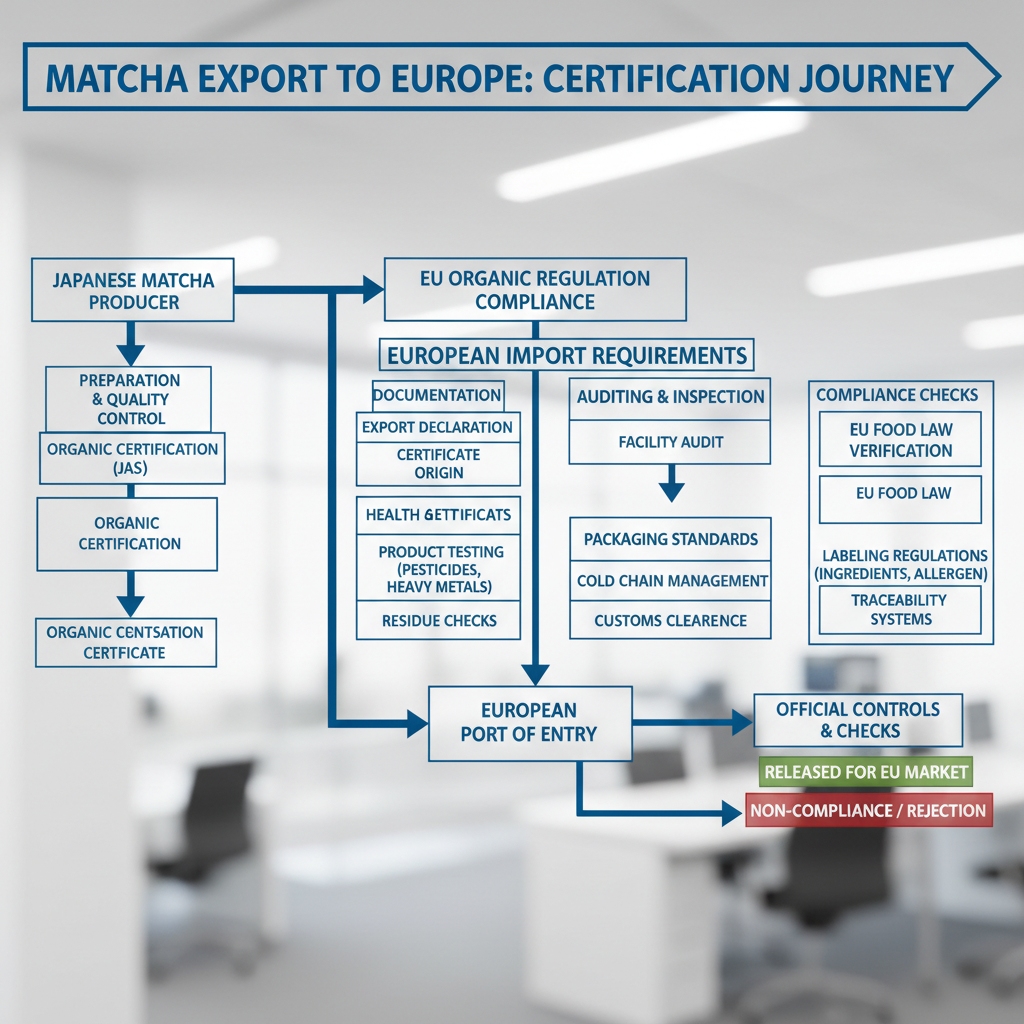
The workflow spans from initial farm verification to the final issuance of certificates, requiring precise coordination. This process validates that the tea growing and processing adhere to the strict guidelines required for export.
It gets better:
How does the audit work?
The first step involves application submission to bodies like the Japan Kosher Service or accredited Halal agencies. This is followed by a physical site inspection to verify the sources of the tea leaves, often involving large farm areas.
Reviewers then analyze the “flow chart” of production to identify Critical Control Points (HACCP). This step ensures that every stage of processing, from steaming to grinding, meets the required purity standards.
Key Takeaway: Transparency is vital, so your supplier must be willing to open their doors to Rabbinic and Imam coordinators to verify the entire chain of custody.
Phase | Action | Duration (Est.) | |
|---|---|---|---|
Pre-Audit | Document Review | 1-2 Weeks | |
Audit | On-site Factory Inspection | 1-3 Days | |
Approval | Contract & Fee Settlement | 1 Week | |
Issuance | Certificate Release | Immediate |
Analysis: Planning for this four-week timeline is essential to align your certification approval with your export shipping schedules.
Which matcha grades work best for the European market?
Europe demands distinct tiers of matcha ranging from ceremonial boutique quality to industrial ingredients for large-scale manufacturing. Utilizing the Halal Kosher Matcha Powder Export to Europe Guide helps you align specific grades with the correct market channels.
Think about it:
Matching Grade to End-Use
Ceremonial Grade sees high demand in boutique cafes and health shops where a vibrant green color is non-negotiable. It commands the highest price point and requires the strictest handling.
Culinary/Premium grades act as the workhorse for versatile culinary grade ingredients in industrial food manufacturing, such as ice cream and chocolate production. Top Series blends offer specialized color and flavor profiles for specific confectionary needs.
Key Takeaway: Do not oversell or undersell your product; exporting Ceremonial grade for an industrial cookie factory destroys your margins, while low-grade powder ruins cafe relationships.
Grade | Target Use | Market Channel | |
|---|---|---|---|
Ceremonial | Drinking/Tea Ceremony | Boutique Retail / Cafes | |
Premium | Baking / Smoothies | Food Service / Bakeries | |
Industrial | Ice Cream / Confectionary | Large Scale Mfg |
Analysis: Selecting the appropriate grade maximizes profitability by ensuring the product’s quality attributes match the customer’s specific application and price sensitivity.
Does packaging impact your export compliance?
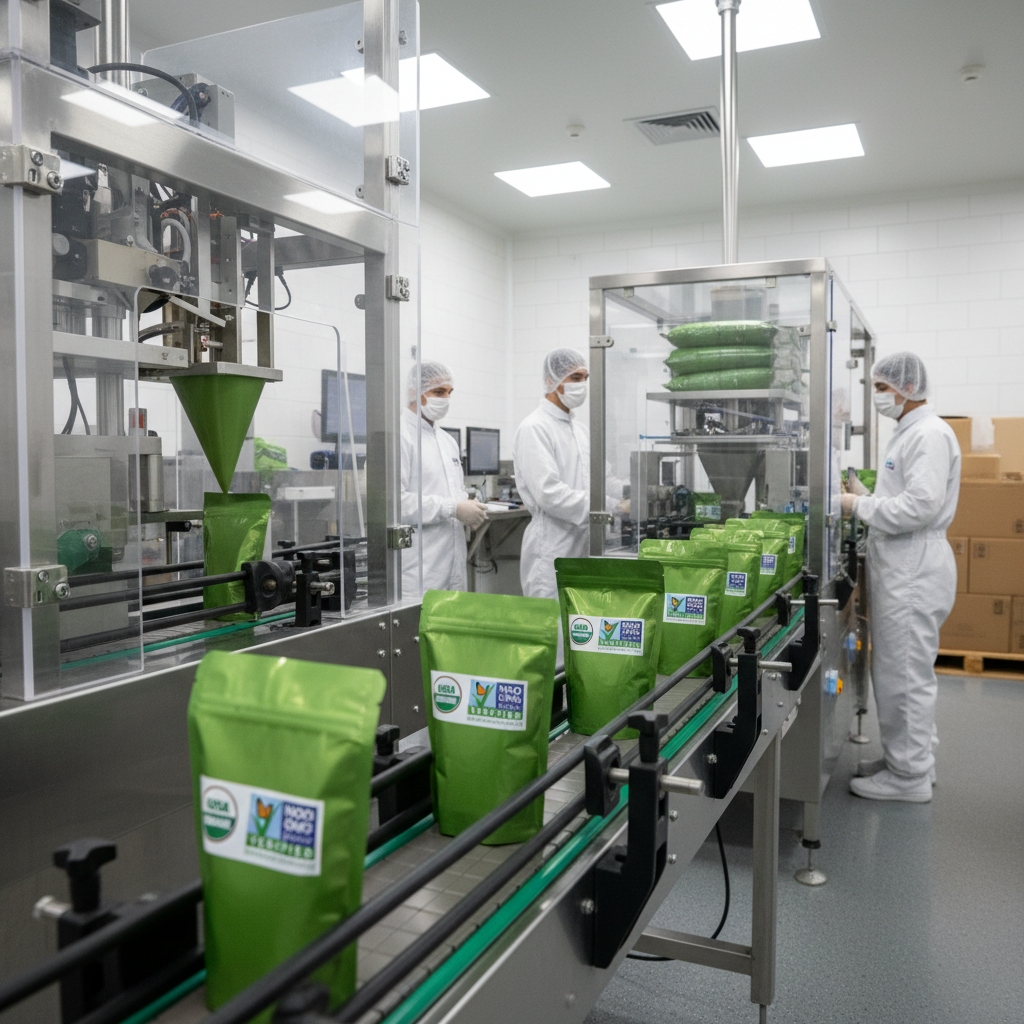
Packaging is the primary visual checkpoint for customs officers and consumers, making it a critical component of compliance. If the exterior does not match the documentation, the product inside may never reach the shelf.
What’s the catch?
Labeling and Material Requirements
Logos for Halal and Kosher certification must be clearly visible and authorized by the respective agencies. Materials, such as aluminum foil bags or tins, must be food-grade and migration-tested to meet EU safety standards.
If you white-label, the certification must often “transfer” to your brand name, which requires specific custom private label configurations to transfer the certification. This legal agreement allows your brand to carry the factory’s certification status.
Key Takeaway: Incorrect logo usage is a trademark violation that can get goods seized, so ensure all artwork is pre-approved by the certifying bodies.
Format | Size | Target Channel | |
|---|---|---|---|
Kraft/Foil Bag | 1kg | B2B / HoReCa | |
Metal Tin | 30g – 100g | B2C Retail | |
Sachet | 2g – 5g | Travel/Sample |
Analysis: Packaging choices must balance marketing appeal with strict regulatory adherence regarding materials and logo placement to ensure smooth market entry.
What documentation is mandatory for customs clearance?

Customs clearance requires specific verified proofs beyond just a standard commercial invoice to prove safety and religious compliance. The Halal Kosher Matcha Powder Export to Europe Guide emphasizes that paperwork is as important as the product itself.
Here is the secret:
Beyond the Invoice
The Organic Transaction Certificate (TC) is essential for every single shipment of organic goods to the EU via the TRACES system. Without this, your organic product cannot be sold as organic in Europe.
You also need a Certificate of Analysis (COA) as proof of testing for pesticides according to Eurofins or SGS standards. Finally, Halal and Kosher originals or verified chains of custody are needed to prove the religious status of the batch.
Key Takeaway: Your supplier needs a dedicated export team, not just a sales rep, to handle these complex document chains accurately and quickly.
Document | Purpose | Authority | |
|---|---|---|---|
Organic TC | Verify Organic Status | TRACES / Certifier | |
COA | Verify Safety/Pesticides | Accredited Lab (SGS/Eurofins) | |
Halal/Kosher Cert | Verify Religious Status | Religious Agency |
Analysis: A missing or incorrect document can cause indefinite delays, so establishing a checklist protocol with your supplier is mandatory for every shipment.
How do you manage logistics to preserve quality?

Managing logistics involves controlling temperature and preventing cross-contamination during transit to maintain product integrity. Matcha is fragile, and exposure to heat or incompatible goods can ruin a shipment.
You might be surprised:
Reefer vs. Dry Cargo
For high-grade matcha, temperature-controlled shipping (Reefer) is non-negotiable, even if it costs more. Heat degradation can turn vibrant green powder brown before it arrives.
When considering LCL (Less than Container Load) vs. FCL (Full Container Load), consolidating shipments saves money but risks contamination. If mixed with non-Halal or non-Kosher goods, such as pork products or alcohol, the certification is voided.
Key Takeaway: Logistics is part of the “Kosher status,” meaning a broken seal or a mixed container can legally void your hard-earned certification.
Method | Pros | Cons | Best For | |
|---|---|---|---|---|
Air Freight | Fast, Freshness | Expensive | Samples / Urgent | |
Sea (Reefer) | Quality Safe, Bulk | Slower | Large Orders | |
Sea (Dry) | Cheap | Heat Damage Risk | Lower Grades |
Analysis: Choosing the right shipping method is a balance of cost versus risk, where investing in Reefer containers acts as insurance for product quality and compliance.
How do you select a reliable supplier?
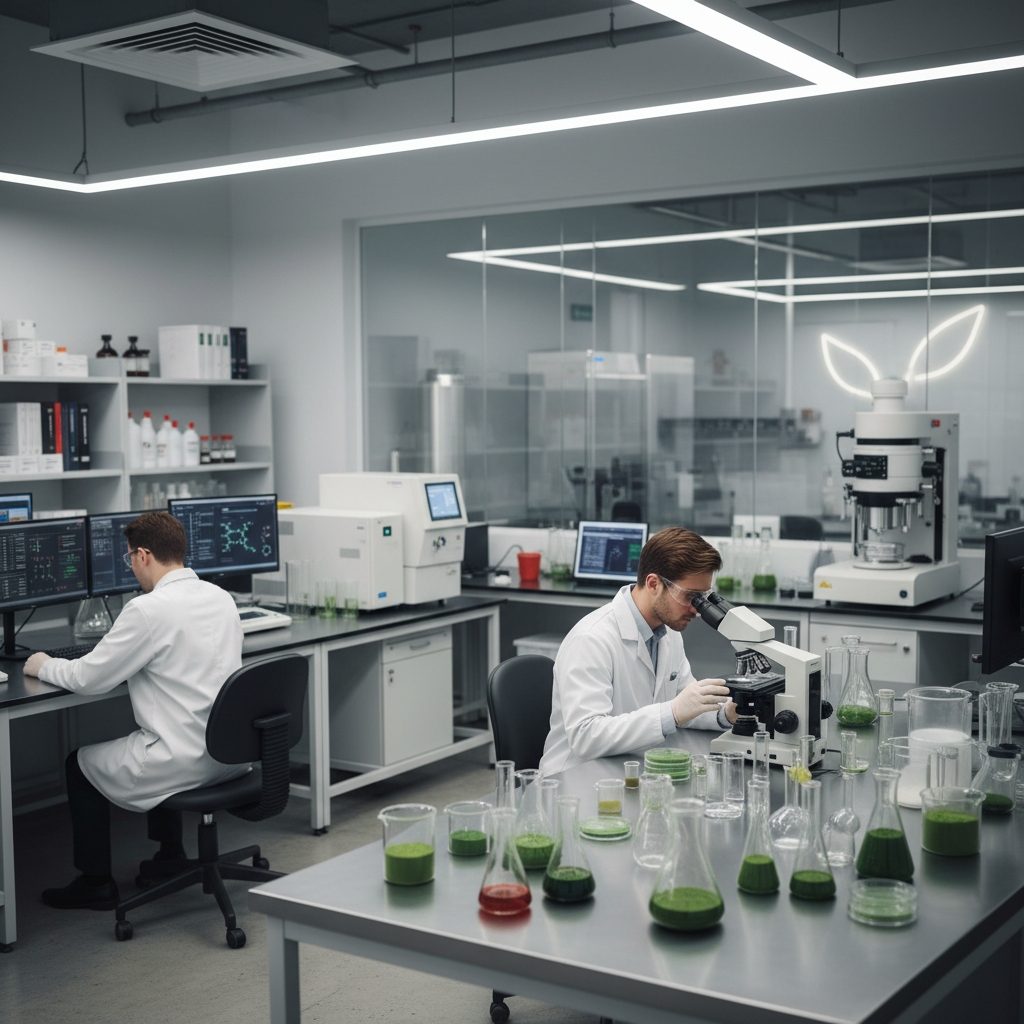
Selecting a reliable supplier requires vetting their physical assets and testing protocols to ensure consistent compliance. Adhering to the Halal Kosher Matcha Powder Export to Europe Guide means partnering with manufacturers who control the source.
Ready for the best part?
The “Farm to Cup” Advantage
Look for suppliers with a vertically integrated production facility (e.g., 1,000,000 ㎡ owned tea farms). This ownership guarantees there is no pesticide drift from neighbors and allows for total control over the harvest.
Capacity is also critical; you must ask if they can reliably ship 500 tons/year. Furthermore, verify that they use external, neutral labs like Eurofins for all their testing rather than relying solely on internal data.
Key Takeaway: A supplier who owns the farm controls the variables, reducing the risk of surprise contamination or certification lapses.
Criteria | Ideal Standard | Why It Matters | |
|---|---|---|---|
Farm Ownership | Direct Ownership | Control over pesticides | |
Capacity | >500 Tons/Year | Scalability | |
Lab Testing | Third-Party (Eurofins) | Unbiased verification |
Analysis: Vertical integration is the strongest indicator of a supplier’s ability to maintain long-term consistency in both quality and regulatory compliance.
What future trends should you anticipate?
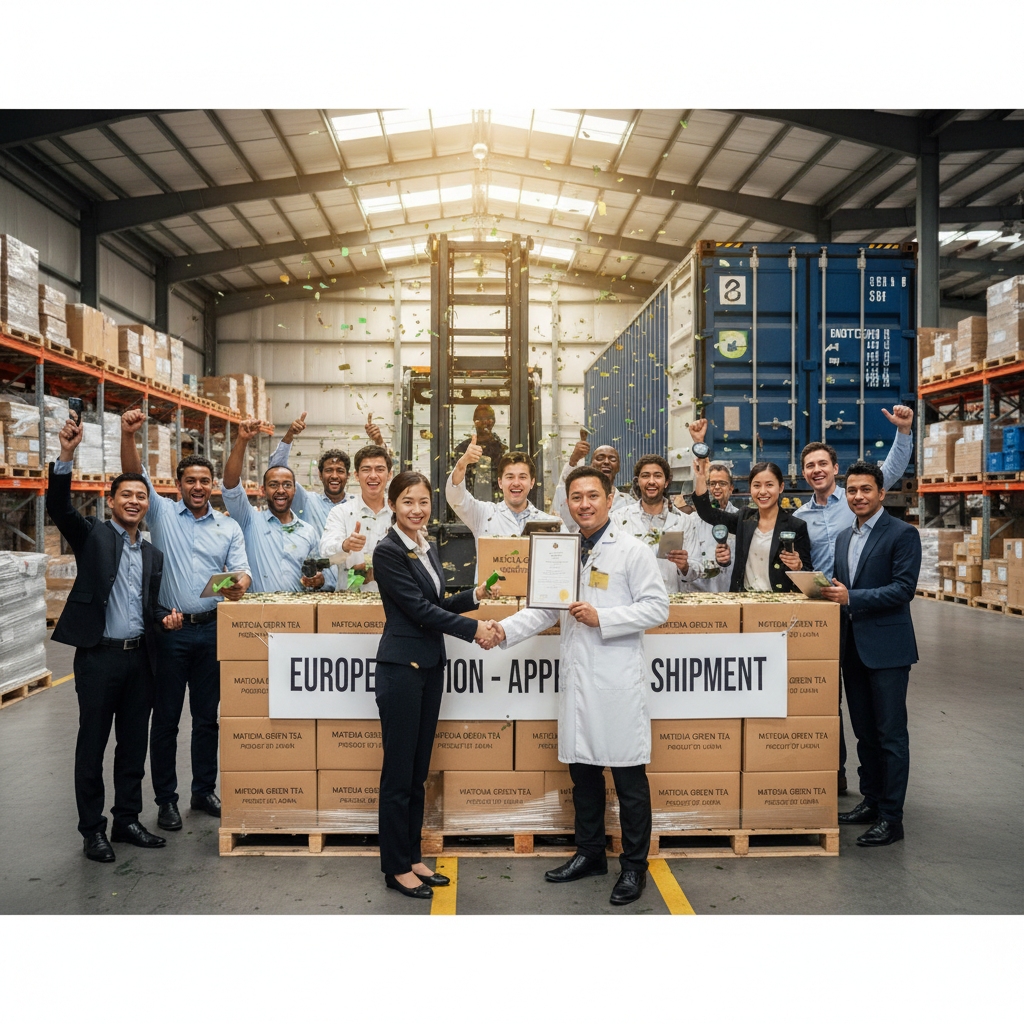
Future market trends are moving toward functional ingredients and colorful botanical alternatives that require the same rigorous certification. Being ahead of these trends ensures your portfolio stays relevant in a competitive market.
Here is the bottom line:
Beyond Green
Blue Matcha: ( butterfly pea flower powder ) gaining traction as a visual alternative for cafes and instagrammable foods. It requires its own specific set of safety and purity checks.
Hojicha, a roasted green tea powder, is growing as a low-caffeine alternative. Functional blends that mix matcha with collagen or probiotics are also rising, but every added ingredient must also be Halal and Kosher certified.
Key Takeaway: Your supply chain needs to be flexible enough to certify these new ingredients quickly, ensuring you don’t miss out on emerging consumer preferences.
Trend | Key Characteristic | Regulatory Challenge | |
|---|---|---|---|
Blue Matcha | Visual Appeal | Non-Tea Plant Status | |
Hojicha | Roasted/Nutty | Acrylamide Testing | |
Instant Tea | Convenience | Carrier Agent Certification |
Analysis: Diversifying your product line into these emerging categories requires a proactive certification strategy to ensure new ingredients meet existing strict standards.
Conclusion
Mastering the Halal Kosher Matcha Powder Export to Europe Guide transforms compliance from a headache into a competitive advantage. By securing the right certifications, choosing the correct packaging, and partnering with a supplier who understands the nuances of EU regulations, you build a fortress around your brand. Don’t let paperwork slow you down—leverage these standards to access the most lucrative markets in the world. We are committed to empowering global tea trade with integrity.
FAQs
Can I export “Culinary Grade” matcha to Europe for retail?Yes, you can, but it is not recommended for drinking as tea. Culinary grade is designed for baking, smoothies, and industrial use; labeling it as “premium drinking matcha” can lead to bad customer reviews. However, from a regulatory standpoint, as long as it passes the chemical and biological safety tests, it is legal to import.
What’s the best way to handle Organic and Kosher certification together?The best approach is to select a supplier who already holds both master certifications. This avoids the need for separate audits and ensures that the production lines are already set up to meet the strictest overlap of standards (e.g., organic cleaning agents that are also Kosher pareve).
How do I know if I need a new Halal certificate for every shipment?Check if your buyer requires batch-specific certification. Typically, the factory holds a valid annual Halal certificate that covers their production lines, but specific exports may need a batch-specific certificate or “Halal Logistics” verification depending on the strictness of your buyer or the destination country’s customs.
Can I use the factory’s Halal/Kosher logo on my private label brand?Yes, provided you sign a specific “Private Label Agreement” or “Transfer of Certification” document. This legally authorizes you to use their certification number and logo on your packaging, ensuring the chain of custody is recognized by the certifying authority.
Is Blue Matcha covered under the same regulations as Green Matcha?No, Blue Matcha is actually Butterfly Pea Flower powder, not Camellia Sinensis (tea). While it still needs phytosanitary certificates and food safety checks, it does not fall under the exact same “Tea” regulations, so you must ensure your supplier has specific testing and Halal/Kosher verification for this specific botanical.