
Introduction
Business owners and health-conscious consumers alike face a constant struggle when trying to decipher the nutritional profile of popular beverages. With café menus dominated by sugary syrups and heavy creams, it is increasingly difficult to identify what is genuinely healthy and what is a dessert in disguise. The risk of “hidden calories” is real; a seemingly innocent green tea latte can easily carry as many calories as a full meal if prepared incorrectly, leading to dietary derailment for customers and menu confusion for businesses. The solution lies in sourcing pure, organic matcha, which serves as the ultimate low-calorie foundation for a wellness-focused lifestyle. By choosing high-quality options from Riching Matcha, you ensure a nutrient-dense experience without the caloric guilt. To answer the pressing question directly: one gram of pure matcha contains roughly 3 calories. For those seeking the highest quality for their daily ritual or business, our Ceremonial Grade Matcha offers the perfect balance of flavor and health.
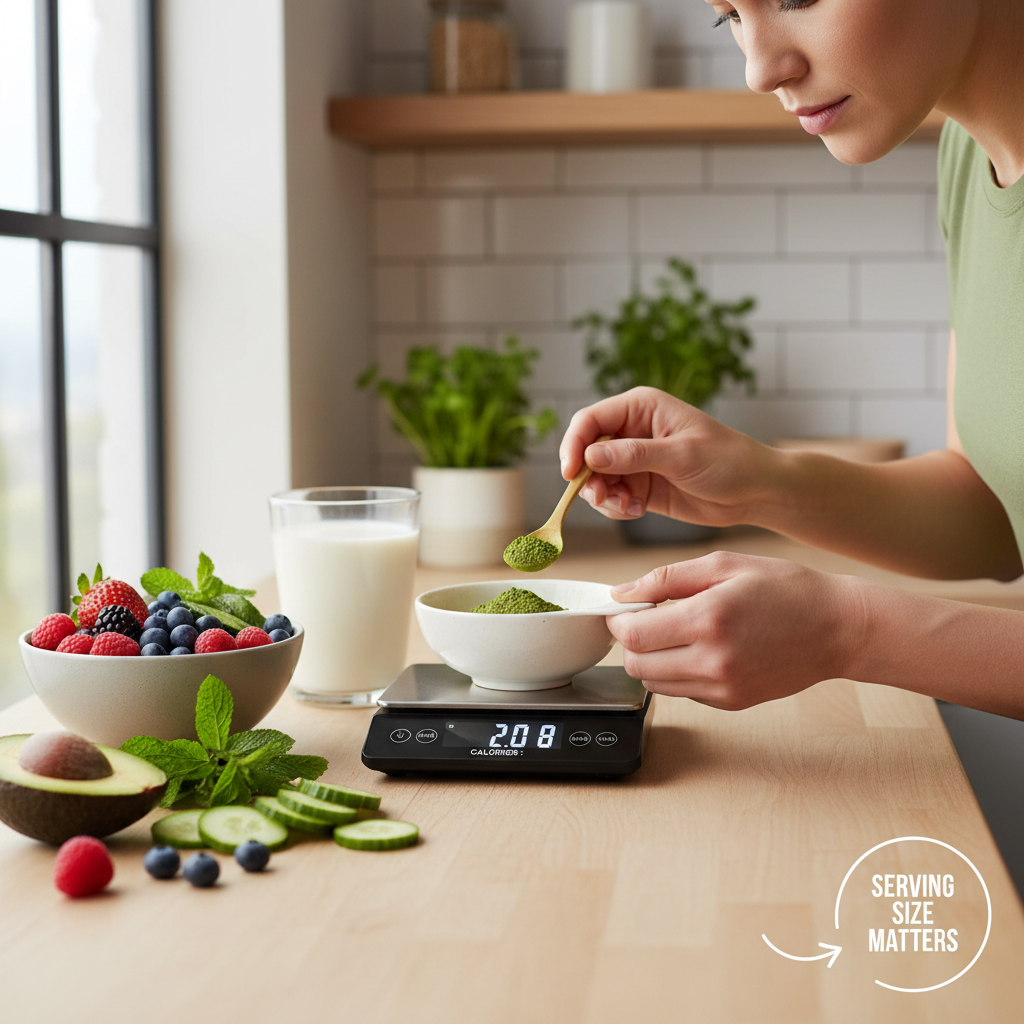
Pure, unadulterated matcha powder is virtually calorie-free, with a standard serving of 2 grams (about 1 teaspoon) containing approximately 5 to 6 calories. This incredibly low caloric density makes it one of the most efficient superfoods available for both retail consumers and wholesale buyers planning healthy menus. When you consume the whole leaf ground into powder, you are ingesting a small amount of plant fiber and protein, which accounts for these negligible calories.
Here is the deal: the calories in pure matcha come from minimal amounts of protein and carbohydrates found naturally in the Camellia sinensis leaf. Unlike brewed tea where leaves are discarded, drinking the suspended powder provides 100% of the phytonutrients without a significant energy load. For businesses looking to offer versatile, healthy options, our Premium Grade Matcha is an excellent choice for maintaining low calorie counts while delivering robust flavor.
Nutritional Breakdown
When you analyze the macronutrients of straight matcha, you will find that it is almost free of fats and sugars. A single gram provides a burst of antioxidants rather than energy-dense macronutrients. This profile is why fitness enthusiasts and nutritionists advocate for matcha as a staple in weight management plans.
- Calories: ~3 per gram
- Total Fat: < 0.1g
- Total Carbohydrates: ~0.4g
- Protein: ~0.3g
- Sugar: 0g
Analysis of Micronutrients
Beyond the macros, you are getting a powerhouse of vitamins and minerals. The caloric cost is low, but the nutritional value is high, providing Vitamin C, Selenium, and Zinc. This high nutrient-to-calorie ratio is what defines a true superfood.
Key Takeaway:Pure matcha is an ultra-low-calorie food that fits into any dietary restriction. For businesses, marketing the “zero-sugar” and “low-calorie” aspects of the raw powder is a powerful selling point. You can confidently promote this as a guilt-free additive to any health regimen.
Nutrient (per 2g serving) | Amount | |
|---|---|---|
Calories | ~6 cal | |
Total Fat | 0g | |
Total Carbs | ~1g | |
Protein | ~0.6g | |
Sugar | 0g |
Pure matcha powder offers a negligible caloric impact while maximizing nutrient intake, making it the ideal base for health-focused beverages.
2. How Many Calories Are in a Typical Matcha Latte?
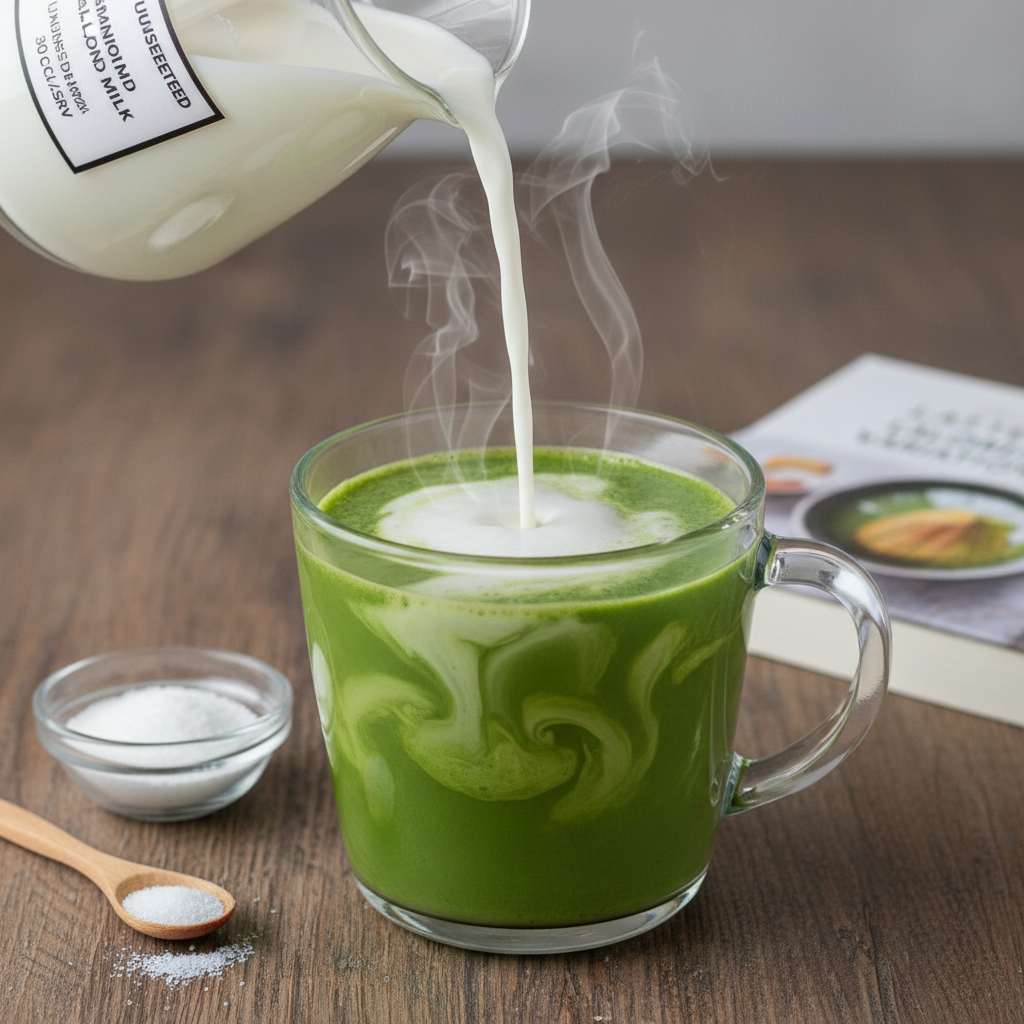
A standard 12oz (350ml) matcha latte prepared in a café setting typically contains between 120 and 200 calories, depending heavily on the milk and sweeteners used. While the matcha powder itself contributes almost nothing to this total, the milk acts as the primary calorie source. This drastic jump from 5 calories to over 100 is often a shock to consumers who believe they are making a “light” choice.
You might be wondering why the difference is so extreme between the powder and the latte. The answer lies in the volume of liquid calories; a cup of whole milk alone contains about 150 calories. When you combine this with the tendency of coffee shops to sweeten their matcha blends pre-preparation, the drink transforms from a supplement into a treat. B2B buyers must be aware of this when designing menu boards or sourcing Matcha Latte Mixes .
Traditional Dairy Preparations
When you order a latte with whole milk, you are adding significant fat and sugar (lactose) to the beverage. Even 2% milk will keep the calorie count above 120 for a standard size. This richness is often desired for flavor, but it masks the health benefits if weight loss is the goal.
- Whole Milk (8oz): ~150 calories
- 2% Milk (8oz): ~120 calories
- Skim Milk (8oz): ~80 calories
Impact of Serving Sizes
Size matters immensely when liquid calories are involved. A 16oz “Grande” or “Large” latte can easily surpass 250 calories without any added syrup. You should encourage customers to stick to 8oz or 12oz servings to keep the drink within a snack-sized calorie range.
Key Takeaway:The matcha is not the culprit for high calorie counts; the dairy and serving size are. By controlling the milk ratio and cup size, you can reduce the calorie load by more than half.
Drink Size | Milk Type | Approx. Calories | |
|---|---|---|---|
8oz (Short) | Water | ~5 | |
8oz (Short) | Whole Milk | ~155 | |
12oz (Tall) | 2% Milk | ~180 | |
16oz (Grande) | Whole Milk | ~300 |
The transition from water-based tea to a milk-based latte increases caloric density by over 2000%, primarily due to the macronutrients in dairy.
3. How Do Different Milks Impact Matcha Calories?
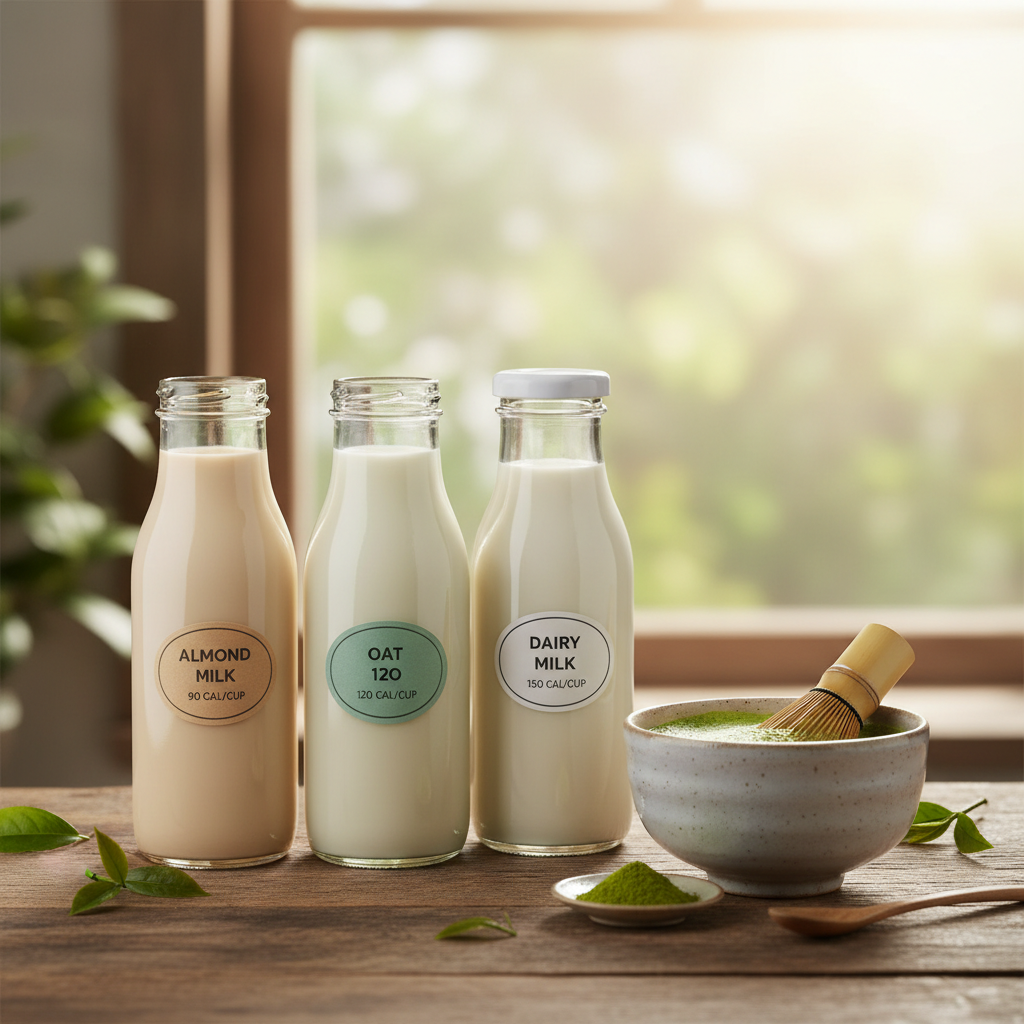
Choosing unsweetened almond milk is often the most effective way to lower calorie content, bringing a standard latte down to approximately 30-50 calories. Conversely, oat milk, which has gained massive popularity for its creamy texture, is calorie-dense and comparable to whole milk, often containing 120-130 calories per cup. For coffee shops and wholesale buyers, offering a variety of milk bases is critical to satisfying different dietary goals.
Here is the bottom line: not all plant-based milks are created equal regarding energy density. Coconut milk is high in saturated fats and calories, while soy milk offers a middle ground with high protein but moderate calories. When you are sourcing ingredients or advising clients, it is vital to distinguish between “dairy-free” and “low-calorie.”
Almond and Coconut Milk Profiles
Unsweetened almond milk is the champion of low-calorie lattes, adding a nutty flavor that complements matcha well. Coconut milk, often sold in cartons for drinking, is low in calories, but canned coconut milk used for cooking is extremely high in fat and should be avoided for beverages.
- Almond Milk (Unsweetened): ~30 calories per cup.
- Coconut Milk (Carton): ~45 calories per cup.
Oat and Soy Milk Considerations
Oat milk is high in carbohydrates, which gives it that desirable froth and sweetness without added sugar, but it does spike the calorie count. Soy milk is a traditional pairing that offers a good protein boost, though it is denser than almond milk.
Key Takeaway:Menu transparency regarding milk choices helps customers navigate how many calories in matcha drinks they are actually consuming. Promoting almond milk as the “skinny” option is a proven strategy.
Milk Base (8oz / 240ml) | Calories | Sugar (g) | |
|---|---|---|---|
Water | 0 | 0 | |
Almond (Unsweetened) | 30 | 0 | |
Soy (Unsweetened) | 80 | 1 | |
Oat (Original) | 120 | 7 | |
Whole Dairy | 150 | 12 |
Milk selection is the single largest variable in the caloric equation of a matcha latte, with almond milk offering the lowest energy density.
4. How Can You Prepare a Low-Calorie Matcha Drink?
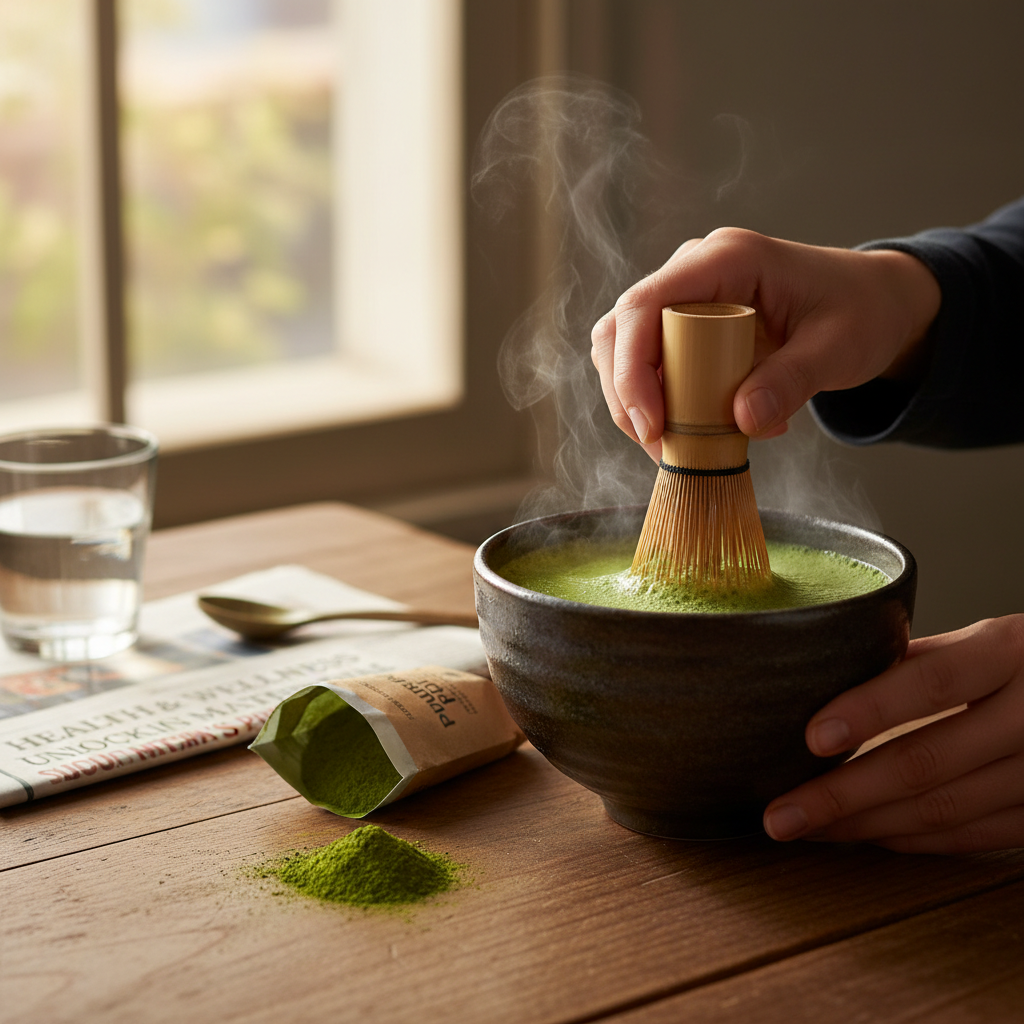
The most effective way to prepare a low-calorie matcha drink is to use traditional water-based methods, such as Usucha (thin tea), which keeps the total count under 10 calories. By relying on high-quality tools like a Matcha Whisk Set , you can create a frothy, rich texture without needing milk fats to emulate creaminess. This method highlights the grassy, umami notes of the tea without masking them with dairy or sugar.
Ready for the good part? You do not need to be a tea master to keep it healthy. Simple adjustments, like using half water and half plant milk, can cut a drink’s calories by 50%. This “mistos” style approach is popular among consumers who want the creaminess of a latte but the lightness of a tea.
Water-Based Cold Brews
Cold brewing matcha is as simple as shaking the powder with cold water and ice. This results in a refreshing, zero-sugar beverage that is hydrating and energizing. It is the ultimate guilt-free caffeine fix for summer menus.
- No hot water required.
- Zero added fats.
- Preserves delicate antioxidants.
Reducing Sweetener Reliance
High-grade matcha does not need to be covered up with sugar. If you find the taste too bitter, it is often a sign of low-quality powder or water that is too hot. Switching to a better grade allows you to omit sweeteners entirely.
Key Takeaway:Preparation method dictates the health profile. Investing in proper tools and better tea quality negates the need for high-calorie masking agents.
Preparation Style | Liquid Base | Approx. Calories | |
|---|---|---|---|
Traditional (Usucha) | Water | ~5 | |
Cold Brew | Water + Ice | ~5 | |
Misto (50/50) | Water + Almond Milk | ~20 | |
Iced Latte | Oat Milk | ~130 |
Prioritizing water-based preparation methods preserves the integrity of matcha as a weight-loss-friendly beverage.
5. Does Matcha Have More Calories Than Coffee?
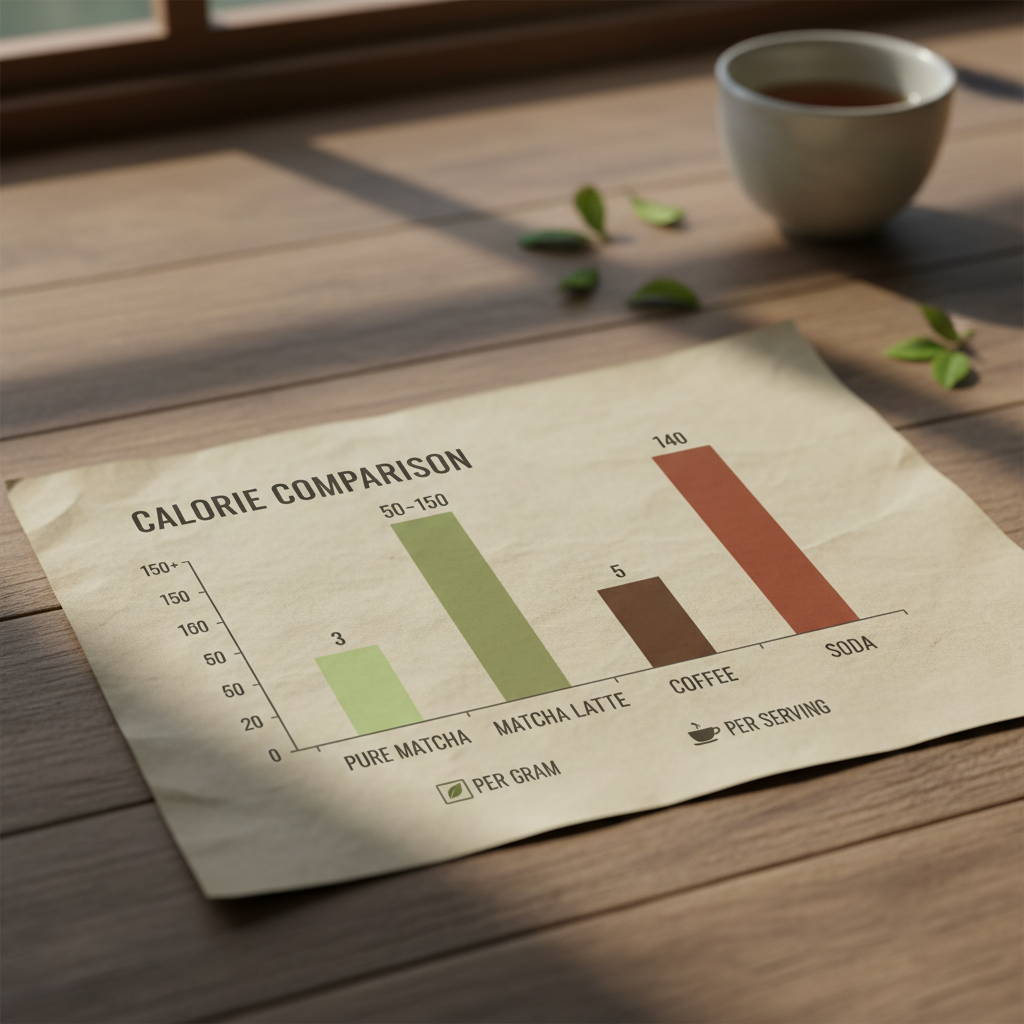
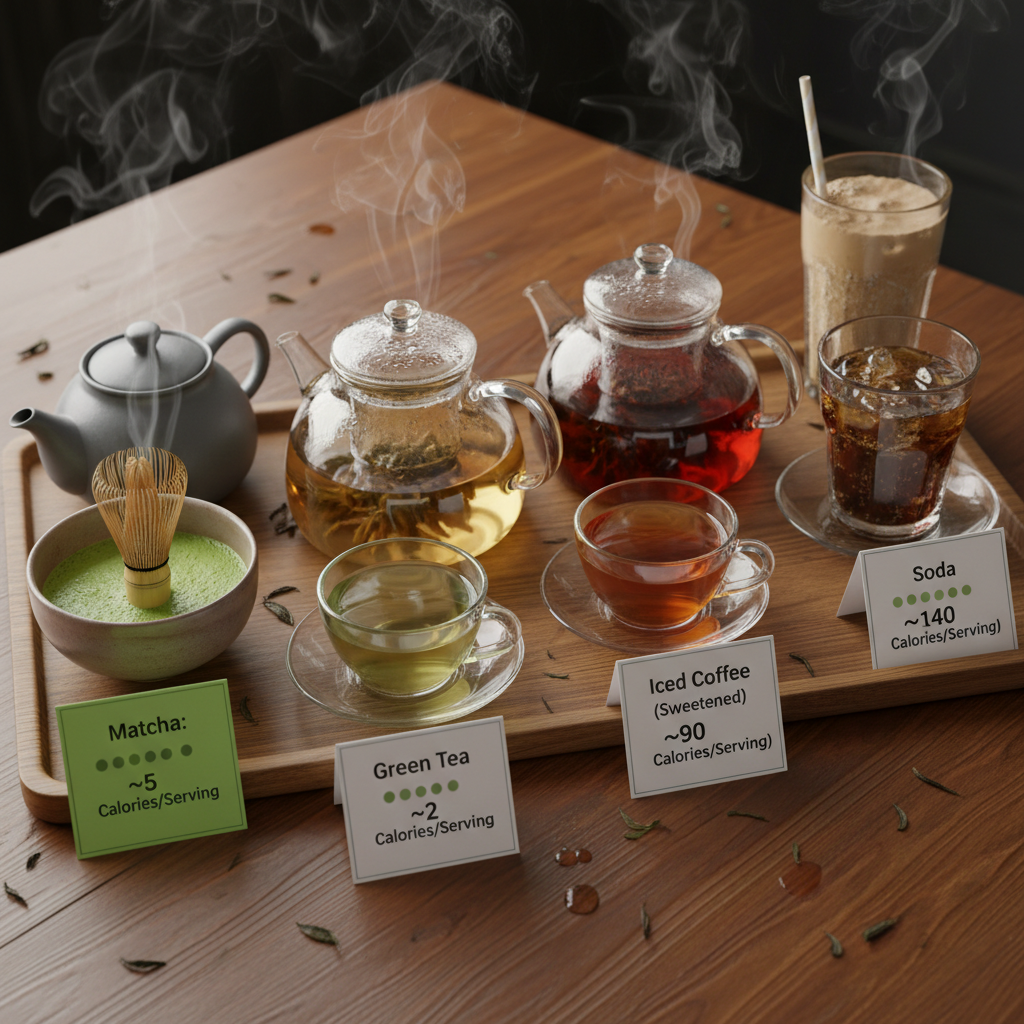
No, pure matcha and black coffee are virtually identical in caloric content, with both containing fewer than 5 calories per typical serving. Both beverages are essentially calorie-free delivery systems for caffeine and antioxidants when consumed plain. The misconception that matcha is “heavier” comes from the fact that it is almost always served as a latte in Western chains, whereas coffee is frequently drunk black.
But here is the kicker… matcha provides a more sustained energy release without the jitters, often leading to less “stress eating” or sugar cravings later in the day compared to the crash associated with coffee. This indirect effect can assist in overall calorie management.
Caffeine and Calorie Density
While the calorie counts are the same, the nutrient density differs. Coffee provides antioxidants, but matcha provides fiber, chlorophyll, and amino acids for the same negligible caloric “price.”
- Black Coffee (8oz): ~2 calories.
- Pure Matcha (8oz water): ~5 calories.
Comparison of Additives
Both drinks suffer from the same issue: the “Starbucks Effect.” A Frappuccino and a Green Tea Frappe are both calorie bombs. However, a plain matcha offers higher satiety due to the consumption of the actual leaf fiber.
Key Takeaway:If you are switching from black coffee to plain matcha, your calorie intake remains unchanged, but your nutrient intake skyrockets.
Feature | Black Coffee | Pure Matcha | |
|---|---|---|---|
Calories | ~2 | ~5 | |
Caffeine | ~95mg | ~70mg | |
Antioxidants | High | Very High | |
Energy Effect | Jittery/Crash | Calm/Sustained |
Matcha and coffee are statistically tied for calories, but matcha offers a superior nutrient profile for the same energy cost.
6. Do Sweeteners Significantly Raise Matcha Calories?

Yes, adding sweeteners is the fastest way to turn a healthy matcha tea into a high-calorie dessert; just two tablespoons of honey or flavored syrup can add over 120 calories. Many commercial matcha powders are actually “mixes” where sugar is the first ingredient, meaning you are drinking mostly empty carbohydrates. For businesses, using a Private Label Matcha Supplier allows you to control the blend and offer unsweetened options.
Let’s face it: we all love a sweet treat, but transparency is key. A single pump of vanilla syrup at a coffee shop contains about 20 calories and 5 grams of sugar. A standard drink often gets 3 to 4 pumps, adding 60-80 calories of pure sugar before the milk is even poured.
High-Calorie Sweeteners
Honey, agave, and maple syrup are often marketed as “natural,” but to your body, they are dense energy sources. If you are watching your weight, these should be used sparingly or avoided.
- Honey (1 tbsp): 64 calories.
- Simple Syrup (1 pump): ~20 calories.
- Cane Sugar (1 packet): 15 calories.
Zero-Calorie Alternatives
Stevia, Monk Fruit, and Erythritol are excellent choices for sweetening matcha without the caloric penalty. They dissolve well in warm matcha and maintain the low-calorie integrity of the drink.
Key Takeaway:Sweeteners can easily triple the calorie count of a matcha drink. Opting for sugar-free alternatives or learning to appreciate the natural sweetness of ceremonial grade matcha is essential for weight control.
Sweetener (1 tbsp equivalent) | Calories | Glycemic Impact | |
|---|---|---|---|
Stevia/Monk Fruit | 0 | None | |
White Sugar | 48 | High | |
Honey | 64 | Moderate | |
Maple Syrup | 52 | Moderate |
Eliminating added sugar is the single most effective step in maintaining matcha as a low-calorie health beverage.
7. Does Matcha Help Boost Metabolism and Burn Fat?
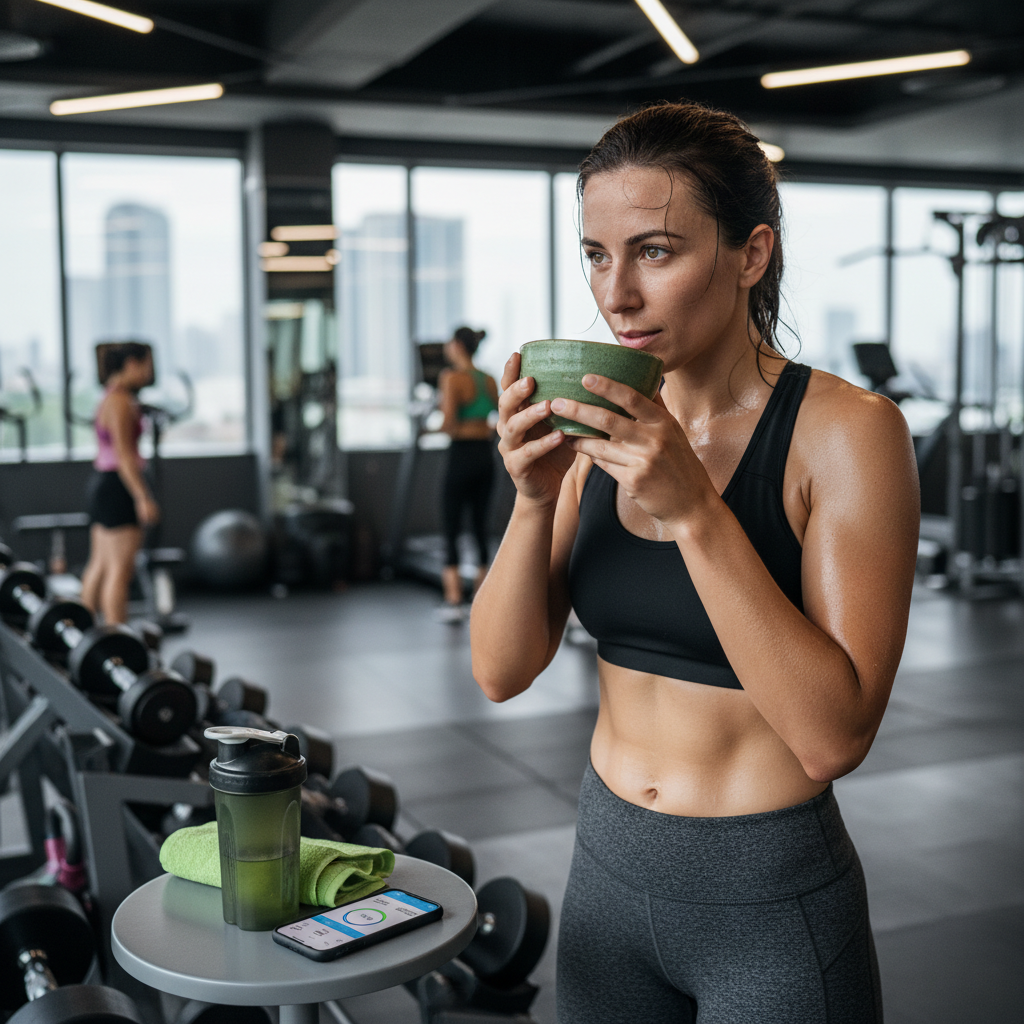
Research suggests that the high concentration of EGCG (epigallocatechin gallate) in matcha can increase thermogenesis (the body’s rate of burning calories) by up to 17-35% during moderate exercise. This means that while matcha contains 5 calories, drinking it may help your body burn significantly more than that, effectively creating a negative calorie balance. This metabolic boost makes it a favorite among athletes and dieters.
What is the real story? It is not a magic pill, but it is a powerful tool. The combination of caffeine and catechins works synergistically to oxidize fat. Unlike synthetic fat burners, matcha provides this benefit naturally without stressing the cardiovascular system.
The Role of EGCG
EGCG is the primary antioxidant in green tea. Because you ingest the whole leaf with matcha, you get 137 times more EGCG than standard green tea. This compound helps inhibit the enzyme that breaks down norepinephrine, the hormone involved in fat burning.
Pre-Workout Benefits
Consuming matcha 30 minutes before a workout can enhance fat oxidation. It provides the focus needed for a good session and the metabolic support to maximize results.
Key Takeaway:Matcha works on the “output” side of the calorie equation by helping your body burn energy more efficiently. It is a functional food that supports an active lifestyle.
Component | Function | Benefit | |
|---|---|---|---|
Caffeine | Stimulant | Increases energy output | |
EGCG | Antioxidant | Increases fat oxidation | |
L-Theanine | Amino Acid | Reduces stress/cortisol |
Matcha acts as a metabolic accelerator, helping to increase daily calorie expenditure particularly when combined with exercise.
8. Are There Calorie Differences in Matcha Grades?
Technically, the calorie count per gram remains consistent across all grades of matcha (~3 cal/g), but the way these grades are consumed leads to vastly different calorie intakes. Culinary grade matcha is more astringent and is almost always paired with sugar, fats, or milk to balance the flavor, whereas ceremonial grade is designed to be drunk plain with water. Understanding this distinction is vital for B2B purchasing.
You need to know this: The grade determines the application. You wouldn’t drink culinary matcha with water because of the bitterness, and you wouldn’t waste ceremonial matcha in a baked cake. Check our Culinary Grade Matcha for ingredient applications.
Culinary Grade Composition
Harvested from later flushes, culinary matcha has a stronger flavor profile to cut through other ingredients. Because it requires sweeteners to be palatable as a drink, it is indirectly associated with higher calorie consumption.
Ceremonial Grade Purity
Harvested from the first flush, this matcha is naturally sweet and savory (umami). It requires zero additives to be enjoyable, making it the default choice for low-calorie drinking.
Key Takeaway:While the powder itself has the same energy density, Ceremonial Grade facilitates a lower-calorie lifestyle because it tastes delicious without sugar.
Grade | Flavor Profile | Typical Use | Calorie Context | |
|---|---|---|---|---|
Ceremonial | Sweet, Umami | Plain Tea / Water | Lowest | |
Premium | Balanced | Lattes / Smoothies | Moderate | |
Culinary | Bold, Astringent | Baking / Blended | Highest (due to add-ins) |
The grade of matcha influences the preparation method, which in turn dictates the final calorie count of the consumable product.
9. How Many Calories Are in Matcha Baked Goods?

Matcha-flavored baked goods like cookies, cakes, and croissants are calorie-dense foods, typically ranging from 250 to over 500 calories per serving. The health halo of “green tea” often misleads consumers into thinking a matcha muffin is a diet food. In reality, the matcha powder makes up less than 1% of the recipe, while flour, butter, and sugar constitute the rest.
This is where it gets interesting… innovative bakers are now using matcha to reduce sugar content. Because matcha has a complex flavor profile, it pairs well with white chocolate or fruits, allowing for unique flavor combinations. For a fun, visual twist without the calories, consider using Blue Matcha for natural coloring.
The Hidden Calorie Sources
In a matcha cheesecake or cookie, the calories come from the fats and carbohydrates of the batter. The 10 grams of matcha powder in an entire cake add perhaps 30 calories total to the whole dessert.
Healthier Baking Swaps
To keep baked goods lighter, use almond flour, coconut oil, and natural sweeteners. Matcha’s flavor holds up well in these “clean eating” recipes, allowing for treats that are closer to 150 calories.
Key Takeaway:Do not equate “matcha flavor” with “low calorie” when it comes to pastries. Treat these items as indulgences, not health supplements.
Bakery Item | Approx. Calories | Matcha Content | |
|---|---|---|---|
Matcha Muffin | ~450 | 1 tsp | |
Matcha Cookie | ~250 | 0.5 tsp | |
Matcha Donut | ~350 | 0.5 tsp | |
Plain Matcha Tea | ~5 | 1 tsp |
Matcha baked goods derive their calorie count from traditional baking ingredients, not the tea powder itself.
10. Is Matcha Suitable for Low-Calorie Diets?
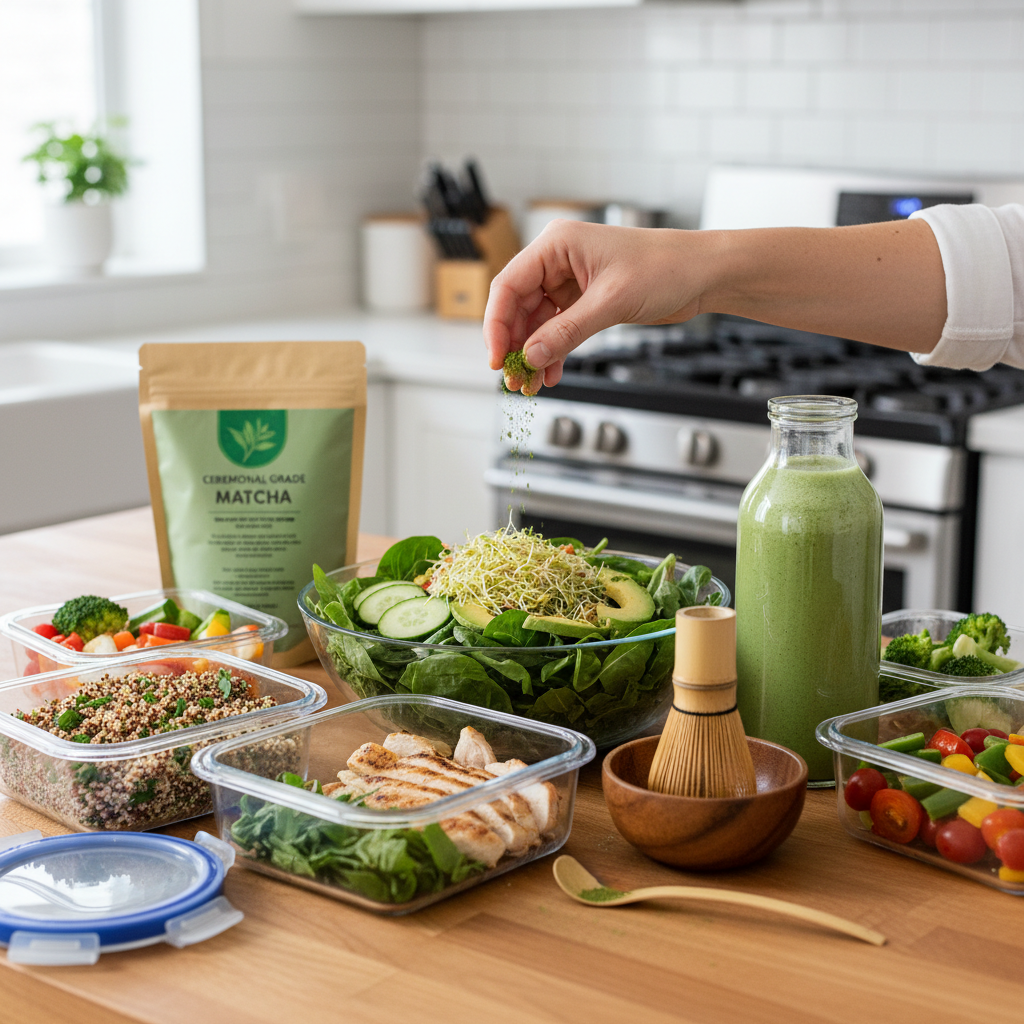
Yes, matcha is perfectly suitable and highly recommended for low-calorie diets, including Keto, Paleo, and Intermittent Fasting. Because pure matcha has zero sugar and negligible carbohydrates, it does not trigger an insulin response, keeping the body in a fat-burning state (ketosis). It provides a necessary energy boost during calorie-restricted windows without breaking a fast.
Here is the bottom line: Matcha is a tool for compliance. Dieting is hard, and having a flavorful, warm beverage that suppresses appetite and provides energy makes sticking to a low-calorie plan significantly easier.
Keto and Paleo Fit
On a Keto diet, fats are high, but carbs are low. Matcha lattes made with heavy cream or coconut oil (Bulletproof Matcha) fit these macros perfectly, though they are high in calories. For pure weight loss, water-based matcha is the Paleo-friendly choice.
Intermittent Fasting Safety
Drinking plain matcha during a fasting window is generally considered safe. It does not contain enough calories to shift the body out of the fasted state, yet the caffeine helps suppress hunger pangs.
Key Takeaway:Matcha is a versatile ally for any diet protocol. Its ability to provide energy without calories or insulin spikes makes it unique among beverages.
Diet Protocol | Suitable? | Preparation Notes | |
|---|---|---|---|
Keto | Yes | Use heavy cream or almond milk. | |
Paleo | Yes | Use water or nut milks; no sugar. | |
Intermittent Fasting | Yes | Must be prepared with water only. | |
Vegan | Yes | Naturally plant-based. |
Matcha supports metabolic flexibility and fits seamlessly into modern low-carb and fasting-focused lifestyles.
Conclusion
While the world of café drinks is fraught with hidden sugars and fats, pure matcha remains a nutritional sanctuary. The powder itself is virtually calorie-free, offering immense health benefits for a negligible energy cost. The “danger” lies only in the preparation—the milk, the syrup, and the serving size. For business owners, the opportunity is clear: offering high-quality organic matcha allows you to provide customers with the flavor they crave and the health profile they demand. By sourcing premium powder, you empower your customers to enjoy a guilt-free ritual.
Contact us today to discuss how Riching Matcha can elevate your menu or product line with our premium bulk offerings. Whether you need ceremonial grade for purity or culinary grade for innovation, we have the supply chain to support your growth. Elevate your health and your menu with the pure power of green tea—because great health shouldn’t be complicated.
FAQ
Q1: Can I drink matcha every day without gaining weight?Yes, drinking pure matcha daily is excellent for weight management. Because it contains only ~5 calories per serving and boosts metabolism, it supports a healthy lifestyle unless you load it with high-calorie sweeteners or heavy milk.
Q2: What’s the best milk for a low-calorie matcha latte?Unsweetened almond milk is generally the best choice. It provides a creamy texture and nutty flavor for only 30-40 calories per cup, compared to 120+ calories for oat or dairy milk.
Q3: How do I know if my matcha latte is high in calories?Check the sugar content and milk type. If the drink tastes like a dessert or uses “matcha mix” (which lists sugar as the first ingredient), it likely contains 200+ calories; a distinct, grassy, unsweetened taste usually indicates a low-calorie preparation.
Q4: Can I drink matcha while intermittent fasting?Yes, as long as you prepare it with water only (no milk or sugar). Plain matcha tea has negligible calories and will not break your fast or spike your insulin levels.
Q5: Is matcha better for weight loss than coffee?Many experts believe so. While both have few calories, matcha contains EGCG which aids fat burning, and L-theanine which prevents the stress-induced cortisol spikes often associated with coffee and weight gain.