
Finding the equilibrium between necessary energy and unwanted anxiety is a daily challenge for professionals and consumers alike. Relying solely on coffee often results in the “jitters” and a counterproductive mid-afternoon crash, leaving you searching for a better alternative.
The solution lies in understanding the chemical composition of your beverage to achieve “calm alertness.” Generally, an 8-ounce cup provides 20–60mg of caffeine in jasmine tea , offering a balanced lift without the chaotic spike of coffee. This guide explores the metrics, biochemical interactions, and sourcing standards you need to know.
1. What Is the Real Caffeine Content in Jasmine Tea?
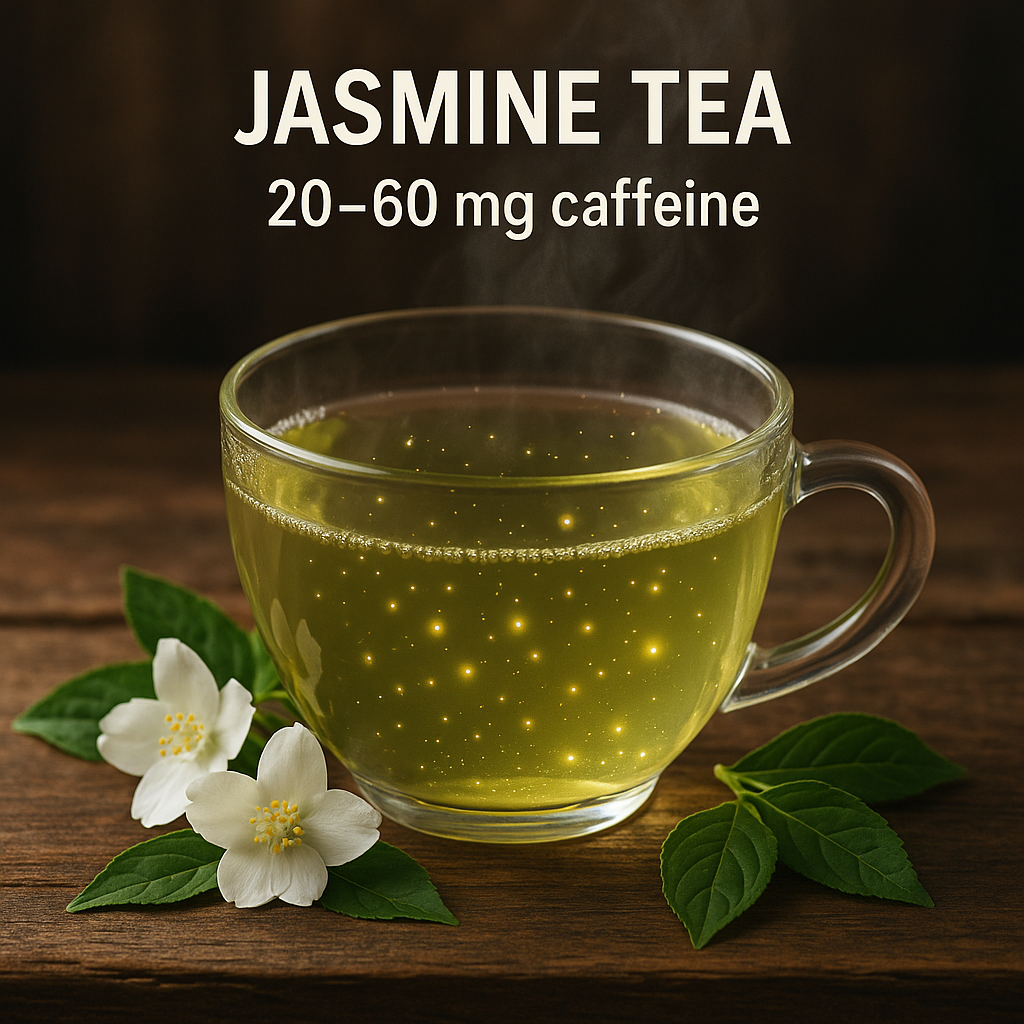
The quantitative reality often surprises those new to specialty teas. Generally, an 8-ounce cup of jasmine tea yields between 20 and 60 milligrams of caffeine.
To contextualize this data, it is approximately one-third the dosage found in a standard cup of coffee. However, it is slightly higher than many white teas, depending on the processing method used.
Is the Stimulant Derived from the Flower?
- Source: No, jasmine blossoms are naturally caffeine-free.
- Mechanism: The stimulant comes exclusively from the Camellia sinensis leaves.
- Process: Tea leaves absorb the jasmine aroma during the scenting process.
What Factors Influence Potency?
- Water Temperature: Higher thermal energy extracts molecules more rapidly.
- Leaf Ratio: More leaves equal higher Total Dissolved Solids (TDS).
- Leaf Quality: Young buds are denser in caffeine than older leaves.
Key Takeaway: The caffeine comes entirely from the tea base, not the flower, and varies based on how you brew it.
Factor | Impact on Caffeine | Ideal Range | |
|---|---|---|---|
Water Temp | High heat increases extraction | 175°F (80°C) | |
Steep Time | Longer time increases yield | 2–3 Minutes | |
Leaf Part | Buds have more caffeine | Bud vs. Leaf |
Analysis: Control your caffeine intake by adjusting water temperature and steeping duration.
2. How Does the Tea Base Affect Caffeine Levels?
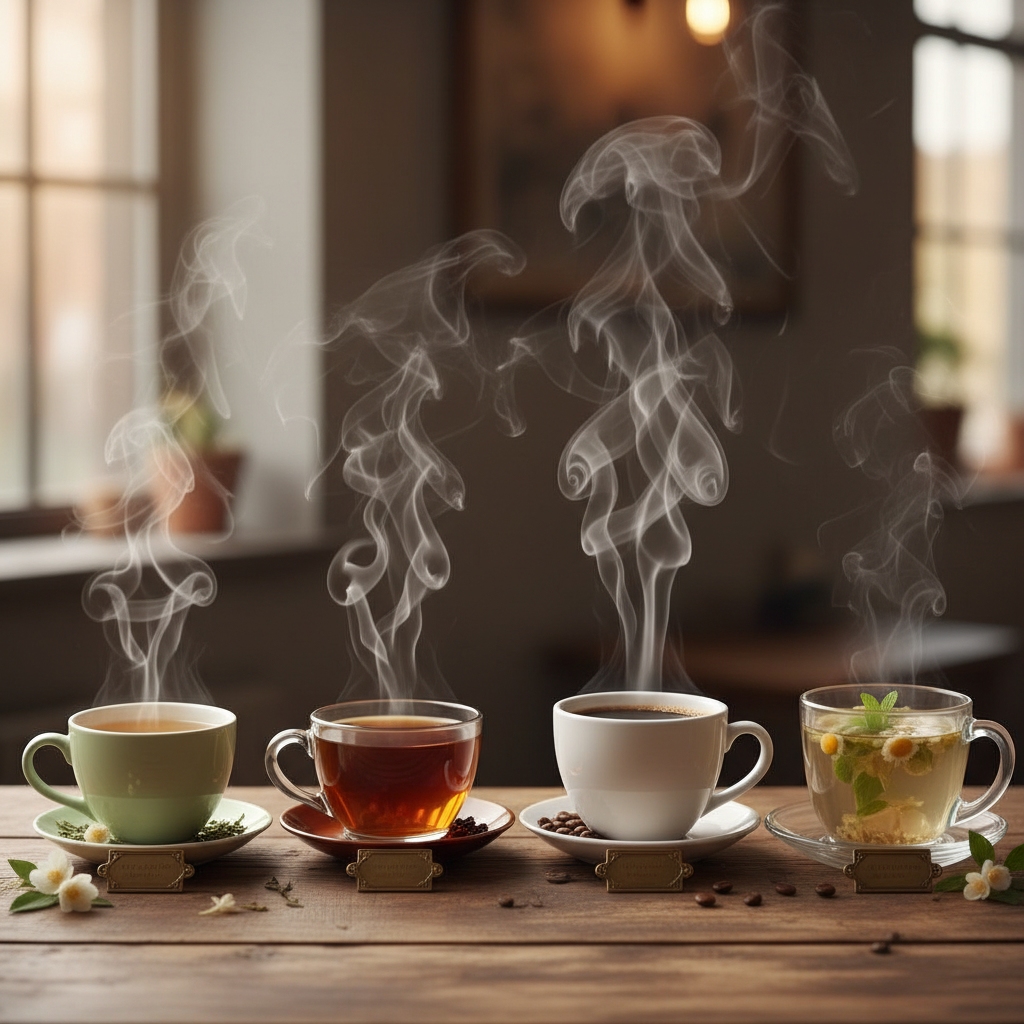
While Jasmine Green Tea commands 90% of the market share, distributors must recognize the variations. The caffeine in jasmine tea fluctuates significantly based on the manufacturing variable of the base leaf.
This distinction is vital for businesses crafting a menu that caters to different energy needs.
Is Green Tea the Strongest Base?
- Standard: Green tea bases average 25–50mg per cup.
- Profile: Offers a vegetative profile that harmonizes with floral aromatics.
- Usage: Ideal for broad B2B applications and RTD beverages.
Which Base is Best for Low Caffeine?
- Premium: Jasmine White Tea utilizes young buds with delicate flavor.
- Brewing: Typically brewed at lower temps, resulting in 15–30mg.
- Demographics: Appeals to the wellness-focused, ultra-premium sector.
Key Takeaway: Choose a Green Tea base for moderate energy or a White Tea base for a gentler, premium experience.
Tea Base | Caffeine Est. (8oz) | Flavor Profile | Target Audience | |
|---|---|---|---|---|
Green Tea | 25–50mg | Grassy, Fresh | General Consumer | |
White Tea | 15–30mg | Sweet, Delicate | Premium/Wellness | |
Black Tea | 40–80mg | Robust, Malty | Breakfast/Energy |
Analysis: The base leaf is the primary determinant of caffeine strength, overriding the scenting process.
3. Can Brewing Time Change Caffeine Potency?
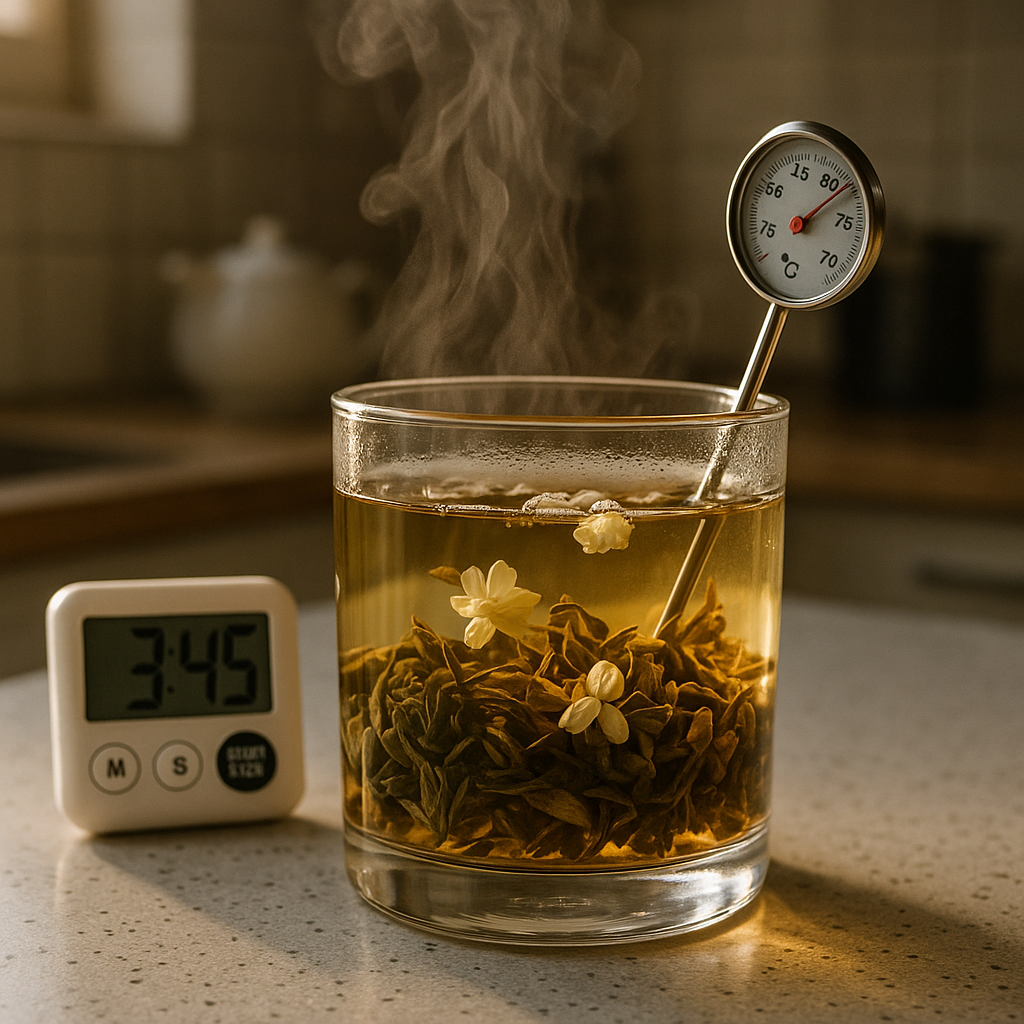
Analytical precision in brewing is as critical as the leaf quality itself. Caffeine is water-soluble, and its extraction rate is a direct function of time and temperature contact.
Why Does Temperature Matter?
- Chemistry: Boiling water (212°F) extracts caffeine aggressively.
- Risk: High heat can degrade delicate essential oils.
- Recommendation: The optimal range is 175°F (80°C).
How Long Should You Steep for Energy?
- 1 Minute: Extracts roughly 20% of caffeine (~15mg).
- 3 Minutes: Optimal balance of flavor and energy (~35mg).
- 5 Minutes: Maximum caffeine but higher astringency (~55mg).
Key Takeaway: Steep for under two minutes for light caffeine, or over four minutes if you need a stronger functional kick.
Steep Time | Caffeine Yield | Flavor Note | |
|---|---|---|---|
1-2 Mins | Low (~20mg) | Light, Sweet | |
3 Mins | Medium (~35mg) | Balanced, Floral | |
5+ Mins | High (~55mg) | Strong, Astringent |
Analysis: Brewing time acts as a volume knob for caffeine; adjust it to suit your immediate energy requirements.
4. Is Jasmine Tea Stronger Than Coffee?
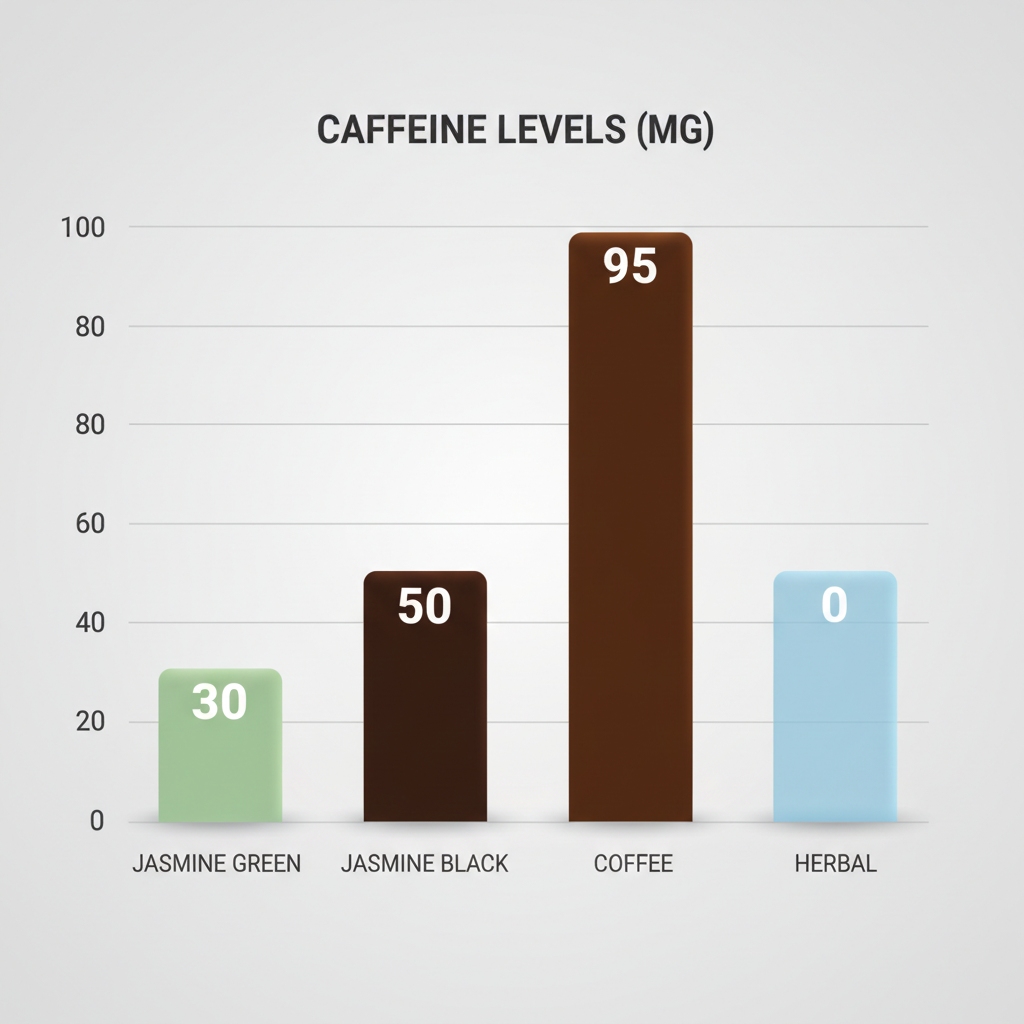
The comparison data is clear: if the objective is a rapid adrenaline spike, coffee is superior numerically. However, when considering sustained productivity, the caffeine in jasmine tea offers superior functionality.
Coffee averages 95–110mg per cup, whereas jasmine tea remains in the moderate 25–50mg range.
What is the “Jitters” Factor?
- Coffee: Often causes a rapid spike followed by a crash.
- Tea: Contains L-Theanine, a psychoactive amino acid.
- Result: L-Theanine promotes alpha brain waves for relaxation.
Does It Help Focus?
- Synergy: Caffeine plus L-Theanine creates “mindful alertness.”
- Performance: Energy manifests as a plateau, not a spike.
- Utility: Perfect for corporate settings where anxiety hampers work.
Key Takeaway: Jasmine tea provides less total caffeine than coffee but delivers it in a way that enhances focus rather than anxiety.
Beverage | Avg Caffeine | Energy Type | Best Use Case | |
|---|---|---|---|---|
Coffee | 95–110mg | Rapid Spike | Morning Jumpstart | |
Jasmine Tea | 25–50mg | Sustained Lift | Focused Work | |
Espresso | 60–80mg | Intense Hit | Immediate Alertness |
Analysis: While numerically weaker, jasmine tea acts as a more stable productivity tool due to L-Theanine.
5. What Are the Key Health Benefits of Jasmine Tea?
Beyond the energy metric, jasmine tea functions as a nutritional supplement rich in polyphenols. For businesses expanding their wellness inventory, it pairs perfectly with Hojicha Powder for a comprehensive menu.
The green tea base acts as a potent antioxidant delivery system for your body.
How Does It Protect Cells?
- Antioxidants: Catechins (EGCG) mitigate oxidative stress.
- Defense: Helps combat free radicals at the cellular level.
- Longevity: Regular consumption supports long-term cellular health.
Can It Help Manage Stress?
- Aroma: Linalool in jasmine triggers the parasympathetic nervous system.
- Reaction: Can lower heart rate simply through inhalation.
- Metabolism: EGCG enhances fat oxidation for weight management.
Key Takeaway: You gain dual benefits: antioxidants from the tea leaves and stress-reduction from the jasmine aroma.
Compound | Source | Primary Benefit | |
|---|---|---|---|
EGCG | Tea Leaf | Antioxidant/Metabolism | |
Linalool | Jasmine Flower | Stress Reduction | |
L-Theanine | Tea Leaf | Focus/Relaxation |
Analysis: Jasmine tea is a functional beverage that supports metabolic health and stress management simultaneously.
6. Are There Caffeine-Free Alternatives to Jasmine?

Market demand dictates options for stimulant-sensitive consumers who enjoy floral notes. While traditional caffeine in jasmine tea is standard, modern blending offers new solutions.
What Are Herbal Infusions?
- Rooibos: A naturally caffeine-free base that pairs well with jasmine.
- Chamomile: Enhances the sedative effects of the jasmine scent.
- Experience: Offers the aromatic experience without wakefulness.
Is Decaf Process Effective?
- Method: CO2 extraction removes caffeine while retaining polyphenols.
- Flavor: High-quality decaf retains the vegetal notes.
- Availability: A growing category for evening tea drinkers.
Key Takeaway: You can enjoy the jasmine scent without the energy boost by choosing herbal bases or CO2 decaffeinated versions.
Option | Caffeine Content | Base Material | Best Time | |
|---|---|---|---|---|
Rooibos Jasmine | 0mg | S. African Herb | Evening | |
Decaf Green | <2mg | Decaf Tea Leaf | Late Afternoon | |
Blue Matcha | 0mg | Butterfly Pea | Anytime |
Analysis: Herbal and decaf alternatives allow for the enjoyment of jasmine aromatics regardless of the time of day.
7. How Should You Store Jasmine Tea for Freshness?
Volatility is the enemy of fine tea, as the value lies in the labor-intensive scenting process. Improper storage leads to rapid evaporation of these essential oils.
What Kills the Aroma?
- Air: Oxidizes leaves and dissipates the jasmine scent.
- Light: UV radiation degrades chlorophyll and flavor.
- Moisture: Introduces risk of mold and fermentation.
What Containers Work Best?
- Material: Use airtight, opaque tins or aluminum foil pouches.
- Location: Store in a cool, dark cupboard away from spices.
- Seal: Ensure the mechanism is airtight after every use.
Key Takeaway: Protect your investment by sealing tea away from air and light to maintain the delicate floral scent.
Threat | Consequence | Prevention Method | |
|---|---|---|---|
Oxygen | Stale flavor | Vacuum/Airtight Seal | |
UV Light | Bitter taste | Opaque Tin/Bag | |
Heat | Aroma loss | Cool Storage |
Analysis: Proper storage extends the shelf life and potency of both the caffeine and the aromatic profile.
8. Why Is Organic Certification Important for Tea?
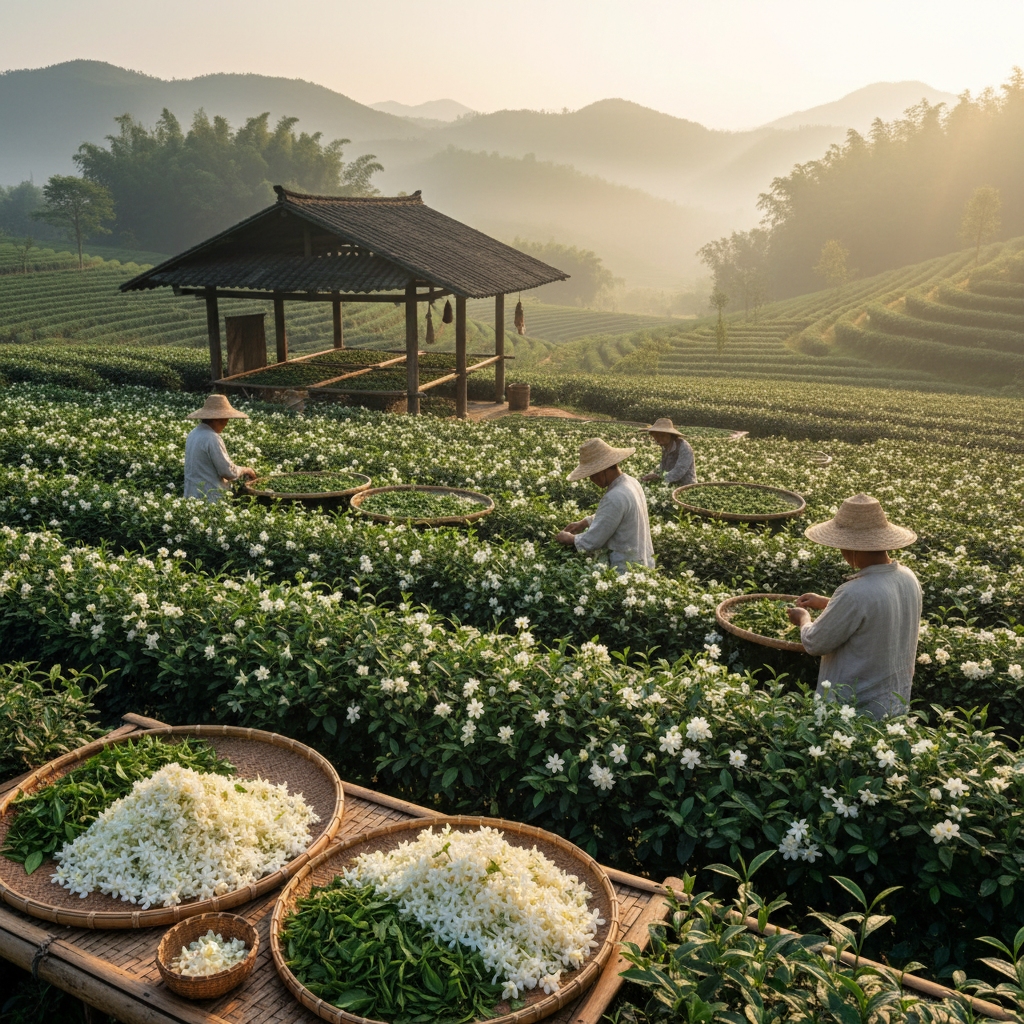
Tea is an agricultural product often consumed without a “wash” step. The hot water extracts surface compounds, meaning any pesticides present end up in your cup.
Ensuring that the caffeine in jasmine tea is the only stimulant you ingest requires strict sourcing.
Does It Affect Flavor?
- Chemicals: Synthetic fertilizers often impart a harsh, metallic finish.
- Organic: Nitrogen from natural sources yields sweeter leaves.
- Purity: Clean soil translates to a cleaner palate finish.
Is It Safer to Drink?
- Residue: Conventional teas may carry pesticide residues.
- Validation: EU and USDA Organic Certifications are the gold standard.
- Ecosystem: Organic farming preserves the biodiversity of gardens.
Key Takeaway: Organic certification is your only guarantee that the tea is free from synthetic pesticides and fertilizers.
Feature | Organic Tea | Conventional Tea | |
|---|---|---|---|
Pesticides | Prohibited | Permitted | |
Flavor | Clean, Sweet | Often Metallic | |
Safety | Certified Clean | Variable |
Analysis: Organic certification validates the integrity of the supply chain and ensures a safer, better-tasting beverage.
9. How Does Processing Impact Tea Quality?
The value proposition of premium jasmine tea is defined by its processing method. Authentic jasmine tea is not “flavored” via chemical additives; it is carefully “scented.”
To understand how professional facilities manage these workflows, review our manufacturing standards at About Us .
Is Scenting the Same as Flavoring?
- Scenting: Fresh flowers are layered over tea leaves up to 9 times.
- Flavoring: Chemical sprays are applied to low-grade leaves.
- Absorption: Leaves naturally absorb the fragrance hygroscopically.
How Do You Spot Quality?
- Visual: High-grade tea has spent flowers removed manually.
- Debris: Lower grades often contain dried flower petals as filler.
- Palate: The jasmine note should persist in the aftertaste.
Key Takeaway: True quality comes from contact with fresh blossoms, not chemical sprays or dried flower fillers.
Attribute | Premium Processing | Low-Grade Processing | |
|---|---|---|---|
Method | Fresh Flower Scenting | Chemical Flavoring | |
Cycles | 3–9 Repetitions | Single Spray/Mix | |
Visual | Clean Leaves | Petal Debris |
Analysis: The number of scenting cycles directly correlates to the longevity and depth of the jasmine flavor.
10. Can You Drink Jasmine Tea Daily?
For the majority of the adult population, daily consumption is both safe and beneficial. The caffeine in jasmine tea is moderate enough to allow for multiple cups.
The FDA cites a daily caffeine limit of 400mg for healthy adults.
What is the Safe Limit?
- Capacity: You would need 10–15 cups to exceed FDA limits.
- Moderation: 3–4 cups daily provide optimal antioxidant benefits.
- Safety: Generally safe, barring specific medical sensitivities.
When is the Best Time to Drink?
- Morning: An effective wake-up aid without anxiety.
- After Lunch: Aids digestion and mitigates the “afternoon slump.”
- Cut-off: Stop 4–6 hours before sleep to protect rest.
Key Takeaway: Drinking jasmine tea daily is safe and effective for energy, provided you respect a mid-afternoon cutoff.
Time of Day | Purpose | Recommended Amount | |
|---|---|---|---|
Morning | Wakefulness | 1–2 Cups | |
Post-Lunch | Digestion/Focus | 1 Cup | |
Evening | Relaxation | 0 Cups (Use Herbal) |
Analysis: Daily consumption fits easily within health guidelines, offering a sustainable alternative to high-caffeine energy drinks.
Conclusion
Jasmine tea represents a sophisticated synthesis of energy and relaxation. By recognizing that the caffeine is derived from the base leaf and modulated by L-Theanine, you can optimize your intake for health and productivity.
From rigorous organic farming to traditional scenting processes, jasmine tea is a staple requiring careful selection to ensure the best experience.
Seeking high-quality, organic tea solutions? Contact Us today to explore premium wholesale and private label options that elevate your beverage offerings.
Frequently Asked Questions (FAQ)
1. Can I drink jasmine tea on an empty stomach?It is advisable to consume it with food. The tannins in the green tea base can increase stomach acidity, potentially causing mild discomfort if ingested on a completely empty stomach.
2. What’s the best way to reduce caffeine in my cup?Use cooler water (around 175°F) and shorten your steeping time to under two minutes. You can also discard the first 30-second infusion, as a significant portion of caffeine is released initially.
3. How does jasmine tea compare to matcha regarding caffeine?Matcha contains significantly higher caffeine (70mg+) because you consume the entire leaf in suspension. Jasmine tea is an infusion, yielding only 20–60mg per cup.
4. Is the caffeine in jasmine tea safe during pregnancy?Most guidelines limit pregnancy intake to 200mg daily. Since jasmine tea contains only 20–60mg, moderate consumption is generally considered safe, though you should always consult your doctor.
5. Can jasmine tea leaves be re-steeped?Absolutely. High-quality organic leaves are durable enough for 2–3 infusions. The second steep often reveals sweeter nuances with significantly reduced caffeine content.