
The global market for organic matcha is undergoing an unprecedented expansion. Driven by consumer demands for clean-label products, functional wellness ingredients, and premium beverage experiences, matcha has transitioned from a specialty health-food niche into a mainstream powerhouse. For B2B buyers—including global importers, health and wellness brands, café chains, and large-scale food manufacturers—sourcing organic matcha presents a unique set of challenges. Unlike standard agricultural commodities, matcha is a highly sensitive, specialized product where quality, color, flavor, and food safety are directly tied to the precise agricultural practices of the farm and the technological capabilities of the processing facility.
When purchasing at a commercial scale, selecting the wrong supplier can result in catastrophic consequences: volatile pricing, seasonal out-of-stock issues, regulatory rejections due to pesticide drift, or importing low-grade green tea powder disguised as ceremonial matcha. This comprehensive buyer’s guide is designed to equip procurement officers, brand owners, and QA managers with the technical knowledge, verification strategies, and industry insights required to identify, audit, and partner with a world-class organic matcha manufacturer. By choosing a vertically integrated, certified supplier like Riching Matcha , brands can secure a stable supply of premium organic matcha that complies with international regulations and delights end consumers.
Evaluating a potential B2B matcha supplier goes far beyond comparing price sheets. Matcha is an ingredient of agricultural origin, meaning it is naturally vulnerable to weather fluctuations, regional pests, and seasonal variations. A truly reliable supplier must possess the infrastructure and expertise to mitigate these risks and provide a consistent, premium product year-round.
Vertically Integrated Factory and Farming Operations
The gold standard in matcha sourcing is vertical integration. Suppliers who control the supply chain—from the cultivation of the tea plants (Camellia sinensis) to the final stone-milling and packaging—offer superior traceability and quality control. Working directly with a manufacturer rather than a trading broker ensures:
- Direct transparency into agricultural inputs and shading practices.
- Immediate control over processing parameters to match specific client profiles.
- Lower costs by eliminating intermediary margins.
Volume Stability and Year-Round Supply Capacity
Matcha is harvested primarily during specific flushes throughout the year. A reliable supplier must operate large-scale cold storage facilities (typically held at -18°C to 0°C) to store raw tea leaves (Tencha) or semi-processed tea (Aracha). This preservation of raw material prevents oxidation and degradation, allowing the supplier to mill fresh batches of matcha consistently every month to fulfill long-term contracts without a drop in quality or color.
Global Export Compliance and Certification Portfolios
A professional supplier must be deeply experienced in international logistics and customs regulations. This includes:
- Holding active registrations with key international bodies (e.g., FDA registration for the United States).
- Compliance with the Foreign Supplier Verification Program (FSVP).
- Comprehensive knowledge of regional customs duties, phytosanitary requirements, and import tariffs.
- Established relationships with international freight forwarders to handle refrigerated transport (reefer containers) when necessary.
Communication and Technical Support
The technical nature of food formulation requires a supplier who can communicate clearly, provide rapid documentation, and offer R&D support. Whether you need to adjust the particle size for a RTD (ready-to-drink) beverage or require assistance in customizing a private label pouch, a reliable partner provides a dedicated account manager and a responsive quality assurance team to resolve technical hurdles swiftly.
Why Organic Certification Matters When Sourcing Matcha in Bulk
For B2B buyers, organic certification is not just a marketing claim—it is a critical legal shield, a quality indicator, and an entry requirement for major retail channels. The market for non-certified green tea powder is vast, but importing non-organic matcha into heavily regulated markets carries substantial financial and legal risks.
Core Global Organic Standards
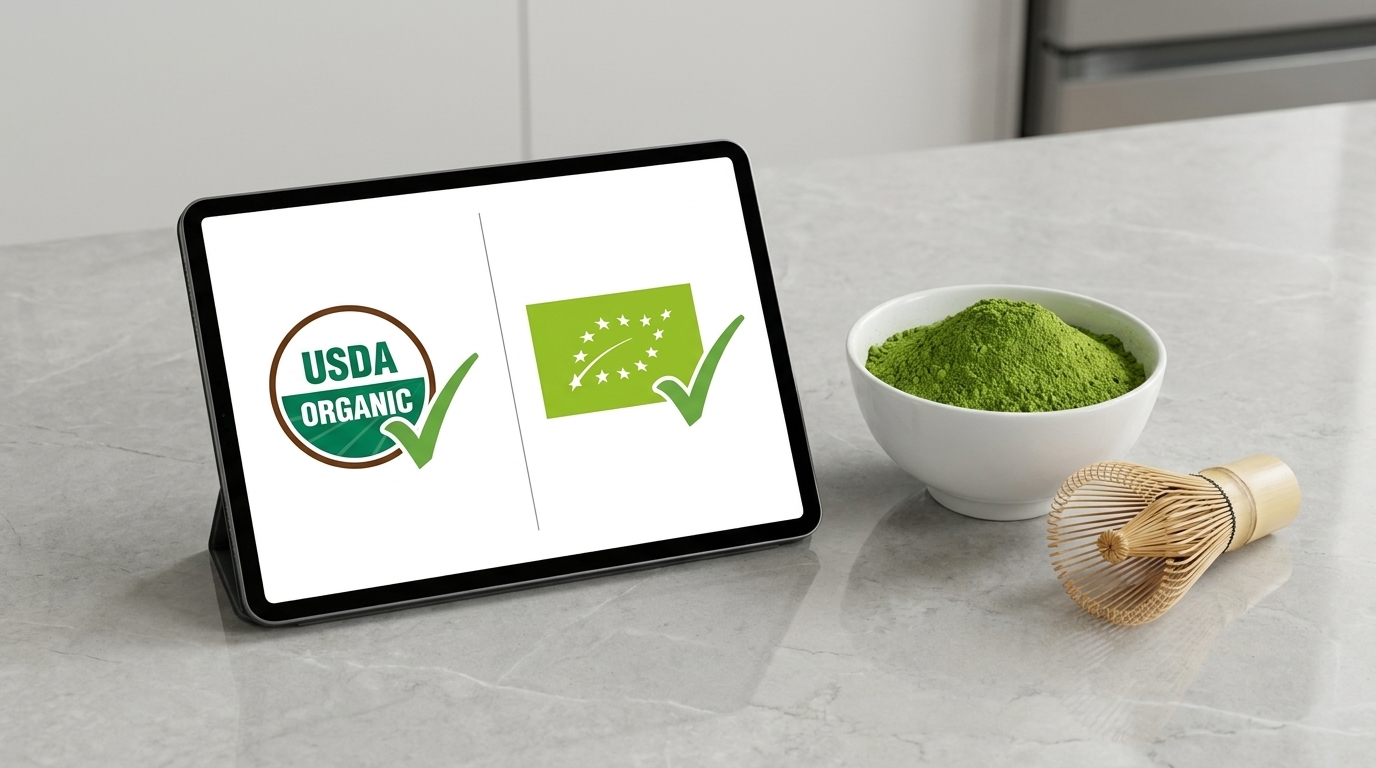
To sell organic matcha globally, the product must be certified under the relevant regional standard. The three most globally recognized organic standards are:
- USDA Organic (National Organic Program – NOP): Mandatory for the United States market. It strictly prohibits the use of synthetic fertilizers, sewage sludge, irradiation, genetic engineering, and a vast list of synthetic pesticides.
- EU Organic Certification: Regulated by European Commission rules. The EU standard is exceptionally strict regarding pesticide residues, enforcing some of the lowest Maximum Residue Limits (MRLs) in the world.
- JAS Organic (Japanese Agricultural Standard): The organic standard of Japan. Due to mutual equivalency agreements between certain nations, JAS certification can often be streamlined into other systems, but direct compliance with the destination country’s organic standard is always required for retail labeling.
The Threat of Pesticide Drift and Soil Contamination
Tea leaves are never washed during the processing of matcha. Because the entire leaf is ground into a fine powder and consumed directly, any chemical residue present on the leaf ends up in the consumer’s cup.
Furthermore, tea estates are often located in close proximity to conventional farms. This places organic plantations at risk of pesticide drift—wind-borne chemicals from neighboring conventional fields settling on organic tea leaves. A professional organic supplier mitigates this risk by establishing physical buffer zones, using windbreaks, and conducting rigorous pre-harvest batch testing of the leaves.
Business Value for Private Labels and E-Commerce Brands
For brands selling on platforms like Amazon, Shopify, or in physical retail chains (like Whole Foods, Trader Joe’s, or Carrefour), organic certification is a strict prerequisite.
- E-Commerce Compliance: E-commerce marketplaces routinely audit organic claims, requiring brands to submit valid USDA/EU organic certificates matching the exact brand name on the packaging.
- Premium Pricing Power: Consumers are consistently willing to pay a premium of 20% to 50% for certified organic matcha over conventional alternatives, ensuring healthier profit margins for your brand.
How to Verify an Organic Matcha Supplier’s Certificates
The B2B market is unfortunately flooded with counterfeit certificates and outdated documents. To protect your brand from customs seizures and costly recalls, your quality assurance team must execute a systematic verification process for every potential supplier.
Step-by-Step Certificate Verification Protocol
- Request the Complete System Certificate: Ask for the original, English-language organic certificate issued by an accredited third-party certifying body (such as CERES, Kiwa BCS, SGS, or QAI).
- Cross-Reference the Company Name and Address: Ensure that the name and physical address on the organic certificate match exactly with the business license, the factory address, and the entity listed on your commercial invoices. If the supplier is using a trading name or a subsidiary, demand legal proof of their corporate relationship.
- Query the Certifying Body’s Public Database: Every major organic certifier maintains an online directory of active certificates. Input the certificate number or the supplier’s registered name directly into their database (e.g., the USDA Organic Integrity Database) to confirm that the certificate is active, valid, and has not been suspended or revoked.
- Audit the Product Scope: Carefully check the “Product Scope” or “Annex” of the certificate. It must explicitly list “Organic Matcha Powder” or “Organic Green Tea Powder.” A generic certificate for “Tea Leaves” or “Agricultural Products” is insufficient for customs clearance of finished matcha powder.
- Verify the Expiry Date: Organic certificates are typically valid for one year and must be renewed via an annual on-site audit of the farms and facilities. Ensure the certificate has a valid, non-expired date.
Transaction Certificates (TCs) for Importation
An organic certificate alone is not enough to import a specific batch of organic matcha. For every shipment, your supplier must provide a Transaction Certificate (TC) issued by their organic certifier. The TC acts as a legal receipt, linking a specific shipment invoice, batch number, and volume of matcha to the supplier’s organic certification. Without a matching TC for each shipment, your local organic certifier will not allow you to sell that imported batch as organic under your own brand name.
What Quality Standards and Specifications Should Bulk Organic Matcha Meet?
When drafting a B2B purchasing contract or establishing a Quality Agreement, you must define the exact physical, chemical, and microbial specifications that the bulk matcha must meet. Relying on vague terms like “high quality” is a recipe for dispute.
Physical Characteristics
- Color: Premium organic matcha should possess a vibrant, brilliant emerald green color. This is a direct indicator of high chlorophyll content achieved through proper shade-growing. Yellowish or brownish hues indicate poor shading, harvesting of mature bottom leaves, or thermal damage during milling.
- Mesh Size & Particle Distribution: The particle size of high-quality matcha must be exceptionally fine, typically ranging from 800 to 1500 mesh (equivalent to 10 to 18 microns). Fine particle sizes ensure excellent suspension in liquids, a creamy mouthfeel, and no gritty texture.
- Solubility and Dispersion: True matcha does not dissolve in water (as it is ground whole leaf), but it must disperse evenly with minimal clumping when whisked or blended.
Chemical and Contaminant Thresholds
- Pesticide Residue: Under organic standards, pesticide residues must be “ND” (Not Detected) or fall below extremely low regulatory thresholds (typically <0.01 mg/kg for EU organic regulations).
- Heavy Metals: Tea plants are hyper-accumulators of minerals from the soil. A reliable supplier must guarantee that heavy metal concentrations are well within safe international limits. Lead (PbPb
), Arsenic (
AsAs), Cadmium (
CdCd), and Mercury (
HgHg) must be tightly controlled.
- Radiation Levels: Following historical events in East Asia, radiation safety is a high priority for European and North American customs. Suppliers must provide batch-specific testing showing negligible levels of Iodine-131, Cesium-134, and Cesium-137.
Microbial Standards
Because matcha is a raw agricultural product that is not boiled before consumption, microbial safety is paramount to prevent foodborne illnesses, particularly when the powder is used in raw formulations like energy bars, protein powders, or cold café beverages.
Chemical/Microbial Quality Standards Specification Table
Parameter | Premium/Ceremonial Standard | Culinary/Industrial Standard | Test Method / Reference |
|---|---|---|---|
Moisture Content | ≤5.0%\le 5.0\% | ≤6.5%\le 6.5\% | GB 5009.3 / AOAC 925.10 |
Total Ash | ≤6.0%\le 6.0\% | ≤7.0%\le 7.0\% | GB 5009.4 / AOAC 930.30 |
Lead ( PbPb ) | ≤1.0 mg/kg\le 1.0 \text{ mg/kg} | ≤2.0 mg/kg\le 2.0 \text{ mg/kg} | ICP-MS / EPA 6020B |
Arsenic ( AsAs ) | ≤0.2 mg/kg\le 0.2 \text{ mg/kg} | ≤0.5 mg/kg\le 0.5 \text{ mg/kg} | ICP-MS / EPA 6020B |
Cadmium ( CdCd ) | ≤0.1 mg/kg\le 0.1 \text{ mg/kg} | ≤0.2 mg/kg\le 0.2 \text{ mg/kg} | ICP-MS / EPA 6020B |
Total Plate Count | ≤1,000 CFU/g\le 1,000 \text{ CFU/g} | ≤10,000 CFU/g\le 10,000 \text{ CFU/g} | ISO 4833-1 / FDA BAM |
Yeast & Mold | ≤100 CFU/g\le 100 \text{ CFU/g} | ≤500 CFU/g\le 500 \text{ CFU/g} | ISO 21527 / FDA BAM |
Coliforms | Negative in 1g1\text{g} | ≤10 CFU/g\le 10 \text{ CFU/g} | ISO 4832 / FDA BAM |
Salmonella | Negative in 25g25\text{g} | Negative in 25g25\text{g} | ISO 6579 / FDA BAM |
E. coli | Negative in 1g1\text{g} | Negative in 1g1\text{g} | ISO 16649 / FDA BAM |
Pesticide Residues | Meets EU/USDA Organic Limit | Meets EU/USDA Organic Limit | LC-MS/MS & GC-MS/MS |
Radiation ( Cs-134/137Cs\text{-}134/137 ) | ≤10 Bq/kg\le 10 \text{ Bq/kg} (or ND) | ≤50 Bq/kg\le 50 \text{ Bq/kg} (or ND) | Gamma Spectrometry |
Matcha Quality Grading: How to Select the Right Grade for Your Application
One of the most common mistakes B2B buyers make is sourcing a grade of matcha that is poorly suited for their end-use. Using a highly expensive ceremonial grade in a baked good is an unnecessary waste of capital, while using an industrial culinary grade in a premium tin for drinking will severely damage your brand’s reputation.
Understanding the unique profiles of premium organic matcha grades is essential for product formulation and cost optimization.

Deep Dive into Matcha Grading Profiles
- Ceremonial Grade: Harvested exclusively during the first flush in early spring. The youngest, most tender leaves are selected, de-veined, and stone-ground. This grade features an intense emerald green color, a rich sweet umami flavor with zero astringency, and high L-theanine levels. It is designed to be whisked solely with hot water.
- Premium / Latte Grade: A versatile, high-quality grade harvested during the late spring or transition period. It maintains a strong green color and a robust flavor profile that can cut through the fat of plant-based or dairy milks without losing its characteristic matcha taste.
- Culinary / Baking Grade: Harvested in summer (second or third flush). These leaves contain more catechins (antioxidants) due to increased sunlight, giving them a sharper, more astringent flavor. This bitterness is highly desirable in baking and confectionery, as it ensures the matcha flavor is not overpowered by sugar, butter, or flour.
- Industrial / Supplement Grade: Often manufactured from late-season harvests. This grade typically has a yellowish-green or olive color and is optimized for tablet pressing, capsule filling, or extraction processes where color and delicacy of flavor are not the primary drivers.
Matcha Grading and Application Chart
Grade Category | Primary Flush | Sensory Profile | Best Targeted Applications | Particle Size | Relative Cost |
|---|---|---|---|---|---|
Super Ceremonial | 1st Flush (Spring) | Sweet, intense umami, zero bitterness, creamy | Traditional whisked tea, ultra-premium RTD elixirs | 1200–1500 mesh | $$$$$ |
Standard Ceremonial | 1st Flush (Spring) | Mild umami, smooth finish, very low astringency | Premium retail tins, high-end cafe drinking matcha | 1000–1200 mesh | $$$$ |
Premium Latte | 1st & 2nd Flush | Balanced sweet/bitter, vibrant green color | Matcha lattes, protein shakes, premium ice creams | 800–1000 mesh | $$$ |
Culinary A (Baking) | 2nd & 3rd Flush | Bold green tea taste, noticeable pleasant bitterness | Pastries, cakes, chocolate, frosting, cookies | 800 mesh | $$ |
Industrial / Extract | Late Season | Astringent, dull green/yellowish, highly soluble | Nutraceutical capsules, dietary fiber blends, cosmetics | 600–800 mesh | $ |
What Essential Testing Documents Must a Supplier Provide?
When dealing with international food imports, the phrase “trust, but verify” must be your operating philosophy. A professional B2B organic matcha supplier must provide a comprehensive documentation package for every single production batch. If a supplier hesitates or delays in providing these documents, it indicates a critical lack of QA infrastructure.

The Mandatory B2B Documentation Package
Before approving a batch for shipment, ensure you receive and verify the following ten essential documents:
- Certificate of Analysis (COA): A batch-specific document detailing the physical (color, moisture, mesh size), chemical (pesticide screening, heavy metals), and microbiological test results compared to the agreed specifications.
- Third-Party Pesticide Residue Report: A comprehensive multi-residue pesticide screen (typically covering 500+ compounds) executed by an independent, ISO 17025 accredited laboratory (such as Eurofins, SGS, or Intertek).
- Heavy Metals Lab Report: A dedicated laboratory analysis verifying that levels of Lead, Arsenic, Cadmium, and Mercury are well below the regulatory thresholds of your target market.
- Microbial Analysis Report: Batch-specific test results validating that the total plate count, yeast, mold, coliforms, and pathogens (Salmonella, E. coli) comply with global food safety standards.
- Technical Specification Sheet: A document outlining the standardized parameters of the specific product code, including ingredient composition (100% organic matcha), shelf life, storage conditions, and organoleptic descriptions.
- Material Safety Data Sheet (MSDS) / Safety Data Sheet (SDS): Particularly crucial for industrial buyers using matcha as a bulk ingredient in manufacturing plants. It details dust handling, safety precautions, and first-aid measures.
- Manufacturing Flowchart: A step-by-step visual diagram detailing the production process from fresh leaf harvest, steaming, drying, de-veining, milling, metal detection, to final packaging. This is required for HACCP and SQF audits.
- Nutritional Profile Sheet: A standardized statement detailing the nutritional values per 100g (calories, protein, fats, carbohydrates, dietary fiber, vitamins, and minerals) to facilitate accurate retail label printing.
- Allergen Declaration: A formal statement confirming that the production facility is free from cross-contamination with major global allergens (gluten, nuts, soy, dairy, shellfish, etc.).
- Certificate of Origin (COO): A legal document issued by local trade authorities or chambers of commerce confirming the exact geographic origin of the tea leaves, which is vital for customs clearance and tariff calculations.
Evaluating the Supplier’s Farming and Production Capacity
A supplier might send an excellent 100g sample, but can they replicate that exact quality when you order a 5-ton container in the peak of the summer? To evaluate a supplier’s true capacity, you must understand their agricultural footprint and manufacturing technology.
The Science of Organic Shade-Growing
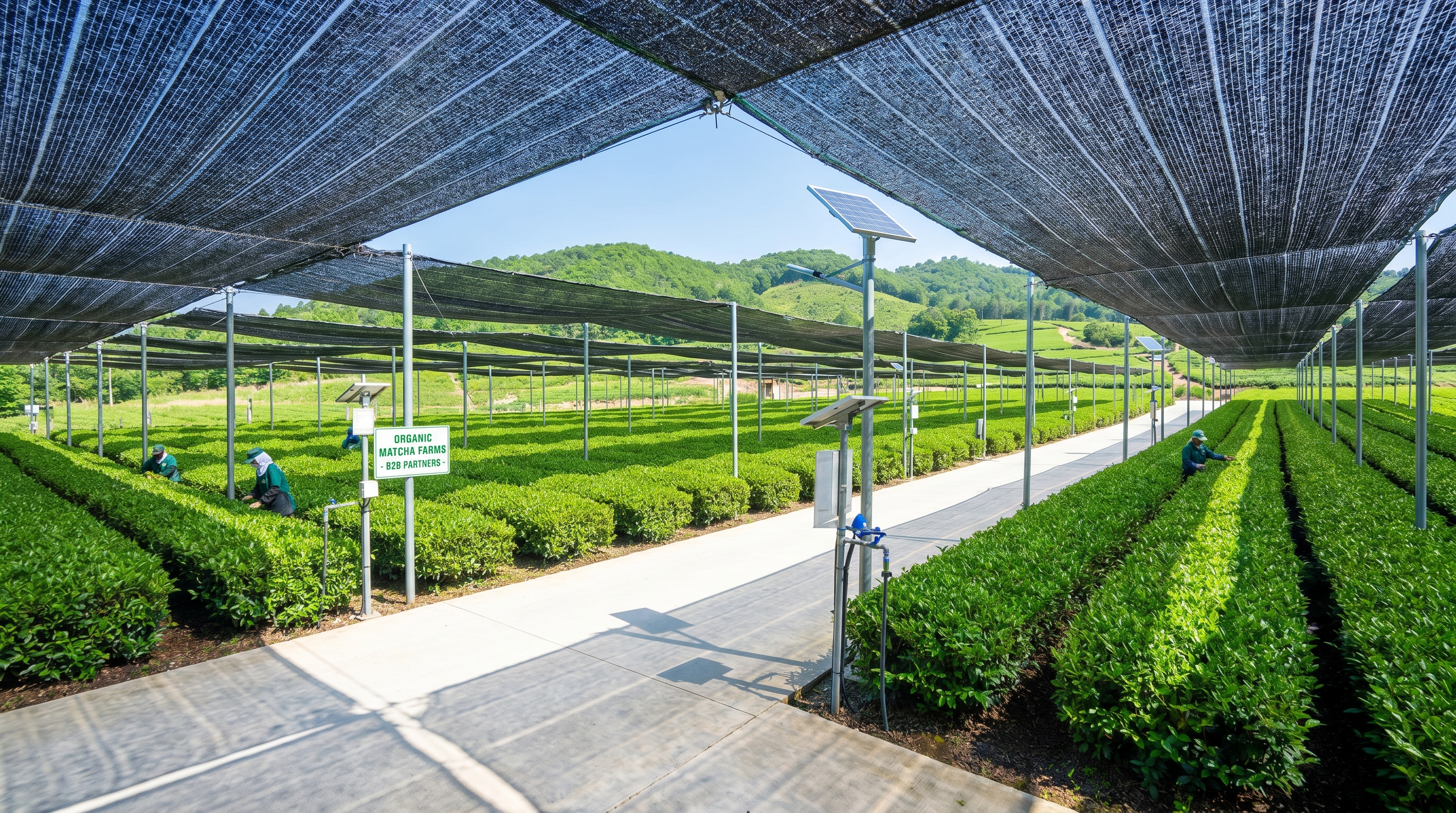
True matcha owes its vibrant color and unique flavor chemistry to the traditional practice of shade-growing.
- The Mechanism: Approximately 20 to 30 days before harvest, the tea fields are covered with black netting (shading structures), blocking 90% to 98% of sunlight.
- The Chemical Shift: Deprived of light, the tea plants compensate by producing massive amounts of chlorophyll to maximize photosynthesis, turning the leaves a deep, brilliant green. Simultaneously, this shading halts the conversion of L-theanine (a sweet, relaxing amino acid) into bitter catechins.
When auditing a supplier, demand photographic evidence and geographical data of their shading setups. Low-grade suppliers often skip or shorten this shading period to cut costs, resulting in a bitter, yellow product.
Sourcing and Manufacturing Technologies
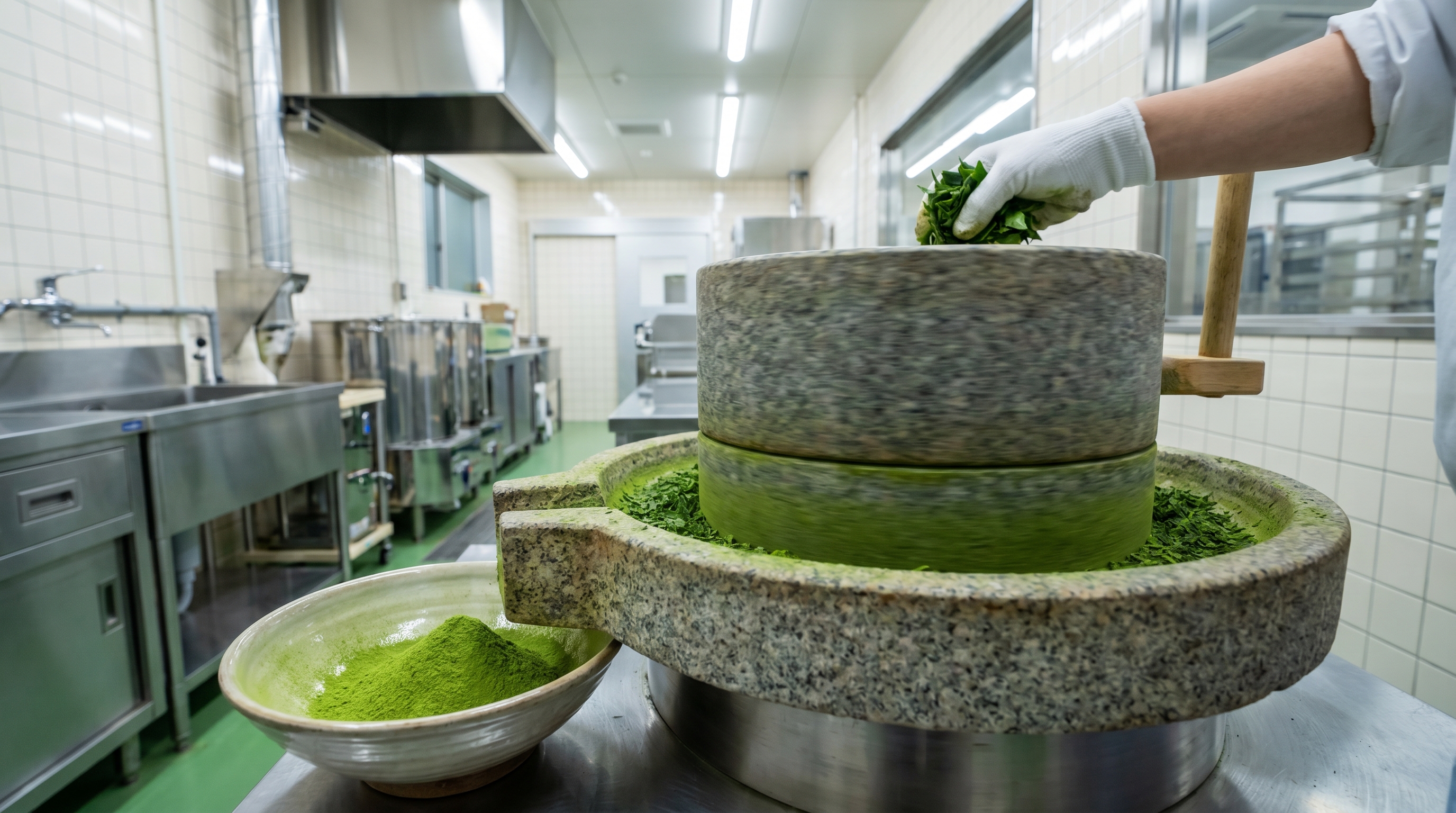
The method of grinding the processed tea leaves (Tencha) into finished powder has a profound impact on the physical properties of the matcha:
- Traditional Granite Stone Milling: The traditional method. Granite mills rotate slowly, maintaining a low temperature (usually below 35°C) to prevent thermal degradation of the delicate nutrients, color, and aroma of the tea. A single stone mill typically produces only 30g to 40g of matcha per hour. This is the optimal method for ceremonial grades.
- Advanced Ball Milling / Jet Milling: Modern, high-capacity machinery. While historic pulverizing machines generated excessive heat that scorched the tea, state-of-the-art temperature-controlled ball mills and air-jet mills can produce highly consistent fine powder at a commercial scale without compromising the organic integrity or sensory qualities of the matcha. This is the standard for high-volume wholesale organic matcha powder used in beverages and culinary formulations.
Batch Traceability and Inventory Systems
A world-class factory operates under strict ERP (Enterprise Resource Planning) and batch tracking protocols. From the moment the raw leaves are harvested from a specific organic farm plot, they are assigned a unique lot number. This lot number follows the product through steaming, drying, milling, blending, packaging, and shipping.
In the event of a quality deviation, your supplier must be capable of executing a mock recall, tracing any shipped batch back to its exact farming plot and processing time within 4 hours.
Packaging Options and Private Label (OEM) Support
Matcha is an incredibly delicate powder. Exposure to oxygen, light, moisture, and high temperatures will rapidly oxidize the chlorophyll, turning the vibrant green powder into a dull brown, and degrading the fresh umami aroma into a flat, stale hay-like smell. The choice of packaging is literally a matter of product life or death.
Bulk Packaging Standards
For bulk buyers, matcha should be packed in protective barrier materials. The industry standard is high-barrier, multi-layer aluminum foil bags (often vacuum-sealed or flushed with food-grade nitrogen gas to displace oxygen). These bags are then placed inside heavy-duty fiber drums or double-corrugated cardboard cartons to prevent physical damage during transit.
Retail-Ready Private Label (OEM) Support
For wellness brands, beauty lines, and e-commerce businesses looking to launch under their own brand name, finding a supplier that offers comprehensive, integrated private label matcha services is a massive competitive advantage.
A sophisticated OEM partner should offer:
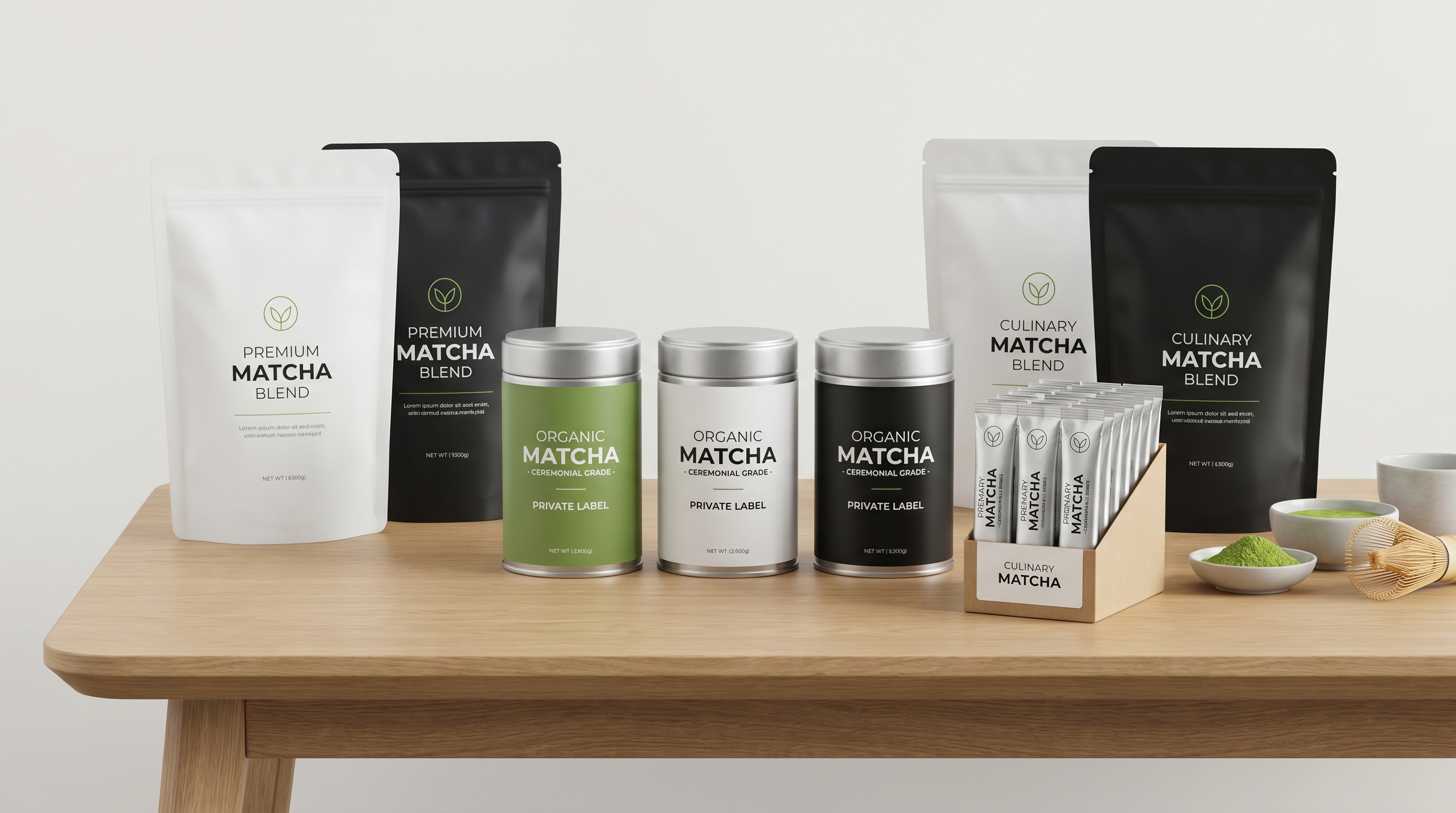
- Diverse Packaging Configurations: Aluminum tins, stand-up pouches (with resealable zippers), single-serve stick packs, and bulk catering bags.
- Nitrogen Flushing Capabilities: Standard packaging lines trap ambient air inside the container, causing oxidation. Advanced packaging machinery injects nitrogen gas (N2N_2
) into the pouch or tin immediately before sealing, reducing residual oxygen levels to below 1.0%, extending shelf life up to 2 years.
- Regulatory and Label Compliance Reviews: Expert guidance to ensure your packaging labels meet the strict regulatory guidelines of your target market (including FDA nutrition panels, allergen statements, organic logo usage rules, and batch code placement).
Packaging & OEM Options Guide
Packaging Format | Typical Net Weights | Material Composition | Barrier Quality | Best Target Market / Channel |
|---|---|---|---|---|
Aluminum Tins (with pull-ring inner seal) | 30g, 40g, 50g, 80g | Food-grade aluminum + inner lining | Outstanding (Maximum protection) | Premium retail, High-end gifts, Ceremonial drinking |
Stand-Up Pouches (Mylar / Kraft Foil) | 50g, 100g, 250g, 500g | PET/AL/PE or Kraft paper/AL/PE | Excellent (Resealable zipper) | E-commerce brands, Supermarket shelves, Home baking |
Single-Serve Stick Packs (Sachets) | 1.0g, 1.5g, 2.0g, 3.0g | PET/AL/PE laminated film | Outstanding (Pre-measured, zero waste) | “On-the-go” fitness brands, hotels, cafes, office pantries |
Bulk Kraft Foil Bags in Drums | 10kg, 20kg, 25kg | Multi-layer aluminum foil + HDPE lining | Excellent (Requires cold storage) | Large food factories, RTD beverage bottlers, bulk repackers |
Sourcing Economics: Pricing, MOQ, and Lead Times
Sourcing premium organic matcha requires balancing your financial budget with the physical realities of agricultural production. Understanding the cost drivers of matcha prevents your purchasing department from falling victim to unrealistically low prices that inevitably result in sub-par quality or regulatory issues.
The Cost Breakdown of Organic Matcha
The market price of organic matcha is primarily driven by three factors:
- Harvest Flush: First-flush spring leaves command the highest premium due to their limited supply, labor-intensive harvesting, and superior sensory qualities. Summer and autumn harvests are significantly cheaper.
- Organic Certification Costs: Maintaining organic fields is highly labor-intensive. Yields are typically 20% to 40% lower than conventional farms because synthetic fertilizers and chemical pesticides are banned. Instead, farmers must manually weed the fields, use expensive organic fertilizers, and undergo rigorous annual third-party audits.
- Milling Speed: Stone-milled matcha is slow and labor-heavy, making it significantly more expensive than high-capacity, air-cooled ball-milled culinary matcha.
Understanding Minimum Order Quantities (MOQs)
- Bulk Sourcing: For raw bulk powder packed in 10kg to 25kg drums, professional factories typically require a minimum order of 100kg to 500kg per grade.
- Private Label Sourcing: For custom retail packaging (printed tins or pouches), MOQs are usually dictated by the packaging printing machines. Standard rotogravure printed pouches often require an MOQ of 5,000 to 10,000 units per design, whereas digital printing can accommodate smaller runs (from 1,000 units) at a higher per-unit cost.
Logistics, Freight, and Cold Chain Management
Matcha is highly sensitive to environmental factors. During international transit, the heat inside standard dry shipping containers sitting on ocean vessel decks can easily exceed 50°C. This extreme heat will completely degrade the quality of your organic matcha before it even reaches your warehouse.
- Air Freight: Recommended for high-value ceremonial grades, private label product launches, and urgent shipments. It ensures minimal transit time and lowers exposure to thermal stress.
- Reefer Containers (Refrigerated Ocean Shipping): Absolutely critical for bulk shipments of culinary and latte grades exceeding 2 tons. The shipping temperature should be set between 2°C and 8°C to guarantee that the matcha arrives in the exact same pristine condition it left the factory.
B2B Supplier Red Flags: Warning Signs of an Unreliable Matcha Partner
In your search for a matcha supplier, you will encounter hundreds of companies claiming to be premier manufacturers. Identifying red flags early in the negotiation process will save your brand from costly legal liabilities, customer complaints, and supply chain disruptions.
Critical Warning Signs to Watch For
- Unverifiable or Mismatched Organic Certificates: If the name on the organic certificate is different from the exporter’s name, or if the supplier refuses to provide the certificate registration number, walk away. This is a common indicator of brokers passing off conventional green tea powder as organic.
- Suspiciously Low Pricing: If a supplier’s quote is significantly lower than the market average for a specific grade, they are likely cutting corners. This is often done by blending cheap conventional green tea powder, using chemically treated leaves, or omitting the shading process entirely.
- Refusal to Provide Batch-Specific TCs: A certified organic supplier must be able to issue a Transaction Certificate (TC) for every single shipment. If they make excuses or refuse to provide TCs, your final product cannot legally be sold as organic.
- Lack of In-House Quality Assurance and Lab Equipment: A professional factory will have an active, visible QC laboratory equipped to test moisture levels, microbiological counts, and particle sizes on-site before sending samples to third-party labs.
- Slow, Ineffective Communication: If a supplier takes several days to answer simple technical questions or is hesitant to provide documentation (such as a COA or specification sheet), they lack the professional customer service infrastructure required for a global B2B partnership.
How to Scientifically Conduct Matcha Sample Testing
Before committing to a high-volume contract, your quality control or R&D team must perform rigorous sensory and physical evaluations of the supplier’s samples. Do not rely solely on the supplier’s written descriptions; test the product using systematic, repeatable laboratory methodologies.
The Sensory Evaluation Protocol
Follow this structured protocol to compare samples under identical, controlled conditions:
- Dry Powder Color Test: Place exactly 5 grams of each sample on a clean, solid white sheet of paper side-by-side. Use a flat ruler to level the powder. Under neutral daylight (or 5000K LED lighting), observe the color. Look for a vibrant, bright emerald green. Avoid any samples that display yellowish, khaki, or brownish hues.
- The “Slick” Touch Test: Rub a pinch of dry matcha powder between your thumb and forefinger. High-quality, finely ground matcha (1000+ mesh) will feel silky and smooth, similar to baby powder or cornstarch. If it feels sandy, gritty, or rough, it has not been milled properly and will clump in liquid.
- Smear Test on Glossy Paper: Smear a small line of the dry powder across a piece of white paper with your finger. A high-quality, fine-mesh matcha will leave a smooth, continuous, solid green streak with no broken lines or graininess.
- Whisking and Foam Evaluation: Weight out exactly 2.0 grams of matcha into a wide-bottom ceramic bowl. Add 70mL of purified water heated to exactly 80°C (using boiling water will scorch the matcha, making it artificially bitter). Use a traditional bamboo whisk (Chasen) to whisk the tea in an energetic “W” pattern for 30 seconds.
- Evaluate the Froth: Premium ceremonial matcha will produce a dense, velvety layer of foam with tiny, uniform micro-bubbles. Lower culinary grades will produce sparse, uneven foam with large bubbles that pop quickly.
- Evaluate Foam Durability: Observe the foam after 5 minutes. High-quality matcha maintains its micro-foam structure, while poorly processed or coarse powders will show rapid separation of the foam layer.
- Aroma and Taste Profiles: Inhale the steam rising from the whisked bowl.
- High-Quality Profiles: Should smell incredibly fresh, sweet, and vegetal, with subtle notes of steamed baby spinach, cream, and a distinct seaweed/marine aroma (indicative of rich amino acids).
- Low-Quality Profiles: Will smell flat, dusty, like toasted straw, or excessively bitter.
- Taste Test: Take a small sip and let it roll across your tongue. High-quality ceremonial grades will taste rich, smooth, creamy, and deeply savory (umami), ending with a clean, naturally sweet finish and zero unpleasant astringency. Culinary grades will taste distinctly bitter, sharp, and highly astringent, but should still maintain a clean green tea flavor free of chemical off-notes.
- Sedimentation Test: Pour the whisked matcha into a tall, clear glass cylinder and let it stand undisturbed for 15 minutes. Note how quickly the powder settles to the bottom. Poorly milled, coarse matcha (with larger particle sizes) will precipitate rapidly, leaving a clear layer of water on top. Well-milled, fine-mesh matcha will remain suspended in solution for a significantly longer period.
- Batch-to-Batch Consistency Auditing: If you are testing a second or third sample batch over time, perform these exact same tests side-by-side with retained samples from previous approved shipments. This ensures the supplier is delivering a highly stable, consistent raw material year-round.
Building a Resilient, Long-Term Strategic Matcha Partnership
In the competitive world of consumer packaged goods (CPG) and café retail, a supplier is not merely a vendor—they are a critical partner in your brand’s growth and financial success. Building a resilient, collaborative partnership with your supplier guarantees supply chain security and can lead to valuable strategic advantages.
Annual Contracts and Price Locking
Because matcha is highly vulnerable to agricultural volatility, entering the spot market every time you need to restock is a risky strategy. Work with your supplier to draft an Annual Supply Agreement. By committing to a guaranteed annual volume forecast, you can lock in stable, competitive pricing for 12 months, protecting your operating margins from sudden currency fluctuations or crop shortages.
Joint Demand Forecasting and Peak Season Logistics
The highest demand for cold drinks, ice creams, and matcha-flavored products occurs during the spring and summer months. Collaboratively share your 6-month and 12-month sales forecasts with your supplier. This proactive sharing allows their farming and manufacturing teams to allocate the exact volume of raw Tencha leaves in cold storage and schedule the necessary milling hours to guarantee your shipments are dispatched on time, avoiding costly stockouts during peak retail seasons.
Collaborative R&D and Custom Blend Engineering
Every final application requires a slightly different matcha profile. If you are formulating a highly specific product—such as a ready-to-drink canned matcha latte, an ultra-smooth protein powder, or a natural matcha-infused cosmetics cream—work directly with your supplier’s technical R&D team.
A sophisticated partner like Riching Matcha can engineer custom blends, adjusting the harvest ratio, milling fine-ness, and bitterness levels to perfectly match your formulation needs, giving your brand a unique, proprietary sensory profile in the marketplace.
Conclusion: Selecting the Perfect Matcha Partner for Stable B2B Growth
Choosing the right organic matcha supplier is a pivotal strategic decision for any global B2B buyer. It requires finding a partner who balances pristine agricultural traditions with state-of-the-art food processing technologies and rigorous, unyielding quality assurance standards.
By systematically verifying organic certifications, establishing explicit technical quality specifications, selecting the appropriate matcha grades for your specific applications, and rejecting suppliers who exhibit critical red flags, you can secure a safe, consistent, and highly profitable supply chain.
As you seek to elevate your brand and build a resilient foundation for long-term growth, partnering with a vertically integrated, certified industry veteran is the ultimate step. We invite you to get in touch with our sourcing team today to request complimentary sensory samples, discuss annual volume contracts, or explore our tailored OEM private label services designed to bring premium, certified organic matcha directly to your global customers.
Global B2B Sourcing: Frequently Asked Questions (FAQs)
Q1: What is the difference between ceremonial and culinary organic matcha in terms of sourcing costs?
The price disparity between ceremonial and culinary grades of organic matcha is profound, with ceremonial grades often costing 200% to 500% more in bulk than culinary alternatives. This difference is rooted in agricultural economics and processing times.
- Ceremonial Matcha is harvested exclusively from the ultra-delicate first spring flush. It requires intensive manual labor to select the youngest leaves, and a slow, low-temperature stone-milling process that yields only 30g to 40g per hour. This creates a highly limited supply of a premium product characterized by rich umami and a vibrant green color.
- Culinary Matcha utilizes second or third-flush summer leaves, which are harvested mechanically and processed at a high volume using temperature-controlled ball mills. This high throughput significantly reduces production costs, making it highly economical for bulk food manufacturing.
Q2: How does summer heat affect bulk organic matcha transport, and how can we mitigate this?
Matcha is highly sensitive to thermal degradation. Exposure to high temperatures (above 25°C) during international transport accelerates the oxidation of chlorophyll and volatile aromatic compounds, turning the vibrant green powder a dull yellow-brown and causing the fresh flavor to become flat and bitter.
To mitigate this risk:
- For shipments exceeding 2 tons, always specify Reefer Containers (Refrigerated Sea Freight) with the temperature controlled between 2°C and 8°C.
- For smaller LCL (Less than Container Load) orders or high-value ceremonial runs, prioritize Air Freight to minimize transit time.
- Ensure the matcha is vacuum-sealed in high-barrier aluminum foil bags flushed with nitrogen gas before shipping, protecting the powder from ambient moisture and oxygen.
Q3: Can we get custom organic certificates under our brand name for retail-ready private label matcha?
Yes. When utilizing a manufacturer’s private label or OEM packaging services, you can legally market the finished product as certified organic. To do this, your manufacturer must supply a Transaction Certificate (TC) matching your specific shipment.
You must submit this TC, along with your supplier’s valid USDA or EU organic certificate, to your local organic certifying agency (such as CCOF, QAI, or Soil Association). Your local certifier will then issue a sub-certificate or add the product line to your brand’s organic profile, giving you the legal right to print your own organic registration number and logos on the retail packaging.
Q4: What is the shelf life of bulk organic matcha, and how should it be stored in our warehouse?
Under optimal storage conditions, bulk organic matcha has a shelf life of 18 to 24 months from the date of milling. Once received at your warehouse, it must be stored under the following conditions:
- Temperature Control: Ideally kept in cold storage between 0°C and 5°C (or in a cool, climate-controlled warehouse below 15°C).
- Humidity Control: Relative humidity (RH) must be kept below 50% to prevent moisture absorption.
- Light and Odor Protection: Keep the matcha sealed in its original multi-layer aluminum foil bags, completely away from direct sunlight. Additionally, because matcha is highly absorbent, ensure it is stored far away from any strong-smelling spices, chemicals, or aromatic food ingredients to prevent odor transfer.
Q5: Why does organic matcha sometimes have a less intense green color compared to non-organic matcha?
Non-organic (conventional) tea farmers can apply synthetic, fast-acting ammonium-based chemical fertilizers in massive quantities, causing the tea plant to rapidly produce chlorophyll and yield a bright neon-green leaf.
Organic farmers, by contrast, are legally restricted to slow-release, natural organic fertilizers (such as compost, rapeseed cake, and organic bone meal). Because these organic nutrients take longer to break down in the soil, the chlorophyll development is more gradual.
However, premium organic manufacturers overcome this by implementing exceptionally rigorous, extended shading protocols (covering the plants for up to 30 days before harvest) and selecting only the highest-quality first-flush leaves. This traditional, meticulous approach guarantees an intense, natural emerald green color that matches the visual standards of the finest conventional tea.