
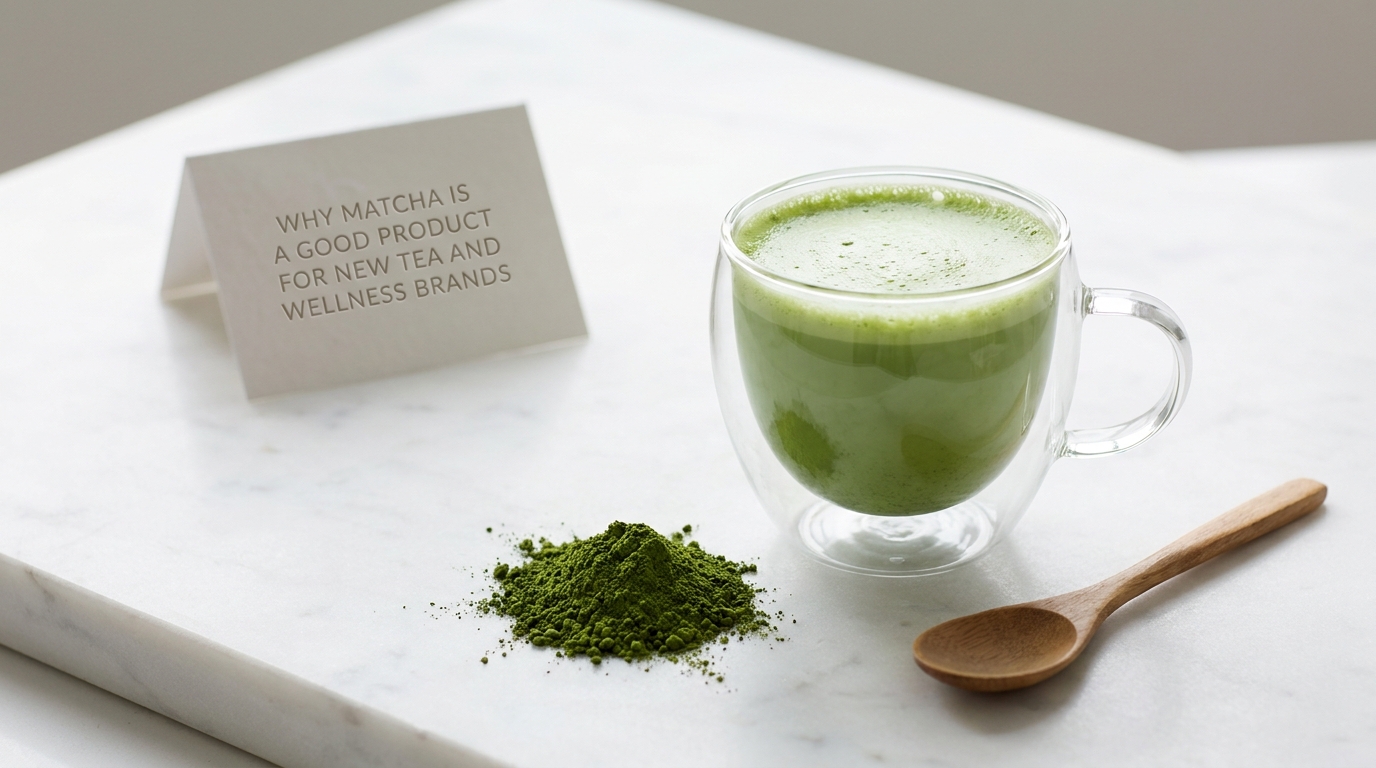
2. Phase 1 (Days 1–15): Target Market Definition & Matcha Grade Selection
Defining Your Target Consumer Segments
- The Traditional Purist: This consumer drinks matcha whisked with warm water in its purest form. They demand an incredibly vibrant jade-green color, a sweet umami flavor profile with zero astringency, a creamy body, and a delicate, grassy aroma. This segment is highly price-inelastic but demands the absolute highest tier of ceremonial grade.
- The Modern Café Latte Enthusiast: These consumers primarily consume matcha mixed with plant-based milks (oat, almond, or coconut) and natural sweeteners. For this application, an ultra-premium ceremonial grade would be wasted, as milk fat masks delicate umami notes. Instead, they require a robust, slightly astringent premium grade that cuts through milk fat while retaining a vivid green color when blended.
- The Functional Baker & Food Manufacturer: This B2B or retail customer uses matcha for cookies, cakes, protein powders, energy bars, and chocolate. They require a culinary grade that has a strong, bold green tea flavor, high thermal stability (retaining flavor after baking), and a cost-effective price point that supports viable product manufacturing.
Understanding the Shading and Harvesting Process
- Shading: True matcha must be shaded from sunlight using straw or black vinyl nets for 20 to 30 days prior to harvest. This process restricts photosynthesis, forcing the tea plant (Camellia sinensis) to produce massive amounts of chlorophyll (giving matcha its vibrant green color) and L-Theanine (reducing bitterness and boosting sweet umami flavors).
- Harvest Timing: First-flush leaves, harvested in early spring, are extremely tender and packed with accumulated nutrients. These are reserved exclusively for organic ceremonial grade matcha powder . Second-flush (summer) and third-flush (autumn) harvests contain higher levels of catechins (which develop under sunlight and add bitterness). These leaves are coarser and are processed into premium barista and culinary grades.
- De-veining and De-stemming: High-end grades utilize only the soft leaf fleshy tissue (known as Tencha). The stems and veins are mechanically separated, as grinding them introduces yellow hues and fibrous, bitter notes. Culinary grades may include a small portion of these elements to maintain cost-efficiency.
Metric / Attribute | Ceremonial Grade | Premium / Barista Grade | Culinary Grade |
|---|---|---|---|
Harvest Season | First Flush (Spring) | Late Spring to Early Summer | Summer to Autumn (2nd/3rd Flush) |
Leaf Raw Material | 100% Tencha (De-stemmed/De-veined) | Tencha with minimal stem content | Tencha & premium Sencha leaf blends |
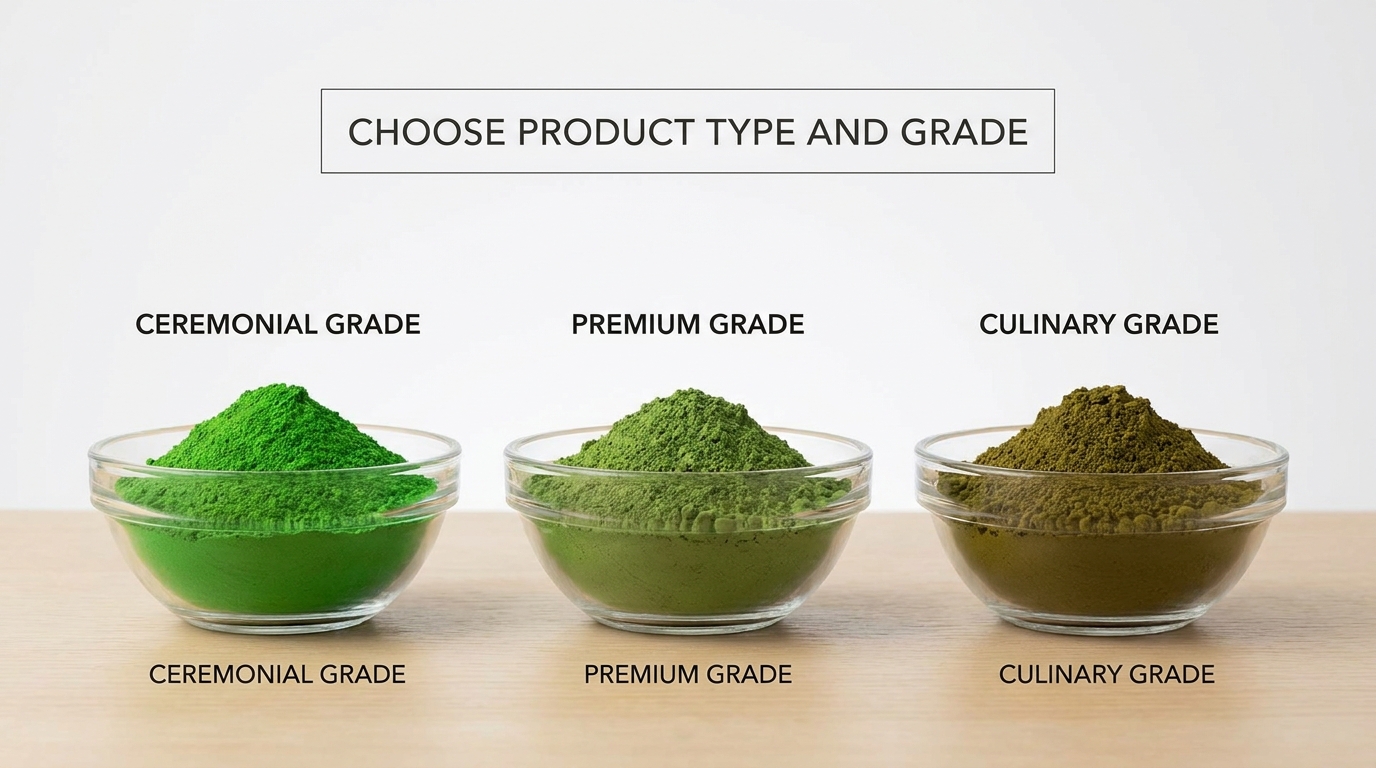
Color Profile | Brilliant, electric jade green | Vibrant grass green | Yellow-green to olive/khaki green |
Taste & Aftertaste | Sweet, rich umami, completely smooth | Balanced sweetness, moderate astringency | Bold, astringent, intense green tea flavor |
Texture & Particle Size | Ultra-fine silky powder (5–10 microns) | Fine silky powder (10–12 microns) | Slightly textured powder (12–15 microns) |
Best End-Use Applications | Traditional hot tea, premium retail | Cafés, lattes, iced beverages, RTDs | Baking, confectionery, ice cream, smoothies |
Relative Wholesale Cost | High (Premium pricing) | Moderate (Optimal balance) | Low (Volume-driven efficiency) |

3. Phase 2 (Days 16–25): Requesting Samples and Testing Matcha Applications
Setting Up a Systematic Sample Evaluation
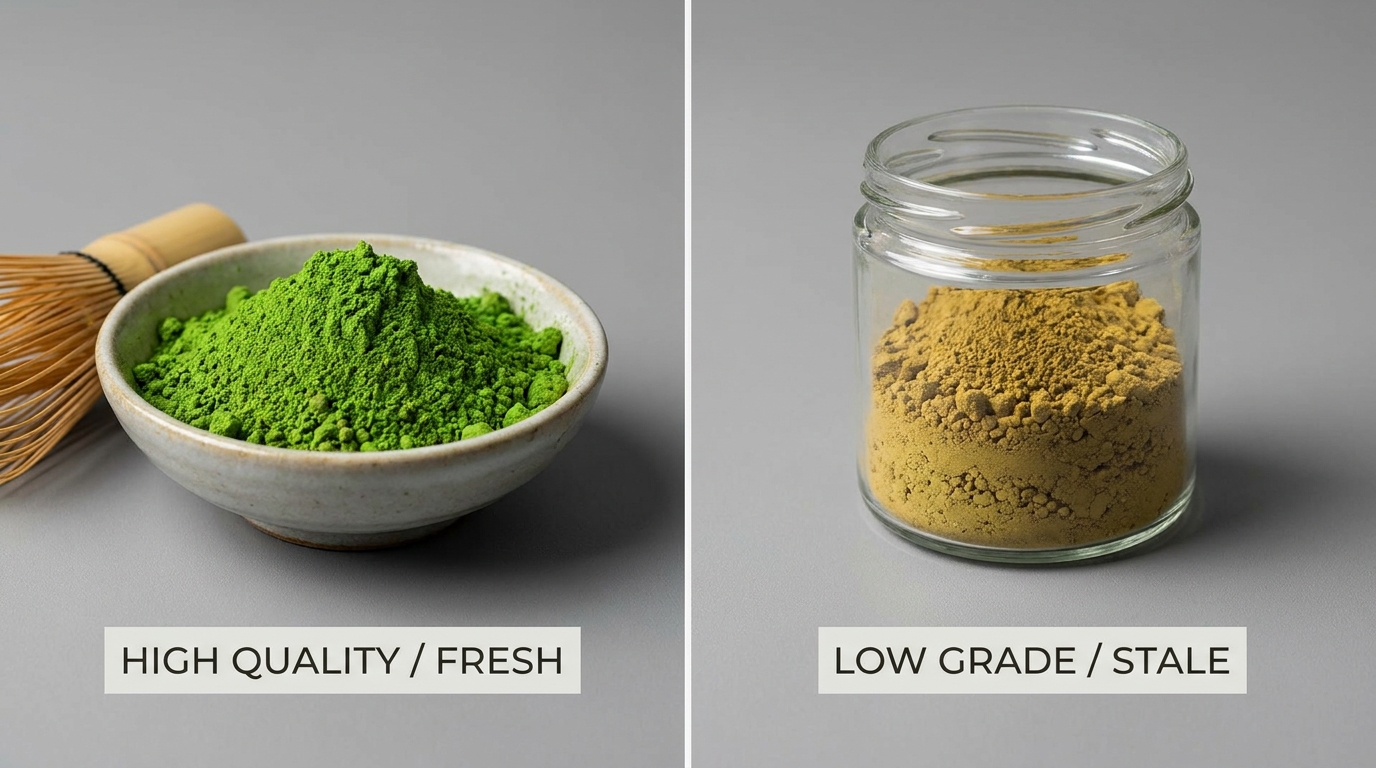
- Dry Powder Visual Assessment: Place 5g of each sample onto a clean sheet of white paper under natural daylight. Look for brightness and saturation of color. High-quality matcha will be a bright green that catches the light. Low-quality, poorly shaded, or oxidized matcha will look dull, yellowish, or brownish.
- The Touch & Texture Test: Rub a small pinch of dry matcha powder between your thumb and forefinger. High-grade ceremonial matcha should feel like fine cosmetic powder or cornstarch, without any noticeable grit. This indicates that the leaves were stone-milled correctly, resulting in microscopic particle sizes (5 to 10 microns) that suspend easily in water. If it feels like fine sand, it was likely ground too quickly on low-end industrial impact mills, which burns the leaf and leaves large, heavy particles that sink rapidly to the bottom of the cup.
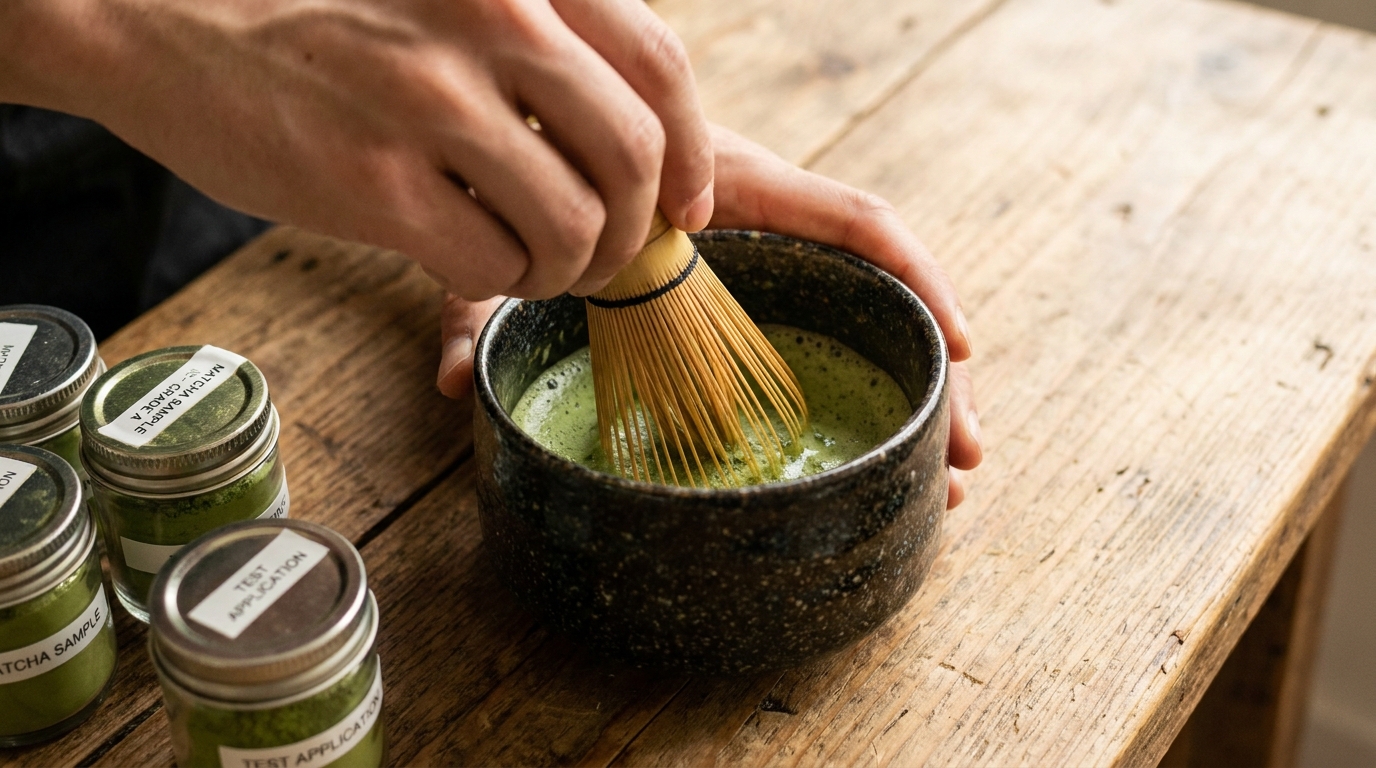
- Froth and Suspension Quality: Whisk 2g of matcha with 70ml of hot water (specifically at 80°C/176°F, as boiling water scalds the powder and coaxes out bitterness). Whisk vigorously in a “W” or “M” motion using a traditional bamboo whisk (chasen). Note the density, uniform size, and longevity of the foam bubbles. A dense, micro-foamed head that remains stable for several minutes indicates a high concentration of water-soluble proteins and excellent milling quality.
- Application-Specific Testing (The Latte Test): If you are launching a product targeted at cafés or retail latte drinkers, blend the premium and culinary samples with oat and whole dairy milk. Evaluate whether the distinct green tea flavor cuts through the milk fat, and observe if the drink retains an appealing green color or turns into an unappetizing gray-brown shade.
- Shelf-Life Stress Testing: Leave a small portion of the prepared liquid matcha exposed to air and light for two hours. Observe how quickly it oxidizes and turns brown. Superior-quality matcha, packed with natural antioxidants, holds its green color significantly longer than lower-tier options.
4. Phase 3 (Days 26–35): Selecting and Confirming Your Matcha Packaging Style
Crucial Material and Preservation Specifications
- Tri-Layer Foil Laminates: If using flexible pouches, avoid simple plastic or paper materials. You must specify a minimum of a three-layer high-barrier laminate structure, typically consisting of Matte PET (exterior for printing) / VMPET or Aluminum Foil (middle barrier layer to block 100% of light and oxygen) / LLDPE (interior food-grade sealant layer).
- Airtight Mechanical Seals: For metal tins, the lid must feature an internal gasket or a pull-top aluminum seal (similar to a soda can) to prevent ambient humidity from penetrating the container during transit and storage.
- Nitrogen-Flushing Technology: During the automated packaging stage at the factory, atmospheric oxygen inside the pouch or tin must be evacuated and replaced with food-grade nitrogen gas (N2N_2
). Your target residual oxygen level inside the sealed container must be less than 2.0% (ideally <1.0%). This process halts the chemical oxidation cascade, extending the stable shelf life of your packaged product from 3 months to 2 entire years.
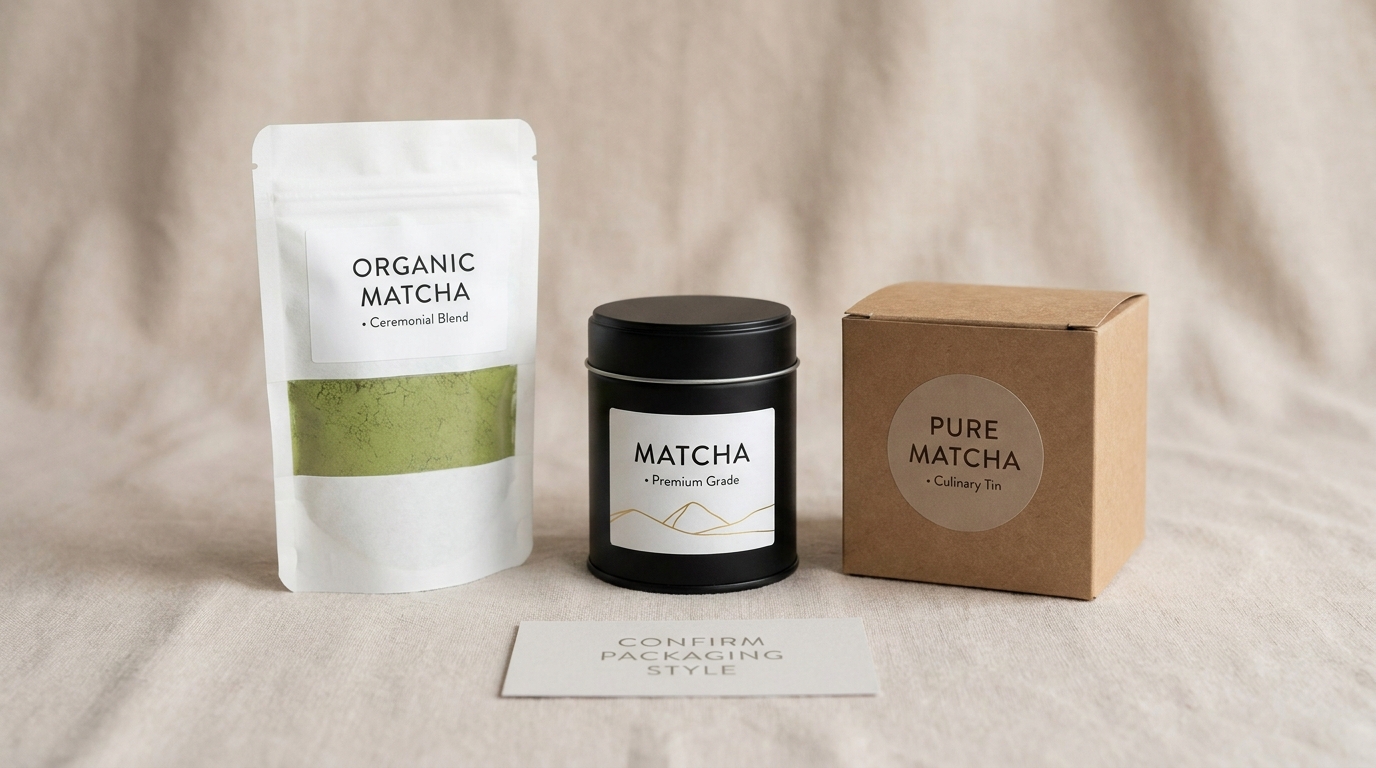
Packaging Style | Average MOQ | Shelf-Life Protection | Premium Consumer Perception | Relative Cost-Efficiency | Best Suited For |
|---|---|---|---|---|---|
Airtight Aluminum Tins (30g – 80g) | 5,000 – 10,000 units | Exceptional (Ultimate light/oxygen barrier) | High (Luxury wellness aesthetic) | Low (Higher shipping volume/weight) | Ceremonial grades, traditional retail, gifting |
Stand-Up Zipper Pouches (30g – 500g) | 1,000 – 5,000 units | Very Good (If tri-layer laminate is used) | Moderate to High (Clean, modern look) | High (Lightweight, cheap to transport) | Premium latte grades, home baristas, bulk culinary |
Single-Serve Sachets / Sticks (1g – 3g) | 20,000+ units | Excellent (Individual portions limit exposure) | High (Conveys convenience/active lifestyle) | Moderate (Higher upfront tooling costs) | On-the-go wellness, travel packs, café portions |
5. Phase 4 (Days 36–45): Crucial Food Safety Certificates and Document Review
Navigating the Certificate of Analysis (COA)
- Heavy Metal Tolerances: Because tea plants can absorb heavy metals from the soil, the COA must confirm that Lead (Pb), Arsenic (As), Cadmium (Cd), and Mercury (Hg) levels are well below strict FDA and EU regulatory limits (e.g., Lead <1.0 ppm).
- Pesticide Residue Limits: If your product is labeled as “Organic,” the COA must show non-detectable levels for over 500 controlled agricultural chemicals. This is verified using advanced liquid chromatography-mass spectrometry (LC-MS) screening.
- Microbial Control: The COA must prove that the product has undergone a verified sterilization stage, keeping Total Plate Count (TPC) under 10,000 CFU/g, and showing completely negative results for pathogens like E. coli, Salmonella, and Listeria.
- Moisture Content: This must be strictly kept under 5.0% (typically targeting 3.0% to 4.5%). Moisture levels above 5.0% cause the powder to clump and catalyze microbial growth, significantly shortening shelf life.
Certification Standard | Geographic Scope | Auditing Entity | Business Value for New Brands |
|---|---|---|---|
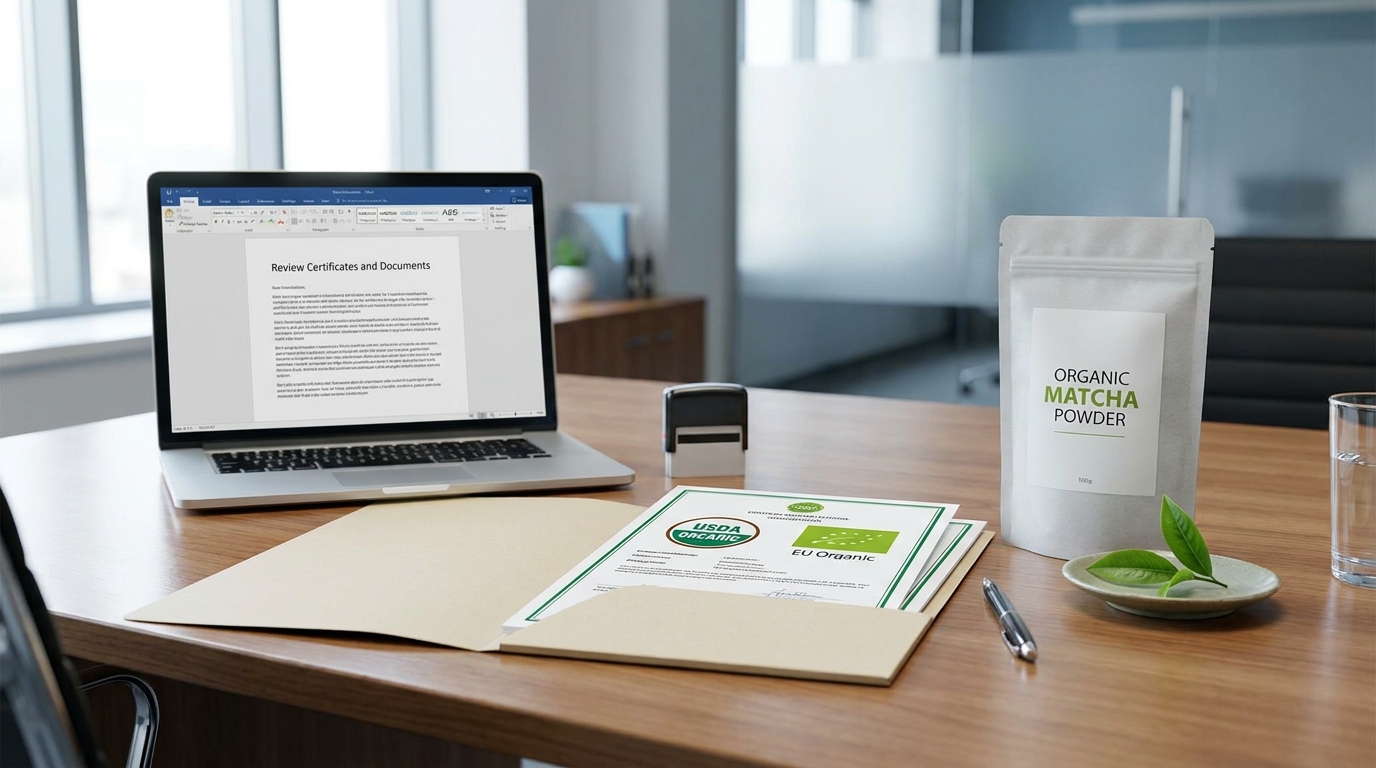
USDA Organic | United States / Americas | Accredited Certifying Agents | Mandatory to market and print “Organic Matcha” on packaging in the US. |
EU Organic | European Union / UK | Approved Control Bodies | Confirms adherence to strict European soil and pesticide standards. |
JAS Organic | Japan / Global | Registered Certifying Organizations | Confirms authenticity of traditional Japanese agricultural methods. |
ISO 22000 / FSSC 22000 | International | Global Certification Bodies | Validates a fully implemented Hazard Analysis Critical Control Point (HACCP) system. |
Kosher / Halal | Global | Recognized Religious Councils | Expands retail reach to observant consumer demographics. |
6. Phase 5 (Days 46–60): Label Design Compliance and Custom Order Details
Designing a Regulatory-Compliant Packaging Label
- Statement of Identity: The product name must clearly state “Matcha Green Tea Powder” or “100% Organic Matcha Green Tea.” It must be printed parallel to the base of the package in a prominent font size.
- Net Quantity of Contents: This must be displayed on the bottom third of the Principal Display Panel (PDP). Ensure it is listed in both US customary units (ounces) and metric units (grams)—for example:
Net Wt. 1.05 oz (30g).
- Nutrition Facts Panel: This must follow exact regulatory sizing and font styles, listing serving sizes, calories, fats, carbohydrates, proteins, and key vitamins. High-quality matcha typically contains zero sugars and negligible calories.
- Ingredient Statement: If you are packaging pure matcha, the only ingredient listed should be
Organic Matcha Green Tea Powder. If you are manufacturing a custom blend, ingredients must be listed in descending order of predominance by weight.
- Country of Origin: You must clearly state where the tea leaves were grown and processed—for example:
Product of ChinaorCountry of Origin: China.
- Distributor Declaration: The label must display the name and physical address of your business (e.g.,
Distributed by [Your Brand Name, LLC], [City, State, Zip]). This ensures trace-back capability in the event of a product recall.
Selecting Your Color Palette and Materials
7. Phase 6 (Days 61–75): Bulk Production and Quality Inspection Standards
Step-by-Step Matcha Production Process
- Tencha Sorting & Cleaning: High-quality tencha leaves are retrieved from temperature-controlled storage facilities. They undergo air-flotation cleaning and physical sorting to remove any remaining yellow leaf fragments, stems, or foreign material.
- Low-Temperature Stone Milling: This is the heart of matcha manufacturing. The tencha leaves are ground into an ultra-fine powder using heavy granite stone mills or advanced low-temperature ball mills. The temperature must be strictly controlled and kept below 40°C (104°F). If the mill runs too fast, the friction creates heat that scorches the delicate tea powder, instantly destroying its vibrant color and pleasant aroma.
- Multi-Stage Fine Sifting: The milled powder is passed through ultra-fine vibrating mesh screens to break up any electrostatic clumps and ensure a consistent particle size of 5 to 10 microns. This ensures effortless whisking for the end consumer.
- In-Line Metal Detection: The sifted powder passes through high-sensitivity, industrial in-line metal detectors to identify and remove any microscopic metallic particles before packaging.
- Cleanroom Automated Packaging: The finished matcha powder is transferred to an automated packaging line located inside a certified Class 100,000 cleanroom. The packaging machinery fills your custom tins or pouches, performs a dual nitrogen-gas flush to displace oxygen, and heat-seals the packaging.
- Final Quality Check & Batch Coding: Each unit is weighed by automated check-weighers and stamped with a unique Batch Number, Production Date, and Expiration Date using high-speed inkjet coding.
8. Phase 7 (Days 76–85): Global Logistics and Shipping Preparation
Essential Shipping Protocols for Matcha
- Expedited Air Freight for Initial Batches: If you have a firm launch deadline, ship your first 10% to 20% of inventory via expedited air cargo. This allows you to launch on schedule, while the remaining bulk inventory travels via more cost-effective ocean freight.
- Temperature-Controlled Sea Freight (Reefer Containers): For sea freight, particularly when shipping during warm summer months or crossing equatorial waters, you should utilize refrigerated shipping containers (commonly called “Reefers”) set to a constant temperature of 10°C to 15°C (50°F to 59°F). Standard dry containers can experience internal temperatures exceeding 50°C (122°F) when sitting on ocean port docks, which will quickly degrade the color and quality of your matcha.
- Heavy-Duty Palletization & Moisture Barriers: All cartons must be stacked on sturdy, heat-treated ISPM-15 export pallets. The entire pallet must be wrapped in heavy-duty stretch film with moisture-absorbing silica desiccant bags placed inside to prevent moisture buildup during transit.
- Accurate HS Code Classification: Ensure your import customs broker utilizes the correct Harmonized System (HS) code. For matcha, this is typically under
0902.10(Green tea, unfermented, in immediate packings of <= 3kg) or0902.20(Green tea, unfermented, in immediate packings of > 3kg). Incorrect classification can lead to customs delays, audits, or unexpected import duty penalties.
- Secure customs-bonded, climate-controlled warehousing: Upon arrival in your destination country, your inventory must be stored in a clean, pest-controlled warehouse maintained at 15°C to 20°C with humidity levels below 50%.
9. Phase 8 (Days 86–90): Launch Preparation & Go-to-Market Strategy
Building an Authentic, Education-First Brand
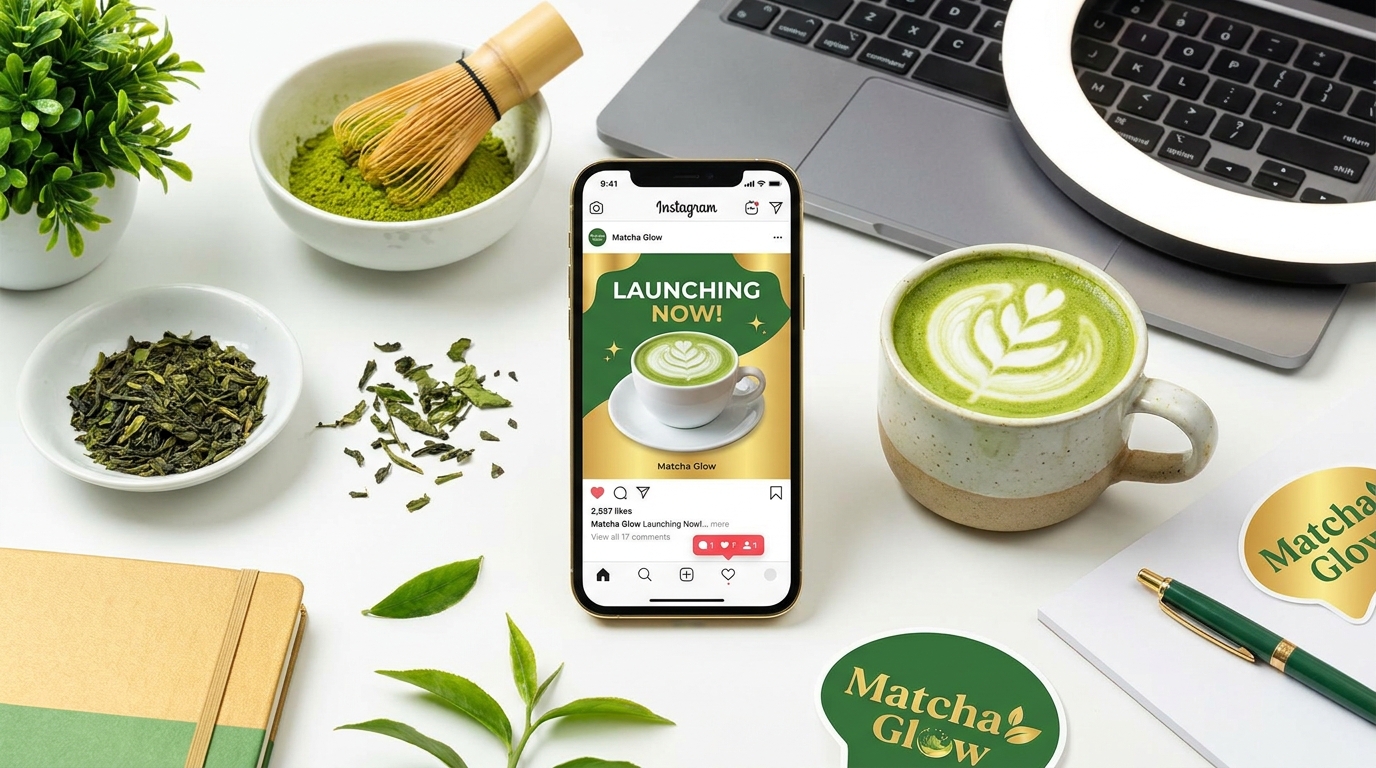
- High-Definition Visual Assets: Invest in clean, minimalist product photography and dynamic lifestyle videos. Show the striking contrast of electric-green matcha being whisked into rich, creamy milk. Use these visuals across your website, social media channels, and email campaigns to highlight the premium quality of your product.
- Education-First Content Marketing: Many consumers are eager to enjoy matcha but don’t know how to prepare it correctly. Produce clear, engaging step-by-step videos demonstrating how to whisk traditional matcha, how to make a cold-iced matcha latte without clumping, and how to use culinary grade matcha powder in healthy recipes.
- Micro-Influencer Gifting Campaigns: Ship beautifully designed PR boxes containing your custom-branded matcha tins, a bamboo whisk, and preparation instructions to micro-influencers in the health, wellness, and fitness spaces. Their authentic, daily wellness content can drive organic traffic and build valuable brand credibility.
- High-Value B2B Café Program: If you are targeting the wholesale B2B market, send premium matcha tasting kits directly to independent cafés, specialty bakeries, and restaurant beverage directors. Offer them complimentary barista training and portion-control guides. Once a café switches to a premium, vibrant matcha that drives repeat customer visits, they become a highly profitable, recurring wholesale customer for your brand.
10. Sourcing Pitfalls: Common Mistakes New Matcha Brands Must Avoid
1. Purchasing Cheap Green Tea Powder Masquerading as True Matcha
2. Underestimating the Importance of Nitrogen Flushing
) to displace oxygen from the packaging, the matcha will rapidly oxidize inside the pouch. Within just a few weeks on a retail shelf, the powder will lose its brilliant green hue, turn a flat olive-brown, and lose its fresh, sweet aroma. Always insist on automated packaging with a verified nitrogen flush to maintain product freshness.
3. Relying on Uncertified Farms and Non-Compliant Suppliers
4. Failing to Account for Long Sourcing Lead Times
11. Empowering Your Launch: How Riching Matcha Supports New Brands
Vertically Integrated Control from Farm to Cup
- Massive Agricultural Foundation: Riching Matcha owns and operates a 4,000,000 m² organic tea farm, managed under strict ecological guidelines. This direct agricultural control ensures a stable supply of high-grade tencha leaves and insulates your brand from seasonal market shortages.
- Advanced Manufacturing Technology: Their state-of-the-art facility combines traditional low-temperature stone milling with high-efficiency modern automation. By keeping grinding temperatures strictly below 40°C, they preserve the maximum amount of chlorophyll, L-Theanine, and delicate volatile oils, ensuring every batch matches your approved samples.
- Comprehensive Private Label Support: Riching Matcha offers a complete end-to-end private label service, providing a wide variety of packaging options including custom tins, stand-up pouches, bulk bags, and single-serve sachets. This allows brands to customize their packaging sizes and designs to target different market segments.
- Uncompromised Quality & Compliance: Holding USDA Organic, EU Organic, JAS, Kosher, Halal, and ISO 22000 certifications, Riching Matcha ensures that every shipment is accompanied by complete, accredited third-party lab documentation (such as Eurofins or SGS COAs) for smooth customs clearance and peace of mind.
- Start-Up Friendly MOQs with Enterprise Scalability: Understanding the capital constraints faced by new brands, Riching Matcha offers flexible, low minimum order quantities for initial private label launches, while maintaining the production capacity to scale up to hundreds of tons as your brand grows.
12. Frequently Asked Questions (FAQs) About Launching a Matcha Brand
Q1: What is the minimum order quantity (MOQ) for launching a private-label matcha product line?
Q2: How does nitrogen flushing extend the shelf life of packaged matcha powder, and is it mandatory?
) to push oxygen out of the container before sealing. This reduces the residual oxygen level to under 2.0% (and ideally under 1.0%). Because nitrogen is an inert gas, it does not react with the tea powder, halting the oxidation process and keeping the matcha fresh, vibrant, and aromatic for up to 24 months.
Q3: What is the difference between Chinese-origin and Japanese-origin matcha in terms of flavor, price, and regulatory acceptance?
- Japanese Matcha: Japan is the traditional home of matcha production, utilizing advanced shading and processing methods. Japanese matcha is famous for its rich, sweet umami flavor and vibrant green color, making it highly prized for premium ceremonial drinking. However, due to high labor, land, and energy costs in Japan, Japanese matcha commands a significant price premium, making it harder to maintain high margins in competitive retail sectors.
- Chinese Matcha: Over the last two decades, Chinese manufacturers have adopted traditional Japanese shading and stone-milling technologies, combining them with large-scale farming and efficient manufacturing. Chinese matcha is highly cost-effective, making it the ideal choice for high-volume lattes, baking, ice cream, and functional supplement blends.
Q4: How can we ensure our custom-designed packaging complies with FDA and EU food safety standards?
- Material Safety: Your packaging manufacturer must provide a formal declaration of compliance stating that all product-contact layers (specifically the interior LLDPE food-grade film or inner coating of metal tins) are completely BPA-free, food-safe, and comply with FDA regulations (21 CFR) or EU Framework Regulation (EC) No 1935/2004 for food contact materials. This document must confirm that no heavy metals or harmful plasticizers can leach into the dry powder.
- Label Design Compliance: Your graphic design must include all legally required elements: a clear Statement of Identity, Net Quantity of Contents in both metric and imperial units, an accurate Nutrition Facts Panel, a simple Ingredient Statement (e.g.,
100% Organic Matcha Green Tea Powder), the Country of Origin, and a Distributor Declaration with your business name and physical address.
Q5: What are the key storage and transport conditions required to maintain the vibrant green color of bulk matcha powder?
- Temperature: Keep storage facilities consistently cooled to 15°C to 20°C (59°F to 68°F), or ideally refrigerated at 2°C to 8°C (35°F to 46°F) for long-term bulk storage before final packaging. Exposure to ambient temperatures above 25°C (77°F) accelerates the degradation of chlorophyll.
- Humidity: Maintain relative humidity levels below 50%. Matcha powder is highly hygroscopic (meaning it easily absorbs moisture from the air), and moisture levels above 5% will cause clumping, catalyze microbial growth, and ruin the texture.
- Light: Ensure bulk matcha is stored in thick, lightproof, multi-layer aluminum barrier bags inside sturdy cardboard drums. Never store matcha in clear plastic bags or glass containers exposed to sunlight or fluorescent warehouse lighting.
- Transport: When shipping bulk containers internationally, always utilize refrigerated ocean containers (Reefers) or expedited air freight to prevent the product from sitting in hot customs yards or standard dry shipping containers during warm weather.