
This comprehensive professional guide provides the definitive technical methodology for creating a premium, plant-based beverage that utilizes high-clarity seaweed extracts to achieve a superior “QQ” texture without the use of animal products. Many culinary professionals struggle to achieve the perfect balance of bounce and flavor when attempting to remove gelatin from traditional Japanese dessert recipes, often resulting in a product that is either too brittle or fails to set entirely. It is highly frustrating to source expensive ceremonial powders only to have the final texture feel unrefined or watery, which ultimately undermines the luxury experience your customers or guests expect from a high-end tea preparation. By mastering how to make matcha jelly without gelatin , you can offer a sophisticated, antioxidant-rich alternative that caters to vegan dietary requirements while maintaining the structural integrity and vibrant aesthetic of a classic teahouse “jelly latte.”
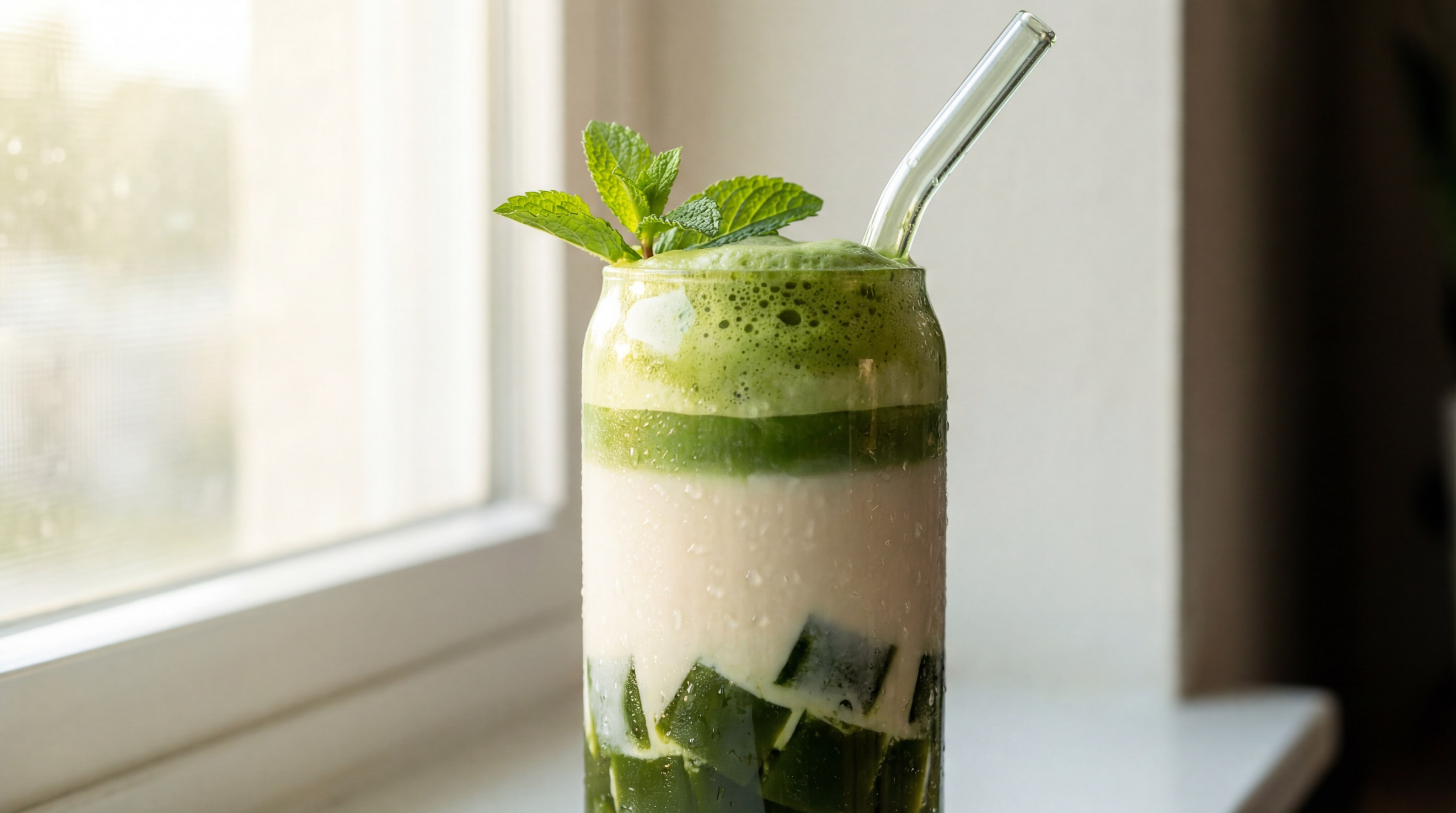
This recipe is considered the ultimate version because it harmonizes advanced hydrocolloid science with the delicate umami profile of stone-ground tencha leaves to create a consistent, mouth-feel-focused beverage experience. When you understand the specific molecular interactions required in how to make matcha jelly without gelatin, you elevate the drink from a simple home recipe to a professional-grade product suitable for high-end hospitality environments.
The Problem with Traditional Thickening Agents
Traditional recipes almost exclusively rely on porcine or bovine gelatin which is fundamentally incompatible with the growing global demand for plant-based and ethical food alternatives. Believe it or not, these animal-derived proteins often introduce a subtle aftertaste that can mask the nuanced sweetness of premium green tea.
- Requires long refrigeration times to set.
- Derived from animal connective tissues.
- Low melting point causes instability in warm climates.
- Can create a cloudy appearance in clear jellies.
The Hydrocolloid Solution for Texture
By shifting your focus to seaweed-derived polysaccharides, you gain significantly more control over the final firmness and clarity of your jelly cubes. The best part? These plant-based stabilizers allow for a much cleaner flavor release, ensuring the matcha remains the star of the show.
- Rapid setting at room temperature.
- High thermal stability for transport.
- Superior clarity for visual layering.
- Completely odorless and tasteless profile.
Achieving Professional Aesthetic Results
The aesthetic appeal of a perfectly layered beverage is a critical component of its marketability in a professional B2B or retail setting. Interestingly, the precision of vegan gelling agents allows for sharper edges on your jelly cubes, providing a more refined look than the softer, rounded edges typical of gelatin-based versions.
- Crisp, uniform cube shapes.
- Distinct color separation in lattes.
- Minimal bleeding between liquid layers.
- High light refraction for photography.
Key Takeaway: Using plant-based stabilizers ensures a cleaner flavor profile and superior thermal stability, making it the professional choice for modern beverage applications.
2. What exactly is matcha jelly and why is it trending?
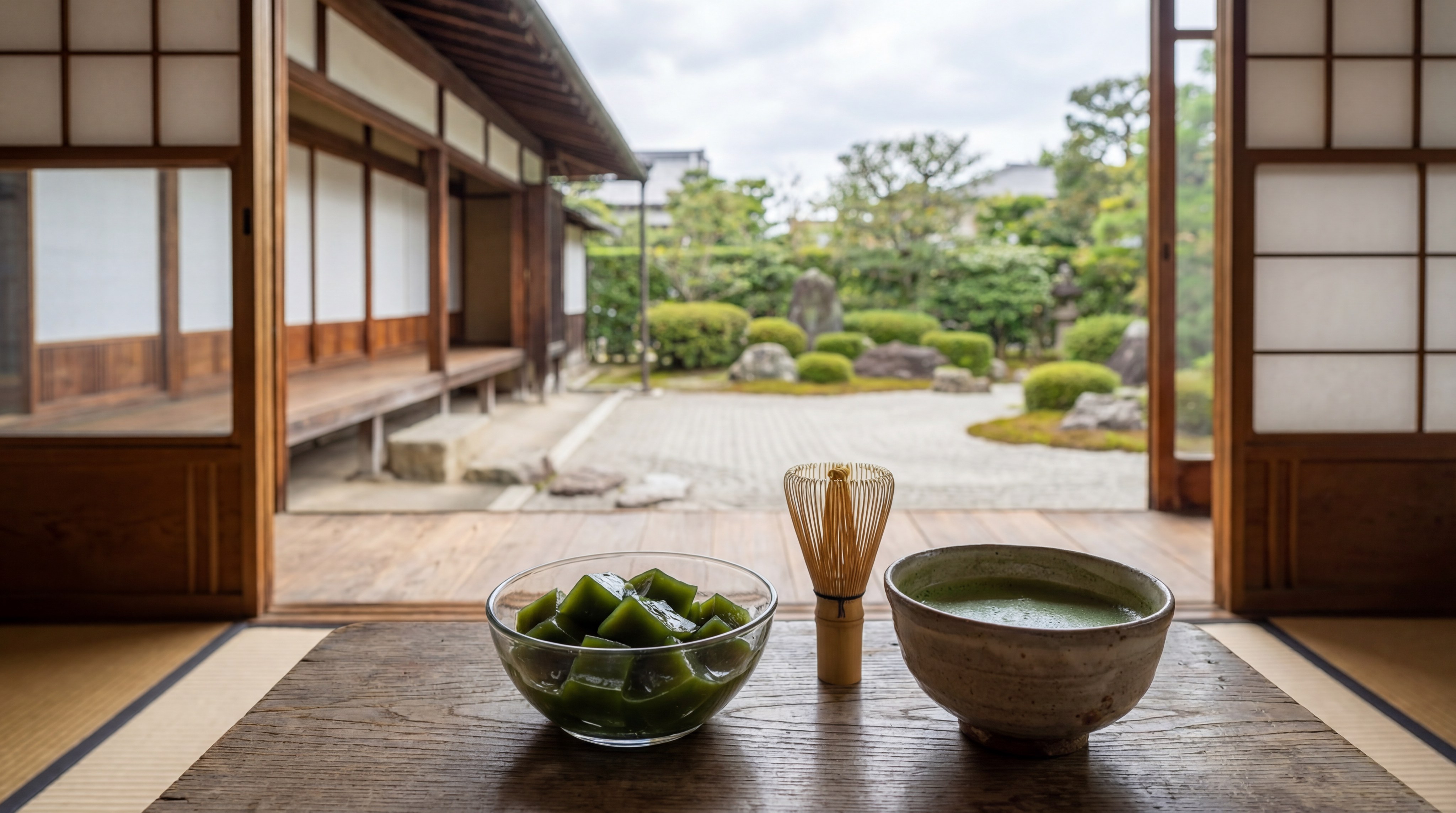
Matcha jelly is a contemporary Japanese culinary innovation that transforms traditional concentrated green tea into a structured, chewy component that serves as both a dessert and a functional beverage topping. Understanding how to make matcha jelly without gelatin is essential for businesses looking to capitalize on the “texture-focused” drink trend that has dominated the global market in recent years.
Origins in Japanese Coffee Jelly Culture
This modern iteration finds its roots in the classic Japanese “Coffee Jelly” which became a staple of the Showa-era cafe scene before evolving into tea-based variants. To understand the cultural context of these desserts, professionals often refer to a How to Make Delicious Matcha Jelly: A Simple Recipe Guide for foundational insights.
- Derived from Western-style gelatin desserts.
- Adapted for Japanese palates using agar.
- Served with cream or sweetened condensed milk.
- Popularized in modern urban “macho” cafes.
The Rise of Functional Texture Trends
The global success of bubble tea has paved the way for “chewable” drinks, but discerning consumers are now seeking lighter, healthier alternatives to heavy tapioca pearls. Here is the kicker: matcha jelly offers a significantly lower calorie count while providing the same satisfying sensory experience as traditional boba.
- Appeals to the “mouth-feel” consumer segment.
- Lower glycemic index than starch-based pearls.
- Natural, chlorophyll-rich visual appeal.
- Compatible with functional health branding.
Versatility in Menu Engineering
For any beverage program, the ability to use one preparation across multiple menu items is a significant advantage for inventory management and labor efficiency. Think about it: a single batch of high-quality jelly can be used in lattes, frappes, and even standalone plated desserts.
- Scalable production for high-volume cafes.
- Long shelf life in refrigerated storage.
- Modular component for seasonal specials.
- Easy to integrate into existing milk-based drinks.
Key Takeaway: Matcha jelly represents the intersection of traditional tea culture and modern texture trends, offering a versatile, low-calorie alternative to starch-based toppings.
Trend Factor | Impact on Beverage Sales | Consumer Perception |
|---|---|---|
Texture Variation | High (Repeat Purchase Driver) | Premium / Handcrafted |
Plant-Based Labels | High (Essential for Growth) | Ethical / Health-Conscious |
Visual Aesthetics | Moderate (Social Media Viral Potential) | High-Quality / Artisanal |
The integration of structured jelly into liquid beverages significantly increases the perceived value of the product, allowing for premium pricing strategies based on textural complexity.
3. How to make matcha jelly without gelatin using plant-based agar?
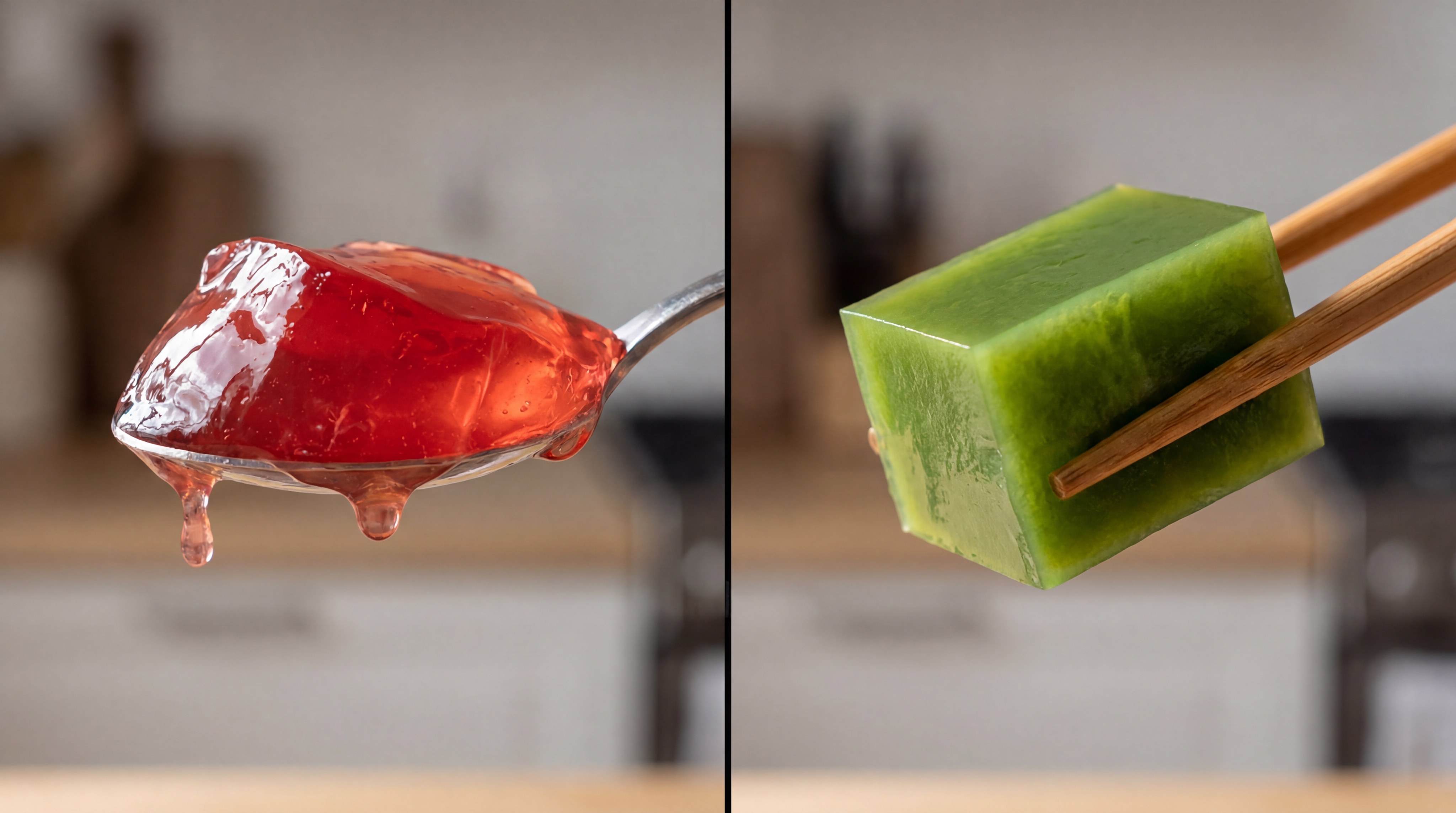
The process of creating a vegan jelly requires the use of agar-agar, a hydrocolloid extracted from red algae that provides a much firmer and more heat-stable structure than animal proteins. Learning how to make matcha jelly without gelatin involves a precise boiling stage to activate the polymers, ensuring the mixture sets into a clean, sliceable block.
Understanding the Agar-Agar Ratio
Unlike gelatin, which requires long cooling periods and higher concentrations, agar-agar is highly potent and will begin to solidify at room temperature once properly hydrated. The reality is that even a slight deviation in the gram-to-liter ratio can result in a jelly that is either unpleasantly rubbery or too soft to handle.
- Standard ratio: 1g agar per 100ml liquid.
- Adjust for “drinkable” vs “chewable” textures.
- Must be weighed with a precision digital scale.
- Sensitivity to acidity should be monitored.
The Critical Boiling Phase
Activation of the gelling properties only occurs when the liquid reaches a rolling boil, which breaks down the complex polysaccharides into a soluble form. Look at it this way: if you do not hit the thermal threshold, your jelly will never achieve the necessary structural integrity.
- Whisk agar into cold water first to prevent clumps.
- Boil for at least 90-120 seconds.
- Monitor for a slight thickening of the syrup.
- Avoid over-boiling to prevent evaporation of volume.
Controlling Clarity and Transparency
Achieving a jewel-like translucency in your jelly is a hallmark of professional preparation, requiring careful temperature management after the boiling phase. Interestingly, adding the tea powder too early while the water is still at maximum heat can lead to oxidation and a muddy, brownish hue.
- Temper the solution to 70°C before adding tea.
- Use filtered water to prevent mineral cloudiness.
- Sift all dry ingredients to ensure total dissolution.
- Skim surface bubbles for a smooth finish.
Key Takeaway: Precision in weighing and a strict boiling protocol are the non-negotiables for successfully transitioning from gelatin to plant-based gelling agents.
Agent | Setting Temperature | Thermal Stability | Texture Profile |
|---|---|---|---|
Gelatin | ~15°C (Requires Fridge) | Low (Melts at Body Temp) | Soft, Melting, Jiggly |
Agar-Agar | ~35°C (Sets at Room Temp) | High (Stable up to 85°C) | Firm, Bouncy, Structural |
The superior thermal stability of agar-agar makes it the ideal choice for high-volume foodservice operations where consistent texture is required across varying environmental temperatures.
4. Which matcha grade should you choose for the best results?
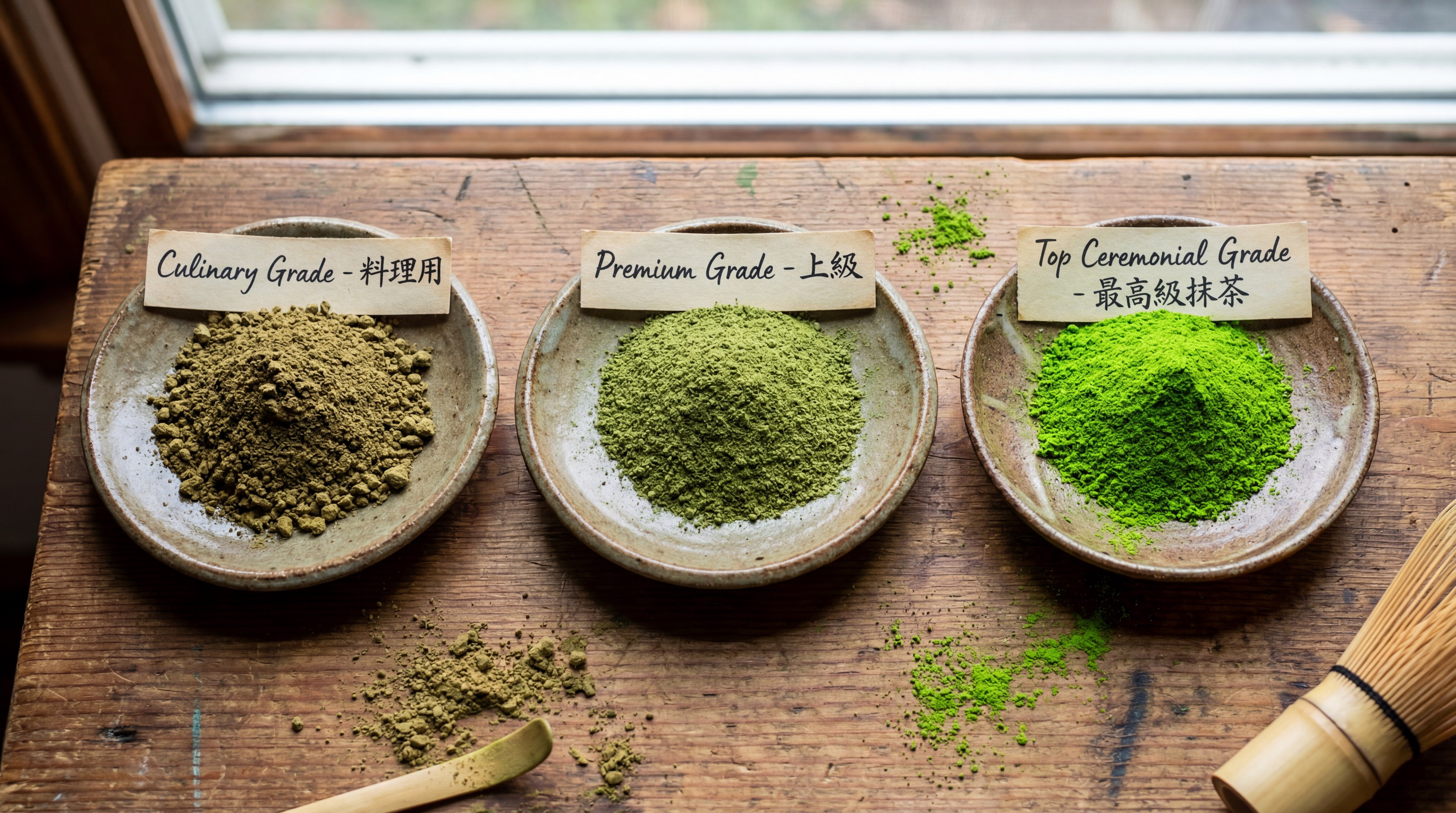
Selecting the appropriate grade of tea is the most significant factor in determining the final flavor balance and visual vibrance of your jelly. When researching how to make matcha jelly without gelatin, professionals prioritize grades that offer high chlorophyll content and a balanced amino acid profile to avoid excessive bitterness after the cooling process.
The Role of Premium Culinary Grades
For jelly production, a high-quality culinary grade is often more effective than an ultra-delicate ceremonial grade because it possesses the necessary “punch” to stand up to sweeteners and plant milks. To ensure you are using the right product, consult our guide on the Best Matcha for Jelly: Top Quality Picks for detailed sourcing standards.
- High levels of L-theanine for umami.
- Stronger flavor profile for culinary suspension.
- Vibrant green color from late-spring harvests.
- Cost-effective for wholesale and large batches.
Avoiding Lower-Tier Industrial Powders
Industrial-grade powders often have a yellow-brown tint and a harsh, astringent finish that becomes unpleasantly concentrated when solidified into jelly. Now, while these powders are cheaper, they can negatively impact your brand perception and the overall quality of the beverage.
- Risk of metallic or “hay-like” flavor notes.
- Low chlorophyll density results in poor visuals.
- Higher fiber content can lead to grittiness.
- Lack of the characteristic “fresh-mown” aroma.
Sourcing for Consistency and Scale
In a B2B context, the ability to source consistent lots of tea is vital for maintaining a standardized menu across multiple locations. Actually, working with a direct-from-origin supplier ensures that your jelly maintains the same color and taste profile throughout the entire fiscal year.
- Verify organic certifications for clean labeling.
- Request COA (Certificate of Analysis) for safety.
- Ensure stone-milled consistency for solubility.
- Establish a reliable wholesale supply chain.
Key Takeaway: Choosing a premium culinary grade provides the best balance of bold flavor and vibrant color, ensuring the jelly stands out in milk-based drinks.
Grade Level | Ideal Application | Color Intensity | Flavor Profile |
|---|---|---|---|
Ceremonial | Standalone Tea / Toppings | Electric Green | Sweet, Creamy, Delicate |
Premium Culinary | Jelly / Lattes / Ice Cream | Bright Forest Green | Bold, Umami, Balanced |
Industrial | Mass-Produced Baked Goods | Dull Yellow-Green | Bitter, Astringent, Flat |
Utilizing a premium culinary grade specifically designed for desserts ensures that the jelly provides a sophisticated tea experience without the excessive cost of ceremonial-only ingredients.
5. What ingredients do you need for a perfectly balanced drink?
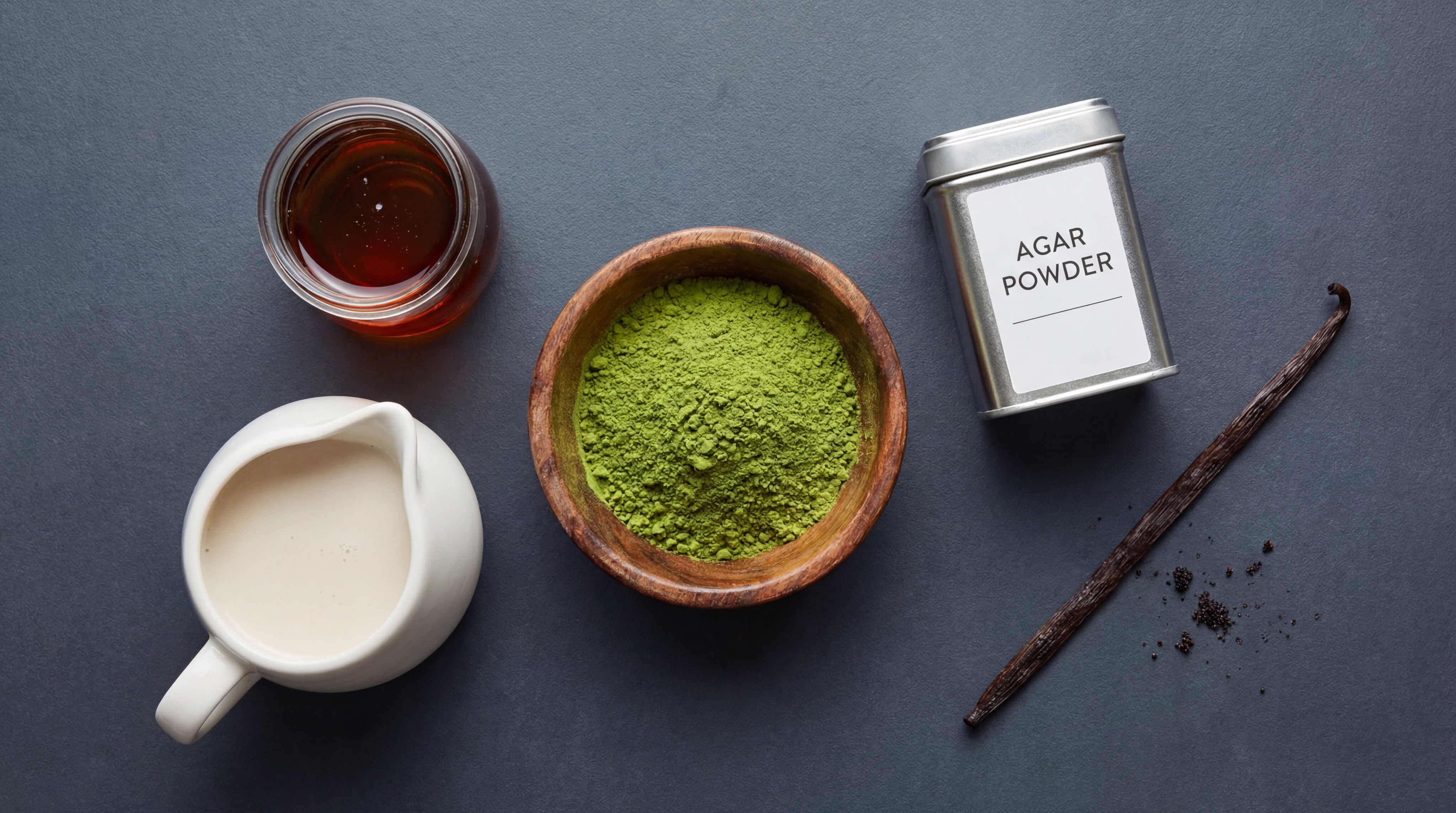
Constructing a balanced jelly drink requires five core components: a gelling agent, a sweetener, a plant-based lipid source, high-quality tea, and purified water. For those learning how to make matcha jelly without gelatin , the quality of each individual ingredient directly contributes to the clarity of the tea notes and the silkiness of the final beverage.
Selecting the Right Plant Milk
The choice of milk is critical because the fat content and natural sweetness of the liquid will determine how the earthy notes of the tea are perceived. But that’s not all; certain milks like oat or cashew offer a much better “cling” to the jelly cubes than thinner options like almond or rice milk.
- Oat milk: Best for creaminess and natural sweetness.
- Cashew milk: Excellent for a neutral, nutty finish.
- Soy milk: Traditional choice for high protein content.
- Coconut milk: Adds a tropical, floral dimension.
Choosing Vegan Sweeteners Wisely
To keep the recipe strictly plant-based while maintaining a clean flavor, you should avoid refined sugars that may have been processed with bone char. The best part? Natural liquid sweeteners like maple or agave syrup integrate seamlessly into the agar base without crystalizing during the cooling phase.
- Maple syrup: Complements the earthy tea notes.
- Agave nectar: Provides a neutral, high-clarity sweetness.
- Monk fruit: Ideal for low-calorie or keto applications.
- Rice syrup: Offers a thick, viscous mouthfeel.
The Importance of Water Quality
Since water makes up the vast majority of the jelly’s volume, any impurities or minerals can interfere with the delicate catechins in the tea. Interestingly, hard water can lead to a cloudy appearance and a muted flavor profile that fails to do justice to high-grade powders.
- Use reverse osmosis or carbon-filtered water.
- Ensure a neutral pH level for optimal color.
- Avoid softened water with high sodium content.
- Monitor temperature for perfect tea infusion.
Key Takeaway: High-quality supporting ingredients like oat milk and filtered water are essential for showcasing the premium nature of the tea and the texture of the jelly.
Component | Standard Vegan Choice | Function in Recipe |
|---|---|---|
Base Liquid | Filtered Water | Dissolves agar and hydrates tea. |
Gelling Agent | Agar-Agar Powder | Provides structural chew and bounce. |
Sweetener | Agave or Maple | Balances tea bitterness and adds gloss. |
Creamer | Oat or Cashew Milk | Provides lipid body and smooth finish. |
Strategic ingredient selection allows for a cleaner label and an improved nutritional profile, which are high-value selling points in the modern B2B beverage market.
6. How do you master the step-by-step preparation process?
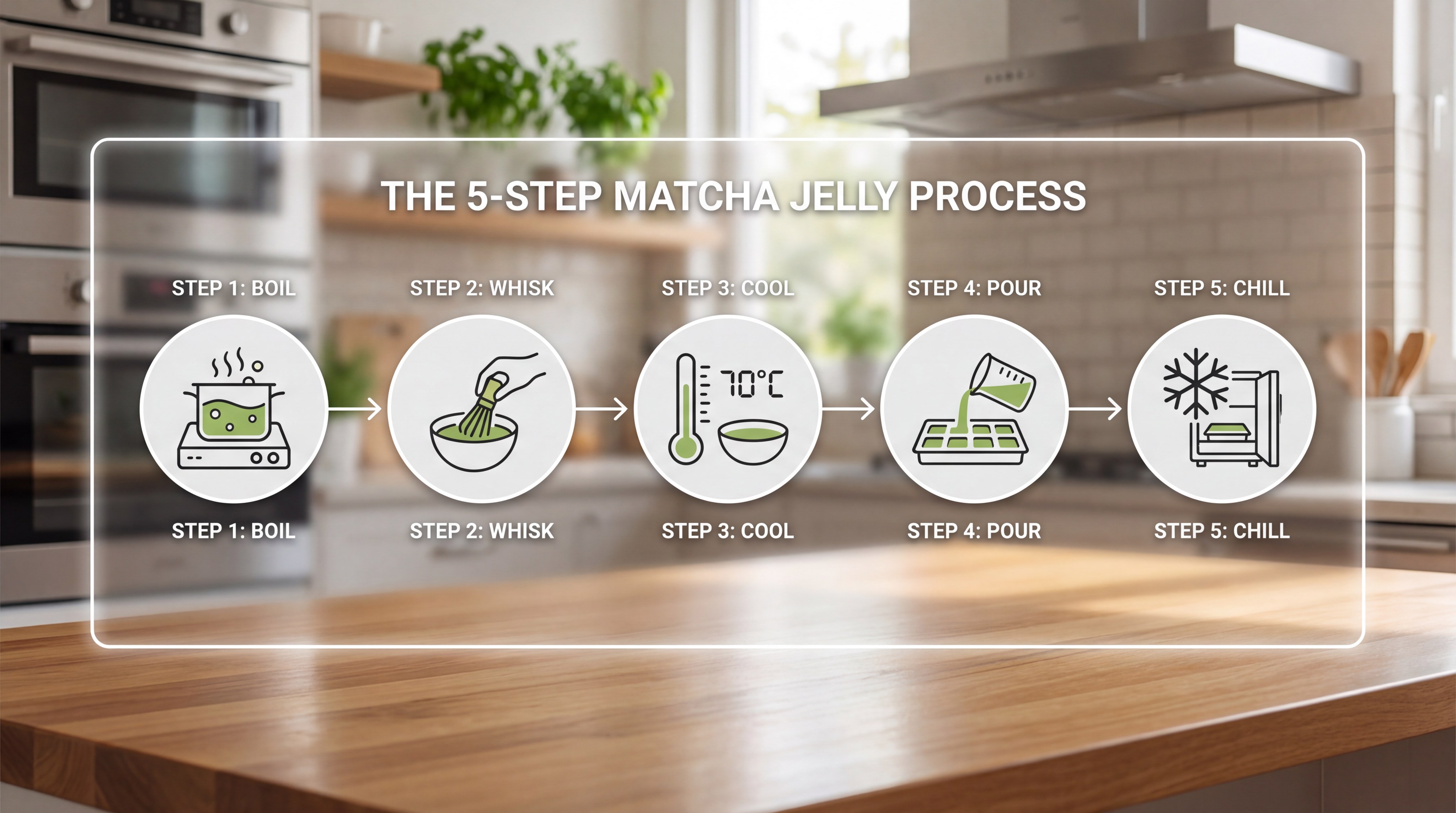
Mastering the preparation involves a specific sequence of heating, tempering, and cooling to ensure that the antioxidants are preserved while the gelling agent is fully activated. Most errors in how to make matcha jelly without gelatin occur during the integration phase, where improper temperature management leads to clumping or color loss.
Stage 1: Thermal Activation
You must begin by hydrating the agar powder in cold water before bringing the solution to a precise boil to ensure the long-chain molecules are fully expanded. Think about it: skipping the cold-mix step almost always results in “fish-eye” clumps that ruin the texture of the jelly.
- Whisk vigorously until the powder is invisible.
- Heat on a medium-high flame to avoid scorching.
- Maintain the boil for exactly 120 seconds.
- Stir constantly to ensure uniform heat distribution.
Stage 2: Tempering and Infusion
Once the agar base is ready, it is vital to lower the temperature slightly before introducing the tea powder to prevent the destruction of heat-sensitive flavor compounds. Believe it or not, boiling the tea itself is the fastest way to create an unpleasantly bitter and dull-looking product.
- Cool the agar base to approximately 70°C.
- Sift the powder into a small amount of warm water first.
- Slowly fold the tea paste into the cooling agar base.
- Use a bamboo whisk or milk frother for a smooth mix.
Stage 3: Solidification and Cubing
The final stage requires a shallow tray to ensure quick, even cooling, which helps maintain the vibrant green hue by minimizing the time the tea is exposed to ambient heat. Look at it this way: the faster the jelly sets, the more of the fresh, grassy aroma you will retain in the final cube.
- Pour into a stainless steel eighth-sheet pan.
- Let sit at room temperature for 10 minutes.
- Refrigerate for at least one hour for maximum firmness.
- Use a sharp, wet knife to cut precise 1cm cubes.
Key Takeaway: Success lies in the “70°C rule”—boiling the agar for activation but cooling the base before adding the tea to preserve its delicate flavor and color.
Phase | Target Action | Critical Metric |
|---|---|---|
Hydration | Mix Agar + Cold Water | No visible clumps before heating. |
Activation | Rolling Boil | Maintain 100°C for 2 full minutes. |
Infusion | Tempering + Whisking | Base must be at 70°C before tea add. |
Setting | Room Temp → Fridge | 1 hour total for firm structure. |
Adhering to a standardized process flow ensures that every batch of jelly produced meets the high-quality benchmarks required for professional beverage service.
7. What are the health benefits of this antioxidant-packed beverage?
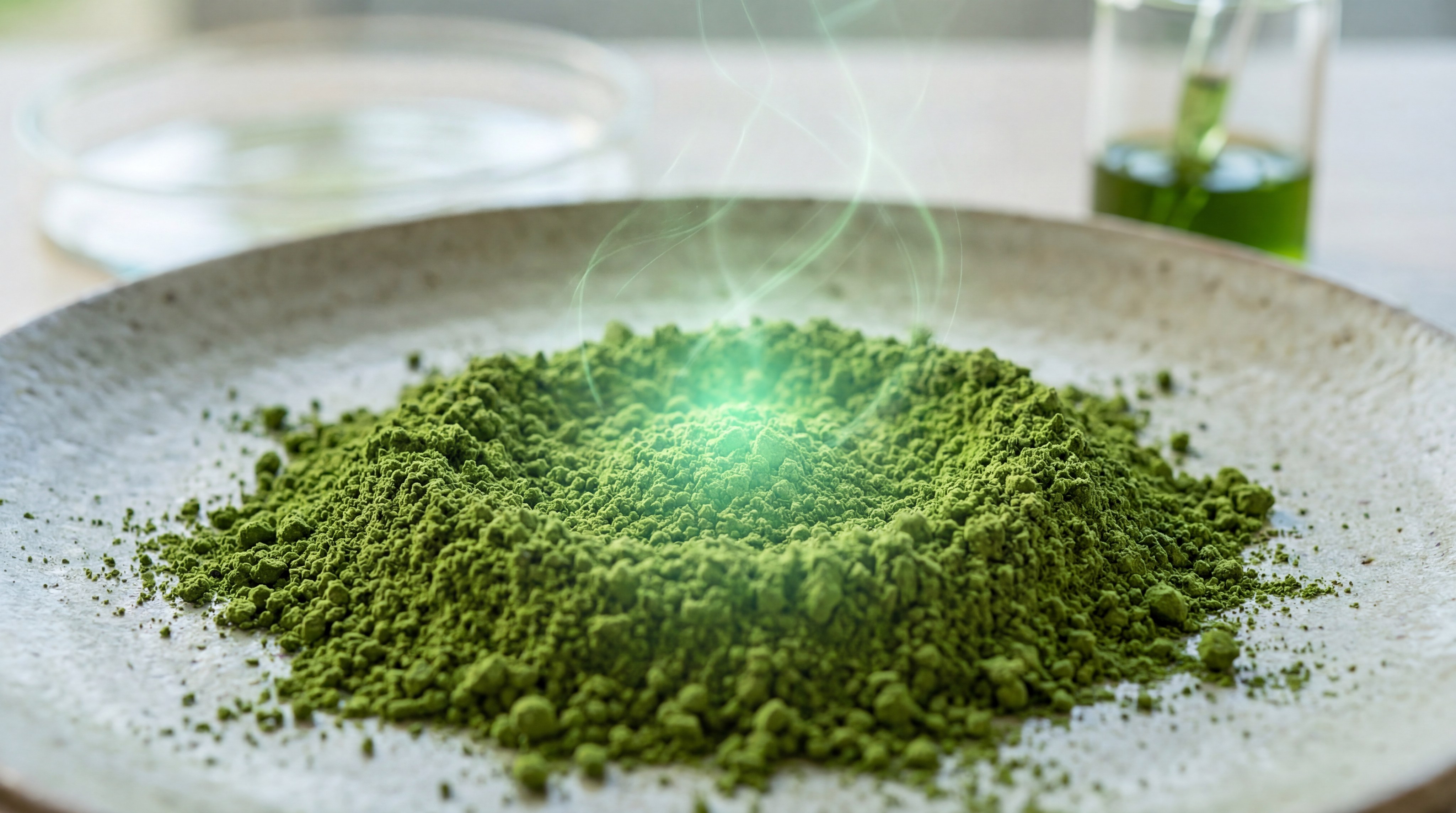
This drink serves as a functional powerhouse, delivering a concentrated dose of catechins, amino acids, and prebiotic fiber in a highly bioavailable format. When consumers ask how to make matcha jelly without gelatin , they are often looking for the nutritional advantages of a whole-leaf beverage that supports metabolic health and cognitive function.
High Density of EGCG and Catechins
Because this recipe utilizes stone-ground leaves rather than a steeped infusion, you are consuming the entire nutritional profile of the plant, including the potent antioxidant EGCG. Check out the comparison in our article on Matcha Jelly vs. Green Tea: Key Health Benefits to see why the jelly format is so effective.
- Supports cardiovascular health and circulation.
- High ORAC (Oxygen Radical Absorbance Capacity) score.
- Aids in the neutralization of harmful free radicals.
- Promotes natural skin radiance through chlorophyll.
L-Theanine for Cognitive Focus
One of the most valuable aspects of high-quality tea is the presence of L-theanine, an amino acid that promotes relaxation without drowsiness, perfectly balancing the caffeine content. Actually, this “calm alertness” is why the drink has become a favorite for mid-afternoon productivity boosts in professional environments.
- Reduces the “jitters” associated with coffee.
- Improves sustained attention and focus.
- Supports healthy stress management.
- Enhances the alpha-wave activity in the brain.
Prebiotic Fiber from Agar-Agar
A significant but often overlooked benefit of switching to a vegan gelling agent is the inclusion of seaweed-derived fiber, which serves as a prebiotic for beneficial gut bacteria. The best part? This makes the drink a digestive-friendly option that aligns with the growing “gut-health” consumer trend.
- Zero-calorie bulking agent for satiety.
- Supports healthy bowel regularity.
- Acts as a substrate for probiotic growth.
- Completely free from common animal-based allergens.
Key Takeaway: The combination of whole-leaf tea nutrients and seaweed-derived fiber creates a functional beverage that supports both mental clarity and digestive health.
Nutrient | Function | Consumer Value |
|---|---|---|
EGCG | Powerful Antioxidant | Anti-aging and metabolic support. |
L-Theanine | Amino Acid | Sustained focus and stress relief. |
Chlorophyll | Natural Detoxifier | Aesthetic appeal and nutrient density. |
Agar Fiber | Prebiotic | Digestive health and satiety. |
Marketing these functional benefits allows businesses to position the jelly drink as a health-forward “superfood” beverage rather than just a simple sweet treat.
8. How can you customize your matcha jelly for different flavors?
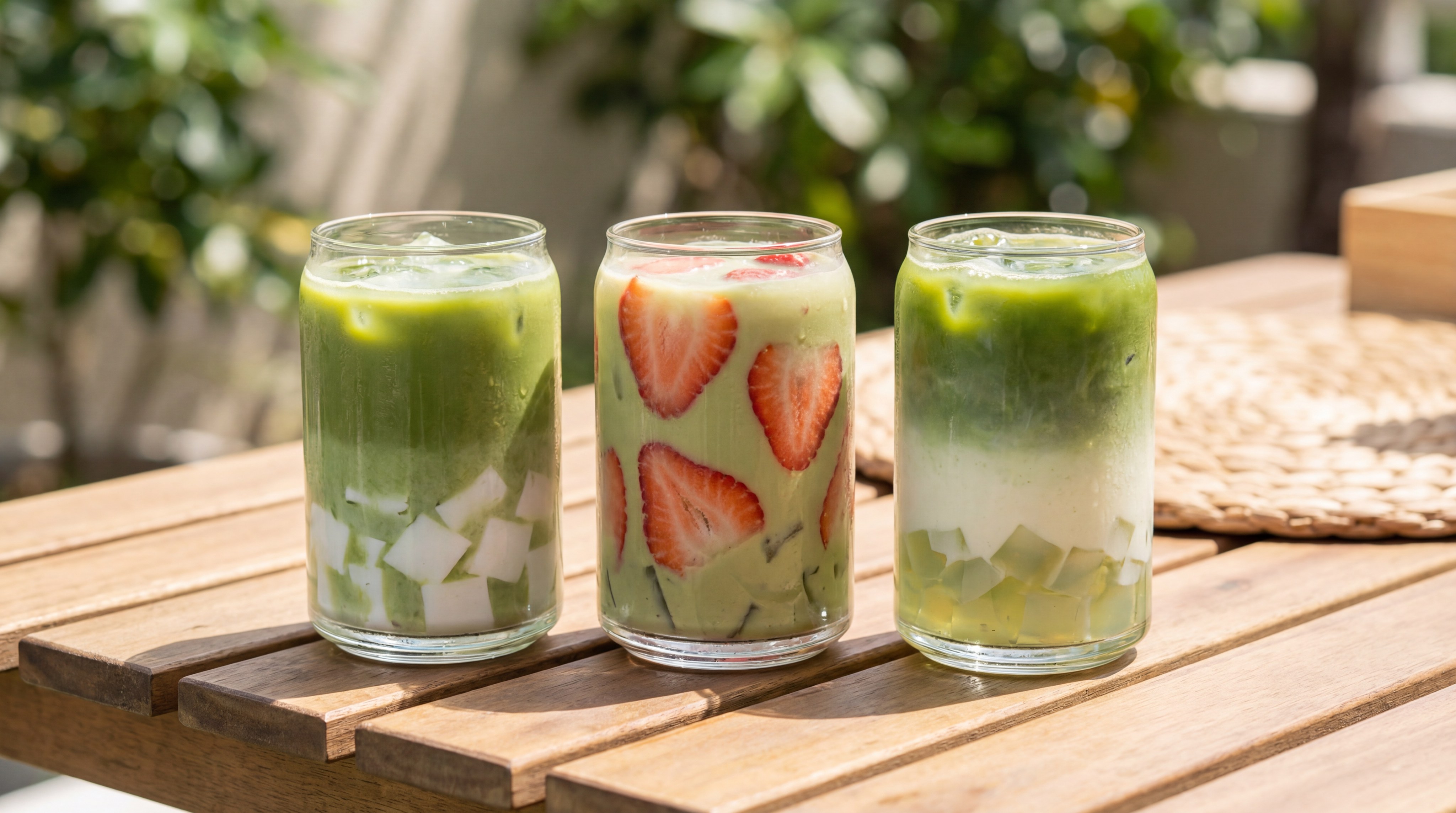
Once the core technique is mastered, the jelly can be infused with secondary flavors or layered with complementary textures to create a signature menu item. Knowing how to make matcha jelly without gelatin provides the technical foundation to experiment with various plant-based infusions that can be tailored to seasonal marketing campaigns.
Seasonal Fruit and Floral Infusions
By adding a small amount of floral water or fruit reduction to the agar base, you can create a complex, multi-dimensional flavor profile that appeals to adventurous palates. For instance, many successful cafes utilize a Delicious Low-Sugar Matcha Jelly Recipe for Vegans as a base for strawberry or lavender variants.
- Rose water: Complements the floral notes of tea.
- Strawberry puree: Creates a “Matcha-Berry” aesthetic.
- Yuzu juice: Adds a bright, citrusy acidity.
- Lavender: Promotes a relaxing, aromatic experience.
Layering for Visual Complexity
The high setting temperature of agar allows you to pour multiple layers of different flavored jellies on top of one another without them melting into each other. Think about it: a tri-layer jelly of coconut, matcha, and black sugar creates a stunning visual that justifies a premium price point.
- Wait for each layer to set for 5 minutes.
- Score the surface slightly to help layers bond.
- Use contrasting colors for maximum impact.
- Maintain consistent thickness for each layer.
Texture Additions and Toppings
While the jelly provides the primary chew, adding secondary elements like toasted seeds or fresh fruit can enhance the overall sensory experience of the drink. Look at it this way: the interplay between the bouncy jelly and a crunchy topping creates a more sophisticated mouthfeel that keeps customers engaged.
- Toasted sesame seeds for a nutty crunch.
- Fresh pomegranate arils for a burst of juice.
- Whipped coconut cream for a decadent finish.
- Shaved dark chocolate for an indulgent twist.
Key Takeaway: The structural stability of agar-agar makes it the perfect vehicle for creative layering and flavor infusions, allowing for endless menu variations.
Customization Type | Example | Visual Result |
|---|---|---|
Floral | Lavender Infusion | Soft Purple + Deep Green |
Citrus | Yuzu/Lemon Zest | Bright, Zesty Highlights |
Creamy | Coconut Milk Base | Opaque, Silky White Layers |
Offering a customizable menu based on a single high-quality jelly preparation increases operational efficiency while meeting the consumer’s desire for personalization.
9. What are the common mistakes when making vegan jelly?
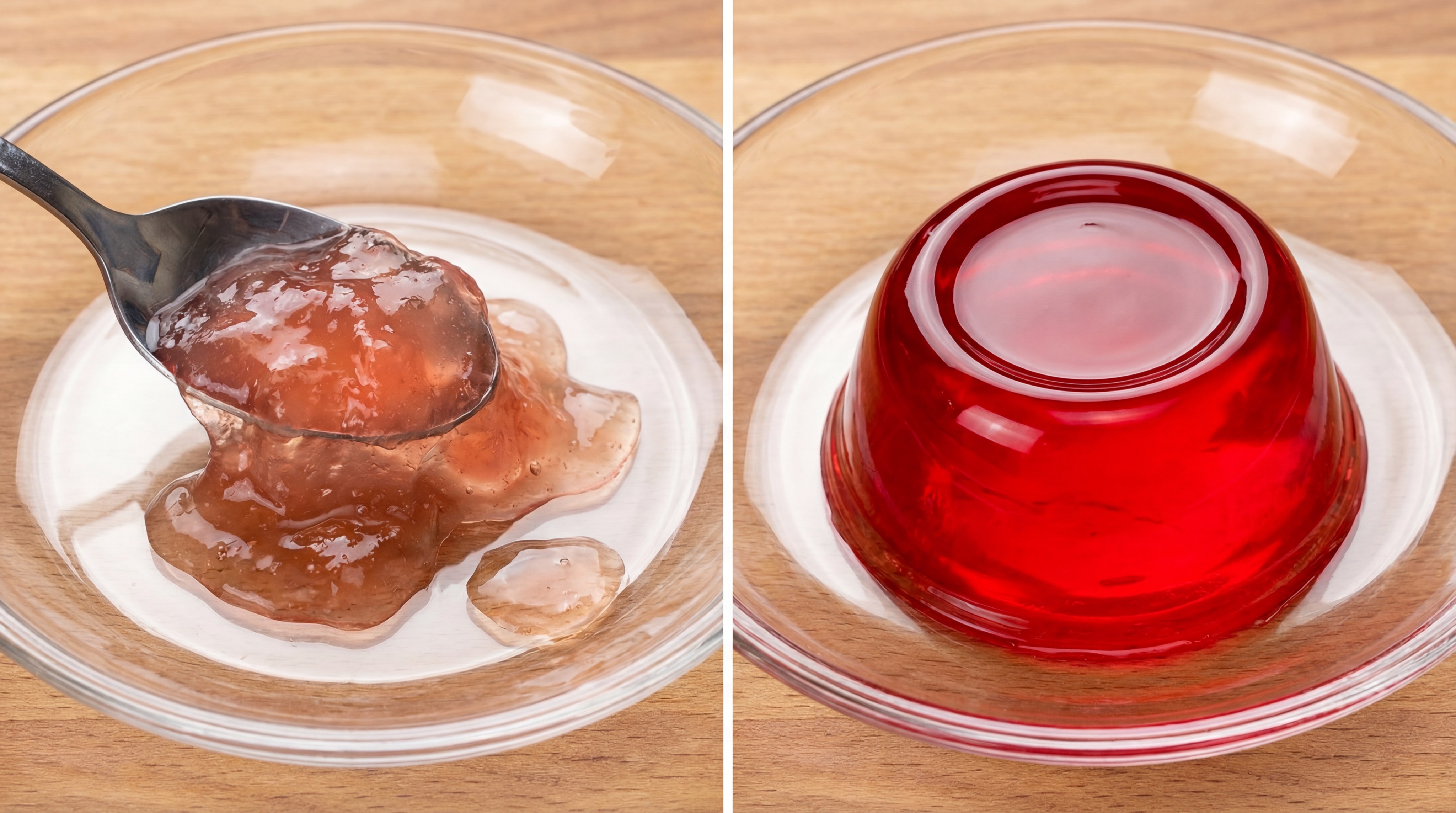
The most frequent failures in plant-based jelly production stem from a misunderstanding of how agar reacts to acidity, temperature, and moisture levels. When troubleshooting how to make matcha jelly without gelatin , it is important to realize that plant-based gelling agents behave very differently than the animal-based products most cooks are accustomed to.
The Problem of “The Heat Gap”
As previously mentioned, the most common reason for a failed set is simply not reaching the required boiling point for long enough to activate the seaweed polymers. Here is the kicker: even if the water looks hot, if it hasn’t reached a true 100°C boil for at least 90 seconds, the jelly will remain a liquid as it cools.
- Use a calibrated digital thermometer.
- Watch for the specific “rolling” bubble pattern.
- Account for higher altitudes where water boils lower.
- Do not stop stirring during the boiling phase.
Acidity and Enzyme Interference
Certain ingredients, particularly highly acidic fruits or specific enzymes found in fresh pineapple, can break down the molecular bonds of the agar. Interestingly, if you are planning to add citrus or acidic fruit pieces to your drink, you must adjust the agar concentration upward to compensate for this weakening effect.
- Limit acidic juice to less than 10% of total volume.
- Use zest instead of juice for flavor without acidity.
- Increase agar by 20% when working with citrus.
- Test small batches when introducing new fruit.
Syneresis and “Weeping” Jellies
Syneresis, or the leaking of liquid from the gel, occurs when the jelly is either over-concentrated or has been stored for too long in an environment with fluctuating temperatures. The best part? You can minimize this by using a small amount of sugar or syrup, which helps hold the moisture within the gel matrix.
- Avoid freezing the jelly cubes at all costs.
- Store in an airtight container with minimal air gap.
- Consume within 3-4 days for peak texture.
- Use liquid sweeteners to improve water retention.
Key Takeaway: Precise temperature control and an awareness of ingredient interactions (like acidity) are the keys to avoiding common “failed set” scenarios.
Mistake | Consequence | Professional Solution |
|---|---|---|
Under-Boiling | Jelly fails to set / remains liquid. | Maintain rolling boil for 2+ minutes. |
High Acidity | Weak, crumbly, or watery texture. | Increase agar ratio or reduce acid. |
Freezing | Irreversible “weeping” and loss of chew. | Store at constant 4°C (never freeze). |
Understanding these technical pitfalls allows for a more robust quality control process, ensuring that your vegan jelly drink remains a consistent, premium offering.
10. Why should you try this recipe for your next afternoon boost?
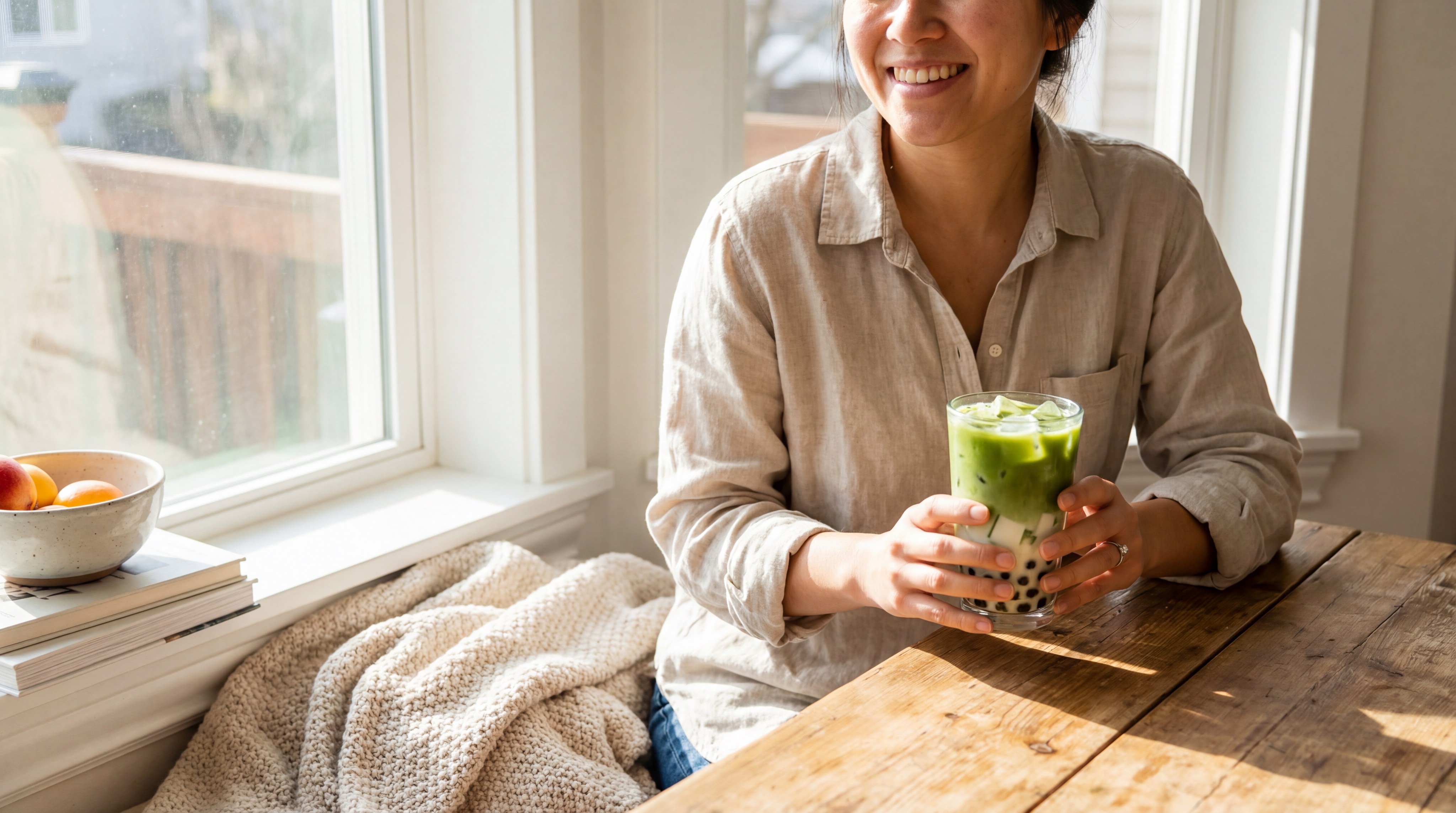
This Matcha Jelly Drink is the perfect solution for those seeking a clean, high-performance beverage that provides sustained energy without the crash of sugar-laden sodas or heavy coffee. Mastering how to make matcha jelly without gelatin is more than just a culinary skill; it is a commitment to providing a sophisticated, health-conscious ritual that respects both the environment and the body.
A Ritual of Mindfulness and Energy
The preparation of the jelly and the assembly of the drink encourage a moment of focus and intention, mirroring the traditional Japanese tea ceremony but in a modern, playful format. Interestingly, the tactile experience of the jelly combined with the rich umami of the tea creates a sensory “reset” that is ideal for the modern professional.
- Encourages a break from the digital workspace.
- Provides a multi-sensory experience (visual/texture).
- Connects the consumer to artisanal tea traditions.
- Offers a sense of accomplishment through preparation.
Sustainable and Ethical Consumption
By choosing a 100% vegan recipe, you are supporting a more sustainable food system that reduces reliance on industrial animal agriculture. Think about it: every plant-based choice contributes to a lower carbon footprint and a cleaner label for your personal or commercial kitchen.
- Seaweed is a highly renewable, low-impact resource.
- Organic tea supports biodiversity and soil health.
- Plant milks utilize significantly less water than dairy.
- Minimal waste through precise batch preparation.
The Ultimate Functional Beverage
Whether you are a cafe owner looking for a high-margin specialty drink or an enthusiast seeking a better way to consume green tea, this recipe delivers on every front. The reality is that the combination of antioxidants, focus-enhancing amino acids, and prebiotic fiber makes this one of the most functional drinks available today.
- High perceived value for premium menu pricing.
- Unique selling proposition for health-conscious brands.
- Easy to prep ahead for fast service.
- Universally appealing to various dietary needs.
Key Takeaway: This recipe offers a rare combination of ethical production, functional health benefits, and a superior sensory experience, making it the ideal choice for a modern afternoon boost.
Recipe FAQs
Can I use agar flakes instead of powder?Yes, but you must adjust the volume because flakes are much less dense than concentrated powder. Generally, you will need to use approximately three times the volume of flakes to achieve the same setting strength as one unit of powder.
How long does the matcha jelly stay fresh?The jelly will maintain its optimal “QQ” texture and vibrant color for approximately 3-4 days when stored in an airtight container in the refrigerator. After this period, the tea may begin to oxidize, and the jelly may start to release excess moisture through syneresis.
Is it safe for children?Absolutely, provided the jelly is cut into small enough cubes to prevent any potential choking hazards common with chewy toppings. It serves as an excellent low-sugar alternative to store-bought gummy snacks or high-fructose corn syrup beverages.
Why is my jelly cloudy instead of translucent?Cloudiness is usually a sign of using water with a high mineral content or over-whisking the mixture which incorporates too many micro-bubbles. To ensure a glass-like finish, use filtered water and stir the solution gently with a spoon rather than a high-speed whisk during the cooling phase.
Can I make this recipe sugar-free?Yes, the gelling properties of agar-agar are not dependent on sugar, so you can substitute maple syrup with stevia or monk fruit. However, keep in mind that liquid sweeteners contribute to the glossy sheen of the cubes and help prevent the jelly from drying out.
Conclusion
By following this guide, we have successfully addressed the structural challenges of plant-based gelling and provided a professional methodology for creating a premium, antioxidant-rich beverage. At Riching Matcha, we solve the problem of inconsistent quality by providing standardized, stone-milled organic powders that ensure your jellies are always vibrant and full of umami. What we can do for you is streamline your sourcing process, providing the wholesale consistency and technical support needed to scale your beverage program with confidence.
Our Vision: We believe that the future of tea lies in the intersection of ancient tradition and modern functionality, where every sip supports a healthier, more ethical world.
For premium organic powders and wholesale inquiries tailored to your business needs, please contact us today.