
You invest heavily in premium matcha powder, yet results in the cup often turn out bitter, clumpy, or lack that signature crema. Such inconsistency not only ruins a drinking experience but damages the hard-earned reputation of any cafe or brand. Here is the brutal truth. Even fine tea leaves cannot compensate for poor preparation technique or incorrect tools. A solution lies in mastering the bamboo chasen. Learning how to use a matcha whisk properly stands as the single most critical skill for transforming powder plus water into a suspended, frothy masterpiece. This guide walks through professional steps ensuring every bowl served stays velvety, aromatic, and perfectly aerated.
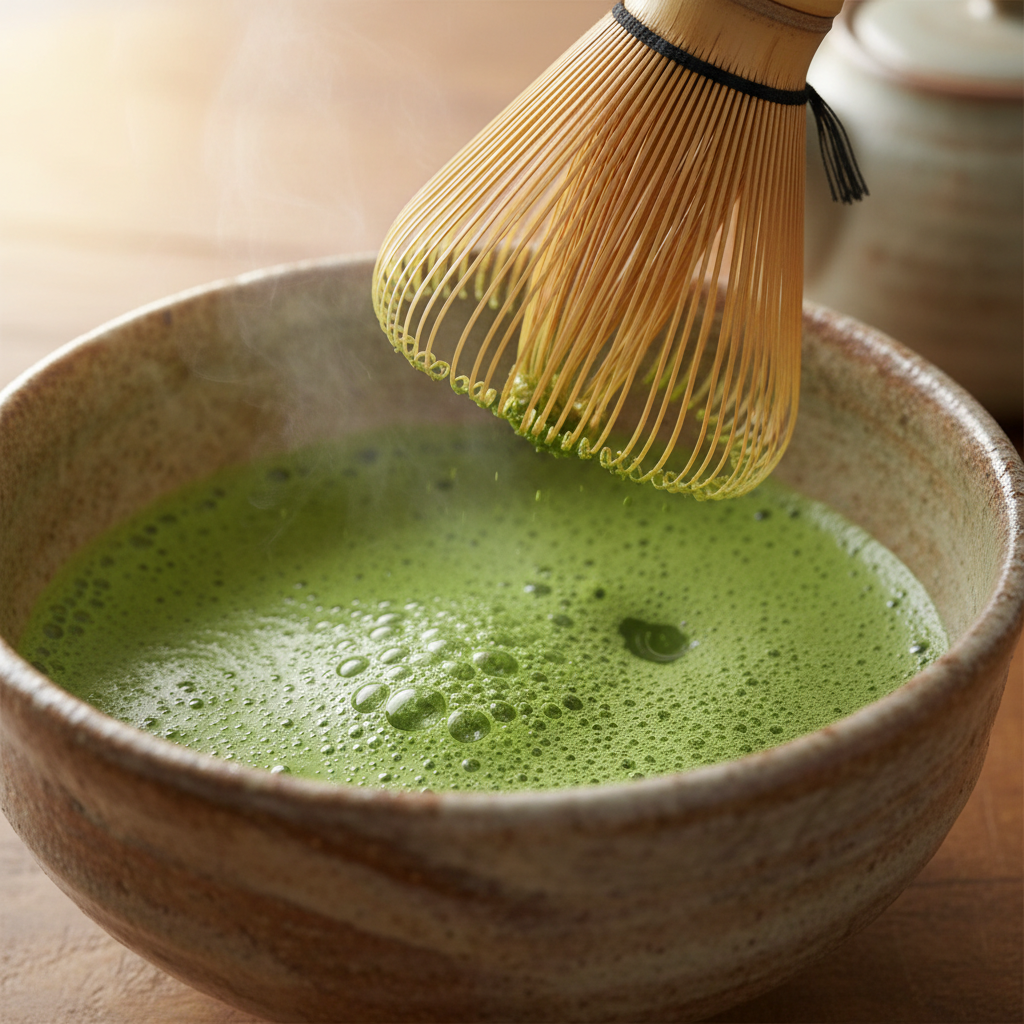
Matcha exists as a suspension rather than a solution like sugar dissolving in coffee. Merely stirring with a spoon causes microscopic particles to clump together before sinking rapidly toward the bowl’s bottom. You might be wondering. Why does a bamboo whisk matter so much? A high count of flexible tines separates individual particles while suspending them in water, creating a smooth mouthfeel metal tools fail to replicate.
Physics behind this process involves creating a colloid where solid particles disperse throughout liquid. Metal spoons or standard wire whisks lack density regarding tines required for breaking surface tension effectively or incorporating air at a microscopic level. Utilizing a traditional bamboo chasen allows independent tines to work simultaneously, shearing liquid and forcing air into a mixture to create a stable lattice of bubbles. Aeration does more than look good; it softens natural astringency found in tea leaves, releasing volatile organic compounds responsible for aroma.
For B2B contexts, serving clump-free, perfectly frothed matcha lattes or ceremonial tea stands as a testament regarding your establishment’s attention toward detail. Customers may not understand hydrodynamics concerning suspension, yet they immediately recognize gritty textures from poorly whisked beverages. Mastering this tool ensures that ceremonial grade matcha sourced retains value within the final cup.
Feature | Spoon/Metal Whisk | Bamboo Chasen | |
|---|---|---|---|
Texture | Grainy, thin, watery | Creamy, suspended, velvety | |
Foam Structure | Large bubbles, unstable | Microfoam, dense, stable | |
Flavor Impact | Sharper, potentially bitter | Mellow, savory, expanded | |
Particle Dispersion | Poor (clumping likely) | Excellent (full suspension) |
How Do You Prepare the Chasen Before Making Tea?
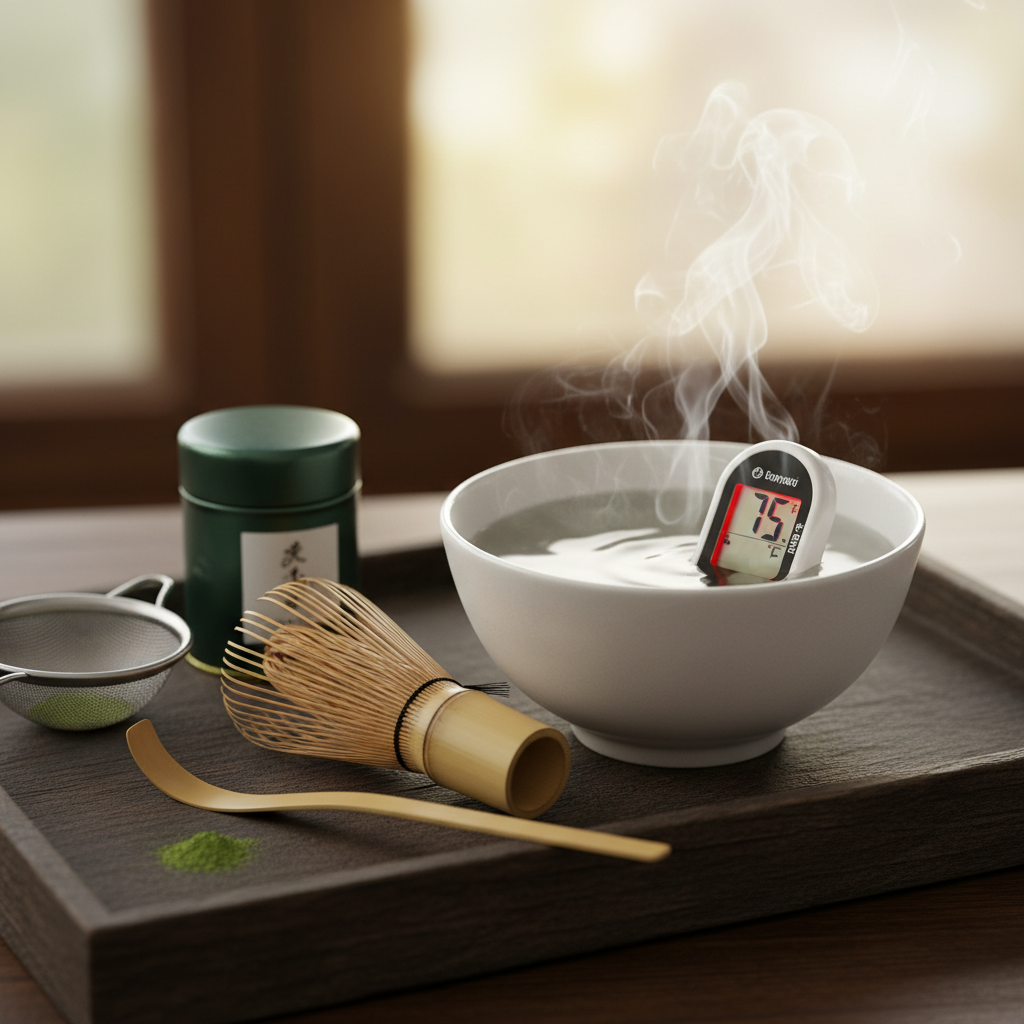
Never use bamboo whisks straight from a box or drawer while they remain brittle or dry. Dry bamboo snaps easily under whisking pressure, leading toward broken tines inside your tea. But here is the kicker. A quick soak changes everything. Submerging tines in warm water for a few minutes softens bamboo, rendering it flexible plus resilient against a bowl’s bottom.
Cellular structures within bamboo expand when hydrated. This hygroscopic property gives chasen its spring-like resilience. Attempting vigorous whisking with a dry tool keeps tines rigid, making them prone toward snapping off upon impact with ceramic bowls. Such negligence destroys equipment and poses physical hazards for customers. Professional tea masters always begin rituals by inspecting whisks then letting them sit in heated water within a tea bowl (chawan).
Pre-warming serves dual purposes: conditioning bamboo and warming bowls, preventing tea temperature from dropping too rapidly during preparation. Simply fill your matcha bowl using warm water then place whisks inside, tines down. Let it sit for roughly 60 seconds up to 2 minutes. Once tips curl slightly feeling soft upon touch, pour out water then dry bowls thoroughly before adding powder.
State | Characteristics | Risk Level | |
|---|---|---|---|
Dry Whisk | Brittle, stiff, tight tines | High (Breakage imminent) | |
Soaked Whisk | Pliable, curved, soft tips | Low (Durable and effective) | |
Cold Water Soak | Moderately flexible | Medium (Less effective than warm) |
What Motion Defines How to Use a Matcha Whisk Properly?
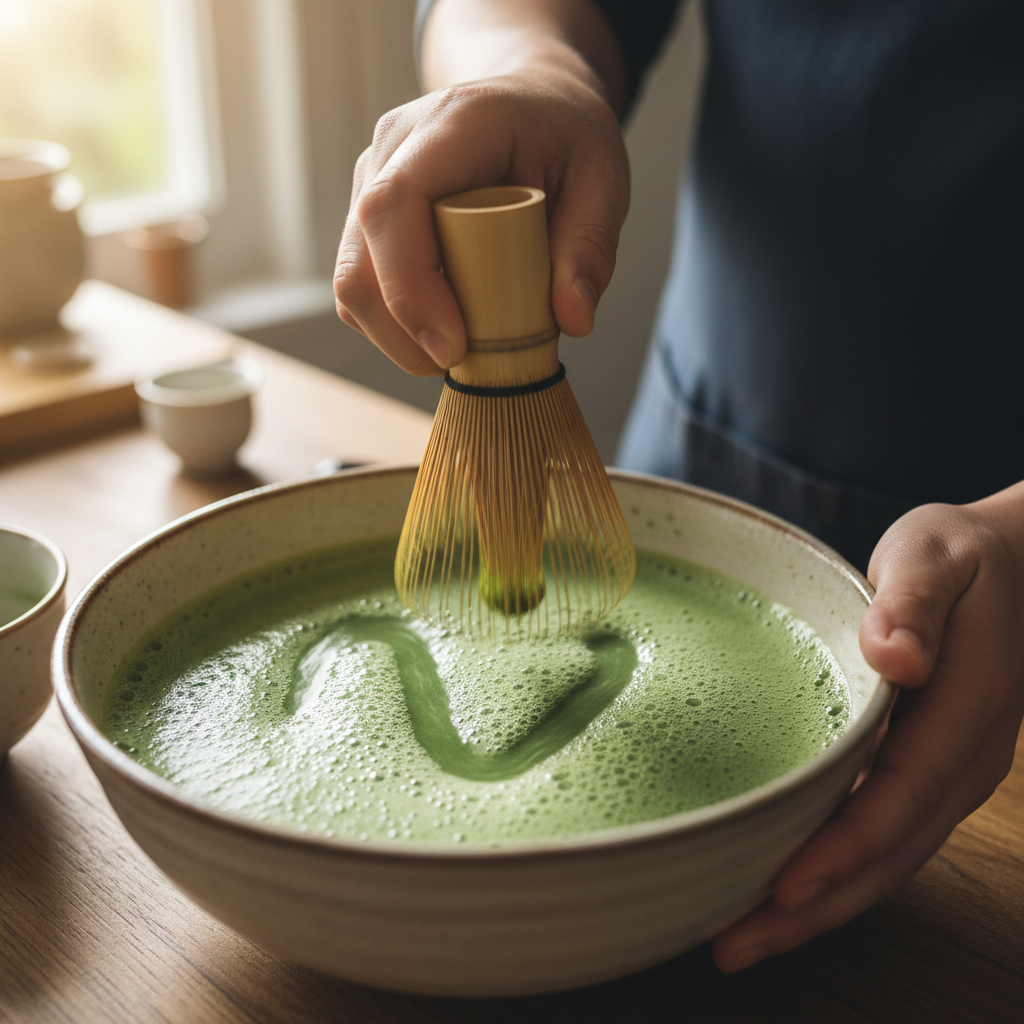
Beginners often make mistakes by stirring matcha in circles, much like mixing batter. Circular motions merely chase powder around bowls without incorporating air. This is where it gets interesting. Generating froth requires abandoning circular motions entirely. Your goal involves agitating water plus tea violently yet in a controlled manner for forcing air into mixtures.
Correct methods involve rapid back-and-forth motions utilizing wrists rather than arms. Imagine tracing letters “W” or “M” repeatedly plus quickly across bowls. This zig-zag pattern creates shear forces within liquids that circular stirring simply cannot achieve. You essentially crash liquid against itself plus bowl walls, trapping air bubbles during this process. Arms should remain relatively stationary while wrists do heavy lifting, acting as rapid pivot points.
Ready for the secret? Keep tines suspended just above a bowl’s bottom. Pressing down creates friction slowing speed while damaging tines against rough ceramics. Suspension allows liquid flow through tines, creating necessary turbulence. It requires practice maintaining this hover, but once mastered, it produces thickest foam with minimal effort.
Motion Type | Result | Suitability | |
|---|---|---|---|
Circular Stirring | No foam, swirling liquid | Mixing juice (Not Matcha) | |
Zig-Zag (W/M) | Thick, stable microfoam | Standard Matcha | |
Pressing Down | Damaged whisk, flat tea | Incorrect Technique |
How Long Should You Whisk to Achieve the Perfect Microfoam?
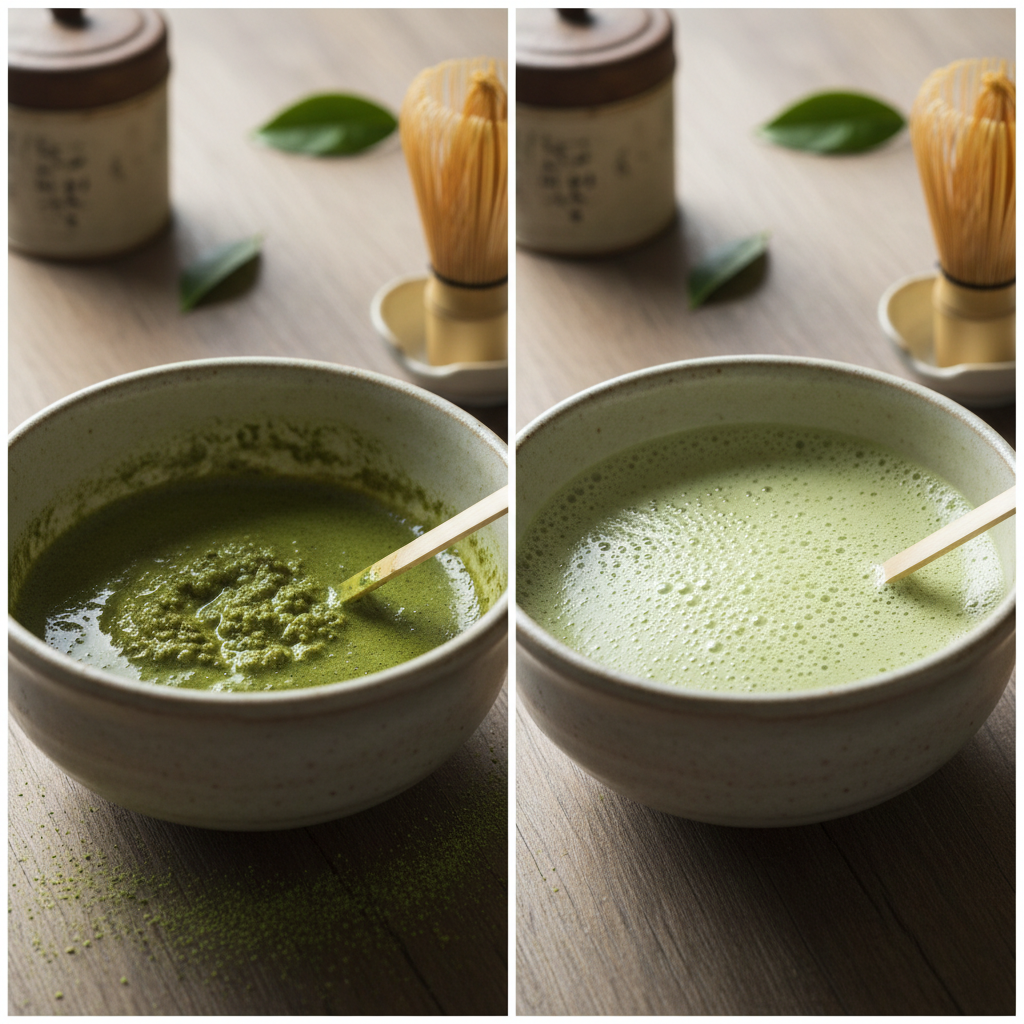
While guides suggest specific times, visual states regarding tea offer better indicators. Generally, vigorous whisking for 15 or 30 seconds suffices for most portions. Here is the bottom line. You look for transformation in surface texture. Large bubbles forming initially must break down into tiny, dense bubbles resembling creamy clouds.
Commercial settings demand efficiency, yet quality cannot suffer sacrifice. Stopping early leaves foam composed of large, soap-like bubbles that pop quickly, revealing dark liquid underneath. Such results appear visually unappealing suggesting amateur preparation. Continue that rapid “M” motion until an entire surface becomes covered in dense, pale green foam obscuring liquid below. This layer acts as a textural lid, trapping aroma within bowls.
Once you achieve thick froth, avoid stopping abruptly. Slow whisking pace then gently lift tools towards surface foam. Think about this. This final step breaks last few large surface bubbles. It leaves smooth, uninterrupted surfaces of jade green looking professional plus appetizing. Transitioning from high-speed aeration toward slow refinement marks skilled tea makers.
Duration | Foam Quality | Texture | |
|---|---|---|---|
Under 15s | Watery, large irregular bubbles | Thin, disappointing | |
15-30s | Dense, uniform microfoam | Creamy, luxurious | |
Over 60s | Foam may stiffen, tea cools | Diminishing returns |
How to Use a Matcha Whisk Properly for Different Grades?
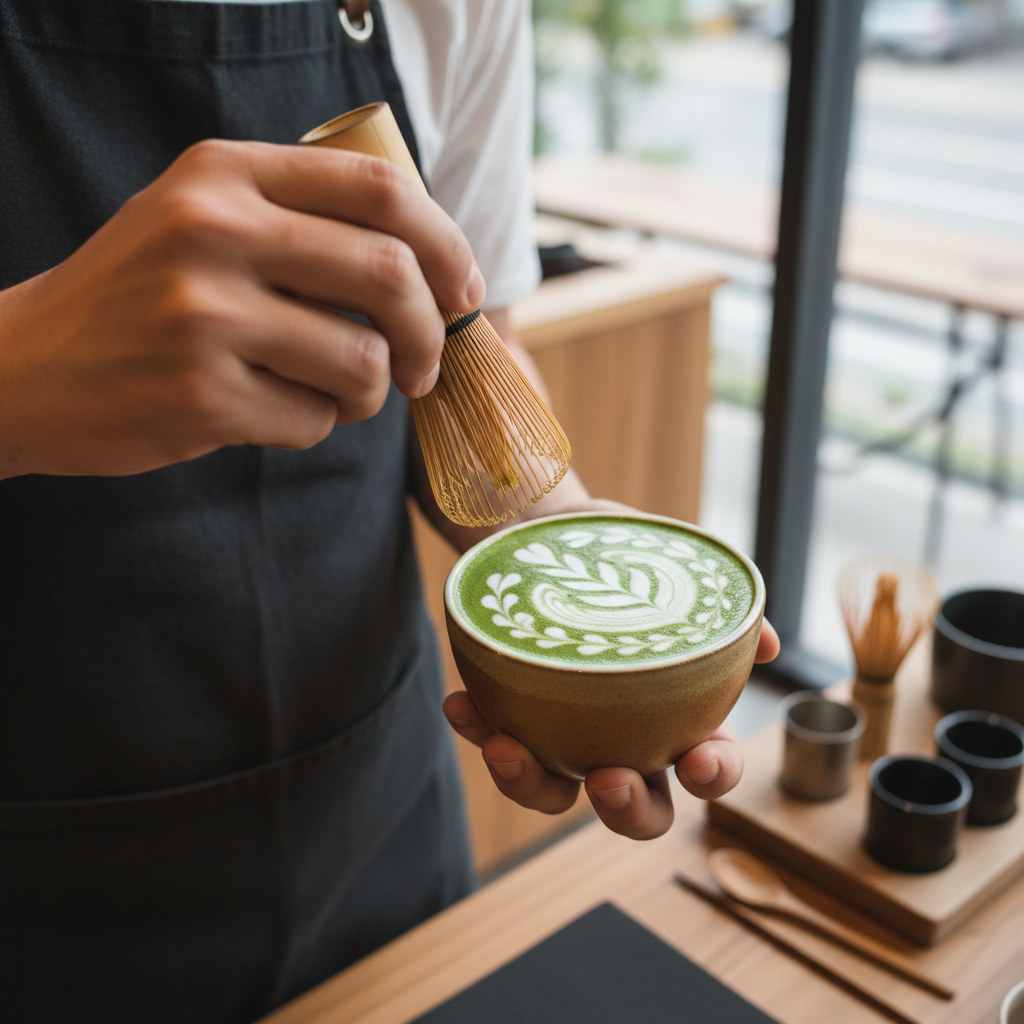
Not every matcha type demands identical preparation. When utilizing premium grade matcha , you typically aim for balanced flavor plus froth suitable for drinking straight. You need to know this. Lower grades prove harder for whisking. Higher quality powder dissolves more readily, while coarser grades might require additional physical agitation for breaking up.
Traditional Japanese tea ceremonies utilize two primary preparation styles: “Usucha” (thin tea) plus “Koicha” (thick tea). Koicha uses significantly higher ratios regarding tea versus water, resulting in consistency similar to warm honey or melted chocolate. For Koicha, avoid rapid “W” motions. Instead, use slow, kneading rotations for blending powder into thick syrup without creating foam. Goals here involve smoothness plus intensity, not aeration.
Conversely, for Usucha or when preparing bases for lattes using wholesale matcha whisk supplies, objectives shift toward volume plus texture. Adjust vigor based upon end products. Latte bases need strength plus dissolution for standing up against milk, while ceremonial bowls require delicacy preserving subtle high notes within tea. Understanding these nuances allows serving wider varieties regarding traditional plus modern beverages.
Preparation | Ratio (Tea:Water) | Whisking Style | |
|---|---|---|---|
Usucha (Thin Tea) | 1:15 (approx. 2g/70ml) | Fast Zig-Zag (Frothy) | |
Koicha (Thick Tea) | 1:1 (approx. 4g/40ml) | Slow Kneading (Smooth) | |
Latte Base | Concentrated | Vigorous Mixing |
How Do You Clean Your Whisk After Use to Prevent Damage?
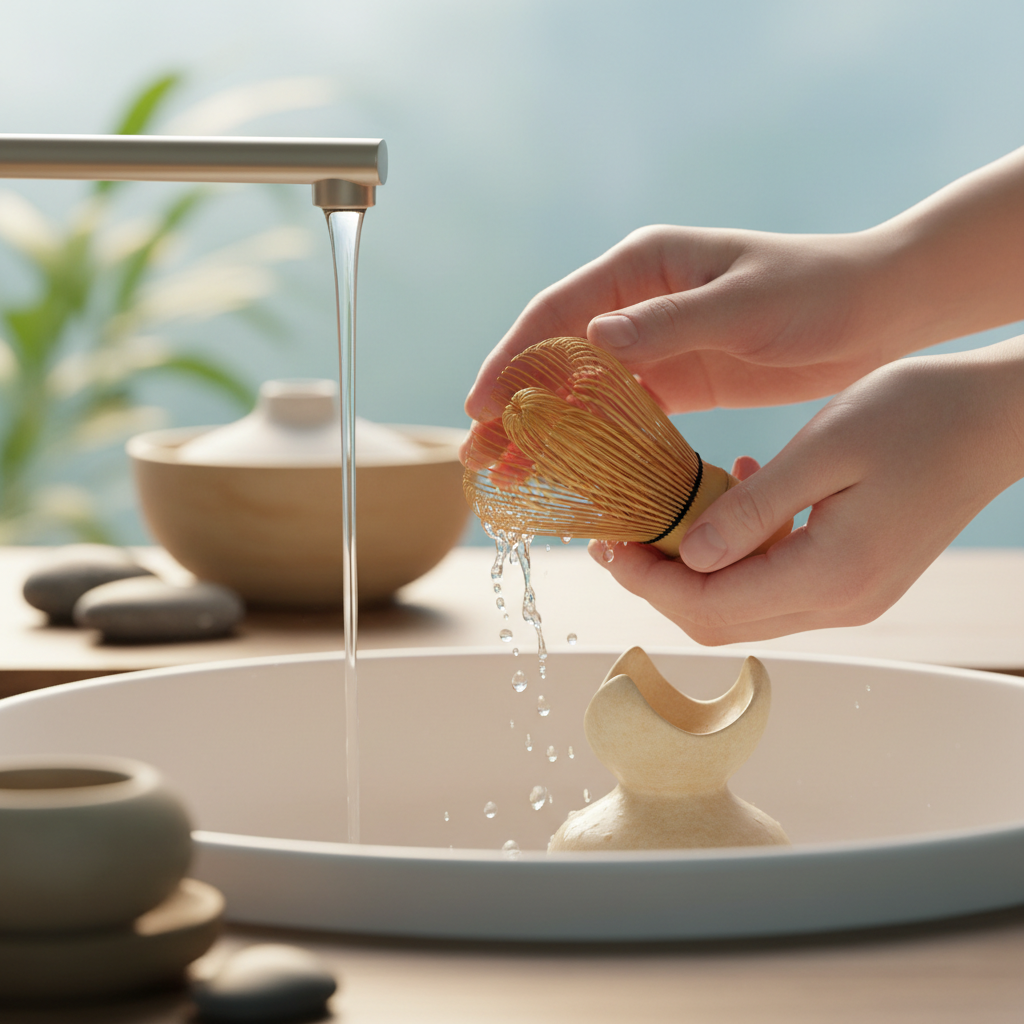
Bamboo remains porous, absorbing tea residue if left sitting. Rinse whisks under warm running water immediately after serving for removing all green traces. But wait, there is more. Never use soap or run it through dishwashers. Detergents strip bamboo of natural oils, causing cracks, or might leave soapy tastes inside your next cup.
Structural integrity regarding chasen depends upon natural moisture content plus oils. Harsh chemicals found in commercial dish soap act as desiccants, drying out bamboo fibers prematurely. Once bamboo becomes too dry, it loses elasticity becoming brittle. Furthermore, because bamboo absorbs liquids, any chemical agent introduced potentially leaches back out into hot water during next tea services, ruining flavor profiles you worked hard creating.
Whisking a bowl containing plain warm water cleans interior tines effectively. This mimics tea-making motions helping dislodge stubborn powder stuck between inner bristles. Here is a pro tip. Visually inspect interior cores regarding whisks (the “ho”) after rinsing. Matcha powder loves hiding in center knots, which leads toward mold growth if ignored. Simple rinses usually suffice, but thoroughness remains key.
Method | Safety for Bamboo | Effectiveness | |
|---|---|---|---|
Dishwasher | Unsafe (Destroys) | High (But damaging) | |
Soap/Detergent | Unsafe (Absorbs) | Moderate | |
Warm Water Rinse | Safe | High (If immediate) |
Why Is Drying Essential in How to Use a Matcha Whisk Properly?
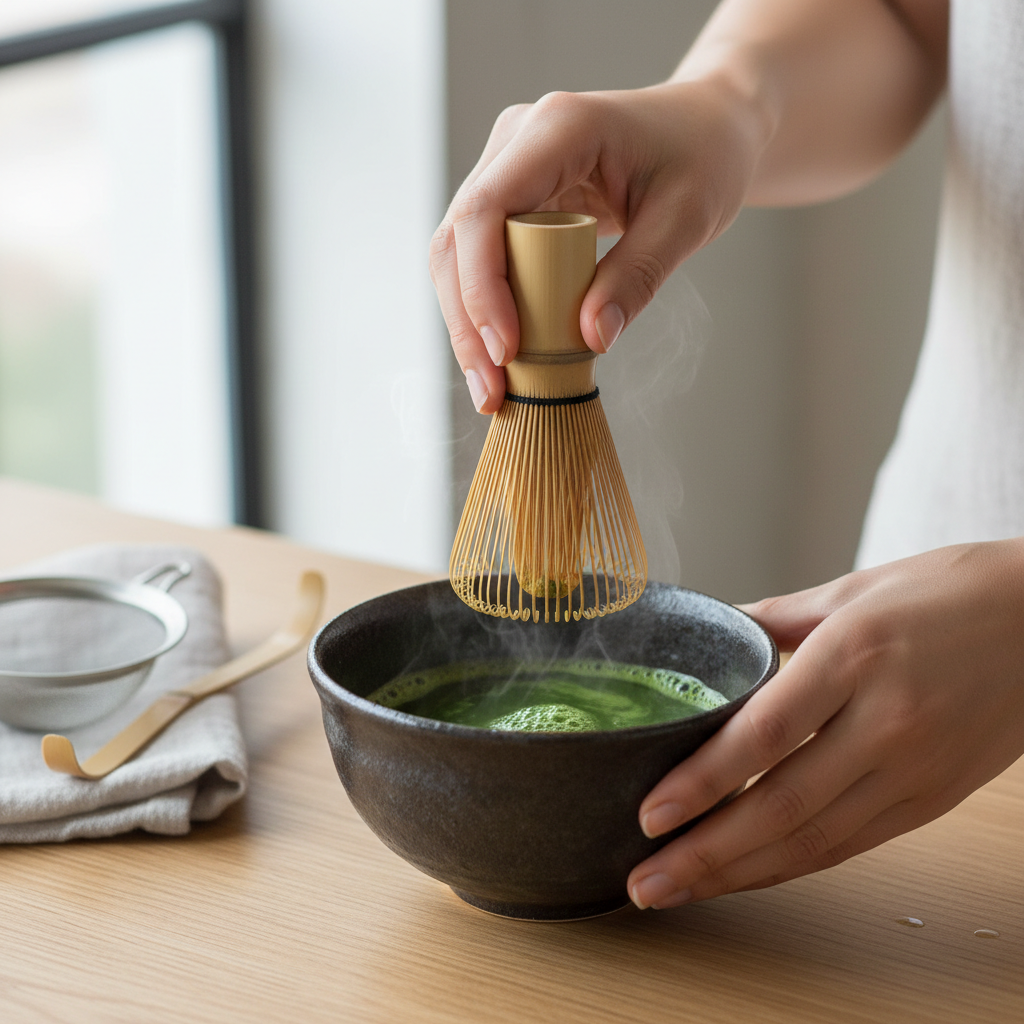
Bamboo stands as organic material retaining moisture. Placing damp whisks back into containers or drawers creates breeding grounds for mold plus mildew. Let’s face it. Finding mold on your whisk represents business costs you must avoid. It requires immediate disposal regarding tools, wasting money plus potentially disrupting service flow.
Microbial growth thrives within dark, damp environments. Complex structures regarding whisks, with many overlapping tines plus central knots, create perfect micro-climates for mold if air cannot circulate freely. Once mold spores penetrate bamboo fiber, they become nearly impossible for eradication without using chemicals rendering whisks unsafe for food use. Therefore, prevention through proper drying acts as sole viable strategies for professional kitchens or cafes.
Gravity helps during drying processes. You want moisture dripping away from handles plus knots, where evaporation happens slowest. Here is the deal. Stand whisks on their base (handle down) in well-ventilated areas if no holder exists. Never store inside plastic cylinders they arrived in; those tubes serve transport packaging only plus trap moisture, guaranteeing moldy whisks within days.
Drying Method | Outcome | Recommendation | |
|---|---|---|---|
Plastic Tube | Mold growth, rot | Never | |
Lying Flat | Warped tines, slow drying | Avoid | |
On Stand (Naoshi) | Perfect shape, fast drying | Best |
How Does Proper Storage Extend the Life of Your Whisk?
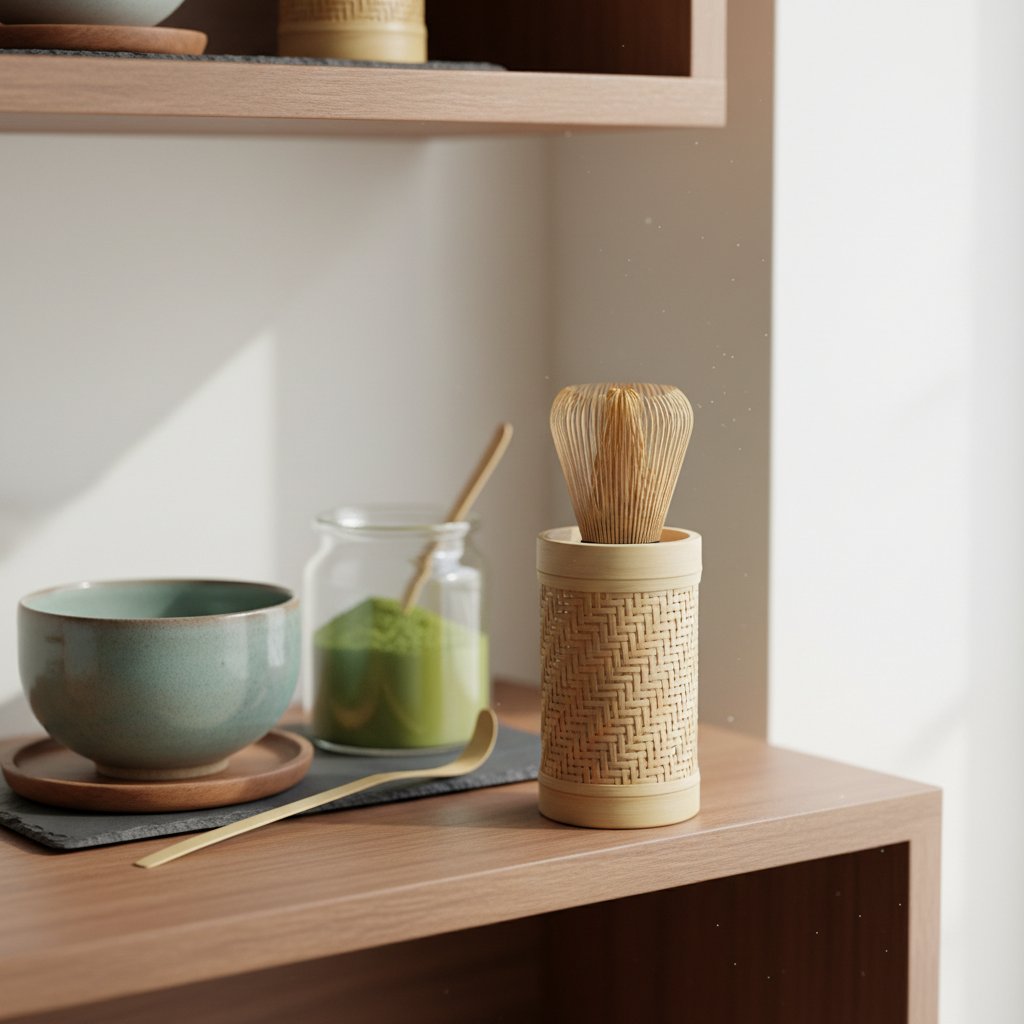
Whisk holders, or Kuse Naoshi, function not just as display pieces but as functional tools maintaining bamboo tine curvature. As whisks dry, bamboo wants for straightening out naturally. Think about this. Is it really necessary? Yes, if you desire consistent results. Porcelain holders shape damp bamboo as it dries, keeping bulbous shapes necessary for effective aeration.
When whisks lose shape, tines bunch together, reducing surface area interacting with liquid. This means working twice as hard for getting half as much foam. In high-volume settings, inefficiency adds up, leading toward barista fatigue plus inconsistent beverages. Placing whisks on holders immediately after cleaning ensures tines remain splayed plus curved, ready for optimal performance on next uses.
For businesses stocking our wholesale matcha whisk options, proper storage demonstrates professionalism toward staff plus customers. It shows you value tools plus understand craft. It significantly extends ROI regarding each unit by doubling or tripling usable lifespan compared with whisks stored improperly in drawers or on counters.
Storage Option | Shape Retention | Protection | |
|---|---|---|---|
Drawer/Loose | Poor (Tines straighten) | Low (Crushing risk) | |
Tabletop (Base) | Moderate | Moderate | |
Whisk Holder | Excellent (Maintains curve) | High |
When Should You Replace Your Chasen for Consistent Results?
Even with best care, bamboo whisks remain consumable items. Over time, tines become brittle, lose tips, or straighten completely, reducing ability for frothing tea. Here is the brutal truth. Using damaged whisks acts as liability. Broken bamboo tips can fall into customer drinks, creating choking hazards plus terrible dining experiences.
Regular inspection forms part regarding professional workflows. Check whisks daily for signs concerning unraveling threads or missing tine tips. As tines thin out or break, you lose mechanical advantages needed for agitating mixtures effectively. You notice it takes longer getting foam, or bubbles appear too large because foam disappears quickly.
Ready for the good part? Replacing whisks feels like upgrades. New bamboo springiness makes whisking effortless again, instantly improving beverage texture. Establish replacement schedules based upon volume. High-volume cafes may need new whisks monthly, while home users might last one year. Always prioritize safety plus texture over squeezing few more uses from dying tools.
Sign of Wear | Consequence | Action | |
|---|---|---|---|
Straight Tines | Poor foam generation | Use Holder / Replace | |
Missing Tips | Safety hazard (splinters) | Replace Immediately | |
Mold/Black Spots | Health risk | Discard |
How Do Tools Enhance How to Use a Matcha Whisk Properly?
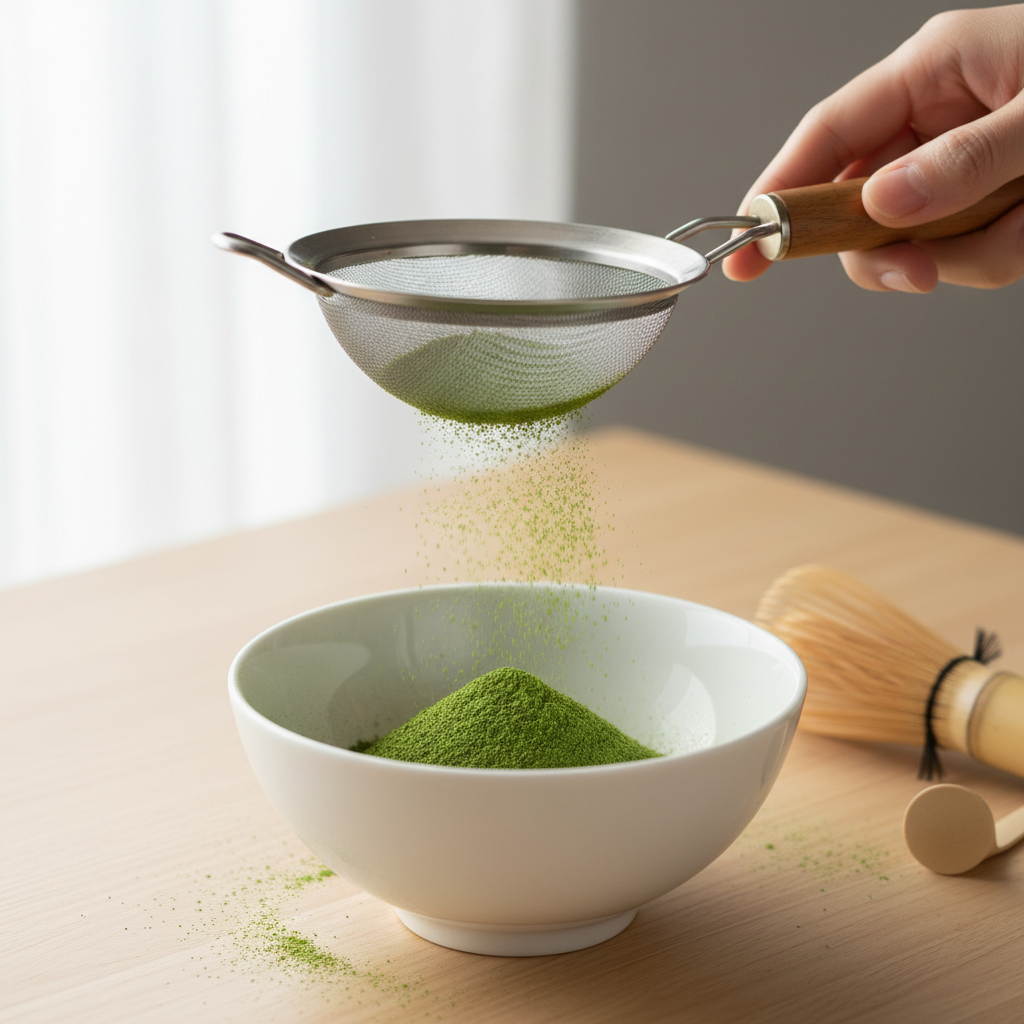
While whisks act as stars, they rely upon supporting actors. Wide-bottomed bowls (Chawan) prove essential for providing enough room for vigorous zig-zag motions without splashing. Look at it this way. Using deep, narrow mugs restricts movement, making it impossible for whisking properly. Correct vessels enable correct techniques.
In addition regarding bowls, fine-mesh sifters remain non-negotiable. Matcha powder proves prone toward clumping due to static electricity plus humidity. Whisking clumps requires excessive force, damaging delicate bamboo tines. Sifting powder into bowls first ensures fine, uniform dust dissolving instantly upon contact with water. This protects whisks while ensuring smoother drinks.
Commitment toward quality becomes visible in your setup. Whether using robust culinary grade matcha for lattes or delicate ceremonial grade, synergy between tool plus product holds keys. To understand our dedication regarding sourcing best tools plus teas for your business, visit our About Us page.
Accessory | Function | Impact on Whisking | |
|---|---|---|---|
Sifter | Aerates/De-clumps powder | Reduces whisking effort/damage | |
Wide Bowl | Contains liquid | Allows full wrist motion | |
Thermometer | Controls heat | Protects bamboo oils from boiling water |
Conclusion
Mastering how to use a matcha whisk properly defines dividing lines between average green tea plus exceptional ones. Preparing tools, perfecting wrist motions, and adhering toward strict cleaning protocols ensures every bowl served reflects premium nature regarding products. B2B clients plus customers alike taste differences technique makes.
At Riching Matcha, we envision markets where quality plus tradition meet efficiency. We support business with not just finest tea leaves, but knowledge for serving them perfectly. Whether needing bulk inventory or expert advice, we remain partners in growth. Contact us today for upgrading tea service plus discovering differences professional tools make.
FAQ
Q1: Can I use a metal whisk instead of a bamboo whisk?No, a metal whisk is generally too harsh for matcha preparation. Metal does not offer the same flexibility or surface area as bamboo tines, often resulting in poor aeration and a lack of the signature microfoam.
Q2: What is the best way to reshape a bent matcha whisk?The most effective method is to use a ceramic whisk holder (Kuse Naoshi). Placing the whisk on this holder while it is still damp after cleaning allows the tines to dry in their original curved shape.
Q3: Can I leave my whisk sitting in water between uses?No, prolonged exposure to moisture can cause the bamboo to rot or warp excessively. It is best to rinse the whisk immediately after use and let it air dry completely.
Q4: How often should a business replace their matcha whisks?For commercial use, inspect whisks daily; replace them when tines break or lose resilience, typically every 1-3 months depending on volume. A compromised whisk creates a safety hazard and inconsistent beverages.
Q5: Is it necessary to sift matcha before whisking?Yes, sifting is highly recommended to remove electrostatic clumps. Sifting the powder ensures that the whisk can dissolve the tea evenly without needing excessive force, protecting the delicate bamboo tines.