
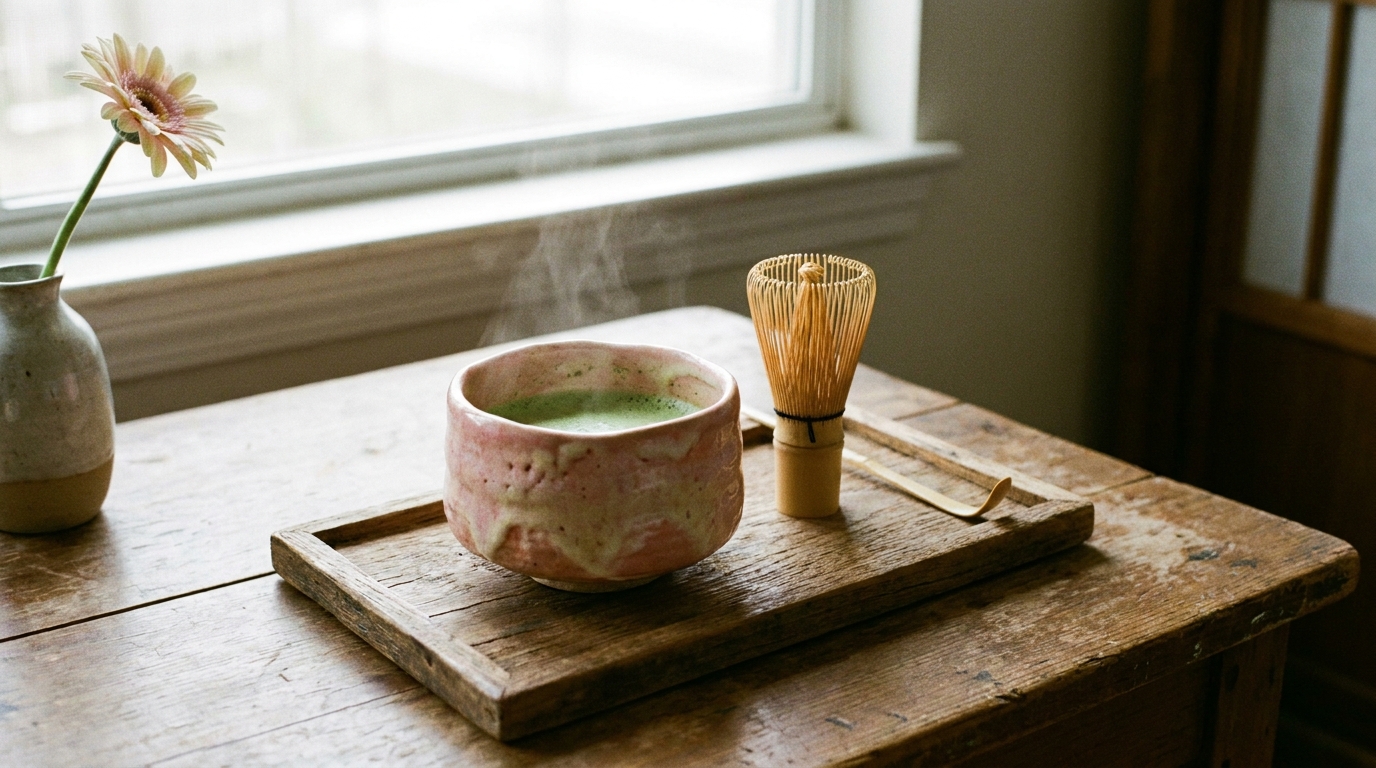
Matcha is far more than a powdered green tea; it is a cultural cornerstone, a meditative practice, and a triumph of botanical engineering. The ritual of preparing matcha, known in Japan as Chanoyu or The Way of Tea, has remained virtually unchanged for over 800 years. At its heart lies the belief that the tools used to prepare the tea are just as vital as the tea leaves themselves.
In the modern context, the “wellness” aspect of matcha is often attributed to its high concentration of L-theanine and EGCG antioxidants. However, true connoisseurs understand that wellness begins before the first sip. The tactile engagement with a hand-carved bamboo matcha whisk, the weight of a ceramic bowl in the palms, and the rhythmic sound of whisking create a “flow state” that reduces cortisol and centers the mind. To achieve this, one must curate a collection of traditional Japanese tea ceremony tools that honor these ancient traditions while meeting modern standards of quality.
As a leading global supplier, Riching Matcha has dedicated decades to bridging the gap between traditional Japanese craftsmanship and the global demand for high-performance tea ware. Whether you are a home enthusiast or looking for bulk matcha accessories for a boutique café, understanding the nuances of these accessories is the first step toward tea mastery.
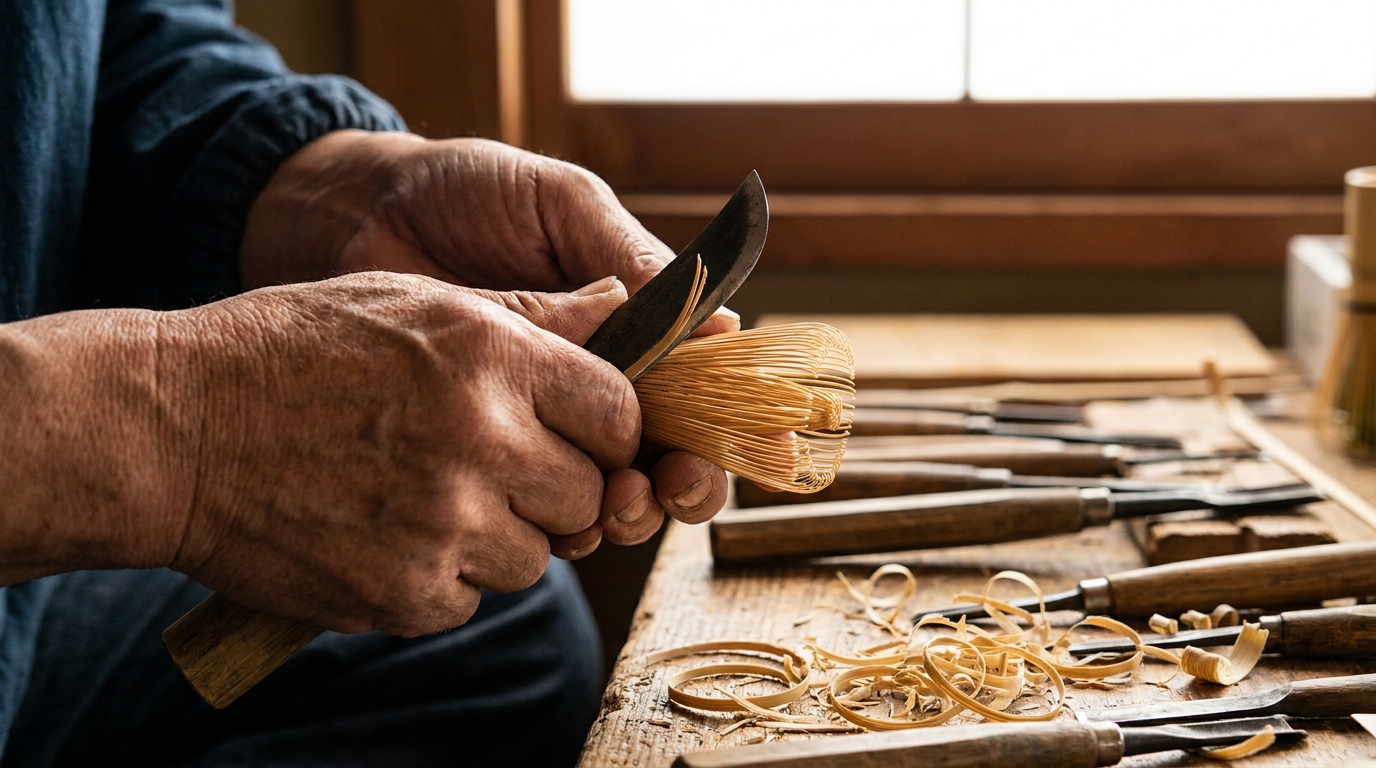
The bamboo matcha whisk, or Chasen, is perhaps the most iconic of all tea tools. It is not merely a stirrer; it is a precision instrument designed to suspend the microscopic particles of stone-ground tencha (matcha) in water while creating a signature micro-foam.
The Anatomy of a Chasen
Every authentic Chasen is carved from a single piece of bamboo. The process begins with selecting the right stalk, typically three years old, which is then dried for a year. The bamboo is split into a specific number of tines, known as Pondate.
- The Inner Core: The central tines are curled into a tight knot to provide structural integrity.
- The Outer Tines: These are the “teeth” of the whisk, shaved to a paper-thin thickness at the tips to allow for maximum flexibility and aeration.
- The Handle: The base of the bamboo remains solid, providing an ergonomic grip for the ‘W’ motion required for whisking.
Tine Counts and Their Impact
The number of tines on your whisk dictates the texture of your tea. A whisk with 16 to 48 tines is designed for Koicha (thick, paint-like tea), where the goal is kneading rather than frothing. Conversely, a whisk with 80, 100, or 120 tines is intended for Usucha (thin tea), where a dense, creamy froth is the hallmark of a well-prepared cup. For those starting their journey, our guide on choosing and using the perfect matcha whisk provides a deeper technical breakdown of these variations.
Table 1: Whisk Material and Performance Comparison
Feature | Traditional Bamboo Chasen | Stainless Steel Whisk | Electric Milk Frother |
|---|---|---|---|
Material | Sustainable Bamboo | Food-grade Steel | Plastic & Metal |
Foam Structure | Micro-bubbles (velvety) | Large bubbles (soapy) | High volume (airy) |
Surface Safety | Gentle on ceramic glazes | Can scratch/chip clay | Safe for most surfaces |
Ritual Value | High (Meditative) | Low (Functional) | Minimal (Industrial) |
Best For | Ceremonial Usucha | Baking/Large Batches | Modern Matcha Lattes |
The Chawan—The Soul of the Chawan Matcha Bowl
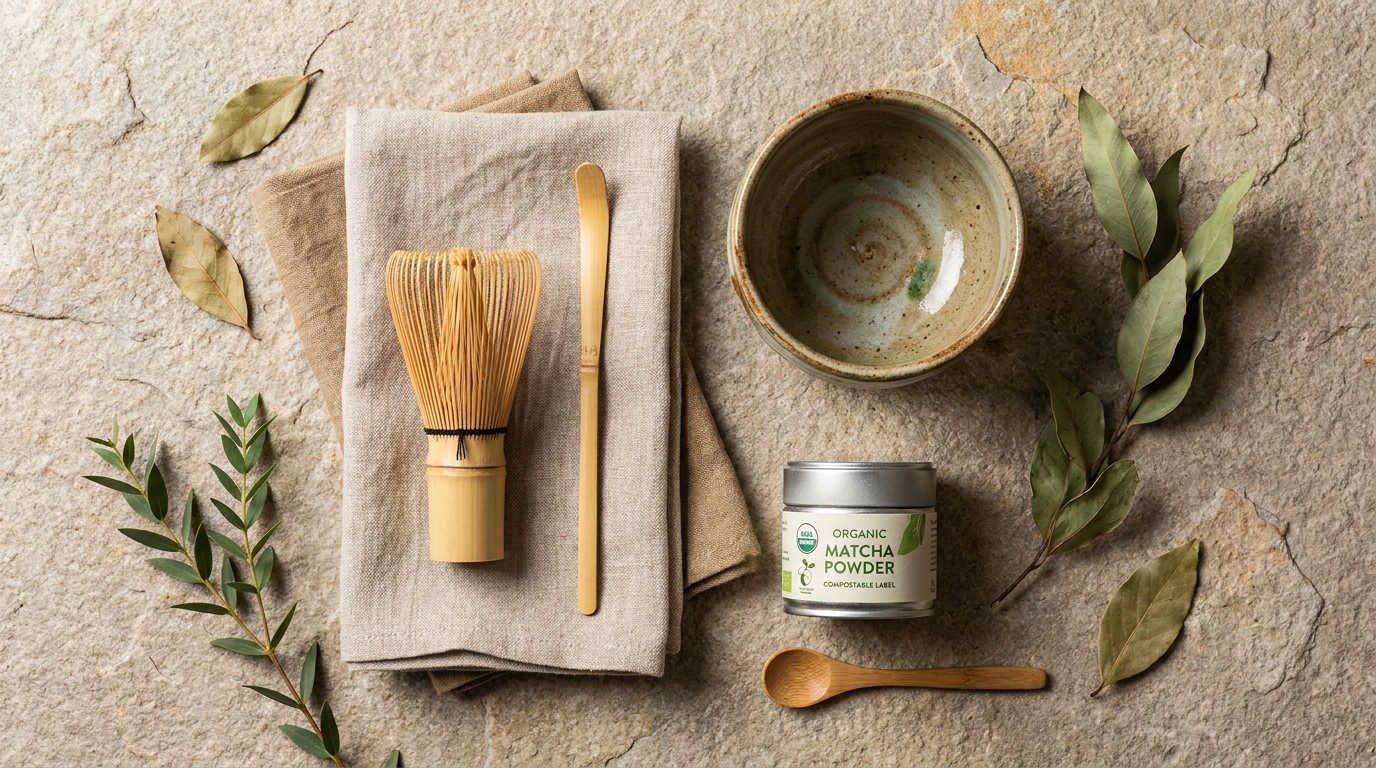
The chawan matcha bowl is the vessel where the tea is both prepared and consumed. Unlike a standard western mug, the Chawan is designed with specific dimensions to facilitate the vigorous whisking motion without splashing.
The Philosophy of the Bowl
In the Japanese tea ceremony, the bowl represents the earth. The aesthetic of Wabi-sabi—the beauty of imperfection—is often reflected in the Chawan. Artisans may leave thumbprints in the clay or allow the glaze to drip unevenly, signaling that each bowl is a unique, living object.
Material Dynamics
The material of the bowl drastically affects the tea’s temperature and taste.
- Earthenware/Stoneware: These are porous and thick-walled, providing excellent heat retention. They are preferred for winter ceremonies.
- Porcelain: Thinner and more refined, porcelain allows the vibrant green of the matcha to “pop” against a white background. Many modern enthusiasts prefer the aesthetic appeal of a pink matcha bowl to add a touch of personality to their daily ritual.
Table 2: Chawan Material Guide
Material | Porosity | Thermal Retention | Tactile Feel | Durability |
|---|---|---|---|---|
Raku Ware (Clay) | High | Excellent | Warm/Textured | Fragile |
Mino Ware (Ceramic) | Medium | High | Smooth/Heavy | Very High |
Porcelain | Low | Moderate | Fine/Sleek | High |
Borosilicate Glass | None | Low | Cold/Modern | Moderate |
The Chashaku and Sifter—Precision and Texture
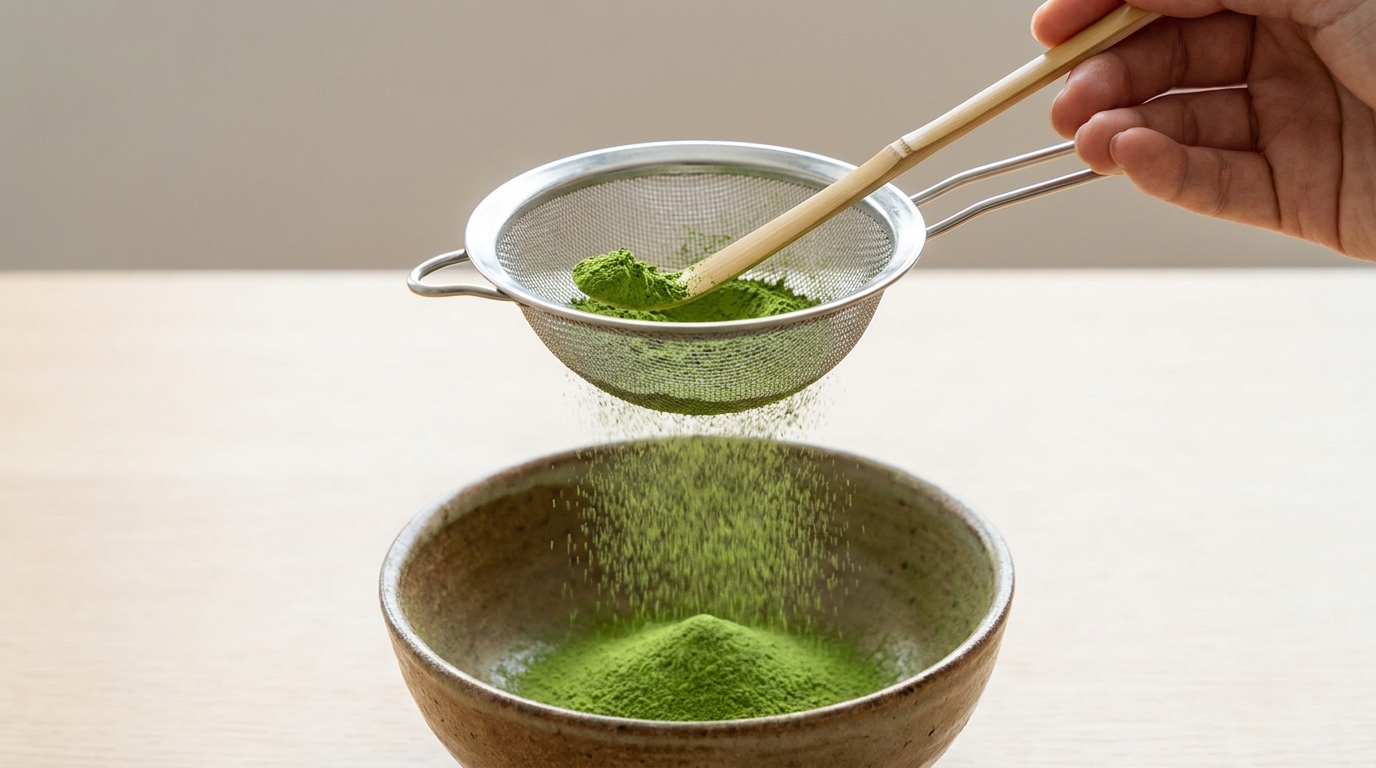
Precision is the difference between a bitter, clumpy drink and a smooth, sweet tea. This is where the Chashaku (scoop) and the Furui (sifter) come into play.
The Chashaku (Matcha Scoop)
Carved from a single strip of bamboo, the Chashaku is steam-bent at the tip. One “scoop” of a Chashaku is approximately 1 gram of powder. For a standard bowl of Usucha, two scoops (2 grams) are generally recommended. Historically, tea masters would carve their own Chashaku and name them, turning a simple measurement tool into a piece of personal history.
The Importance of Sifting
Matcha is a stone-ground powder with a particle size of 5-10 microns. Due to its high surface area and electrostatic charge, it naturally forms small clumps. If you omit the sifting step, these clumps will survive the whisking process, resulting in a “grainy” texture. A high-quality ceremonial matcha set will always include a fine-mesh stainless steel sifter. Sifting aerates the powder, ensuring that every grain is hydrated instantly when it hits the hot water.
The Supporting Accessories—Whisk Holders and Tea Cloths
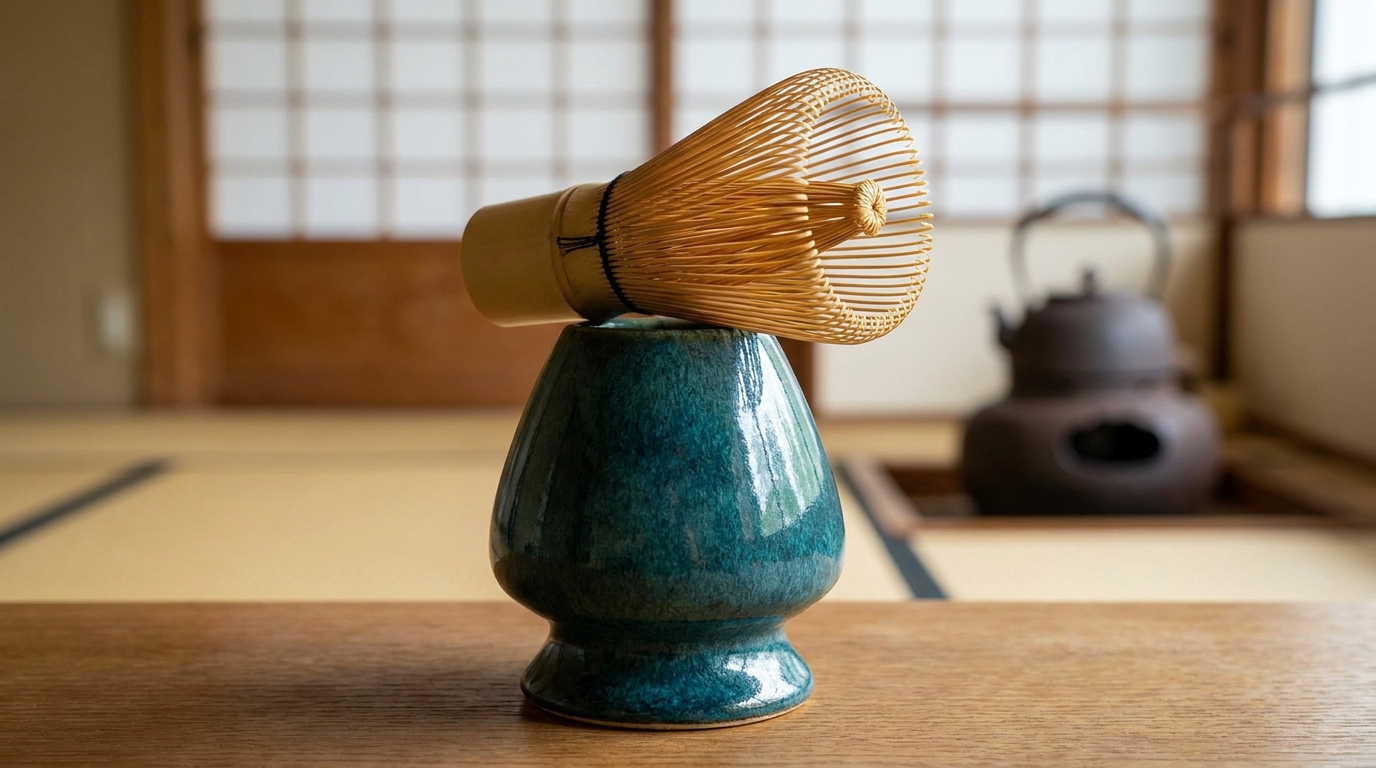
While the whisk and bowl are the stars, the longevity of your traditional Japanese tea ceremony tools depends on the supporting accessories.
The Kusenaoshi (Matcha Whisk Holder)
The most common mistake new matcha drinkers make is storing their whisk on its handle or flat in a plastic container. This causes the bamboo tines to lose their “tulip” shape and can lead to mold growth. The matcha whisk holder, or Kusenaoshi, is a curved ceramic stand that mimics the shape of the inner whisk. By placing the whisk on the holder after cleaning, the tines are stretched back into their original position, ensuring the whisk lasts for years rather than months.
The Chakin (Tea Cloth)
The Chakin is a small, rectangular hemp or linen cloth used to wipe the bowl after rinsing and before adding the powder. A dry bowl is essential; if the bowl is wet when the powder is added, the matcha will clump at the bottom before you even begin whisking.
The Manufacturing Process—From Forest to Table
The production of high-quality ceremonial matcha sets involves an intricate supply chain that spans several provinces in Japan and specialized artisan clusters. At Riching Matcha , we ensure every step adheres to heritage standards.
- Harvesting: Only specific varieties of bamboo (Phyllostachys) are used. The stalks are harvested in winter when the sap content is lowest, preventing future cracking.
- Seasoning: The bamboo is boiled to remove oils and then sun-dried for several months. In some cases, it is stored in the rafters of traditional houses to be “smoked” by hearth fires, creating the rare Susudake (smoked bamboo).
- The “Inner Work”: The artisan uses a knife called a Kiridashi to split the bamboo into 80 or 100 tines. This is done by hand, as machines lack the sensitivity to navigate the bamboo’s natural grain.
- Shaping: The tines are soaked in hot water and curved over a wooden mold to create the whisk’s functional “hook.”
This labor-intensive process is why a handcrafted Chasen is more expensive than a factory-made metal whisk. It is a piece of functional art.
The Modern Ritual—Integrating Tradition into Busy Lives
Many people feel intimidated by the “ceremony” of matcha, believing it requires hours of time. In reality, the ritual can be condensed into a five-minute morning practice that provides a “calm alertness” throughout the work day.
The Three-Minute Morning Ritual
- Rinse & Warm: Pour hot water into your chawan matcha bowl to warm the ceramic and soften the tines of your bamboo matcha whisk.
- Sift: Place 2 scoops of matcha through your sifter into the warm, dry bowl.
- Whisk: Add 2oz of 175°F water. Whisk in a ‘W’ motion using only your wrist until a thick froth forms.
- Savor: Drink immediately. The aromatics are most potent in the first 60 seconds.
By investing in a complete matcha set , you remove the friction of preparation, making it easier to replace coffee with a more sustainable energy source.
Commercial Mastery—Wholesale and Bulk Considerations
For café owners and wellness retailers, the choice of accessories is a business decision. Providing customers with an authentic experience requires tools that are both durable and aesthetically consistent with your brand.
Why Wholesale Quality Matters
In a commercial environment, a whisk may be used 50 to 100 times a day. Standard consumer-grade whisks will splinter under this pressure. Our wholesale matcha accessories are specifically tested for high-volume use, utilizing thicker bamboo segments to resist breakage.
Branding with Accessories
Customizing your tea ware—such as laser-etching your logo onto a matcha whisk holder or commissioning a custom glaze for your bowls—can significantly elevate your brand’s perceived value. It transforms a simple drink into a “branded experience.”
Maintenance and Longevity—Protecting Your Investment
A well-maintained ceremonial matcha set can last for years. Conversely, neglect can ruin a bamboo whisk in a single week.
The Golden Rules of Matcha Care
- Never Use Soap: Bamboo and unglazed clay are porous. They will absorb the flavor of dish soap, ruining all future bowls of tea.
- The “Pre-Soak”: Always dip your whisk tines in warm water for 30 seconds before use. This makes them flexible and prevents them from snapping during vigorous whisking.
- Air Flow is Key: Never store a wet whisk in a closed container. This is a recipe for mold. Always use a matcha whisk holder.
Table 3: Freshness and Storage Checklist
Accessory/Item | Storage Condition | Maintenance Frequency | Expected Lifespan |
|---|---|---|---|
Matcha Powder | Airtight, Dark, Cool | Seal after every use | 1-2 months (opened) |
Bamboo Whisk | On a Kusenaoshi holder | Rinse after every use | 6-12 months |
Ceramic Bowl | Open shelf / Dry area | Hand wash only | Decades (if not dropped) |
Bamboo Scoop | Dry drawer | Wipe with dry cloth | 2-3 years |
The Global Impact of Matcha Accessories

The explosion of matcha’s popularity in the West has led to a renewed appreciation for Japanese craft. By purchasing authentic tools, consumers are supporting rural artisan communities in Japan that have struggled to compete with industrial manufacturing.
At Riching Matcha , we see our role as more than just a supplier; we are educators. Every bamboo matcha whisk we ship is a bridge between the quiet tea rooms of Uji and the bustling cafes of New York, London, and Sydney. To learn more about our mission and our commitment to quality, visit our About Us page.
Choosing Your Path
The world of matcha accessories is deep and rewarding. Whether you begin with a simple matcha starter kit or jump straight into a professional-grade ceremonial matcha set , the goal remains the same: to slow down, breathe, and enjoy the perfect cup of tea.
The tools you choose are the silent partners in your wellness journey. They transform a green powder into a frothy elixir, a morning routine into a sacred ritual, and a simple kitchen into a sanctuary.
FAQs
1. Can I use a regular kitchen whisk if I don’t have a bamboo one?While you can physically mix the powder with a metal whisk, it is not recommended. Metal whisks have fewer, thicker wires that create large “soapy” bubbles rather than the creamy micro-foam desired in matcha. Furthermore, metal can scratch the delicate glaze of a chawan matcha bowl.
2. Why is my bamboo whisk losing its shape?This usually happens because the whisk is not being dried on a matcha whisk holder. Without the holder, the tines collapse inward as they dry, losing their ability to aerate the tea properly. Always store your whisk on a holder to maintain its “bloom.”
3. Is a sifter really necessary?Yes. Matcha is stone-ground and extremely fine, which leads to natural clumping due to static electricity. Sifting is the only way to ensure a smooth, clump-free texture. Even the most expensive ceremonial grade matcha will clump if not sifted.
4. How do I know if my matcha bowl is lead-free?When purchasing a chawan matcha bowl, always ensure you are buying from a reputable supplier like Riching Matcha that provides food-safety certifications. High-quality Japanese ceramics are traditionally lead-free, but “decorative” bowls found in thrift stores may not be.
5. My bamboo whisk has a small crack in the handle. Is it still safe to use?Small surface cracks in the handle are common as bamboo adjusts to the humidity in your home. As long as the tines are intact and there is no mold, the whisk is safe to use. To prevent further cracking, avoid storing your whisk near heat sources like stoves or heaters.