
Digestive unpredictability disrupts the workday for countless professionals, manifesting as bloating, sudden urgency, or uncomfortable constipation that kills productivity. Relying on heavy caffeine doses often exacerbates these gut issues rather than solving them. Ignoring these visceral signals creates a cycle of dependency where your morning cup triggers a frantic dash for the restroom or leaves you feeling dehydrated and jittery by noon. That “coffee gut” sensation isn’t just an annoyance; it signifies a disruption in your microbiome that effects mental clarity and long-term health. Switching to premium organic matcha offers a scientifically backed alternative that supports regularity through fiber, antioxidants, and sustained energy release. We provide high-quality, lab-tested matcha that stabilizes digestion while maintaining peak professional performance, so you should Find Out Why Matcha May Be Better Than Coffee for Gut Health .

Yes, matcha stimulates bowel movements, but it does so with significantly less violence and urgency than coffee. While both beverages rely on caffeine to initiate peristalsis—the wave-like muscle contractions that move food through your digestive tract—matcha delivers this stimulant alongside soothing amino acids. This unique combination encourages a bowel movement without the “five-alarm fire” sensation that often sends coffee drinkers sprinting down the hallway.
Many users find that high-quality options, such as Ceremonial Grade Matcha , provide a predictable and comfortable regularity rather than a digestive emergency. But here’s the kicker… while both beverages contain caffeine, the physiological reaction differs immensely between the two. Matcha contains roughly 35mg of caffeine per gram, which initiates peristalsis gently. Unlike the harsh acid bomb that coffee drops into your stomach, matcha delivers this stimulant alongside soothing amino acids.
The Caffeine Connection
Caffeine acts as a known stimulant that increases bile production and stomach acid, signaling your colon to empty. However, the mechanism in matcha is buffered by L-theanine, which modulates the absorption rate of caffeine into your bloodstream.
- Slower Absorption: Prevents sudden shock to the digestive system.
- Sustained Signal: Provides a gentle nudge rather than a harsh kick.
- Reduced Cortisol: Lowers stress responses that can lead to spasmodic bowel movements.
The Antioxidant Factor
High-grade powders contain high levels of polyphenols. These compounds work to reduce inflammation within the intestines. If you suffer from IBS or general sensitivity, antioxidants in green tea powder can help soothe the lining of your gut.
Gentle Regularity vs. Urgency
You might be wondering if the green powder works too well. The answer lies in balance. It promotes movement but supports the system simultaneously.
Key Takeaway: Matcha stimulates digestion through caffeine but buffers the effect with antioxidants for a smoother experience.
Feature | Coffee | Matcha | |
|---|---|---|---|
Stimulant | High Caffeine | Caffeine + L-Theanine | |
Onset | Rapid / Sudden | Gradual / Sustained | |
Gut Feel | Acidic / Jittery | Soothing / Stable |
Matcha provides the motility you need without the visceral panic you hate.
2. Why Does That Sudden Urge to Go Hit So Hard?

The intense urgency to defecate often stems from high acidity and rapid caffeine absorption associated with coffee. Your body recognizes acidic influx as a potential irritant and attempts to expel waste rapidly to protect gut lining. Here’s the deal: Matcha does not trigger this same “fight or flight” response in your bowels.
Presence of L-theanine creates a symbiotic relationship with caffeine, slowing its absorption into the bloodstream. This slower release means your colon receives a gentle signal rather than a blaring alarm. Urge to defecate becomes a manageable notification instead of a five-alarm fire. For professionals in meetings or long shifts, this difference implies maintaining control over your schedule and bodily functions.
Understanding the “Urge”
“Urgency” is often a sign of mucosal irritation rather than healthy motility. When stomach lining is irritated by coffee oils and acids, gastrocolic reflex triggers aggressively.
- Acidic Trigger: Coffee pH of ~5.0 can irritate the stomach.
- Rapid Emptying: Body tries clearing irritants quickly.
- Mucosal Defense: Increased mucus production can lead to loose stools.
The Coffee Jitters
We have all experienced that panic. You finish a latte and suddenly it’s go time. This reaction often stems from high acidity.
Smooth Energy Release
Digestive peace allows for better focus and less anxiety about restroom proximity.
Key Takeaway: The “sudden urge” is often a reaction to acidity and rapid caffeine spikes, both of which matcha mitigates.
Aspect | Coffee Urgency | Matcha Regularity | |
|---|---|---|---|
Trigger | Acidic irritation | Gentle peristalsis | |
Control | Low (Emergency) | High (Predictable) | |
Feeling | Cramping / Panic | Natural / Calm |
Switching to matcha puts you back in the driver’s seat of your own digestion.
3. Is Caffeine the Only Culprit Behind the Urge?

Scientists once believed caffeine stood alone as the laxative agent. What’s the real story? Studies comparing fully caffeinated coffee against decaf versions reveal a surprising truth. Decaf coffee stimulates the colon almost as intensely as the caffeinated version, suggesting other compounds like chlorogenic acids play a massive role.
Matcha works differently because you consume the entire leaf, not just a brewed extraction. While matcha contains caffeine, the mechanism involves a complex interplay of fiber and phytonutrients. Stimulation comes from a holistic nutrient profile rather than a single chemical irritant. This distinction matters for those who feel sensitive to stimulants yet still need help with regularity.
Decaf vs. Regular Studies
Research indicates that laxative effects of coffee are multifactorial, involving hormones like gastrin and cholecystokinin. Matcha influences these hormones more gently due to its complex matrix of fibers and polyphenols.
- Gastrin Release: Coffee spikes this hormone rapidly.
- Cholecystokinin: Stimulates digestion and bile production.
- Matcha Profile: Balances hormonal release with fiber intake.
Colon Pressure Facts
You get motility benefits without harsh chemical irritation that coffee oils often inflict on stomach lining.
The Chemical Composition
Matcha involves consuming the physical plant material.
Key Takeaway: Caffeine isn’t the sole laxative; matcha’s whole-leaf composition offers a gentler stimulation mechanism.
Stimulant Source | Primary Mechanism | Effect on Colon | |
|---|---|---|---|
Regular Coffee | Caffeine + Acids | High Pressure | |
Decaf Coffee | Acids + Oils | Moderate/High Pressure | |
Matcha | Caffeine + Fiber | Gentle/Rhythmic |
Matcha relies on a complex nutrient profile rather than harsh acids to get things moving.
4. Could Coffee Be Hiding Your Digestion Issues?
Many people claim they cannot poop without their morning joe. This reliance is a red flag. Ready for the bad news? If you depend on a strong laxative beverage to function, you might be masking underlying dehydration or a fiber-deficient diet. Coffee forces the issue, overriding your body’s natural signals.
When you skip a day, the system halts, proving the dependency. Matcha supports natural function rather than forcing it. By integrating our Culinary Grade Matcha into smoothies or lattes, you encourage the body to work correctly on its own. It acts as a regulator, not a dictator.
Masking Constipation
Dependency creates a lazy bowel that waits for a chemical shock before performing its duty. Breaking this cycle involves nourishing the gut rather than shocking it.
- Stimulant Reliance: Gut stops signaling on its own.
- Masking Symptoms: You ignore dehydration because coffee forces liquid out.
- Fiber Deficits: Coffee provides zero dietary bulk.
The Dependency Cycle
Restoring natural rhythm requires stepping away from harsh stimulants.
True Gut Health
Nourishing the gut with compounds promotes autonomous peristalsis.
Key Takeaway: Relying on coffee to poop masks underlying health issues; matcha supports natural digestive autonomy.
Condition | Coffee Effect | Matcha Effect | |
|---|---|---|---|
Dependency | High (Addictive) | Low (Supportive) | |
Root Cause | Masks Issues | Reveals/Fixes Issues | |
Long-term | Lazy Bowel | Active Bowel |
Matcha helps you rebuild a digestive system that works without a chemical crutch.
5. How Does Hydration Impact Your Bowel Movements?
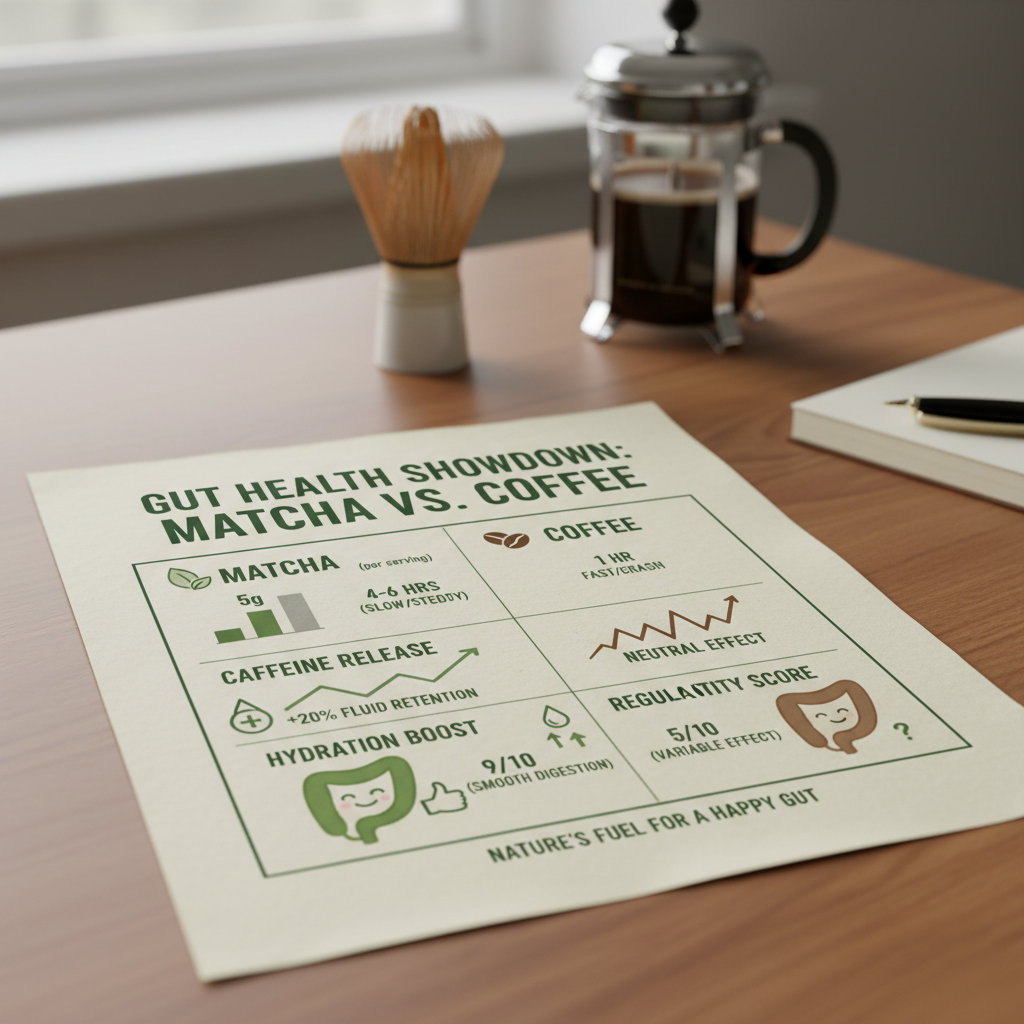
Dehydration acts as a leading cause of constipation. Here is a crazy fact: Coffee acts as a significant diuretic, pulling fluids from your body and potentially hardening stool. This counteracts the laxative effect, leading to cramping or incomplete evacuation. Matcha is prepared with water and does not possess aggressive diuretic properties.
When you drink a bowl of matcha, you actively consume fluid that helps soften waste. Hydration remains essential for mucosal lining health in the intestines. A well-hydrated gut moves waste efficiently. Replacing a dehydrating habit with a hydrating ritual changes entire texture of digestion.
Water vs. Diuretics
Net hydration status of your body dictates how easily waste moves through colon. If colon detects dehydration, it absorbs more water from stool, turning it into “rocks.”
- Fluid Balance: Matcha supports positive fluid retention.
- Stool Texture: Hydration keeps stool soft and pliable.
- Ease of Passage: Reduces need for straining.
Stool Consistency
Your body retains fluid it needs to process food effectively.
Absorption Rates
Matcha provides liquid that stays in the system longer.
Key Takeaway: Matcha contributes to hydration, which softens stool, whereas coffee can dehydrate and worsen constipation.
Beverage | Hydration Impact | Stool Effect | |
|---|---|---|---|
Espresso | Negative (Diuretic) | Hardens / Dehydrates | |
Matcha | Neutral/Positive | Softens / Eases | |
Water | Positive | Optimal |
Drinking matcha counts toward your hydration goals; drinking coffee often works against them.
6. What Is the Gastrocolic Reflex Exactly?

Gastrocolic reflex acts as the physiological reaction where entering food or drink stimulates movement in lower GI tract. You might not know that warm liquids trigger this reflex most effectively in the morning. Drinking warm matcha on an empty stomach wakes up digestive system gently.
Reflex prepares colon to make room for new nutrients. While coffee triggers this violently, matcha engages it smoothly. If you add dairy or sweeteners, effect intensifies. However, pure matcha offers cleanest trigger. It signals “start the day” to organs without “emergency evacuation” siren.
Triggering the Gut
This reflex remains strongest in morning hours. Leveraging it correctly sets tone for entire day’s metabolic rhythm.
- Morning Window: Best time to establish regularity.
- Temperature: Warmth relaxes gut muscles and encourages flow.
- Gentle Wake-up: Aligns with circadian biological clocks.
Morning Routine Impact
Gentle wake-up call aligns with natural circadian rhythms.
Milk and Additives
Dairy can increase motility but pure matcha is safer.
Key Takeaway: Warm matcha triggers the gastrocolic reflex gently, preparing the digestion system for the day.
Stimulus | Reflex Intensity | Comfort Level | |
|---|---|---|---|
Cold Water | Low | High | |
Hot Coffee | Severe | Low | |
Warm Matcha | Moderate | High |
Matcha respects your body’s natural signaling pathways rather than overriding them.
7. Can Matcha Fiber Fix Your Constipation Woes?
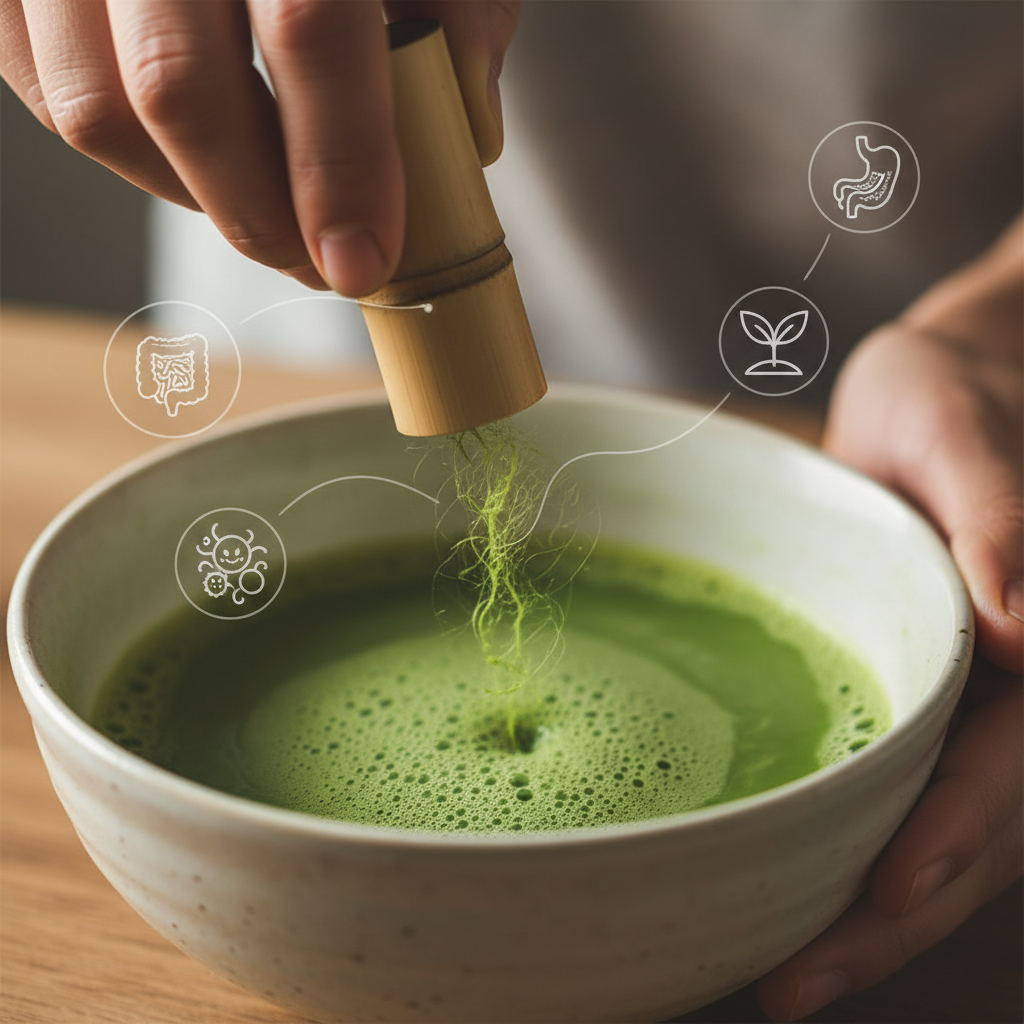
Coffee contains zero fiber. None. Here is the interesting part… Matcha acts as a suspension of ground leaves, meaning you ingest physical plant material. This provides a source of dietary fiber directly in your beverage. While a single cup isn’t a fiber supplement replacement, every gram counts towards regularity.
Matcha contains approximately 385mg of fiber per gram. This insoluble fiber adds bulk to stool, giving colon muscles something to grip and move. For B2B clients formulating health blends or Private Label Matcha products, this fiber content serves as a marketable functional benefit.
Whole Leaf Benefits
Ingesting physical plant material changes beverage from simple extract to nutrient-dense food.
- Insoluble Fiber: Scraps digestive walls clean.
- Stool Bulk: Increases volume for easier passage.
- Nutrient Density: You eat the leaf, you get benefits.
Fiber Content Comparison
Typical steeped tea discards leaves, tossing fiber in trash.
Bulking the Stool
Fiber gives colon muscles something to move.
Key Takeaway: Unlike filtered coffee, matcha provides dietary fiber that physically aids in moving waste through the tract.
Nutrient | Coffee (8oz) | Matcha (2g serving) | |
|---|---|---|---|
Fiber | 0g | ~0.77g | |
Vitamins | Trace | A, C, E, K | |
Chlorophyll | None | High |
Matcha is the only caffeinated morning beverage that doubles as a fiber source.
8. Does Stress Mess With Your Bathroom Schedule?

Stress causes digestive system to seize up or become hyperactive. Gut-brain axis connects your mental state directly to bathroom habits. You might be wondering why anxiety halts digestion. Coffee spikes cortisol, stress hormone, which can induce anxiety-related stomach issues.
Matcha contains L-theanine, an amino acid promoting alpha brain waves and relaxation. By lowering stress levels, matcha allows gut to function in a parasympathetic (rest and digest) state rather than sympathetic (fight or flight) state. A calm mind leads to a calm gut.
The Gut-Brain Axis
Your brain communicates stress directly to your intestines. If brain is jittery from coffee, gut will likely be jittery too.
- Cortisol Spike: Coffee mimics stress response.
- Alpha Waves: Matcha induces flow state.
- Parasympathetic Tone: Essential for healthy digestion.
L-Theanine Calming
Amino acid promotes relaxation and focus.
Cortisol Reduction
Reducing chemical stress load helps normalize bowel movements.
Key Takeaway: Matcha reduces stress via L-theanine, preventing anxiety-induced digestive disruptions common with coffee.
Compound | Mental Effect | Gut Effect | |
|---|---|---|---|
Coffee (Cortisol) | Anxiety / Jitters | Spasms / IBS | |
Matcha (L-Theanine) | Calm Focus | Relaxation / Flow |
Calming your mind with matcha is the first step to calming your stomach.
9. Why Is Matcha Gentler on Your Stomach Than Coffee?

Acid reflux and gastritis act as common complaints among coffee drinkers. Coffee has a pH of around 5, which classifies as quite acidic. Ready for the good part? Matcha is nearly neutral and contains chlorophyll, which acts as a natural detoxifier and soother. That acid in coffee eats away at protective mucus layer.
Tannins in green tea can sometimes cause mild nausea on an empty stomach, but generally, lack of acidity makes it far superior for gut integrity. Protecting stomach lining prevents long-term issues like ulcers or chronic inflammation. For sensitive individuals, this switch is often the only lifestyle change needed.
pH and Acidity
Maintaining neutral stomach environment prevents “sour stomach” feeling that ruins appetite and digestion.
- Alkalizing Effect: Matcha helps balance body pH.
- Stomach Lining: Protected from acid erosion.
- Reflux Control: Less likely to trigger GERD symptoms.
Stomach Lining Protection
Chlorophyll soothes inflammation and protects mucosa.
Reduced Acid Reflux
Switching prevents morning burning sensation.
Key Takeaway: Matcha’s neutral pH prevents the acid reflux and stomach irritation caused by acidic coffee.
Beverage | pH Level | Impact on Stomach | |
|---|---|---|---|
Black Coffee | 5.0 | Irritating / Acidic | |
Matcha Tea | 7.4 | Neutral / Soothing | |
Soda | 2.5 | Highly Corrosive |
Your stomach lining prefers the gentle nature of matcha over the acid bath of coffee.
10. How Can Matcha Support Long-Term Gut Health?
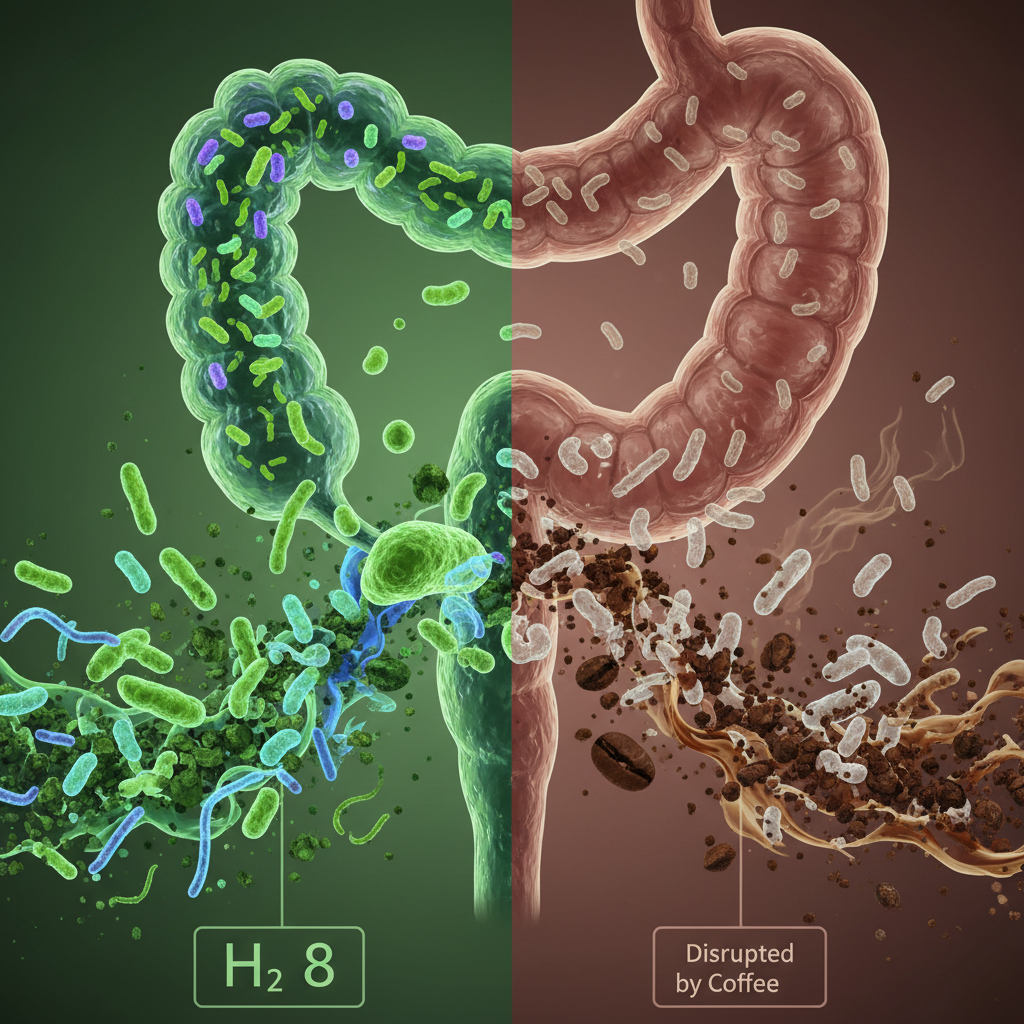
We aren’t just talking about pooping today; we refer to long-term ecosystem health. Here is the truth… Green tea polyphenols act as prebiotics. They feed beneficial bacteria in your gut, such as Bifidobacteria. Coffee does not offer this same level of microbiome support.
A healthy microbiome dictates immunity, mood, and digestion speed. By feeding good bacteria, you crowd out bad bacteria that cause gas and bloating. Sourcing from a reputable supplier ensures you aren’t consuming pesticides that kill these good bacteria. Organic certification matters when attempting to heal microscopic ecosystem.
Prebiotic Potential
Prebiotics serve as fertilizer for your gut garden. Matcha provides this fertilizer naturally.
- Bifidobacteria: Boosted by green tea catechins.
- Microbiome Diversity: Prevents bloating and gas.
- Purity: Organic matters for bacteria health.
Microbiome Diversity
Diverse ecosystem handles food better.
Fermentation in the Gut
Polyphenols ferment to create healthy fatty acids.
Key Takeaway: Matcha acts as a prebiotic, feeding good gut bacteria and supporting long-term digestive health.
Benefit | Mechanism | Long-term Result | |
|---|---|---|---|
Prebiotic | Feeds bacteria | Stronger Immunity | |
Anti-inflammatory | Reduces swelling | Better absorption | |
Antioxidant | Scavenges radicals | Cellular health |
Matcha is an investment in your gut’s future, not just a quick fix for today.
Conclusion
Digestive health serves as the foundation of professional productivity, and swapping coffee for matcha acts as a strategic upgrade. Matcha stimulates regularity through a gentle combination of caffeine and fiber, avoids harsh acidity causing reflux, and supports a healthy microbiome with antioxidants. It hydrates rather than dehydrates and calms stress that often disrupts bowel function.
Transitioning to matcha can stabilize your mornings and improve long-term gut health. Start with a high-quality organic blend to ensure you are avoiding pesticides.
Ready to transform your product line or your morning routine? Contact Us today to request samples of our premium organic matcha. Explore our About Us page to see how we source the cleanest green tea for your gut.
FAQ
Q1: Can I drink matcha on an empty stomach?Yes, but proceed with caution if you have a sensitive stomach. Tannins in matcha can cause mild nausea in some people without food, so we recommend having it after a light breakfast or adding a splash of milk to bind tannins.
Q2: What is the best grade of matcha for digestion?Ceremonial grade serves as the best choice for digestion. It is made from youngest leaves which hold higher L-theanine levels and lower harsh tannin levels compared to culinary grades, offering a smoother experience for the gut.
Q3: How long does it take for matcha to make you poop?Most people feel an urge within 15 to 30 minutes after consumption. This timing occurs due to gastrocolic reflex triggered by warm liquid and initial absorption of caffeine stimulating the colon.
Q4: Does matcha cause diarrhea?It is unlikely to cause diarrhea unless consumed in excessive amounts. Unlike coffee, which can cause loose stools due to high acidity and rapid stimulation, matcha effects are usually more formed and regular.
Q5: Is matcha safe for people with IBS?Generally, yes. Matcha is low FODMAP in small servings and less acidic than coffee, making it a friendlier option for those with Irritable Bowel Syndrome compared to espresso or drip coffee.