
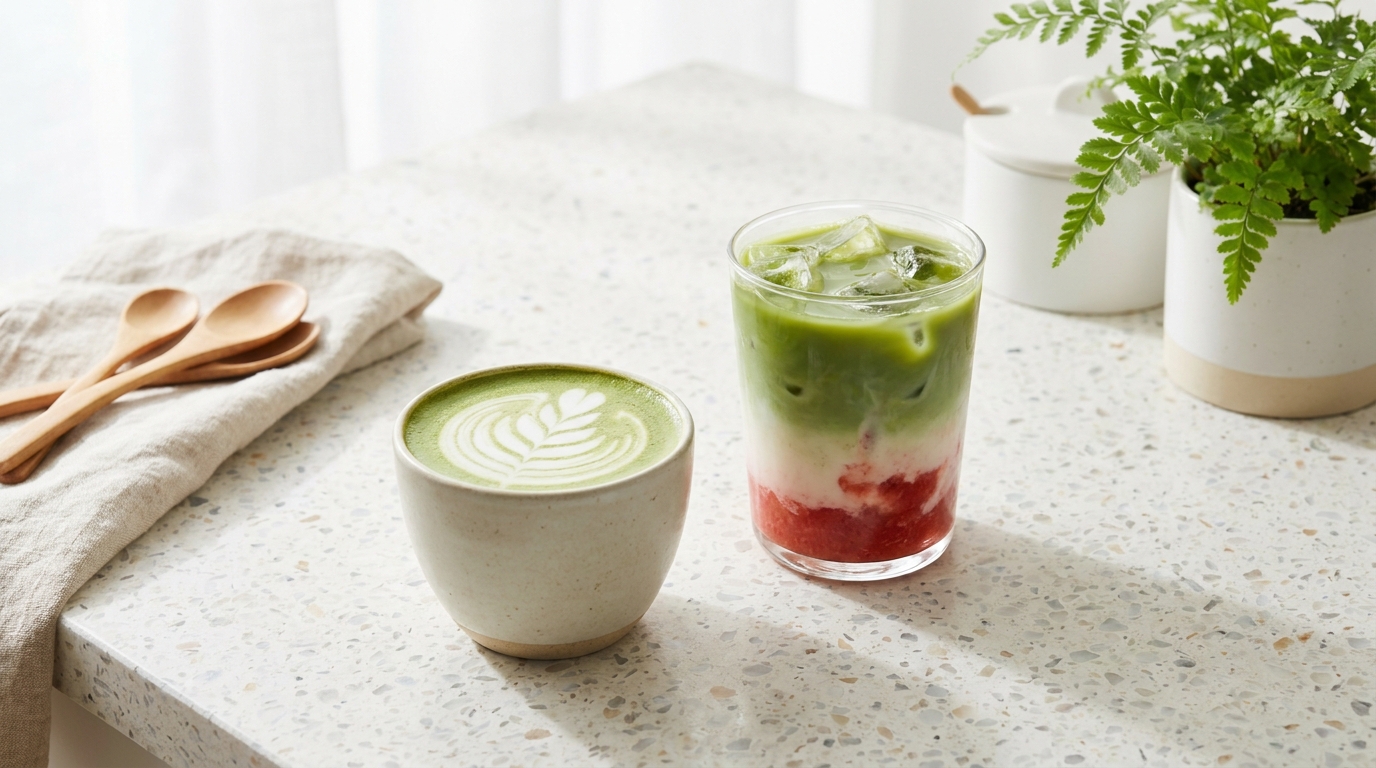
In the hyper-competitive specialty beverage industry, menu diversification is no longer just a strategy for growth—it is an operational necessity. Among the various ingredients driving modern beverage innovation, green tea powder, particularly premium Japanese matcha, has transitioned from a niche health trend to a core, high-margin menu staple. For cafe owners, food and beverage directors, and procurement managers, understanding the economic and culinary drivers behind this shift is essential for capturing high-yield consumer segments.
The primary driver of the global matcha market is a profound shift in consumer wellness patterns. Modern consumers are increasingly seeking out “clean energy” alternatives to coffee. Matcha contains a high concentration of L-theanine, an amino acid that promotes a state of calm, focused alertness by modulating alpha brain waves. When combined with matcha’s natural caffeine content, L-theanine prevents the sudden energy spikes and subsequent crashes associated with espresso-based drinks. This biochemical profile has positioned matcha as the premier functional beverage for working professionals, students, and health-conscious demographics.
From an economic perspective, adding premium matcha to your beverage program offers exceptionally high gross margins. Unlike espresso-based drinks, which require capital-intensive machinery (such as commercial espresso machines, specialized grinders, and water filtration systems), matcha beverages require minimal hardware infrastructure. A high-quality matcha station can be fully established with basic tools: a digital scale, a sifter, high-grade bamboo whisks (chasen) or electric milk frothers, and a temperature-controlled kettle.
Furthermore, the raw ingredient cost-to-retail price ratio of matcha is highly favorable. A standard high-yield matcha latte utilizes approximately 2 to 3 grams of powder. Even when sourcing premium, shade-grown Japanese matcha, the raw ingredient cost per serving remains remarkably low, while retail prices for premium matcha beverages routinely match or exceed those of specialty espresso drinks. To achieve long-term success and consistency across multiple locations, securing a reliable wholesale matcha powder supplier is a critical first step for any commercial operator.
Table 1: Cafe Menu Benefit vs. B2B Value
Cafe Menu Benefit | B2B Value & Operational Impact | Strategic Margin Enhancement |
|---|---|---|
All-Season Appeal | Unlike hot-drip coffee, matcha performs exceptionally well in both hot and iced configurations, stabilizing year-round sales. | Reduces seasonal revenue fluctuations by offering identical menu pricing for hot/iced variants. |
High Ticket Add-ons | Consumers are highly receptive to paying premium surcharges ( 0.75−0.75 – 1.50) for oat milk, house-made syrups, or cold foams paired with matcha. | Boosts the Average Transaction Value (ATV) without increasing baseline extraction times. |
Aesthetic Visual Appeal | The vibrant, chlorophyll-rich green hue of high-quality matcha drives organic user-generated content on social media platforms. | Functions as free marketing, lowering customer acquisition costs (CAC) through natural viral reach. |
Broad Demographic Pull | Attracts non-coffee drinkers, lactose-intolerant consumers, and vegan demographics when paired with alternative milks. | Expands the cafe’s target addressable market (TAM) within the local trade area. |
Understanding Matcha Powder Grades: From Ceremonial to Culinary
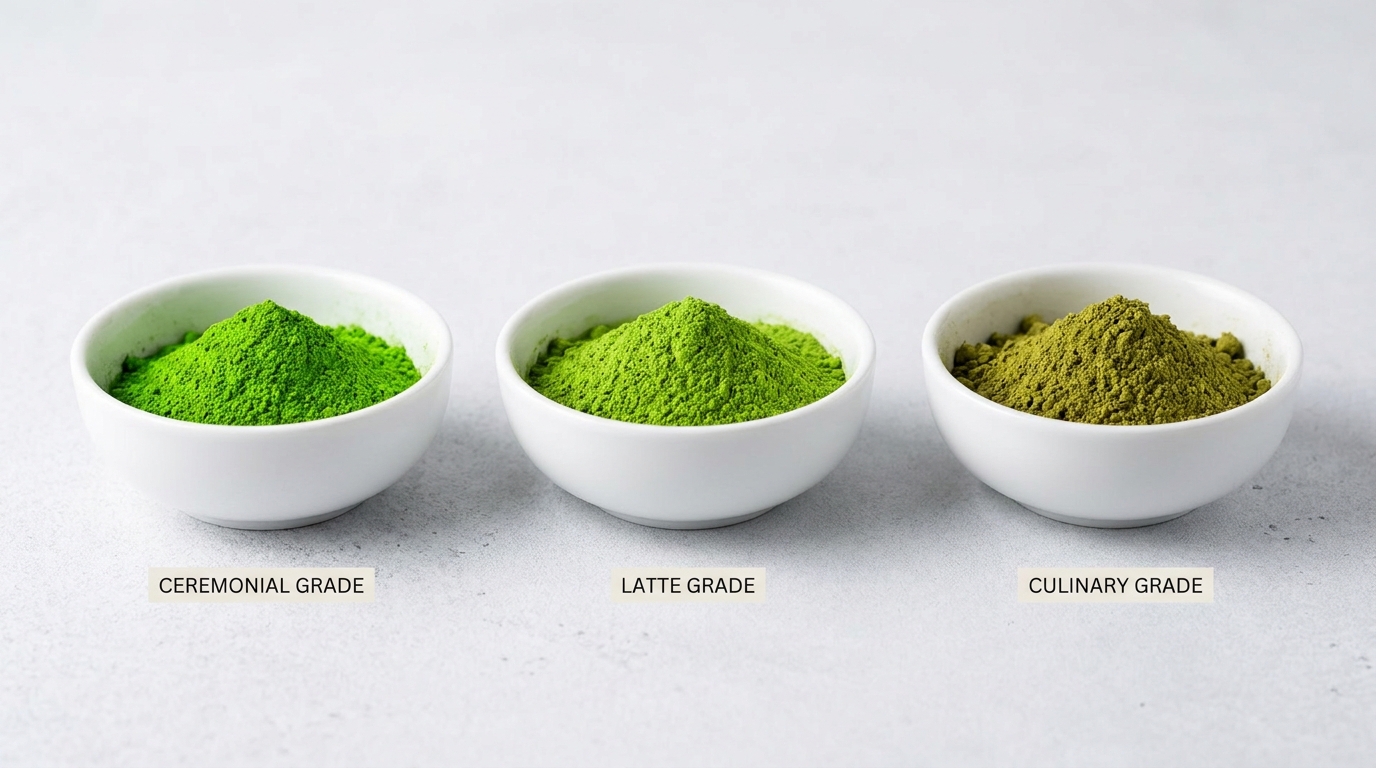
Sourcing matcha requires a comprehensive understanding of the structural and agricultural differences that define various grades. For procurement officers, matching the correct grade of matcha to its intended application is the single most effective way to optimize ingredient costs while maintaining product quality. Matcha is not a uniform commodity; its flavor profile, color, solubility, and cost are determined by agricultural practices, harvesting timelines, and processing methods.
At the pinnacle of quality is Ceremonial Grade Matcha Powder . This premium grade is harvested exclusively during the first flush (spring harvest) of the Camellia sinensis plant, typically in late April or May. The youngest, most delicate leaves at the very top of the tea bush are hand-picked for this grade.
To maximize chlorophyll and L-theanine levels, the tea plants are shaded under structures made of straw or black vinyl for 20 to 30 days before harvesting. Shading reduces sunlight exposure by up to 90%, forcing the plants to produce massive quantities of chlorophyll (which gives ceremonial matcha its signature electric-green color) and preventing the sweet L-theanine from converting into bitter catechins. Once harvested, the leaves are steamed, de-stemmed, and de-veined to produce tencha, which is then slowly ground between traditional granite stone mills to a particle size of 5 to 10 microns. This meticulous process ensures a silky texture, zero grittiness, and a complex flavor profile characterized by rich umami, natural sweetness, and no bitter aftertaste.
As we move down the grading spectrum, we find Latte Grade (Premium Beverage Grade), followed by Premium Culinary, and finally Standard Culinary Grade. These grades are typically harvested during the second flush (summer) or third flush (autumn). Because these leaves receive more sunlight and grow lower on the stem, they contain fewer amino acids and more catechins. This results in a more astringent, robust flavor profile and a slightly yellow or olive-green hue.
While culinary grade is unsuitable for traditional water-only whisking, its stronger, more bitter flavor profile is essential for cutting through heavy dairy, alternative milks, fats, sugars, and flours in baking and beverage applications. Understanding these distinctions prevents cafes from wasting expensive ceremonial matcha on mixed drinks where its subtle sweetness would be completely masked by milk, or using low-grade culinary matcha in pure tea applications, which would result in an unpalatably bitter beverage.
Essential Tools and Preparation Techniques for Authentic Matcha
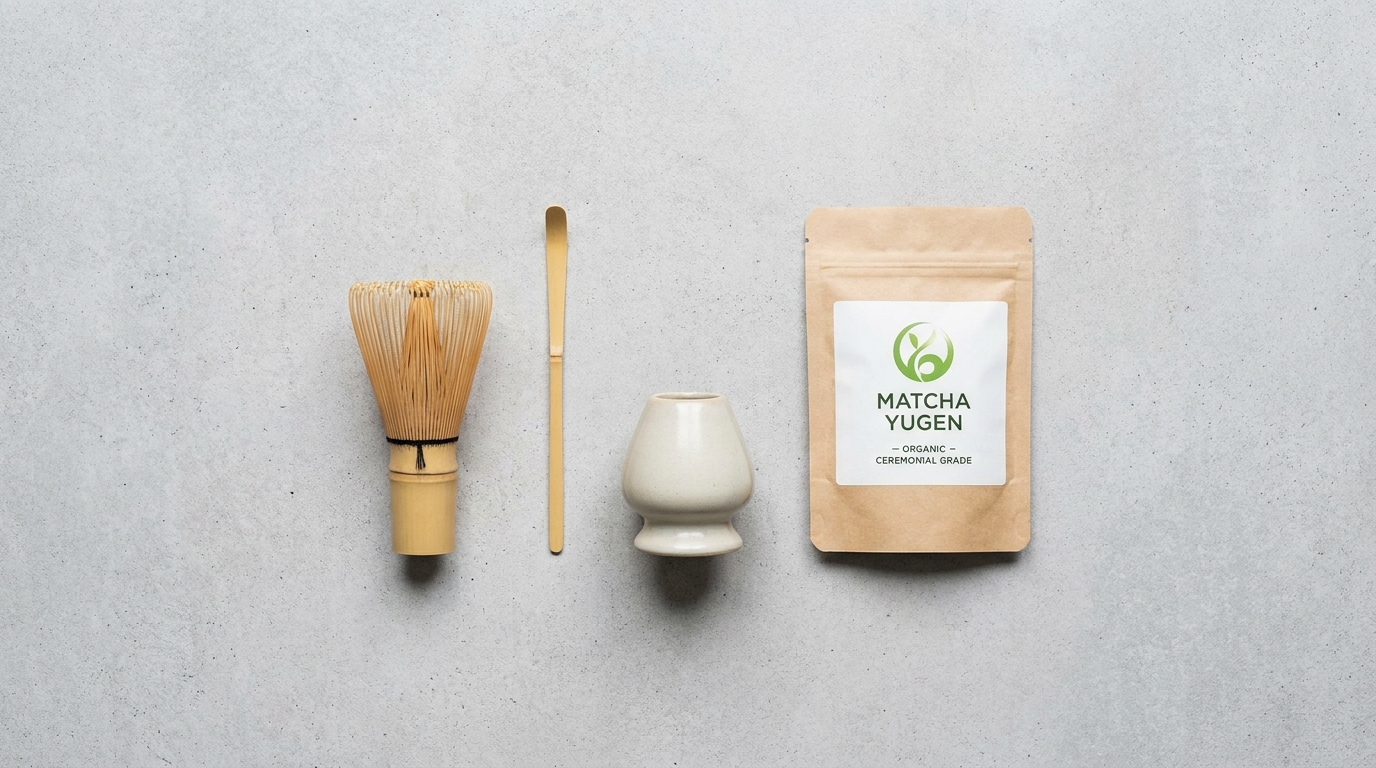
To unlock the full sensory potential of high-quality matcha, a cafe must establish standard operating procedures (SOPs) around correct preparation techniques and tooling. Unlike traditional loose-leaf teas, which are steeped and discarded, matcha is a suspension. The ground tencha leaves are whisked directly into water or milk, meaning the barista is preparing a colloidal dispersion. Incorrect preparation leads to rapid separation, clumping, and an unpleasant grittiness on the palate.
The cornerstone of traditional matcha preparation is the chasen (bamboo whisk), carved from a single piece of seasoned bamboo. It features numerous fine, curved tines designed to break up surface tension and disperse the hydrophobic matcha particles evenly into water. The chawan (wide-bottomed ceramic bowl) provides the necessary physical space for the physical whisking motion—which must be a rapid “W” or “M” motion rather than a circular stirring motion. Sifting the powder through a fine-mesh furui (sifter) before introducing water is non-negotiable; static electricity naturally causes ultra-fine matcha particles to form dense clumps that cannot be fully dissolved by whisking alone.
In a high-volume B2B environment, however, traditional bamboo whisking can create operational bottlenecks. To maintain speed of service without sacrificing quality, modern beverage operations utilize electric hand frothers, high-speed commercial blenders, or specialized matcha shaker tins. When using shaker tins, baristas combine sifted matcha with water and shake vigorously with ice to achieve a perfectly aerated, froth-topped matcha concentrate in seconds.
Regardless of the tool chosen, water temperature control is critical. Water should never exceed 80°C (176°F). Boiling water (100°C/212°F) scorches the delicate ground tea leaves, instantly destroying the sweet L-theanine compounds and releasing bitter, astringent catechins, rendering even a premium ceremonial grade unpalatably bitter.
Table 2: Matcha Grade Comparison
Grade | Best Use Case | Flavor Profile | Cost Tier | Cafe Target Fit |
|---|---|---|---|---|
Ceremonial | Pure hot/iced whisked tea (no milk/sugar). | Intense umami, natural sweetness, smooth grassy notes, zero bitterness. | Ultra-Premium ($$$$) | High-end specialty cafes, traditional tea houses, premium tasting menus. |
Latte / Premium Beverage | Specialty lattes, iced matchas with light sweeteners, cold foams. | Balanced umami, mild astringency, vibrant green color, cuts through milk. | Premium ($$$) | Standard specialty cafes, coffee shops with dedicated matcha menus. |
Premium Culinary | Pastries, delicate creams, ice creams, white chocolate pairings. | Strong tea flavor, noticeable astringency, bright green visual retention after baking. | Moderate ($$) | Artisanal bakeries, pastry kitchens, gelato shops. |
Standard Culinary | Bulk baking, cookies, waffles, industrial food processing. | Robust, highly astringent, deep earthy notes, olive-green hue. | Budget-Friendly ($) | Large-scale commercial food manufacturers, mass-production bakeries. |
Perfecting the Classic Matcha Oat Milk Latte: Formulas and Extraction Standards
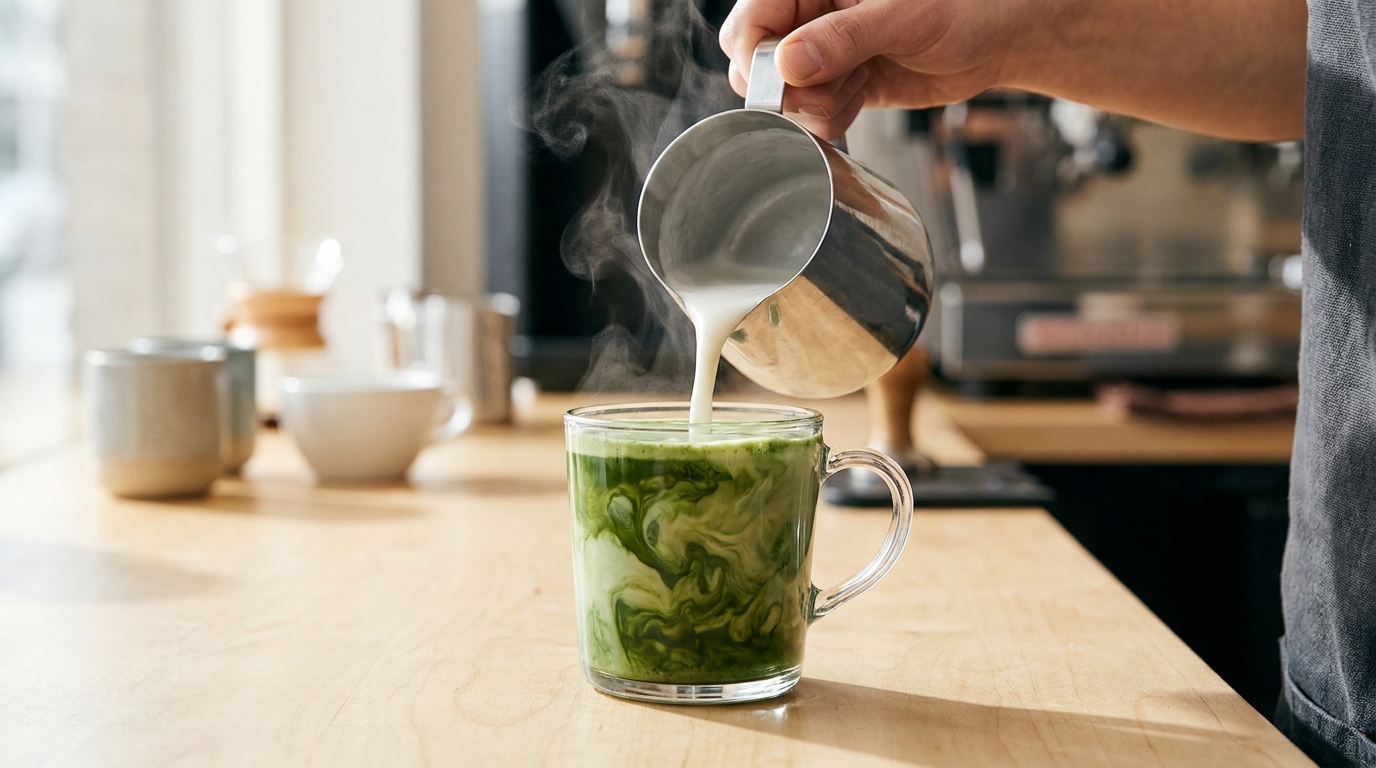
The matcha oat milk latte is the undisputed anchor of the modern green tea menu. Oat milk is the ideal pairing partner for matcha because its natural sweetness and creamy lipids complement the earthy, vegetative notes of the tea without overpowering them. To ensure consistency across multiple cafe locations, beverage directors must implement precise formulas and strict extraction standards.
To prepare the ideal latte, a high-quality Latte Grade Matcha Powder is highly recommended. It provides the necessary robust flavor profile to cut through the oat milk’s fat content while maintaining a striking green aesthetic.
The standard extraction formula for a 12oz (approx. 355ml) hot or iced latte consists of:
- Matcha Powder: 3.0 grams (sifted)
- Water (at 75°C / 167°F): 40 ml
- Oat Milk (Barista Edition): 240 ml
- Liquid Sweetener (optional): 10 ml of simple syrup or agave (to balance the earthy green notes)
The extraction process begins by adding the 3.0g of sifted matcha to 40ml of 75°C water. The mixture is whisked or frothed using a high-speed hand mixer for 15 to 20 seconds until a thick, micro-foam-rich concentrate is created. This step is the “extraction.”
For a hot latte, the oat milk is steamed to 60°C (140°F) to create a velvety micro-foam, similar to flat white milk standards, and then poured slowly into the matcha concentrate. For an iced latte, the matcha concentrate is poured over a glass filled with ice and cold oat milk, creating a striking, photogenic layered effect. Achieving this visual separation relies on liquid density; the milk must be heavier than the whisked matcha, which can be accomplished by adding sweetener to the milk layer first.
Table 3: Latte Matcha Quality and Extraction Testing Standards
Parameter | Operational Standard | Testing Method | Action If Non-Compliant |
|---|---|---|---|
Water Temperature | 70°C – 80°C (158°F – 176°F) | Calibrated digital probe thermometer. | Adjust kettle heating element; never use steam wand water directly. |
Solubility / Texture | Zero sediment, smooth suspension. | Visual check of the bottom of the cup after 3 minutes. | Increase whisking duration; ensure sifting step is not bypassed. |
Visual Color | Bright, vibrant jade green. | Comparison against a color standard card under natural light. | Check powder storage for air exposure; replace oxidized stock. |
Moisture Content | Under 5.0% | Halogen moisture analyzer (lab environment). | Contact supplier; reject batch if powder shows clumping in sealed bags. |
Granulation / Mesh Size | Minimum 800 mesh (approx. 15 microns) | Particle size analyzer (laser diffraction). | Reject batch if grittiness is detected on the palate during quality control. |
Innovative Matcha Beverage Variations to Drive Seasonal Cafe Sales
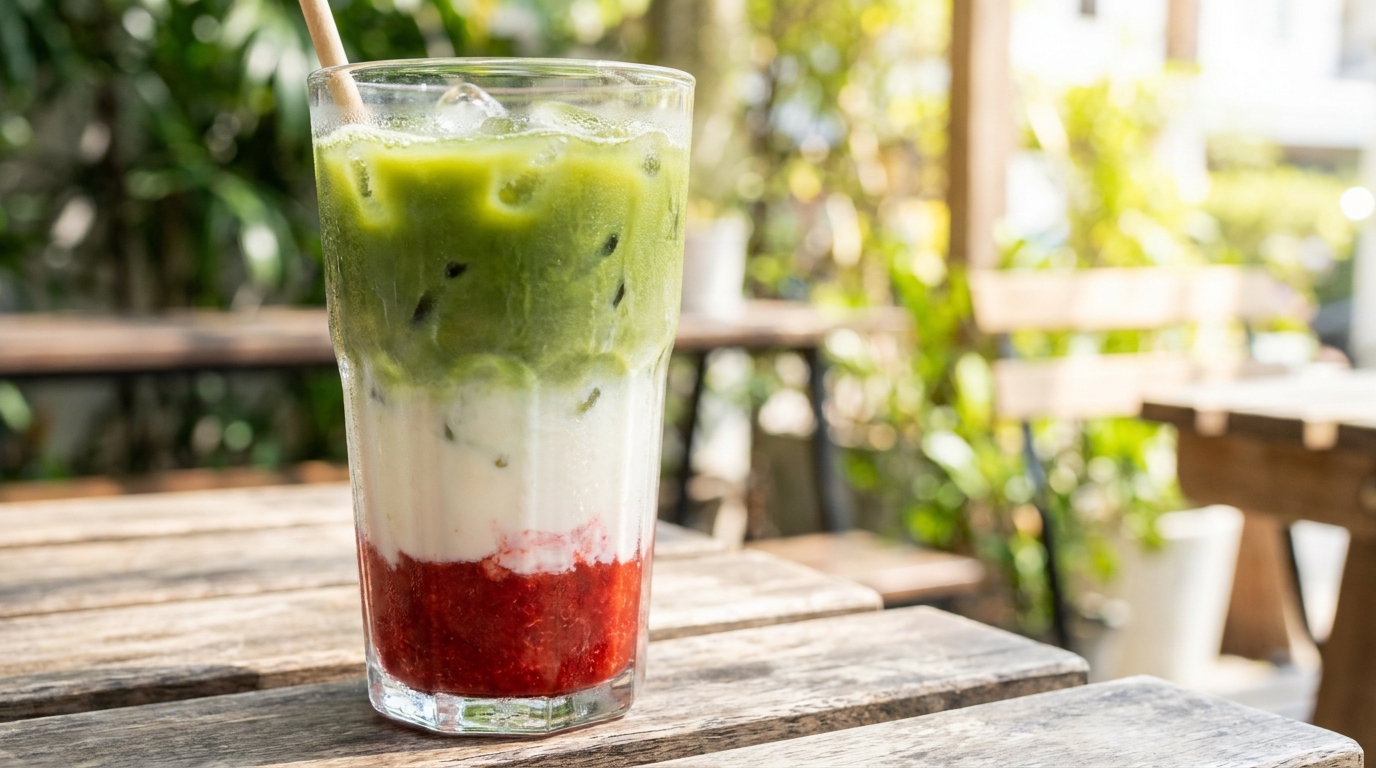
While the classic matcha latte ensures steady baseline revenue, a dynamic seasonal beverage program captures consumer interest, increases visit frequency, and drives higher-margin sales. Matcha’s complex flavor profile makes it incredibly versatile, pairing beautifully with fruits, botanical syrups, carbonated elements, and even espresso. By engineering visually striking, layered beverages, cafes can leverage social-media-driven aesthetic trends to boost organic foot traffic.
One of the most successful seasonal beverage innovations is the Iced Strawberry Matcha Latte. This drink is constructed around distinct color layers: a deep red strawberry compote at the base, followed by a creamy milk layer, and topped with a vibrant green matcha suspension.
To execute this beverage at speed during peak service hours, cafes should prep a house-made strawberry purée (fresh strawberries simmered with sugar and lemon juice until a high-viscosity syrup is formed). During assembly, 30g of the chilled strawberry compote is added to the bottom of a clear glass. The glass is filled with ice, and 180ml of milk is poured gently over the back of a bar spoon to prevent mixing. Finally, a 2g matcha concentrate (whisked with 30ml of cold water) is poured slowly over the top. The resulting three-tier visual stack is highly photogenic, justifying a premium retail price point.
Other high-performing variations include:
- The Matcha Tonic: A refreshing summer beverage combining 150ml of premium tonic water over ice, a splash of yuzu or lime juice, and a 2g matcha float. The natural bitterness of the quinine in the tonic water balances the grassy, sweet umami of the matcha.
- The Dirty Matcha: Designed for coffee enthusiasts, this drink layers a single shot of espresso over a cold iced matcha latte, combining earthy tea notes with the roasted complexity of coffee.
- Botanical Fusions: Incorporating lavender, jasmine, or elderflower syrups into the milk base prior to adding the matcha layer creates a highly fragrant, sophisticated beverage profile suited for spring menus.
Utilizing Matcha in Desserts, Pastries, and Baking Applications
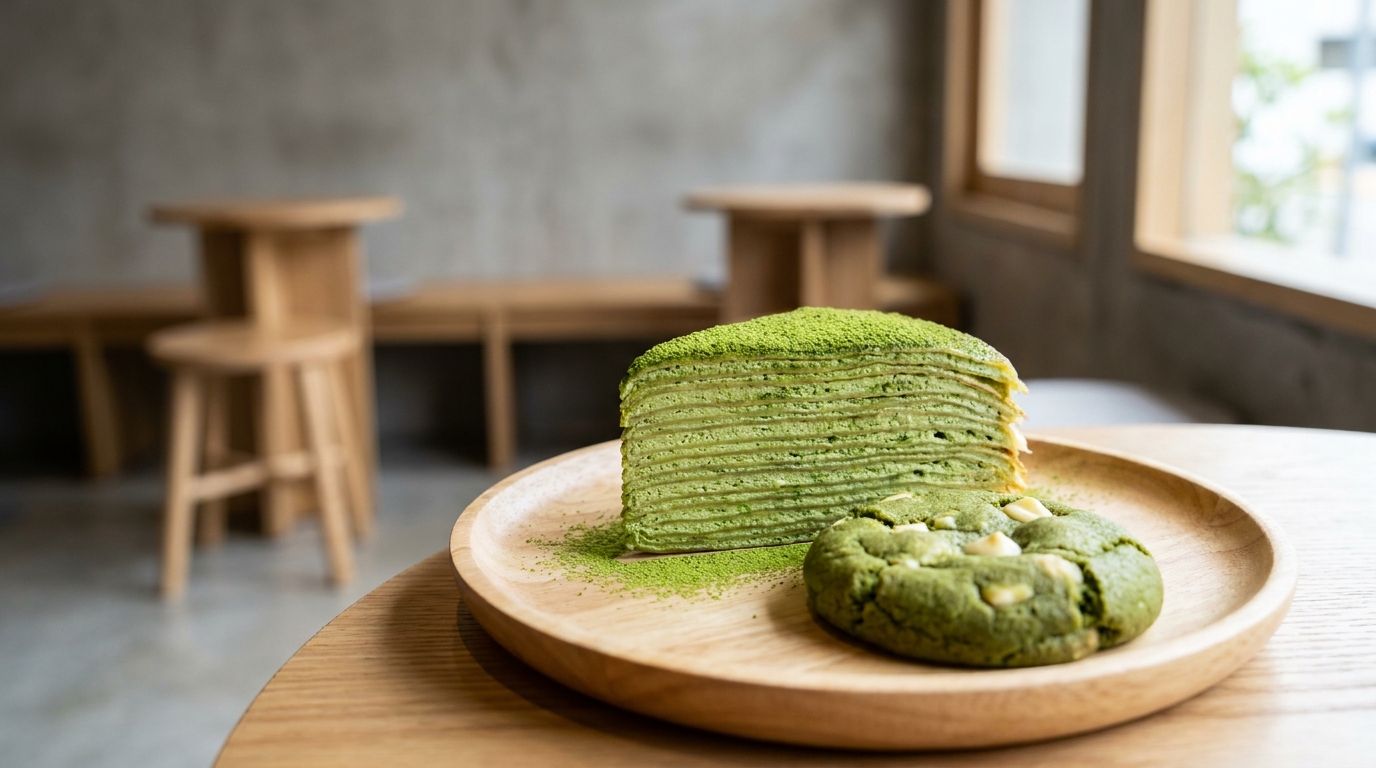
For bakery operations and cafe kitchens, cross-utilizing matcha across both the beverage and food menus is a highly effective way to manage inventory and streamline sourcing. Matcha is highly prized in baking for both its unique flavor and its brilliant green color. However, incorporating matcha into baked goods requires an understanding of how heat, pH, and ingredient interactions affect the delicate powder.
The main challenge when baking with matcha is thermal degradation of chlorophyll. When exposed to high heat (above 160°C / 320°F) for extended periods, the vibrant green chlorophyll in matcha undergoes a chemical reaction that converts it into pheophytin, which has a dull, olive-brown color.
To preserve the vibrant green appearance in finished pastries, bakers must use specialized premium culinary grades with high heat stability. In addition, adjusting the baking parameters is crucial: lowering the oven temperature while slightly extending the baking time, or shielding the pastries with aluminum foil during the bake, can help protect the color. Another option is focusing on raw or low-heat applications, such as raw cheesecakes, match-infused pastry creams, white chocolate ganaches, and delicate multi-layered crepe cakes where the cream is whipped and layered cold.
Furthermore, matcha is naturally acidic and contains high amounts of tannins, which can affect the gluten structure and leavening processes in doughs. When designing recipes, the addition of matcha must be balanced with fat and sugar to soften its inherent astringency.
For instance, pairing matcha with high-fat, high-sweetness ingredients like white chocolate, cream cheese, or sweet red bean paste (anko) creates a balanced flavor profile. The fats coat the tongue, rounding out the sharp bitter notes of the tea and highlighting its complex, toasted-grass sweet undertones.
Table 4: Dessert and Baking Applications Grade Recommendations
Pastry Application | Recommended Matcha Grade | Key Functional Requirement | Typical Inclusion Rate | Visual & Flavor Performance |
|---|---|---|---|---|
Mille Crepe Cakes & Mousses | Premium Culinary / Latte Grade | Fine particle size for smooth cream integration; vibrant green color. | 1.5% – 2.0% of cream weight | Excellent visual appeal; clean, sweet grassy notes with zero grittiness. |
Cookies, Scones & Croissants | Standard Culinary Grade | High heat stability; robust flavor profile that stands up to butter and flour. | 2.5% – 3.0% of flour weight | Deep, rustic olive-green color; pleasantly bitter tea flavor that balances high fat. |
Gelato, Ice Cream & Custards | Latte Grade | High solubility in cold liquid bases; balanced umami profile. | 1.0% – 1.5% of liquid base | Brilliant pastel green hue; smooth mouthfeel with a lingering sweet tea finish. |
Dusting & Finishes | Ceremonial / Premium Beverage Grade | High-quality visual appearance; pleasant, non-bitter taste when tasted directly. | Light dusting on surface | Striking electric-green presentation; premium, high-end aesthetic. |
Cost Control, Portioning, and Profit Margin Optimization for Matcha Items
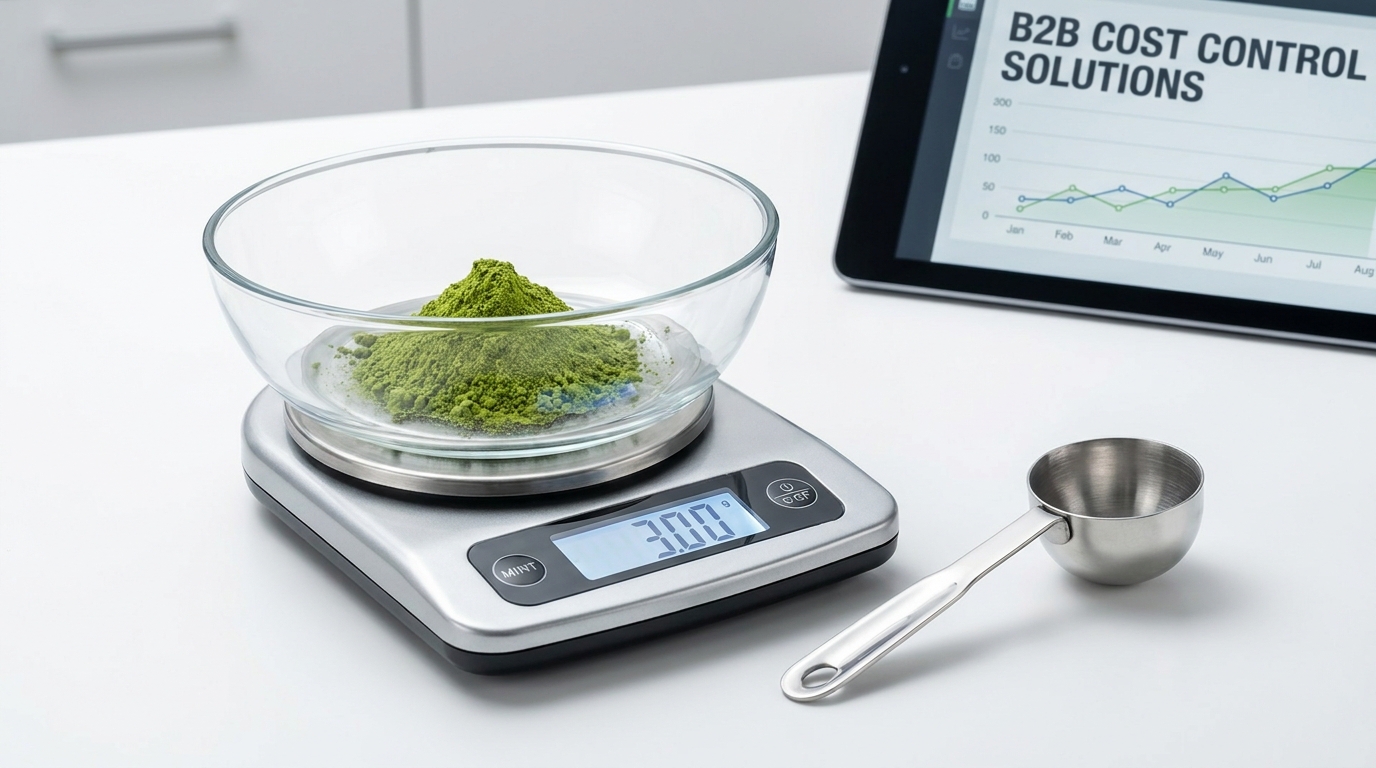
In a commercial food and beverage operation, raw ingredient costs must be strictly managed to maintain healthy profit margins. Because premium matcha is a high-value raw material—often costing significantly more per kilogram than standard coffee beans—implementing strict waste-minimization protocols, precise portioning, and smart cost control is vital.
The first step in controlling costs is standardizing the scoop size. Baristas should never free-pour or estimate matcha portions. Using a calibrated, flat-bottomed digital scale to weigh every dose to the nearest 0.1 gram is the industry standard for premium beverage programs. Alternatively, pre-calibrated stainless steel portion scoops must be used, with staff trained to level off each scoop. A variation of just 1 gram per cup can seem negligible, but across a multi-unit operation serving 500 lattes a day, this discrepancy can quickly add up to kilograms of wasted inventory each month.
Equally important is protecting the raw inventory from environmental degradation. Once opened, bulk matcha is highly sensitive to three key elements:
- Oxygen: Causes rapid oxidation of catechins, turning the powder brown and dulling the flavor.
- Light (UV rays): Photochemical degradation quickly breaks down chlorophyll.
- Moisture: Causes clumping and can lead to microbial spoilage.
To prevent degradation and waste, bulk bags should be kept tightly sealed in air-tight, light-blocking containers (such as food-grade stainless steel canisters with vacuum seals) and stored in a cool, dry place. For long-term storage of unopened bulk inventory, refrigeration at 4°C (39°F) is highly recommended. However, to prevent condensation from forming on the powder, bags must be allowed to reach room temperature before being opened.
Table 5: Usage Calculation per Cup and Inventory Capacity
Beverage Size (oz) | Matcha Dose (g) | Cost per Gram (at $35/kg) | Cost per Gram (at $55/kg) | Yield per 1kg Bulk Bag (Cups) | Cost per Serving (Matcha Only – $35/kg) | Cost per Serving (Matcha Only – $55/kg) |
|---|---|---|---|---|---|---|
8 oz | 2.0g | $0.035 | $0.055 | 500 cups | $0.070 | $0.110 |
12 oz | 3.0g | $0.035 | $0.055 | 333 cups | $0.105 | $0.165 |
16 oz | 4.0g | $0.035 | $0.055 | 250 cups | $0.140 | $0.220 |
Food Safety, Certifications, and Quality Standards for Bulk Sourcing
For franchise chains, food manufacturers, and corporate purchasing managers, supply chain safety and regulatory compliance are critical operational priorities. When sourcing agricultural products like matcha in bulk, verifying food safety credentials is essential for protecting your brand and ensuring regulatory compliance.
Specialty buyers must demand a complete Certificate of Analysis (COA) for every single batch of matcha imported. A COA is a verified document provided by certified third-party testing laboratories that confirms the product meets all chemical, physical, and microbiological safety standards.
Key safety concerns when importing bulk agricultural goods include heavy metal contamination (such as lead and arsenic, which tea plants naturally absorb from the soil) and pesticide residues. Buyers must ensure that their supplier’s products comply with the Maximum Residue Limits (MRLs) set by local regulatory bodies, such as the FDA in the United States or EFSA in the European Union.
In addition to safety testing, national certifications are essential for meeting consumer expectations and opening up new retail opportunities. Sourcing organic-certified matcha (USDA Organic, EU Organic) guarantees that the tea was cultivated without synthetic fertilizers, herbicides, or pesticides. For international supply chains, securing Halal and Kosher certifications ensures accessibility for diverse consumer segments.
Furthermore, processing facilities must hold international food safety management certifications, such as ISO 22000 or HACCP (Hazard Analysis Critical Control Point), which prove that the manufacturer follows rigorous, systematic protocols to prevent physical, chemical, and biological hazards at every stage of production—from harvest to packaging.
Table 6: Quality Standards and Document Sourcing Checklist
Certification / Document | Verifiable Parameters | Target Acceptable Limit | Operational Significance |
|---|---|---|---|
Certificate of Analysis (COA) | Comprehensive lab testing summary. | Batch-specific matching invoice. | Verifies chemical and physical purity of the batch. |
Pesticide Residue Screen | Screen for over 500 common pesticides. | Below Detection Limit (BDL) / Compliance with local MRLs. | Mandatory for custom clearance and organic labeling claims. |
Heavy Metals Panel | Lead (Pb), Arsenic (As), Cadmium (Cd), Mercury (Hg). | Lead < 1.0 ppm; Cadmium < 0.2 ppm; Mercury < 0.1 ppm. | Protects against long-term toxicological risk and brand liability. |
Microbiological Panel | Total Plate Count, Yeast & Mold, E. coli, Salmonella. | TPC < 10,000 CFU/g; Yeast/Mold < 100 CFU/g; E. coli: Negative. | Ensures product stability and prevents foodborne illnesses. |
Organic Certificate | USDA NOP / EU Organic certification. | Valid, active certificate matching supplier name. | Allows use of the “Organic” label on retail packaging and menus. |
Facility Certification | GFSI Benchmarked (FSSC 22000, BRCGS, ISO 22000). | Active registry status. | Verifies that the processing facility operates under world-class safety standards. |
Barista Training and Operational Workflow for High-Volume Matcha Service
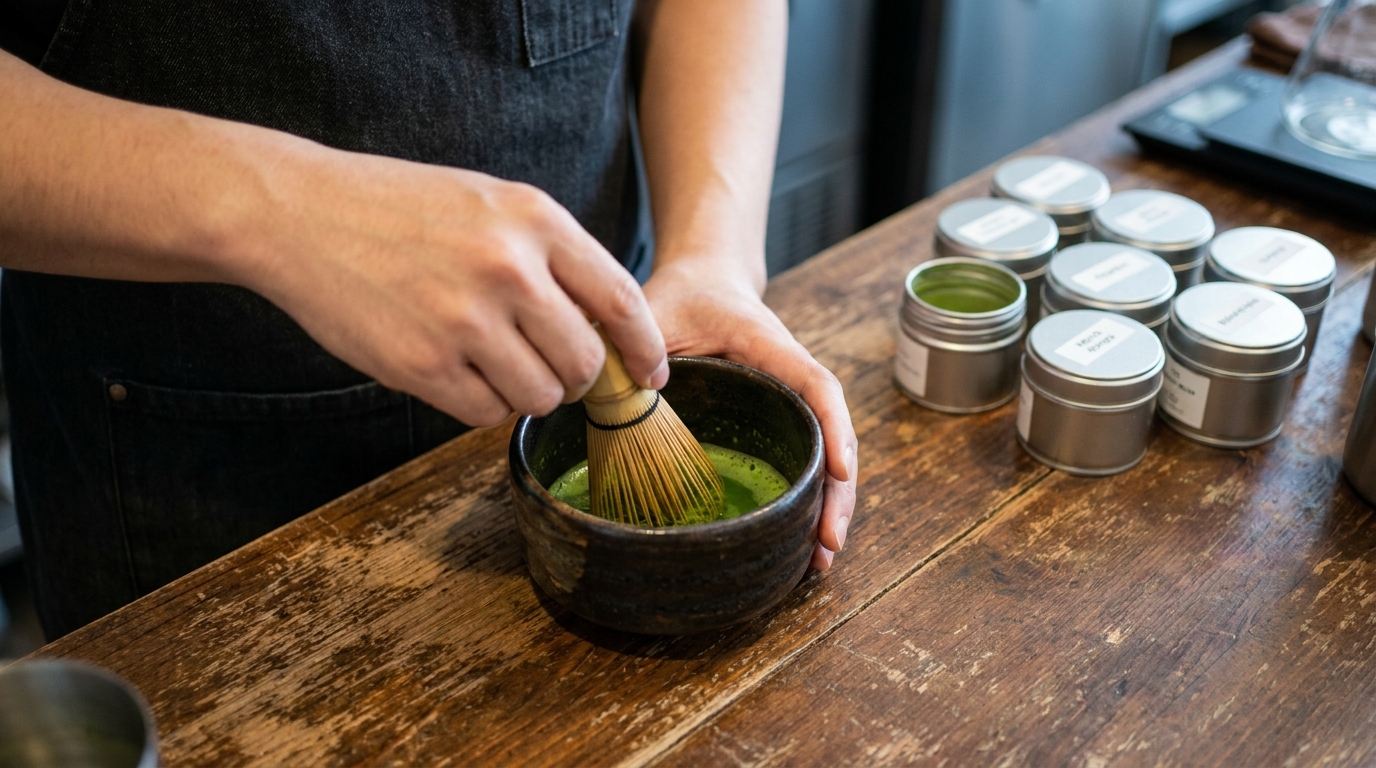
In a high-volume cafe environment, speed and consistency are the dual pillars of operational success. A delicious drink that takes five minutes to prepare will disrupt ticket times and frustrate customers, while a fast drink that is clumpy and bitter will damage repeat business. To achieve both speed and quality, cafe managers must design an optimized workstation layout, implement clear barista training programs, and establish structured operational workflows.
An efficient workflow begins with station layout design. The matcha preparation tools should be organized together, ideally near the milk steaming station and ice bins.
To streamline service during peak hours, many high-volume cafes utilize a pre-batched matcha concentrate system. While matcha should ideally be prepared fresh, whisking individual portions under intense time pressure can lead to bottlenecks.
Instead, baristas can prepare a concentrated batch of matcha at the start of each shift. This is done by combining a larger volume of sifted matcha with room-temperature water in a specialized blending pitcher to create a smooth, highly concentrated suspension. This concentrate can then be kept at the station in a clean squeeze bottle or insulated dispenser.
When an order is placed, the barista simply dispenses a pre-measured shot of the concentrate, adds sweetener, and tops it with hot or iced milk. However, because matcha is a suspended solid rather than a fully dissolved solution, the particles will naturally settle over time. To ensure consistency, the concentrate must be thoroughly agitated or shaken before every single pour.
Additionally, any unused concentrate must be discarded at the end of the shift, as oxidized matcha will lose its vibrant green color and fresh flavor within 4 to 6 hours.
Private Labeling, Packaging Solutions, and Bulk Customization
For multi-unit cafe chains, lifestyle brands, and wellness companies, expanding into retail packaging offers a highly profitable revenue stream that extends your brand’s reach beyond the physical cafe. Offering branded retail tins of high-quality matcha allows customers to enjoy your products at home, strengthening brand loyalty. Leveraging professional Private Label Matcha Services allows brands to seamlessly expand their product lines without needing to invest in complex packaging machinery or manufacturing facilities.
When developing a retail matcha line, choosing the right packaging material is critical. Unlike whole bean coffee, which can be protected with one-way degassing valves, matcha is highly sensitive to light and air.
As a result, retail packaging must provide a complete barrier against oxygen, UV light, and moisture:
- Specially Coated Aluminum Tins: The gold standard for retail matcha. These tins feature airtight, pull-ring inner seals and resealable plastic lids, which completely block light and air to preserve freshness after opening.
- Nitrogen-Flushed Stand-up Pouches: A highly effective option for larger retail sizes (such as 100g to 250g). Flushing the pouches with food-grade nitrogen gas displaces any oxygen inside, preventing oxidation and dramatically extending the product’s shelf life until opened.
For high-volume cafe supply chains and industrial food manufacturers, bulk sourcing requires robust and protective packaging. Bulk matcha is typically packaged in heavy-duty, double-layered food-grade polyethylene bags, which are then vacuum-sealed and packed into light-blocking cardboard cartons or fiber drums.
These bulk configurations, ranging from 1kg to 25kg, are designed to withstand international transit while protecting the sensory qualities of the tea.
Table 7: Bulk Supplier Evaluation Factors
Evaluation Factor | High-Quality Standard (Target Benchmark) | Low-Quality Indicator (Risk Flag) | Operational / Financial Impact |
|---|---|---|---|
Origin Verification | Direct traceability to historic tea-growing regions (such as Shizuoka or Uji). | Unspecified origin; labeled simply as “imported green tea.” | Impacts taste authenticity and limits premium branding opportunities. |
Milling Technology | Traditional granite stone milling or advanced temperature-controlled jet-milling. | Poorly ground, uneven milling with high-temperature processing. | Coarse powder leads to poor suspension, grittiness, and rapid settling in cups. |
Lead Time & Logistics | 15 – 30 days with temperature-controlled air or ocean freight. | Exceeds 60 days; lacks temperature control during long-distance transit. | Long transit times risk heat damage and color degradation before arrival. |
MOQ Flexibility | Low Minimum Order Quantities (such as 50kg to 100kg) for initial testing. | Rigid, excessively high MOQs (exceeding 1000kg) for trial runs. | High MOQs increase inventory holding costs and risk capital tie-up. |
Customization Options | Ability to customize particle size, grade blending, and private label packaging. | Standard “one-size-fits-all” catalog with no custom options. | Limits the ability to create unique signature blends or retail products. |
Designing a High-Margin Matcha Menu Composition and Pricing Strategy
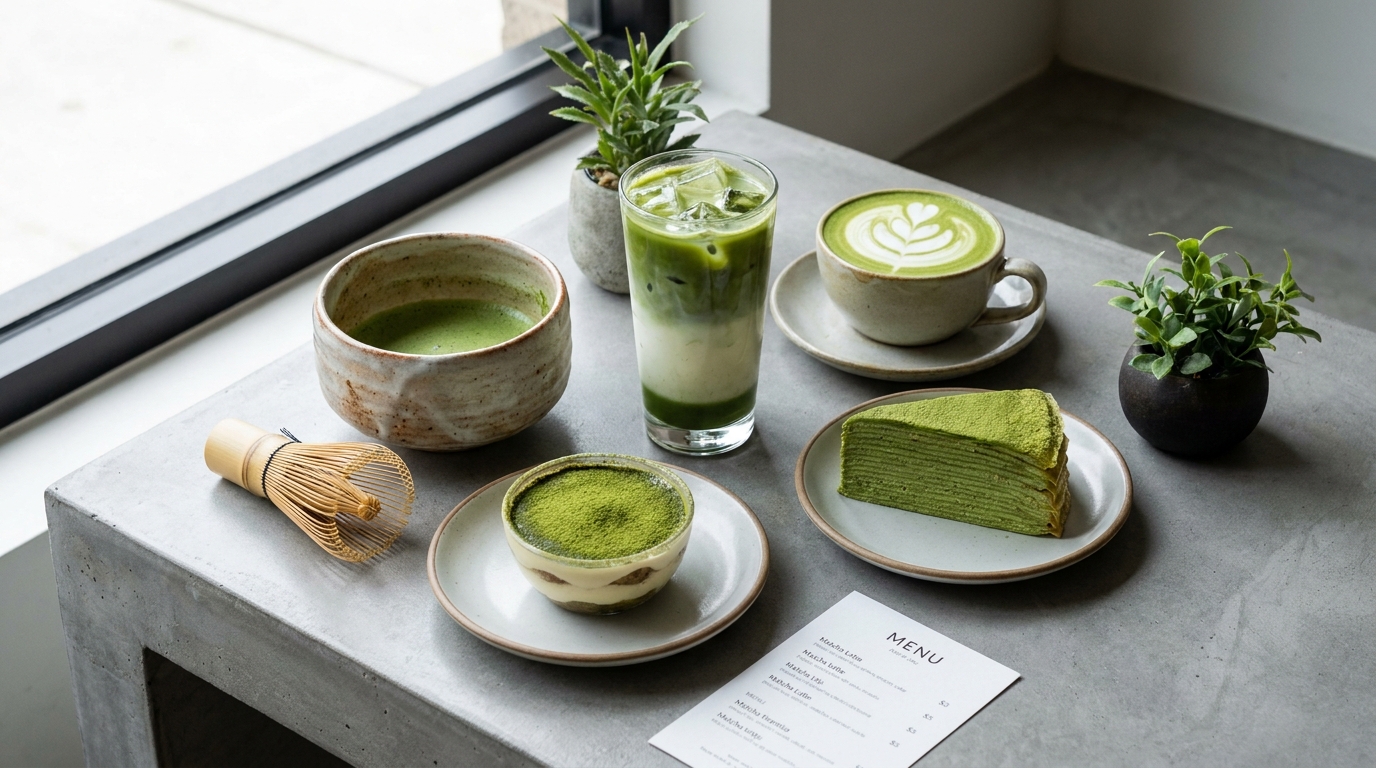
Successfully integrating matcha into your beverage program requires a strategic approach to menu design and pricing. Rather than treating matcha as a single, low-priority item, clever operators build a structured, high-margin menu “ladder.” This approach encourages customers to try different options, easily accommodates premium upgrades, and maximizes the average transaction value.
An effective menu strategy uses a tiered structure:
- The Core Anchor: This is your classic Matcha Oat Milk Latte, positioned as a premium drink priced slightly above standard espresso lattes. This item is made using Latte Grade Matcha, offering a rich, creamy, and visually striking beverage that serves as the entry point for most customers.
- The Signature Specials: These are unique seasonal creations—such as the Iced Strawberry Matcha or a Sparkling Matcha Tonic—which carry higher price points and offer excellent margins. These visually impressive, layered drinks command a premium because of their unique preparation and high social-media appeal.
- The Ultra-Premium Experience: For true tea enthusiasts, offering a traditional, hand-whisked Single-Origin Ceremonial Matcha served purely with water appeals to a sophisticated demographic. This option carries the highest margin, as it requires only hot water and premium powder, while commanding a premium price due to its ceremonial presentation.
To drive sales, menu descriptions should highlight the quality and origin of the tea, using terms like “shaded Japanese green tea” or “stone-ground” to signal premium quality.
Additionally, offering simple, high-margin add-ons—such as house-made lavender cold foam, sweet vanilla cold foam, or alternative milks—allows customers to customize their drinks while boosting profitability.
Table 8: Menu Composition and Grade Sourcing Guide
Menu Item | Target Matcha Grade | Wholesale Cost Index | Recommended Retail Price | Target Margin % | Serving / Preparation Method |
|---|---|---|---|---|---|
Traditional Pure Matcha | High ($$$$) | 5.50–5.50 – 7.50 | 85% – 90% | Sifted, hand-whisked in a Chawan with 75°C water; served hot and unsweetened. | |
House Matcha Latte | Moderate ($$$) | 4.95–4.95 – 6.25 | 78% – 82% | Whisked concentrate mixed with steamed or iced milk of choice. | |
Iced Fruit Matcha | Latte / Premium Beverage Grade | Moderate ($$$) | 5.75–5.75 – 7.25 | 72% – 76% | Layered over fresh fruit compote (strawberry/mango), milk, and ice. |
Matcha Cold Foam Cold Brew | Premium Culinary Grade | Low ($$) | 5.25–5.25 – 6.50 | 80% – 84% | Matcha whipped into sweet cream and floated over cold brew coffee. |
Matcha Affogato | Premium Culinary / Latte Grade | Low ($$) | 6.00–6.00 – 7.50 | 75% – 80% | Thick, warm matcha concentrate poured over premium vanilla bean gelato. |
Choosing the Right Wholesale Supplier: Steps to Place Your First Order
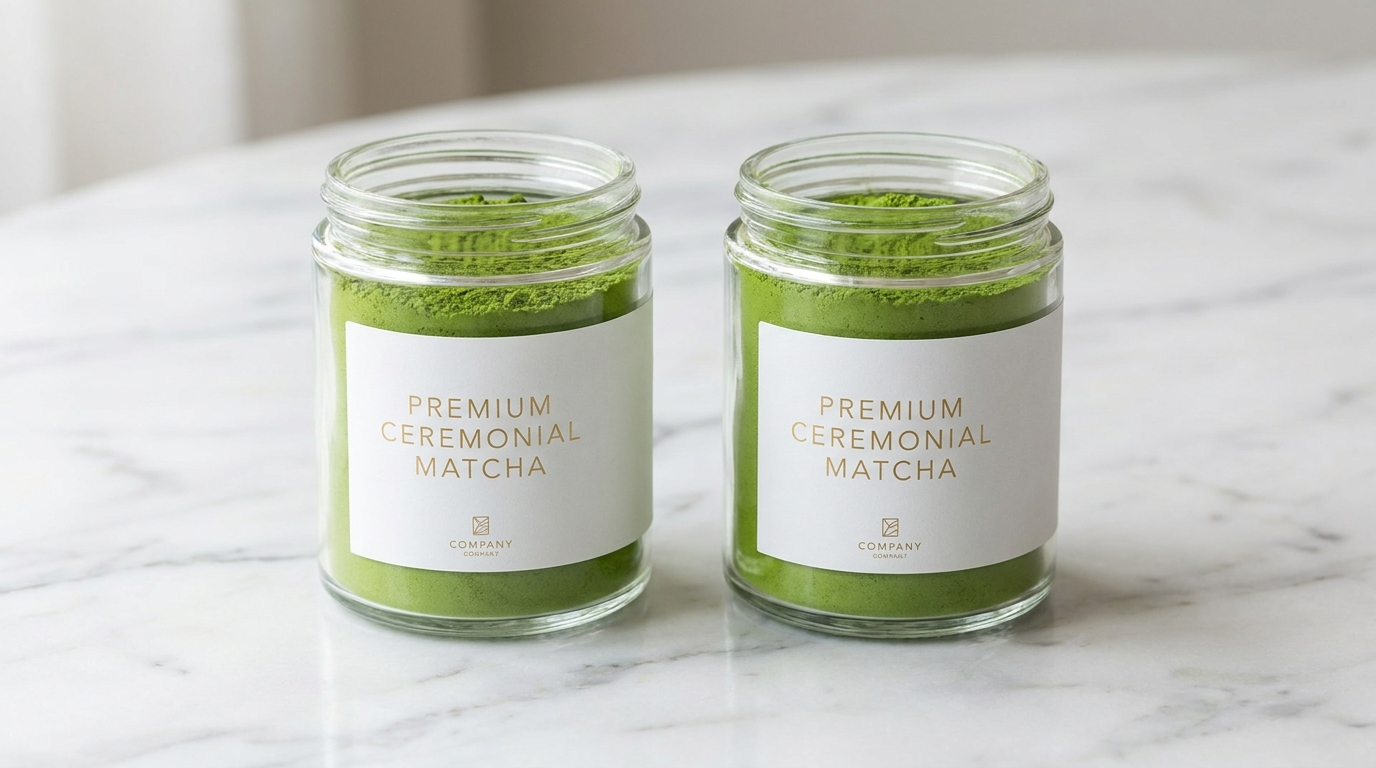
Selecting the right wholesale partner is the final and most important step in building a successful, long-term matcha program. Because matcha is a delicate, agricultural product, partnering with a professional manufacturer ensures a consistent, high-quality supply that keeps your operations running smoothly.
When evaluating potential B2B suppliers, procurement managers should follow a systematic onboarding and sourcing process:
- Request and Evaluate Samples: Before making any purchase commitments, systematically request samples of different grades. A reputable supplier should readily provide sample kits of ceremonial, beverage, and culinary grades.
- Perform Quality Control Testing: Evaluate the samples using standardized tests:
- Color Test: Spread a small amount of powder onto white paper and drag your finger across it. A high-quality grade will leave a smooth, vibrant, bright-green streak with no yellow undertones or clumping.
- Aroma and Taste Test: Whisk the powder with 75°C water. Note the aroma, sweetness, umami depth, and any bitterness.
- Solubility and Suspension: Observe how well the powder disperses in water and check for any grittiness on the palate.
- Verify Compliance and Certifications: Request copies of the supplier’s food safety certifications, heavy metal and pesticide residue reports, and organic credentials to ensure they align with your regulatory requirements.
- Negotiate Terms and Place a Trial Order: Discuss price-break tiers, estimated shipping times, and minimum order quantities. Begin with a smaller trial order to evaluate their shipping efficiency, packaging quality, and batch-to-batch consistency before scaling up to full-scale contract sourcing.
For brands looking for a dependable, vertically integrated wholesale partner, you can request matcha samples from Riching Matcha. Testing their range under real-world cafe conditions is the best way to find the perfect fit for your menu, ensuring your beverage program stands out for its quality, flavor, and profitability.
Frequently Asked Questions (FAQs)
What is the difference between culinary grade and ceremonial grade matcha powder?
Ceremonial grade matcha is harvested during the first spring flush, shaded for 20 to 30 days, and slowly stone-ground. This process preserves the delicate amino acids, resulting in a vibrant electric-green color, rich umami flavor, and zero bitterness. It is designed to be whisked simply with hot water.
In contrast, culinary grade matcha is harvested later in the year, contains more bitter catechins, and has an olive-green hue. It features a robust, astringent flavor profile specifically designed to cut through dairy, alternative milks, sugar, and flour in baking and drink applications.
Why is organic matcha powder highly recommended for B2B food service?
Organic certification guarantees that the matcha is grown without synthetic fertilizers, chemical pesticides, or herbicides. Because matcha involves consuming the entire ground tea leaf rather than simply steeping it, choosing organic options ensures that consumers are not exposed to pesticide residues.
For B2B operators, offering organic matcha builds trust with health-conscious consumers, protects your brand, and aligns with corporate wellness and sustainability initiatives.
How should bulk matcha powder be stored to prevent oxidation and color fading?
Bulk matcha should be stored in an airtight, light-blocking container—such as food-grade stainless steel canisters—and kept in a cool, dry, and dark environment. Once opened, matcha is highly sensitive to oxygen, light, and moisture, which quickly oxidize the catechins and degrade the chlorophyll, turning the powder brown and bitter.
For long-term storage of unopened bulk bags, refrigeration at 4°C (39°F) is recommended. However, bags must be allowed to reach room temperature before opening to prevent condensation from forming on the powder.
What is the shelf life of bulk wholesale matcha powder?
Unopened, nitrogen-flushed bulk matcha powder stored in a cool, dark environment has a shelf life of approximately 18 to 24 months from the date of manufacture.
However, once the packaging is opened and exposed to oxygen, the powder should ideally be used within 4 to 8 weeks to ensure optimal color, aroma, and flavor. To maintain the highest quality, B2B buyers should plan their orders around their actual monthly usage to ensure they are always serving fresh stock.
How do I test the quality of a wholesale matcha sample?
You can evaluate a wholesale matcha sample using three simple tests:
- The Visual Streak Test: Place a small teaspoon of powder onto clean white paper and use your finger to smear a line. A high-quality grade will leave a smooth, vibrant, bright-green streak, while lower grades will appear dull yellow or olive-green and feel gritty.
- The Scent and Taste Test: Whisk 2 grams of matcha with 75°C water. It should yield a sweet, grassy, and umami-rich aroma, with a smooth, pleasantly sweet taste and minimal bitterness.
- The Suspension Test: Whisk the matcha and let it stand in a clear glass for 5 minutes. High-quality, ultra-finely milled matcha will remain in a smooth suspension with minimal settling at the bottom.