
The global market for matcha is experiencing an unprecedented structural transformation. Driven by surging consumer interest in functional wellness, clean-label ingredients, and the convenience of ready-to-mix (RTM) beverages, demand has reached historic levels. According to market intelligence reports by Mordor Intelligence, the global matcha market is valued at USD 3.91 billion in 2026 and is projected to scale to USD 5.35 billion by 2031, exhibiting a robust Compound Annual Growth Rate (CAGR) of 6.47%. In parallel, data from Grand View Research highlights an even broader trajectory, estimating the market at USD 5.07 billion with expectations to touch USD 8.86 billion by 2033 at a CAGR of 7.1%.
For B2B buyers—ranging from multi-national beverage brands and supplement manufacturers to private label e-commerce retailers—navigating this expanding market requires a highly sophisticated understanding of supply chain economics. Sourcing bulk agricultural products is inherently volatile, but matcha represents a unique intersection of high-barrier horticultural techniques and precise industrial processing.
Unlike standard commodity teas (which are experiencing a modest 2% global price contraction according to the World Bank due to black tea oversupply in India and Africa), specialty shade-grown tencha—the raw material for matcha—is facing significant upward pricing pressure. This divergence is evident in global trading data; while Trading Economics recorded general green and black tea trading at approximately 213.09 INR/kg (approx. USD 2.55/kg) in mid-2026, premium stone-ground matcha operates in an entirely different financial tier.
Industrial buyers can no longer rely on outdated pricing models. Climate fluctuations, escalating energy costs for climate-controlled milling, shifting labor dynamics in historic growing regions, and strict international pesticide regulations have made direct-from-origin relationships essential.
Securing a reliable, cost-effective partner like Riching Matcha is critical to mitigating these macro-environmental risks. Understanding how these factors influence the final cost per kilogram is the first step toward building a resilient, high-margin product lineup in 2026.
2. Average Matcha Wholesale Price Range in 2026: A B2B Benchmark
Wholesale pricing for matcha is highly stratified, governed primarily by origin, agricultural practices, harvest season, and the complexity of the processing methods. B2B buyers frequently encounter confusing price disparities when shifting between domestic distributors and direct-to-factory sourcing channels.
For instance, US- and European-based import brokers or premium distributors (such as Matcha.com) quote wholesale rates ranging from
45to45 to
179 per kilogram for mid-to-high tier matcha. Conversely, high-volume industrial buyers sourcing directly from primary processors on a Free on Board (FOB) basis can unlock factory-direct rates between
20and20 and
55 per kilogram for high-grade culinary and entry-level ceremonial powders.
To help procurement managers establish accurate budgets, the table below provides a comprehensive wholesale pricing benchmark for 2026, calculated across key grades and transaction volumes.
Grade Category | Primary End-Use Application | Cultivation Origin | Standard MOQ (kg) | Factory-Direct FOB Price (USD/kg) | Landed Distributor Price (USD/kg) |
|---|---|---|---|---|---|
Ultra-Premium Ceremonial | Traditional Tea Drinking, Premium RTM Brands | Kyoto / Uji, Japan | 100 – 500 | 85.00–85.00 – 140.00 | 150.00–150.00 – 220.00 |
Standard Ceremonial | Cafés, Premium Lattes, Direct-to-Consumer (DTC) Retail | Shizuoka, Japan / Zhejiang, China | 500 – 1,000 | 45.00–45.00 – 80.00 | 75.00–75.00 – 120.00 |
Premium Beverage / Latte | High-Street Coffee Chains, RTD Bottled Beverages | Zhejiang, China / Kagoshima, Japan | 1,000 – 5,000 | 22.00–22.00 – 40.00 | 45.00–45.00 – 65.00 |
High-Grade Culinary | Premium Baking, Chocolatiers, Ice Cream Brands | Zhejiang, China | 1,000 – 5,000 | 15.00–15.00 – 25.00 | 28.00–28.00 – 42.00 |
Industrial / Ingredient | Nutritional Supplements, Protein Powders, Mass Baking | China (Sichuan/Guizhou) | 5,000+ (FCL) | 8.50–8.50 – 14.00 | 18.00–18.00 – 25.00 |
Note: Landed Distributor Prices include average ocean freight, import tariffs (dependent on country of destination), customs clearance fees, and domestic warehousing margins.
The wide pricing spreads between factory-direct FOB and landed distributor rates underscore the financial advantages of direct origin sourcing. Organizations purchasing more than 500 kilograms annually can significantly reduce their cost of goods sold (COGS) by transitioning from domestic distributors to a direct factory relationship, absorbing the logistics management internally to capture double-digit margin improvements.
3. Main Cost Drivers of Matcha Wholesale Pricing
To effectively negotiate bulk contracts, buyers must understand the agricultural and industrial cost centers that determine the final wholesale price of matcha. Unlike standard leaf teas, matcha is an energy- and labor-intensive product.
1. The Shade-Growing Process (Shading Agriculture)
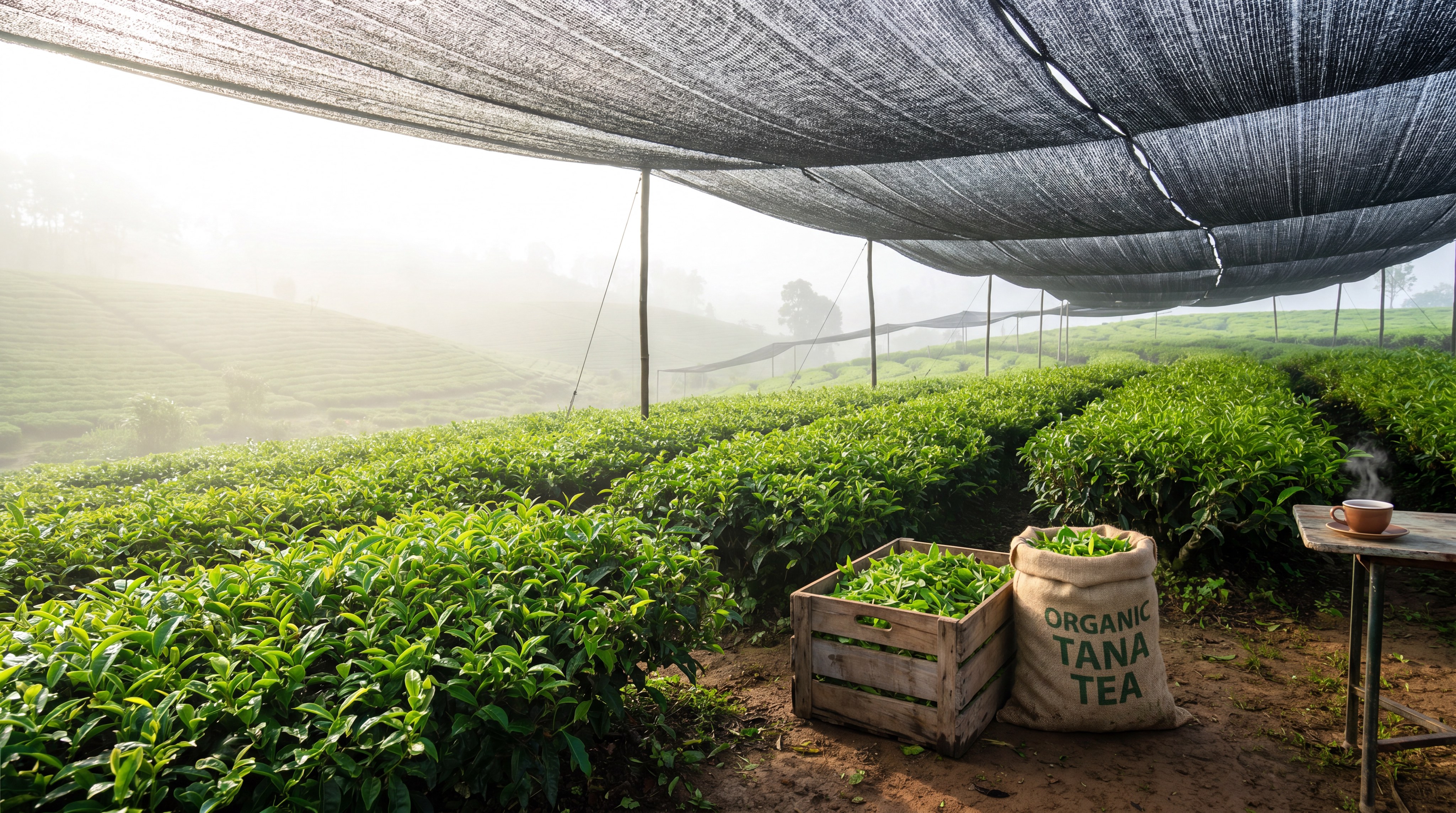
The defining characteristic of authentic matcha is the shading of the Camellia sinensis tea bushes for 21 to 30 days prior to harvest. Growers cover the fields with black polyethylene mesh netting (or traditional straw Tana structures) to block 90% to 98% of direct sunlight.
By limiting photosynthesis, the plant is forced to produce massive concentrations of chlorophyll and L-theanine (an amino acid that imparts the savory “umami” flavor and reduces bitterness). This process is highly labor-intensive and structurally demanding, requiring significant capital investment in framework engineering and seasonal labor to install and dismantle the nets.
2. Harvest Selection and Labor Dynamics
The first spring harvest (Shincha) yields the tenderest, nutrient-dense leaves, containing the highest levels of L-theanine and caffeine. This premium crop is reserved exclusively for ceremonial grades and is often hand-plucked to avoid tearing the leaves or harvesting mature stems.
Subsequent summer and autumn harvests (Nibancha and Sanbancha) are harvested mechanically. They contain higher concentrations of catechins (antioxidants that cause bitterness), making them better suited for culinary applications. Hand-plucking increases agricultural labor costs by up to 400% compared to tractor-pulled mechanical harvesting.
3. Primary De-stemming and Deveining (Tencha Production)
True matcha is never made by grinding whole tea leaves. Raw leaves must undergo steaming (to stop enzymatic oxidation), drying, and a highly complex mechanical separation process. This step removes all fibrous stems and veins (Kuki and Suje), leaving only the pure, fleshy leaf tissue known as Tencha.
The yield ratio from raw leaf to finished Tencha is extremely low—typically around 20% to 22%. The remaining biomass is diverted to low-value green tea powder or compost, adding a substantial raw material cost to the final product.
4. Milling Technology and Speed
The final processing step is where industrial efficiency diverges from artisan tradition:
- Granite Stone Grinding: Reserved for top-tier ceremonial grades. Stone mills operate at exceptionally slow speeds (typically 30 to 45 grams per hour per mill) to prevent friction-induced heat. Heat degrades the delicate chlorophyll, turning the vibrant emerald green powder into a dull, oxidized olive-yellow. Sourcing stone-ground matcha requires paying for the capital depreciation of massive stone-mill cleanrooms and long processing cycles.
- Modern Jet Milling: Air-flow jet mill pulverization is the standard for high-volume beverage and culinary grades. This process uses high-pressure, chilled air streams to collide tea leaves, reducing them to sub-10-micron particles without thermal degradation. Jet milling processes hundreds of kilograms per hour, offering the economies of scale necessary for cost-sensitive food and beverage brands.
4. Why Organic Matcha Usually Commands a Premium
As consumers align their purchasing decisions with health and environmental sustainability, the demand for certified organic options has intensified. Sourcing certified organic matcha powder introduces a distinct set of operational challenges that naturally elevate wholesale prices by 25% to 50% over conventional equivalents.
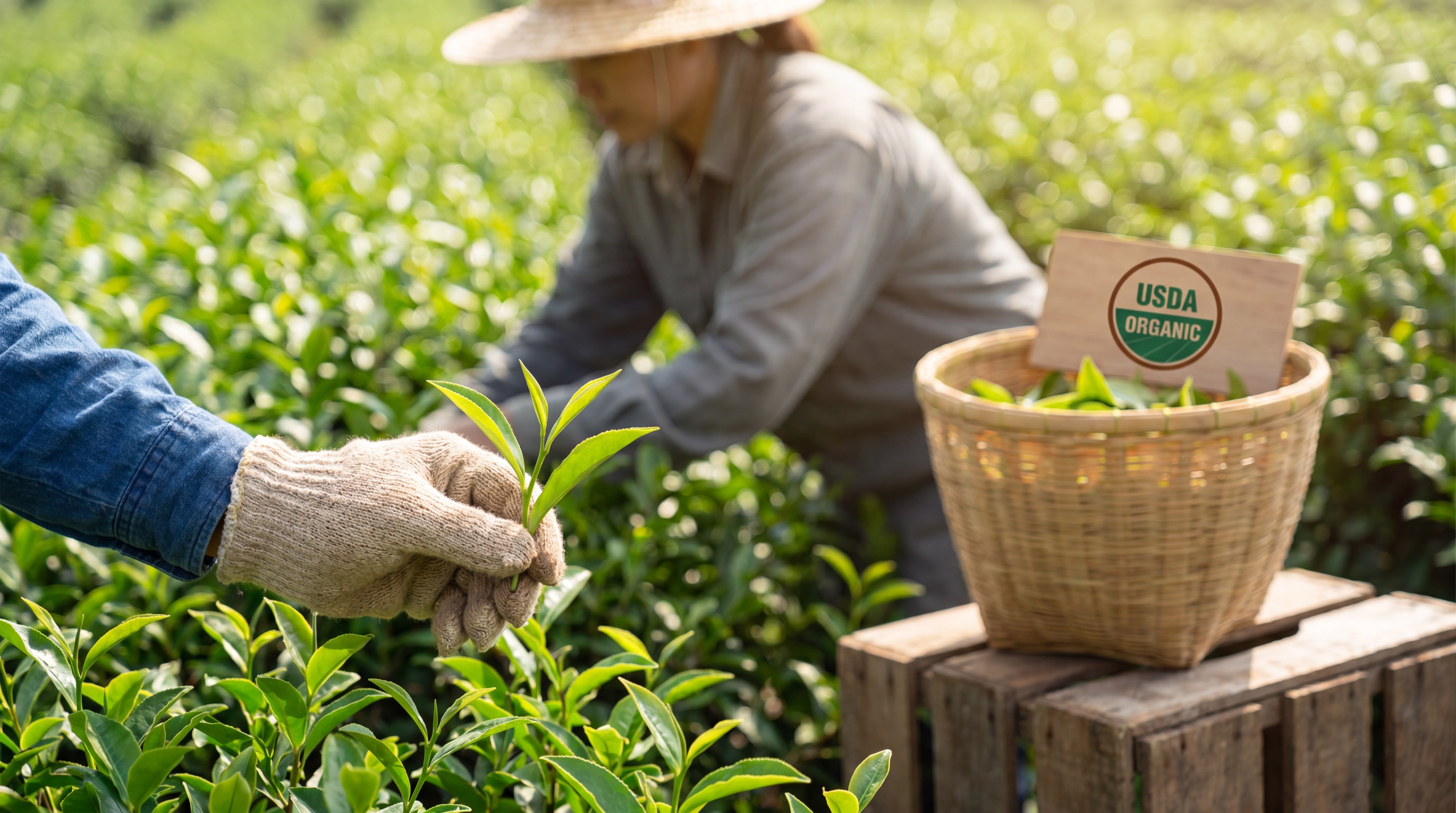
The primary driver of the organic premium is the dramatically lower agricultural yield. Conventional tea farms rely on highly efficient synthetic nitrogen fertilizers to stimulate leaf growth and maximize chlorophyll synthesis. Organic tea farms, by contrast, must use certified organic alternatives such as composted fish meal, rapeseed oil cake, and natural mineral supplements. These organic nutrients release nitrogen slowly, resulting in a 30% to 40% reduction in total leaf yield per acre.
In addition to agricultural yield losses, weed and pest control on organic farms must be managed manually or through biological biological controls. Hand-weeding shaded tea fields is highly labor-intensive, significantly driving up operational overhead.
Furthermore, to maintain organic certification (such as USDA Organic, JAS, or EU Organic), processing facilities must undergo rigorous annual audits. They must also enforce strict isolation protocols during processing to prevent cross-contamination with conventional materials. This process requires dedicated production runs, intensive clean-down cycles, and detailed batch-traceability documentation. For B2B buyers, these compliance measures represent a necessary investment to safeguard brand equity and meet stringent international regulatory standards.
5. Matcha Price by Grade: Match the Right Grade to Your Application
A common error made by B2B procurement teams is over-specifying or under-specifying the matcha grade. Sourcing a costly premium ceremonial grade for an industrial bakery application is economically inefficient, as the delicate flavor profile will be lost during high-temperature baking.
Conversely, utilizing cheap, bitter industrial-grade powder in a premium retail RTD beverage will lead to poor consumer reviews. To optimize COGS, buyers must match the chemical and physical characteristics of each grade with its intended application.
Understanding these trade-offs is critical to product development. By reviewing the technical specifications of ceremonial grade matcha and culinary matcha wholesale options, buyers can make informed decisions based on their product formulations:
Ceremonial Grade
- Harvest Window: Late Spring (First Flush/Shincha).
- Milling Method: Traditional Granite Stone or low-temperature, ultra-fine micro-milling.
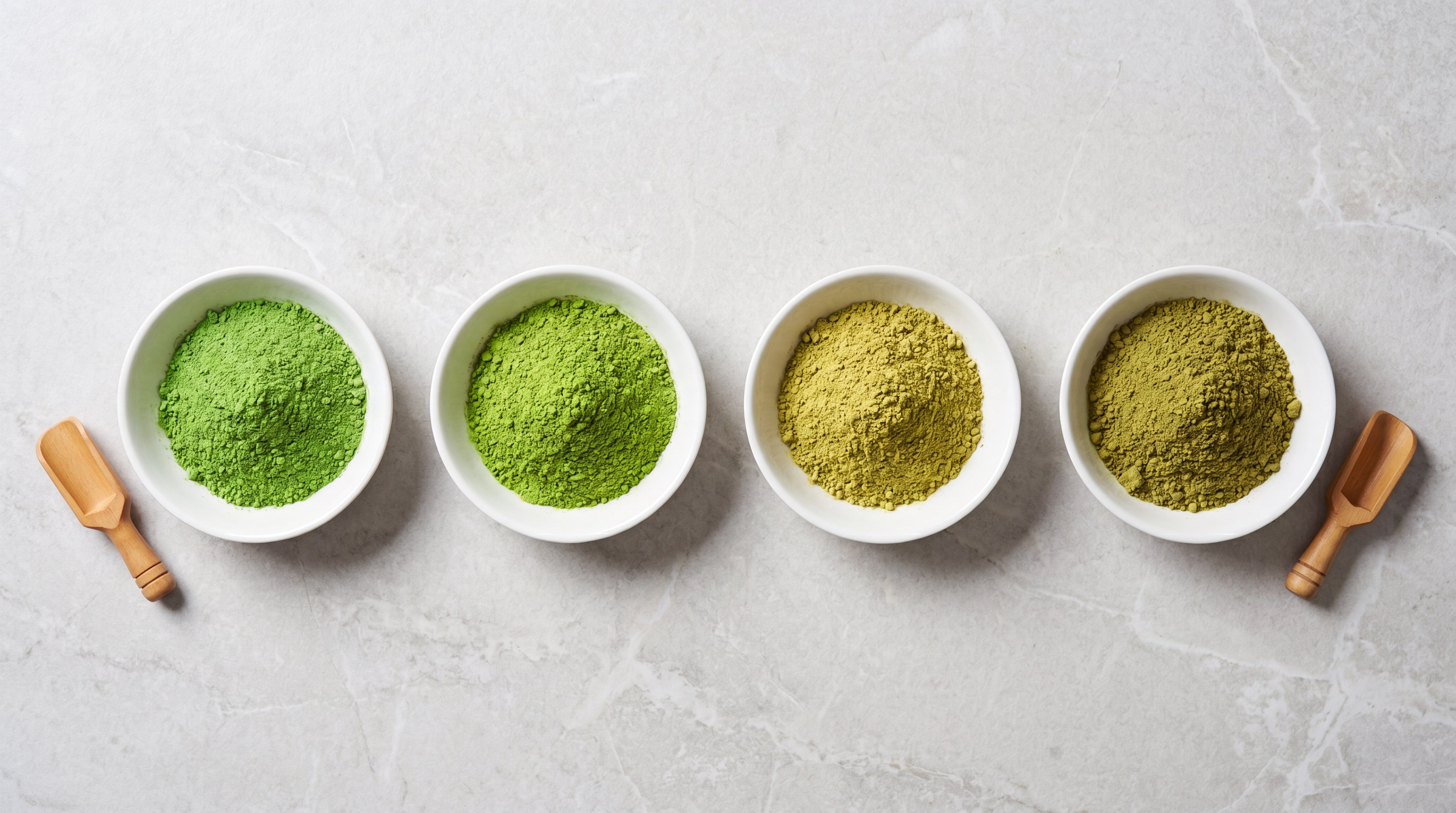
- Color Profile: Brilliant, electric jade green.
- Chemical Profile: High L-Theanine (delivers a smooth, savory sweetness and calming effect), low catechins (no bitterness).
- Optimal Application: Traditional whisked beverages, high-end cafés, premium water-soluble drink mixes.
Culinary/Beverage Grade
- Harvest Window: Early Summer (Second Flush).
- Milling Method: Advanced low-temperature jet milling.
- Color Profile: Vibrant green to medium-bright forest green.
- Chemical Profile: Moderate L-Theanine, balanced catechins (provides a pleasant astringency that cuts through milk and dairy bases).
- Optimal Application: Matcha lattes, bubble tea chains, ready-to-drink (RTD) bottled beverages, premium confectionery, ice cream.
Industrial Grade
- Harvest Window: Late Summer / Autumn (Third Flush).
- Milling Method: Industrial ball milling or standard air milling.
- Color Profile: Dull, olive-yellowish green.
- Chemical Profile: Low L-Theanine, high catechins (highly bitter and astringent, high fiber content).
- Optimal Application: Protein powders, nutritional supplements, dietary capsules, mass-market baked goods, soaps, and cosmetics.
6. China vs. Japan Matcha Wholesale Price: Objective Comparison for B2B Sourcing
The geopolitical and geographical origin of matcha remains one of the most debated topics among professional food and beverage buyers. Japan is the historical and cultural birthplace of matcha, but China has emerged as a major global exporter.
This shift has been supported by massive agricultural modernization and state-of-the-art processing infrastructure. Understanding the structural differences between these two regions is essential for optimizing sourcing strategies.
Japan Sourcing Dynamics
Japan’s tencha production has grown significantly, reaching 4,176 tons in 2023 (nearly triple the 1,471 tons produced in 2010) and climbing to 5,336 tons of tencha in 2024. Despite this expansion, global demand has consistently outpaced supply, resulting in market shortages and highly volatile raw material prices.
This pricing pressure is most evident at regional auctions. At the Kyoto tea auction in May 2025, the average price for premium tencha reached an unprecedented 8,235 JPY per kilogram—a 1.7 times increase over the previous year, shattering the previous record of 4,862 JPY set in 2016. Some first-flush, single-cultivar organic tencha batches even reached 14,333 JPY per kilogram (a 265% surge).
These price increases are driven by several structural challenges:
- An aging agricultural workforce.
- Extremely high energy costs for processing facilities.
- Severe summer heatwaves and changing weather patterns that reduce first-flush crop yields.
- Strict limitations on agricultural expansion due to Japan’s mountainous terrain.
Consequently, Japanese origin matcha commands a high premium, making it best suited for high-margin, top-tier retail brands and specialty cafés.
China Sourcing Dynamics
To meet the rising demand from multinational food service chains and supplement brands, China has developed modern, high-volume tea plantations in regions like Zhejiang, Guizhou, and Sichuan. These growing regions share similar latitudinal coordinates and volcanic soil profiles with Japan’s primary tea-producing prefectures.
Chinese manufacturers have imported advanced Japanese shade-netting machinery, steaming equipment, and modern jet-milling technologies. This infrastructure allows them to produce high-purity, vibrant culinary and ceremonial-grade powders at scale.
Chinese sourcing offers several clear advantages:
- Scale and Pricing: Thanks to abundant land and lower operational labor costs, China-based manufacturers can offer high-quality beverage and culinary grades at 40% to 60% less than Japanese counterparts. This makes them ideal for large-scale industrial projects.
- Pesticide Control: High-end Chinese export manufacturers focus heavily on international compliance, implementing rigorous testing protocols to meet EU and FDA pesticide residue standards.
- Consistency: Large, contiguous plantation layouts allow for highly consistent physical and sensory properties across multi-ton production batches.
Ultimately, the choice between Japanese and Chinese sourcing depends on brand positioning and budget constraints. Many enterprise brands adopt a dual-sourcing model: utilizing Japanese-origin matcha for premium retail items to leverage its cultural heritage, while using Chinese-origin culinary matcha for high-volume lattes, RTD beverages, and functional foods to preserve margins.
7. How Order Quantity (MOQ) Reshapes Your Price Per Kilogram
In B2B purchasing, volume is the most powerful tool for reducing unit costs. Sourcing matcha directly from a manufacturer involves significant setup and cleaning costs. Each grade transition requires deep sanitation of the milling and sifting lines to prevent cross-contamination.
Additionally, packaging lines must be calibrated for different bag weights or container sizes. Consequently, suppliers reward high-volume, consistent buyers with substantial price discounts.
To illustrate how order scale affects unit economics, consider the pricing tiers for a standard, high-grade organic beverage matcha:
1. The Micro-Wholesale Tier (100 kg – 500 kg)
- Target Buyer: Emerging DTC brands, local boutique café chains.
- Pricing Impact: Standard wholesale price sheet (no discounts). Freight is typically shipped via air cargo or Less-Than-Container Load (LCL) ocean freight.
- Logistics Overhead: High relative shipping costs (often adding 3.00to3.00 to
6.00 per kg).
- Customization: Limited to standard stock packaging with stickered labeling.
2. The Medium-Volume Growth Tier (500 kg – 2,000 kg)
- Target Buyer: Regional beverage brands, mid-tier private label e-commerce retailers.
- Pricing Impact: Price reductions of 15% to 25% off the baseline wholesale sheet.
- Logistics Overhead: Optimized LCL ocean shipping, reducing freight costs to less than $1.50 per kg.
- Customization: Access to semi-custom packaging, pre-printed bags, and direct-to-bag printing options.
3. The Enterprise Container-Load Tier (5,000 kg – 20,000+ kg / FCL)
- Target Buyer: Global beverage conglomerates, major food service distributors, multi-national supplement brands.
- Pricing Impact: Direct-to-factory contract pricing, yielding up to 40% to 55% savings compared to low-volume purchases.
- Logistics Overhead: Shipped via Full Container Load (FCL 20ft or 40ft refrigerated containers), lowering transoceanic freight costs to pennies per kilogram.
- Customization: Full access to custom blending services, bespoke moisture levels, tailored particle sizes, and completely integrated OEM packaging lines.
Procurement managers should evaluate their inventory turn rates carefully. While purchasing a 12-month supply of matcha to unlock a lower pricing tier may seem financially attractive, the potential quality loss from long-term storage must be considered.
For high-volume buyers, a better strategy is to negotiate an annual blanket purchase order (e.g., 10,000 kg per year) with scheduled quarterly shipments. This contract structure secures enterprise-level pricing while ensuring fresh, high-quality shipments throughout the year.
8. Packaging Cost Breakdown: Bulk Bags vs. Private Label Pouches, Tins, and Sticks
The raw matcha powder is only one part of the total cost of goods sold. For brands launch finished consumer products, the choice of packaging significantly impacts both production costs and product stability.
Because matcha is highly sensitive to light, oxygen, and heat, its packaging must provide a barrier against the elements. If these barrier requirements are not met, the powder will oxidize rapidly, turning bitter and brown.
Choosing the right packaging format requires balancing cost against protection and convenience. The table below outlines the primary packaging options for B2B buyers in 2026:
Packaging Format | Typical Unit Capacity | Cost Range per Unit (USD) | Primary Target Market | Oxygen & Light Barrier Effectiveness | Minimum Order Quantity (MOQ) |
|---|---|---|---|---|---|
Industrial Bulk Bag | 10 kg – 20 kg | 4.50–4.50 – 8.00 per bag | Food manufacturers, large bakeries, RTD bottlers | Moderate (Requires cold storage once opened) | 100 kg |
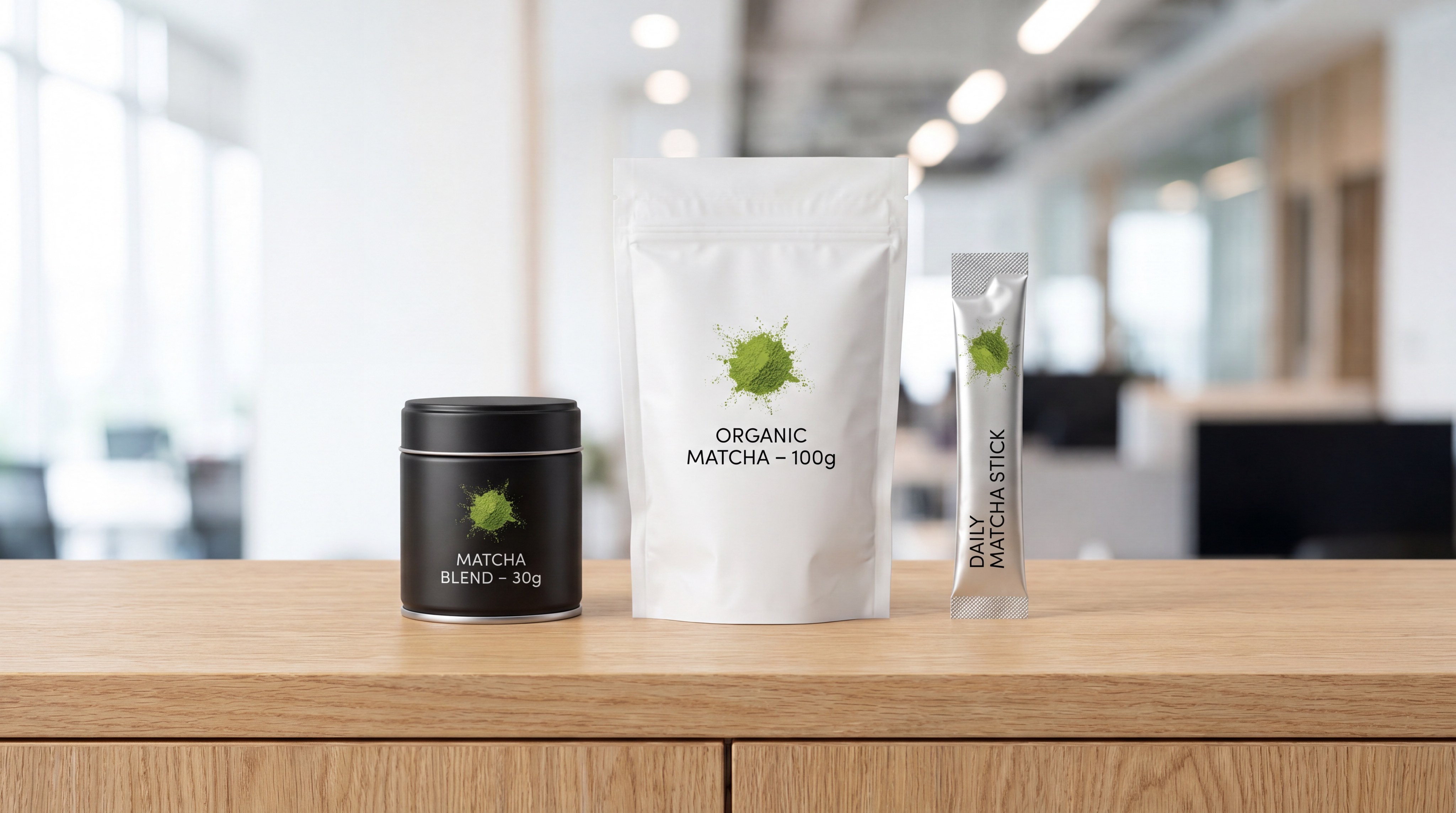
Resealable Foil Stand-Up Pouch | 100g – 500g | 0.45–0.45 – 0.95 per pouch | Retail consumers, wellness brands, fitness market | High (If fitted with a multi-layer metalized PET barrier) | 5,000 units |
Aluminum Tinplate Can | 30g – 80g | 0.85–0.85 – 1.50 per tin | Premium ceremonial tea, luxury gift markets | Excellent (Inducted foil seal with nitrogen flush) | 5,000 units |
Single-Serve Stick Sachet | 1.0g – 3.0g | 0.08–0.08 – 0.15 per stick | Fitness on-the-go, office workspaces, dietary supplements | Excellent (High-speed foil laminate packaging) | 50,000 units |
To explore high-speed packaging options and estimate final manufacturing costs, brands can consult with private label matcha services .
These programs provide turnkey solutions that integrate raw material sourcing, certified organic blending, high-speed retail packaging, and nitrogen-purging.
9. Hidden Costs in Matcha Sourcing That B2B Buyers Often Miss
The initial price quoted on a supplier’s sheet is rarely the actual cost to get the product to your facility. Sourcing a delicate botanical product like matcha introduces several hidden costs that, if ignored, can quickly erode profit margins.
1. Temperature-Controlled Logistics and Storage (Cold Chain)
Matcha is a living, highly delicate food product. Exposure to temperatures above 20°C (68°F) accelerates the degradation of chlorophyll and L-theanine, leading to oxidation. To maintain quality:
- Transoceanic shipping must utilize refrigerated containers (Reefer containers maintained at 4°C to 8°C). A reefer container can add 1,500to1,500 to
3,500 in freight premiums over standard dry containers.
- Once received, bulk inventory must be stored in climate-controlled food warehouses. Standard dry warehousing will shorten the shelf life of the matcha to just a few months, whereas cold storage preserves quality for up to two years.
2. Mandatory Food Safety Testing and Certifications
To import matcha into North America or Europe, shipments must comply with strict food safety standards. Third-party testing is essential to verify:
- Heavy Metal Contamination: Tea plants are hyper-accumulators that can absorb lead and arsenic from the soil. Sourcing must include validation of low heavy metal levels.
- Pesticide Residue Analysis: The FDA and EU Customs authorities routinely seize imports containing banned chemical residues. Testing must verify compliance with local regulations.
- Microbiological Panels: Testing must confirm the absence of pathogens such as Salmonella, E. coli, coliforms, yeast, and mold.
- Radiation Screenings: For matcha sourced from Japan, buyers often require radiation certificates (testing for Cesium-134 and Cesium-137) to reassure cautious consumers.
- Note: A complete third-party laboratory panel (via Eurofins or SGS) costs 600to600 to
1,200 per batch, which must be factored into importing budgets.
3. Customs Duties and Tariffs
Import tariffs vary significantly based on bilateral trade agreements and the specific Harmonized System (HS) code used. Under HS Code 0902.10 (Green tea, unfermented, in immediate packings of <= 3 kg) or HS Code 0902.20 (Other green tea, unfermented), import duties can range from 0% to over 15%, depending on the country of origin and destination.
Procurement teams must consult with a licensed customs broker to confirm these rates before finalizing pricing models.
10. Checklist: How to Compare Matcha Supplier Quotations Correctly
When reviewing multiple quotes from international suppliers, comparing only the final price per kilogram can lead to costly mistakes. One supplier may offer a lower price but leave the buyer responsible for freight, customs, and quality testing.
Conversely, a higher quote may include comprehensive door-to-door delivery and certified analytical testing.
To ensure an accurate comparison, procurement teams should use this verification checklist for every quote:
- Verify Incoterms: Is the quote based on FOB (Free on Board – origin port), CIF (Cost, Insurance, and Freight – destination port), or DDP (Delivered Duty Paid – destination warehouse)?
- Validate Organic Certification Integrity: Is the supplier’s organic certificate issued by an accredited body (such as OTCO, QAI, or Ecocert)? Does the certificate list the specific farm and processing facility?
- Check Particle Size Specifications: What is the D50 particle size rating? (Beverage grade should be 5 to 9 microns; industrial baking grade can range from 10 to 15 microns).
- Request a Certificate of Analysis (COA): Does the supplier provide a detailed batch COA showing moisture content (must be < 5%), ash content, and microbiological safety panels?
- Inquire About Heavy Metal Levels: Does the supplier guarantee lead levels below 1.0 ppm (mg/kg) to comply with global safety standards (e.g., California Proposition 65)?
- Confirm Packaging Construction: Are bulk bags constructed with high-barrier aluminum laminate foil? Do they use double PE food-grade liners?
- Determine the Grinding Method: Is the matcha ground using traditional granite stones, air-jet milling, or standard ball milling?
- Assess Lead Time and Production Capacity: What is the standard lead time for production? Can the factory scale to meet sudden increases in order volume?
By systematically evaluating each supplier against these criteria, brands can avoid low-quality shipments, customs delays, and product recalls, ensuring a stable and secure supply chain.
11. 2026 Matcha Market Outlook: Will Bulk Matcha Prices Rise or Fall?
As we look toward the remainder of 2026 and into 2027, the bulk matcha market is expected to remain stable but tight, with pricing heavily dependent on the specific grade and origin.
1. Premium Japanese Matcha
Prices for authentic, high-end Japanese ceremonial matcha are expected to face persistent upward pressure. As highlighted by the record prices at the Kyoto tea auction, the combination of rising labor costs, high domestic energy prices, and climate-induced crop yields will prevent any significant price drops.
Additionally, the Japanese agriculture ministry reported that while tencha production rose to a record 5,336 tons in 2024, global demand has continued to grow faster than domestic supply. This imbalance will keep premium ceremonial prices high.
2. High-Volume Chinese Culinary and Beverage Grades
In contrast to the premium Japanese market, the outlook for Chinese-origin culinary and beverage grades is expected to remain highly cost-competitive. Massive agricultural investments in Zhejiang and Guizhou have expanded cultivation capacity, helping to stabilize pricing.
This supply cushion is supported by broader commodity tea trends; Trading Economics models show general tea prices leveling out, which has helped offset inflation in agricultural inputs. As a result, buyers of high-volume culinary matcha can expect relatively stable prices, with opportunities for volume-based discounts.
3. Key Market Risks to Monitor
- Climate and Shifting Weather Patterns: Summer heatwaves and changing spring rain patterns in East Asia remain a key risk, as they can suddenly reduce harvest yields and cause short-term price spikes.
- Escalating Logistics and Shipping Costs: Geopolitical tensions and shipping line disruptions continue to impact global freight rates. B2B buyers must monitor container shipping costs, as sudden increases in ocean freight can quickly erode landed profit margins.
- Strengthening Regulatory Standards: Global food safety regulators are continuously updating their limits on pesticide residues and heavy metals. Suppliers who fail to invest in clean agricultural practices may face import rejections, reducing the pool of qualified suppliers and increasing prices for compliant material.
12. Conclusion: Your Step-by-Step Playbook for Matcha Sourcing in 2026
Navigating the bulk matcha market in 2026 requires balancing cost optimization with strict quality control. To build a secure, high-margin supply chain, procurement teams should follow this structured sourcing playbook:
Step 1: Define Your Technical Specifications
Begin by identifying the exact requirements for your application. If you are formulating a dairy-based latte or baking mix, select a jet-milled culinary or beverage grade. This provides the necessary flavor profile to cut through dairy or sugar while protecting your margins. Save premium ceremonial grades for high-end retail products where color and taste are paramount.
Step 2: Source Directly from the Origin
Whenever possible, bypass domestic distributors to eliminate intermediary markups. Partner directly with a vertically integrated manufacturer like Riching Matcha . Direct sourcing not only reduces unit costs but also gives you greater control over quality customization, packaging, and batch consistency.
Step 3: Establish a Rigorous Sampling and Verification Process
Before signing any high-volume contracts, request and evaluate pre-shipment samples. Test these samples for solubility, particle size, color stability, and sensory profile. Ensure every batch is accompanied by a comprehensive Certificate of Analysis (COA) confirming compliance with heavy metal, pesticide, and microbiological limits.
Step 4: Secure Your Logistics and Storage
Factor the cost of refrigerated shipping and storage into your budgets. To preserve the color and flavor of your matcha, maintain a cold chain (4°C to 8°C) from the factory to your warehouse. If you use third-party logistics providers, confirm they have dedicated climate-controlled storage zones.
Step 5: Draft Flexible, Multi-Batch Contracts
Instead of making sporadic spot purchases, negotiate annual blanket agreements. This approach secures lower enterprise-level pricing based on your total annual volume, while allowing you to schedule shipments throughout the year. This setup keeps your inventory fresh, improves cash flow, and protects your brand from seasonal shortages.
13. Frequently Asked Questions (B2B Sourcing FAQs)
Q1: What is the standard shelf life of bulk matcha under cold storage?
When stored in its original, unopened high-barrier vacuum packaging at 2°C to 5°C (35°F to 41°F), bulk matcha maintains its quality for 18 to 24 months. Once the packaging is opened, the powder should be used within 3 to 4 weeks or resealed with a nitrogen flush to prevent oxidation and moisture absorption.
Q2: How can I verify that a supplier’s “Organic Matcha” is valid in my destination country?
To verify organic validity, request the supplier’s master organic certificate and the Transaction Certificate (TC) for your specific batch. Ensure the certifying agency (such as Ecocert, JAS, or QAI) is formally recognized under bilateral equivalency agreements (e.g., the USDA-JAS equivalency agreement for US imports). The importer of record must also hold a valid organic handler’s license.
Q3: Why is Japanese-origin matcha consistently more expensive than Chinese-origin matcha?
The price difference is driven by several structural factors. Japan faces high agricultural labor costs, steep energy prices for processing facilities, and a limited amount of farmable land. These domestic factors, combined with strong global demand for Japanese heritage tea, create a premium price.
By contrast, China’s larger agricultural scale, lower labor overhead, and highly modernized, large-scale processing facilities allow it to produce comparable culinary and beverage grades at a much lower cost.
Q4: What is the typical lead time for custom-packaged OEM private-label matcha?
For standard bulk orders, lead times typically run 10 to 15 days. However, for custom private label projects (including custom sachet printing, tin manufacturing, outer packaging assembly, and nitrogen flushing), standard lead times range from 25 to 45 days. This timeline is determined by the complexity of your custom packaging design and the factory’s production schedule.
Q5: How does nitrogen flushing affect wholesale prices and product stability?
Nitrogen flushing involves replacing the oxygen inside the packaging with food-grade nitrogen gas (bringing oxygen levels below 1%). This process adds a small premium to your packaging costs (typically
0.02to0.02 to
0.05 per retail unit), but it is a highly cost-effective investment.
By eliminating oxygen, nitrogen purging stops the oxidation of chlorophyll and L-theanine, extending your retail shelf life from a few months to two years and protecting your brand’s reputation for quality.