
Tea is not merely a beverage in China; it is a profound cultural vessel, a cornerstone of philosophy, and a testament to five millennia of agricultural mastery. Known as the “Soul of the East,” Chinese tea has evolved from a primitive medicinal herb to the world’s most sophisticated beverage, influencing global trade, art, and spirituality.
This definitive guide explores the deep-rooted history, intricate craftsmanship, and philosophical dimensions of Chinese tea, highlighting how ancient traditions continue to flourish in the form of high-quality organic matcha and premium loose-leaf varieties today.
Table of Contents
Toggle1. The Mythical Genesis: The Legend of Shennong
The story of Chinese tea begins in the mists of prehistory, around 2737 BCE. According to legend, the Divine Farmer, Shennong, who is credited with teaching the Chinese people the art of agriculture and herbal medicine, discovered tea by a stroke of serendipitous fate.
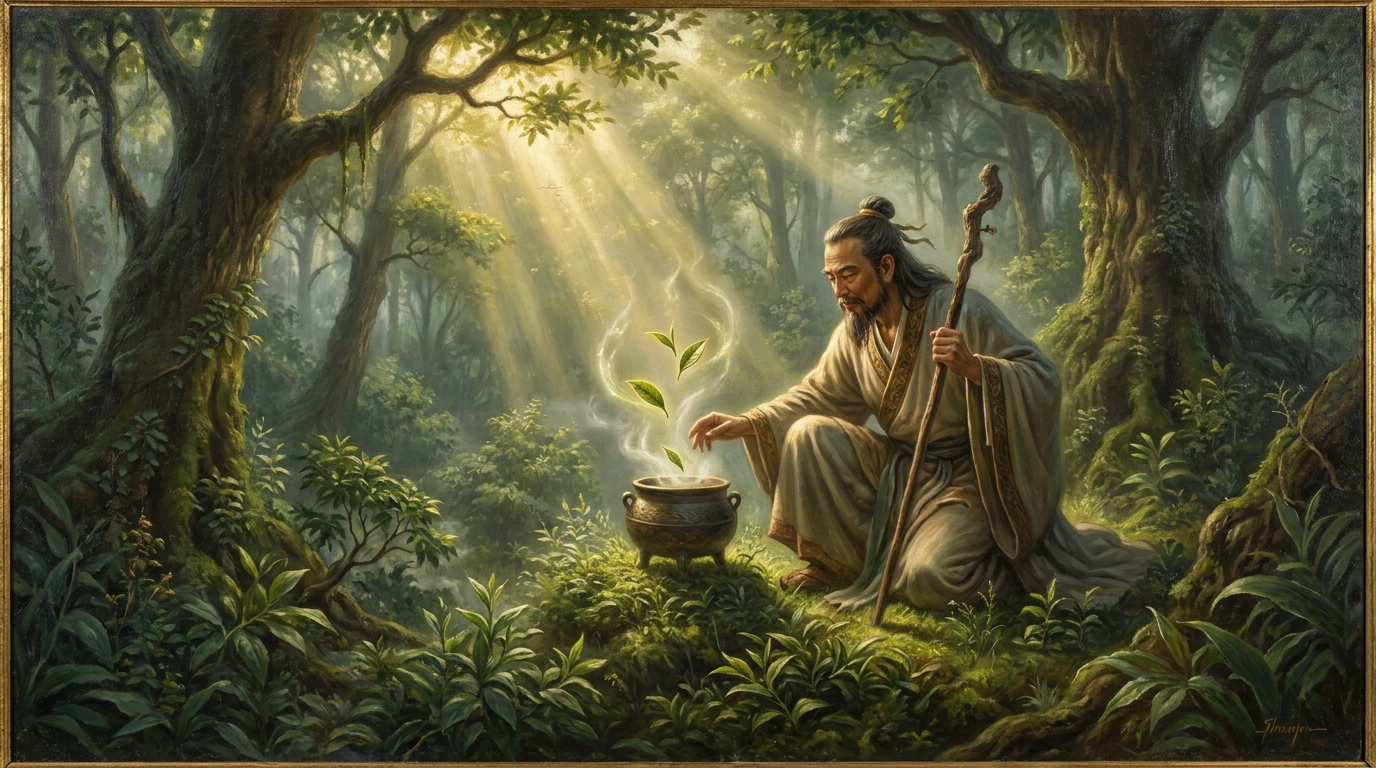
While resting under a wild tea tree (Camellia sinensis), Shennong was boiling water to ensure its purity—a practice he advocated for health. A sudden breeze shook several leaves from the tree into his pot. Intrigued by the fragrant aroma and the resulting amber hue, he tasted the brew. He found it remarkably refreshing and discovered it possessed the power to detoxify his body from the various poisonous herbs he tested daily.
From Medicine to Ritual
For nearly three thousand years following its discovery, tea was primarily consumed as a medicinal decoction. Ancient tribes in the Yunnan and Sichuan regions would chew fresh leaves or boil them into a thick, bitter soup to boost energy and clarity. It wasn’t until the Han Dynasty (206 BCE – 220 CE) that tea began its transition from a specialized medicine to a standardized beverage of the elite.
2. A Chronological Journey: The Evolution of Tea Culture
To understand the complexity of Chinese tea, one must examine its development through the lens of China’s great dynasties. Each era contributed a unique method of preparation and a distinct philosophical approach.
The Tang Dynasty (618–907 CE): The Age of Enlightenment
The Tang Dynasty is often called the “Golden Age of Tea.” During this period, tea was compressed into bricks or cakes for easy transport. To prepare it, pieces were broken off, toasted, ground into powder, and boiled with a pinch of salt.
This era saw the emergence of Lu Yu, the “Sage of Tea,” who wrote the Cha Jing (The Classic of Tea). This seminal work formalized everything from cultivation and processing to the spiritual etiquette of brewing. Lu Yu argued that tea was a reflection of the harmony between heaven and earth.
The Song Dynasty (960–1279 CE): The Birth of Whisked Tea
In the Song Dynasty, tea culture reached its peak of elegance. The method changed from boiling to whisking. Tea leaves were steamed, dried, and stone-ground into a fine powder—the direct ancestor of modern matcha. This powder was placed in a bowl, mixed with hot water, and whipped with a bamboo whisk until a delicate, frothy foam appeared.
“The color of the tea is best when it is white like the moon; the froth is best when it lasts as long as a spring morning.” — Song Dynasty Tea Proverb.
It was during this period that Zen Buddhist monks brought these techniques to Japan. While China later moved toward loose-leaf brewing, the Japanese preserved and refined the Song-style whisking method, which Riching Matcha brand philosophy continues to honor through its dedication to traditional stone-grinding and organic cultivation.
The Ming and Qing Dynasties: The Loose-Leaf Revolution
The Ming Dynasty (1368–1644 CE) saw a radical shift. The first Ming Emperor, Hongwu, decreed that tea should no longer be pressed into cakes to reduce the labor burden on farmers. This led to the invention of steeping loose leaves in teapots. This change allowed for the development of diverse processing methods, giving birth to the six major categories we recognize today: Green, White, Yellow, Oolong, Black, and Dark tea.
Historical Timeline of Chinese Tea
Era | Key Preparation Method | Major Development | Cultural Context |
|---|---|---|---|
Pre-Han (<206 BCE) | Decoction/Chewing | Discovery by Shennong | Used primarily as medicine and detoxifier. |
Tang Dynasty | Boiled Cake Tea | Publication of “The Classic of Tea” | Tea becomes a standardized “Way” (Cha Dao). |
Song Dynasty | Whisked Powdered Tea | Development of tea competitions | Precursor to the Japanese Tea Ceremony. |
Ming Dynasty | Steeping Loose Leaf | Invention of the teapot | Modern categories (Oolong, Black) emerge. |
Qing Dynasty | Gongfu Brewing | Global trade expansion | Tea becomes China’s primary export to the West. |
3. The Art of Craftsmanship: From Soil to Cup
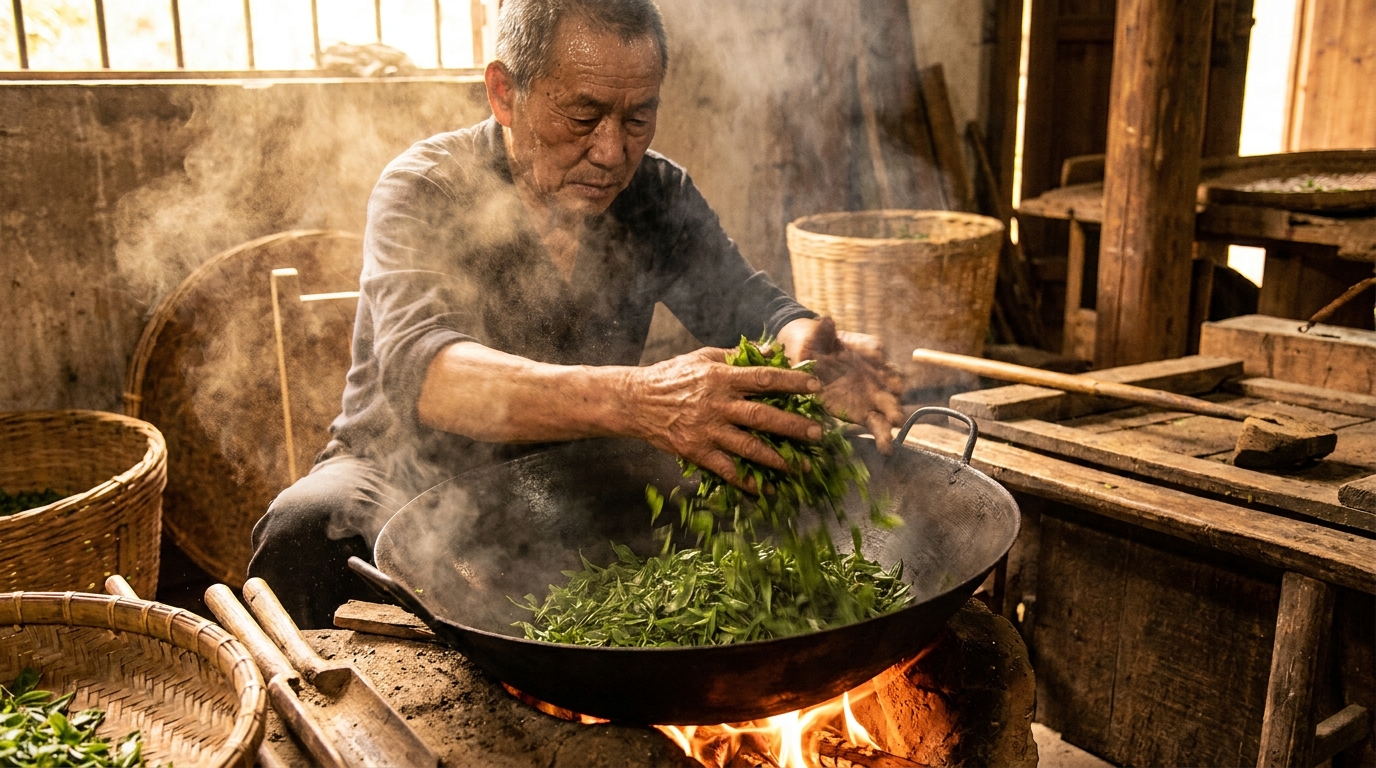
The quality of Chinese tea is determined by two factors: Terroir (environment) and Gongfu (the skill of the artisan). The transition from a raw leaf on a mountain to a refined beverage requires a series of precise, labor-intensive steps.
The Primary Processing Steps
- Withering: Freshly picked leaves are spread out to lose moisture, becoming supple and allowing chemical changes to begin.
- Fixing (Shaqing): Also known as “Kill-Green.” This crucial step involves high heat (roasting or steaming) to stop oxidation. For green tea, this preserves the vibrant color and grassy aroma.
- Rolling: Leaves are twisted or rolled to break cell walls, releasing essential oils that define the tea’s flavor profile.
- Oxidation/Fermentation: Depending on the desired tea type, leaves are left in a humid environment to oxidize. Oolong is partially oxidized, while Black tea is fully oxidized.
- Drying: Final roasting to lock in flavor and ensure the tea can be stored.
At Riching Matcha , the craftsmanship extends even further. For their Organic Superior Matcha , the leaves are shade-grown for three weeks prior to harvest to maximize chlorophyll and L-theanine levels, followed by meticulous de-veining and traditional stone-grinding.
4. The Six Major Categories of Chinese Tea
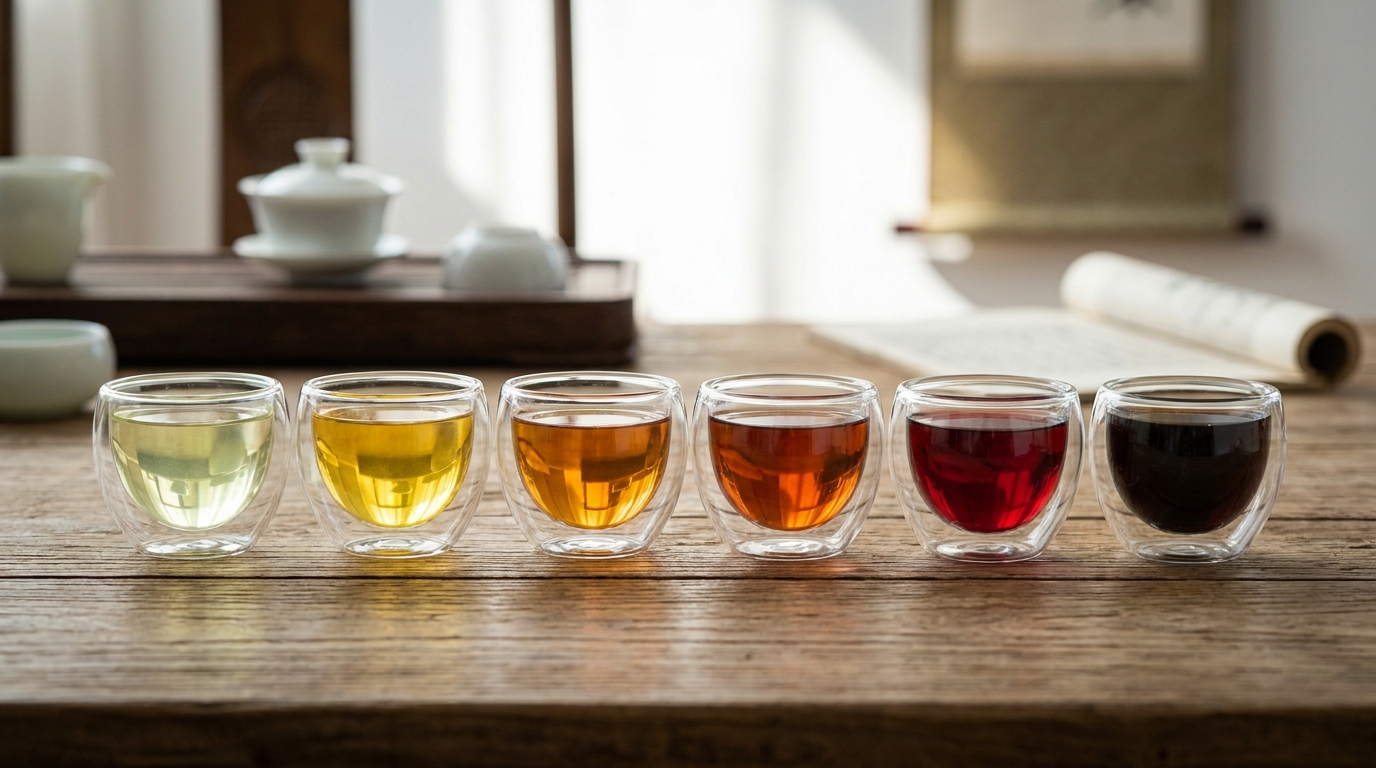
Chinese tea is a vast universe. While all tea comes from the Camellia sinensis plant, the level of oxidation and the specific processing region create radically different experiences.
Detailed Comparison of the Six Tea Families
Category | Oxidation Level | Famous Example | Flavor Profile |
|---|---|---|---|
Green Tea | 0% (Unoxidized) | Dragon Well (Longjing) | Grassy, nutty, refreshing, and crisp. |
White Tea | 5%–10% (Minimal) | Silver Needle | Delicate, floral, naturally sweet, and light. |
Yellow Tea | 10%–15% (Heaped) | Junshan Yinzhen | Mellow, silky, devoid of green tea’s “sharpness.” |
Oolong Tea | 15%–80% (Partial) | Tieguanyin / Da Hong Pao | Complex, ranging from milky/floral to roasted/woody. |
Black Tea | 100% (Fully) | Keemun / Lapsang Souchong | Malty, honey-like, robust, and often fruity. |
Dark Tea | Post-fermented | Pu-erh | Earthy, musky, deep, and improves with age. |
The Special Case of Matcha
Though often categorized under green tea, matcha is unique. Because the entire leaf is consumed as a powder, the nutritional density is ten times higher than steeped tea. Our Premium ceremonial grade matcha represents the pinnacle of this category, offering a vibrant green hue and a “shading-induced” umami sweetness that is unattainable through standard green tea processing.
5. Tea Philosophy: The Intersection of Zen and Tao
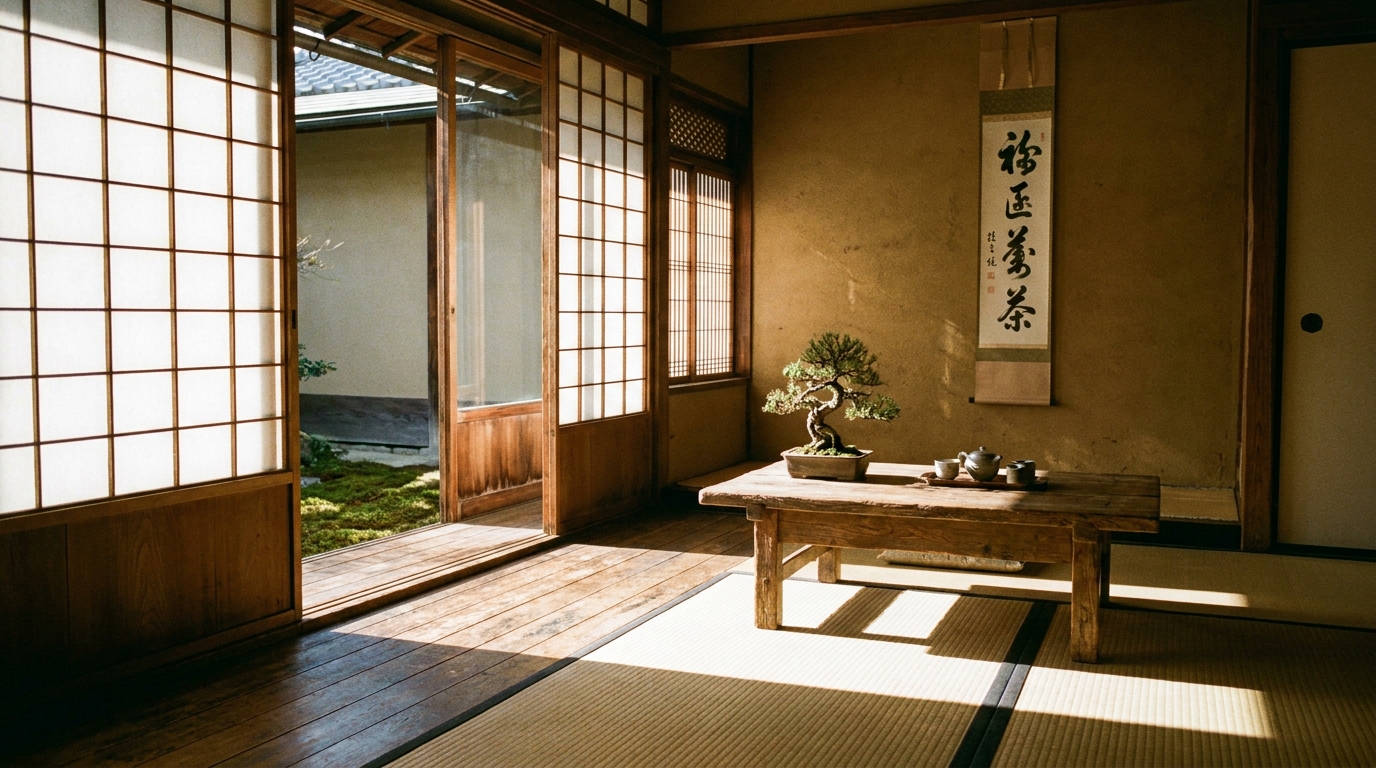
In China, tea is inextricably linked to the three pillars of Eastern thought: Taoism, Buddhism, and Confucianism.
Tea and Taoism
Taoists viewed tea as an “elixir of immortality.” They believed tea helped humans align with the “Tao” (the Way) by fostering a state of naturalness (Ziran) and effortless action (Wu Wei). A simple bowl of tea is a microcosm of the natural world—incorporating water, fire, wood (tea), and earth (the ceramic cup).
Tea and Zen (Chan) Buddhism
“Tea and Zen are of one flavor” (Cha Chan Yi Wei) is a famous Buddhist proverb. Monks found that the caffeine in tea provided the “tranquil energy” needed for long hours of meditation without the jitteriness of other stimulants. This is due to the synergistic effect of L-theanine and caffeine, a combination found in high concentrations in Shizuoka-sourced organic tea .
The Ritual of Connection
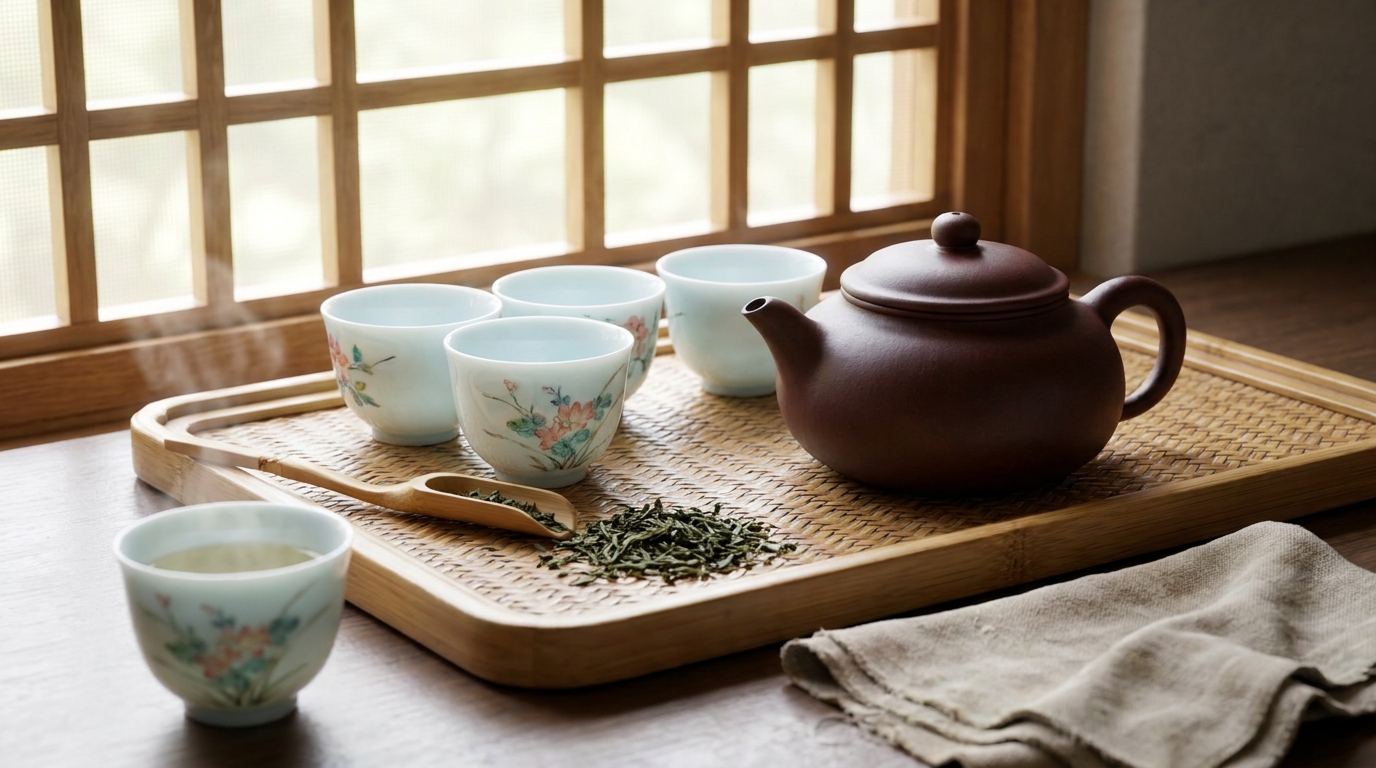
Tea is the ultimate social lubricant in Chinese culture. Whether it is the formal Gongfu Tea Ceremony or a casual dim sum gathering, tea serves as a medium for respect, apology, and gratitude.
6. The Global Legacy: The Tea Horse Road and the Silk Road
Chinese tea did not stay within its borders for long. It became a global currency, traded for horses with Tibet and Central Asia via the Tea Horse Road, and sent to Europe and the Americas via the maritime Silk Road.

By the 17th century, tea had become the national drink of Britain, fundamentally altering the global economy. The demand for Chinese tea was so high that it led to the Opium Wars and the eventual “theft” of tea plants by Robert Fortune, which established the tea industries in India and Sri Lanka.
Despite the globalization of tea, the authentic “Old World” quality remains concentrated in specialized regions. Today, the bridge between ancient Chinese wisdom and modern quality control is best exemplified by brands that prioritize purity and organic standards.
7. The Science of Health: Why Tea is the Ultimate Superfood
Modern science now confirms what Shennong intuited 5,000 years ago: tea is a powerhouse of health-promoting compounds.
- Antioxidants (Catechins): Specifically EGCG, which helps combat oxidative stress and supports heart health.
- L-Theanine: An amino acid that promotes alpha-wave activity in the brain, leading to a state of “calm alertness.”
- Metabolic Boost: Studies suggest that green tea and matcha can enhance thermogenesis and fat oxidation.
- Detoxification: The high chlorophyll content in shade-grown matcha helps the body eliminate heavy metals and toxins.
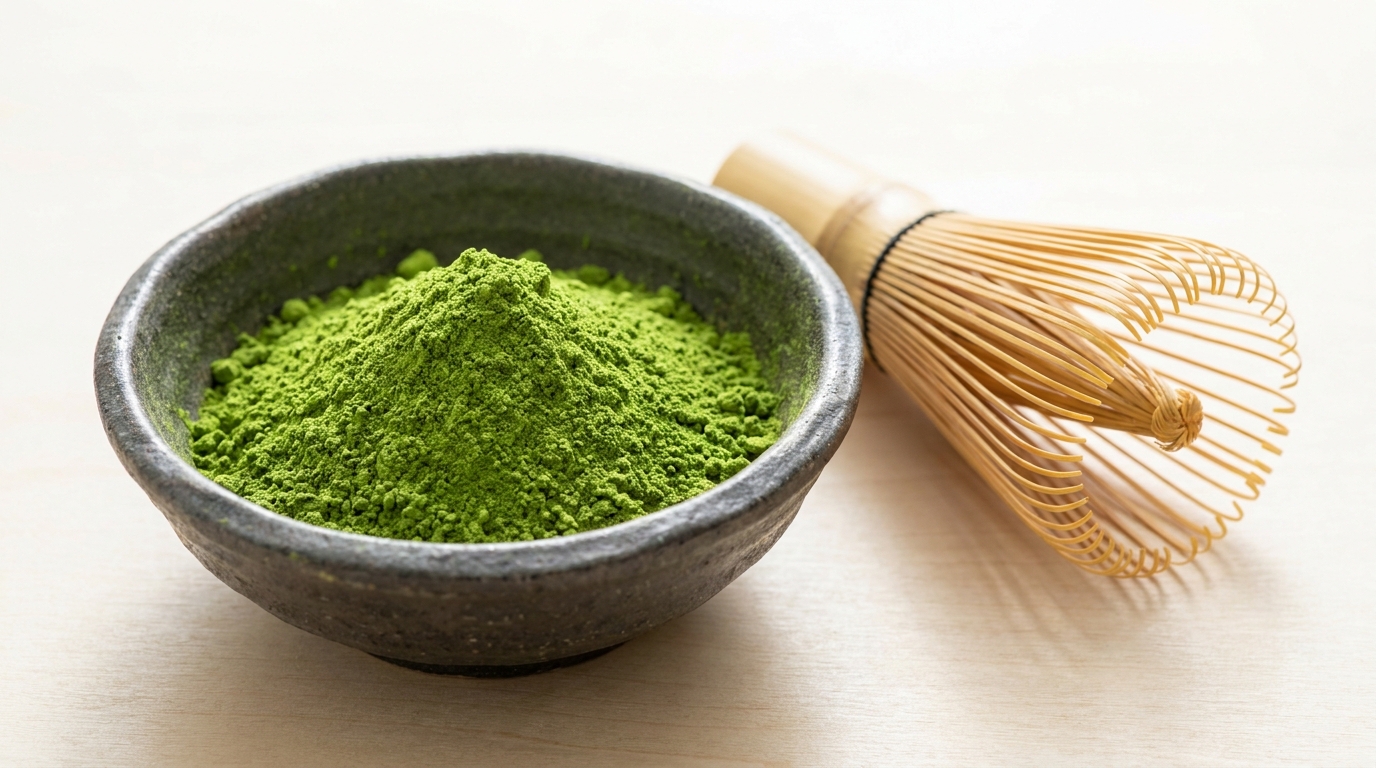
By choosing an organic option, you ensure that these benefits aren’t negated by pesticides or synthetic fertilizers. Riching Matcha works exclusively with multigenerational farmers to ensure their powder is as clean as the air in the high-altitude gardens where it is grown.
8. Conclusion: Embracing the Way of Tea
The history of Chinese tea is a story of human persistence, artistic refinement, and a deep respect for nature. From a single leaf falling into Shennong’s pot to the sophisticated global trade of today, tea remains an invitation to slow down and find clarity in a chaotic world.
Whether you are performing a complex Gongfu ceremony or simply whisking a bowl of premium organic matcha in your kitchen, you are participating in a lineage that spans five millennia. Every sip is a connection to the ancestors, the mountains, and the enduring spirit of the leaf.
Frequently Asked Questions (FAQs)
1. What is the difference between Chinese Green Tea and Matcha?Traditional Chinese green tea is usually steeped as loose leaves, where the water extracts the flavor and nutrients, and the leaves are discarded. Matcha is a powder made from specially grown green tea leaves. When you drink matcha, you consume the entire leaf, providing significantly more antioxidants, fiber, and vitamins than steeped tea.
2. Why is “Shade-Growing” important for high-quality tea?Shade-growing (usually done for 2–4 weeks before harvest) forces the tea plant to produce more chlorophyll and amino acids, specifically L-theanine. This results in a deeper green color, a sweeter “umami” flavor, and a more potent calming effect on the brain.
3. Is it better to buy organic tea?Yes, especially for matcha and green tea. Since you are consuming the leaf (or its direct extract), any pesticides used during cultivation will end up in your cup. Organic certification ensures the tea is grown using natural fertilizers and sustainable methods, preserving both your health and the environment.
4. How should I store my tea to maintain freshness?Tea is sensitive to light, heat, air, and moisture. Store your tea in an airtight, opaque container in a cool, dark place. For matcha, many experts recommend keeping it in the refrigerator after opening to preserve its vibrant color and delicate flavor.
5. What is the “Gongfu” Tea Ceremony?“Gongfu” literally translates to “skill” or “effort.” The Gongfu tea ceremony is a method of brewing tea using small vessels (like a Gaiwan or Yixing clay pot) and multiple short steepings. This allows the drinker to experience the evolution of the tea’s flavor over several rounds, emphasizing the “skill” of both the brewer and the tea maker.