
In the competitive global beverage landscape, matcha has transitioned from a specialty niche offering to a mainstream anchor of café menus and wellness lifestyles. However, many beverage brands, café operators, and importers fail to recognize that the consumer’s perception of matcha is deeply intertwined with the ritual of its preparation. Premium matcha powder—even the finest ceremonial grade—can be rendered bitter, clumpy, and unappealing if prepared with substandard equipment. Conversely, when executed with high-quality, authentic tools, a matcha beverage transforms into a premium, multisensory experience that commands a significant price premium.
For a modern café, beverage menu optimization is a game of margins. Traditional espresso-based drinks are facing rising milk and coffee bean costs, tightening margins across the board. Matcha-based beverages, however, present an exceptional financial opportunity. With a relatively low cost of goods sold (COGS) per serving, a premium hot or iced matcha latte can be sold for upwards of
6.50to6.50 to
8.00 in urban markets, yielding gross margins often exceeding 75% to 80%.
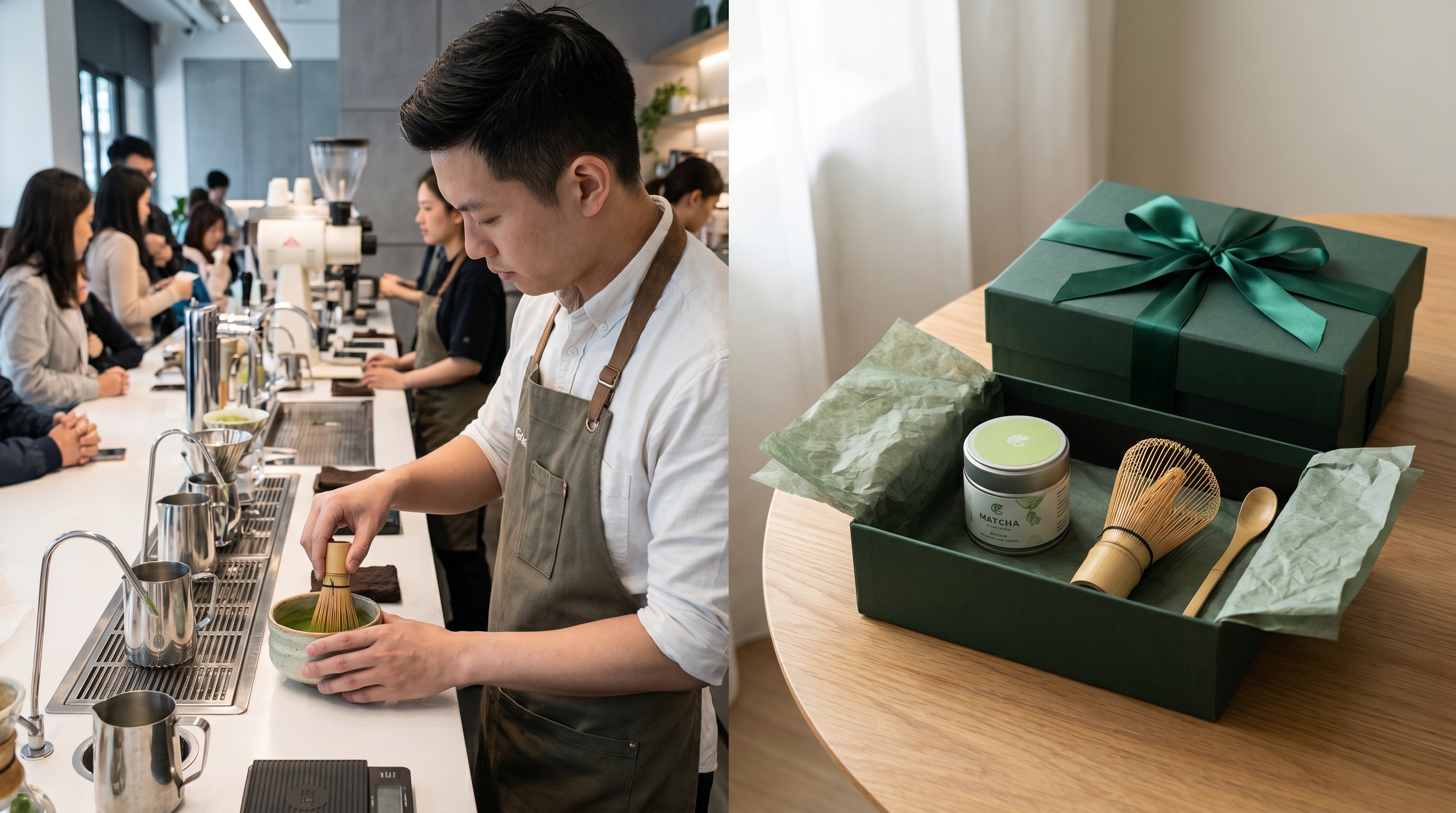
To justify these premium price points, cafés must elevate the theater of preparation. When customers witness a barista utilizing a traditional hand-carved bamboo whisk, measuring powder with a hand-bent bamboo scoop, and serving the beverage in a beautifully glazed ceramic bowl, the perceived value of the drink skyrockets. The preparation becomes an artisanal performance, transforming a simple purchase into an experiential ritual.
For e-commerce matcha brands and specialty tea importers, offering premium accessories is a highly effective strategy for driving customer acquisition and expanding average order value (AOV). Customers looking to enjoy ceremonial matcha at home rarely purchase powder in isolation; they actively seek out complete starter kits to ensure they replicate the café experience. By bundling high-quality accessories with powder, brands can capture greater wallet share and establish long-term loyalty. When a consumer uses a branded whisk or bowl daily, it reinforces brand recall at the most critical touchpoint—the morning wellness ritual.
To understand how to select and leverage these essential tools, brands should consult an authoritative perfect matcha whisk guide to evaluate the technical nuances of materials, construction, and functionality that differentiate commercial-grade accessories from cheap novelty items.
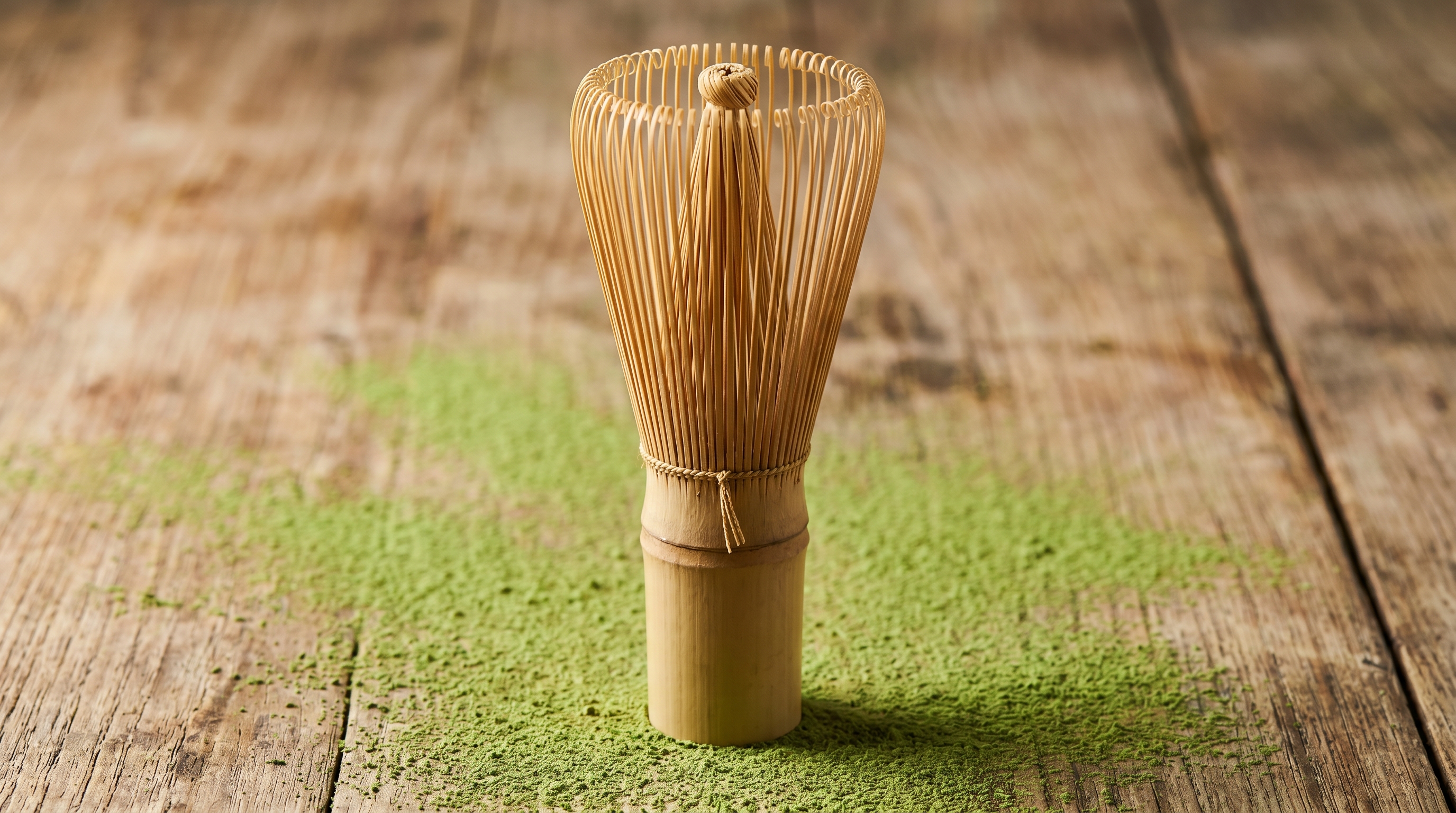
The Traditional Bamboo Whisk (Chasen): Choosing the Right Prong Count for Wholesale
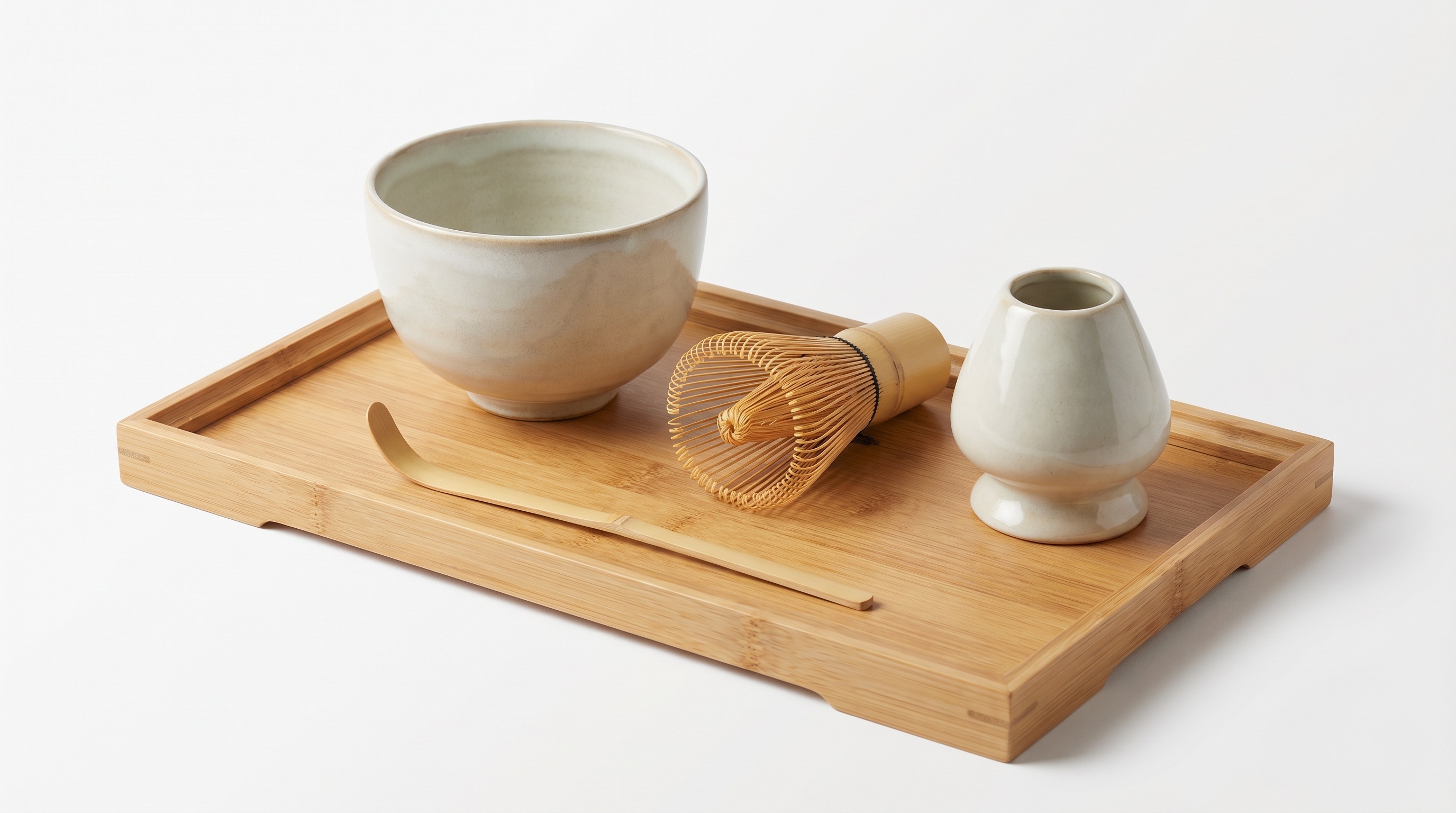
The bamboo whisk, or Chasen, is the undisputed heart of traditional matcha preparation. Forged from a single piece of sustainable bamboo, the chasen is designed to disperse fine matcha particles evenly into hot water while aerating the liquid to create a thick, velvety microfoam. This foam is not merely aesthetic; it tempers the natural astringency of catechins in the matcha, releasing L-theanine sweetness and creating a smooth, creamy mouthfeel that cannot be replicated by metal spoons or standard milk frothers.
When sourcing wholesale bamboo matcha whisks for commercial use or retail distribution, the most critical specification to analyze is the prong count (also referred to as tines or kusu). The number of prongs determines the whisk’s flexibility, the thickness of the microfoam it can generate, and its suitability for different preparation styles.
- 64 to 72 Prongs: These whisks feature thicker, sturdier tines. They are traditionally used for preparing Koicha (thick, paint-like ceremonial matcha), which requires a robust whisk to blend a high concentration of powder with minimal water. In a commercial café environment, these are highly durable but require more physical effort and time to produce a light, frothy texture for standard lattes.
- 80 to 100 Prongs: The gold standard for modern café operations and retail gifting. With a higher concentration of thinner, highly flexible tines, an 80-to-100-prong whisk rapidly aerates the water, breaking down fine powder clumps and generating a luxurious microfoam with minimal effort. This count strikes the perfect balance between aeration efficiency and tine durability.
- 120 Prongs: Featuring ultra-thin, highly delicate tines, a 120-prong whisk produces an incredibly dense, velvety foam almost instantly. However, because the tines are exceptionally fine, they require careful handling and are more susceptible to snapping if subjected to aggressive vertical pressure or rough storage. These are best reserved for high-end ceremonial home use or premium tasting bars.
Beyond prong count, importers must understand the geographical and material differences in bamboo sourcing. While Japanese-crafted whisks from historical regions like Takayama carry immense cultural prestige, their high production costs and limited artisan capacity translate to premium wholesale prices (often
15to15 to
30+ per unit at cost).
For broad café operations and competitive retail markets, high-quality Chinese-manufactured whisks—predominantly sourced from sustainable bamboo forests in Zhejiang and Anhui provinces—provide exceptional performance and durability at a fraction of the cost, making them the preferred choice for commercial scaling. For a detailed breakdown of these differences, review our comprehensive Japanese vs. Chinese matcha whisks analysis to make an informed, margin-optimized procurement decision.
Bamboo Matcha Scoops (Chashaku): Enhancing Ceremonial Presentation
A seamless matcha ritual is incomplete without the traditional bamboo scoop, known as the Chashaku. Hand-carved and steam-bent into a graceful, narrow curve, the chashaku is designed to scoop precise portions of matcha powder from a container (Natsume or tin) into the preparation bowl.
Unlike standard metal spoons, which can carry static charges that cause ultra-fine matcha powder to stick to the surface, natural bamboo is anti-static. This ensures that the entire measured portion of matcha slides smoothly into the bowl without leaving wasteful residue. Furthermore, the aesthetic appeal of a hand-bent bamboo tool on a preparation tray instantly elevates the authenticity of the service, signaling to the customer that every step of their beverage preparation is handled with deliberate, artisanal care.
From a wholesale procurement perspective, the chashaku represents an incredibly cost-effective accessory with high perceived value. Typically crafted from natural white bamboo, aged bamboo, or smoked bamboo (Susu-take), these scoops are lightweight, highly durable, and easily customizable. For retail starter kits, they are a mandatory inclusion, completing the visual harmony of a traditional tea set.
For high-volume cafés, incorporating a chashaku into the back-bar workflow allows baristas to accurately portion matcha powder (typically 1 to 1.5 grams per level scoop) while maintaining a clean, dust-free preparation station. Importers and brands can easily request custom logo engraving along the flat handle of the chashaku, transforming a functional tool into a subtle, elegant brand touchpoint.
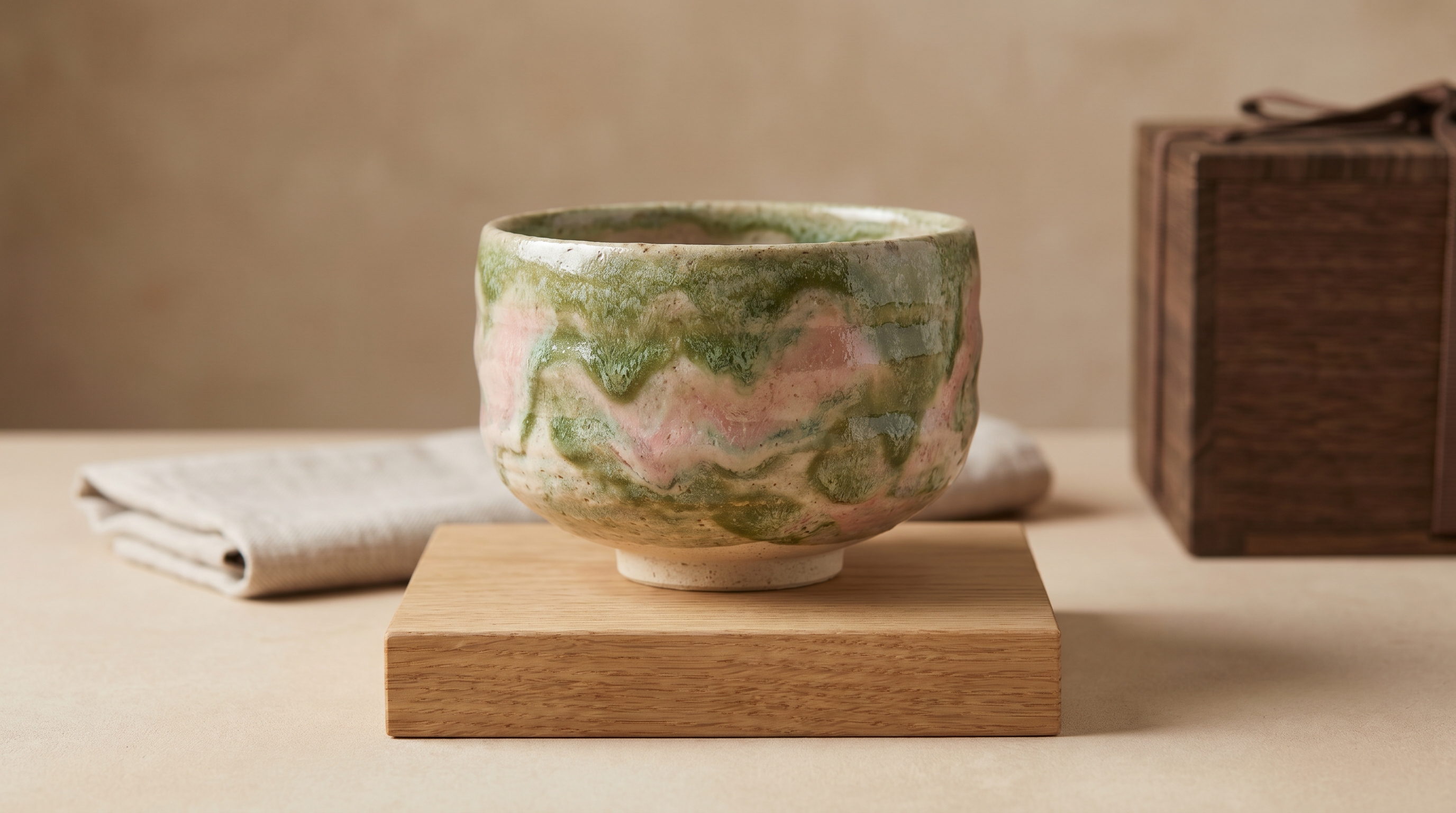
Selecting Wholesale Ceramic Matcha Bowls (Chawan) for Retail and Gifting
The Chawan, or ceramic matcha bowl, is the canvas upon which the matcha ritual is painted. Unlike a standard coffee mug or tea cup, a proper chawan is specifically engineered to facilitate the vigorous, W-shaped or M-shaped whisking motion required to aerate matcha.
When evaluating chawans for your wholesale catalog or café operations, several critical design and manufacturing elements must be assessed:
- Shape and Dimensions: A proper chawan must feature a wide, flat bottom and high, relatively vertical walls. This architecture provides the necessary clearance for the bamboo whisk to move freely without striking the sides of the bowl, allowing the tines to sweep close to the bottom to incorporate all settled powder. The optimal diameter ranges from 11 cm to 13 cm, with a height of 7 cm to 8 cm.
- Clay and Thermal Retention: Sourcing bowls made from high-quality stoneware or dense porcelain is essential. Heavy stoneware retains heat exceptionally well, keeping the matcha latte or ceremonial tea warm during consumption. Additionally, the thermal mass of the bowl prevents the hot water (ideally around 80°C) from cooling down too quickly during the critical whisking phase, ensuring optimal frothing.
- Glazing and Food Safety: For commercial use and international import, all glazes must be certified lead-free, non-toxic, and compliant with major regulatory frameworks such as FDA (United States) and LFGB (Europe). From an aesthetic standpoint, reactive glazes are highly sought after; they react dynamically inside the kiln to create unique, organic color patterns, ensuring that no two bowls are identical.
- Katakuchi (Spouted Bowls): For fast-paced cafés, the spouted matcha bowl—known as a Katakuchi—is an indispensable tool. It combines the wide whisking basin of a traditional chawan with a precision pouring spout. This allows baristas to whisk the matcha shot directly in the bowl and easily pour it over cold milk or ice, preventing messy spills and streamlining ticket times.
For a deeper dive into selecting the perfect inventory for your audience, consult our detailed B2B guide on choosing a matcha bowl . If your target market trends toward vibrant, visual aesthetics for social-media-friendly retail displays or wellness gifts, consider featuring a beautifully crafted, elegant pink matcha bowl in your seasonal collections.
Essential Preservation Tools: Ceramic Whisk Holders and Stainless Steel Sifters
To protect the financial investment of sourcing premium tools, proper maintenance and preparation accessories must be integrated into your product ecosystem. Two of the most overlooked yet operationally critical accessories are the ceramic whisk holder (Kusenaoshi) and the stainless steel sifter (Furui).
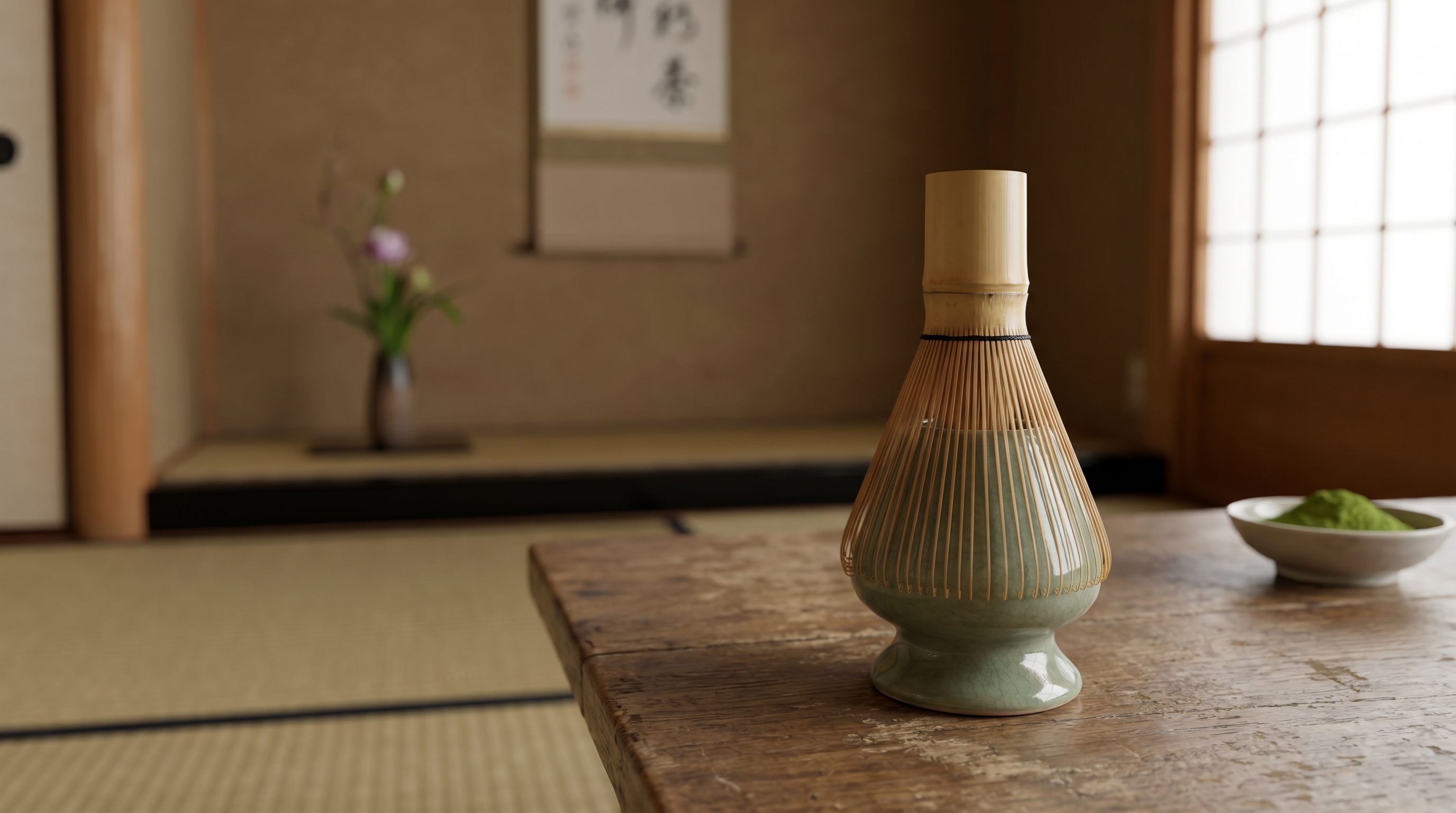
The bamboo whisk is made of natural organic wood, which expands when wet and contracts when dry. If a chasen is left to dry on its side or stands on its handle after use, the delicate tines will warp, lose their outward curve, curl inward, and eventually split or snap. This drastically reduces the whisk’s life span and ruins its ability to generate microfoam.
A ceramic whisk holder is specifically engineered to solve this problem. Shaped like a smooth, rounded cone, the kusenaoshi supports the whisk’s hollow center while keeping the tines gently flared outward in their original shape. Placing the whisk on a holder immediately after washing ensures even air circulation, preventing moisture pooling, structural warping, and mold growth.
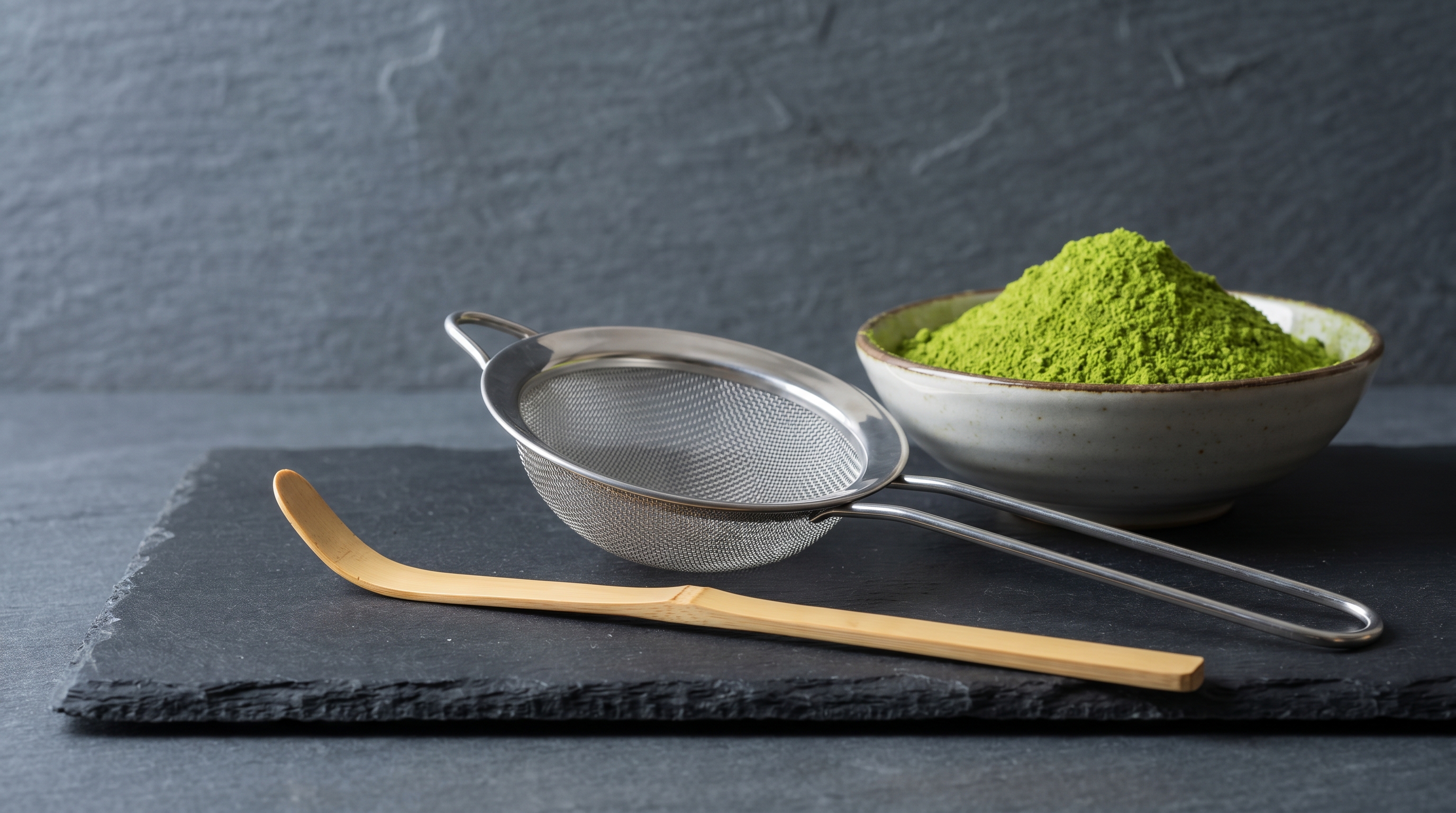
Similarly, the stainless steel sifter is essential for achieving a smooth, lump-free beverage. Because high-quality matcha is ground to an ultra-fine particle size (typically 5 to 10 microns), the powder is highly electrostatic and naturally clumps together when exposed to air and moisture. If directly mixed with water, these tight clumps form dry, bitter pockets that resist whisking.
By passing the powder through a fine, double-mesh stainless steel sifter prior to whisking, the particles are separated and aerated. This drastically reduces whisking time, ensures complete suspension, and guarantees a silky-smooth texture, whether preparing a delicate ceremonial shot or a high-volume iced latte.
High-Efficiency Electric Whisks and Frothers for Fast-Paced Modern Cafés
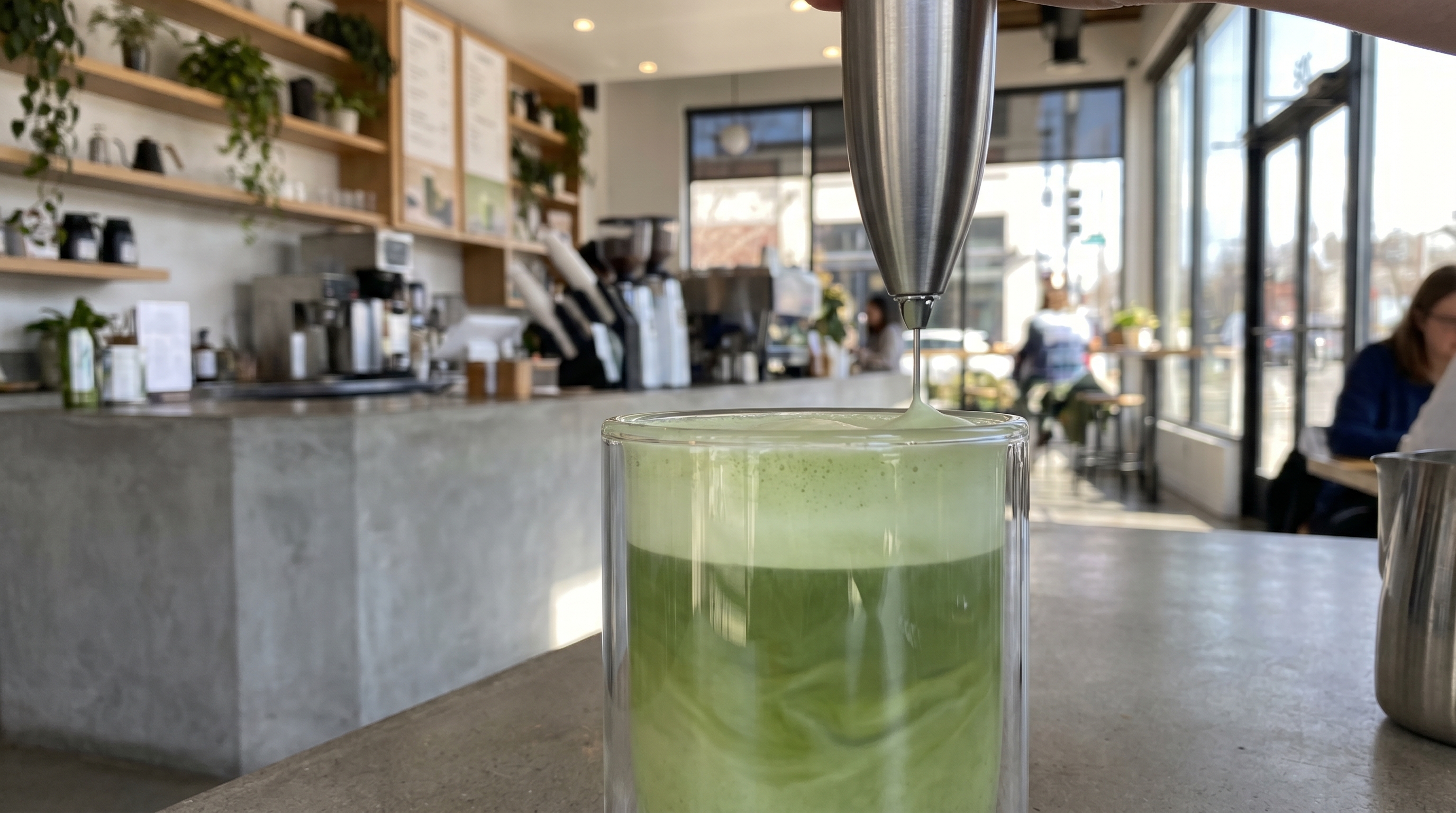
While the traditional bamboo whisk represents the pinnacle of artisanal preparation, the harsh reality of modern, high-volume café operations is the relentless pressure of ticket times. During peak morning rushes, a busy specialty coffee shop or drive-thru beverage kiosk cannot afford to spend 60 to 90 seconds hand-whisking individual matcha orders. To capture the massive profit margins of the matcha boom without sacrificing speed of service, cafés must integrate high-efficiency electric frothers and modern whisks into their workflow.
Handheld electric milk frothers provide an exceptionally fast, consistent, and user-friendly alternative to traditional preparation. Operating at high RPMs, these motorized whisks disperse matcha powder into hot water or milk in a matter of 10 to 15 seconds. This rapid rotation shears through electrostatic clumps instantly, creating a uniform, suspended mixture with minimal physical exertion.
However, standard cheap plastic frothers found on consumer retail sites are not built to withstand the rigorous demands of a commercial bar. For commercial procurement, beverage directors must source electric frothers constructed from premium, professional-grade materials:
- Heavy-Duty Stainless Steel Wands: The mixing shaft and whisk attachment must be forged from high-grade stainless steel (such as 304 or 316 grade) to resist bending, corrosion, and wear from constant sanitization.
- High-Torque, Multi-Speed Motors: A motor with adjustable speed settings allows baristas to delicately blend matcha powder at lower speeds to avoid splashing, before ramping up to high speeds to develop a dense foam.
- Rechargeable or Direct Power Models: Cafés should avoid battery-operated units that lose torque as the charge depletes. Instead, opt for USB-rechargeable lithium-ion models or direct-wire countertop mixing stations that deliver constant, reliable power throughout the busiest shifts.
- Resin and Silicone Alternatives: In addition to electric frothers, modern food-grade resin or silicone-tipped hand whisks are gaining massive popularity. These innovative hybrid tools feature the traditional shape of a chasen but are molded from non-porous, dishwasher-safe polymer materials. They offer the traditional whisking aesthetic while being virtually indestructible and incredibly easy to sanitize in a commercial environment.
Café Procurement Strategy: Which Matcha Accessories Best Fit Your Beverage Operations?
When designing a commercial beverage program, procurement managers must carefully evaluate their brand positioning, operational throughput, and staff training capabilities to select the ideal matcha preparation accessories. Implementing a one-size-fits-all approach often leads to operational bottlenecks or a diluted brand experience.
To guide your procurement strategy, we have contrasted the performance characteristics of traditional and modern preparation tools across six key commercial metrics:
Operational Metric | Traditional Bamboo Whisk (Chasen) | Modern Handheld Electric Frother | Food-Grade Resin Whisk (Hybrid) |
|---|---|---|---|
Preparation Time | 45 – 90 Seconds | 10 – 15 Seconds | 30 – 60 Seconds |
Microfoam Quality | Exceptional (Ultra-dense, velvety) | Good (Rapid aeration, larger bubbles) | Very Good (Balanced density and speed) |
Aesthetic / Theater Value | Maximum (High artisanal, premium appeal) | Low (Industrial, utilitarian feel) | Medium-High (Traditional look, modern build) |
Durability & Lifespan | Low-Medium (Requires careful drying, replaces 1-3 mo) | Medium-High (Requires charging, motor wear) | Maximum (Dishwasher-safe, virtually unbreakable) |
Barista Skill Required | High (Requires precise posture, flicking technique) | Extremely Low (Simple point-and-press) | Medium (Familiar W-motion, less fragile tines) |
Best-Fit Operation | Slow-bars, traditional tea houses, high-end café | High-volume drive-thrus, fast-casual chains | Premium café chains seeking speed + ceremony |
For maximum efficiency and profitability, many top-tier café chains implement a Dual-Track Workflow Strategy:
- The Ceremonial Track: For hot, pure matcha drinks served in-house, baristas utilize traditional bamboo whisks (Chasen) and spouted ceramic bowls (Katakuchi). This preserves the high-value presentation, justifies a premium menu price, and satisfies matcha purists.
- The Latte Track: For high-volume, milk-based flavored iced lattes, baristas use professional-grade electric frothers or high-durability resin whisks. This guarantees a rapid turnaround, maintains consistency across different staff members, and keeps ticket times under the critical 2-minute threshold.
By structuring your back-bar equipment with this hybrid methodology, you ensure that your café optimized both experiential brand value and operational output.
Creating High-Margin Retail Offerings: Designing the Ultimate Matcha Gift Set
For e-commerce tea brands, brick-and-mortar boutique retailers, and corporate gifting distributors, curated matcha accessory gift sets represent one of the most lucrative segments in the specialty tea industry. Consumer data consistently shows that customers purchasing high-quality matcha powder for home use prefer to buy comprehensive starter kits to avoid the hassle of sourcing individual tools. By bundling these components into an elegant, cohesive retail package, brands can command retail price points ranging from
50to50 to
120+, generating outstanding gross profit margins.
When designing a high-conversion retail starter kit, the product assortment should follow a logical tiering system based on your target demographic:
- The Beginner Starter Kit: A highly accessible 3-piece bundle containing a traditional 80-prong bamboo whisk, a bamboo scoop, and a basic ceramic bowl. This lower-price-point kit acts as a low-friction entry point for curious consumers transitioning from café lattes to home preparation.
- The Ceremonial Connoisseur Set: A premium 5-piece collection featuring an 80-to-100-prong bamboo whisk, a matching ceramic whisk holder, a hand-crafted ceramic chawan with a reactive glaze, a bamboo scoop, and a fine stainless steel sifter. This comprehensive set provides everything needed to execute a flawless ritual.
- The Ultimate Modern Matcha Kit: A hybrid bundle targeted at busy professionals, combining premium culinary or ceremonial powder tins with a professional-grade electric frother, a double-walled glass pouring bowl, and a travel-friendly sifter.
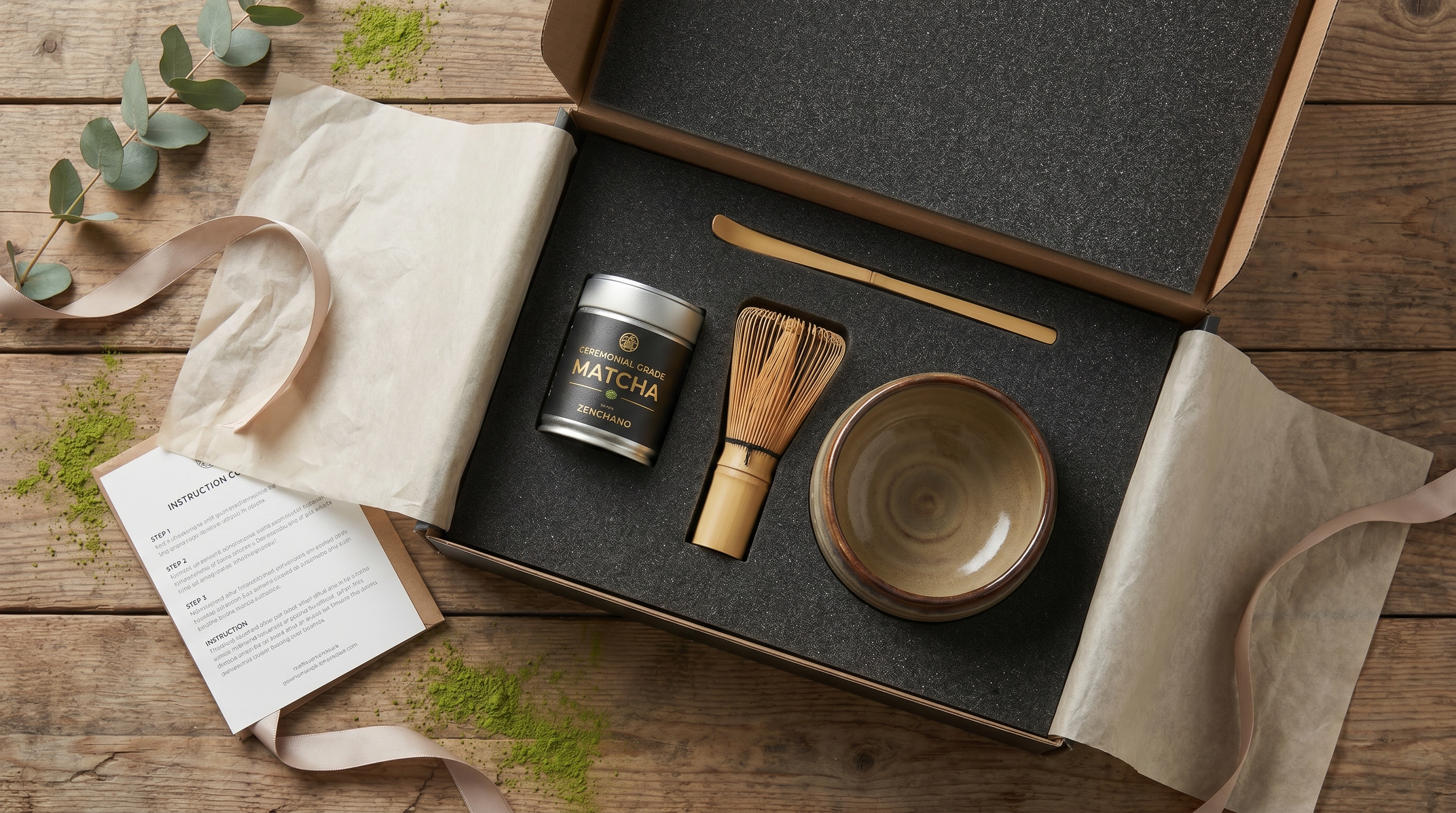
To maximize retail appeal, invest heavily in the unboxing experience. The packaging should match the natural, minimalist, and serene aesthetic of the tea itself. Utilizing thick, rigid cardboard gift boxes lined with custom-molded EVA foam inserts ensures that fragile ceramic bowls and delicate bamboo whisks are held securely in place during shipping, virtually eliminating transit damage.
Furthermore, branding the box exterior with minimalist typography, foil stamping, and tactile matte finishes transforms a simple purchase into a luxury gift item, perfect for holiday seasons, corporate wellness programs, and lifestyle retail displays. Learn more about custom options by exploring our specialized section on custom-branded matcha gift sets to tailor a product line that reflects your brand’s unique identity.
Custom Branding and OEM: Logo Engraving, Color Matching, and Bespoke Packaging
In a crowded marketplace, brand differentiation is vital. To establish your brand as an authority in the wellness space, your accessories must carry a cohesive, premium identity. Partnering with an expert manufacturer that provides comprehensive OEM (Original Equipment Manufacturer) and private label services allows you to customize every aspect of your matcha accessories to align perfectly with your brand guidelines.
At Riching Matcha, we offer state-of-the-art customization technologies across our entire accessory range:
- Laser Engraving on Bamboo: We can laser-engrave your brand logo, name, or iconography directly onto the smooth bamboo handle of our traditional Chasen (whisks) and Chashaku (scoops). This permanent, chemical-free marking process adds a subtle, high-end branding element that will not fade or wash off with use.
- Custom Ceramic Glaze and Pantone Color Matching: Whether you want to match your brand’s signature corporate color palette or develop a custom aesthetic, our glaze masters can match Pantone references. From elegant matte black to glossy sage green, or soft pastel pinks, we can customize the glazes of your ceramic chawans and whisk holders.
- Bespoke Packaging Design: We offer completely custom packaging engineering. From kraft paper cylinders and sliding wooden boxes to premium magnetic-closure gift cases with custom foil-stamped lettering, we help you design packaging that pops on retail shelves and delivers a memorable unboxing experience.
- Innovative Material Integration: For modern brands, we can develop custom-molded silicone or resin whisks with branded, ergonomic handles, giving you a proprietary, patent-pending product design to capture the modern home-brewer market.
By investing in custom-branded tools, you elevate your brand from a simple commodity supplier to a lifestyle icon, ensuring that your customers see your brand mark every single morning when they prepare their daily cup of matcha.
Logistics, MOQ, and Packaging Considerations for International Accessories Wholesale
Sourcing fragile, organic, and moisture-sensitive materials like ceramics and bamboo across international supply chains requires rigorous logistical planning, robust quality assurance protocols, and clear financial packaging parameters.
For global importers, café distributors, and e-commerce brands, understanding the key shipping, packaging, and minimum order quantity (MOQ) metrics is vital for maintaining healthy supply chain margins.
To help structure your purchasing and logistics, refer to the wholesale specification table below, outlining our standard MOQs, lead times, and packaging details:
Product Category | Standard MOQ (Custom Brand) | Peak Production Lead Time | Master Carton Packaging Style | Export Logistics Protection |
|---|---|---|---|---|
Bamboo Whisk (Chasen) | 500 Units | 15 – 25 Days | Clear PET tube / unit; 100 units / carton | Double-wall corrugated box, desiccant packs |
Ceramic Bowl (Chawan) | 200 Units | 25 – 35 Days | Individual bubble wrap; 24 units / carton | Form-fitting styrofoam, heavy drop-tested box |
Ceramic Whisk Holder | 300 Units | 20 – 30 Days | Individual white box; 50 units / carton | Bubble bag wrapping, drop-tested master carton |
Bamboo Scoop (Chashaku) | 1,000 Units | 10 – 20 Days | Paper sleeve/unit; 1,000 units / carton | Moisture-proof polybags, reinforced carton |
Curated Retail Gift Sets | 200 Sets | 30 – 45 Days | Custom rigid box; 10 sets / master carton | Molded EVA foam inserts, corner-protected box |
Electric Hand Frother | 500 Units | 20 – 30 Days | Printed paper box/unit; 50 units / carton | Anti-static packaging, drop-tested thick carton |
When importing matcha accessories, particularly in bulk sea freight or air freight, three operational hazards must be actively managed by your supply chain partner:
- Moisture Control and Mold Prevention: Bamboo is a natural wood product susceptible to moisture absorption. During long sea voyages through high-humidity zones, temperature shifts inside shipping containers can cause condensation. To prevent mold, high-quality export packaging must utilize premium, food-safe silica gel desiccant packets in every carton, and the raw bamboo must undergo rigorous kiln-drying and sterilization processes prior to packing.
- Ceramic Fragility and Shatter Prevention: Standard bubble wrapping is often insufficient for bulk international freight. Ceramic bowls and whisk holders must be housed in dense, custom-molded styrofoam or high-density cardboard cells within drop-tested master cartons, minimizing any internal movement during handling.
- Customs and Food-Grade Compliance: Because these tools come into direct contact with food and drink, customs authorities in major import markets (such as the US Customs and Border Protection and EU customs) require documented food-contact safety compliance certificates. Importers must ensure their manufacturer provides fully verified FDA, LFGB, and RoHS testing documents to guarantee zero delays at the port of entry.
How Riching Matcha Empowers Brands and Cafés with End-to-End Matcha Accessory Sourcing
Navigating multiple suppliers for your matcha powder, ceramic bowls, bamboo whisks, and custom retail packaging is a major operational headache. Managing mismatched production lead times, paying multiple high international shipping fees, and dealing with inconsistent quality control standards can quickly drain your margins and delay product launches.
As a vertically integrated, world-class manufacturer and exporter based in Hangzhou, China, Riching Matcha is your single-source, end-to-end partner for all your matcha and accessory needs. We streamline your entire procurement process, allowing you to focus on marketing and scaling your brand while we handle the complexities of the supply chain.
Why global brands trust Riching Matcha as their strategic manufacturing partner:
- Consolidated Global Shipments: We allow you to bundle your high-grade ceremonial and culinary matcha powder orders directly with your custom accessories in a single, consolidated container. This reduces your international shipping costs by up to 40% and simplifies customs clearance with a single set of import documents.
- Uncompromising Quality Control: Operating out of modern production facilities with advanced testing labs, every single batch of bamboo whisks and ceramic bowls undergoes rigorous quality assurance inspections. We check for dimensional accuracy, prong flexibility, glaze consistency, thermal resistance, and food-safe certification compliance before packing.
- Low MOQs and Scalable OEM: We support growing brands and independent café chains with highly accessible minimum order quantities on custom logo engraving and color-matching services, while possessing the industrial capacity to scale to container-load orders for global distributors.
- Expert Regulatory Compliance: All Riching Matcha products are backed by international food-grade safety certifications, including FDA, LFGB, and SGS compliance, ensuring seamless customs clearance in North America, Europe, Australia, and Asia.
Whether you are looking to launch a private-label wellness brand, upgrade your high-volume café bar workflow, or design an exquisite corporate gift set, our dedicated B2B sales team is ready to assist. Please do not hesitate to contact the Riching Matcha team directly at laura@richingmatcha.com or via phone/WhatsApp at +86 18660258415 to request samples, custom design mockups, and bulk wholesale pricing quotes.
Frequently Asked Questions (FAQs)
How do I properly care for and clean traditional bamboo whisks in a busy café?
In a commercial café setting, traditional bamboo whisks (Chasen) should never be washed in a commercial dishwasher or soaked in harsh chemical detergents, as this will split the bamboo and ruin the tines.
Instead, implement a clean-in-place (CIP) protocol: immediately after use, rinse the whisk under hot running water to wash away residual matcha powder. For stubborn residue, whisk the chasen in a bowl of clean hot water for 5 seconds. Gently shake off excess water and place the whisk face-down on a ceramic whisk holder (Kusenaoshi) to dry. This maintains the tines’ flare, prevents warping, and ensures adequate air circulation to stop mold growth.
What is the lifespan of a bamboo whisk in a commercial versus retail environment?
The lifespan of a Chasen depends entirely on usage frequency and maintenance. In a high-volume commercial café preparing 50 to 100 matcha drinks per day, a traditional bamboo whisk will last approximately 1 to 3 months before the tines begin to lose their structural flexibility, split, or break.
In a home-brewing retail environment with daily or semi-daily use and proper storage on a ceramic whisk holder, a high-quality bamboo whisk can easily last 6 to 12 months. To maximize operational efficiency, we recommend cafés use durable food-grade resin whisks for lattes and reserve bamboo whisks for premium ceremonial services.
Are ceramic matcha bowls and whisk holders dishwasher and microwave safe?
Yes, the vast majority of our stoneware and dense porcelain ceramic chawans and whisk holders are dishwasher and microwave safe. They are fired at extremely high kiln temperatures (exceeding 1200°C), making them highly durable and resistant to thermal shock.
However, for bowls with delicate metallic gold or silver leaf detailing or specialized custom logo hot-stamping, we recommend hand washing with mild soap to preserve the premium decorative elements. Always ensure your wholesale order specifies food-grade glazes compliant with FDA and LFGB regulations.
What is the difference between white bamboo, purple bamboo, and aged bamboo for whisks?
- White Bamboo (Shin-Chaku): The most common, traditional, and cost-effective material. It is lightweight, flexible, and provides excellent springiness for whisking up a dense microfoam.
- Purple/Dark Bamboo (Kuro-Chiku): A premium, naturally dark wood with striking visual appeal. It is slightly denser and highly sought after by high-end brands for luxury gift sets.
- Aged/Smoked Bamboo (Susu-take): Bamboo that has been aged or smoked over hearth firewoods for decades or centuries. It is highly resistant to moisture warping and cracking, boasting a beautiful deep caramel tone. It is exceptionally rare and used almost exclusively for ultra-premium ceremonial accessories.
Can we order custom Pantone-matched glazes for our ceramic bowls and whisk holders?
Absolutely. For customized OEM and private label orders, we can match your precise brand guidelines using Pantone color codes.
Our ceramic glaze masters will run test-firings to ensure the final baked glaze matches your color target while maintaining a non-toxic, lead-free finish that meets global food safety standards. Custom glaze matching typically requires a minimum order quantity (MOQ) of 200 to 300 units per colorway, depending on the complexity of the finish (e.g., solid matte, glossy, or reactive glaze).