
The global food, beverage, and nutraceutical industries are experiencing a profound structural shift as consumer demand leans heavily toward functional, clean-label, and antioxidant-rich ingredients. At the center of this revolution is green tea powder, specifically high-quality bulk matcha. For corporate procurement departments, product developers, and brand owners, navigating this market requires a clear understanding of what commercial-scale matcha sourcing entails.
Unlike retail-packaged matcha, which is typically distributed in small, premium consumer tins of 30g to 100g, bulk and wholesale matcha is defined by commercial packaging formats, scale-optimized supply chains, and industrial applications.
Typically, bulk matcha is shipped in quantities ranging from 1kg double-sealed aluminum foil bags up to 25kg fiber drums or heavy-duty cartons. This packaging is specifically engineered to preserve the delicate, light-sensitive, and highly oxygen-sensitive physical and chemical properties of the stone-ground green tea leaves during global transit.
The commercial demand for wholesale matcha is growing at an unprecedented compound annual growth rate (CAGR). This surge is driven not only by specialty tea houses and artisanal bakeries but primarily by multinational food and beverage manufacturers, large-scale bubble tea chains, dietary supplement brands, and private label retailers.
These enterprises utilize matcha for several key commercial advantages:
- A Natural Colorant and Flavor Agent: Modern consumer sentiment is heavily biased against synthetic green dyes (such as Yellow 5 and Blue 1). High-quality culinary and premium matcha provides an exceptionally vibrant, natural jade-green hue paired with a unique earthy flavor profile that cannot be replicated synthetically.
- The Functional “Halo” Effect: Matcha is globally recognized for its high concentration of L-theanine (an amino acid that promotes calm focus) and Epigallocatechin Gallate (EGCG), a powerful antioxidant. Food brands, energy drink manufacturers, and nutraceutical companies leverage these science-backed health benefits to elevate their product positioning and command premium prices.
- Versatility in Formulations: From instant beverage mixes and dairy-based milk teas to protein powders, energy bars, premium ice creams, and skincare formulations, the applications of bulk matcha are virtually limitless.
To capture this market opportunity, businesses must partner with a sophisticated, export-capable direct manufacturer. As a leading China matcha manufacturer and supplier , Riching Matcha has developed integrated agricultural and industrial systems capable of delivering highly consistent, certifiable, and cost-effective bulk green tea powders designed specifically to meet the rigorous quality control and volume demands of global B2B buyers.
Identifying the Target Audience: Who Buys Wholesale Matcha?
Understanding the unique requirements of various market segments is essential for establishing an efficient, value-driven sourcing relationship. The wholesale green tea market is not monolithic; different buyers operate under vastly different commercial constraints, regulatory environments, and formulation demands.
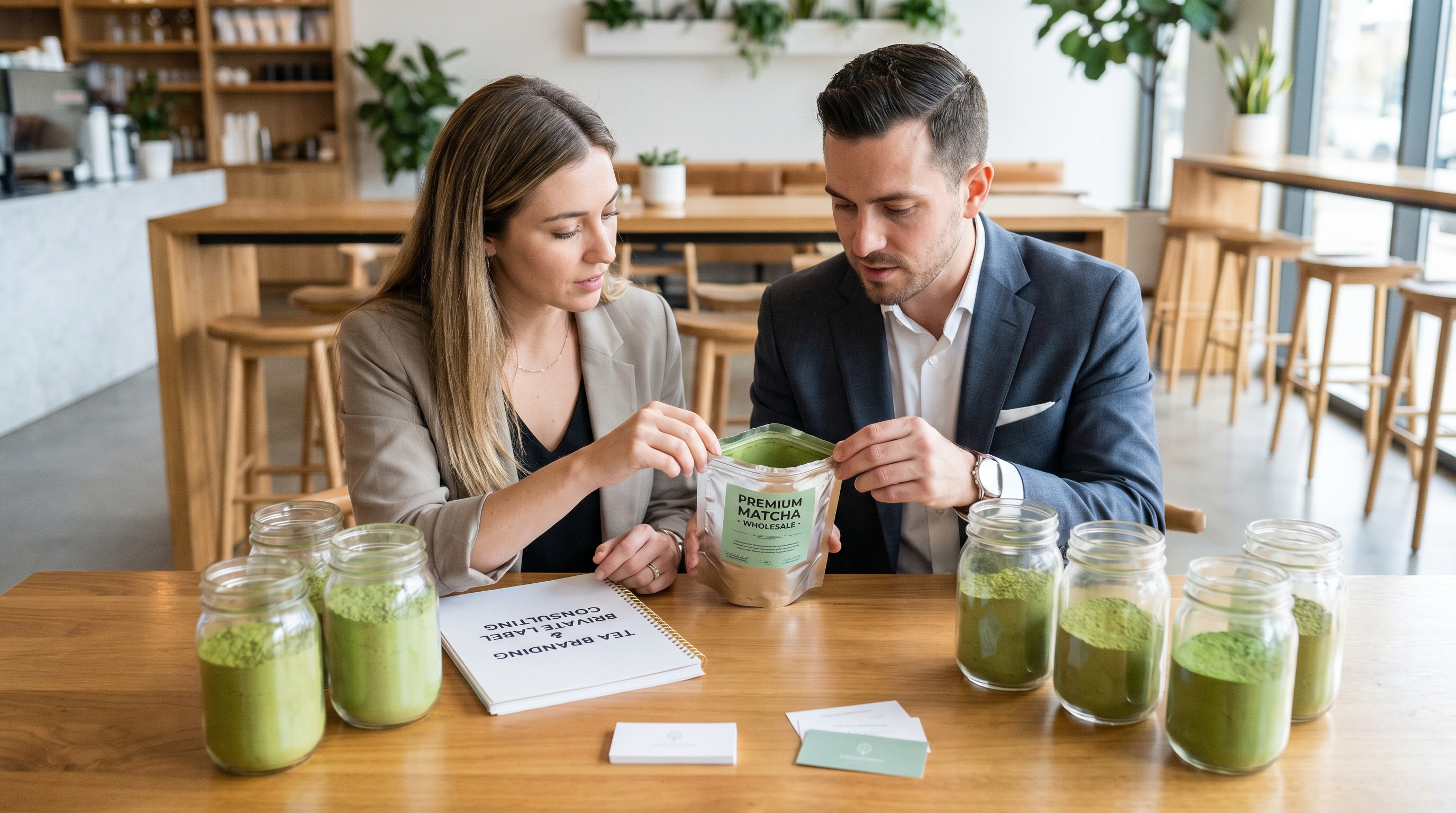
The primary B2B buyers of wholesale matcha can be classified into several main groups:
Importers and Large-Scale Distributors
These entities are the foundational links in regional supply chains. Operating across North America, Europe, the Middle East, and Southeast Asia, importers buy in full container loads (FCL) to achieve maximum economies of scale. Their core requirements are strict regulatory compliance, long shelf-life stability, complete traceability, and reliable bulk packaging that survives sea freight. They require comprehensive documentation, including Certificates of Analysis (COAs), phytosanitary certificates, and customs-ready logistics support.
Tea Brands and Private Label Retailers
These businesses focus on brand equity, packaging aesthetics, and consumer trust. They look to launch high-quality ceremonial or premium organic matcha under their own brand names. They rely heavily on custom private label options to bypass the capital-intensive costs of establishing manufacturing facilities. Their primary concerns are consistent flavor profiles, bright visual appeal, customizable packaging formats (such as single-serve stick packs, stand-up pouches, or aluminum tins), and quick turnarounds on low Minimum Order Quantity (MOQ) trial orders.
Specialty Cafés, Coffee Shops, and Bubble Tea Chains
Operating in high-throughput environments, these buyers require rapid preparation speeds, excellent solubility, and compatibility with milk and plant-based dairy alternatives. They primarily consume barista-grade or premium culinary-grade matcha blends that can cut through the fat and sweetness of syrups, milk, and tapioca. Their priority is securing a stable, highly competitive price-per-kilogram ratio to maintain strong beverage margins while ensuring the powder does not clump during fast-paced drink preparation.
Industrial Food and Beverage Manufacturers
This sector includes industrial bakeries, confectioners, RTD (Ready-to-Drink) beverage brands, and commercial ice cream makers. These buyers purchase in multi-ton volumes and require industrial culinary matcha that retains its vibrant green color and rich tea aroma even after high-temperature baking or pasteurization processes. They operate under highly rigid quality control protocols, requiring strict limits on microbiological counts, heavy metal content, and pesticide residues.
Bulk Matcha vs. Retail Matcha: Critical Differences for Commercial Buyers
Procurement officers must distinguish between consumer-packaged retail products and commercial-grade bulk volumes. Sourcing retail-style matcha for commercial production or attempt-to-repack operations without proper wholesale pricing and physical specifications will quickly erode margins and create production bottlenecks.
The table below outlines the core differences that buyers must analyze when planning their procurement strategy:
Feature / Dimension | Bulk / Wholesale Matcha | Retail-Ready Matcha |
|---|---|---|
Primary Target Buyer | Importers, distributors, food factories, bubble tea chains, private labels. | End consumers, home brewers, retail specialty shoppers. |
Standard Packaging Sizes | 1kg, 5kg, 10kg, 20kg, 25kg bags/drums; custom OEM pouches/tins. | 30g, 50g, 80g, 100g tins or small stand-up pouches. |
Unit Cost Structure | Exceptionally low price-per-kg, optimized for ingredient cost-in-use. | High premium margin-per-gram pricing, heavily driven by brand marketing. |
Consistency Standards | Extremely rigid; relies on standardized industrial lot blending and technical COAs. | Subjective flavor profiles, minor batch variations acceptable to retail consumers. |
Regulatory & Certifications | Mandatory COA, USDA/EU Organic, ISO 22000, HACCP, Halal, Kosher. | Basic food safety label; organic logos are optional but highly market-specific. |
Customization & Blending | High; custom particle mesh, color matching, and sweetness blending available. | Non-customizable; standard off-the-shelf catalog formulas. |
Logistics Handling | Palletized, vacuum-sealed barrier packaging with desiccants; freight optimized. | Corrugated cases containing retail displays; retail shelf-space optimized. |
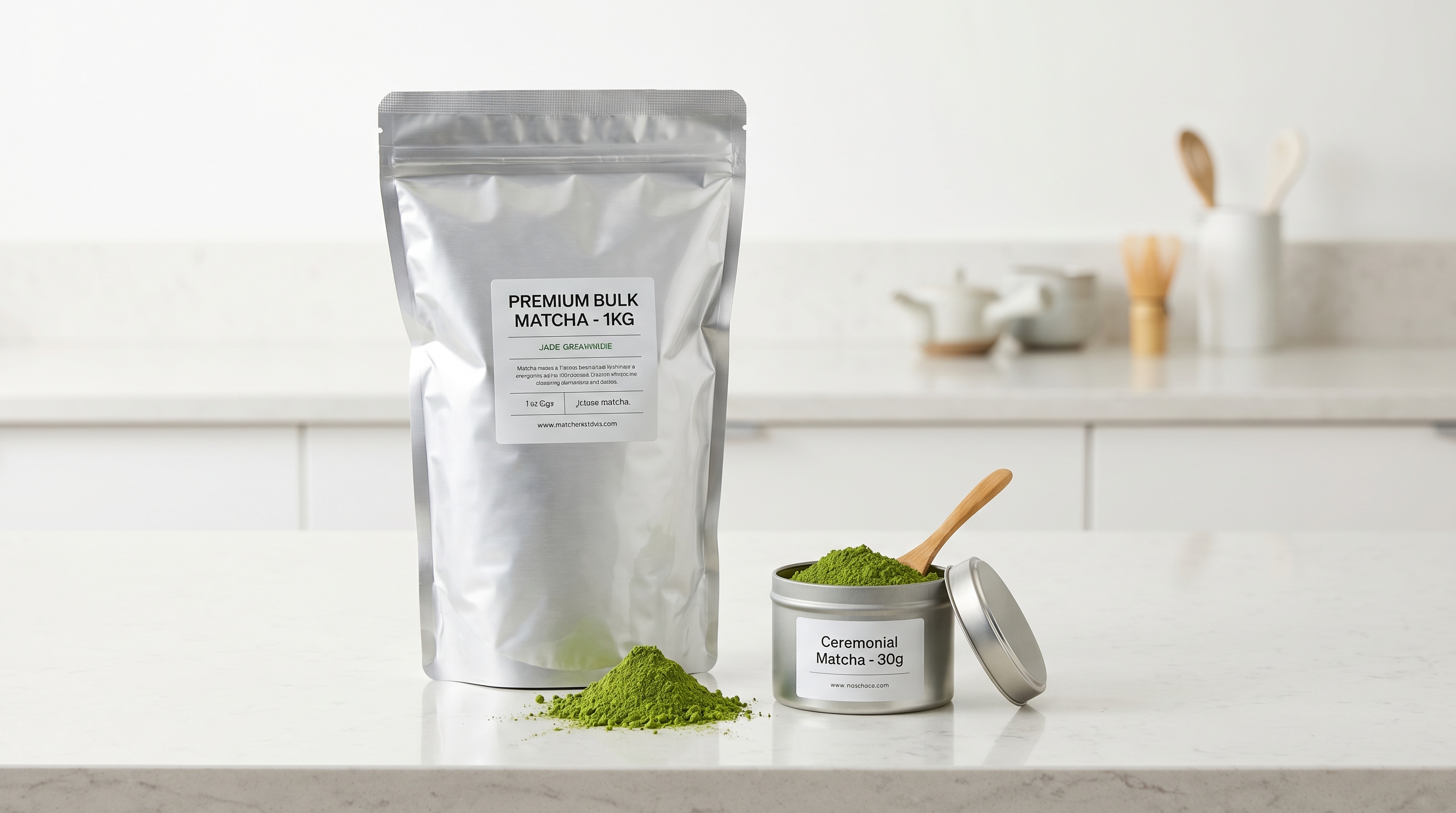
For commercial applications, utilizing bulk packaging is a logistical necessity. High-barrier commercial packaging protects the powder from light exposure and oxidation, which degrade chlorophyll and L-theanine. This degradation turns vibrant green powder into a dull, bitter brown powder.
B2B buyers sourcing through bulk channels can lock in annual contracts to protect their supply chain from seasonal crop fluctuations and shipping cost spikes, a safety measure unavailable in the volatile retail purchasing space.
Navigating the Grades and Types of Bulk Matcha Powder
To source efficiently, a buyer must understand the nuances of the grading spectrum. “Matcha” is not a single product; it is a highly segmented spectrum of green tea powders designed for specific applications. Using a high-priced ceremonial grade for baking is an expensive formulation error, while using a low-cost culinary grade for traditional drinking will result in a bitter, unpalatable cup that alienates premium consumers.
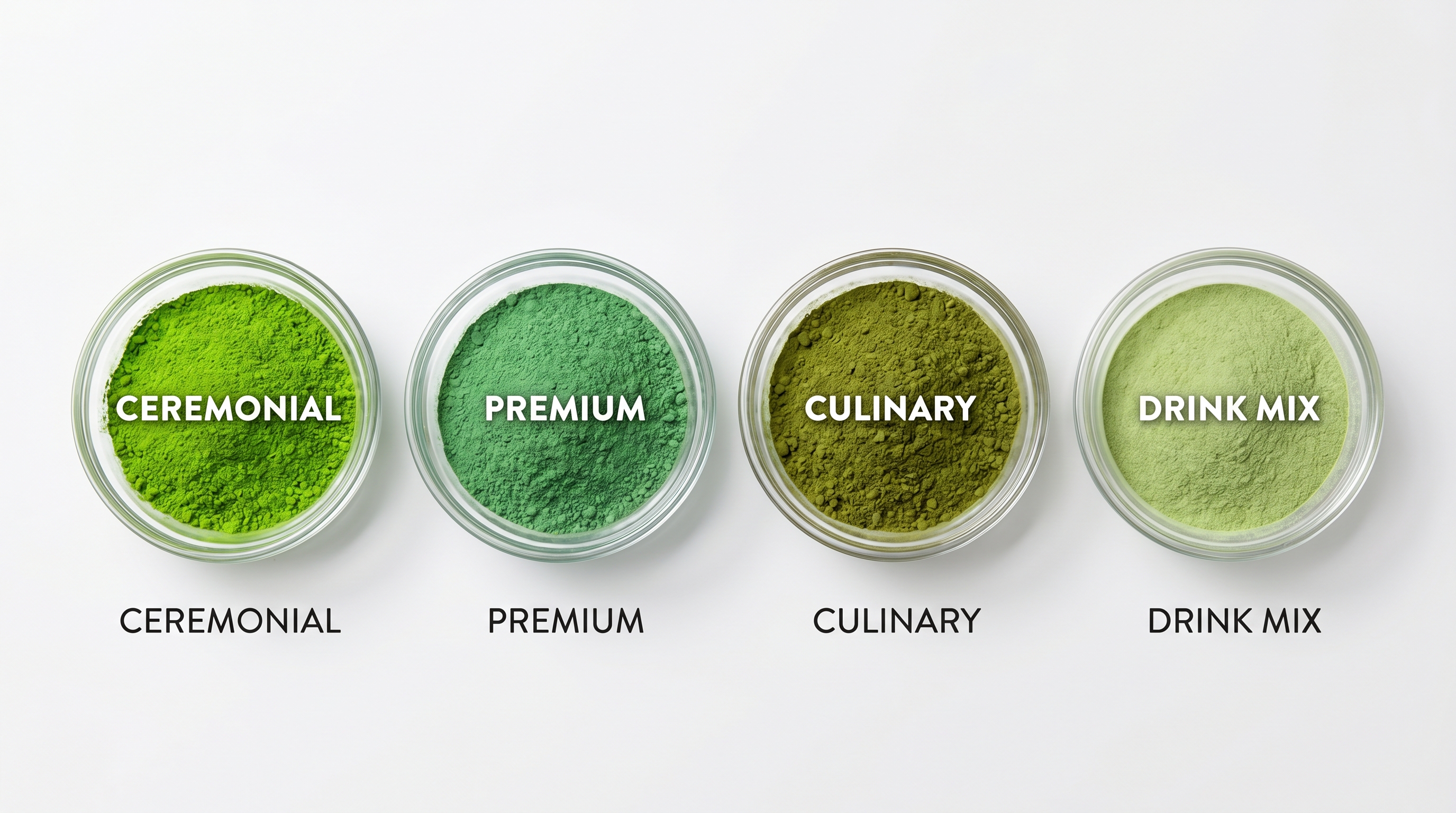
Riching Matcha has developed a sophisticated, highly structured product matrix categorized by technical performance, sensory attributes, and raw material selection:
Ceremonial Grade Matcha
This represents the pinnacle of tea craftsmanship, cultivated from the year’s very first spring harvest (first flush). The tea plants are shade-grown under specialized agricultural shade-nets for 20 to 30 days prior to harvest. This process blocks up to 90% of sunlight, forcing the plants to overproduce chlorophyll and amino acids, specifically L-theanine.
The leaves are meticulously de-stemmed and deveined to produce pure Tencha, which is then slow-ground using traditional stone mills to a particle size of 2 to 5 microns. This grade is characterized by its brilliant jade-green color, smooth velvety mouthfeel, intense natural sweet umami flavor, and zero astringency. It is specifically designed for high-end retail, traditional tea preparation, and premium organic brands. For wholesale applications, buyers can source certified wholesale ceremonial matcha in custom or bulk configurations.
Premium Grade Matcha
An exceptionally versatile grade, harvested in the late spring. It maintains a highly vibrant green color and a strong, balanced flavor profile with an elegant, pleasant hint of natural bitterness. It offers an optimal balance of premium organoleptic qualities and competitive pricing, making it the preferred choice for premium retail lines, high-end private labels, and functional supplement formulations.
Culinary Grade Matcha
Harvested in the summer months, this grade is processed from leaves that have received more sunlight, resulting in a higher concentration of catechins (antioxidants that impart a naturally robust, bitter, and astringent green tea flavor). While less bright green than ceremonial grades, it features a bold, classic green tea flavor profile designed to stand up to heat, acids, and sugars. It is highly sought after by commercial bakers, chocolate manufacturers, and large-scale industrial food companies.
Barista/Beverage Grade
Engineered specifically for the foodservice and cafe industry, this grade is optimized for solubility, color retention, and flavor compatibility with milk, soy, oat, and almond milks. It yields a rich, bright green drink with a clear, refreshing tea flavor that is not masked by sweeteners or dairy fats.
Organic Matcha
Sourced from fully certified, pesticide-free tea gardens, this line meets the strict environmental and chemical-free standards of global organic programs. Riching Matcha’s organic options span Ceremonial, Premium, and Culinary grades, providing international brands with the necessary paperwork to carry USDA Organic and EU Organic seals on their retail packaging.
Matcha Latte Powder & Drink Mix
For businesses seeking high convenience and fast preparation, these blended formulations combine premium green tea powder with natural sweetening agents and emulsifiers. These are highly popular among beverage chains, coffee shops, and instant mix brands seeking to simplify their back-of-house operations.
Application Guide: How to Choose the Right Matcha Grade for Your Business
Selecting the ideal match between your product formulation and the correct wholesale grade is critical to achieving both product quality and cost-of-goods-sold (COGS) efficiency.
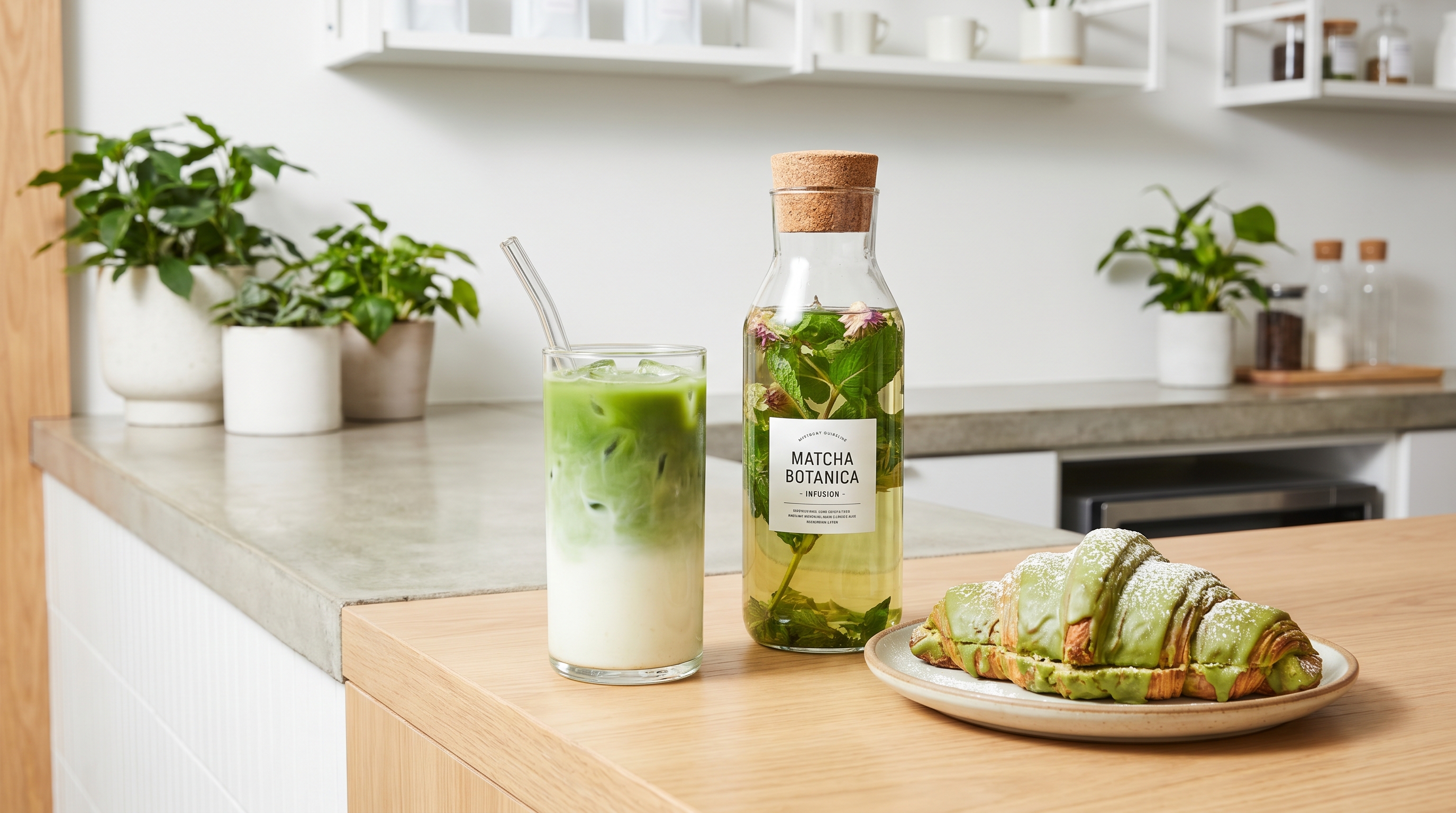
To guide your procurement and product development teams, consult the application matrix below, which matches specific business use cases with the recommended commercial powder profiles:
Business Use Case | Target Application | Key Requirements | Recommended Matcha Type |
|---|---|---|---|
Traditional Drinking & High-End Retail | Whisked matcha tea, luxury gift tins, organic specialty shops. | Intense jade-green color, high L-theanine (sweet umami), zero astringency, ultra-fine grind. | Ceremonial Grade (First Flush / Spring) |
Specialty Cafés & Milk Tea Chains | Iced lattes, bubble teas, frappes, hot lattes, dirty matcha beverages. | High solubility, bright green visual contrast, clean tea flavor that cuts through dairy/sugar. | Barista / Beverage Grade (or Premium Grade) |
Commercial Baking & Confectionery | Croissants, cookies, sponge cakes, macarons, matcha chocolates. | Strong thermal stability, intense green tea aroma, robust flavor that resists high baking heat. | Standard Culinary Grade (Summer Harvest) |
Premium Ice Cream & Frozen Desserts | Gelato, soft serve, plant-based frozen desserts, mochi ice cream. | Stable color, smooth dispersibility at low temperatures, balanced bitterness to offset dairy fat. | Premium Culinary or Premium Grade |
Dietary Supplements & Nutraceuticals | Protein shakes, green superfood blends, functional capsules, gummies. | Standardized EGCG/caffeine content, clean chemical profile, competitive cost-per-kilogram. | Standard Organic Culinary or Extracted Matcha Powder |
E-Commerce & Private Label Launch | Stand-up pouches, single-serve travel stick packs, branded retail tins. | Versatile organoleptic appeal, eye-catching green hue, certified organic options for label power. | Premium Grade & Ceremonial Grade (Organic) |
By analyzing this matrix, B2B buyers can prevent the common mistake of over-specifying (e.g., purchasing ceremonial grade for a cookie formulation, where the delicate umami notes are completely lost during the baking process) or under-specifying (e.g., using a cheap, yellowish culinary grade for a high-end iced matcha latte, which results in an unappealing, sandy-textured beverage).
Organic Certifications and Quality Assurance in Bulk Matcha Sourcing
In the modern B2B importing landscape, quality assurance is not merely a preference—it is a legal and operational mandate. Sourcing bulk agricultural products internationally requires navigating complex chemical, agricultural, and biological regulations. When importing large volumes of green tea powder, verifying compliance at the farm and factory level is critical to preventing customs seizures, product recalls, and brand damage.
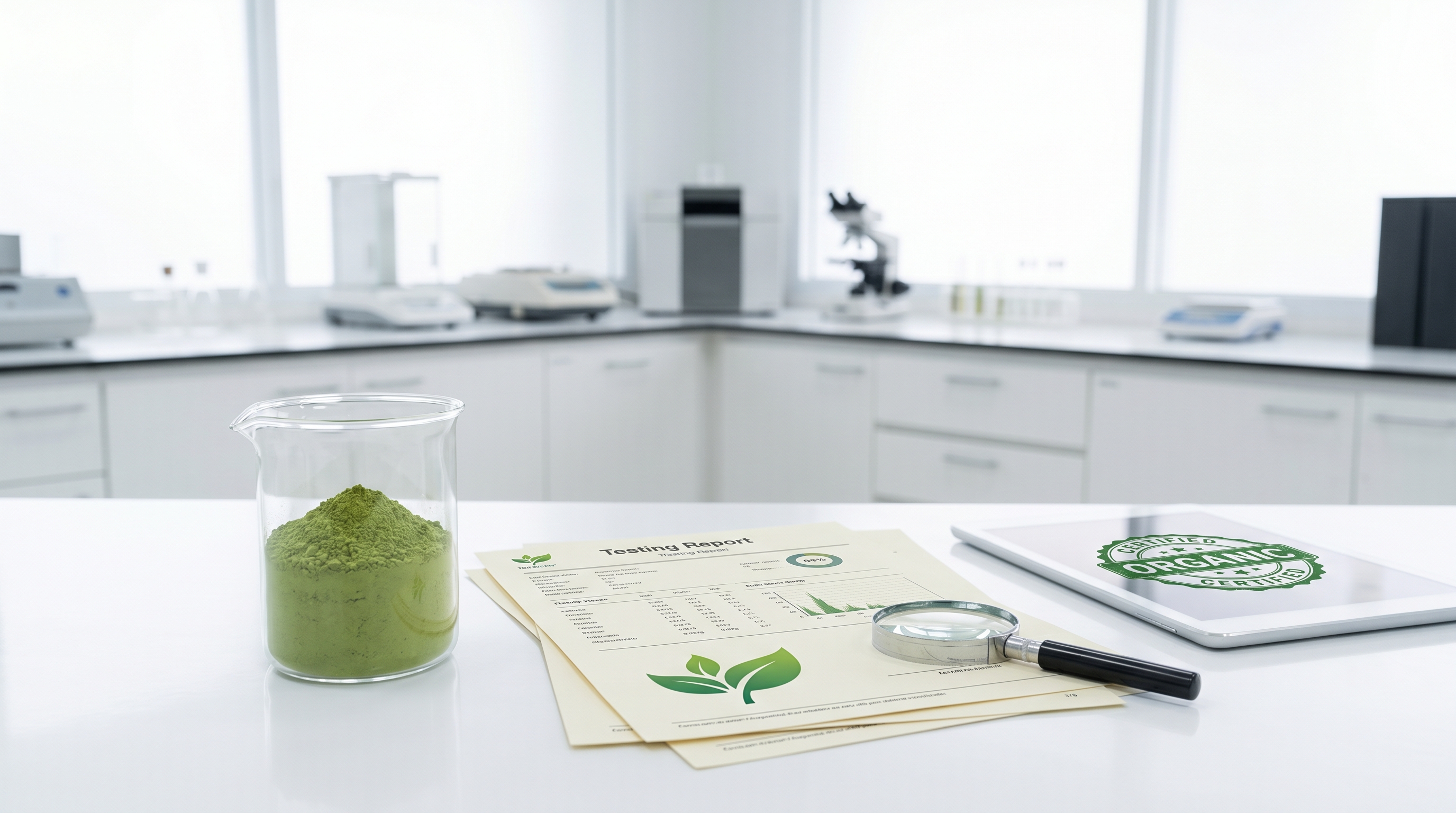
Corporate buyers must prioritize factories that possess a complete suite of global food safety and dietary certifications:
- USDA National Organic Program (NOP) & EU Organic: These certifications guarantee that the tea leaves are cultivated without synthetic chemical pesticides, herbicides, or genetically modified organisms (GMOs). Certifying agencies must audit the entire supply chain, from the soil chemistry of the tea garden to the processing machinery of the grinding facility, ensuring complete separation between organic and conventional processing streams.
- ISO 22000 & HACCP (Hazard Analysis Critical Control Point): These international food safety management systems ensure that the manufacturing facility operates under rigid physical, chemical, and biological hazard controls. This includes automated clean-in-place (CIP) systems, environmental micro-testing, and foreign body control.
- Kosher & Halal Certifications: Necessary for brands looking to address diverse, global consumer demographics. These certificates ensure that no cross-contamination with non-compliant processing agents occurs.
- Heavy Metal & Chemical Residue Testing: True quality assurance is backed by analytical data. Every production batch must be accompanied by a comprehensive Certificate of Analysis (COA) issued by third-party laboratories (such as SGS or Eurofins). Key testing parameters must verify that heavy metals (Lead, Arsenic, Cadmium, Mercury) and pesticide residues are well below the strict Maximum Residue Limits (MRLs) established by the FDA, the European Food Safety Authority (EFSA), and other global regulators.
Riching Matcha maintains strict control over its supply chain, operating a fully trace-back compliant system. By owning and partner-managing agricultural acreage under strict organic cultivation regimes, the company ensures that its bulk powders arrive at international ports fully certified, pre-tested, and clean-label ready, allowing for smooth customs clearance and immediate production integration.
Professional Quality Standards and Evaluation Factors for B2B Sourcing
For procurement professionals, master blenders, and quality assurance directors, evaluating matcha requires a methodical approach that combines sensory testing with laboratory metrics. Price comparison alone is insufficient; a slightly lower price-per-kilogram can conceal severe deficiencies in color stability, flavor performance, and microbiological safety.
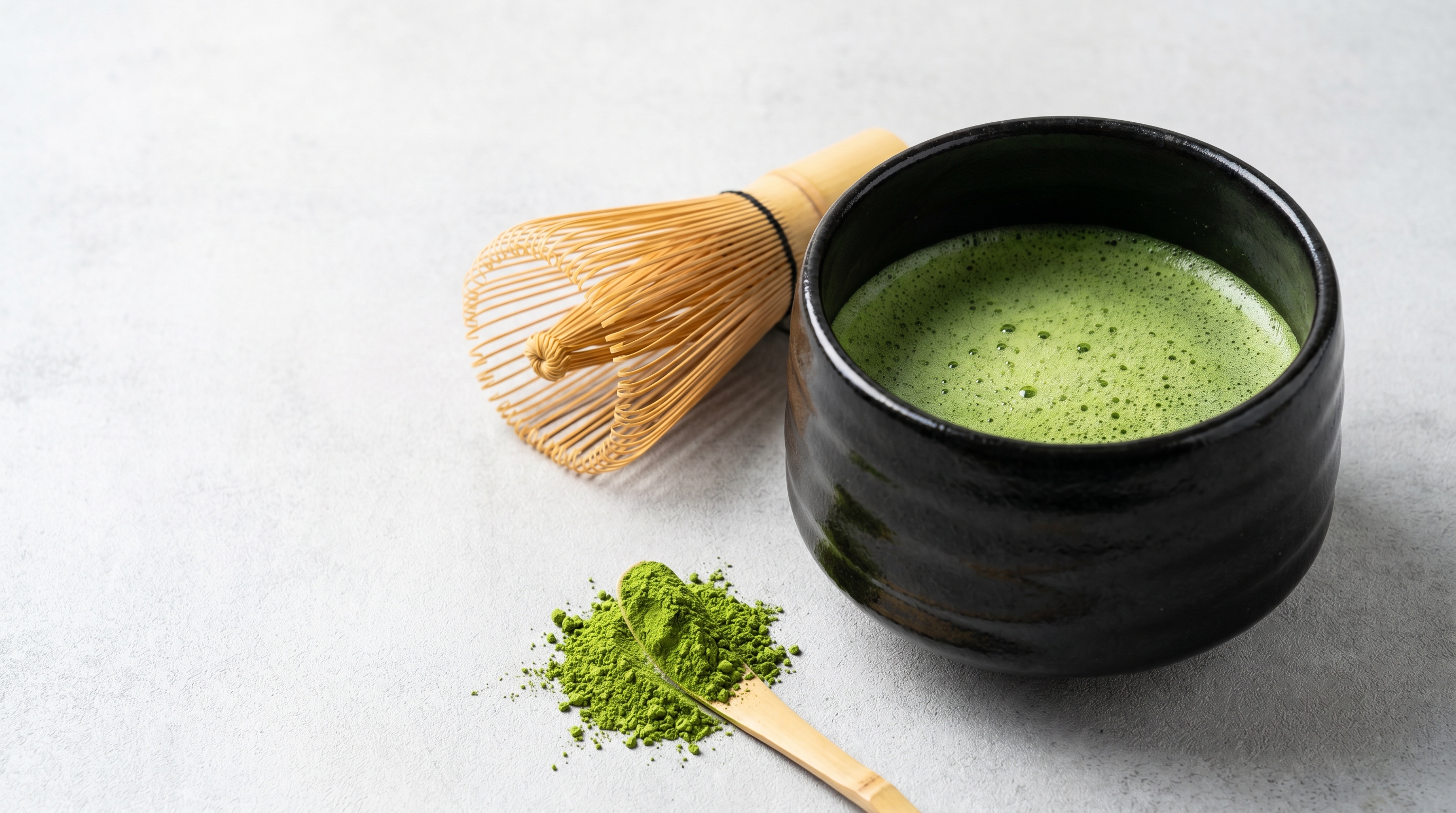
To establish an objective QA framework, B2B buyers should evaluate samples using these five critical pillars:
I. Color Analysis (The Visual Benchmark)
- The Science: Chlorophyll is highly sensitive to heat, light, and oxidation.
- Evaluation Protocol: Spread a 5g sample of dry powder onto a clean sheet of white paper and smooth it out. High-quality spring matcha will exhibit a brilliant, vibrant electric jade-green hue. Lower-quality, late-harvest, or oxidized matcha will display a dull, flat olive-green, khaki, or yellowish tone.
- Industrial Metric: Advanced QA departments use spectrophotometers to measure the Lab* color space values, targeting high a∗a^*
(greenness) and
b∗b^*(yellowness) ratios.
II. Tactile & Particle Size Evaluation (Mesh Calibration)
- The Science: Traditional stone milling or modern low-temperature air-jet milling determines the final particle morphology.
- Evaluation Protocol: Rub a small amount of dry powder between your thumb and index finger.
- The Standard: Premium bulk matcha should feel as fine and smooth as talcum powder, with a particle size averaging 2 to 10 microns (equivalent to 800 to 1200 mesh). It should glide smoothly across the skin. If it feels gritty, sandy, or coarse, it has not been ground properly. This will cause rapid precipitation (settling) in liquid formulations and a sandy texture in food products.
III. Solubility & Dispersion Behavior
- The Science: Ultra-fine powder is naturally hydrophobic and prone to electrostatic clumping.
- Evaluation Protocol: Whisk 2g of matcha into 70°C water.
- The Standard: High-quality powder disperses smoothly, forming a rich, stable crema (froth) with micro-bubbles when whisked. It should remain suspended in water for an extended period. Poorly processed matcha will clump immediately, resist hydration, and settle rapidly to the bottom of the vessel, forming a dense sludge.
IV. Sensory Profiling (Aroma & Taste)
- The Science: The balance of L-theanine (sweet, savory umami) to catechins (bitter, astringent polyphenols).
- Evaluation Protocol: Conduct a blind cupping session.
- The Standard: High-grade ceremonial samples should emit a fresh, grassy, slightly sweet aroma reminiscent of baby spinach or marine algae, with a deep umami taste on the palate and zero bitterness. Culinary grades should exhibit a clean, robust, astringent tea flavor with a pleasantly crisp, bitter finish, free from smoky, burnt, stale, or musty off-notes.
V. Avoid the Sourcing Traps
The most common mistake made by B2B buyers is choosing a supplier solely on the lowest quote. Extremely cheap matcha is often adulterated with standard green tea powder (which is not shade-grown, contains bitter stems, and lacks the nutritional density of authentic Tencha-derived matcha), mixed with enzyme-treated green food coloring, or processed in non-certified facilities with high microbial counts. Always request a full batch COA, evaluate physical samples under standardized conditions, and verify the supplier’s manufacturing credentials before issuing a purchase order.
Customization and Brand Development: Private Label & OEM Customization
For modern tea brands, wellness startups, e-commerce retailers, and international grocery chains, speed-to-market and brand differentiation are critical. Establishing a green tea grinding facility is cost-prohibitive, requiring massive capital expenditures for cleanroom facilities, stone mills, and high-speed packaging lines. B2B buyers leverage the expertise of established manufacturers by utilizing comprehensive private label matcha services to build strong, profitable product lines.
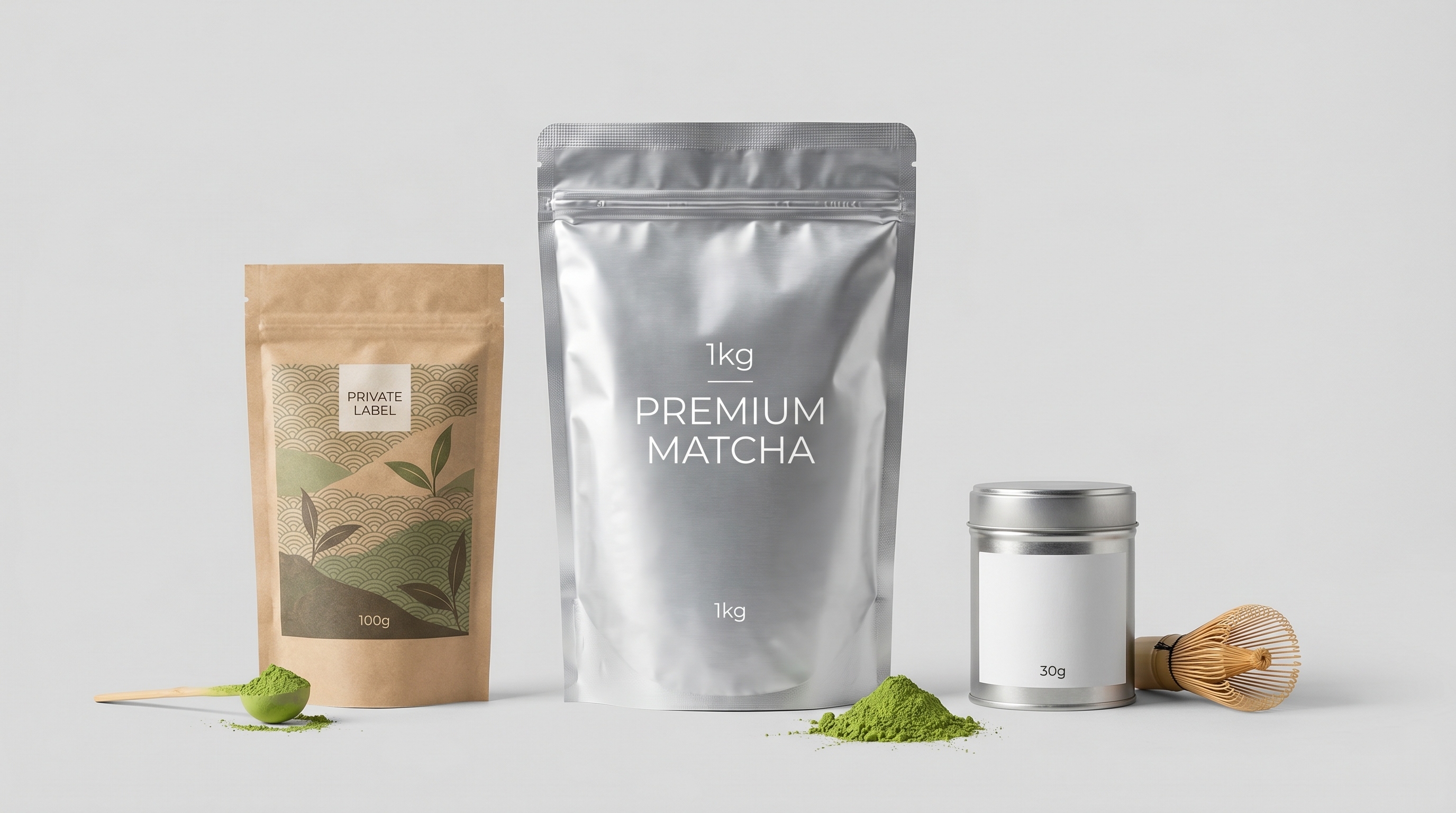
Partnering with an experienced OEM (Original Equipment Manufacturer) like Riching Matcha unlocks a deep portfolio of packaging and custom formulation options:
Industrial Bulk Packaging
- Formations: Double-walled aluminum foil barrier bags (1kg, 5kg, 10kg) packed inside heavy-duty corrugated master cartons or fiber drums (20kg to 25kg).
- Optimization: Vacuum-sealed and nitrogen-flushed to drive down oxygen levels to less than 1%, ensuring maximum freshness during long sea-freight transit.
Retail-Ready Stand-Up Pouches & Tins
- Formations: Premium double-sealed tin canisters (30g, 50g, 80g, 100g) with food-grade inner pull-ring lids, or modern kraft/matte-finished stand-up zip pouches (resealable, high-barrier laminates).
- Service: Complete custom printing, label application, and external box packaging.
Single-Serve Stick Packs (Sachets)
- Formations: 1g to 5g portion-controlled stick packs made from high-barrier foil laminates.
- Application: Ideal for active lifestyle brands, travel-friendly beverage options, dietary supplement additions, and cafe quick-serves.
Custom Blending & Formulation
- Formations: Custom recipe development.
- Options: Integrating bulk matcha with organic cane sugar, coconut milk powder, collagen peptides, functional mushrooms (Lion’s Mane, Cordyceps), probiotics, or natural flavors to create proprietary, market-ready drink mixes.
By leveraging Riching Matcha’s extensive OEM services, international clients can obtain fully compliant, beautifully designed, market-ready products. The factory handles everything from sourcing raw materials and grinding to final packaging, barcoding, and export logistics, allowing your brand to focus entirely on marketing and sales channels.
The Commercial Economics: Bulk Pricing, MOQs, and Purchase Pathways
Navigating the financial and procedural aspects of wholesale purchasing requires a clear understanding of international trade mechanisms. Bulk matcha pricing is dynamic, governed by agricultural yields, harvesting seasons, certification tiers, and order volumes.
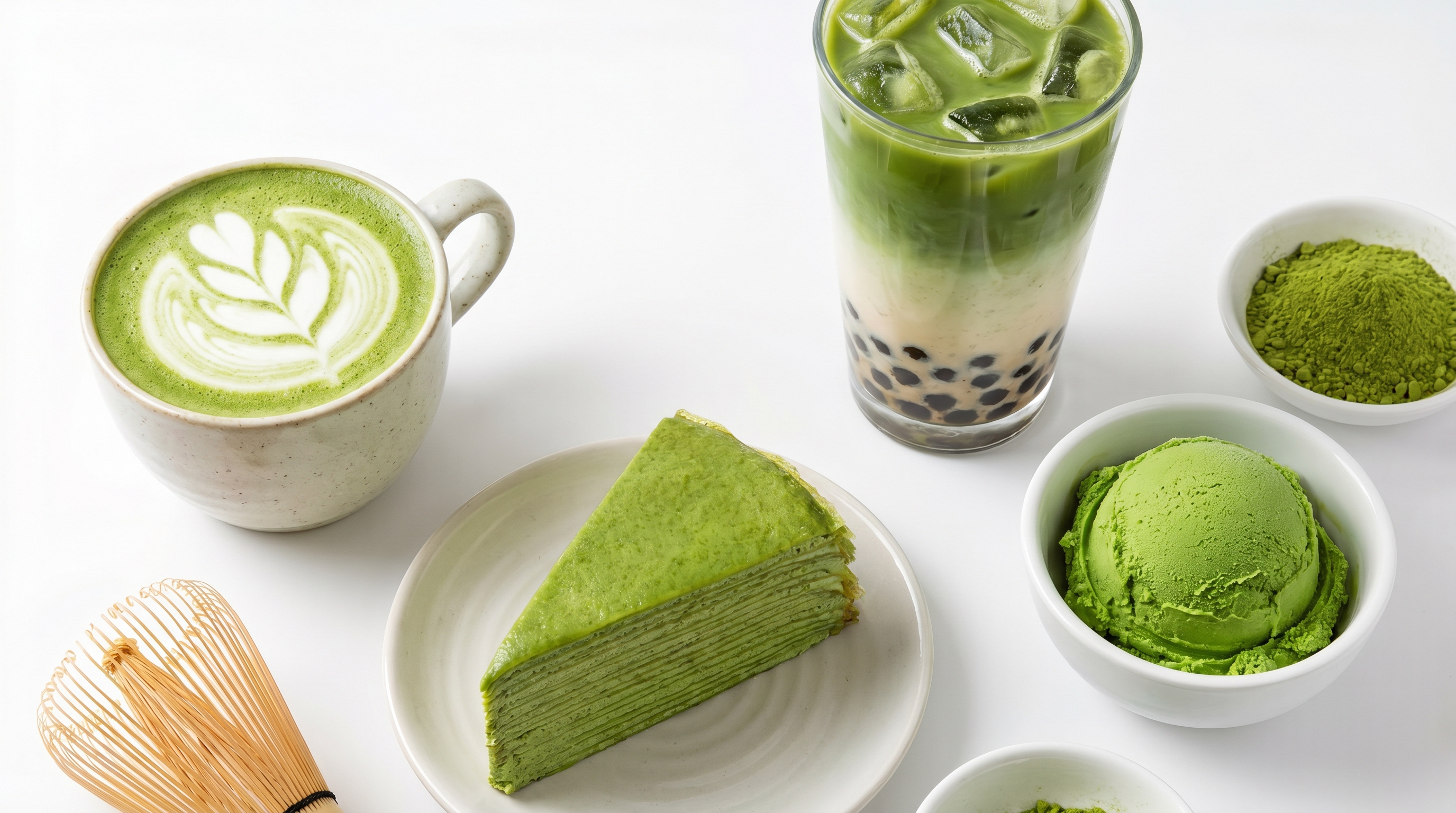
Understanding these variables enables procurement departments to optimize their annual purchasing budgets:
Key Factors Influencing Wholesale Pricing
- Harvest Timing (The Seasonal Index): First-flush spring harvests command the highest premium due to their rich amino acid profile, low bitter compounds, and limited annual supply. Summer and autumn harvests yield far greater volumes at significantly lower cost points, making them highly economical for industrial culinary food manufacturing.
- Organic Status: True certified organic matcha typically carries a 15% to 30% premium over conventional farming outputs. This reflects the increased agricultural labor, lower crop yields, and extensive auditing fees required to maintain USDA and EU compliance.
- Volume Scale & Shipping Destination: Buying in Less than Container Load (LCL) volumes carries higher per-kilogram transit and processing costs than securing Full Container Loads (FCL). Long-term contract purchasing offers the most stable pricing.
- Packaging Complexity: Shipping raw bulk powder in 25kg drums is highly cost-effective; processing the same powder into custom-printed, nitrogen-flushed 1.5g single-serve stick packs adds packaging material and machine-run labor costs.
The Structured Sourcing Pathway
To ensure quality matching and financial security, Riching Matcha utilizes a standardized procurement workflow:
- Inquiry & Specification Alignment: The buyer contacts the manufacturer, outlining their target application, volume requirements, and certification needs.
- Sample Evaluation: The factory dispatches standardized sample kits representing various grades. The buyer conducts sensory, solubility, and cooking tests.
- Analytical Verification (COA): The factory provides detailed COAs, heavy metal profiles, and pesticide residue assays matching the sample lot.
- Low MOQ Trial Order: The buyer places a trial order to test manufacturing compatibility, custom packaging setups, and local market response.
- Long-Term Contract & Mass Production: Upon trial success, both parties establish a blanket purchase agreement, securing stable pricing and scheduled shipping releases to maintain an uninterrupted supply chain.
To begin this structured procurement process and request your initial evaluation sample kit, please contact the Riching Matcha export team directly with your specific project parameters.
Supply Chain Integrity: Sourcing from Tea Farm to International Logistics
An unbroken chain of custody and rigorous quality control at every processing milestone are essential to maintaining the integrity of bulk matcha. From the geographic terroir of the tea garden to the container stuffing at the shipping port, every step must be managed precisely to protect the physical, chemical, and biological purity of the product.
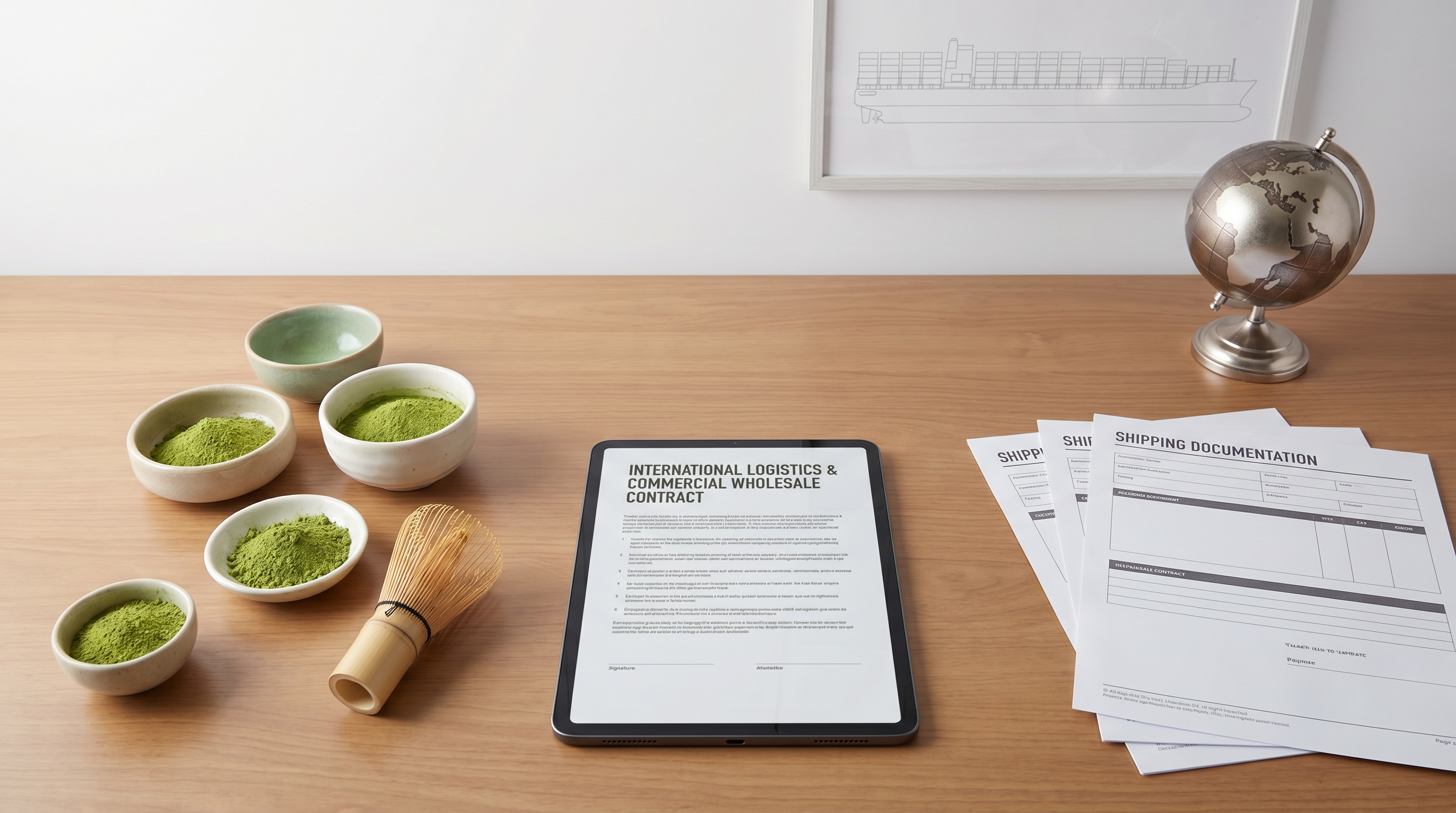
The process of bringing bulk matcha to the international market involves several key stages:
Agricultural Cultivation & Shading
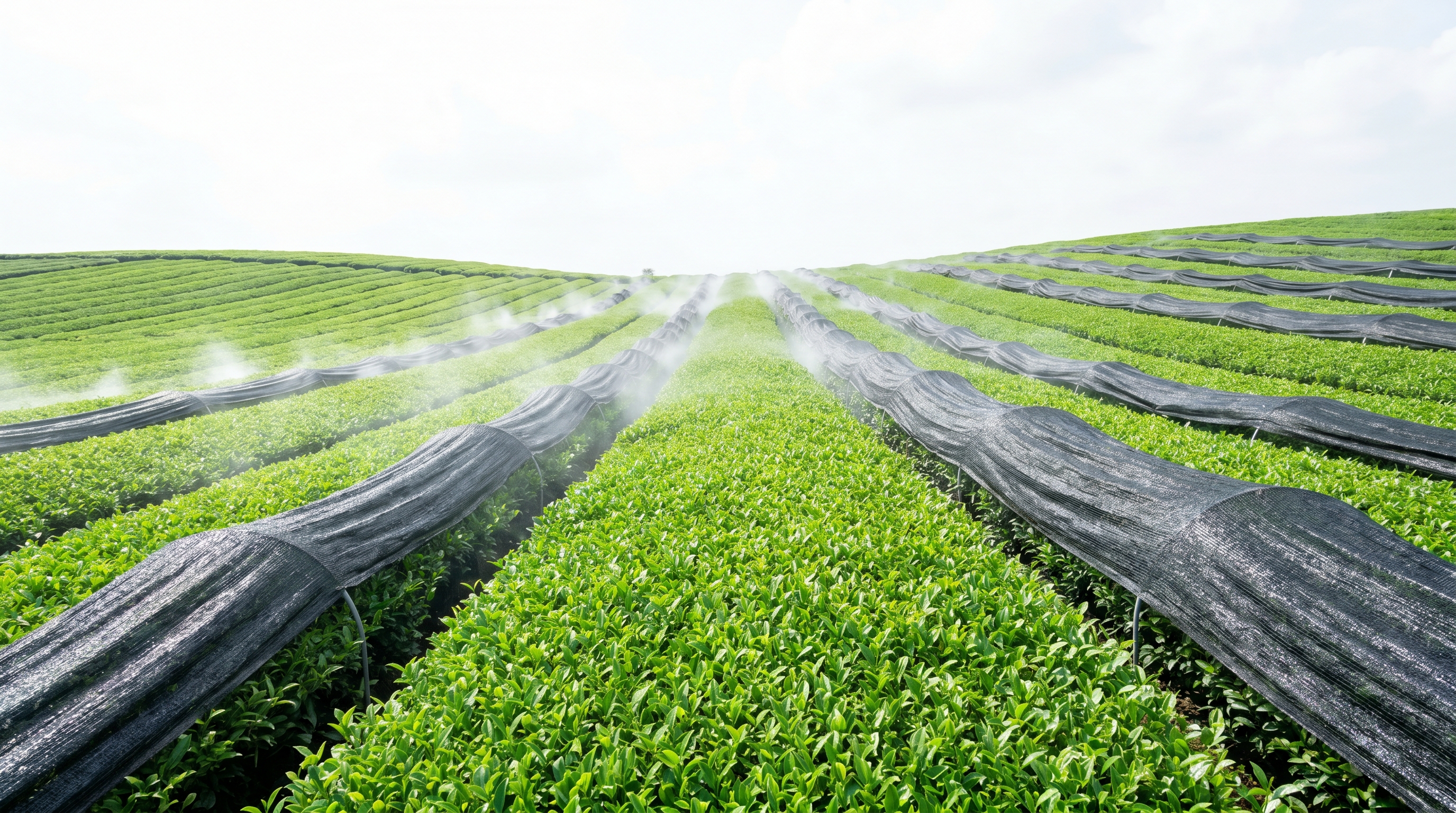
The journey begins in high-altitude, mist-shrouded tea fields. The natural geography provides the optimal combination of rich, well-draining soil, pure water, and dramatic temperature fluctuations that develop the complex flavors of the Camellia sinensis plant.
At least 20 to 30 days before harvest, the fields are completely covered with black shading nets. This blocks out sunlight, forcing the plants to synthesize high volumes of chlorophyll (creating the signature deep green color) and amino acids (generating the sweet umami flavor).
Harvesting & Rapid De-enzyming (Steaming)
The fresh leaves are harvested and transported immediately to the processing plant. To halt enzymatic oxidation (which would turn the leaves black and destroy the vibrant green color and health-promoting antioxidants), the fresh leaves are subjected to high-temperature steam treatment within hours of harvest. This preserves the natural, bright-green characteristics of the leaf.
Tencha Processing (Drying, Destemming, and Deveining)
The steamed leaves are gently dried in specialized multi-stage ovens to produce raw Aracha tea. Next, the tea undergoes a highly sophisticated separation process: specialized wind-sorting and mechanical sorting machines remove all stems, veins, and yellowing leaf particles. This leaves only the pure, soft leaf flesh, known as Tencha. Tencha is the exclusive raw material for authentic matcha.
Precision Micro-Grinding & Foreign Body Control
The Tencha is moved to temperature-controlled cleanrooms where it is ground into an ultra-fine powder (2 to 10 microns). This is achieved through traditional stone mills or advanced low-temperature air-jet mills that prevent heat buildup, protecting the delicate color, nutrients, and flavor compounds.
The powder then passes through a series of high-density vibratory sieves, followed by high-sensitivity rare-earth magnets, inline metal detectors, and dual-source X-ray inspection systems to eliminate any potential foreign materials.
Packaging, Export Logistics, and Incoterms
The finished powder is packed into high-barrier, vacuum-sealed aluminum bags, nitrogen-flushed, and placed into insulated corrugated cases.
Riching Matcha supports a variety of Incoterms to match our clients’ logistical capabilities:
- FOB (Free On Board): The factory delivers the cleared cargo to the designated export port; the buyer manages the ocean freight and import clearance.
- CIF (Cost, Insurance, and Freight): The factory manages ocean freight and marine insurance to the buyer’s target destination port.
- DDP (Delivered Duty Paid): The most comprehensive service; the factory manages the entire transit chain, including ocean freight, customs clearance, import tariffs, and final overland delivery directly to the buyer’s warehouse door.
Strategic Advantage: Why Partner with Riching Matcha for Your Wholesale Needs?
For global B2B buyers, deciding where to source bulk matcha is a critical strategic decision. Historically, Japan was viewed as the exclusive source of premium matcha. However, over the past decade, China’s advanced agricultural modernization, rigorous quality standards, and massive industrial capacity have positioned it as a dominant force in the global green tea market.
Understanding this landscape is essential for optimizing procurement decisions.
While Japanese matcha is highly regarded, Japanese producers face significant operational constraints. These include limited agricultural land, aging farming demographics, and high labor costs. These constraints lead to elevated wholesale pricing and high volatility in crop availability, making it difficult for international buyers to scale up production.
In contrast, China features vast, high-altitude tea-growing regions with rich, volcanic soil and ideal climates. Chinese manufacturers have integrated Japanese shade-growing and stone-milling technologies with large-scale automated agricultural systems.
This combination enables Chinese producers to offer exceptional quality, highly consistent volumes, and extremely competitive cost structures, with savings often reaching 30% to 50% compared to Japanese sourcing.
Riching Matcha represents the pinnacle of this modern agricultural and processing capability, offering key advantages that set us apart:
- Direct-from-Source Pricing: By operating as a direct manufacturer, we eliminate unnecessary middlemen, broker commissions, and trading agency fees. This provides our clients with highly competitive pricing that maximizes their product margins.
- Integrated Quality Control: We manage the entire production chain, from soil testing at our partner farms to the final packaging line in our certified facility. This ensures complete traceability, uniform batch consistency, and reliable, high-purity products.
- Robust Export Experience: With over a decade of experience serving clients across North America, Europe, the Middle East, South America, and Asia, our team understands international customs regulations, shipping documentation, and global food safety compliance requirements.
- Flexible OEM and Customization Capability: We are highly adaptable, capable of delivering custom mesh sizes, color profiles, unique tea blends, and private label packaging designs with low, flexible MOQs that support your brand’s growth.
Whether you are looking to source high-purity ceremonial matcha for a premium retail line or require multi-ton shipments of culinary matcha for industrial manufacturing, Riching Matcha is your trusted, long-term strategic partner.
How to Get Started with Your Wholesale Inquiry:
Our experienced global procurement specialists are ready to assist you. To request free sample kits, obtain technical specification sheets, or receive a customized quotation, please reach out through our official communication channels:
- Corporate Email: laura@richingmatcha.com (Alternative: laure@richingnutrition.com )
- WhatsApp / WeChat: +86-18660258415
- Corporate Headquarters: Qingdao City, Shandong Province, China
Let Riching Matcha elevate your brand, streamline your supply chain, and deliver the natural power of premium green tea powder directly to your production lines.
Comprehensive FAQs for B2B Sourcing
1. What is the difference between bulk matcha and wholesale matcha?
In the commercial landscape, “bulk matcha” refers specifically to the physical packaging format and state of the product. Bulk matcha is shipped in large, unpackaged commercial sizes (typically 1kg, 5kg, or 25kg foil bags and drums) and is intended as an ingredient for industrial food manufacturing, large-scale beverage preparation, or regional repacking.
“Wholesale matcha” refers to the commercial transaction and pricing model, where products—including both bulk bags and retail-ready private label packaging (such as pre-packed 30g tins or custom stick packs)—are purchased in large quantities under B2B commercial pricing terms.
2. What is the best matcha grade for cafes and beverage chains?
For cafes, coffee shops, and bubble tea chains, the optimal choice is Barista/Beverage Grade or Premium Grade. These grades are engineered to strike the perfect balance between vibrant color, clean tea flavor, and cost efficiency.
They contain a balanced level of natural amino acids and mild catechins, allowing the tea’s bright green visual appeal and refreshing, crisp flavor to cut through dairy fats, plant-based milks, syrups, and sweeteners without clumping or settling rapidly in the cup.
3. What is the best matcha grade for commercial baking?
The recommended choice for industrial bakeries and confectioners is Culinary Grade (Summer Harvest). This grade is harvested later in the season, resulting in a higher concentration of catechins, which impart a robust, bold green tea flavor profile.
This strong flavor profile and robust aroma resist high oven temperatures, sugars, and flour mixtures, ensuring the signature green tea character remains prominent in the final baked goods.
4. Can I buy certified organic bulk matcha with USDA and EU Organic certificates?
Yes. Riching Matcha specializes in supplying fully certified organic bulk matcha. Our organic tea farms and state-of-the-art grinding facilities are fully audited and certified by recognized international agencies.
Every batch of organic matcha is accompanied by official USDA NOP and EU Organic transaction certificates, as well as a comprehensive Certificate of Analysis (COA) detailing pesticide-free and heavy metal compliant laboratory results. This ensures seamless customs clearance and clean-label verification for your brand.
5. What is the typical MOQ for starting a wholesale matcha order?
Our Minimum Order Quantities (MOQs) are designed to support businesses at different stages of growth. For standard bulk packaging (such as our 1kg aluminum foil bags), we offer highly flexible, low MOQs starting at 10kg to 50kg for initial trial and validation runs.
For custom OEM private label packaging (such as custom-printed retail tins, stand-up zip pouches, or single-serve stick packs), the MOQ typically ranges from 1,000 to 5,000 units, depending on the complexity of the packaging materials and custom printing requirements.