
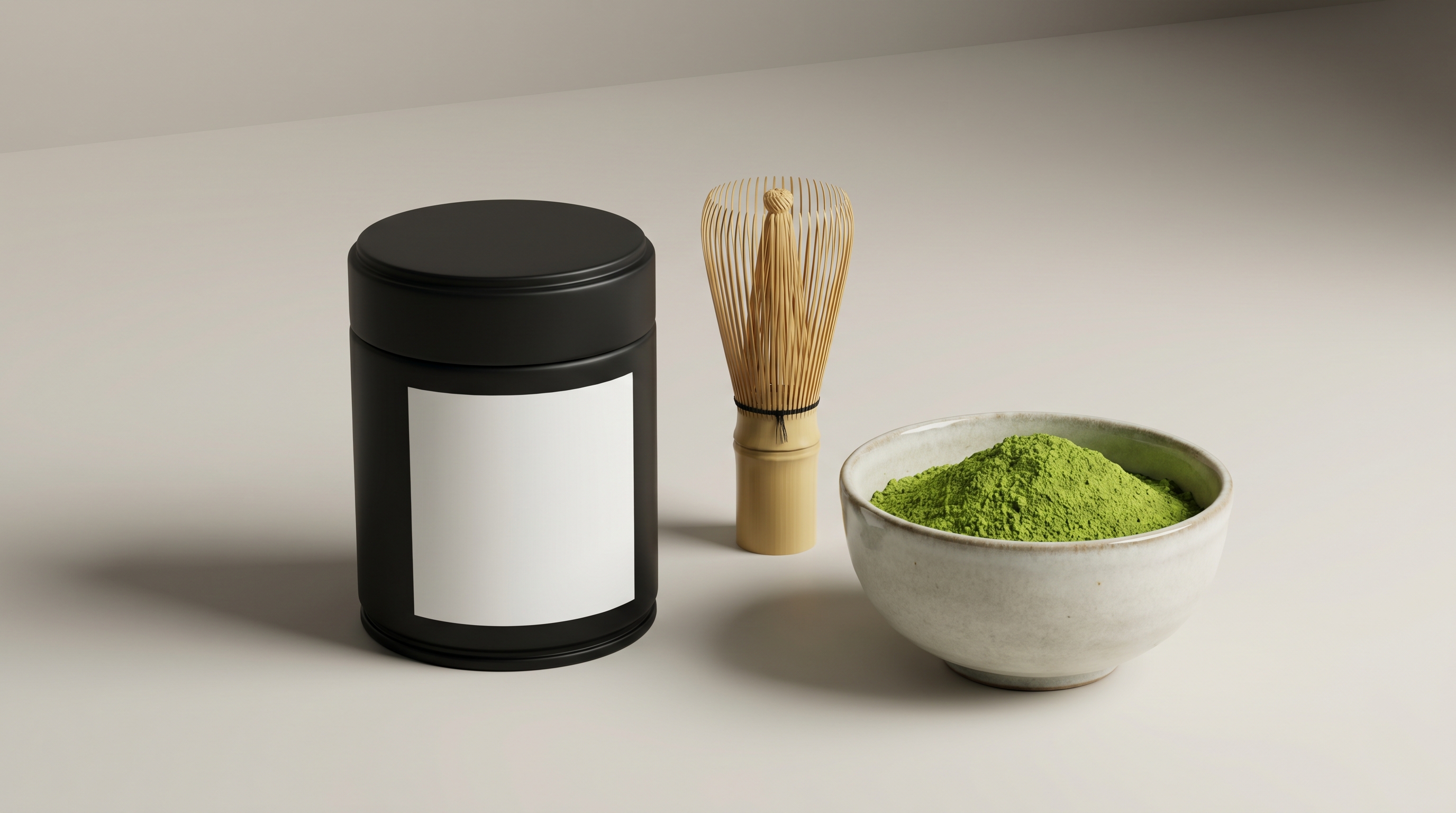
In the highly competitive global health, wellness, and beverage markets, brand owners and distributors are continuously searching for ways to deliver high-quality products while maintaining operational efficiency. This is where a private label matcha supplier plays an indispensable role.
For procurement managers and business owners, it is essential to distinguish between a simple bulk tea distributor and a comprehensive, vertically integrated private label partner.
- Bulk Matcha Suppliers: These companies act primarily as raw material importers or agricultural brokers. They ship large quantities of matcha—typically packaged in multi-kilogram fiber drums or double-walled vacuum bags—directly to your manufacturing plant or co-packer. The buyer is entirely responsible for quality control, primary packaging selection, compliance testing, retail filling, labeling, and logistical coordination.
- Private Label Matcha Suppliers: These are turn-key manufacturing partners. They manage the entire value chain from farm level sourcing, stone-grinding, and custom blending, to final retail packaging, labeling, and regulatory compliance. By leveraging their specialized, cleanroom-certified automated packing facilities, you bypass millions of dollars in capital expenditure, operational overhead, and specialized labor.
To navigate this industry successfully, procurement teams must also understand the distinct manufacturing models available when launching or scaling a brand:
- White Label (Stock private label): The supplier offers standard, pre-formulated matcha grades packed in pre-determined stock packaging (such as generic 30g tins or 100g silver stand-up pouches). The buyer simply supplies a branded sticker label to apply to the front. This is the fastest, lowest-cost entry point into the market.
- Private Label (Custom private label): The supplier provides a tailored product where you can choose custom package materials, custom fill weights, and custom-designed printed film. The packaging is created specifically for your brand, though the product inside remains a standard or slightly modified house blend.
- OEM (Original Equipment Manufacturer): Under this model, the supplier processes and packs a completely custom matcha formulation or specification designed by the buyer. This may include unique raw material specifications (e.g., sourcing only a specific spring-harvested cultivar like Saemidori or Okumidori), specific stone-grinding particle sizes (under 10 microns), or custom-blended ratios of matcha with functional ingredients (like collagen, MCT oil, or adaptogens).
- ODM (Original Design Manufacturer): The supplier’s internal R&D department designs the formulation, packaging aesthetics, and functional profiles based on your high-level business goals. The manufacturer owns the formula, but licenses the finished product exclusively to your brand for retail.
For growing enterprises, partnering with an established global wholesale matcha provider allows you to scale your inventory dynamically while ensuring that agricultural supply chain fluctuations do not disrupt your retail distribution.
2. Who Needs Private Label Matcha Manufacturing?
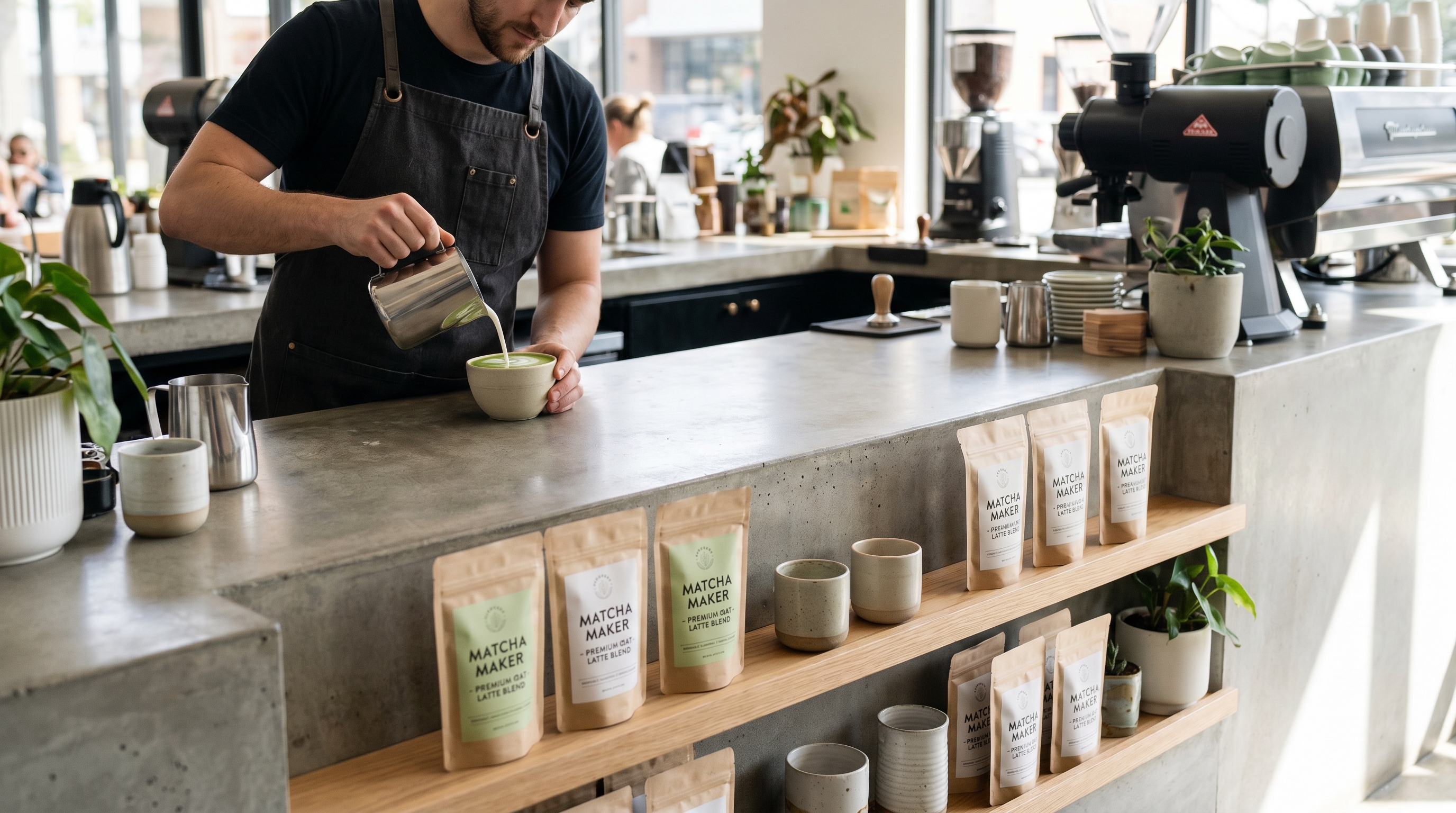
The global demand for green tea powder stretches across multiple multi-billion-dollar sectors. Each buyer profile operates under different commercial pressures, distribution channels, and compliance frameworks. Understanding these distinct B2B buyer profiles reveals how a private label partner must adapt to meet diverse commercial goals.
Ten Key B2B Target Buyer Profiles
- Matcha Brand Owners: Focus entirely on premium brand positioning, aesthetic superiority, and storytelling. They require access to ultra-premium, single-origin spring harvests, customized premium tinplate cans, and long-term price stability to protect their high-margin retail positioning.
- Coffee Shops & National Cafe Chains: Prioritize extreme solubility, consistency in flavor-to-milk ratios, and a bright, vibrant green color that remains stable under hot water and steam-wand applications. Their procurement managers focus on bulk bag packaging (typically 500g to 1kg zipper bags) designed for rapid food service workflow.
- Traditional Tea Shops: Seek authenticity, traditional shade-growing heritages (such as Uji or Nishio regions), and standard metal tin packaging that preserves the delicate volatile compounds of ceremonial grades.
- RTD (Ready-To-Drink) Beverage Brands: Require large-scale, consistent supply chains. They focus on beverage-grade matcha that can withstand high-temperature pasteurization (UHT processing) and maintain suspension without heavy sedimentation.
- Health Food Stores & Wellness Brands: Demand strict USDA Organic and EU Organic certifications. They target health-conscious consumers and require premium packaging with clean-label layouts emphasizing functional nutritional claims.
- Supermarkets & Big Box Retailers: Focus heavily on GFSI certifications (such as FSSC 22000 or SQF), EDI (Electronic Data Interchange) compliance, high-volume production capacities, and razor-sharp unit margins.
- Amazon & E-Commerce Brands: Prioritize light, puncture-resistant, and high-visual-impact packaging (such as custom metalized pouches) that optimizes shipping weight for multi-channel fulfillment (FBA). They require low MOQ entry options to test dynamic market trends quickly.
- Food Ingredient Importers: Operate as regional distributors, purchasing large quantities of bulk, palletized master cartons. They require robust phytosanitary certificates, certificates of origin, and consistent container-load logistics.
- Large-Scale Food Distributors: Supply institutional kitchens, bakeries, and industrial food manufacturers. They look for cost-efficient, industrial-grade culinary matcha packed in multi-kilogram moisture-barrier bags.
- Nutraceutical & Supplement Brands: Treat matcha as a highly standardized active ingredient. They require lab-verified profiles highlighting specific concentrations of L-theanine, EGCG (Epigallocatechin gallate), and total polyphenols, often utilizing matcha in tablet, capsule, or functional powder blend forms.
Sourcing Priorities: Cafe Chains vs. Amazon Sellers
The strategic trade-offs between different buyer profiles are stark. For example, a national cafe chain’s procurement officer and an Amazon brand owner have completely different priorities:
- The Cafe Chain Buyer: Focuses on in-cup yield and operational workflow. If a matcha powder clumps easily under rapid preparation, it slows down service times. Hence, they prefer custom café-grade formulations that are easily soluble in cold or hot dairy and plant-based milks. They require heavy-duty, resealable, gas-barrier culinary bags to prevent moisture degradation in humid commercial kitchen environments.
- The Amazon Brand Owner: Prioritizes unboxing aesthetics, retail compliance, and digital-friendly packaging design. They are highly sensitive to shipping-to-weight ratios; hence, a metal tin might look premium, but its higher weight and dimensional bulk increase shipping costs. They often opt for slim, highly barrier-efficient stand-up pouches with matte-finish laminates.
For wellness brands and retailers seeking to capture these high-value consumer demographics, accessing specialized custom private labeling services ensures your retail line is optimized for target unit economics and compliant with international shipping regulations.
3. Private Label vs. White Label vs. OEM Matcha: What Is the Difference?
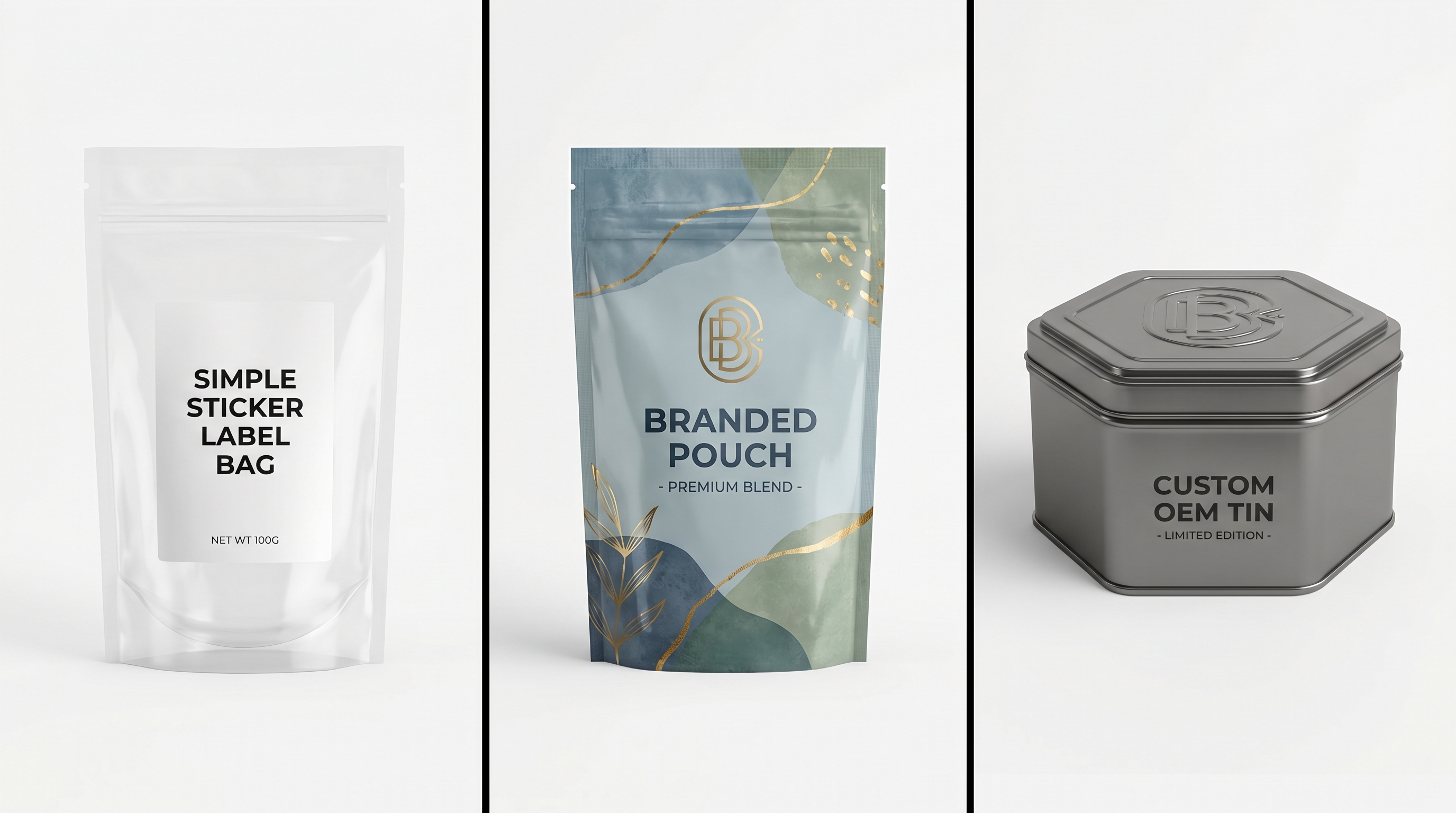
Selecting the right manufacturing relationship is one of the most critical structural decisions a procurement team will make. The chosen model directly impacts your time-to-market, capital requirements, intellectual property ownership, and overall brand equity.
Below is a detailed comparative analysis designed to help procurement managers evaluate these models objectively:
B2B Matcha Sourcing Model Matrix
Criteria | White Label | Private Label | OEM (Original Equipment Manufacturer) | ODM (Original Design Manufacturer) |
|---|---|---|---|---|
Target Buyer | Startups, Amazon beginners, local tea shops | Emerging brands, mid-scale wellness companies | National chains, established global brands | Multi-national food corps, pharmaceutical brands |
Best For | Ultra-fast market entry, low-risk testing | Scaled brand identity, premium retail placement | Proprietary taste profiles, unique ingredient blends | Turn-key functional product line development |
Customization Level | Low (Sticker labels on stock packaging shapes/sizes) | Medium (Custom printed films, custom packaging dimensions) | High (Bespoke agricultural sourcing, custom mesh sizes, unique blends) | Very High (Co-developed proprietary functional formulas) |
Minimum Order Quantity (MOQ) | Very Low (e.g., 100 – 500 units) | Medium (e.g., 1,000 – 5,000 units) | High (e.g., 5,000 – 10,000+ units) | Very High (e.g., 10,000 – 20,000+ units) |
Buyer Formulation Control | None (Standard supplier catalog grades) | None to Low (Standard catalog grades with minor custom edits) | Absolute (Buyer dictates raw material specs, cultivars, and ratios) | Moderate (Developed by supplier’s R&D, licensed to buyer) |
Packaging Options | Stock tinplate cans, stock silver/white pouches | Custom printed pouches, custom outer carton boxes | Custom tins, custom stick-packs, custom bulk box inserts | Bespoke bottle designs, custom structural boxes, premium jars |
Time-to-Market | 2 to 4 weeks | 6 to 10 weeks | 12 to 16 weeks (due to agricultural cycles & raw material sourcing) | 16 to 24 weeks (includes stability, shelf-life, and lab testing) |
Unit Cost Profile | Higher per-unit cost due to lower purchase volumes | Balanced, optimized scale discounts available | Lowest per-unit cost at high-volume production runs | Premium unit cost due to integrated formulation licensing |
Selecting the Optimal Pathway
When determining your brand’s pathway, evaluate your internal resources:
- If your primary strength is digital marketing and rapid online distribution, and you want to test the market with minimal downside, White Label is the logical choice. You can launch a brand in weeks and iterate on packaging designs based on real-time customer feedback.
- If you are an established brick-and-mortar retailer or wellness brand with an existing customer base, Private Label provides the professional aesthetic and custom printed packaging necessary to command premium shelf space alongside global competitors.
- If your business model relies on a proprietary formulation (for example, a proprietary ceremonial blend with a specific sweet-to-astringent profile, or a high-performance functional drink mix with active botanical additions), the OEM model is required. This allows you to secure the supply of specific harvest regions and control the agricultural specifications of the tea leaves (Tencha) before they enter the stone mills.
4. How to Choose the Right Matcha Grade for Private Label Products?
In the B2B matcha trade, “grade” is not merely a marketing term—it is a direct reflection of botanical chemistry, agricultural labor, harvest timing, and processing methods. Choosing the incorrect grade can devastate a brand: sourcing an overly astringent culinary grade for a pure drinking application leads to poor customer retention, while utilizing a highly delicate, expensive ceremonial grade in baked goods is economically unviable and functionally useless, as the delicate flavor profiles are lost in the baking oven.
Deciphering the Matcha Spectrum
- Ceremonial Grade Matcha: This represents the pinnacle of matcha production. Sourced exclusively from the first harvest (Ichibancha) in early spring, the tea plants are shade-grown for 20 to 30 days prior to harvesting. Shading forces the plant to hyper-produce chlorophyll and amino acids, specifically L-theanine. The leaves are hand-picked, steamed, air-dried, and de-stemmed/de-veined to produce Tencha, which is then slowly ground on traditional granite stone mills. The resulting powder is an intense, vibrant emerald green with a creamy, rich, umami flavor profile and zero bitterness.
- Premium Grade Matcha: Also harvested primarily during the first or early second flush. It offers an excellent balance of rich green color, delicate umami notes, and a very mild, pleasant astringency. This grade is highly versatile, ideal for premium daily drinking, iced matcha, or high-end cafe beverages where a distinct matcha flavor needs to cut through light sweeteners.
- Café Grade Matcha: Specifically formulated for food service applications. Sourced from later spring or early summer harvests, this grade has a more pronounced astringency and a robust green tea flavor. This is a deliberate formulation choice: the natural tannins and catechins are highly pronounced, allowing the matcha flavor and color to remain vibrant and distinct when mixed with heavy dairy, oat milk, or sugary syrups.
- Culinary Grade Matcha: Sourced from summer and autumn harvests (Sanbancha or Yonbancha). These leaves have received significantly more sunlight, converting the sweet amino acids into health-promoting but bitter catechins. Ground using high-speed industrial jet mills rather than stone mills, culinary matcha has a slightly yellowish-green hue. It possesses a highly astringent, intensely bold green tea flavor, making it the perfect ingredient for baking, chocolate manufacturing, ice cream production, and culinary applications where heat resistance is required.
- Matcha Latte Powder: A pre-blended industrial formulation designed for rapid retail or food service preparation. It typically consists of premium or café-grade matcha pre-mixed with soluble sweetening agents (such as cane sugar, fruit sugar, or monk fruit) and emulsifiers to prevent clumping.
- Hojicha & Genmaicha Extensions: Savvy brand owners expand their portfolios by offering companion products. Hojicha (roasted green tea powder) offers a deep, nutty, caramel-like flavor with minimal caffeine, while Genmaicha (green tea mixed with roasted popped brown rice) provides an earthy, savory alternative. Both are processed into fine powders using similar milling techniques, allowing for seamless integration into existing packaging lines.
For pure drinking applications, selecting high-grade ceremonial matcha harvested in early spring provides the necessary color, aroma, and delicate umami flavor profile that premium consumers demand. Conversely, food service operators and bakeries require robust, astringent profiles like culinary matcha that can hold its flavor against sugars, fats, and high-temperature processing.
To help your product development team map these grades to your specific commercial objectives, refer to the detailed formulation matrix below:
Application-to-Grade Matching Matrix
Intended Application | Suggested Matcha Grade | Harvesting Period | Primary Milling Method | Key Sensory Attributes | Key Chemical Focus |
|---|---|---|---|---|---|
Pure Traditional Drinking (Whisked with hot water) | Ceremonial Grade (Super Premium / Imperial) | Early Spring (1st Flush Only) | Granite Stone Ground (slow speed, low temp) | Intense emerald green, zero bitterness, deep creamy umami, sweet grassy aroma | Max L-theanine (>2.5%), high chlorophyll, minimal tannin |
High-End Cafés & Specialty Lattes (Premium iced/hot lattes) | Premium Grade | Spring to Early Summer | Granite Stone Ground / Specialized Ball Mill | Bright green, balanced umami, very mild astringency, highly aromatic | Balanced amino-to-catechin ratio, high solubility |
Standard Café Menus (Syrup lattes, frappes, blenders) | Café Grade | Early Summer | Controlled Fine Jet Mill | Balanced green, robust flavor, pronounced pleasant bitterness to cut through milk | Moderate catechins, robust physical suspension stability |
Industrial Bakery & Confectionery (Cookies, cakes, chocolates) | Culinary Grade (A or B) | Summer / Autumn | High-Speed Industrial Jet Mill | Olive green, highly astringent, bold green tea bite, heat-stable | High catechins, stable flavor compounds under thermal stress |
Functional Blends & Supplements (Capsules, protein powder mixes) | Supplement / Ingredient Grade | Autumn | Jet Mill / Micro-pulverization | Yellowish-green, bitter, dry taste, easily masked by other ingredients | Standardized active markers (EGCG, Caffeine, total Polyphenols) |
Ready-to-Drink (RTD) Beverages (Bottled/canned iced teas) | Beverage Grade | Summer / Autumn | Specialized Wet Milling or Ultrafine Jet Mill | Light green to olive, astringent, highly soluble | Low sedimentation rate, acid-stable, heat-sterilization resistant |
5. What Certifications Should a Private Label Matcha Supplier Provide?
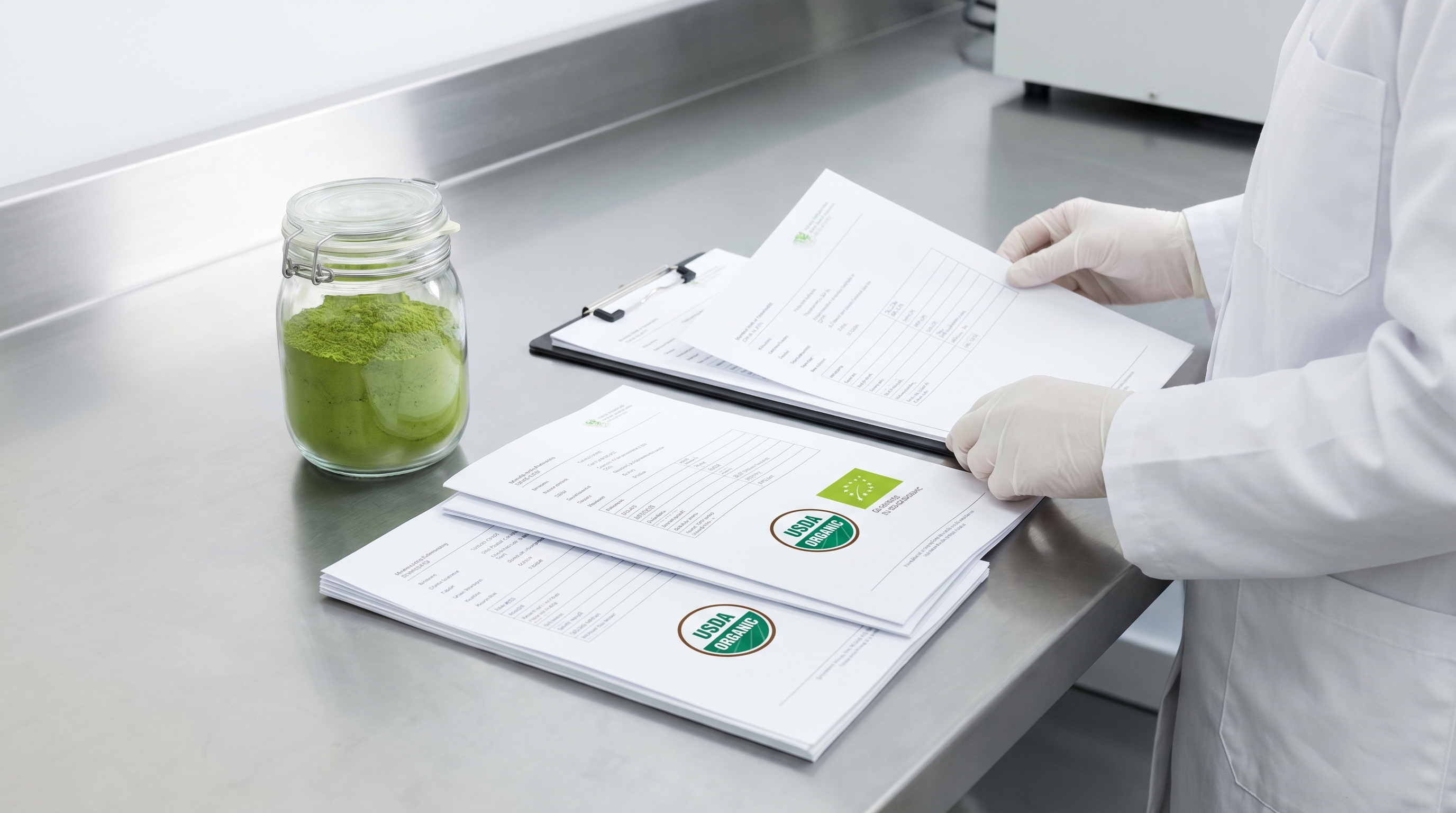
In the global trade of agricultural food products, regulatory compliance is non-negotiable. Sourcing matcha without verified international certifications is a major business risk that can lead to customs seizures, retail rejection, lawsuits, and irreversible damage to brand equity.
As a high-value agricultural export, tea leaves absorb heavy metals from soil and pesticide residues from surrounding farms if not strictly managed. Therefore, a professional private label partner must supply a robust portfolio of up-to-date, third-party verified laboratory reports and facility certifications.
Critical Global Certifications Explained
- USDA Organic & EU Organic: These certificates prove that the matcha was grown without synthetic fertilizers, herbicides, or chemical pesticides. More importantly, they require a complete chain of custody. When importing organic matcha, the supplier must provide a Transaction Certificate (TC) for every single batch shipped, confirming that the organic integrity has been maintained from the farm to the importing country’s border.
- HACCP / ISO 22000 / FSSC 22000: These represent the gold standard in food safety management systems. An FSSC 22000 certification is a GFSI (Global Food Safety Initiative) recognized scheme. It guarantees that the packaging facility operates under rigorous hygiene standards, implements allergen control policies, conducts metal detection checks, and maintains an end-to-end batch traceability system.
- HALAL & KOSHER: These certifications open doors to massive, highly loyal global consumer demographics. They require regular audits by recognized religious authorities (such as Kosher OU or Halal certification boards) to verify that no cross-contamination with non-compliant substances occurs anywhere in the processing plant.
- Certificate of Analysis (COA): Every single production run must be accompanied by a batch-specific COA. A standard, professional B2B COA must explicitly outline and verify:
- Physical Parameters: Moisture content (must be under 5.0% to prevent rapid microbial degradation and clumping), particle size distribution (ideally 95% passing through a 10-micron mesh for ceremonial grades), color, and bulk density.
- Chemical Parameters: Total ash content, pesticide residue levels, and active nutrient markers.
- Microbiological Limits: Total Plate Count (TPC) (typically < 10,000 CFU/g), Yeast & Mold (< 100 CFU/g), E. coli (Negative/g), and Salmonella (Negative/25g).
- Pesticide Residue Testing: Reputable suppliers go far beyond standard country-of-origin checks. They utilize independent, ISO-certified testing giants like SGS or Eurofins to run multi-residue pesticide screens covering over 500 potential chemical compounds. This is vital for meeting the extremely strict maximum residue limits (MRLs) enforced by the European Food Safety Authority (EFSA) and the US FDA.
- Heavy Metal Testing: Tea plants (Camellia sinensis) are known bioaccumulators. If grown near industrial areas, they can absorb contaminants from the soil. Your supplier must provide lab reports confirming that heavy metal levels are well below international health thresholds:
- Lead (Pb): < 1.0 ppm (or strictly within California Proposition 65 safe harbor limits).
- Arsenic (As): < 0.5 ppm.
- Cadmium (Cd): < 0.2 ppm.
- Mercury (Hg): < 0.1 ppm.
- Export Documents: To ensure smooth customs clearance, the supplier must provide a Phytosanitary Certificate (issued by the exporting country’s department of agriculture), a Certificate of Origin (vital for accessing preferential trade tariffs), and a Certificate of Free Sale confirming the product is fit for human consumption.
6. What Packaging Options Are Available for Private Label Matcha?
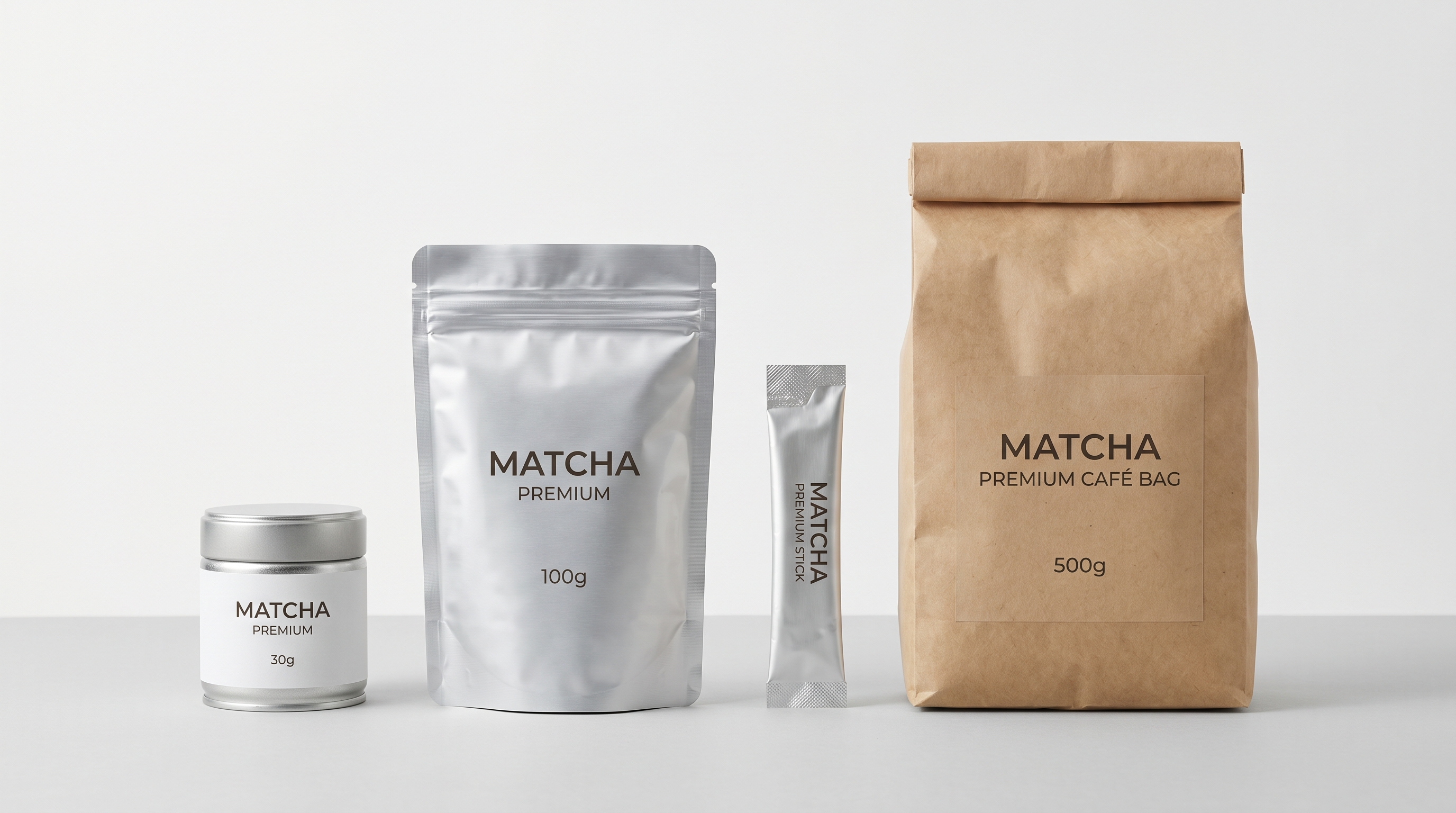
Matcha is highly sensitive to environmental factors. It is highly susceptible to photo-oxidation, thermal degradation, and moisture absorption. When exposed to light, oxygen, or moisture, chlorophyll degrades rapidly into pheophytin, turning the vibrant green powder a dull, sandy brown. At the same time, delicate amino acids oxidize, replacing the sweet umami flavor with flat, bitter notes.
Therefore, packaging is not just a branding tool—it is an active preservation system. An expert private label matcha supplier must offer packaging options constructed with superior barrier materials.
Technical Packaging Materials Analysis
- Oxygen Transmission Rate (OTR) & Water Vapor Transmission Rate (WVTR): Always ensure your supplier utilizes packaging materials with near-zero OTR and WVTR. For example, simple paper bags or thin single-layer plastic pouches are highly permeable to gases and humidity. High-quality matcha packaging utilizes multi-layer laminates, such as PET/AL/PE (Polyethylene Terephthalate / Aluminum Foil / Polyethylene) or Kraft Paper/AL/PE. The aluminum layer acts as an absolute physical barrier to light and oxygen.
- Nitrogen Flushing & Oxygen Scavengers: During the automated filling process, premium suppliers flush the packaging head-space with food-grade nitrogen gas (N2N_2
) to displace oxygen (
O2O_2) before heat-sealing. This reduces residual oxygen levels to under 1.0%, effectively halting the oxidation process. Inserting a small food-grade oxygen scavenger sachet inside the packaging is another highly effective method to maximize shelf-life.
To select the perfect packaging configuration for your distribution channel, refer to the detailed B2B packaging analysis below:
Packaging Options Comparison Table
Packaging Type | Typical Capacity | Primary Materials | Key Advantages | Best Suited For | Target MOQ (Custom Printed) |
|---|---|---|---|---|---|
Traditional Metal Tin (Pull-ring or screw-top lid) | 30g, 40g, 50g | Food-grade Tinplate with internal protective lacquer and inner aluminum pull-ring | Maximized shelf-life, premium retail presence, excellent light/air barrier, resealable | Premium Ceremonial Brands, gift sets, traditional retail | 3,000 – 5,000 tins (or 1,000 tins with custom sticker labels) |
Stand-Up Pouch (Doypack) (With re-closable zipper) | 50g, 100g, 250g | Matte PET/AL/PE, Kraft/AL/PE, or recyclable EVOH high-barrier films | Lightweight (lowers shipping costs), flat surface optimized for branding, space-efficient | Amazon Brands, retail supermarkets, online e-commerce stores | 5,000 – 10,000 pouches (or 1,000 pouches with sticker labels) |
Single-Serve Stick Packs (Individually sealed) | 1g, 1.5g, 2g, 3g | Metalized roll film (PET/AL/PE) | Maximum consumer convenience, perfect dosage, zero exposure to air until consumption | On-the-go wellness lines, gym supplements, hotel amenities | 50,000 – 100,000 individual sticks |
Bulk Master Bags (Heavy-duty double zip) | 500g, 1kg, 2kg | Thick matte metalized laminate | Cost-effective, robust, easy-pour mouth, commercial grade preservation | Café Chains, foodservice distributors, institutional kitchens | 1,000 bags (standard stock silver/kraft) |
Industrial Fiber Drums (With double PE inner liners) | 10kg, 20kg, 25kg | Rigid kraft cardboard outer drum, food-grade blue PE inner vacuum bags | Safest transport for massive wholesale volumes, lowest packaging cost per kg | Food ingredient importers, large co-packers, RTD factories | 100 kg (Raw wholesale volume) |
7. What Is the MOQ for Private Label Matcha?
Minimum Order Quantity (MOQ) is often the most significant point of friction when negotiating with private label suppliers. Understanding the industrial logic behind these numbers is key to achieving mutually beneficial agreements.
The Physics and Economics Behind MOQs
A professional packaging facility does not set MOQs arbitrarily. They are dictated by strict engineering and operational realities:
- Automated Packaging Machine Setup: A high-speed, automated packaging line—especially one equipped for single-serve stick packs or form-fill-seal pouches—takes hours of mechanical calibration to adjust for a specific pouch size or fill weight.
- Product Waste During Calibration: When setting up a multi-lane powder filler, several kilograms of matcha powder must pass through the system simply to calibrate the filling heads for weight accuracy and test the heat-seal temperatures. If a run is too small, the raw material wasted during setup makes the project financially unviable.
- Print Run Minimums: The rotogravure printing presses used for high-end, custom-printed pouches operate at extremely high speeds. These machines require a minimum roll of plastic/aluminum film (often 3,000 to 5,000 meters) simply to maintain tension and registration accuracy. Therefore, printing 1,000 custom pouches is chemically and physically impossible on mass-production lines. Modern digital printing has lowered this barrier, but at a significantly higher unit cost.
- Allergen and Flavor Changeovers: If a packaging facility handles flavored matcha blends, switching back to pure ceremonial matcha requires a rigorous, multi-hour “wet cleaning” and sanitization cycle to prevent cross-contamination.
To help you plan your cash flow and stock levels, we have mapped out the typical MOQ tiers based on the complexity of your project:
Private Label Project MOQ Tiers
Project Type | Typical MOQ (Units) | Packaging Method | Customization Level | Ideal Cash Flow Profile |
|---|---|---|---|---|
Sticker Labeling on Stock Packaging | 500 – 1,000 | Stock tins or standard silver pouches with high-end, custom-printed vinyl sticker labels applied manually. | Low. Limited to label design, but allows for rapid testing of multiple grades. | Conservative: Low upfront capital risk, higher unit cost, fast inventory turnover. |
Custom Digitally Printed Pouches | 2,000 – 3,000 | Custom stand-up pouches printed on specialized digital roll presses. | Medium-High. Full-coverage custom design with no plate fees, but limited to standard pouch shapes. | Balanced: Moderate capital risk, optimized unit cost, professional market testing. |
Custom Rotogravure Printed Pouches | 10,000+ | Large-scale print runs using physical copper cylinder plates. Exceptional print clarity and specialized finishes. | High. Full-bleed custom matte, gloss, or metallic finishes, custom tear notches. | Aggressive: High upfront capital (including one-time plate fees), lowest possible unit cost, high margin potential. |
Custom Printed Tinplate Cans | 5,000 – 10,000 | Directly printed tin bodies with custom embossing or debossing on the metal lids. | High. Ultimate premium feel, custom inner foil printing, custom lid textures. | Premium Brand: High capital commitment, designed for scaled retail chains and luxury wellness lines. |
Single-Serve Stick Packs (Carton Boxed) | 50,000+ individual sticks | High-speed multi-lane vertical form-fill-seal machines using custom printed roll film. | Very High. Individual branding on each stick, custom printed outer paper display boxes. | High Volume: Major capital commitment, targeting mass-market convenience retail and supplement chains. |
8. How Much Does Private Label Matcha Cost?
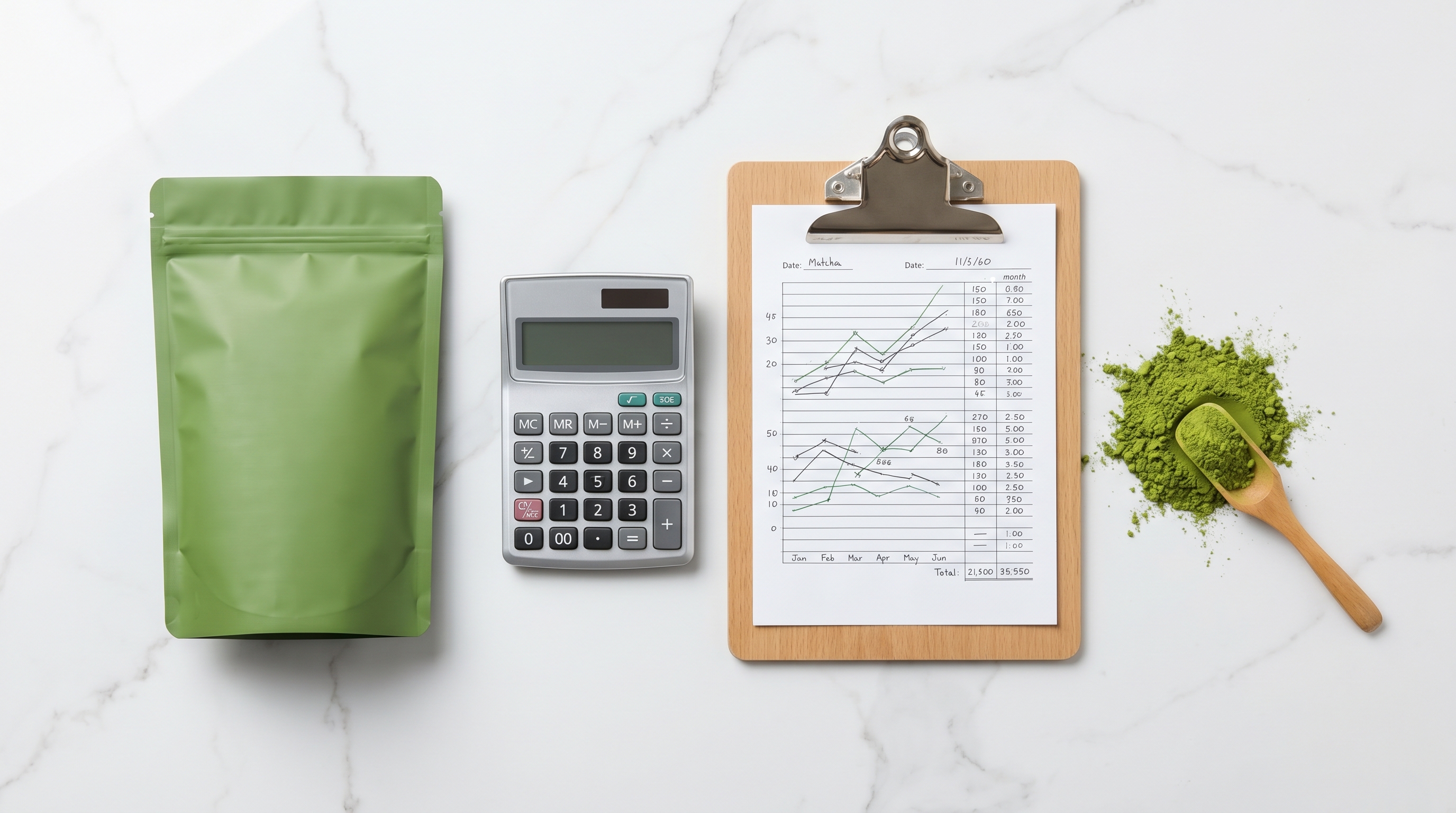
Evaluating the financial viability of a private label project requires moving beyond simple unit prices. A successful brand launch is built on a comprehensive understanding of the total landed cost per unit.
The B2B Landed Cost Equation
Landed Cost per Unit=Raw Powder Cost+Packaging Material+Labeling/Printing+Filling Fee+Quality Testing+Freight+Import TariffsTotal Units Produced\text{Landed Cost per Unit} = \frac{\text{Raw Powder Cost} + \text{Packaging Material} + \text{Labeling/Printing} + \text{Filling Fee} + \text{Quality Testing} + \text{Freight} + \text{Import Tariffs}}{\text{Total Units Produced}}
Let us break down each cost component in detail to understand where your budget is allocated:
- Raw Matcha Powder Cost (per Kg): This is the single largest variable. The price of bulk matcha spans a wide spectrum depending on its quality:
- High-End Ceremonial Grade (First Harvest): $45.00 – $90.00+ per kg.
- Premium / Café Grade: $25.00 – $40.00 per kg.
- Standard Culinary / Baking Grade: $10.00 – $22.00 per kg.
- Industrial / Mass Beverage Grade: $6.00 – $9.00 per kg.
- Primary Packaging Material:
- Standard stock metal tins with pull-ring: $0.40 – $0.80 per unit.
- Custom printed aluminum pouches: $0.15 – $0.45 per unit (highly dependent on volume).
- Custom lithographed tins: $0.60 – $1.20 per unit.
- Labeling and Custom Printing:
- Manually applied vinyl sticker labels: $0.10 – $0.25 per label.
- One-time rotogravure plate fees: $150.00 – $300.00 per color (only applicable to your first rotogravure print run).
- Filling and Packing Fees (Labor & Equipment Depreciation):
- This is the fee charged by the supplier to run the matcha through their automated cleanrooms. It includes nitrogen flushing, heat sealing, and master carton packing. This typically ranges from $0.15 to $0.45 per unit depending on the complexity of the filling parameters.
- Quality Control and Certifications:
- Batch-specific COA testing and organic Transaction Certificate (TC) processing fees: typically $50.00 – $150.00 per batch.
- Global Freight and Logistics:
- Matcha is dense and sensitive to heat. Sea freight with temperature-controlled (reefer) containers is highly cost-effective for large volumes ($0.20 – $0.60 per kg), but takes 4 to 8 weeks. Air freight is rapid (5 to 10 days) but costly ($4.00 – $8.00 per kg), making it suitable only for high-margin ceremonial launches or urgent stock replenishments.
- Tariffs, Customs Duties, and Import Taxes:
- Different countries apply varying import duties on green tea products. For example, importing green tea powder into the United States under HS Code 0902.10 is generally duty-free, but specific trade policy tariffs can apply depending on the country of origin. In contrast, the European Union and other markets may impose specific import tariffs that must be calculated upfront to prevent unexpected costs at the border.
9. How Should B2B Buyers Check Matcha Quality Before Ordering?
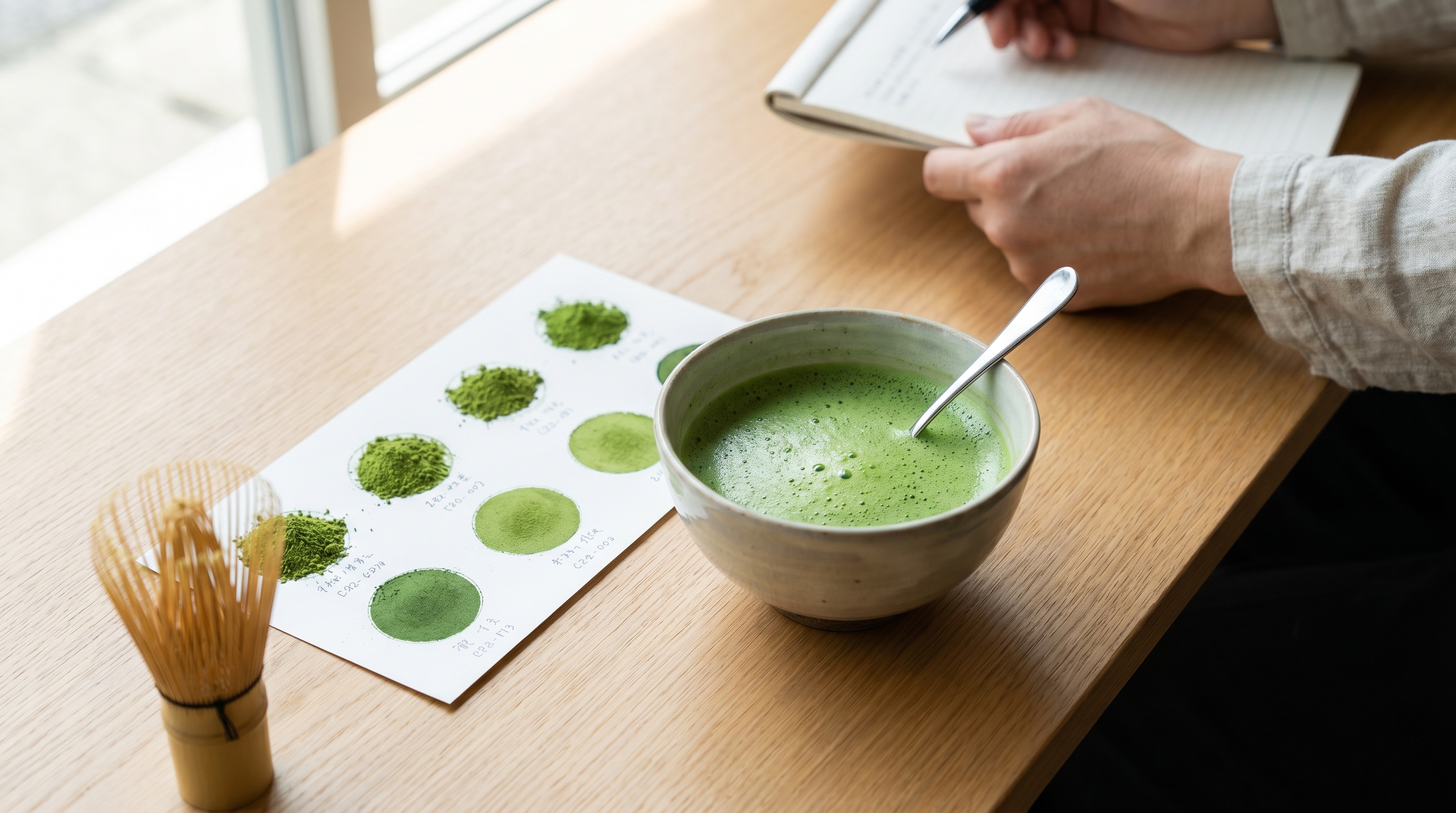
In the B2B marketplace, relying on a supplier’s self-proclaimed “ultra-premium” claims is highly risky. A professional procurement department must establish a standardized, objective sensory and laboratory evaluation process.
Step-by-Step Quality Evaluation Process
To build a reliable quality control workflow, follow these five steps when assessing new matcha samples:
- Request Split-Batch Samples: Always request samples from the exact batch of raw material currently available in stock. Ensure the supplier sends enough sample material (at least 100g) to perform both internal sensory tests and external laboratory testing if required.
- Conduct the “Paper Swipe” Color Test: Place a spoonful of matcha powder on a sheet of bright white paper. Use your finger to swipe the powder in a clean, straight line.
- High-Quality Matcha: Leaves a smooth, bright, vibrant green trace.
- Low-Quality/Oxidized Matcha: Leaves a grainy, dull, olive-yellow or brownish trace, indicating late harvests, improper storage, or excessive stem content.
- Perform Sensory Cupping (Traditional Preparation): Whisk 2.0g of matcha powder with 70ml of purified water heated to exactly 80°C (176°F) in a wide-bottom ceramic bowl (Chawan).
- Evaluate the Froth: High-grade, stone-ground matcha creates a thick, creamy layer of micro-bubbles with excellent stability. Poorly milled or old matcha struggles to foam, leaving large, rapidly popping bubbles.
- Aroma: Sniff the steam. Look for notes of fresh grass, cream, and a distinct sweet pasture aroma. Avoid samples with a straw-like, stale, or dusty smell.
- Taste Profile: Sip the liquid. The initial taste should be rich and creamy with a distinct umami flavor, followed by a sweet finish. Any intense bitterness or sour, astringent notes indicate lower-grade summer or autumn harvests.
- Test Solubility and Suspension Stability: Mix the matcha with room-temperature water in a clear glass tube. Observe how long the powder stays in suspension. High-quality, finely ground matcha (5-10 microns) remains suspended significantly longer than coarser, jet-milled powders, which sediment rapidly to the bottom.
- Verify COA Against International Standards: Check the supplier’s Batch COA against your target country’s regulatory limits for heavy metals and microbiological activity, as detailed in the technical metrics table below.
To help your quality assurance team perform these checks systematically, use this comprehensive technical benchmark table:
Matcha Technical Evaluation Metrics
Parameter | Premium Ceremonial Benchmark | Culinary Grade Benchmark | Substandard Indicators | Testing Instrument / Method |
|---|---|---|---|---|
Color (Chroma) | Vibrant, brilliant emerald green | Olive-green to light yellowish-green | Dull yellow-brown, dusty sand | Spectrophotometer / Visual Paper Swipe Test |
Particle Size | 5.0 to 10.0 microns | 10.0 to 15.0+ microns | > 20.0 microns (feels gritty to the touch) | Laser Diffraction Particle Size Analyzer |
Moisture Content | < 4.5% | < 5.5% | > 7.0% (leads to rapid mold and clumping) | Halogen Moisture Analyzer / Gravimetric method |
Solubility & Foam | Fine, stable micro-bubbles with high creaminess | Coarse bubbles, rapid separation and settling | No foam, heavy sediment at the bottom within 2 minutes | Standard Whisking Test ( 80∘C80^\circ\text{C} water) |
Taste & Aftertaste | Strong umami, sweet vegetal notes, clean smooth finish, zero bitterness | Robust green tea astringency, bitter notes, dry finish | Intensely bitter, metallic, sour, or stale flavor | Trained Sensory Panel / Cupping Protocol |
Heavy Metals (Lead) | < 0.5 ppm | < 1.0 ppm | > 2.0 ppm (violates FDA/EU food safety limits) | ICP-MS (Inductively Coupled Plasma Mass Spectrometry) |
10. How to Compare and Select the Best Private Label Matcha Supplier?
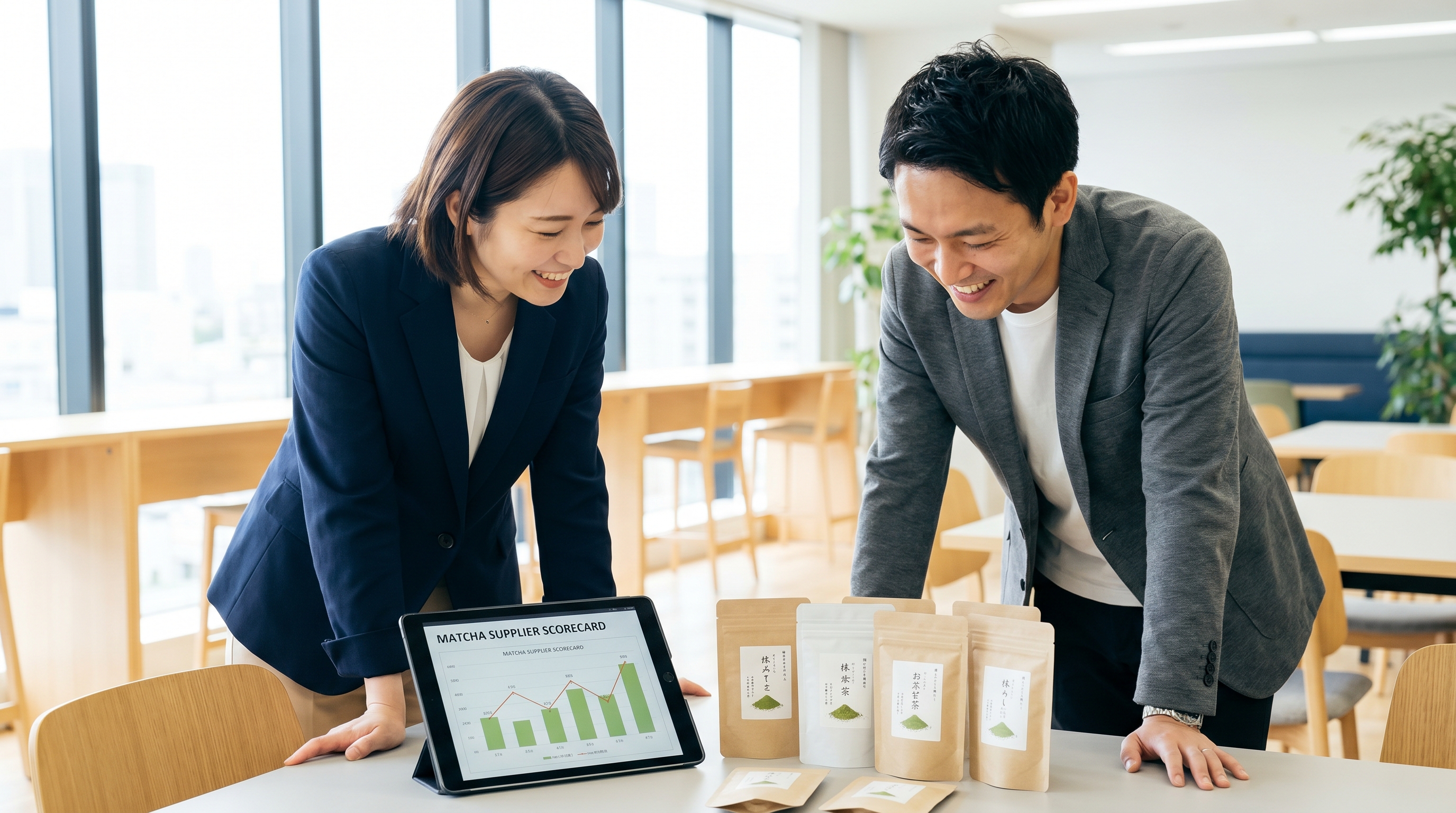
Selecting a private label partner is a long-term strategic decision. A mistake can lead to costly product recalls, stockouts during peak retail seasons, or inconsistent flavor profiles that alienate your customer base.
When auditing potential suppliers, move beyond price comparisons. Utilize the scorecard below to evaluate and compare suppliers across key operational dimensions.
Supplier Selection Scorecard Checklist
This scorecard uses a weighted scoring model to help procurement teams systematically evaluate suppliers:
Weighted Score=Score (1-10)×Weight %\text{Weighted Score} = \text{Score (1-10)} \times \text{Weight \%}
Evaluation Criteria | Weight % | Key Metric to Evaluate | Audit Score (1-10) | Weighted Score |
|---|---|---|---|---|
Agricultural Sourcing & Supply Chain Control | 20% | Does the supplier own or directly control their tea farms (e.g., in major cultivation hubs)? Do they have a secure multi-region backup supply to mitigate crop-loss risks? | ||
Manufacturing Standards & Certifications | 20% | Do they hold FSSC 22000, ISO 22000, or equivalent GFSI certifications? Are their organic transfer processes (USDA/EU) fully verified with active Transaction Certificates (TCs)? | ||
Custom Packaging & R&D Capabilities | 15% | Can they support custom film structures, nitrogen flushing, and custom retail box packaging? Do they offer advanced formulation services (e.g., blending matcha with functional ingredients)? | ||
Quality Control & Lab Verification | 15% | Do they provide batch-specific COAs from independent, ISO-certified third-party labs (e.g., Eurofins, SGS) covering pesticide multi-residues and heavy metals? | ||
Export Logistics & Regulatory Experience | 10% | Do they have a proven track record of exporting to your target region (US, EU, UK, Australia)? Are they registered with the FDA, and do they provide accurate HS tariff codes and custom clearances? | ||
Lead Times & Supply Reliability | 10% | What is their average production lead time (ideally 4-6 weeks)? Do they offer flexible warehousing and safety-stock options for recurring orders? | ||
Commercial Flexibility & Pricing Stability | 10% | Are their MOQs aligned with your growth phases? Do they offer long-term price-lock contracts (e.g., 12-month pricing stability) to protect your retail margins? | ||
TOTALS | 100% | The supplier with the highest total score is your optimal long-term partner. |
11. Conclusion: Launching Your Private Label Matcha Brand with Less Risk
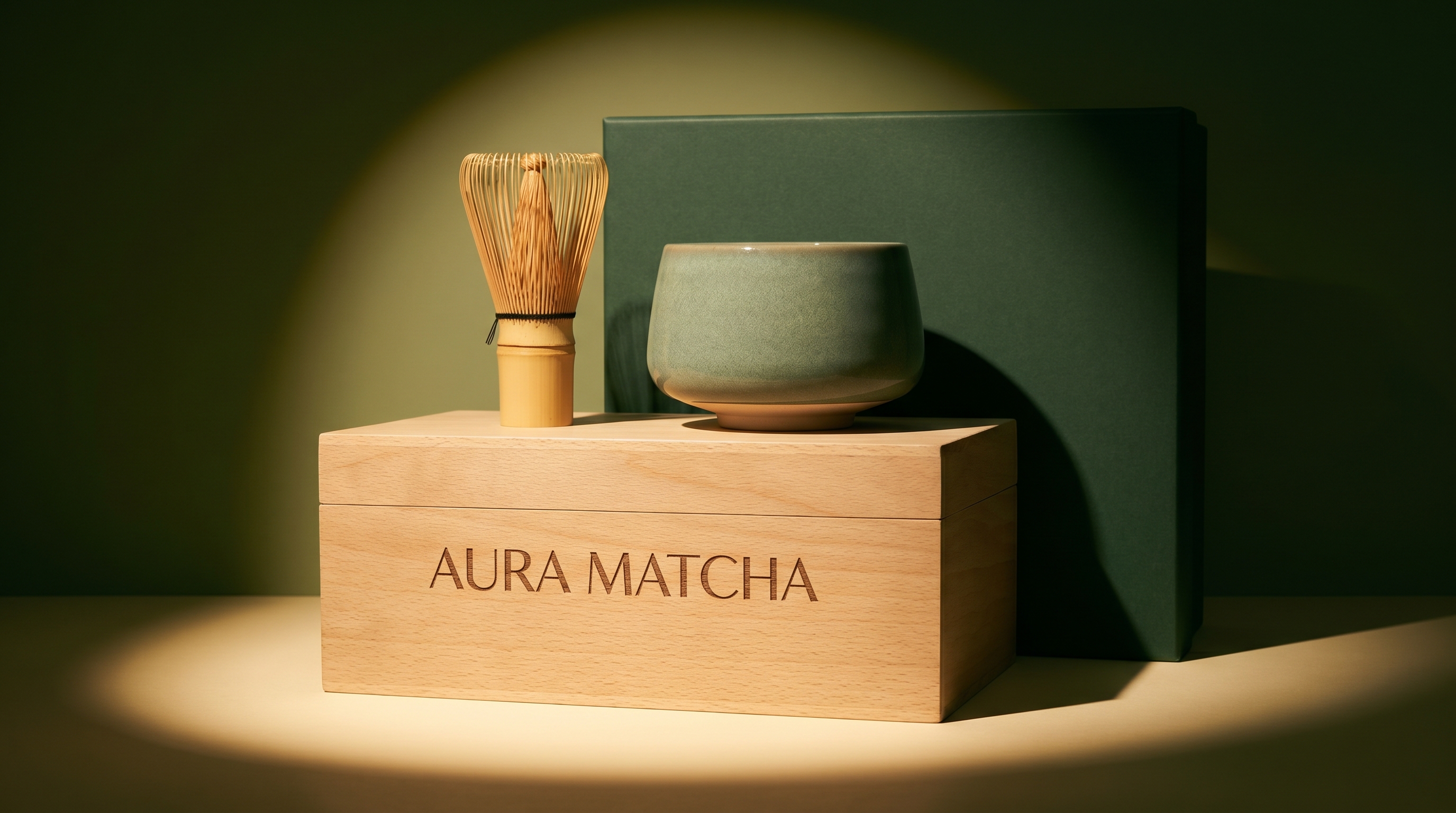
Launching a private label matcha brand is a highly lucrative opportunity, but success requires careful planning and risk management. To help you navigate the process, we have outlined a proven, step-by-step launch strategy designed to minimize upfront risk and optimize your capital allocation.
- Confirm Market Target: Define your primary customer demographic. Are you targeting health-conscious Amazon shoppers, high-volume specialty café chains, or premium traditional tea drinkers?
- Select Matcha Grade: Align your matcha grade with your target audience and application. Use ceremonial grade for high-end pure drinking, café grade for specialty lattes, and culinary grade for bulk baking and food ingredient distribution.
- Order Samples & COA: Request physical samples of your selected grades. Run the “paper swipe” color test, perform sensory cupping, and review the batch COA to verify heavy metal and pesticide safety compliance.
- Select Packaging/Label: Choose a packaging format that preserves freshness and aligns with your distribution model. Start with stock pouches or tins with custom sticker labels to minimize your initial investment.
- Review MOQ/Landed Cost: Calculate your complete landed cost per unit, including raw powder, packaging, filling, shipping, and import duties. Ensure your target retail price leaves room for sustainable profit margins.
- Place Trial/Test Order: Launch with a low-risk trial run of 500 to 1,000 units using stock packaging and custom sticker labels. This lets you test market demand and gather real customer feedback without committing to massive inventory levels.
- Scale Up with Confidence: Once your brand has gained market traction, transition to fully custom-printed rotogravure pouches or lithographed tinplate cans at higher volume tiers to unlock the lowest possible unit costs and maximize your margins.
Leverage an Expert Global Supply Partner
By partnering with a vertically integrated global manufacturer, you gain access to direct-from-source pricing, automated packing facilities, and comprehensive international safety certifications.
Whether you are launching a premium e-commerce brand or scaling a national café chain, reach out and contact Riching Matcha today to request your custom sample pack and receive a detailed consultation from our expert team.
12. FAQs About Private Label Matcha Suppliers
Q1: What is the typical shelf life of private label matcha, and how should it be stored?
The unopened shelf life of high-quality private label matcha is typically 18 to 24 months from the date of milling. However, this is highly dependent on the quality of the packaging. To maintain this shelf life, matcha must be packed in high-barrier materials (such as aluminum-laminated pouches or tinplate cans) that are flushed with nitrogen (
N2N_2
) to reduce residual oxygen levels to under 1.0%.
Once opened by the consumer, the matcha should be consumed within 4 to 8 weeks for optimal freshness. Retailers and brand owners should store unopened stock in cool, dry, and dark warehouses. For long-term preservation of bulk raw material, storing the sealed vacuum bags under refrigeration (
2∘C2^\circ\text{C}
to
5∘C5^\circ\text{C}
) is highly recommended.
Q2: Can we transfer the supplier’s organic certifications to our own brand?
Yes, but you must follow a specific regulatory process. Simply printing your supplier’s organic certification numbers on your custom labels is a violation of international organic standards. To claim your finished private label product is “USDA Organic” or “EU Organic”:
- Your company must be registered and certified as an organic handler/distributor by an accredited organic certifier (such as QAI, CCOF, or Ceres) in your local region.
- When your private label supplier ships a batch of organic matcha, they must issue an official Transaction Certificate (TC) or NOP Import Certificate (NOP-IC) that references your brand’s specific shipment.
- Your local certifying body will review this documentation to officially approve the organic status of your finished retail SKUs, allowing you to use the organic logos on your custom packaging with complete peace of mind.
Q3: How is international shipping and customs clearance managed?
Matcha is a high-value, moisture-sensitive green tea powder, making proper transit logistics critical. Most large-scale orders are shipped via sea freight using temperature-controlled reefer containers (set to
10∘C10^\circ\text{C}
to
15∘C15^\circ\text{C}
) to protect the product from heat degradation during ocean transit, especially when passing through tropical shipping lanes. For smaller, high-velocity shipments, air freight is preferred to ensure rapid inventory replenishment.
To clear customs smoothly, your private label supplier must provide a comprehensive documentation set, including:
- A Phytosanitary Certificate issued by the exporting country’s agricultural department.
- A Certificate of Origin (vital for calculating preferential tariffs).
- An accurate Harmonized System (HS) Tariff Code (typically 0902.10 for green tea products).
- A detailed Commercial Invoice, Packing List, and Batch-Specific COA.
Q4: Do you offer custom functional formulations, such as sweetening or adaptogen additions?
Yes. Professional private label manufacturers provide advanced OEM formulation services. This allows brand owners to tap into the booming wellness market by blending pure matcha with functional ingredients:
- Sweeteners: Pre-blending matcha with natural, low-glycemic sweeteners like stevia, monk fruit, erythritol, or organic cane sugar for easy “instant latte” mixes.
- Functional Proteins: Blending matcha with hydrolyzed collagen peptides or plant-based proteins (such as pea or hemp protein) to create nutritional shakes.
- Adaptogens & Nootropics: Adding functional mushrooms (Lion’s Mane, Reishi, Cordyceps), L-theanine boosts, or ashwagandha to create high-performance mental clarity blends.
When developing custom formulations, the supplier’s R&D lab must run stability and homogeneity tests to ensure the ingredients remain evenly mixed and do not separate or clump over time.
Q5: What is your sample policy, and how are sensory discrepancies resolved?
A professional, customer-focused private label manufacturer should offer a transparent and systematic sampling process:
- Pre-Shipment Samples (PSS): Before placing a full production order, the buyer receives a 50g to 100g sample from the exact raw batch of matcha allocated to their order.
- Sensory and Technical Verification: The buyer evaluates this sample against their verified benchmarks (color, aroma, taste, solubility, and COA specifications).
- Batch Locking: Once the buyer officially signs off on the sample, the supplier “locks” that specific batch of raw material in their temperature-controlled warehouse for the buyer’s production run.
- Resolving Discrepancies: In the rare event that the final delivered product does not match the approved pre-shipment sample, the supplier uses retained reference samples from the production run to conduct a comparative analysis. If a physical or sensory discrepancy is verified, the supplier’s quality assurance department initiates a corrective and preventive action (CAPA) protocol to resolve the issue, which may include batch replacement or commercial credits.