It is incredibly frustrating when you spend hours measuring ingredients for a green tea dessert, only to have it turn brown or taste bitter coming out of the oven. This culinary disaster typically happens because standard recipes do not account for the delicate nature of matcha powder, which oxidizes rapidly under high heat. The solution lies in using high-quality culinary grade matcha and following precise temperature adjustments to ensure your baking with matcha results in vibrant, bakery-worthy treats every time. Why Do Your Matcha Bakes Turn Brown?
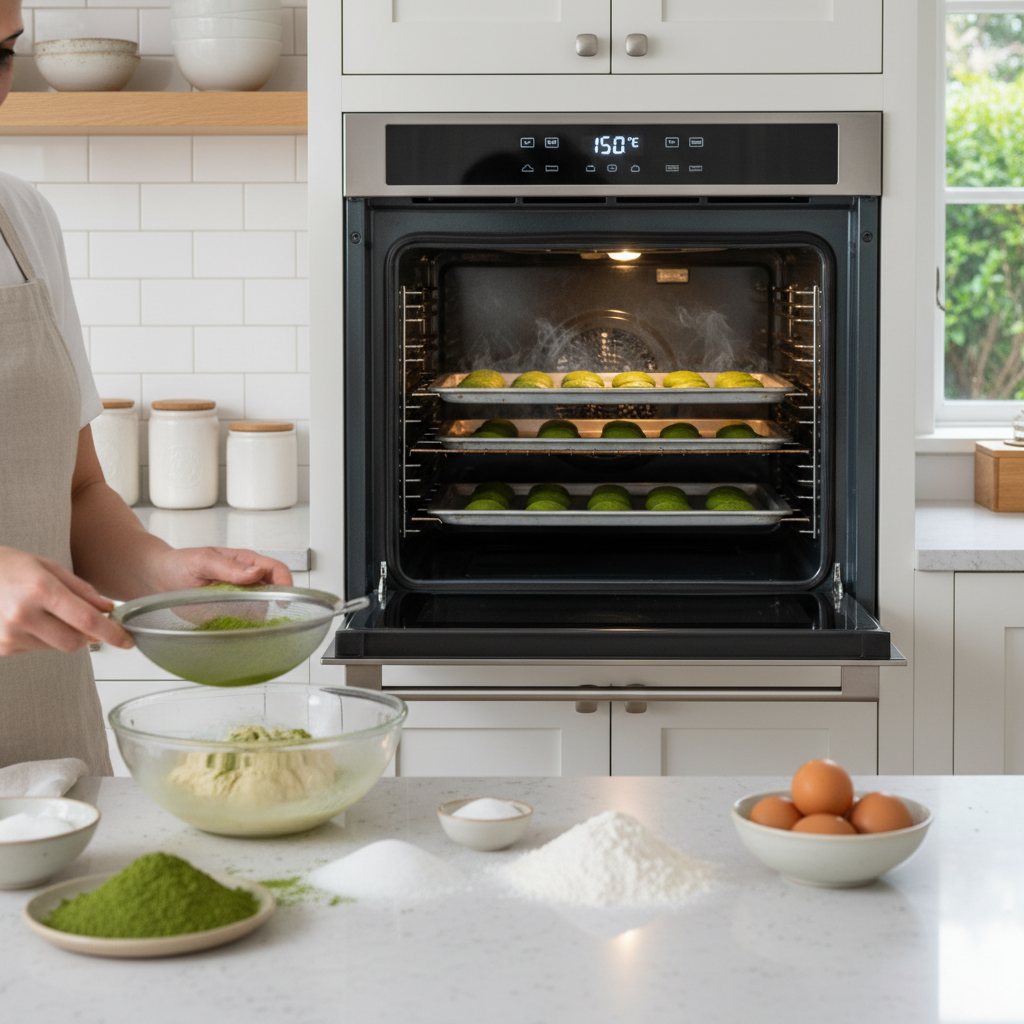
Matcha turns brown in the oven because chlorophyll, the pigment responsible for its bright green color, degrades when exposed to temperatures above 350°F (175°C) for extended periods. To prevent this while baking with matcha, you must lower your oven temperature and slightly extend the baking time, or cover your goods with foil halfway through.
Temperature Control Secrets
Here is the deal: lower heat preserves color. By reducing your oven temperature by 25°F and baking for a few minutes longer, you protect the chlorophyll molecules. This “low and slow” approach is critical for thicker items like cakes or loaves that require significant time in the oven.
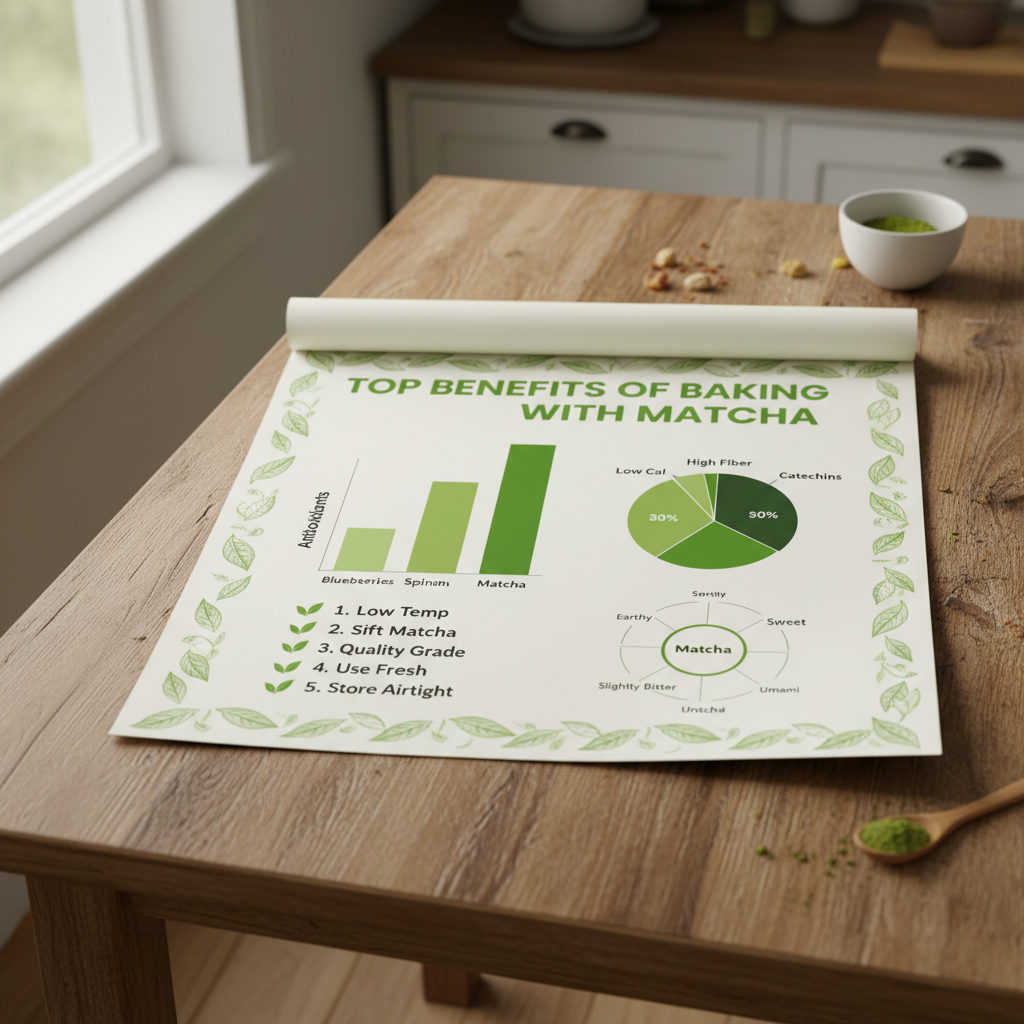
You might be wondering if ingredients matter. Yes, they do. Acidic ingredients like yogurt or buttermilk can help stabilize the green color, while excessive baking soda can promote browning. Storing your matcha in the freezer until the moment you use it also helps maintain its vibrancy.
Key Takeaway: Always bake at a slightly lower temperature than standard recipes call for to keep your matcha desserts bright green.
| | |
|---|
| | |
| | |
| | Add cream of tartar/yogurt |
| | |
Controlling heat and pH levels is the scientifically proven method to maintain the visual appeal of green tea pastries.
How Do You Make Perfect Matcha Cookies?
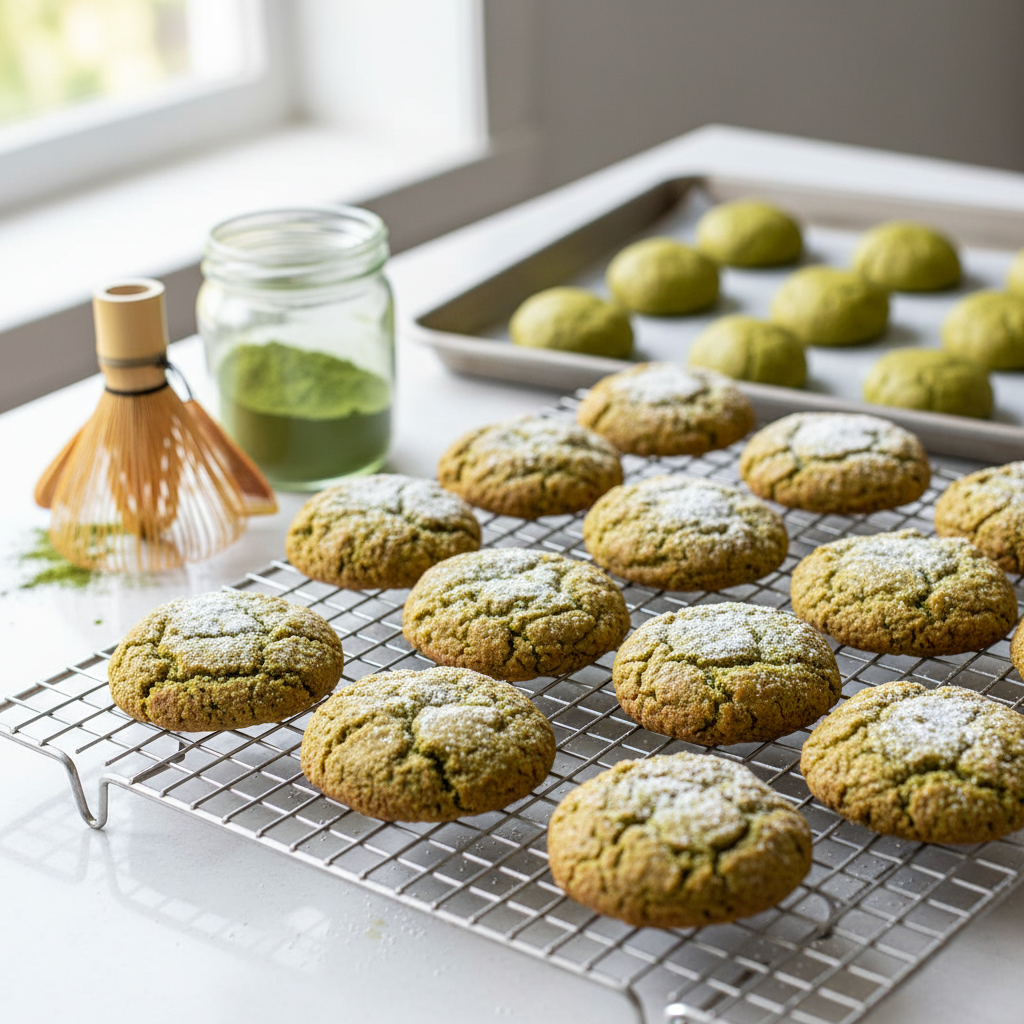
To make perfect matcha cookies that are crispy on the edges and chewy in the center, you need to chill your dough and ensure the powder is evenly distributed. When baking with matcha cookies, clumps are your enemy, so always use a bamboo whisk (chasen) to mix the powder with melted butter or sugar before combining it with flour. But here is the kicker: white chocolate is matcha’s best friend. The creamy sweetness of white chocolate chips cuts through the earthy bitterness of the tea, creating a balanced flavor profile. For the best texture, pull the cookies out when they still look slightly underbaked in the center.
Crinkle and Icebox Variations
Matcha crinkle cookies are rolled in powdered sugar before baking, creating a stunning contrast between the white coating and the cracked green interior. Alternatively, checkerboard icebox cookies use vanilla and matcha doughs stacked together for a geometric look that screams professionalism.
Key Takeaway: Chill your cookie dough for at least 30 minutes to prevent spreading and to allow the matcha flavor to hydrate fully.
Selecting the right cookie style allows you to manipulate texture while showcasing the vibrant green hue.
What Is the Secret to Fluffy Matcha Muffins?
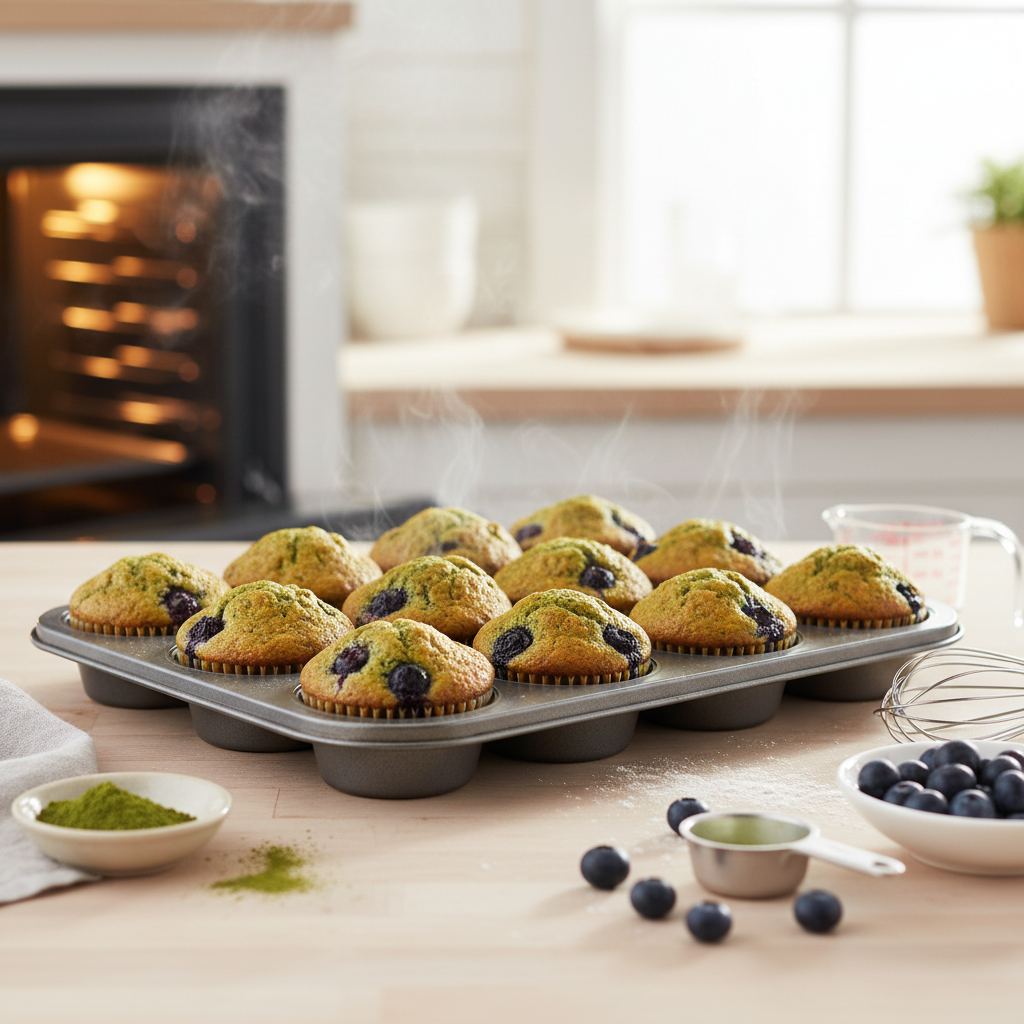
The secret to fluffy muffins lies in avoiding overmixing, which develops gluten and leads to a dense, rubbery texture. When baking with matcha muffins, sift the powder with your dry ingredients first to ensure an airy, uniform crumb without heavy mixing.
Ready for the good part? You can achieve those high, bakery-style domes by starting your oven hot (400°F) for the first 5 minutes, then dropping the temperature to 350°F. This initial burst of heat activates the leavening agents rapidly, pushing the batter up before the crust sets.
Matcha powder is absorbent, acting somewhat like cocoa powder, which can dry out your batter. To counteract this, incorporate moist ingredients like sour cream, Greek yogurt, or oil instead of just butter. These fats coat the flour proteins and keep the muffin tender for days.
Key Takeaway: Use the “two-temperature” baking method and add yogurt to your batter for tall, moist matcha muffins.
| | |
|---|
| | |
| | Use neutral oil (canola/veg) |
| | |
| | Sprinkle on top for crunch |
Balancing moisture-rich ingredients with proper leavening ensures your muffins rise high without becoming dry.
Can You Bake Elegant Matcha Layer Cakes?
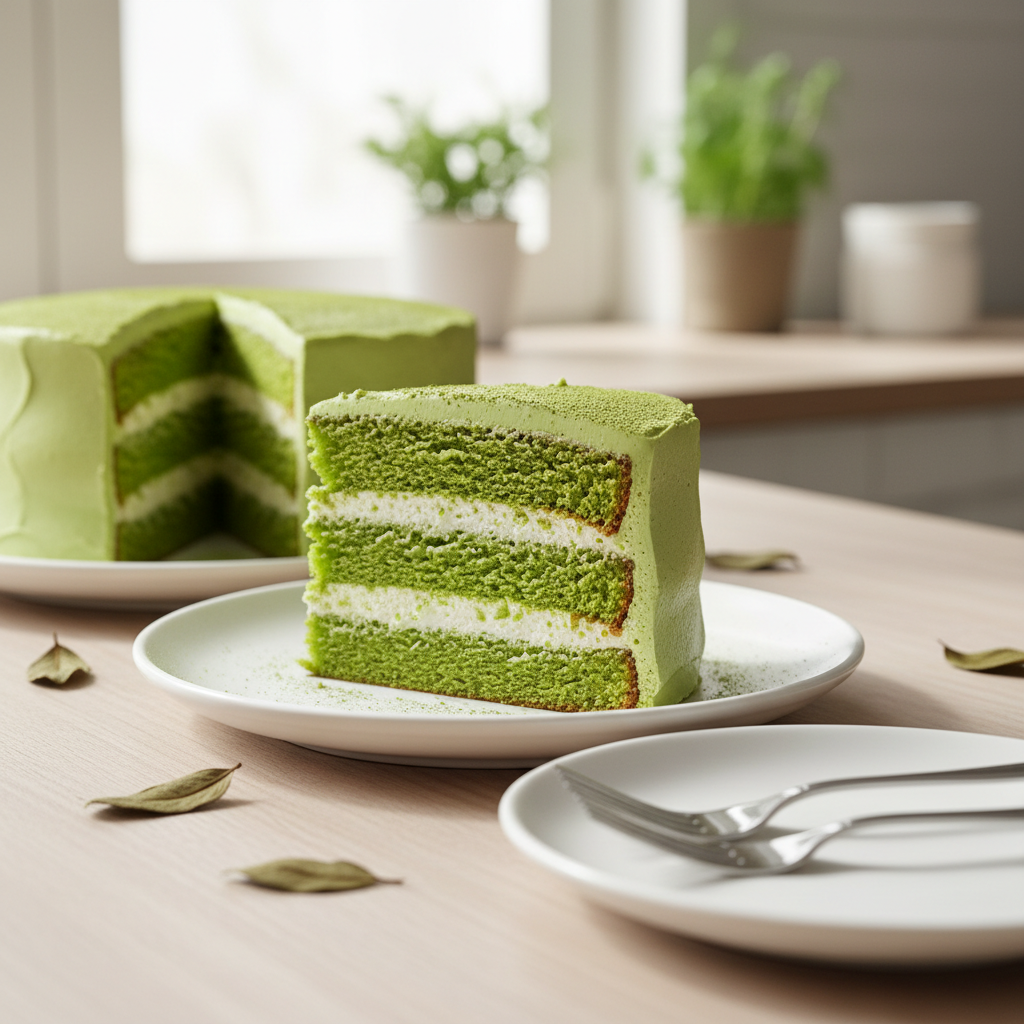
Yes, you can bake elegant layer cakes, but you must prioritize the quality of your tea to ensure the flavor shines through the frosting. For cakes where color is paramount, we recommend using premium organic matcha to achieve a brilliant electric green that stands out against white fillings when baking with matcha. Sponge and Chiffon Basics
This is where it gets interesting: foam-based cakes like sponges and chiffons rely on whipped eggs for structure. Matcha contains oils that can destabilize egg white foams if added too quickly. Always fold your sifted matcha flour mixture gently into the eggs to preserve the air bubbles.
A matcha layer cake needs a filling that complements rather than overpowers it. Light whipped cream, mascarpone, or a white chocolate ganache are ideal choices. Avoid heavy dark chocolate frostings, as they will completely mask the delicate grassy notes of the sponge.
Key Takeaway: Gently fold matcha into your batter to maintain volume and pair with light, creamy frostings for the best flavor balance.
Understanding the structural base of your cake helps you determine how much matcha can be added without collapsing the batter.
How Do You Roll a Matcha Swiss Roll?
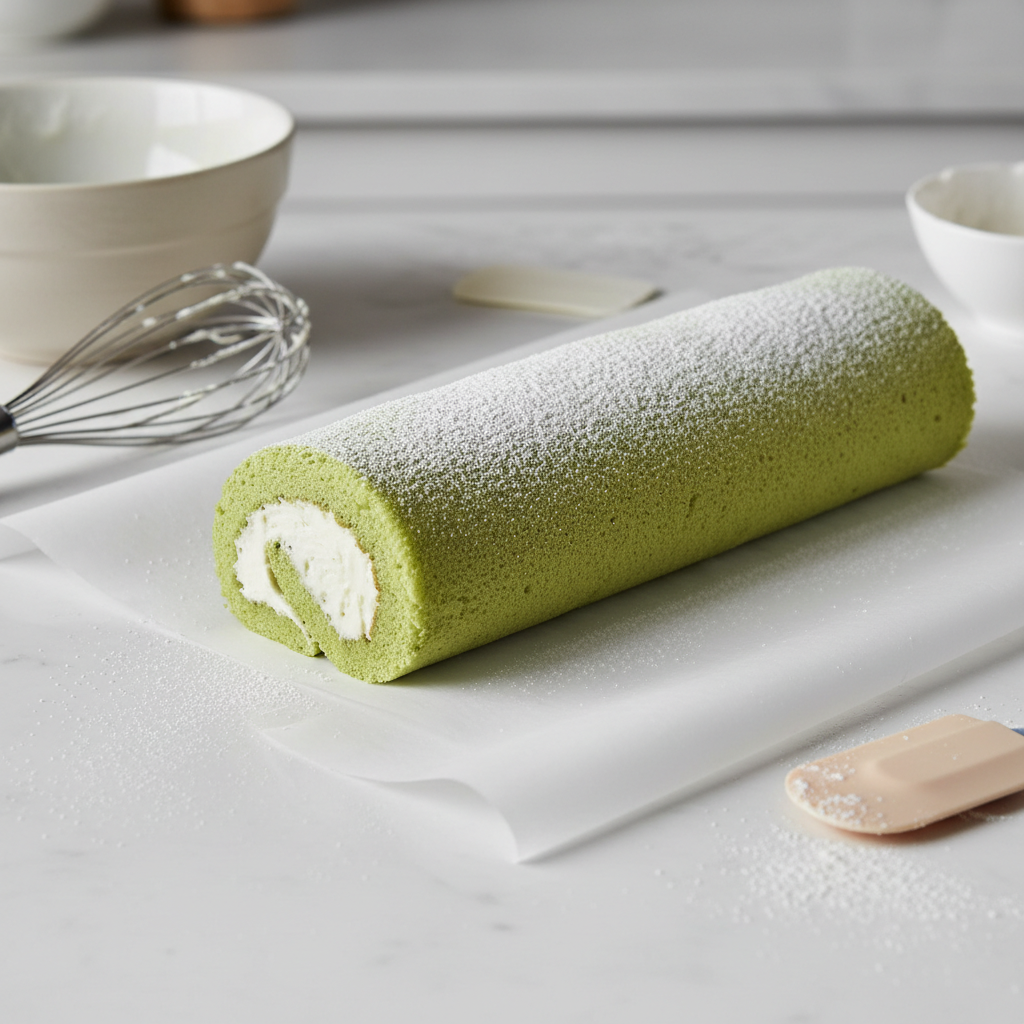
Rolling a Swiss roll without cracking requires timing and a flexible sponge recipe. When baking with matcha roll cakes, you must roll the cake while it is still warm and pliable to set the “memory” of the shape before filling it.
Here is the secret: add a small amount of oil and milk to your sponge batter. This extra fat ensures the cake remains elastic enough to bend. A traditional fat-free sponge is often too dry and will snap the moment you try to curl it.
Once the cake has cooled in its rolled shape, unroll it gently and spread your matcha cream or azuki bean paste filling. Re-roll it tightly and refrigerate for at least an hour. This chilling time firms up the filling, making the cake easy to slice into perfect spirals.
Key Takeaway: Pre-roll your cake in a towel while it is hot to prevent cracking, then fill and chill for clean slices.
Mastering the temperature timing is the single most important factor in achieving a crack-free Swiss roll.
Are Matcha Financiers Hard to Bake?
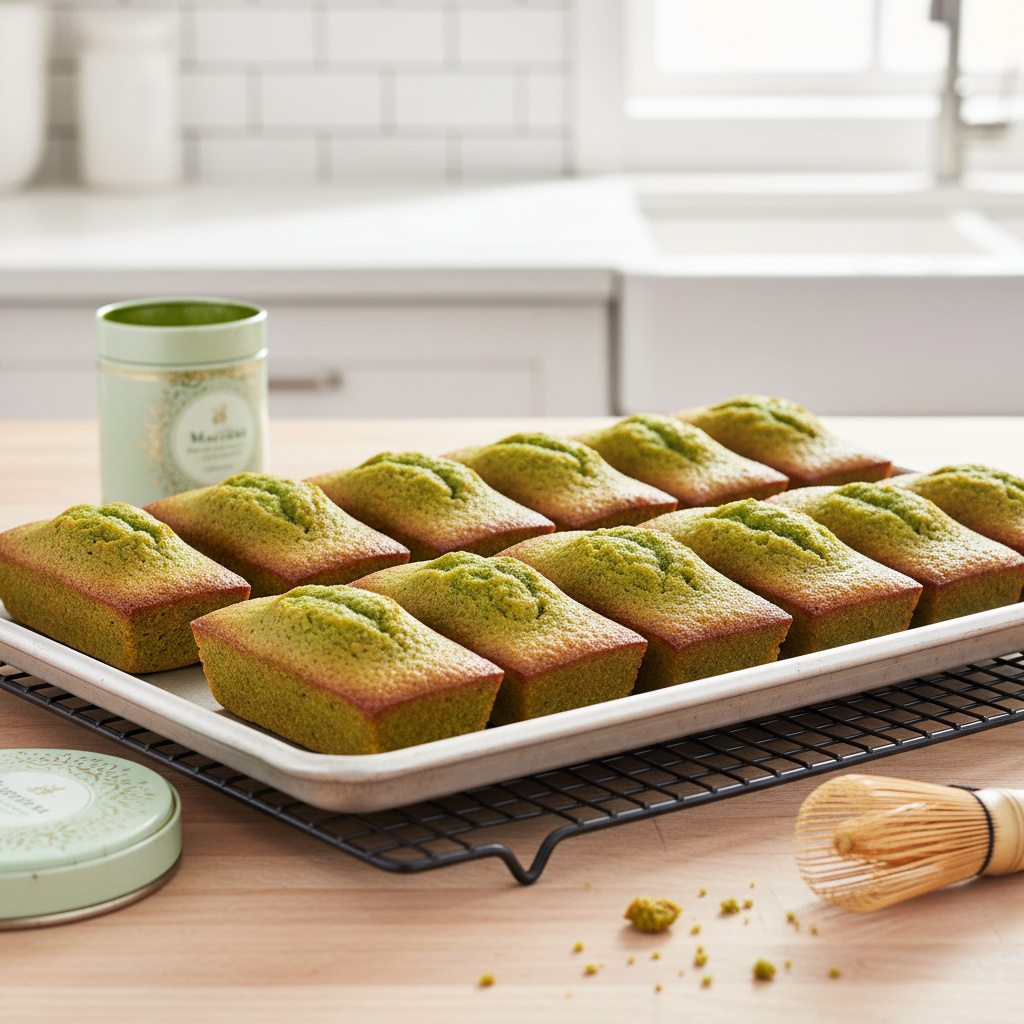
Matcha financiers are surprisingly easy to bake and are one of the most sophisticated ways to enjoy green tea. These small French cakes rely on nuttiness from brown butter (beurre noisette) and almond flour, which pairs exceptionally well with the earthiness of baking with matcha.
You need to know this: browning your butter adds a deep, caramel-like aroma that elevates the matcha flavor from grassy to gourmet. Be sure to let the butter cool slightly before mixing it into your egg whites to avoid cooking the eggs prematurely.
For the signature “hump” on top of the financier, chill your batter in the refrigerator for at least an hour before baking. This rest allows the gluten to relax and the hydration to even out, resulting in a tender interior with a delightfully crisp exterior.
Key Takeaway: Brown your butter and chill the batter to achieve the perfect texture and flavor depth in financiers.
The high fat content from brown butter and almonds makes financiers naturally moist and perfect for holding matcha flavor.
How Do You Make Creamy Matcha Cheesecake?
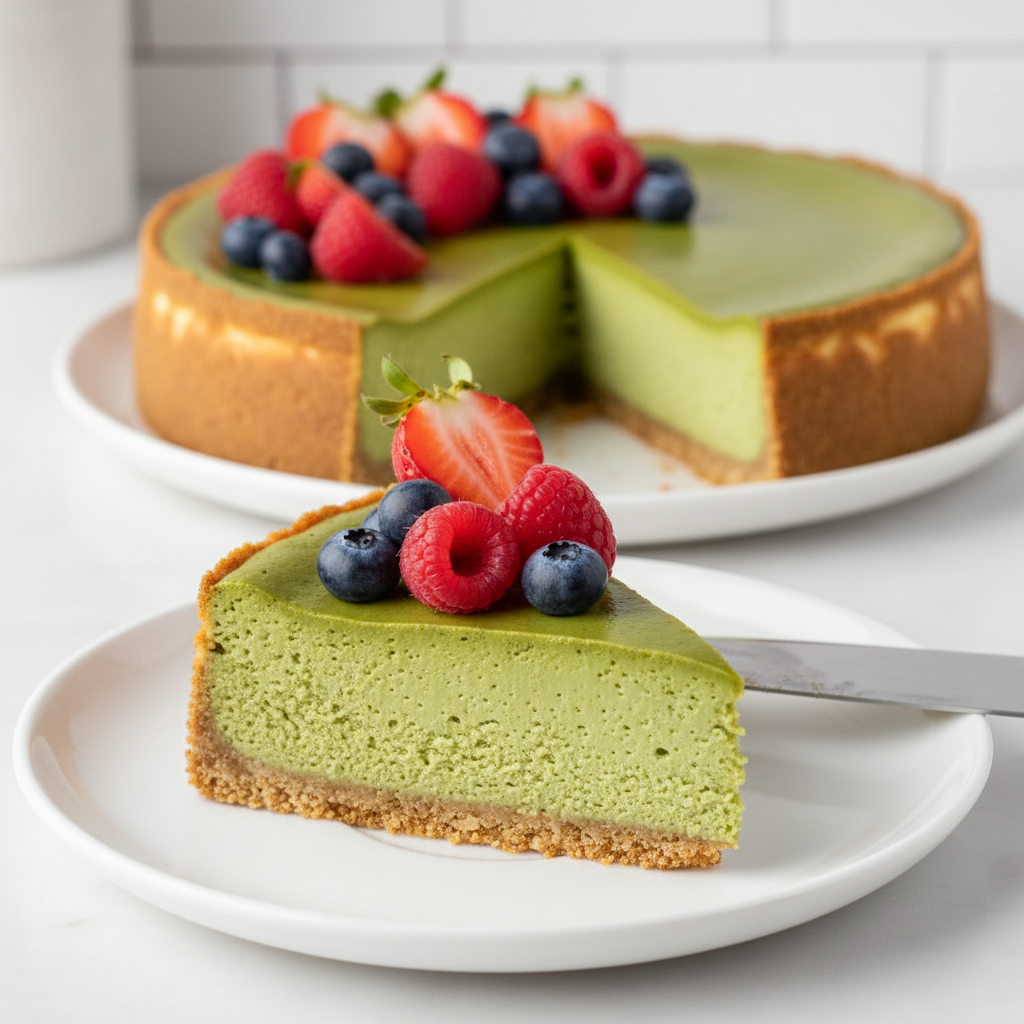
Making a creamy matcha cheesecake involves baking at a low temperature to ensure a smooth, crack-free custard. When baking with matcha cheesecake, the lack of flour means the pure flavor of the tea is front and center, supported by the tang of cream cheese.
Basque vs. New York Style
Check this out: for a rustic look, try a Basque Burnt Cheesecake. You bake it at high heat to burn the top intentionally, creating a caramelized crust that contrasts with the green, gooey center. For a traditional New York style, use a water bath to keep the heat gentle and the top pale and smooth.
To avoid lumps of matcha in your smooth cheese batter, mix the powder with a little bit of sugar or heavy cream to create a paste before adding it to the main mixture. This ensures a uniform green color throughout the slice without any bitter speckles.
Key Takeaway: Use a water bath for a smooth, uniform texture, or high heat for a trendy burnt top with a creamy center.
Choosing your baking method determines whether you get a dense, rich slice or a light, airy dessert.
What Are the Best Matcha Scones Recipes?
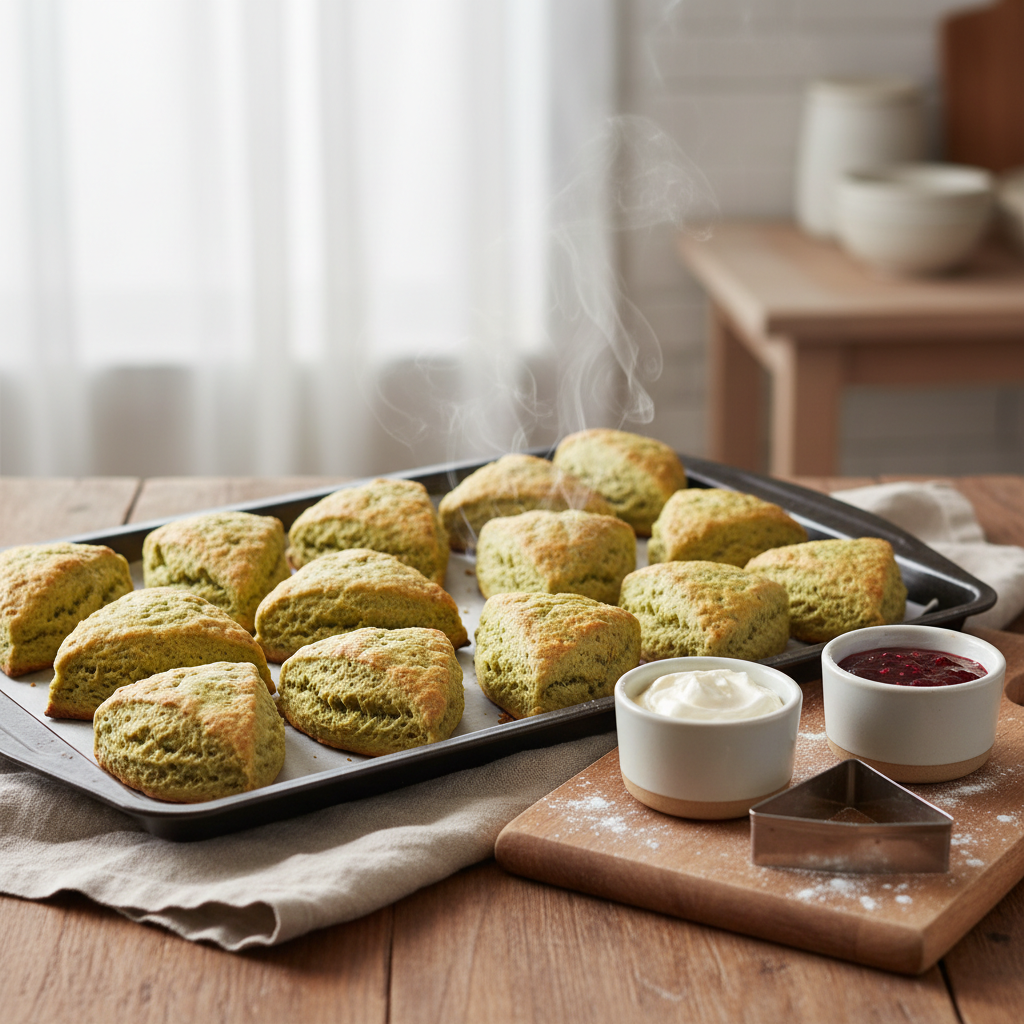
The best matcha scones are flaky, tender, and not overly sweet, making them the ideal canvas for a white chocolate drizzle or clotted cream. Success in baking with matcha scones comes down to keeping your ingredients, especially the butter, absolutely cold until they hit the oven.
Here is the trick: grate frozen butter into your dry ingredients. This creates tiny pockets of fat that steam during baking, creating layers. When adding your matcha liquid (tea dissolved in milk/cream), mix gently with a fork just until the dough comes together to avoid tough scones.
Matcha scones can be slightly dry on their own, so a glaze is essential. A simple icing made of powdered sugar, milk, and a pinch of matcha powder adds a sweet finish and an extra pop of green color that looks beautiful on a serving platter.
Key Takeaway: Keep your butter frozen and handle the dough as little as possible for flaky, tender scones.
Cold ingredients are the non-negotiable factor for achieving the characteristic rise and flake of a good scone.
How Fudgy Should Matcha Brownies Be?
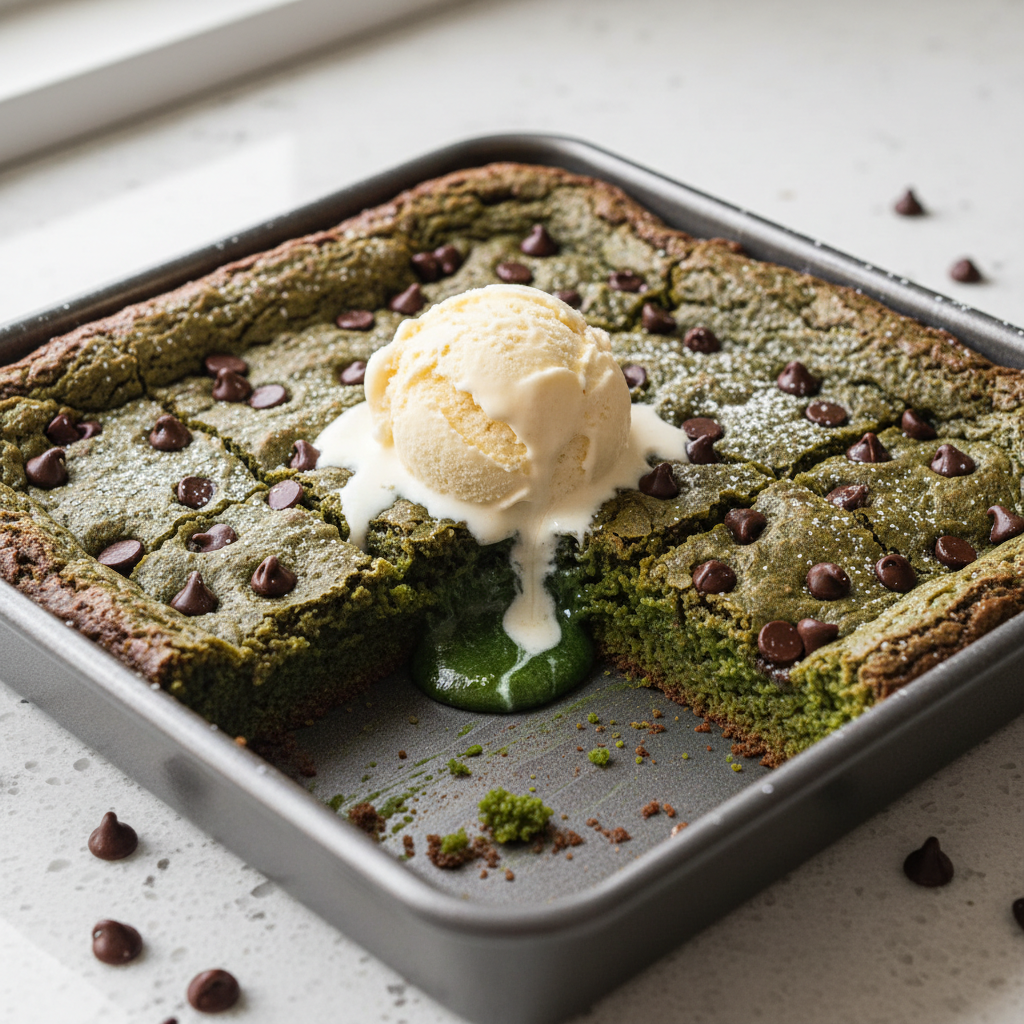
Matcha brownies (often called blondies) should be incredibly fudgy, dense, and rich, relying on white chocolate rather than cocoa powder. When baking with matcha brownies, you want a texture that is moist and almost underbaked, allowing the buttery tea flavor to linger on the palate.
This is huge: cocoa powder would turn the batter brown and mask the matcha, so high-quality melted white chocolate is the base. It provides the fat and sugar structure needed for that fudgy bite. Be careful not to overheat the chocolate when melting it.
These brownies bake faster than you think. Remove them from the oven when the edges are set but the center still jiggles slightly. They will firm up as they cool. Overbaking leads to a dry, cakey texture that loses the luxurious mouthfeel you want.
Key Takeaway: Base your recipe on melted white chocolate and underbake slightly for the ultimate fudgy texture.
The absence of chemical leaveners and the reliance on chocolate fat creates the signature dense texture of a brownie.
Can You Bake Moist Matcha Loaf Cakes?
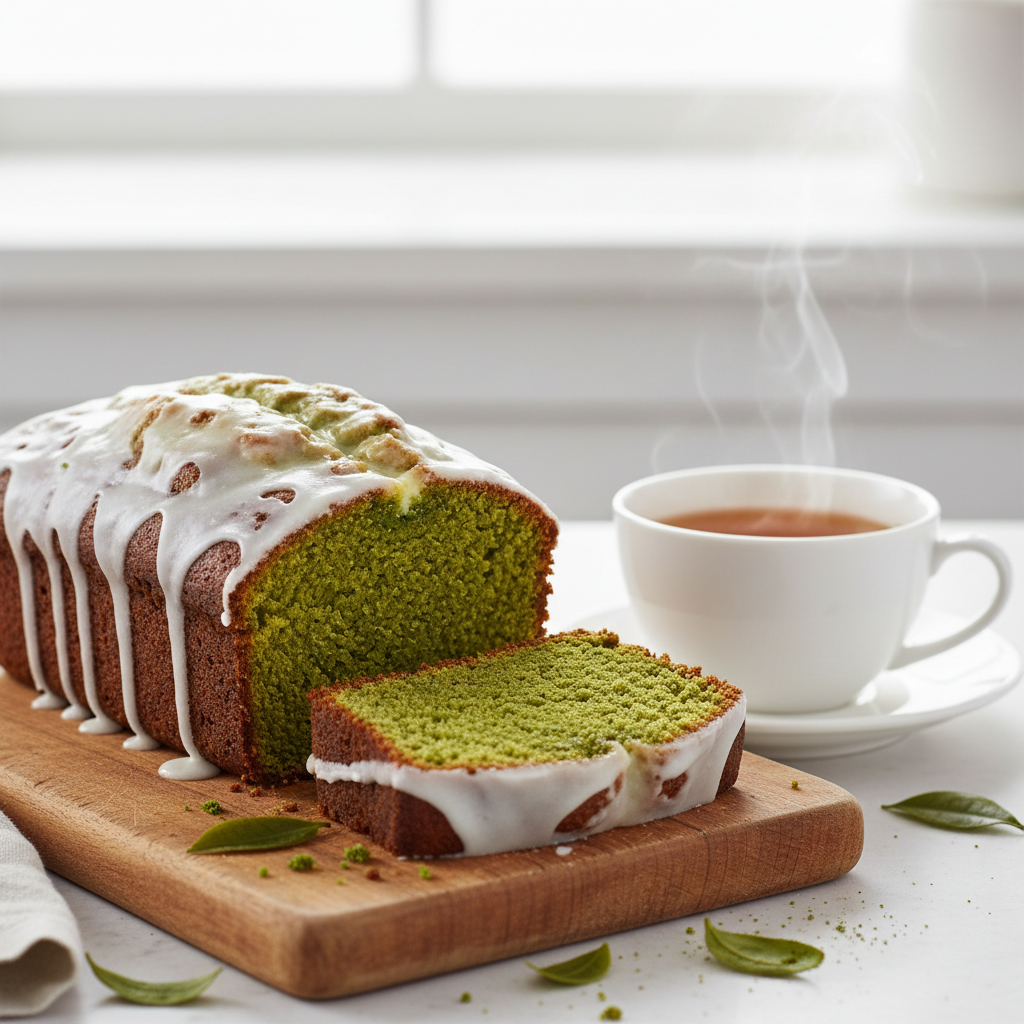
You can absolutely bake moist matcha loaf cakes, which are perfect for slicing and serving with tea. These loaves benefit from a tighter crumb and often use sour cream or oil to stay moist for days. If you run a bakery and plan to add these to your menu permanently, you might want to request bulk matcha samples to find a cost-effective blend that maintains color in larger batches of baking with matcha. But wait, there’s more: a traditional pound cake ratio (equal parts flour, sugar, butter, eggs) works beautifully with matcha. The density of the pound cake supports the powder well. For a modern twist, swirl a plain batter with a matcha batter for a marble effect that looks stunning when sliced.
Loaf cakes are robust and actually taste better the day after baking. The moisture redistributes, and the matcha flavor deepens. Wrap the loaf tightly in plastic wrap while it is still slightly warm to trap the steam inside, ensuring a soft crust.
Key Takeaway: Use high-fat moisteners like sour cream and wrap the loaf while warm to ensure a moist, long-lasting cake.
Proper storage extends the saleability of loaf cakes, making them a profitable item for bakeries.
Mastering the art of baking with matcha opens up a world of vibrant, earthy, and sophisticated desserts that are sure to impress. By controlling temperature, choosing the right ingredients, and using the proper tools, you can banish brown, bitter cakes forever. Whether you are a home baker or a business owner, contact us today to explore how our premium tea products can elevate your culinary creations. We are dedicated to providing the freshest, most vibrant matcha to help you bake with confidence and color. Q1: Can I use regular green tea bags instead of matcha powder?No. Tea bags contain loose leaves meant for steeping water, not for eating. Matcha is a suspended powder that provides specific texture, color, and flavor that tea bags cannot replicate in baking.
Q2: Is ceremonial grade matcha better for baking?Generally, no. Ceremonial grade is delicate and expensive; its subtle nuances are often lost when mixed with sugar and flour. High-quality culinary grade is more robust and cost-effective for baking.
Q3: Why does my matcha cake taste bitter?Bitterness is usually caused by using low-quality, oxidized matcha or adding too much powder to the batter. Ensure your matcha is fresh and vibrant green, not dull olive.
Q4: How should I store my matcha powder?Matcha oxidizes quickly. Store it in an airtight, opaque container in the refrigerator or freezer to protect it from light, air, and heat, which destroy the flavor and color.
Q5: Can I make these recipes vegan?Yes. You can substitute flax eggs, plant-based butter, and non-dairy milk (like oat or almond) in most of these recipes. Just be aware that coconut oil may add a coconut flavor.