
Matcha is not merely a beverage; it is a finely orchestrated symphony of agriculture, chemistry, and tradition. In the modern wellness and culinary landscape, few ingredients have achieved the cult status of this vibrant green powder. Whether you are a tea connoisseur seeking the perfect bowl of usucha or a business procurement specialist searching for a reliable matcha supplier, understanding the intricacies of matcha is essential for navigating this multi-billion dollar industry.
This exhaustive guide explores the profound depths of matcha—covering its historical roots, the sophisticated science behind its cultivation, and the critical factors that define high-quality matcha wholesale sourcing.
The story of matcha begins not in Japan, but in Tang Dynasty China (618–907). During this era, tea leaves were steamed and formed into bricks for storage and trade. The tea was prepared by roasting and pulverizing the leaves, then decocting the resulting powder in hot water with salt. However, it was during the Song Dynasty (960–1279) that the method of “whisking” powdered tea in a bowl became popular.
The Zen Connection
In 1191, the Zen monk Eisai returned to Japan from China, bringing with him tea seeds and the Zen Buddhist method of preparing powdered tea. He planted these seeds at a temple in Kyoto and authored the Kissa Yojoki (Book of Tea), the first Japanese treatise on tea, which hailed the beverage as a “precious medicine for sustaining life.”
Over centuries, what began as a medicinal aid for meditation evolved into the highly ritualized Chanoyu (The Way of Tea). Under the influence of masters like Sen no Rikyu, the tea ceremony became a practice of mindfulness, aesthetics, and social harmony, centered around the principles of Wa (Harmony), Ke (Respect), Sei (Purity), and Jaku (Tranquility).
2. The Science of Cultivation: From Leaf to Powder
What differentiates matcha from standard green tea is a rigorous, labor-intensive cultivation process known as “shading.” This process is a marvel of botanical engineering designed to manipulate the plant’s photosynthesis.
The Shading Process
About 20 to 30 days before harvest, the tea bushes (Camellia sinensis) are covered with straw mats or black plastic netting. This reduces the amount of sunlight reaching the leaves by up to 90%.
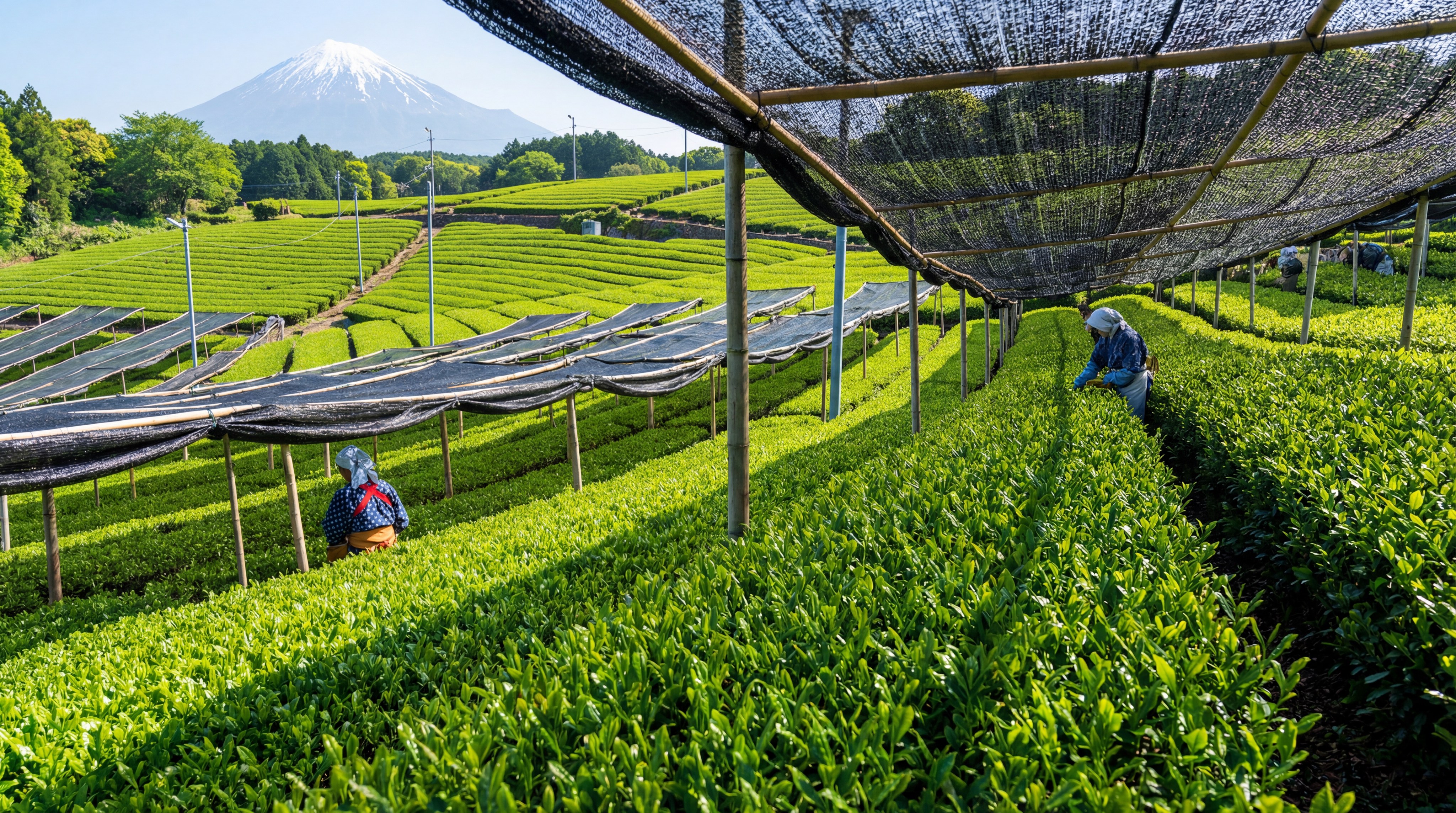
A traditional Japanese tea plantation utilizing specialized shading structures to enhance the nutrient profile of the leaves.
The chemical impact of shading is profound:
- Chlorophyll Explosion: Deprived of light, the plant overcompensates by producing massive amounts of chlorophyll to capture what little energy is available. This gives matcha its signature electric-green hue.
- L-Theanine Preservation: In direct sunlight, L-theanine (an amino acid) normally converts into polyphenols (catechins). Shading inhibits this conversion, resulting in high levels of L-theanine, which provides the “umami” flavor and the calm, focused energy matcha is known for.
Harvesting and Processing
Only the finest, youngest buds are hand-picked during the first flush (Ichibancha) in the spring. Once harvested, the leaves undergo a specific industrial workflow:
- Steaming: Within hours of picking, leaves are steamed to stop oxidation, preserving the green color and nutritional integrity.
- Drying: The leaves are air-dried in a “ten-cha” furnace.
- De-veining and De-stemming: The dried leaves, now called Tencha, are stripped of their stems and veins.
- Stone Grinding: The pure leaf tissue is ground between granite stones. It takes approximately one hour to produce just 30 grams of powder. This slow process prevents the powder from overheating, which would degrade the flavor and nutrients.
3. The Chemistry of Matcha: A Deep Dive
Matcha is a nutritional powerhouse because, unlike steeped tea where the leaves are discarded, you consume the entire leaf.
L-Theanine: The “Smart” Amino Acid
Matcha contains up to five times more L-theanine than common green tea. L-theanine crosses the blood-brain barrier and promotes the production of alpha waves in the brain, inducing a state of relaxation without drowsiness. When combined with caffeine, it creates a “timed-release” effect, preventing the jitters and “crash” associated with coffee.
Catechins and EGCG
Matcha is rich in a class of antioxidants called catechins. The most potent among them is Epigallocatechin gallate (EGCG), which has been extensively studied for its:
- Metabolic Support: Enhancing thermogenesis and fat oxidation.
- Cellular Protection: Scavenging free radicals and reducing oxidative stress.
- Heart Health: Potential for improving lipid profiles and arterial function.
Chlorophyll and Alkalinity
The high chlorophyll content is not just aesthetic; it acts as a natural detoxifier, helping the body eliminate heavy metals and chemical toxins. Furthermore, matcha is highly alkaline, helping to balance the body’s pH levels.
4. How Matcha Compares to Other Teas
To understand matcha’s value, one must look at how it differs from other popular tea varieties in terms of processing, caffeine, and antioxidant yield.
Table 1: Comparative Analysis of Tea Varieties
Feature | Matcha | Loose Leaf Green Tea (Sencha) | Black Tea |
|---|---|---|---|
Processing | Shaded, steamed, stone-ground | Sun-grown, steamed/panned, rolled | Fully oxidized and dried |
Consumption | Whole leaf powder ingested | Water infusion (leaves discarded) | Water infusion (leaves discarded) |
Color | Bright, vibrant green | Pale green to yellow-green | Deep amber to dark brown |
Caffeine Content | High (35-70mg per gram) | Moderate (20-30mg per cup) | High (40-70mg per cup) |
L-Theanine | Extremely High | Moderate | Low |
Antioxidants | 137x more EGCG than Sencha | High | Moderate (Theaflavins) |
Flavor Profile | Umami, creamy, sweet-bitter | Grassy, astringent, fresh | Bold, malty, floral |
A visual representation of the distinct physical and textural differences between matcha, loose-leaf green tea, and black tea.
5. The Intricate Flavor Profile
A high-quality matcha should provide a multi-sensory experience. Professional tasters evaluate matcha based on three primary pillars:
- Umami: This “fifth taste” is a savory, brothy sensation caused by the high amino acid content. In premium ceremonial grades, umami is the dominant note.
- Sweetness: A natural, vegetal sweetness that lingers on the finish, often compared to young peas or white chocolate.
- Astringency/Bitterness: While all tea has some tannins, a high-quality matcha should have a “pleasant bitterness” that balances the sweetness, rather than an overwhelming, acrid bite.
6. Grades of Matcha: Choosing the Right Powder
Not all matcha is created equal. For a matchfactory or a matcha supplier, categorizing these grades is essential for meeting diverse market needs.
Table 2: Ceremonial Grade vs. Culinary Grade
Characteristic | Ceremonial Grade | Culinary Grade |
|---|---|---|
Harvest Time | First Harvest (Spring) | Late Harvest (Summer/Autumn) |
Leaf Selection | Top delicate buds | Lower, more mature leaves |
Color | Electric, vivid green | Duller, yellowish-green |
Texture | Ultra-fine (like cornstarch) | Slightly grittier |
Flavor | Delicate, sweet, high Umami | Robust, bold, high astringency |
Best Use | Whisked with water (Traditional) | Lattes, baking, smoothies, cooking |
Price Point | Premium | Economical/Bulk |
7. Traditional vs. Modern Preparation Methods
The preparation of matcha is an art form that balances temperature, agitation, and ratio.
The Traditional Method (Usucha)
To prepare “thin tea,” you need a few essential tools: the Chawan (bowl), Chasen (bamboo whisk), and Chashaku (bamboo scoop).
- Sift: Always sift 1.5–2 scoops (approx. 1.5g) of matcha into the bowl to remove clumps.
- Water Temp: Use 70-80ml of hot water. Critical: Never use boiling water, as it scorches the delicate powder and releases excessive bitterness. Aim for 80°C (176°F).
- The Whisk: Using the bamboo whisk, stir gently to incorporate, then whisk vigorously in a “W” or “M” motion for about 20-30 seconds until a thick, frothy foam with tiny bubbles forms on the surface.
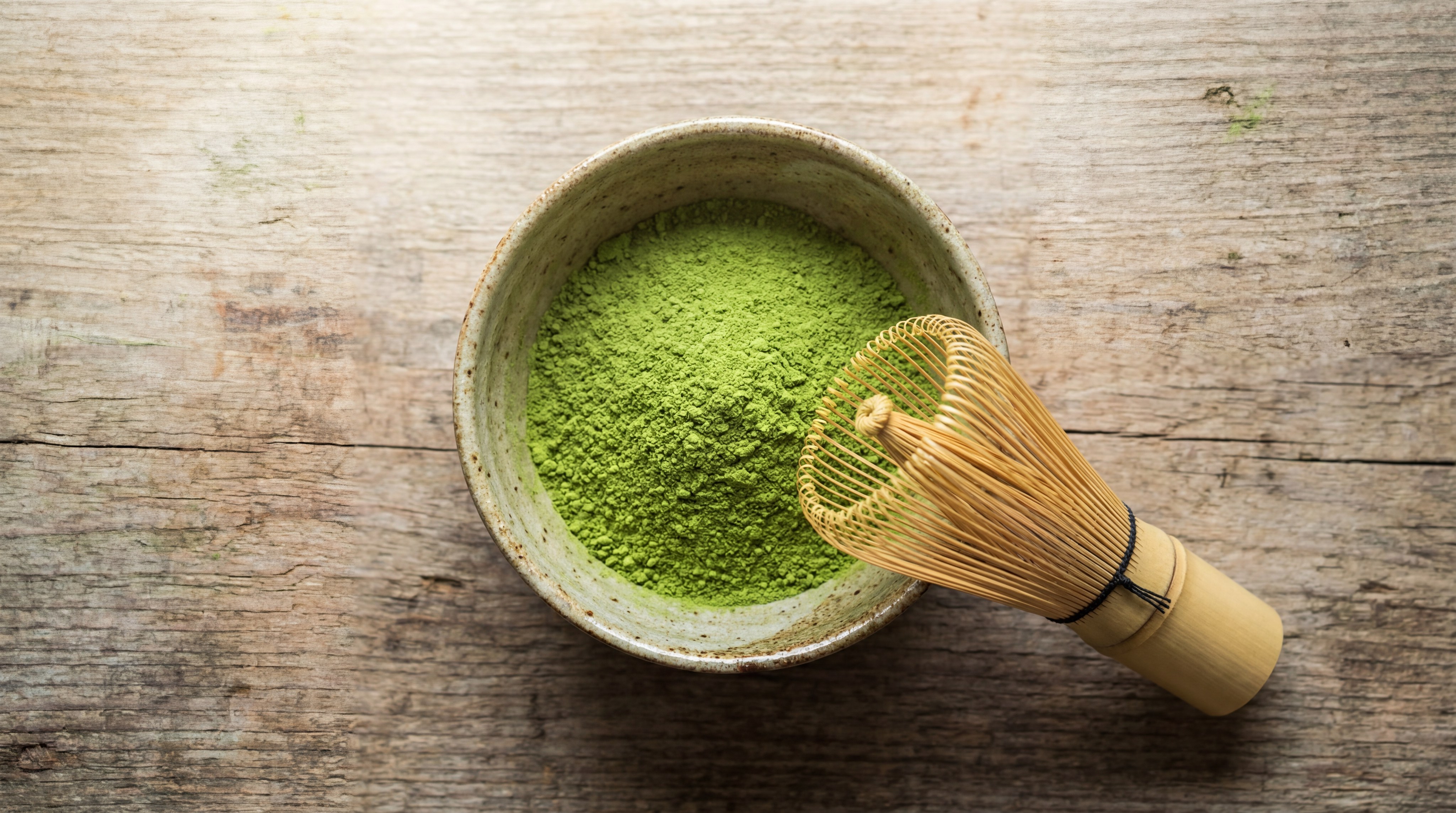
The quintessence of Japanese tea culture: finely sifted matcha powder in a handmade ceramic bowl with a traditional bamboo whisk.
Modern Preparation
In the fast-paced modern world, many use electric frothers or shaker bottles. While efficient, these methods often fail to achieve the same creamy micro-foam as a bamboo whisk, but they are ideal for making a quick matcha package on the go.
8. Culinary Uses and Pairings
Beyond the bowl, matcha’s bold flavor makes it a versatile ingredient in the modern kitchen. Because its flavor is so concentrated, a little goes a long way.
Table 3: Culinary Pairings & Applications
Category | Application | Pairing Suggestions |
|---|---|---|
Sweet | Macarons, Crepe Cakes, Ice Cream | White chocolate, strawberry, black sesame |
Dairy/Alt-Dairy | Lattes, Cortados | Oat milk (enhances nuttiness), Coconut milk |
Savory | Matcha Salt, Rubs, Pasta | White fish, tempura, goat cheese |
Beverage | Lemonades, Cocktails | Mint, ginger, yuzu, gin |
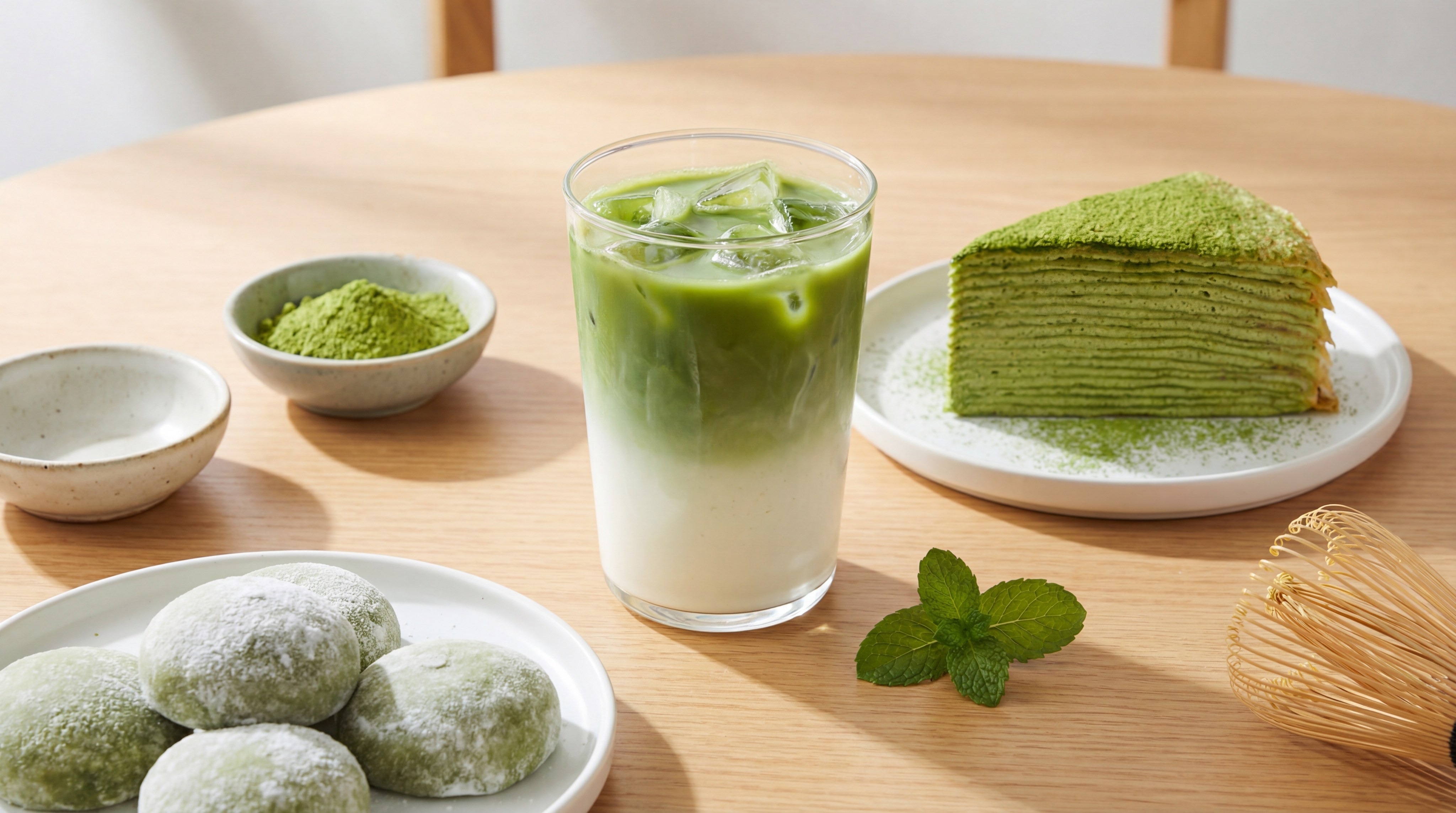
The versatility of matcha showcased through elegant pastries, chilled lattes, and traditional mochi.
9. The Ultimate B2B Buyer’s Guide to Sourcing Matcha
For businesses looking to enter the tea market or expand their wellness line, finding the right matcha supplier is the most critical decision in the supply chain. Quality variance in the matcha wholesale market is massive, and a “cheap” source can often lead to customer dissatisfaction and brand damage.
Why Sourcing from a Dedicated “Matchfactory” Matters
A specialized matchfactory ensures a closed-loop system of quality control. When you source matcha bulk quantities, you need consistency in color, particle size, and microbial safety.
Key Considerations for B2B Buyers:
- Certification: Ensure your supplier provides Organic (JAS/USDA), ISO, and Food Safety certifications.
- Sample Testing: Never commit to a large order without requesting a matcha sample. Test for color vibrancy and how well the powder suspends in liquid.
- Packaging Integrity: Matcha is highly sensitive to light and oxygen. Your matcha package must be airtight, opaque, and preferably nitrogen-flushed to prevent oxidation.
- Private Label Services: Many businesses seek private label matcha to build their own brand identity. A top-tier supplier like Riching Matcha offers end-to-end solutions, from custom blending to final packaging.
Spotlighting “Riching Matcha”
When it comes to high-volume procurement, Riching Matcha stands out as the industry leader. By bridging the gap between traditional Japanese cultivation techniques and modern industrial scale, they provide the consistency that global brands demand. Whether you need ceremonial grade for a boutique tea shop or industrial-grade matcha bulk for food manufacturing, Riching Matcha offers unparalleled transparency and quality.
Professional commercial setup showcasing the scale and organization required for high-quality wholesale distribution.
10. Consumer Testimonials: The Real-World Impact
“Switching our café’s matcha to Riching Matcha was a game-changer. Our customers immediately noticed the more vibrant green color and the smoother, less bitter finish of our lattes. The matcha wholesale support we received made the transition seamless.” — Sarah T., Coffee Shop Owner
“As a supplement brand, we needed a matchfactory that could provide consistent matcha bulk with rigorous lab testing. The quality control is the best we’ve seen in the industry.” — David K., Operations Director
Conclusion: Embracing the Green Revolution
The rise of matcha is more than a trend; it is a shift toward functional, mindful consumption. From its origins in the misty mountains of Japan to its current status as a global culinary staple, matcha continues to captivate.
For the enthusiast, it offers a moment of Zen and a potent nutritional boost. For the business owner, it offers a high-growth opportunity backed by centuries of tradition. By choosing a reputable matcha supplier like Riching Matcha, you ensure that you are delivering the purest, most effective version of this “liquid emerald.”
Frequently Asked Questions (FAQs)
Q1: What is the main difference between matcha and regular green tea?
The primary difference lies in the cultivation and consumption. Matcha is grown under shade for several weeks before harvest to increase chlorophyll and L-theanine levels. Unlike regular green tea, where you steep leaves and discard them, matcha is the entire tea leaf ground into a fine powder, meaning you ingest 100% of the nutrients and antioxidants.
Q2: Why is some matcha powder yellowish or brownish instead of bright green?
The color of matcha is a direct indicator of quality and freshness. A yellowish or brownish tint usually signifies one of three things: it is a lower “culinary” grade made from older leaves, the leaves were not shaded properly, or the powder has oxidized due to exposure to light and air. High-quality ceremonial matcha should always be a vibrant “electric” green.
Q3: How much caffeine is in a serving of matcha compared to coffee?
A typical serving of matcha (about 1 gram or 1/2 teaspoon) contains approximately 35-70mg of caffeine. In comparison, a standard cup of coffee contains about 95-150mg. However, because matcha contains L-theanine, the caffeine is released more slowly, providing a sustained energy boost for 4-6 hours without the “coffee jitters.”
Q4: Can I use boiling water to make my matcha?
No, you should never use boiling water (100°C/212°F) to prepare matcha. Boiling water “burns” the delicate powder, resulting in an unpleasantly bitter and astringent taste. The ideal water temperature for matcha is between 70°C and 80°C (158°F – 176°F), which preserves the natural sweetness and umami flavor.
Q5: Is it safe to consume matcha every day?
Yes, for most people, consuming 1-2 servings of matcha daily is safe and highly beneficial due to its high antioxidant content. However, because it contains caffeine and high levels of minerals, those sensitive to caffeine or with specific medical conditions should consult a healthcare provider. Always ensure you are sourcing from a reputable matcha supplier to avoid contaminants.