
The global matcha market has transitioned from a niche health trend to a fundamental pillar of the modern beverage industry. For cafe owners, juice bar operators, and high-volume foodservice providers, the question of where to buy matcha in bulk is no longer just about finding a product—it is about securing a strategic supply chain partner. Sourcing high-quality matcha involves navigating origin stories, technical grade specifications, and complex international logistics.
High-volume cafes typically source their matcha through three primary channels: direct-from-origin manufacturers, regional wholesale distributors, or specialized tea importers. To maximize profit margins while maintaining the vibrant jade hue and umami profile customers expect, professional buyers are increasingly moving toward the direct-from-origin model.
For a commercial enterprise, every cent in the Cost of Goods Sold (COGS) impacts the bottom line. Traditional sourcing often involves multiple layers of markups: the manufacturer sells to an exporter, who sells to a national importer, who then sells to a local distributor. By the time the matcha reaches the cafe, the price has inflated by 40–60%.
Modern cafes prioritize sourcing from a Bulk Matcha Wholesale manufacturer. This direct link provides:
- Price Stability: Protection from middleman-induced price fluctuations.
- Freshness: Minimal time spent in intermediate warehouses ensures the chlorophyll remains vibrant.
- Customization: The ability to request specific blends or “proprietary grades” suited to a unique signature latte.
Table 1: Bulk Matcha Supplier Channel Comparison
Feature | Direct Manufacturer (e.g., Riching Matcha) | Regional Distributor | Retail/Wholesale Marketplaces |
|---|---|---|---|
Pricing | Factory Direct (Lowest) | Mid-tier (Markup included) | High (Platform fees added) |
Grade Variety | Full Spectrum (Culinary to TOP Series) | Limited to stocked items | Variable/Unreliable |
Traceability | Full (Farm to Cup) | Partial (Brand name only) | Minimal |
MOQ | Usually 10kg – 100kg | Low (1kg+) | Very Low |
Technical Support | High (COA, Lab Testing) | Low | None |
2. Origin Deep Dive: Japanese vs. Chinese Matcha Terroir
The “terroir”—the environmental factors including soil, climate, and altitude—is the soul of matcha. Historically, the 30° North latitude is recognized as the “Golden Latitude” for tea cultivation. While Japan is widely marketed, the roots of matcha trace back to Jingshan, China, where the tea ceremony first flourished.

The Jingshan Advantage
Riching Matcha’s parent company, Matcha Village, is located in Jingshan, a region with over 1,200 years of tea history. The ecological tea gardens here benefit from:
- High Humidity & Mist: Natural shading from mountain mists protects the leaves before the artificial shading nets are even applied.
- Soil Composition: Rich, acidic soil perfect for Camellia sinensis, facilitating high nitrogen absorption which leads to increased L-theanine levels.
- Modern Technology: Integration of Japanese-inspired shading and steaming techniques with large-scale Chinese manufacturing efficiency.
Chinese matcha is increasingly favored by global B2B buyers because it offers an exceptional price-to-quality ratio. High-end Chinese ceremonial grades can match the sensory profile of Japanese counterparts while offering significantly better margins for the cafe operator.
3. Understanding Matcha Grades: Ceremonial vs. Culinary for B2B
One of the most critical decisions for a cafe owner is selecting the correct Wholesale Matcha Tea Grades for their menu. Using a ceremonial grade in a baked muffin is a waste of capital, while using a low culinary grade in a pure whisked tea will result in a bitter, unpalatable experience for the customer.

Ceremonial Grade (The “Top Series”)
Sourced from the first harvest (Ichiban-cha) in spring, ceremonial matcha is defined by:
- Vibrant Jade Color: Extremely high chlorophyll content.
- Umami Flavor: A rich, savory sweetness with zero astringency.
- Fine Texture: Ground to approximately 18 microns for a smooth mouthfeel.
- Application: Traditional whisked tea, “Matcha Americanos,” or high-end sipping drinks.
Culinary and Premium Grades
Culinary matcha is not “bad” matcha; it is “strong” matcha. It is harvested later in the season (second or third harvest).
- Premium Grade: The sweet spot for lattes. It has enough umami to be pleasant but enough “tea strength” to cut through the fats in oat milk or whole milk.
- Culinary Grade: High in catechins (antioxidants), giving it a bolder, more astringent flavor that holds up against sugar and flour in baking.
Table 2: Technical Specifications by Grade
Metric | Ceremonial (TOP-1) | Premium (Latte Grade) | Culinary (Grade A) |
|---|---|---|---|
Harvest Time | Early Spring (1st) | Late Spring (1st/2nd) | Summer (3rd) |
Amino Acid Content | > 4% | 2 – 3% | < 1.5% |
Color | Deep Emerald/Jade | Bright Leaf Green | Olive Green |
Particle Size | 18μm | 20-25μm | 30μm+ |
Best For | Pure Water Service | Lattes & Smoothies | Baking & Confectionery |
4. The Science of Quality: Technical Evaluation Checklist
Cafes buying in bulk must go beyond a simple taste test. A professional Matcha Manufacturer in China will provide technical documentation to prove quality.
The Evaluation Pillars
- Visual Color Check: High-quality matcha should be a vibrant, electric green. If it leans toward yellow or brown, it indicates either late-harvest leaves (low quality) or oxidation (poor storage).
- Aroma Profile: It should smell like fresh grass and seaweed (oceanic notes). A “hay-like” or dusty smell indicates old stock.
- Solubility & Froth: When whisked, ceremonial matcha should produce a thick, uniform foam with tiny bubbles (saponins).
- COA Analysis: Always request a Certificate of Analysis. It should confirm the absence of heavy metals (Lead, Arsenic), low pesticide residue (EU/USDA compliant), and microbiological safety (Salmonella/E. coli negative).
5. Manufacturing Excellence: The Riching Matcha Advantage
With over 10 years of manufacturing expertise and a production base exceeding 60,000 square meters, Riching Matcha represents the “Industry 4.0” approach to tea.

Advanced Processing Techniques
- Shading: 90% UV-blocking for 21 days before harvest to maximize L-theanine.
- De-enzyming (Steaming): A rapid <20-second steam to halt oxidation, preserving the green color better than pan-firing.
- Ball Milling: Unlike traditional stone mills which are slow (40g/hr), our electric ball grinders maintain low temperatures while producing 30 tons per day, ensuring large-scale supply without heat damage.
- Certification Rigor: Riching is one of the few suppliers maintaining USDA Organic, EU Organic, Halal, Kosher, and ISO22000/HACCP certifications simultaneously.
6. Logistics and Supply Chain Management for Cafes
Managing a bulk matcha supply requires understanding that matcha is a “living” product. It is highly sensitive to light, heat, and oxygen.
Shipping Methods for B2B
- Air Express (DHL/FedEx): Ideal for orders under 100kg. Fastest transit (5–7 days) ensures maximum freshness.
- Sea Freight: Most cost-effective for orders over 300kg. Riching uses climate-controlled containers to prevent the tea from “cooking” in transit during summer months.
Table 3: Bulk Shipping Comparison
Mode | Order Size | Transit Time | Cost Factor | Freshness |
|---|---|---|---|---|
Air Express | 10kg – 100kg | 5-7 Days | High | Excellent |
Air Cargo | 100kg – 500kg | 10-14 Days | Medium | Very Good |
Sea Freight | 500kg+ | 30-45 Days | Low | Good (if temp-controlled) |
7. Culinary Grade Matcha: The Backbone of Cafe Revenue
While ceremonial tea builds prestige, Culinary Matcha Wholesale drives the volume. In a typical cafe, for every one cup of whisked ceremonial tea, thirty matcha lattes are sold.
Why Quality Culinary Matters
Many wholesalers sell “green tea powder” as culinary matcha. Green tea powder is made from unshaded, sun-grown leaves. It is bitter and brown. Real culinary matcha from Riching is still shaded for 20 days. This ensures that even in a latte or a cookie, the “vibrant green” remains.
For high-volume beverage chains, we recommend our Premium Grade. It balances the cost-efficiency of culinary harvesting with the bright color and solubility required for professional latte art.
8. Pricing Structures and Economic Order Quantities (EOQ)
Pricing for bulk matcha is dictated by harvest time and processing complexity. To get the best value, cafe owners must understand tiered pricing.
Table 4: Estimated Wholesale Pricing Tiers (USD/KG)
Grade | 10kg – 50kg | 51kg – 200kg | 500kg+ |
|---|---|---|---|
Ceremonial (TOP Series) | 75−75 – 95 | 60−60 – 75 | 45−45 – 55 |
Premium (Latte Grade) | 35−35 – 45 | 28−28 – 34 | 22−22 – 26 |
Culinary (A/B) | 18−18 – 22 | 14−14 – 17 | 10−10 – 13 |
Note: Prices vary by season. Buying during the spring harvest (April–May) usually secures the best pricing and freshest stock.
9. Private Labeling: Building Your Cafe’s Brand Identity
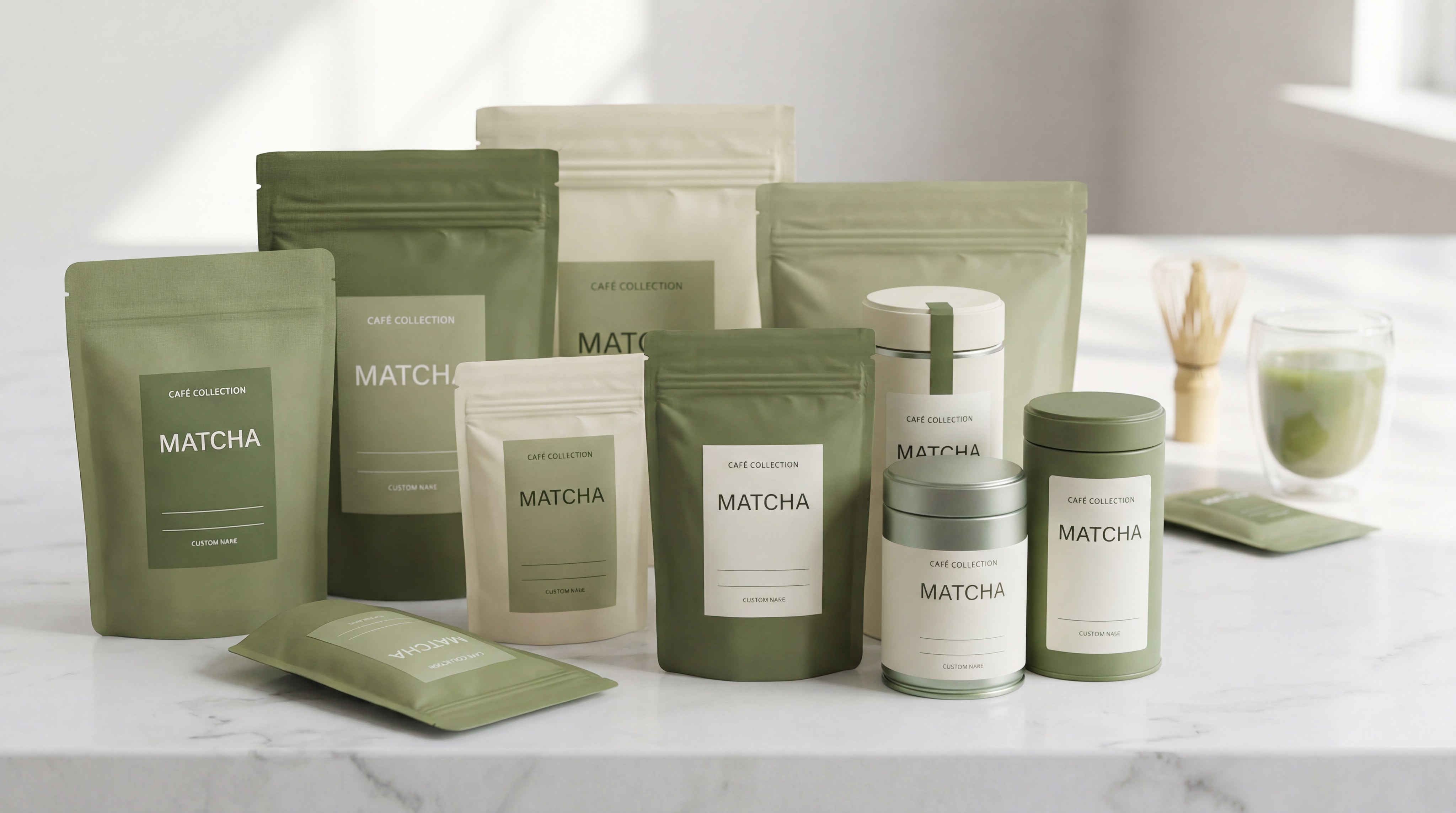
Cafes often transition from serving matcha to selling it. By leveraging Ceremonial Matcha Wholesale under a private label, a cafe creates a secondary revenue stream.
The OEM/ODM Advantage
Riching Matcha provides end-to-end private label support:
- Custom Formulations: We can blend matcha with fruit powders (strawberry, mango) or functional ingredients (collagen, mushrooms).
- Packaging Variety: Tins (30g/100g), stand-up pouches, or single-serve sachets (convenient for modern “on-the-go” customers).
- Design Compliance: We ensure all labeling meets FDA/EU requirements for nutritional facts and health claims.
10. Certification Standards: Trust and Food Safety
In the B2B world, certifications are not just marketing—they are risk management.
The Essential Checklist
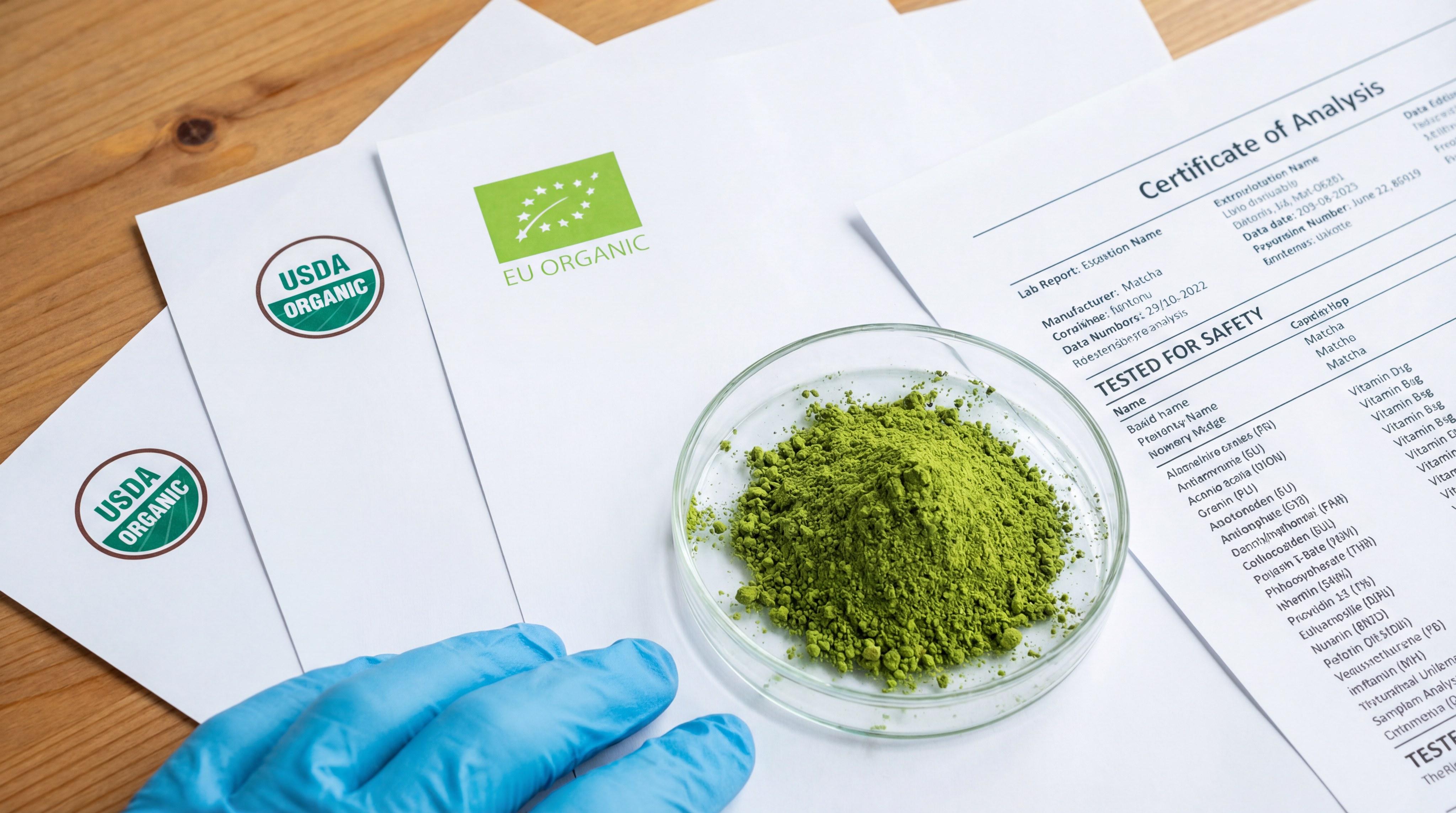
- USDA & EU Organic: Ensures no synthetic pesticides or fertilizers were used. Vital for brands positioning themselves as “clean label.”
- ISO 22000 / HACCP: Proof of international food safety management systems.
- Halal & Kosher: Expands your customer base by meeting specific dietary requirements.
- Non-GMO & Vegan: Standard requirements for modern health-conscious consumers.
Table 5: Certification Importance for B2B
Certification | Market Access | Consumer Trust | Safety Verification |
|---|---|---|---|
USDA Organic | Essential for US Retail | Very High | Rigorous soil/pest audits |
EU Organic | Essential for Europe | Very High | Strict residue testing |
HACCP | Foodservice Requirement | Medium | Facility-level safety |
Halal/Kosher | Middle East / Specialized | High | Ingredient purity |
Developing a Long-Term Sourcing Partnership
Successful cafes do not “shop around” every month. They build a relationship with a manufacturer that understands their business model. Riching Matcha supports long-term growth by offering:
- Sample Support: Free samples for evaluation of different harvest lots.
- Inventory Reserves: We can store your bulk order in our temperature-controlled warehouses and ship in smaller “calls” to ensure freshness.
- Technical Consulting: Helping you troubleshoot your latte froth or optimize your baking recipes.
As you look to scale your cafe brand, consider the source. The difference between a “good” matcha latte and a “world-class” one starts in the soil of Jingshan and ends with the manufacturing precision of a partner like Riching Matcha.
Frequently Asked Questions (FAQ)
1. Can I get a sample before placing a large wholesale order?Yes. Riching Matcha encourages businesses to request samples. While the product is often provided at no cost to qualified B2B buyers, a small shipping fee usually applies. This is the only way to ensure the grade matches your specific milk and equipment setup.
2. What is the shelf life of bulk matcha?Unopened bulk bags have a shelf life of 18–24 months if stored in a cool, dark environment. Once opened, it is best used within 60 days to maintain peak color and aroma.
3. Why is there such a large price gap between culinary and ceremonial?Ceremonial matcha uses the youngest, most tender leaves which have lower yields. It also requires more precise de-veining (removing stems/veins) and slower milling to preserve the delicate L-theanine.
4. Is Chinese matcha safe?Absolutely. All Riching Matcha products are tested by third-party labs like SGS and Eurofins. Our EU and USDA Organic certifications guarantee that the tea meets the world’s strictest safety standards.
5. How do I prevent my matcha from clumping in the cafe?Always sift your matcha through a fine mesh strainer before whisking. Additionally, keep your bulk powder in a cool place; heat and humidity cause the powder to clump naturally.
6. Does the shading process really matter?Yes. Shading is what transforms “green tea powder” into “matcha.” It increases chlorophyll (for color) and L-theanine (for sweetness/umami). Unshaded tea is bitter and yellow.
7. Do you offer custom blends for lattes?Yes. We can customize the blend ratio of different harvest flushes to hit a specific price point or flavor profile for large chains.
8. What is the difference between stone grinding and ball milling?Stone grinding is traditional but produces heat which can dull the color. Modern ball milling, used by Riching, is temperature-controlled and more efficient, producing a more consistent particle size for large orders.
9. How do you ship to the USA?We offer door-to-door shipping via DHL/FedEx for smaller batches and DDP (Delivered Duty Paid) sea freight for large containers, handling all customs and duties for you.
10. Can you produce private label packaging?Yes, we offer full OEM services including tin filling, pouch sealing, and label design support for your own cafe brand.