
Blue matcha is a vibrant, cobalt-blue powder made from the dried and finely ground petals of the butterfly pea flower (Clitoria ternatea). For coffee shop owners and beverage distributors, finding the next “Instagrammable” yet healthy ingredient is a constant challenge. Serving standard drinks often leads to stagnant menus and missed revenue from the growing wellness-focused demographic. By integrating high-quality blue matcha into your offerings, you provide a caffeine-free, color-changing experience that captivates customers and drives social media engagement.
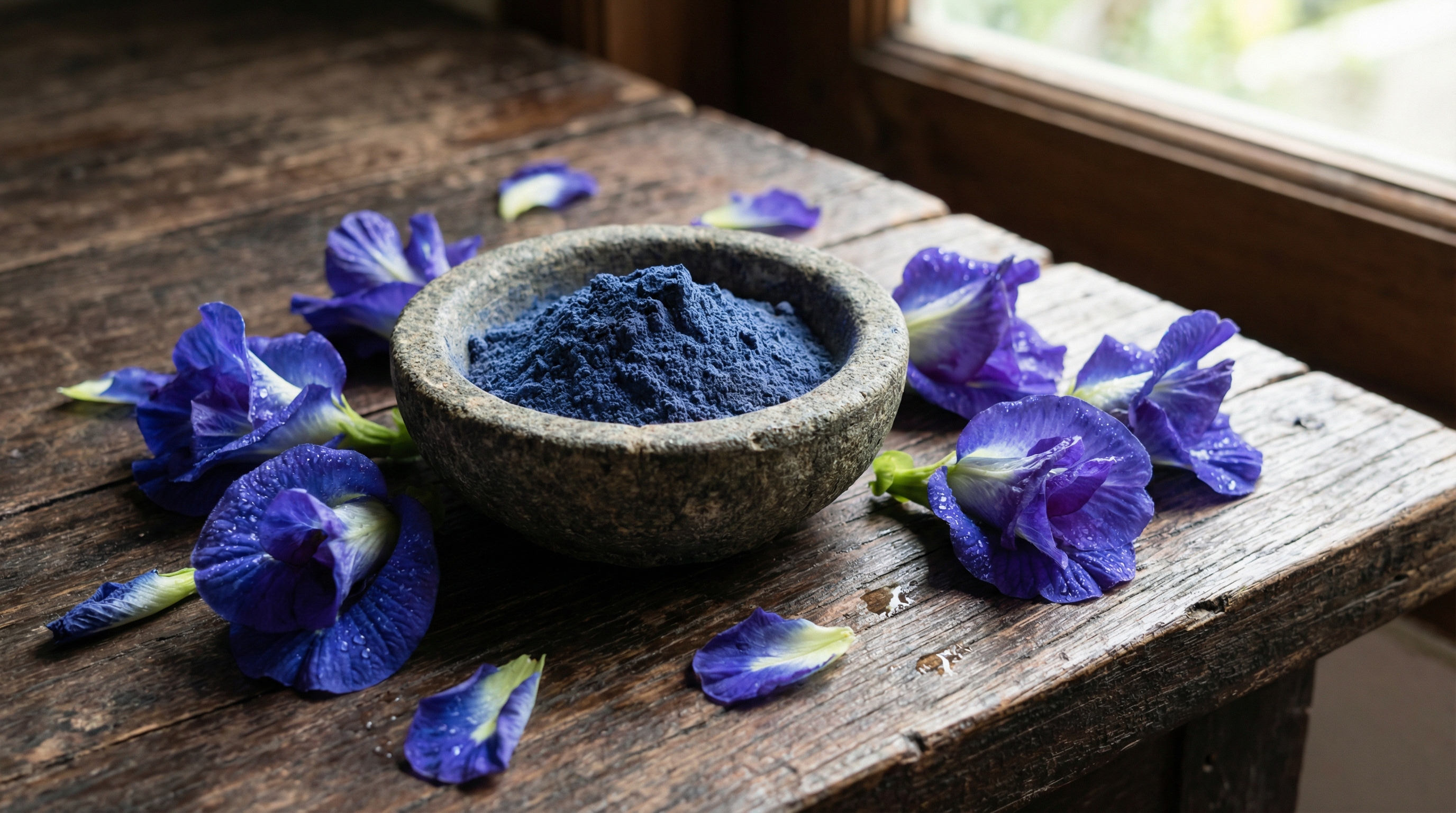
Blue matcha is a 100% natural herbal powder derived from the butterfly pea flower rather than the traditional tea plant. While it shares the “matcha” name due to its fine, stone-ground texture, it is botanically unrelated to green tea. It has been used for centuries in Southeast Asia as a natural food dye and traditional wellness tonic.
Why the “Matcha” name?
The term is used as a culinary descriptor for the processing method. Unlike whole-leaf herbal teas, this flower is pulverized into a micro-powder that allows for complete incorporation into liquids. This makes it as versatile as premium grade matcha for professional drink preparation.
Key Takeaway
Attribute | Description |
|---|---|
Origin | Southeast Asia ( Clitoria ternatea ) |
Form | Finely ground botanical powder |
Primary Use | Natural coloring and wellness lattes |
How is blue matcha produced?
The production of blue matcha involves hand-picking vibrant flowers, drying them at low temperatures, and milling them into a fine powder. This delicate process ensures that the heat-sensitive antioxidants and the striking cobalt pigment remain intact. Quality manufacturers focus on maintaining a consistent mesh size to ensure the powder dissolves smoothly in commercial applications.
Traditional Milling Methods
Much like culinary grade matcha , the best blue powders are processed using stone mills. This slow-grinding technique prevents the oxidation of the delicate floral petals.
Think about it:
- Hand-harvesting preserves the integrity of the petals.
- Dehydration must be precise to lock in the blue hue.
- Fine milling ensures a clump-free texture for baristas.
Key Takeaway
Step | Significance |
|---|---|
Harvesting | Peak-bloom picking for maximum pigment |
Milling | Stone grinding for professional solubility |
Quality Control | Ensuring zero synthetic additives |
Blue matcha vs green matcha: what’s the difference?
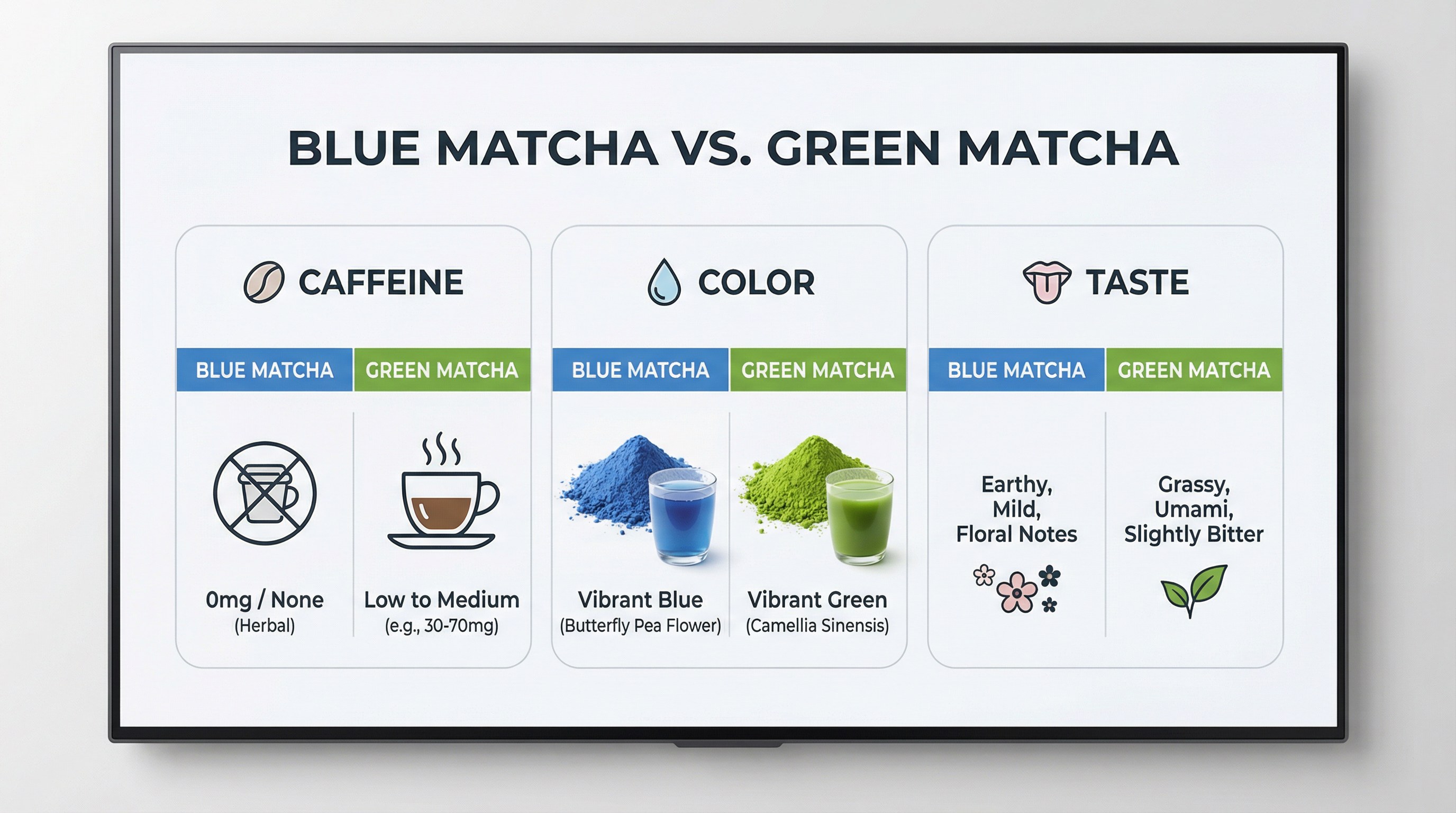
The primary difference lies in the plant source: green matcha comes from Camellia sinensis tea leaves, while blue matcha comes from flowers. This distinction results in completely different chemical profiles, flavors, and functional benefits. While green matcha provides energy through caffeine, the blue variety offers a calming, herbal experience.
A Comparison of Properties
Green matcha is known for its umami flavor and high chlorophyll content. In contrast, blue matcha has a mild, earthy taste that serves as a neutral base for complex beverage recipes. For a traditional tea experience, many cafes continue to rely on ceremonial grade matcha .
The big picture:
- Green = Energy and Focus.
- Blue = Relaxation and Visuals.
Key Takeaway
Feature | Blue Matcha | Green Matcha |
|---|---|---|
Caffeine | 0mg (Caffeine-free) | 30-70mg per serving |
Main Antioxidant | Anthocyanins | Catechins (EGCG) |
Taste | Floral/Woody | Umami/Grassy |
What are the primary health benefits of blue matcha?
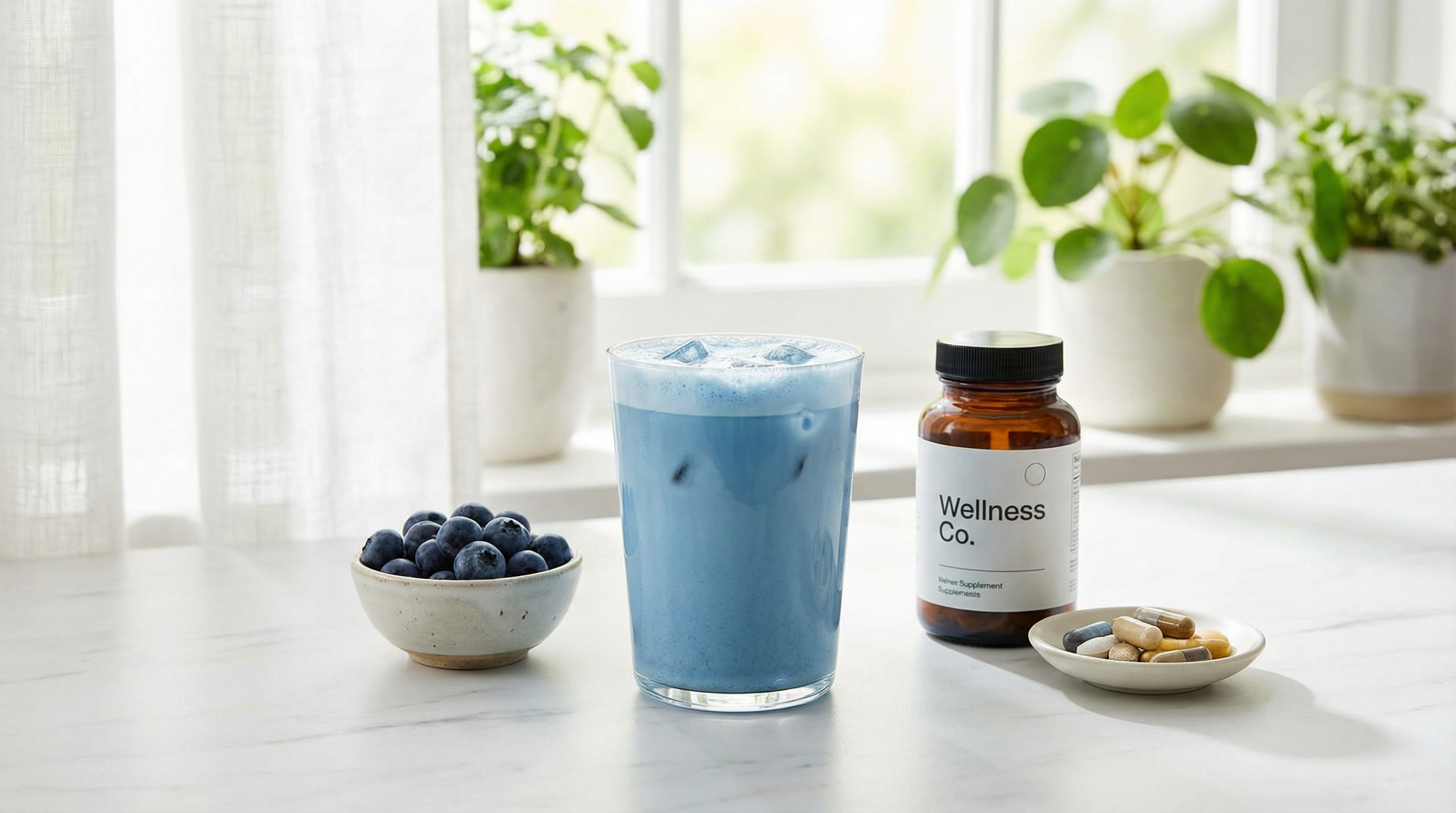
The most significant health benefit of blue matcha is its high concentration of anthocyanins, the same potent antioxidants found in blueberries. These compounds are widely studied for their ability to reduce oxidative stress and support healthy aging. For B2B buyers, these wellness claims are a major selling point for health-conscious consumers.
Specific Wellness Advantages
Beyond general antioxidant support, butterfly pea powder is traditionally used to promote skin elasticity and hair health. It is also linked to improved cognitive function and reduced eye strain from digital screen use.
Check this out:
- Supports collagen production for skin health.
- Helps combat inflammation throughout the body.
- Promotes a sense of calm without drowsiness.
Key Takeaway
Benefit | Targeted Area |
|---|---|
Antioxidants | Cellular protection and anti-aging |
No Caffeine | Anxiety reduction and better sleep |
Anthocyanins | Eye health and skin vitality |
Is blue matcha naturally caffeine-free?

Yes, blue matcha is 100% naturally caffeine-free because it is an herbal infusion rather than a true tea. This makes it the perfect alternative for customers who are sensitive to stimulants or those looking for a relaxing evening beverage. Cafes can market it as a “moon milk” or “sleepy latte” to increase late-day sales.
The Ideal Nighttime Ritual
Unlike traditional tea powders, blue matcha does not interfere with sleep cycles or cause jitters. It provides the same creamy, indulgent mouthfeel of a latte without the metabolic spike.
The best part:
- Safe for children and pregnant women.
- Perfect for the “sober curious” movement.
- Ideal for evening menu expansions.
Key Takeaway
Characteristic | Detail |
|---|---|
Caffeine Content | 0% |
Best Time to Drink | Evening or anytime |
Consumer Fit | Caffeine-sensitive individuals |
Why does blue matcha change color with lemon?
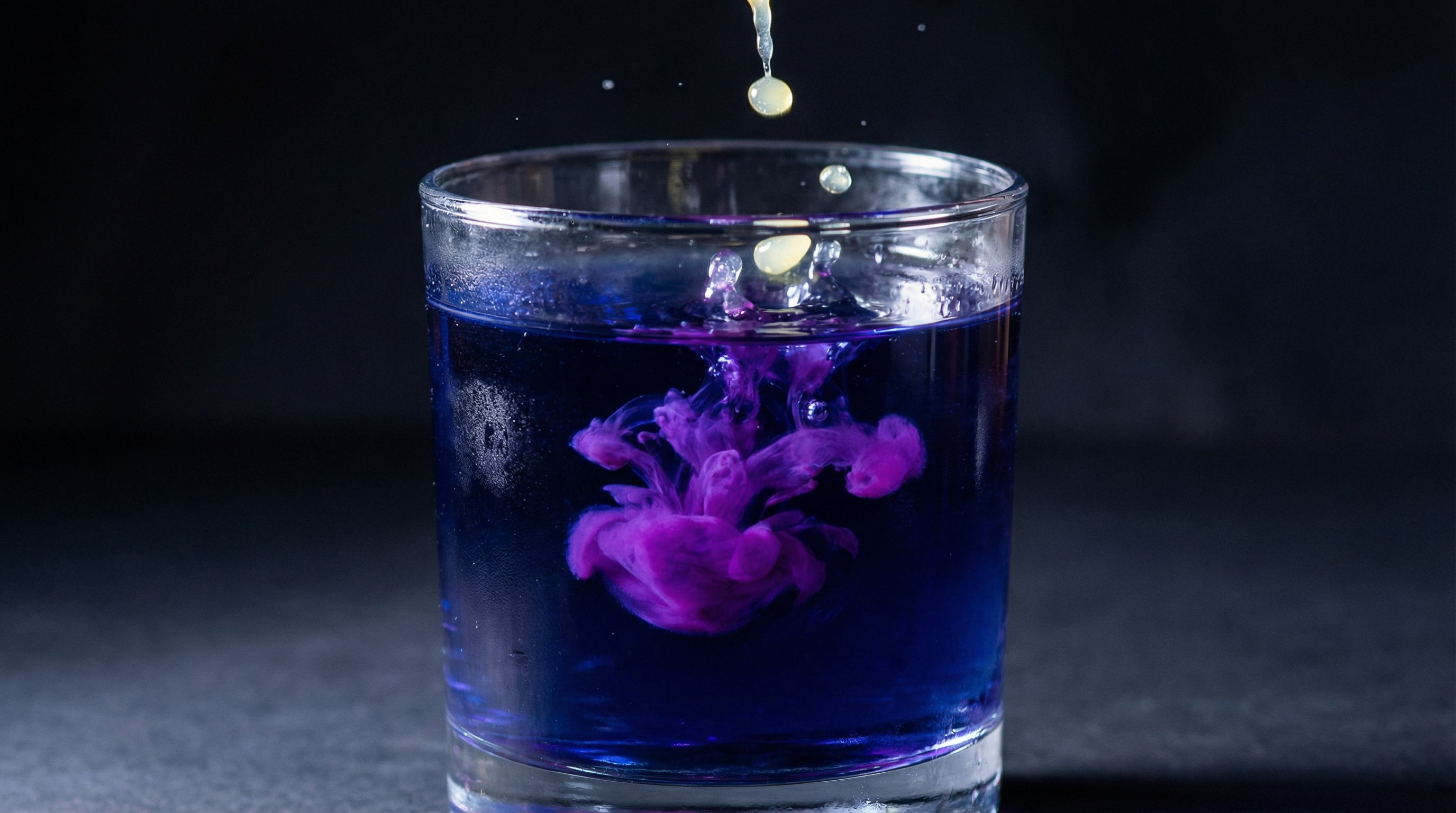
The color-changing property of blue matcha is caused by its sensitivity to pH levels. When an acidic ingredient like lemon juice or lime is added, the anthocyanins in the powder react chemically, shifting the color from deep blue to vibrant purple or magenta. This “magic” effect is a massive driver for viral social media content in the food industry.
The Science of Anthocyanins
Anthocyanins act as natural pH indicators, changing their molecular structure based on the acidity of the surrounding liquid. This reaction is entirely natural and does not require any synthetic additives or chemicals.
Here’s the kicker:
- Add lemon: The blue turns to purple.
- Add hibiscus: The purple turns to red.
- Neutral water: Stays a deep, royal blue.
Key Takeaway
Input | Resulting Color |
|---|---|
Neutral (Water/Milk) | Deep Cobalt Blue |
Acid (Lemon/Citric) | Vibrant Purple/Pink |
Alkaline | Teal or Green |
How can you use blue matcha in culinary creations?
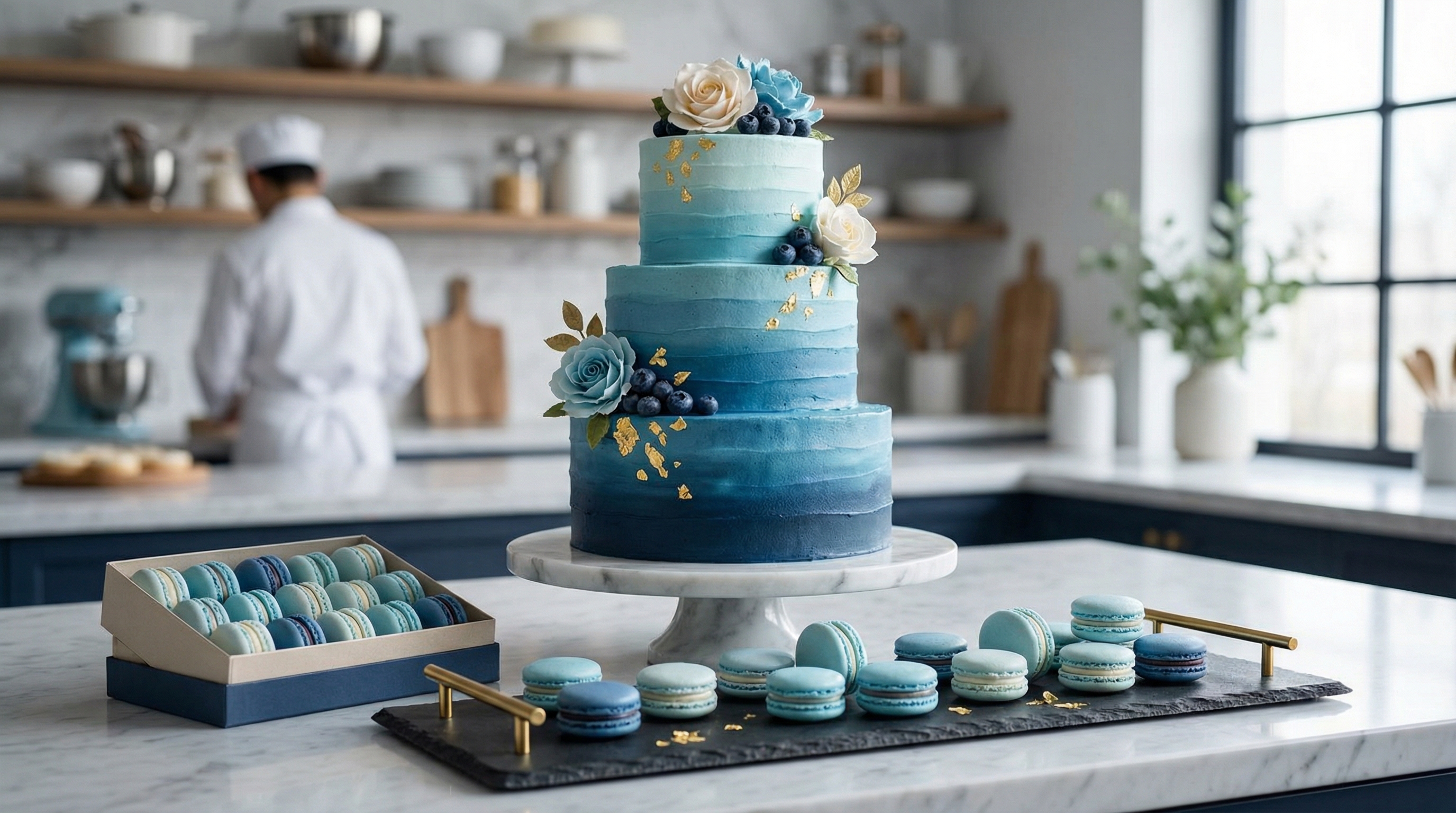
Blue matcha is exceptionally versatile in professional kitchens, used for everything from vibrant blue macarons to ombre-style cakes. Because it is heat-stable and has a neutral flavor, it acts as a high-performance natural food coloring for bakeries. Many businesses choose private label matcha options to package this powder for their own retail lines.
Beyond the Beverage
Chefs use blue matcha to color rice, pasta, and even artisanal breads without introducing a “grassy” taste. It pairs beautifully with coconut, vanilla, and citrus flavors, allowing for creative dessert profiles.
Think about these uses:
- Natural blue frosting for wedding cakes.
- Vibrant blue smoothie bowls.
- Eye-catching colorful doughs for pastry.
Key Takeaway
Application | Benefit |
|---|---|
Baking | Heat-stable natural blue dye |
Confectionery | Clean-label coloring for chocolates |
Savory | Decorative coloring for rice and pasta |
What is the secret to a perfect blue matcha latte?
The secret to a perfect blue matcha latte is using a high-quality, finely sieved powder and a professional matcha whisk set to ensure a smooth suspension. Because blue matcha is more soluble than green tea, it creates a velvety texture that layers beautifully with plant-based milks like coconut or oat.
Mastering the Layered Look
To achieve the iconic “ocean” look, baristas often pour the blue matcha over cold milk and ice. The difference in density allows the blue liquid to sit atop the white milk, creating a stunning visual contrast.
Barista tips:
- Always sift the powder to remove lumps.
- Use a small amount of warm water for the initial paste.
- Pair with coconut milk for the most vibrant contrast.
Key Takeaway
Element | Recommendation |
|---|---|
Mixing Tool | Bamboo whisk or electric frother |
Milk Choice | Coconut or Oat (for brightness) |
Technique | Sifting is mandatory for smoothness |
How should you store blue matcha to keep it fresh?
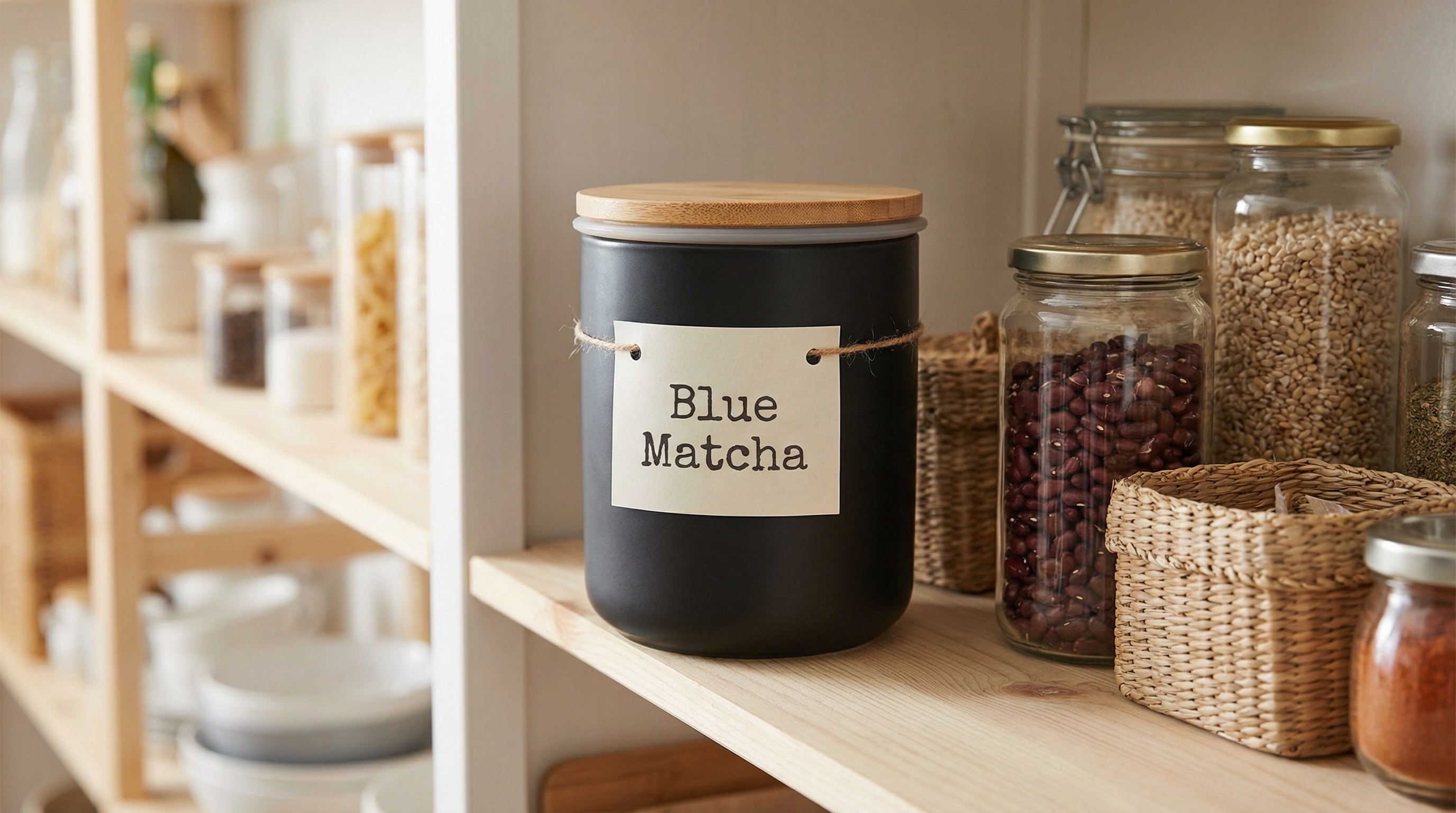
To maintain the vibrant blue color and antioxidant potency, blue matcha should be stored in an airtight, opaque container away from direct sunlight. Exposure to UV rays and moisture can cause the natural pigments to fade over time. For bulk storage in a commercial kitchen, cool and dry environments are essential for maximizing shelf life.
Protecting the Pigment
Anthocyanins are sensitive to light degradation. Using ceramic jars or tin canisters ensures that the powder remains as vivid as the day it was ground.
Storage checklist:
- Keep away from the heat of espresso machines.
- Ensure the lid is sealed tightly after every use.
- Avoid clear glass jars on display shelves.
Key Takeaway
Factor | Ideal Condition |
|---|---|
Light | 0% (Opaque container) |
Temperature | Cool and consistent |
Air | Airtight seal |
Is blue matcha different from butterfly pea powder?
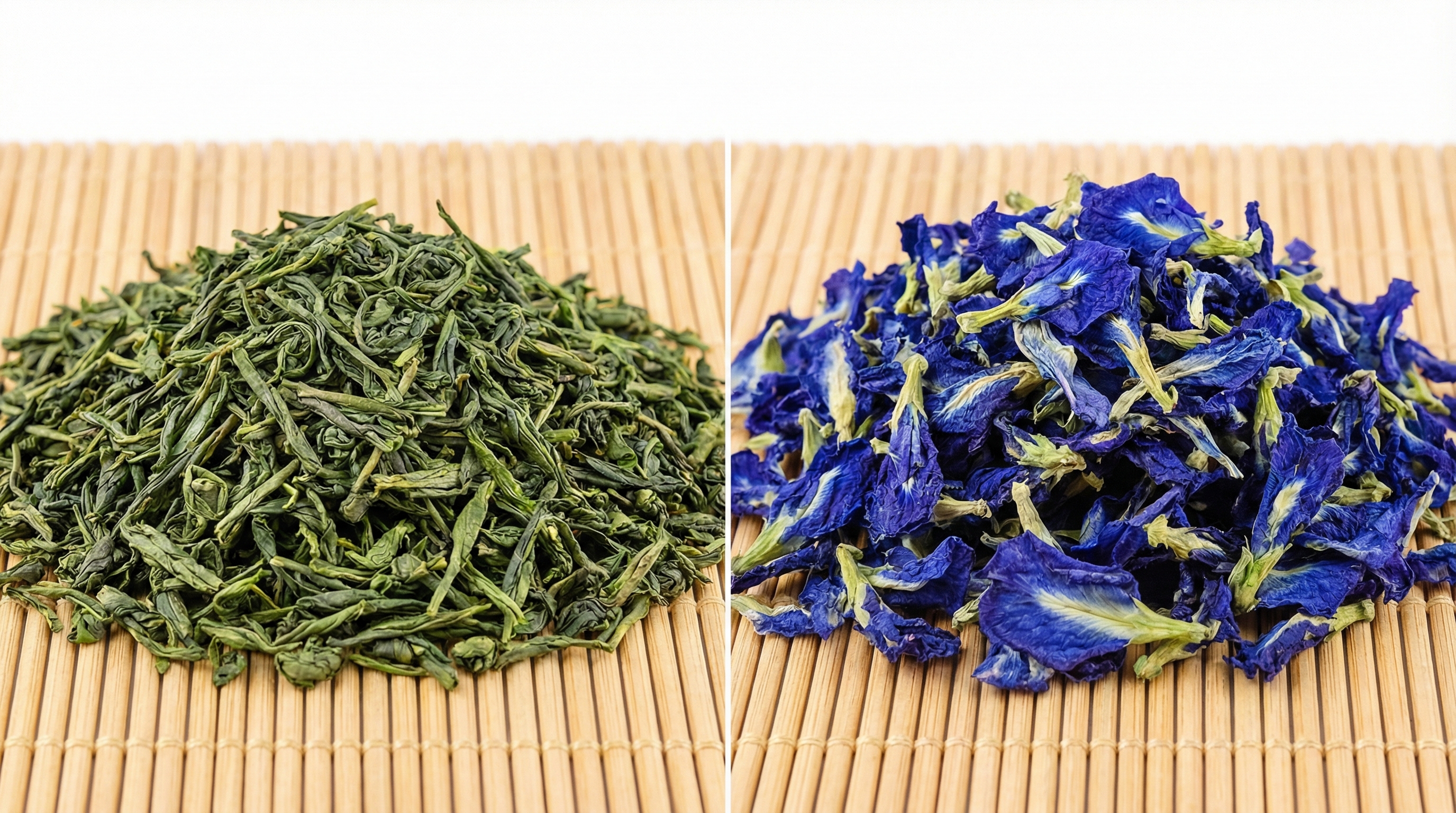
Technically, blue matcha and butterfly pea powder are the same product, but “matcha” usually denotes a higher grade of milling. In the B2B world, products labeled as blue matcha are often ground to a much finer mesh size, making them suitable for lattes and delicate pastries. Lower-grade powders may contain more fibrous material and are better suited for simple tea infusions.
Understanding the Grades
When sourcing for a professional menu, it is important to verify the solubility and color intensity of the powder. High-grade blue matcha will leave no grit and provide a deep, consistent cobalt hue.
Don’t forget:
- “Matcha” grade = Ultrafine and latte-ready.
- “Flower” grade = Grittier, best for steeping.
- Always check for organic certifications.
Key Takeaway
Term | Professional Context |
|---|---|
Blue Matcha | Premium, fine-milled culinary powder |
Butterfly Pea Powder | General term, can vary in quality |
Grind Size | The primary differentiator in texture |
Conclusion
Blue matcha is more than just a passing trend; it is a functional, natural, and visually stunning ingredient that solves the problem of menu fatigue. Whether you are looking to boost your cafe’s social media presence or offer a healthy, caffeine-free alternative to traditional tea, this botanical powder delivers exceptional value. To elevate your beverage program with premium organic powders, contact us today and discover how our wholesale solutions can transform your business.
FAQ
Q: Does blue matcha taste like green tea?A: No, it has a much milder, earthy, and slightly floral flavor. It lacks the bitterness and umami of green matcha, making it easier to pair with various sweeteners.
Q: Can I use blue matcha for latte art?A: Yes, it behaves similarly to green matcha when whisked into a concentrated shot. However, its lower density means you may need to adjust your pouring technique slightly.
Q: Is blue matcha safe for everyone?A: It is generally considered safe as a natural food. However, in traditional medicine, it is sometimes avoided during pregnancy, so consumers should consult a doctor if concerned.
Q: Why is my blue matcha turning grey?A: This usually happens due to light exposure or using water with a very high mineral content. Ensure you store it in an opaque jar and use filtered water.
Q: Is blue matcha better for you than blue spirulina?A: Both offer antioxidants, but blue matcha (butterfly pea) has a neutral floral taste, whereas blue spirulina can sometimes have a faint “oceanic” or fishy scent.