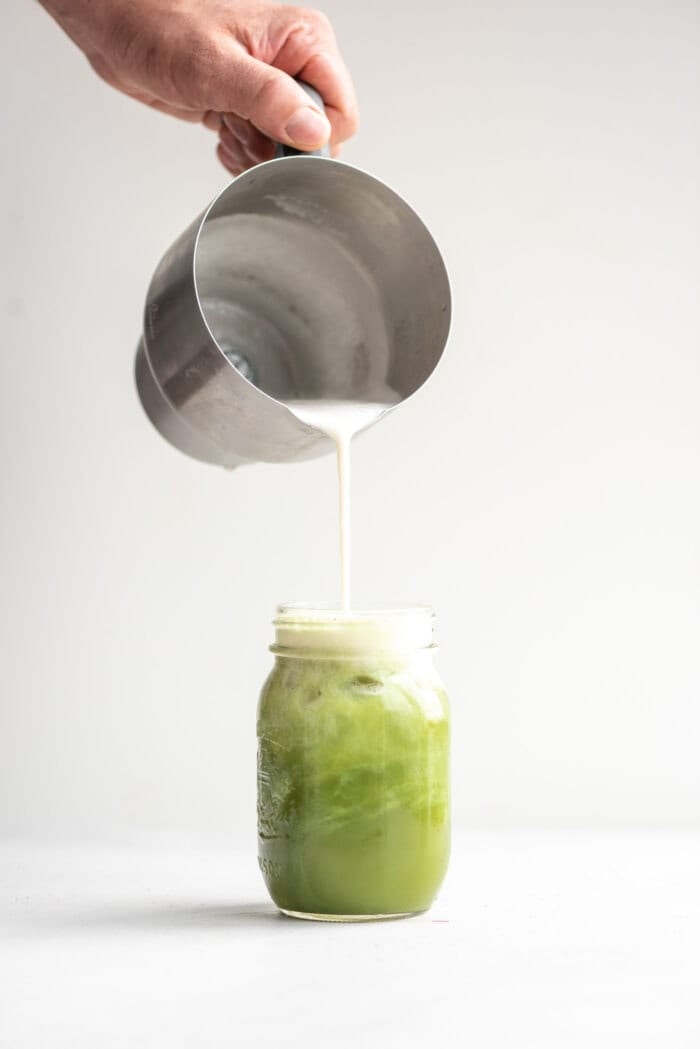
How to Make Matcha Latte?

The matcha latte is more than a vibrant green alternative to coffee; it is a sophisticated marriage of ancient Japanese tradition and modern beverage technology. While its roots lie in the 12th-century Zen Buddhist monasteries, where powdered tea was consumed to facilitate “alert calmness” during meditation, its contemporary evolution has transformed it into a global cafe staple.
The transition from a purely ceremonial beverage to a milk-based “latte” represents a fascinating shift in palate and preparation. Historically, matcha was prepared exclusively with water (Usucha or Koicha). Today, the addition of steamed milk or plant-based alternatives introduces a new dimension of creamy texture and sweetness that balances the natural vegetal notes of the tea. Understanding the science behind this balance—the interaction between the amino acid L-theanine and the polyphenols (catechins)—is essential for any barista or enthusiast aiming for mastery. As we explore the journey from the shaded tea fields of Japan and China to the modern espresso bar, we uncover a discipline that rewards precision, patience, and high-quality sourcing.

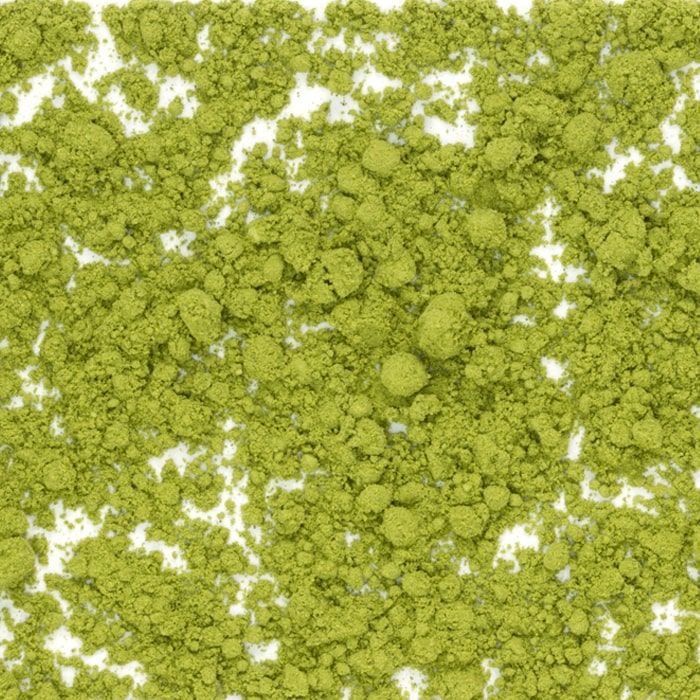
The foundation of a world-class latte is the quality of its components. Unlike coffee, where the bean is discarded after extraction, matcha is a suspension. You are consuming the entire leaf, which makes the purity and origin of the powder paramount. To understand the complexity of the product, one must first ask,  what is matcha powder ? It is a stone-ground green tea produced from Tencha leaves that have been shaded for three to four weeks before harvest. This shading process forces the plant to overproduce chlorophyll and L-theanine, resulting in the characteristic deep green color and “umami” flavor profile.
Beyond the tea itself, the water and milk choices are critical. High mineral content in water (hard water) can bind with the tea’s antioxidants, dulling the color and creating a metallic aftertaste. Filtered water with a neutral pH is the industry standard.

Ingredient Breakdown and Professional Alternatives

Ingredient
Role
Selection Criteria
Professional Alternative
Matcha Powder
Core Flavor & Color
Vibrant green, stone-ground, fine texture.
Organic Ceremonial or High-End Culinary.
Liquid Base
Mouthfeel & Dilution
Neutral pH water; High-fat milk for creaminess.
Oat milk (for superior froth and sweetness).
Sweetener
Balancing Bitterness
Liquid state for easy integration.
Agave, Simple Syrup, or Honey.
Emulsifier
Texture (Optional)
Prevents separation in commercial settings.
Sunflower lecithin (rarely needed if whisked correctly).

The Matcha Toolkit – Traditional vs. Modern
Preparation methodology is where art meets physics. The goal of whisking matcha is to create a colloidal suspension—where the tiny particles of tea leaf are evenly distributed throughout the liquid. This requires tools capable of breaking down surface tension and introducing air to create a “micro-foam.”
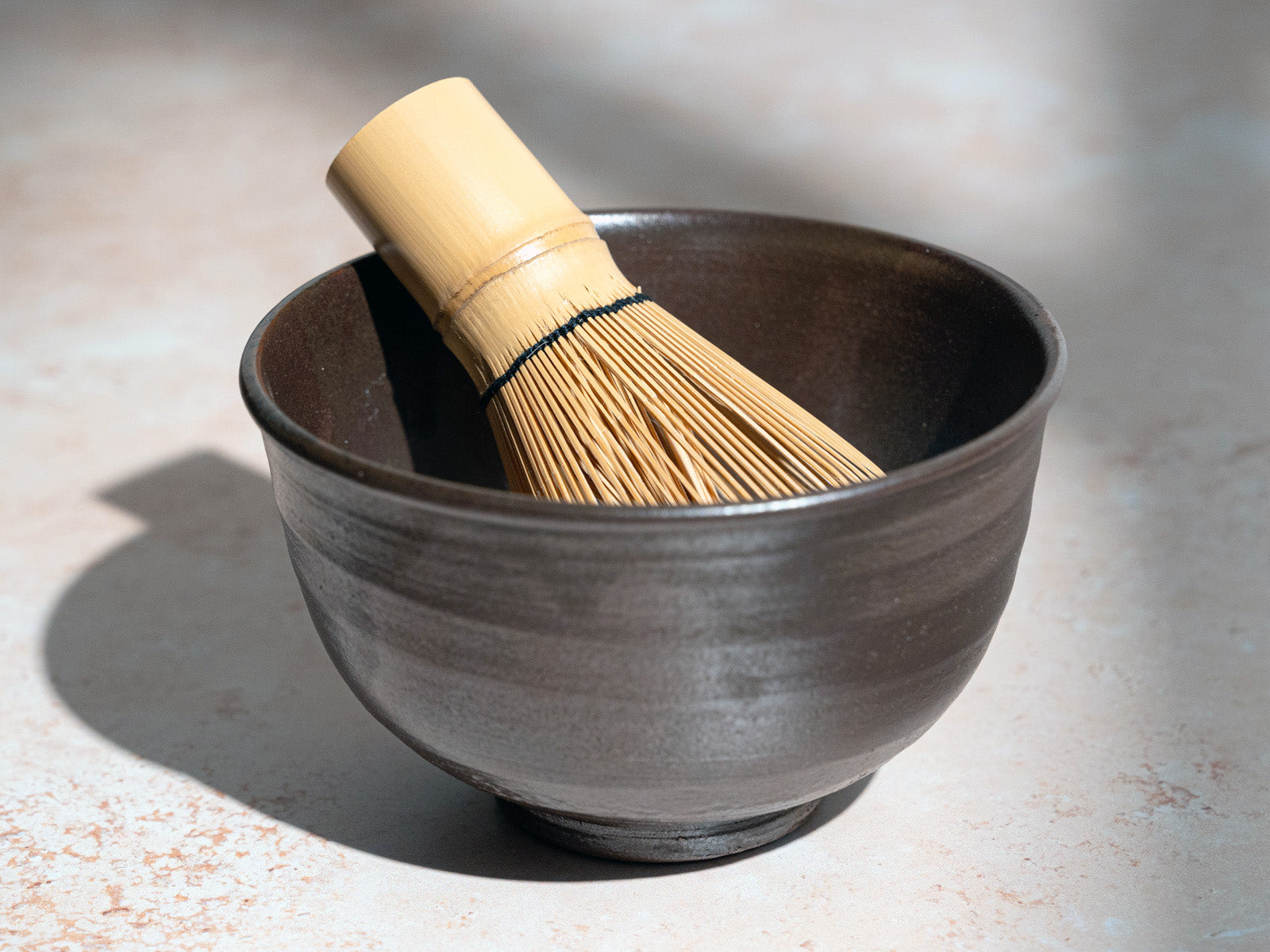
The traditional Chasen (bamboo whisk), carved from a single piece of bamboo, remains the gold standard. Its 80 to 120 fine tines are flexible and designed to maximize agitation without scratching the bowl. Conversely, the modern electric frother offers speed and convenience, though it often fails to reach the same level of silky suspension as the bamboo counterpart. For those looking to scale, specialized matcha espresso machines and high-speed blenders are now entering the commercial market.

Tool Comparison: Precision and Outcome

Tool
Mechanism
Best For
Pros/Cons
Bamboo Whisk (Chasen)
Manual high-frequency agitation.
Ceremonial preparation & home ritual.
Pro:
Best froth.
Con:
High maintenance, fragile.
Electric Hand Frother
High-speed motorized rotation.
Quick morning lattes; Iced lattes.
Pro:
Very fast.
Con:
Can create “soapy” large bubbles.
Fine Mesh Sifter
Particle separation.
All preparations.
Pro:
Essential for removing clumps.
Con:
Extra step.
Chawan (Matcha Bowl)
Wide surface area for whisking.
Traditional hot lattes.
Pro:
Allows for full arm movement.
Con:
Retains heat too well for iced.

The Step-by-Step Masterclass

Achieving the perfect latte requires a deep understanding of temperature and mechanical force. If the water is too hot, you scald the tea, releasing excessive tannins and resulting in a harsh, bitter drink. If the water is too cold, the  ceremonial grade matcha  will not properly “bloom,” and the flavor will remain flat.
  1. Sifting (The Essential Step): Matcha is electrostatic; the fine particles naturally clump together. Use a fine-mesh sifter to push the powder into your bowl. Without this, you will have “flavor bombs” of dry powder in your finished drink.
  1. The “Slurry” Phase: Add a small amount of water (roughly 2 oz) at exactly 175°F (80°C). Use the bamboo whisk to create a thick, smooth paste. This ensures every particle is hydrated before you begin the vigorous whisking.
  1. The Whisking Technique: Add another 1-2 oz of water. Using your wrist (not your arm), whisk in a “W” or “M” motion—never circular. This geometry creates the most turbulence, breaking up clumps and aerating the tea.
  1. The Science of Temperature: At 175°F, L-theanine (sweetness/umami) is preserved while the extraction of catechins (bitterness) is controlled. Boiling water (212°F) destroys the delicate volatile oils that provide the tea’s floral aroma.
  1. Integrating the Milk: Pour your prepared matcha over your steamed milk (for a hot latte) or cold milk and ice (for an iced version). If using dairy, aim for a milk temperature of 140°F–150°F; higher temperatures can introduce “cooked” milk flavors that overwhelm the tea.

Temperature & Texture: The Hot vs. Iced Debate
The experience of a matcha latte changes dramatically based on its thermal state. A hot latte is an aromatic experience; the steam carries the grassy, nutty scents of the tea to the nose, enhancing the perception of flavor. The heat also helps to keep the matcha in suspension longer by increasing the kinetic energy of the water molecules.
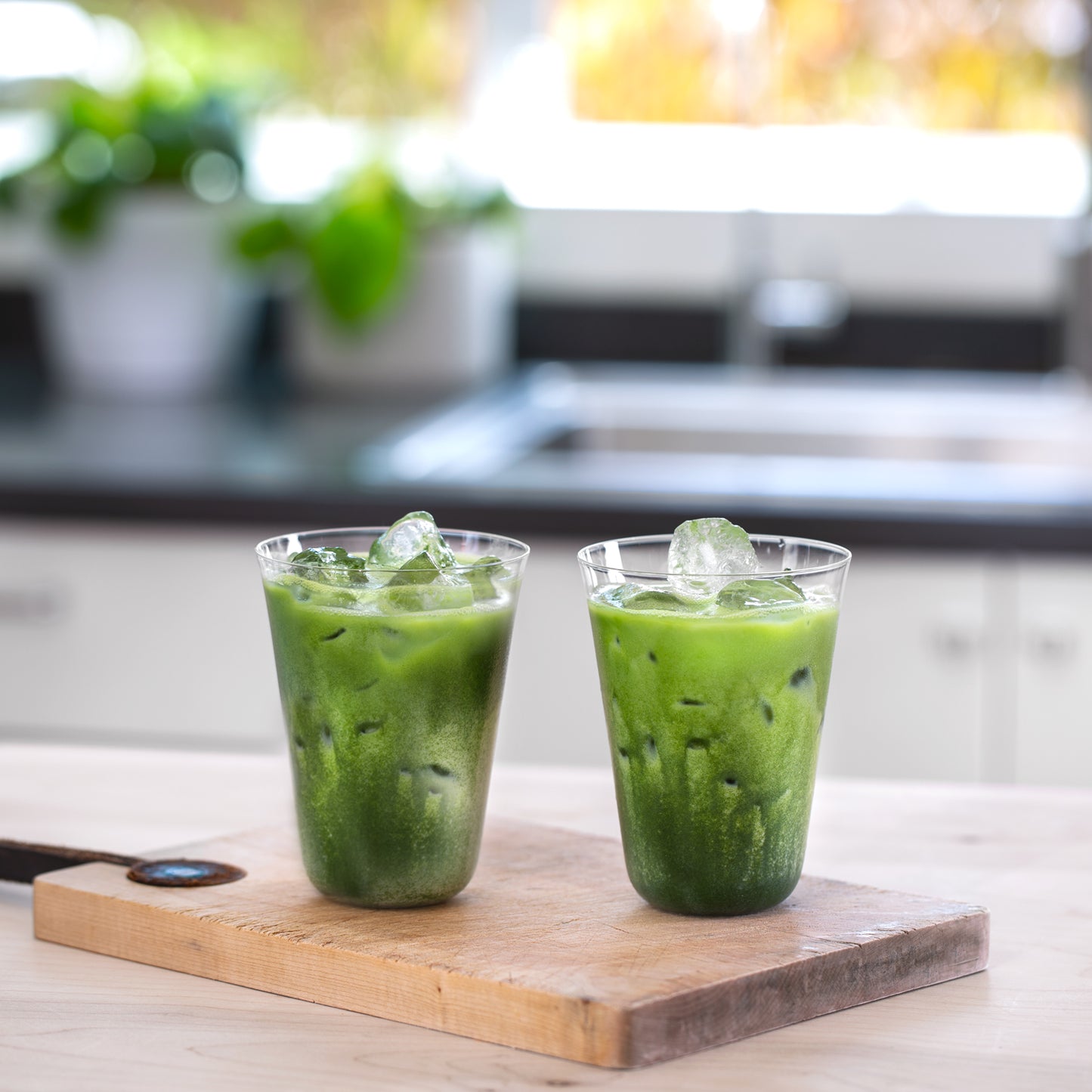
An iced matcha latte, however, is a refreshing, textural experience. The primary challenge with iced drinks is “clumping” and “layering.” Because cold liquids are less effective at dissolving (or suspending) solids, the matcha must be prepared as a hot concentrate first and then poured over ice and cold milk. This “flash-chilling” method preserves the vibrant green color. In recent years, “layered” iced lattes—where the green tea sits atop a white bed of milk—have become an aesthetic sensation on social media, though they should be stirred before drinking to ensure flavor uniformity.

Grading Matcha: Ceremonial, Premium, and Culinary

Navigating the market requires a keen eye for grading. There is no international regulatory body for the term “ceremonial,” which makes it vital for buyers to understand the  different grades of organic matcha  through sensory evaluation.
  • Ceremonial Grade: Harvested during the first flush (spring). These are the youngest, most tender leaves. The flavor is delicate, sweet, and lack any astringency. It is meant to be drunk with water, but it makes a luxurious, light latte.
  • Premium Grade: A versatile middle ground. Often a blend of first and second harvests. It has enough “bite” to stand up to milk while remaining vibrant green.
  • Culinary Grade: Harvested later in the year. The leaves are older and contain more catechins (bitterness) and less L-theanine. While not suitable for drinking plain, its robust flavor is often preferred for baking or lattes with heavy sweeteners and flavors.

Comparison Table: Grading at a Glance

Feature
Ceremonial
Premium
Culinary
Harvest Season
1st Flush (Spring)
1st & 2nd Flush
Late Summer/Autumn
Color
Electric, “Neon” Green
Bright Green
Yellowish/Dull Green
Flavor Profile
Umami, Sweet, Floral
Balanced, Vegetal
Bold, Astringent, Nutty
Texture
Ultra-fine (like cornstarch)
Fine
Slightly Gritty
Best Use
Plain Tea / High-end Latte
Standard Cafe Latte
Baking / Smoothies
To further investigate the commercial landscape, professionals often review  wholesale matcha tea grades  to balance cost with the desired flavor profile for their specific clientele.

Troubleshooting 101: Solving Bitter and Clumpy Lattes

Even with high-quality ingredients, errors in technique can lead to a subpar beverage. The two most common complaints are bitterness and clumps. Bitterness is rarely a “bad batch” of tea; it is usually a symptom of water that is too hot or using a culinary grade when a ceremonial profile was expected.
Clumping is a matter of physics. Because matcha is ground to a particle size of 5-10 microns, the surface area is massive, leading to high moisture absorption from the air. This causes the particles to stick together before they ever touch the water.

Common Mistakes & Professional Fixes

Problem
Likely Cause
Professional Solution
Gritty Texture
No sifting or improper whisking.
Sift powder through a fine mesh; whisk in a “W” motion.
Excessive Bitterness
Water temperature > 185°F.
Use a thermometer; aim for 175°F.
Dull / Brown Color
Oxidation or low-grade matcha.
Store in airtight, opaque containers in a cool place.
Weak Flavor
Too much milk/water ratio.
Increase matcha dose to 2-3 grams per 8oz drink.
Separation (Sediment)
Incomplete suspension.
Drink immediately or whisk with a small amount of fat/sugar.

The Golden Ratio: Precision in Measurement

In a professional setting, consistency is the hallmark of quality. Relying on “scoops” is unreliable because the density of matcha can vary based on how much it has settled. Gram-based measurements are the only way to ensure the same flavor profile every time.
The “Golden Ratio” for a matcha latte is generally 1:30 (matcha to total liquid). However, this can be adjusted based on the potency of the tea and the sweetness of the milk. For a standard 12oz (355ml) latte, a 2.5g to 3g dose of matcha provides a robust flavor that isn’t drowned out by the milk.

Ratios for Standard Cup Sizes

Drink Size
Matcha Powder
Water (for slurry)
Milk (Steamed/Cold)
8 oz (Small)
2.0g
40ml
180ml
12 oz (Medium)
3.0g
60ml
270ml
16 oz (Large)
4.0g
80ml
360ml
Iced (12 oz)
3.5g
50ml
200ml (+ Ice)

Chapter 8: Milk Science: Dairy vs. Plant-Based Pairings
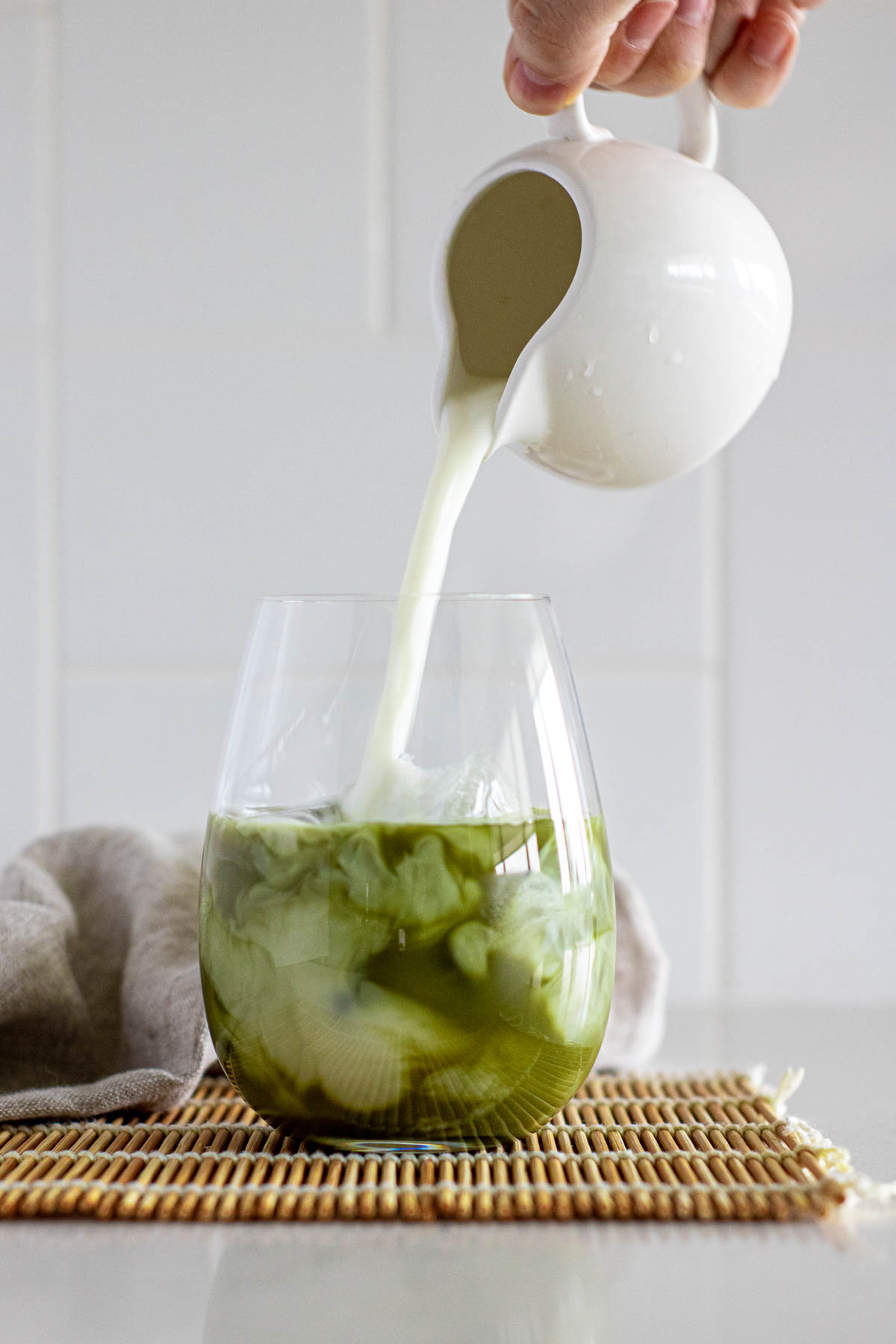
The chemistry of the milk you choose interacts directly with the tea’s polyphenols. Dairy milk contains a protein called casein, which can bind with the catechins in matcha. While this reduces the bioavailability of the antioxidants slightly, it also significantly rounds out the bitterness, making the drink smoother.
However, the modern matcha movement is heavily driven by plant-based alternatives.
  1. Oat Milk: The “Barista’s Choice.” Its natural malt-like sweetness complements the earthy notes of matcha perfectly. It also contains fats that mimic the mouthfeel of whole milk.
  1. Almond Milk: Often too thin, but its nutty undertones can work well if using a “Barista Blend” that includes stabilizers for better foaming.
  1. Coconut Milk: Adds a tropical sweetness but can be polarizing. It works best in iced lattes where the fats can provide a rich, dessert-like quality.
  1. Soy Milk: A classic pairing in Japan. It has a high protein content similar to dairy, allowing for excellent micro-foam, though it can sometimes have a “beany” aftertaste that competes with the tea.

Commercial Success: Standardizing for Cafes and Brands
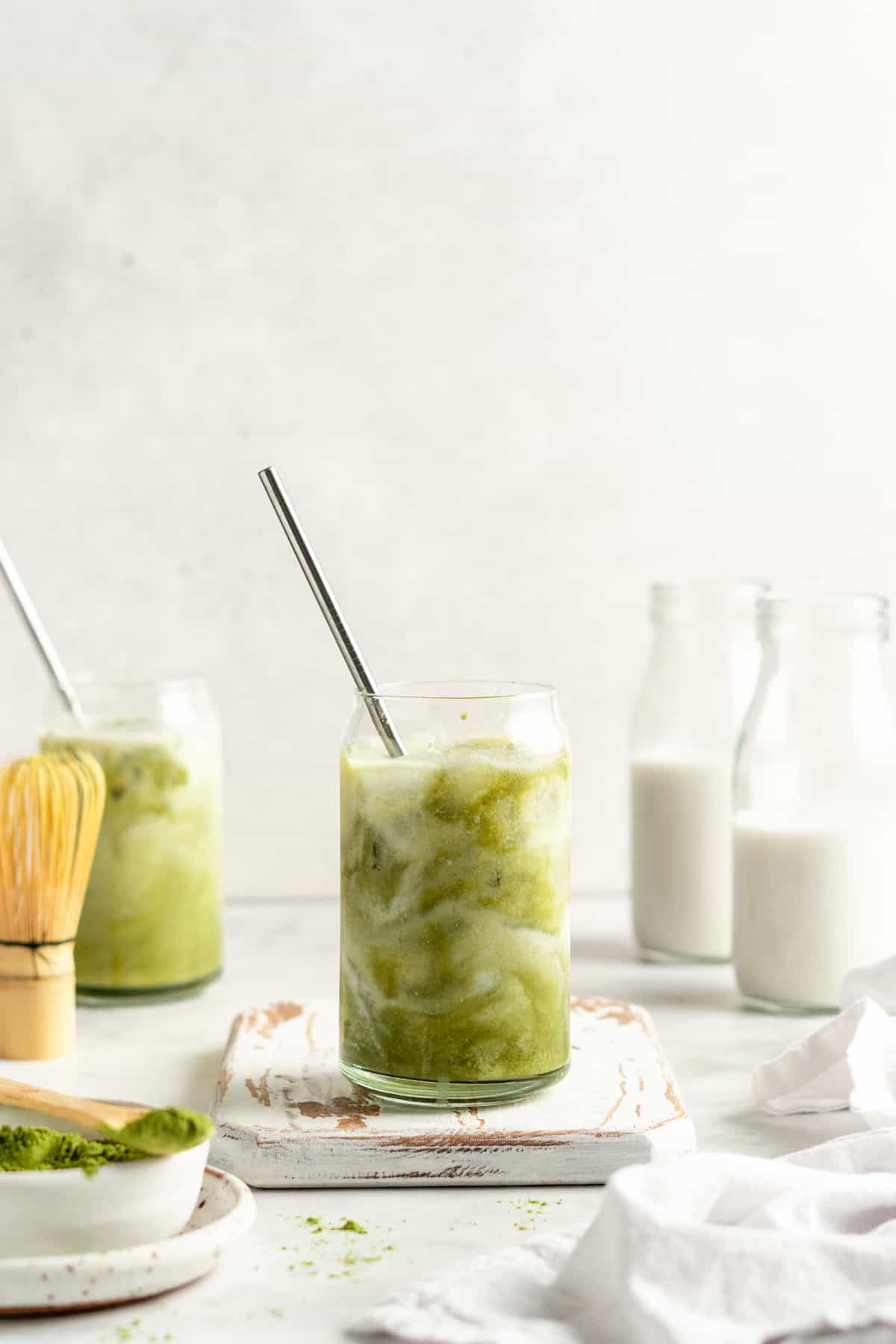
For business owners, the matcha latte is a high-margin item that requires careful operational planning. Unlike espresso, which is automated by a machine, matcha requires manual labor. To maintain speed of service, many cafes utilize a “Matcha Concentrate” or “Pre-Batching” method.
Standardization Strategies:
  • Concentrate Method: Whisking a large batch of matcha with a small amount of water to create a concentrate that lasts for 4-6 hours. This allows the barista to simply pour and stir, reducing drink build time to under 30 seconds.
  • Quality Control: Matcha is highly sensitive to light and oxygen. In a cafe, it should be kept in small, airtight tins and never left in the hopper of a grinder or in an open bowl.
  • Branding: Many successful cafes are now moving toward  private label matcha , allowing them to control the flavor profile and offer a unique product that customers cannot find elsewhere. This also creates an additional revenue stream through retail tin sales.

Sourcing & Bulk Production

The final layer of mastery is understanding the supply chain. While Japan is the traditional home of matcha, the rise of organic standards has seen a surge in high-quality production from specific regions in China. When sourcing in bulk, one must look for certifications (USDA Organic, EU Organic) and lab results for heavy metals and radiation.
Terroir plays a massive role. Soil rich in minerals and areas with significant mist/fog produce a leaf that is naturally sweeter. The grinding process is the final bottleneck: a traditional granite stone mill produces only 30-60 grams of powder per hour. This slow speed prevents the tea from heating up, which would otherwise oxidize the powder and turn it yellow before it even reaches the bag. For large-scale food service, finding a supplier that can guarantee “stone-ground” quality at a wholesale scale is the difference between a mediocre drink and a destination-worthy latte.

Conclusion: Your Journey to Matcha Mastery

Mastering the matcha latte is a journey that balances respect for an ancient craft with the precision of modern science. Whether you are a home enthusiast looking to perfect your morning ritual or a cafe owner aiming to standardize a premium product, the principles remain the same: source with integrity, measure with precision, and respect the temperature.
By understanding the nuances of grading, the physics of whisking, and the chemistry of milk pairings, you transform a simple cup of tea into a sensory experience. As the global demand for functional, health-conscious beverages continues to grow, the matcha latte stands as the pinnacle of that evolution—a drink that offers energy without the crash, and tradition without the rigidity. Embrace the process, and let every whisk bring you closer to the perfect green cup.

FAQs

1. What type of matcha is best for making a matcha latte?
For matcha lattes, premium grade matcha is often the most balanced choice. It offers a bright green color, smooth taste, and enough tea flavor to pair well with milk.

2. Why does my matcha latte taste bitter?
A bitter matcha latte is usually caused by water that is too hot, low-grade matcha, or too much powder compared with the amount of milk and water used.

3. How can I make my matcha latte smooth without clumps?
Sift the matcha first, mix it with a small amount of warm water into a paste, and whisk it in a fast “W” motion before adding milk.

4. Which milk works best with matcha latte?
Oat milk is one of the best options for matcha latte because it has a smooth texture, mild sweetness, and good foaming performance for both hot and iced drinks.

5. Can culinary grade matcha be used for lattes?
Yes. Culinary grade matcha can be used for lattes, especially in flavored or sweetened drinks. For a smoother and brighter result, many brands choose premium grade matcha instead.

Update cookies preferences
Scroll to Top

Get a Quick Quote!

x