
Identifying authentic matcha in a saturated global market is increasingly difficult for business owners and consumers alike. Misinformation abounds, often suggesting that geographical location alone dictates quality, while ignoring the crucial role of modernization and processing standards. The reality is that without specific technological interventions, “matcha” is simply green tea powder. By understanding the specific technological variances in shading, steaming, and grinding, you can source premium matcha regardless of its geographical borders.
The technological gap is closing. Modern manufacturing lines in China are now replicating traditional Japanese methods at scale to ensure consistency and safety. This guide explores the Key Differences Between Chinese and Japanese Matcha Production Technology, highlighting how adopted methods and new innovations have revolutionized the industry. Companies like Riching have notably pivoted to these advanced production lines to bridge the historical divide.
1. Did True Matcha Technology Actually Originate in Japan?
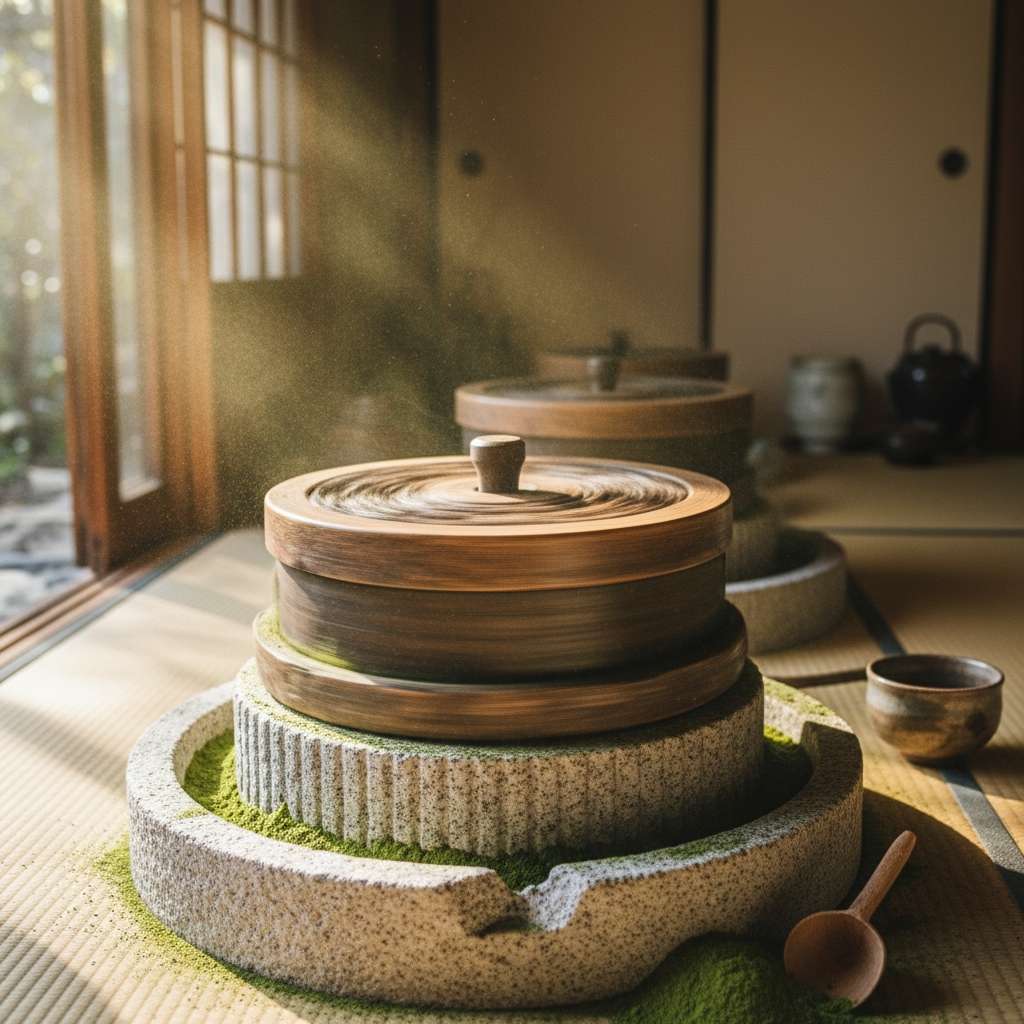
While Japan perfected the Tea Ceremony (Chanoyu), the fundamental technology of processing powdered tea originated in China during the Tang and Song Dynasties. The Key Differences Between Chinese and Japanese Matcha Production Technology began to diverge historically when China shifted its focus to loose-leaf brewing during the Ming Dynasty, while Japan preserved and refined the steaming and powdering methods introduced by monks like Eisai.
However, we are witnessing a “Return of the King” scenario. Modern Chinese producers like Riching are revitalizing these ancient roots by importing state-of-the-art Japanese machinery. This technological transfer allows for the production of matcha that respects historical standards while utilizing modern industrial capabilities.
How has historical processing evolved over time?
The core concept of matcha—steaming fresh leaves and grinding them into a fine powder—has remained unchanged for centuries. However, the execution has shifted from artisanal, manual tools to industrial precision. Where ancient monks used hand-turned stone mills to produce mere grams of tea, modern facilities utilize automated lines that monitor temperature and humidity in real-time.
But here is the interesting part regarding the technological lineage:
- Tang Dynasty: Introduced the steaming and compressing of tea.
- Song Dynasty: Popularized the whipping of powdered tea in bowls.
- Modern Era: Reintroduction of precision temperature control and automated shading.
Understanding the lineage of these technologies ensures you appreciate the modern renaissance of matcha production. It proves that technology, not just soil, drives the final product quality.
Feature | Ancient Chinese Origin | Modern Japanese Standard | Modern Riching Approach | |
|---|---|---|---|---|
Core Method | Steam & Grind | Steam & Stone Grind | Steam & Ball Mill/Air Grind | |
Focus | Medicine/Ritual | Ceremony/Flavor | Consistency/Scale | |
Technology | Manual Tools | Artisan Machinery | Automated Lines |
2. How Does Shading Technology Impact Chlorophyll Levels?
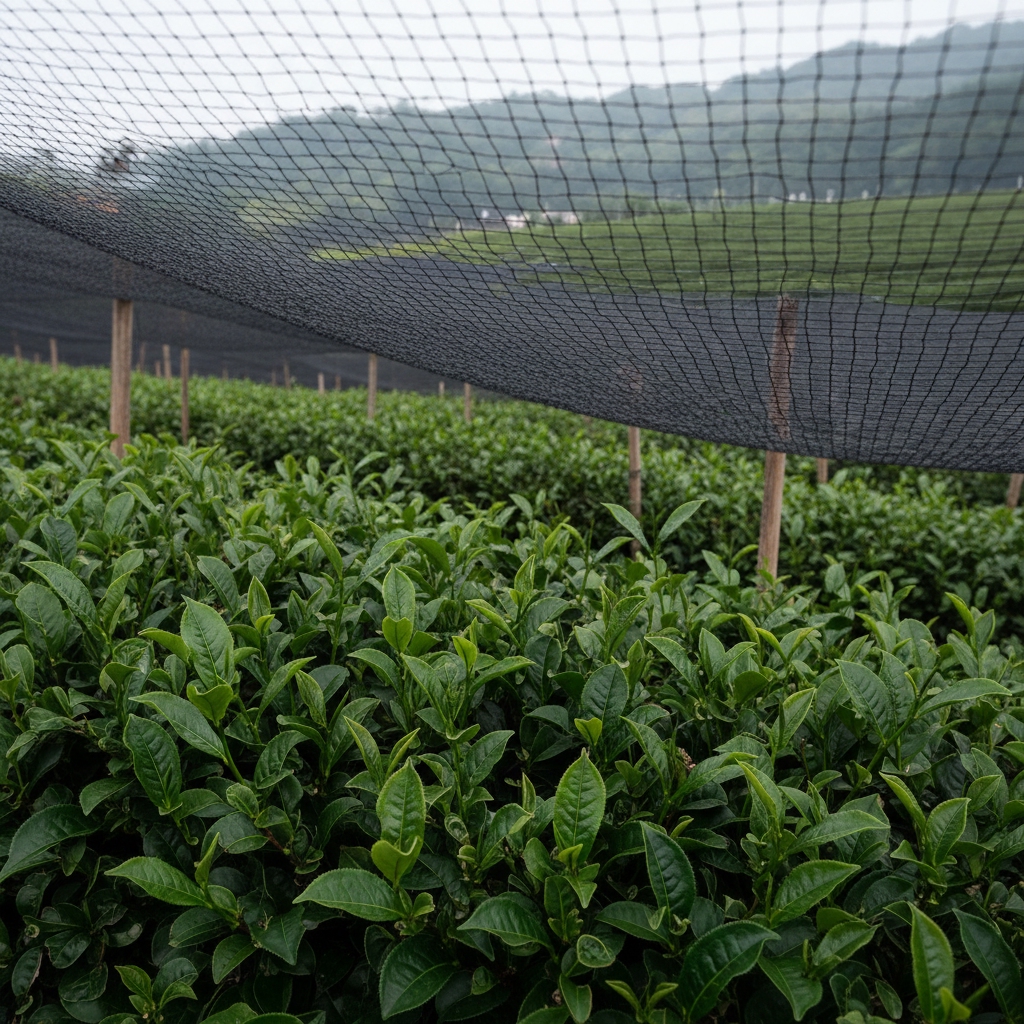
Light deprivation technology is the non-negotiable step that defines true matcha. Understanding the Key Differences Between Chinese and Japanese Matcha Production Technology starts with how farmers manipulate sunlight to boost chlorophyll and L-theanine levels. Without this stress-induction phase, the tea leaves retain high tannins, resulting in bitterness rather than the savory umami profile required for ceremonial grades.
While traditional Japanese farmers utilize “Tana” (canopy) techniques often made of bamboo or straw, modern large-scale Chinese estates have adapted this using direct-covering technologies. This evolution allows for massive scalability while maintaining the necessary chemical changes in the leaf.
Can modern shading nets replicate traditional straw?
Yes, modern polyethylene materials allow for precise light filtration percentages, typically ranging from 70% to over 90%. This technology allows agronomists to calibrate the shading density based on the sun’s intensity, ensuring a consistent amino acid profile across thousands of acres.
Why does this matter to you as a buyer?
- Increases Color: It forces the plant to overproduce chlorophyll, resulting in a vibrant emerald green.
- Reduces Astringency: It halts the conversion of L-theanine into catechins (bitterness).
- Boosts Umami: It preserves the savory amino acids that give matcha its signature broth-like flavor.
Proper shading technology is the primary driver of nutrient density and color, regardless of the farm’s location. Modern shading technology allows large estates to produce ceremonial-grade profiles consistently.
Shading Method | Material Used | Light Blockage | Primary Benefit | |
|---|---|---|---|---|
Traditional (Japan) | Bamboo/Straw | Variable | Complex Terroir | |
Modern (China) | Black Nylon Nets | Controlled (90%+) | High Consistency | |
Open Field | None | 0% | Not Matcha (Green Tea Powder) |
3. Steaming vs. Pan-Frying: Which Stops Oxidation Best?
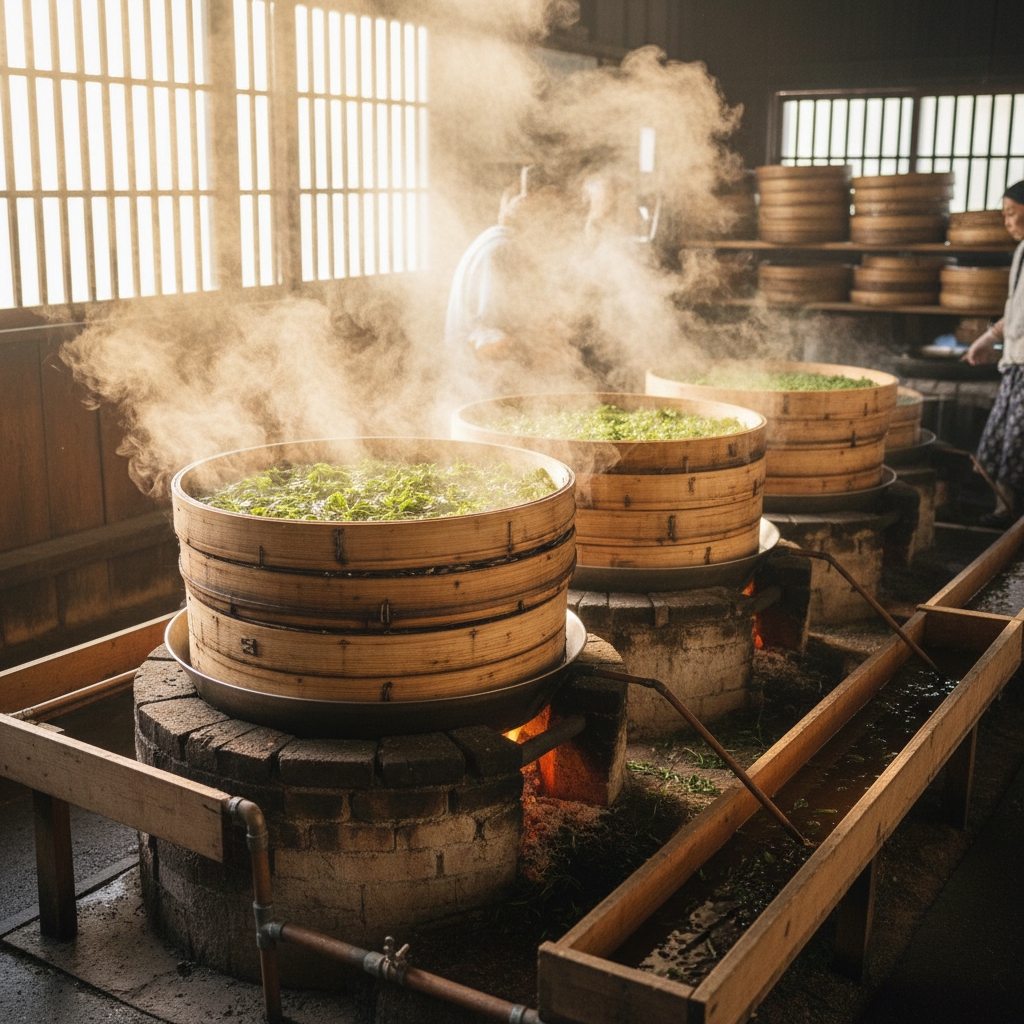
Steaming is the superior technology for preserving color and nutrients, distinguishing true matcha from general green tea powder. In analyzing the Key Differences Between Chinese and Japanese Matcha Production Technology, the “kill green” (fixation) step is the most critical technical divergence. Japanese technology relies heavily on steaming to stop enzymatic oxidation immediately.
Many lower-grade powders on the market are pan-fried (classic Chinese Sencha style). This results in a dull yellow-green hue and a roasted flavor profile. Riching utilizes imported Japanese steaming lines to lock in the emerald green color and fresh, vegetal notes, ensuring the powder meets international ceremonial standards.
Why is the steaming machinery so critical?
Steaming machinery penetrates the leaf tissue immediately, halting enzyme activity without overheating the surface. This technology prevents the “toasted” flavor common in cheaper alternatives and preserves the delicate marine notes characteristic of high-quality matcha.
Let’s look closer at the impact of this technology:
- Preserves Notes: Locks in delicate marine and vegetal flavors.
- Antioxidants: Maintains high levels of heat-sensitive EGCG.
- Visuals: Ensures a bright green suspension in water, vital for lattes and beverages.
Always verify that your supplier uses steaming technology, as this is the hallmark of authentic matcha production. The investment in steaming infrastructure is what separates professional matcha manufacturers from generic tea producers.
Fixation Tech | Process | Resulting Color | Flavor Profile | |
|---|---|---|---|---|
Steam (Japanese Tech) | 15-20 sec Steam | Vibrant Emerald | Sweet, Vegetal, Umami | |
Pan-Fry (Old Style) | Heated Wok/Drum | Dull Olive/Yellow | Nutty, Roasted, Bitter | |
Baking | Hot Air | Brownish Green | Flat, Earthy |
4. Stone Mills or Jet Mills: Which Grinding is Finer?
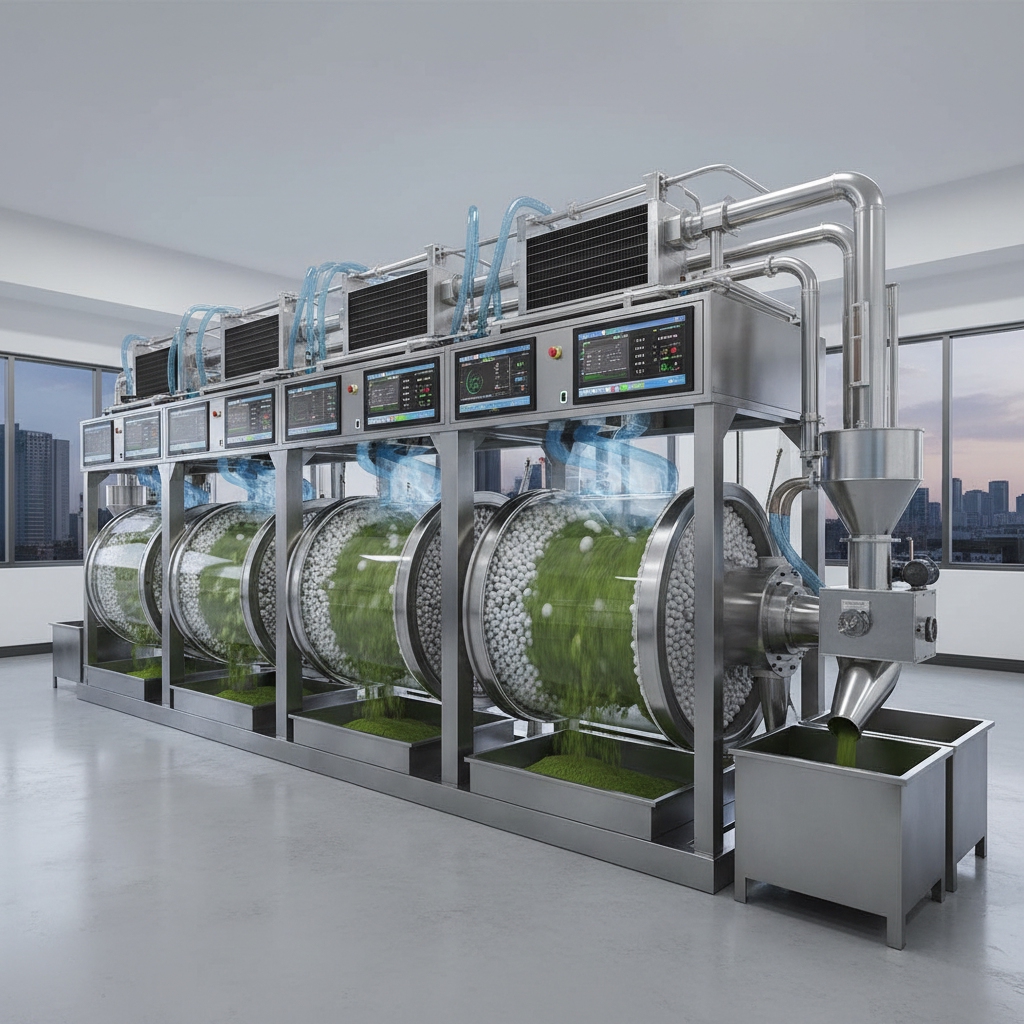
While stone mills are the traditional icon of matcha, modern jet pulverization and ball mills offer superior scalability without heat damage. When reviewing the Key Differences Between Chinese and Japanese Matcha Production Technology, grinding is where scalability meets quality. Traditional stone mills are incredibly slow, producing only about 40g of powder per hour.
To meet global demand, modern facilities utilize advanced ceramic ball mills and air-pressure jet mills. These machines can produce powder that is microns-fine at a commercially viable pace, maintaining the quality standards for various matcha grades without the bottleneck of artisan methods.
Does grinding speed affect the nutrient profile?
It can, if heat is not managed. Friction generates heat, which can “cook” the delicate powder and turn it yellow. Modern air-flow technology and water-cooled jackets keep temperatures low to protect the tea during high-speed grinding. This ensures you benefit from a powder that suspends perfectly in lattes without the “sandy” mouthfeel associated with coarse grinds.
Consider the texture implications:
- Stone Mill: Creates irregular particle shapes that foam beautifully; ultra-smooth but low yield.
- Jet/Ball Mill: Produces uniform particle sizes with high yield; excellent for industrial consistency.
- Pin Mill: Often results in coarse, gritty powder (generally to be avoided for beverages).
Advanced grinding technology allows for the production of silky, clumping-free matcha suitable for both ceremonies and industrial baking.
Grinding Tech | Speed/Yield | Heat Generation | Particle Size (Mesh) | |
|---|---|---|---|---|
Granite Stone | Very Slow | Minimal | 800-1000+ (Ultra Fine) | |
Ceramic Ball Mill | Medium/High | Low (Controlled) | 800-1000 (Super Fine) | |
Metal Machine | Fast | High (Burns Tea) | <200 (Coarse) |
5. How Do Cultivation Technologies Ensure Consistency?
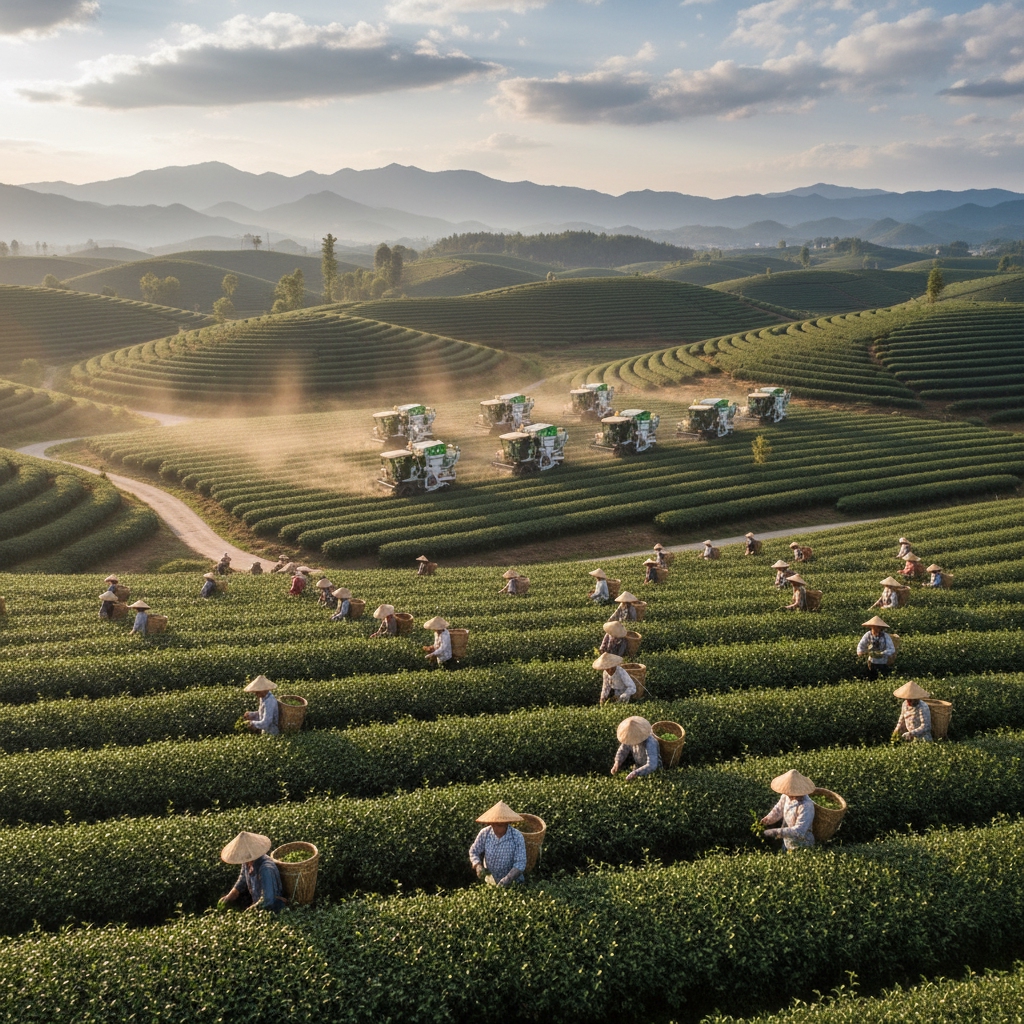
Clone propagation and automated field management ensure that every batch tastes the same, year after year. The Key Differences Between Chinese and Japanese Matcha Production Technology often come down to the scale of these agricultural technologies. Japanese farms are often fragmented smallholdings, whereas Chinese production is characterized by massive, contiguous estates.
For a commercial buyer, large-scale estate management (like Riching’s 5500 acres) offers a significant advantage. It utilizes uniform trimming, irrigation, and fertilizer schedules across vast areas, reducing the batch-to-batch variance that can plague smaller producers.
Is machine harvesting inferior to hand-picking?
Not necessarily for culinary and premium grades. Modern harvesters are precise and allow for rapid processing, which preserves freshness by reducing the time between “field and factory.” While hand-picking is romanticized, speed is a technological advantage in preserving antioxidants.
Here is the reality of modern harvesting:
- Hand-picked: Essential for top-tier competition grade (expensive).
- Machine-harvested: Ideal for consistent food/beverage ingredients (cost-effective).
- Laser-sorting: Technology used post-harvest to remove stems and old leaves, ensuring purity.
Mechanized cultivation combined with optical sorting technology guarantees a clean, pure product free from stems and veins.
6. Does Terroir or Technology Define the Nutrient Profile?
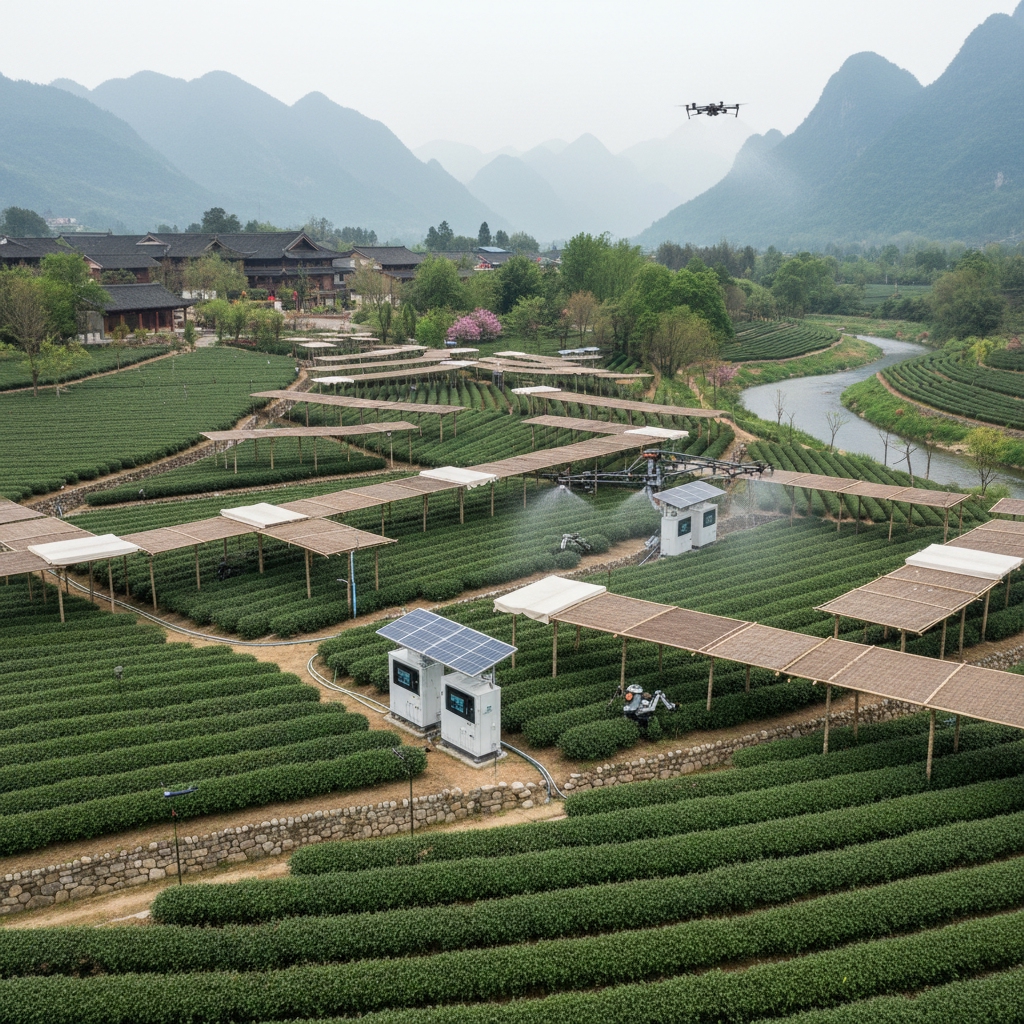
While soil matters, the technology used to amend and manage that soil is equally vital. In the context of Key Differences Between Chinese and Japanese Matcha Production Technology, modern soil science allows different regions to achieve similar nutrient densities. The idea that only Uji or Nishio can produce matcha is a marketing myth; soil chemistry can be analyzed and optimized globally.
Specific organic fertilizers and soil pH management technologies enable Chinese farms to mimic the ideal conditions found in Japan. By scientifically managing nitrogen levels, producers can boost the L-theanine content that provides the coveted sweetness.
How is soil safety managed technologically?
Through rigorous soil testing and filtration systems that prevent heavy metal uptake. Leading Chinese producers rely on lab data rather than just reputation to ensure safety.
What does the science say?
- Chromatography: Regular soil tests ensure optimal nutrient balance.
- Biological Control: Use of physical traps and biological agents rather than chemical pesticides.
- Irrigation: Deep root systems managed by sensors to prevent water stress.
Technology allows producers to overcome geographical limitations, creating nutrient-rich matcha in new environments.
Factor | Traditional View | Technological Reality | |
|---|---|---|---|
Geography | Only Japan has the soil. | Soil chemistry can be optimized anywhere. | |
Climate | Must be misty mountains. | Irrigation/Shading control micro-climates. | |
Nutrients | Nature determines EGCG. | Fertilizer tech boosts L-theanine. |
7. Are Safety and Pesticide Standards Technologically Enforced?
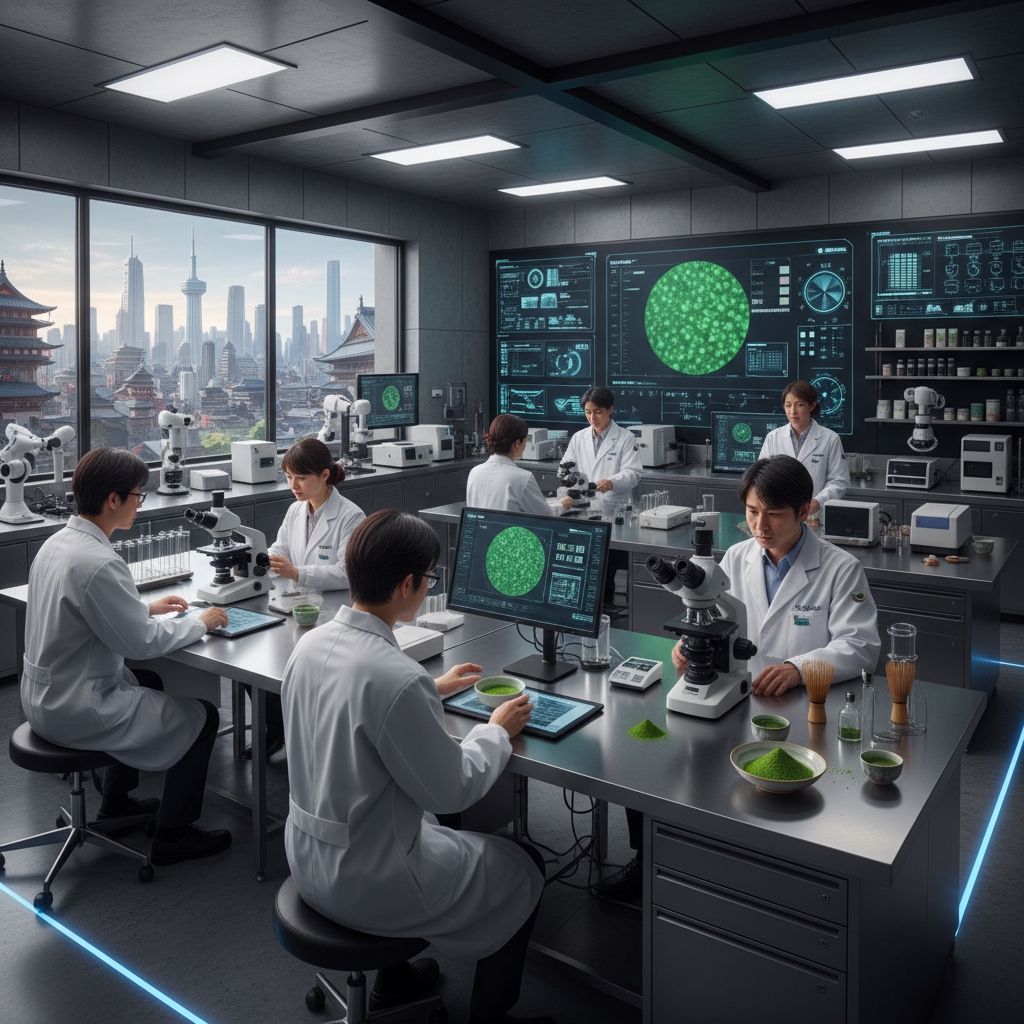
Modern mass spectrometry and automated lab testing have revolutionized food safety in Chinese exports. Acknowledging the Key Differences Between Chinese and Japanese Matcha Production Technology includes recognizing the massive investment in safety compliance tech by top Chinese exporters. While historical concerns existed, the sector has professionalized rapidly.
Leading suppliers now utilize “positive list” systems and internal labs that often exceed international requirements to secure EU and USDA organic certifications. This is not just about farming; it is about the technology of verification.
How do automated tracking systems work?
They trace every batch from the specific garden row to the final vacuum-sealed bag. This traceability technology protects your brand from contamination risks and allows for instant accountability.
Think about the risk management:
- Batch Coding: Allows for instant recall ability and detailed origin tracking.
- Heavy Metal Screening: Automated detection for Lead and Arsenic.
- Pesticide Analysis: Cooperation with global labs like Eurofins and SGS.
Advanced testing technology transforms “trust” into “verification,” making modern Chinese matcha statistically safe.
Safety Step | Old Perception | Modern Standard (Riching) | |
|---|---|---|---|
Pesticides | High risk in China. | USDA/EU Organic Certified. | |
Testing | Random/Spotty. | Every batch lab-tested. | |
Traceability | Paper records. | Digital tracking systems. |
8. Can Mass Production Technology Match Artisan Quality?
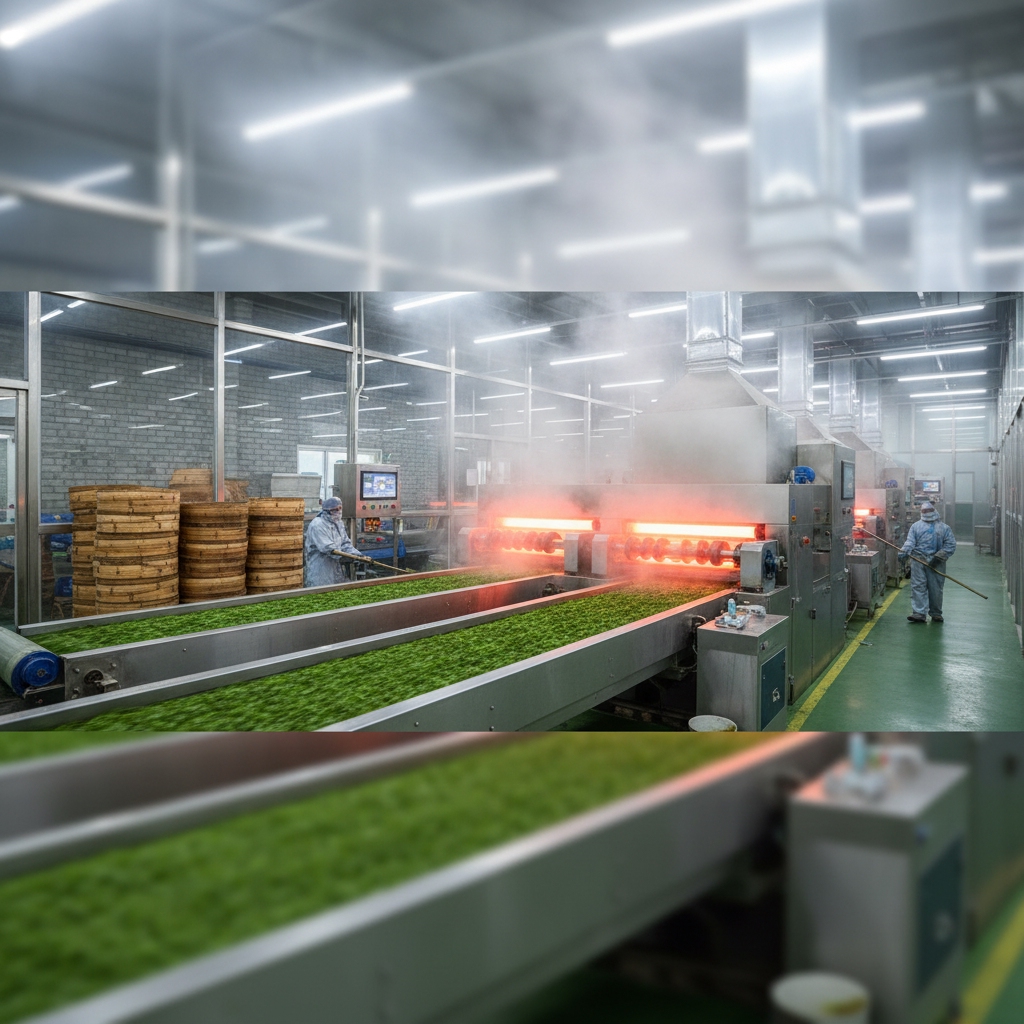
It depends on the intended use; automation excels at producing the massive volumes needed for the beverage and baking industries. When debating Key Differences Between Chinese and Japanese Matcha Production Technology, scale is the defining feature of the Chinese model. While artisan tea is art, industrial tea is engineering—perfect for when you need 500kg of identical powder for a latte mix.
Automation removes “human error” and alleviates seasonal labor shortages, ensuring a steady flow of product year-round. For businesses, this reliability is often more critical than the subtle nuance of a hand-made tea.
How does automation affect the supply chain?
Automated production technology is the only way to service large-scale commercial wholesale needs without compromising on baseline quality specs. It ensures that the matcha you buy in March tastes exactly like the matcha you buy in November.
Why is this crucial?
- No Waiting: Eliminates reliance on small-batch harvest windows.
- Consistent Color: Vital for food manufacturing where visual uniformity is key.
- Standardized Flavor: Ensures recipes do not need constant adjustment.
For business growth, the technology of scale is often more valuable than the romance of hand-made products.
9. Why Does Production Technology Drastically Change the Price?
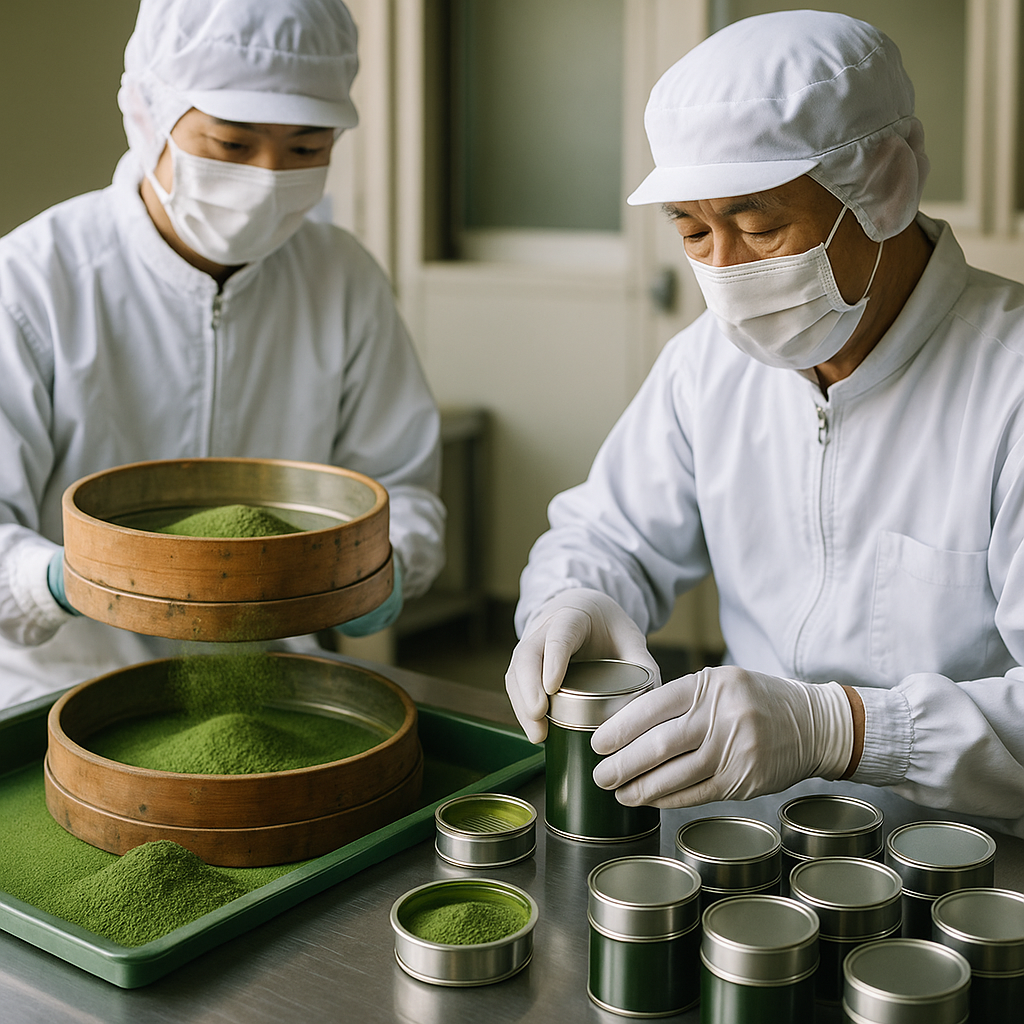
The cost difference isn’t just about quality; it’s about the efficiency of the technology used. The Key Differences Between Chinese and Japanese Matcha Production Technology often manifest as labor-saving advancements that lower the cost per kilogram. Japanese production often carries a “heritage premium” and high manual labor costs due to an aging population.
In contrast, Chinese tech-focused production captures economies of scale. Savings come from mechanized harvesting, automated shading deployment, and continuous-flow milling. These savings are passed to the buyer without necessarily sacrificing chemical composition.
Where do the savings come from?
- Labor: Machines replace hundreds of pickers, drastically lowering overhead.
- Land: Larger, flatter estates allow for more efficient logistics and machinery use.
- Processing: Energy-efficient modern lines reduce utility costs per unit.
You are paying for the tea, not the tradition, when you choose technology-driven production. Technological efficiency makes matcha accessible as a daily ingredient rather than just a luxury item.
10. Which Production Style Suits Your Business Best?
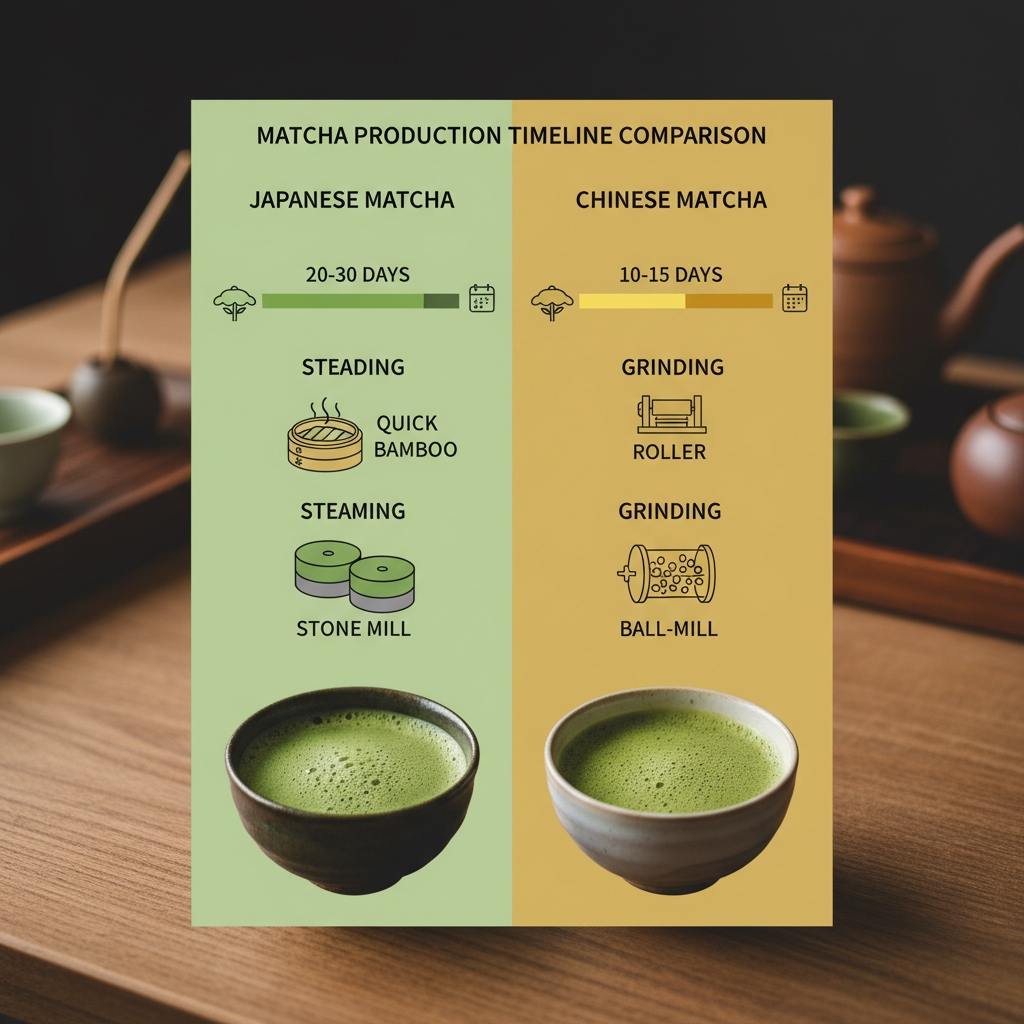
Your choice should depend on your end-product, not just the country of origin on the label. Synthesize the Key Differences Between Chinese and Japanese Matcha Production Technology to help make a commercial decision. It is advisable to look at technical specifications (mesh size, color values, organic certifications) rather than marketing stories.
If you are creating a private label brand , the consistency of Chinese technology is often unmatched for scalability. However, for strict traditional tea ceremonies, the nuance of Japanese artisan production may still hold the edge.
Are you formulating for lattes or ceremonies?
Ask yourself this:
- High-End Cafe: Premium Organic (Steam tech is a must for color).
- Supplements: Standardized EGCG levels (Extraction tech focus).
- Bakery: Heat-stable culinary grades (Cost efficiency focus).
Match the technology to the application to maximize both quality and profit margins. Smart sourcing is about leveraging the right technology for your specific market niche.
Business Type | Recommended Tech Origin | Why? | |
|---|---|---|---|
Global Chain | Chinese (Modern Tech) | Volume & Price Stability | |
Boutique Tea Shop | Japanese (Traditional) | Story & Nuance | |
Supplement Brand | Chinese (Extract Tech) | Ingredient Standardization |
Conclusion
The line between “traditional” and “technological” is blurring. As Chinese manufacturers like Riching Matcha adopt and refine Japanese processing technologies, the global market benefits from higher quality standards at more accessible prices. Whether through advanced shading, precise steaming, or ultra-fine grinding, technology is the bridge that connects ancient tradition to modern demand.
Ready to experience the difference that modern technology makes? Visit our homepage or Contact Us to request samples. Stop guessing about quality and partner with a supplier that combines the scale of Chinese agriculture with the precision of Japanese processing technology.